At its worst, the true crime genre offers its readers a wallow in lurid sensationalism, but at its best it provides an opportunity to scrutinize the ways a society establishes truth and justice on the ground. For all its masterful storytelling, Eric Larson's bestselling "The Devil in the White City" -- which grafted a portrait of the architect who designed the Chicago World's Fair in 1893 to the grisly dish on a serial killer who preyed on tourists drawn to the exhibition -- never quite managed the latter. Dave King's absorbing new book, "Death in the City of Light," does it better, landing just shy of setting a new standard for the form.
"Death in the City of Light" recounts the infamous case of Marcel Petiot, a physician believed to have killed over 60 people in Paris between 1942 and 1944, under the Nazi occupation of the city. King presents the story as a procedural, beginning with the day in March 1944 when residents in the chic 16th arrondissement complained of a foul smoke billowing out of a neighboring townhouse. When attempts to rouse the house's inhabitants proved fruitless, the fire department was called. In the basement, they found a coal stove with the "charred remains of a human hand" sticking out of it. Body parts and bones littered the floor. Further police investigations discovered a pit in which numerous corpses in various stages of decay had been covered with quicklime. In total, over 11 pounds of human hair would be gathered from the remains.
If King's book has a protagonist, it's police detective Victor Massu (an inspiration for Georges Simenon's Inspector Maigret), who picked up the case at the beginning. Determining, capturing and convicting the culprit, however, would prove supremely challenging in a city whose civil institutions were hopelessly compromised under Nazi rule. It was difficult for anyone to sort out wrong from right. For example, the patrolmen initially dispatched to the scene allowed a man claiming to be the brother of the owner to enter the building and take away some undetermined piece of evidence. Why? Because he assured them that the house was a Resistance outpost and that the bodies inside it were the remains of "Germans and traitors to our country." Later, they learned that the man was in fact Petiot, the house's owner and the prime suspect.
People were disappearing from Nazi-occupied Paris in droves. Some escaped to Spain and beyond via clandestine networks. Others vanished into the prisons of the Gestapo; you could be arrested for something as simple as wearing red, white and blue on Bastille Day. Above all, the city's Jewish population was subject to raids and deportations, plucked from their homes or off the streets and loaded into trains destined for death camps, never to be seen again. This made identifying the dismembered and mutilated remains in Petiot's charnel house extremely difficult, especially given that the parts of the bodies most useful to this process were missing.
King sketches this background in brisk, workmanly prose. At first it seems a bit too workmanly, but as the case evolves into a bizarre farrago of false identities, paranoia, wild goose chases, rumors, secret agendas and outright delusion -- all liberally sprinkled with Gallic histrionics -- the choice makes perfect sense. Authorial flourishes would be superfluous in a story already replete with penny-dreadful details: a mysterious femme fatale, a coffin stuffed with treasure just before it was interred, a crime boss who "obsessively collected" rare dahlias and orchids and entertained socialites in his lavish townhouse while members of the Resistance were tortured in the cellars beneath, and so on.
The authorities finally caught Petiot after a seven-month search. By then, Paris had been liberated -- an event described with crisp brio by King -- and Massu had been charged with collaboration, losing his job. (He was later fully exonerated.) The doctor was deliberately goaded into revealing himself by a newspaper that ran the wild testimony of a witness (who later disappeared), alleging that Petiot was a cocaine smuggler who hired prostitutes to have sex with other men while he watched and who wore German uniforms to hunt down Resistance fighters. Outraged, Petiot sent the paper a long, handwritten note filled with clues that led to his apprehension. He was working under a false identity as a captain in the counterespionage service, where he participated in the investigation of his own crimes.
Petiot's trial gave him further occasion to display his almost superhuman brazenness. He was accused of operating a false "escape agency," promising to spirit people out of France, then killing them and stealing their valuables. Petiot maintained that he had worked for a Resistance operation, called "Fly-Tox," that "liquidated" collaborators and informants. He painted his victims -- including several Jews fleeing Nazi persecution -- as Gestapo agents. He admitted to killing scores of people, just not the ones found in the townhouse. Those corpses, he insisted, had been planted there by the Gestapo in order to frame him.
The trial quickly became a three-ring circus -- a situation exacerbated by the French judicial process, which allows civil attorneys hired by victims' families as well as prosecutors to question witnesses and permits the participants (including the defendant) to interrupt testimony and statements. The quick-witted Petiot lambasted his enemies with barbed jokes and accusations of collaboration, capitalizing on the uneasiness everyone felt in the aftermath of the war. He nearly came to blows with one attorney while on the stand.
Petiot was not the only one to misbehave. Incredibly, the presiding magistrate was quoted describing the accused as "an unbelievable demon" and "an appalling murderer" in the press while the trial was in process and yet no mistrial was declared. The public fought over spots in the overflowing courtroom, then camped out, munching on sausages and sandwiches and shouting remarks like spectators at a sporting match. It was the best show in town. The writer Colette turned up to report on the trial, and such luminaries as Prince Rainier of Monaco and the duke of Windsor requested seats.
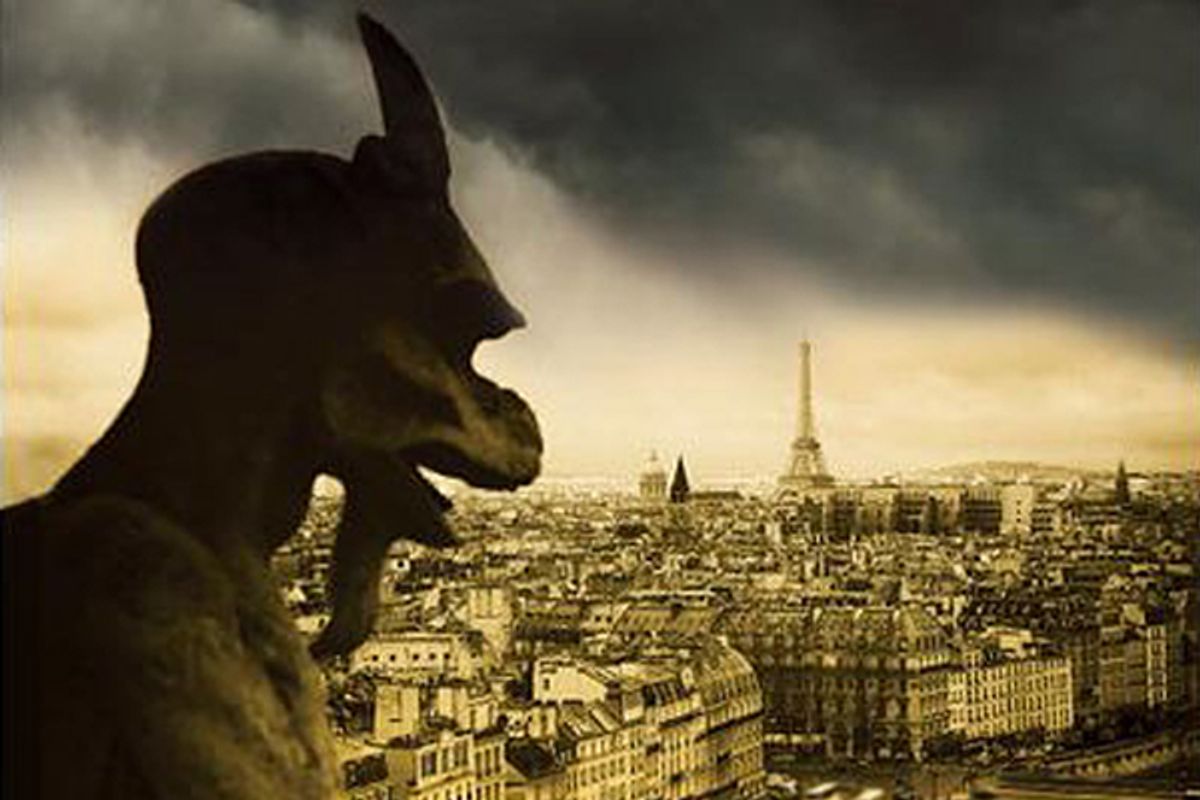
King has unearthed new evidence (a first-person account of the early days of the investigation written by Massu not long after the trial) to counter the widespread assumption that Petiot killed his victims via lethal injections. He also suspects that Petiot had powerful protectors in the Occupation regime and presents a convincing case for those suspicions. But the most startling impression left by "Death in the City of Light," is of Paris itself, confronting the bestiality lurking behind its supremely civilized facade, and of the handful of Parisiennes who tried to serve justice in spite of it.
Shares