
Free trade’s multinational corporate bonanza
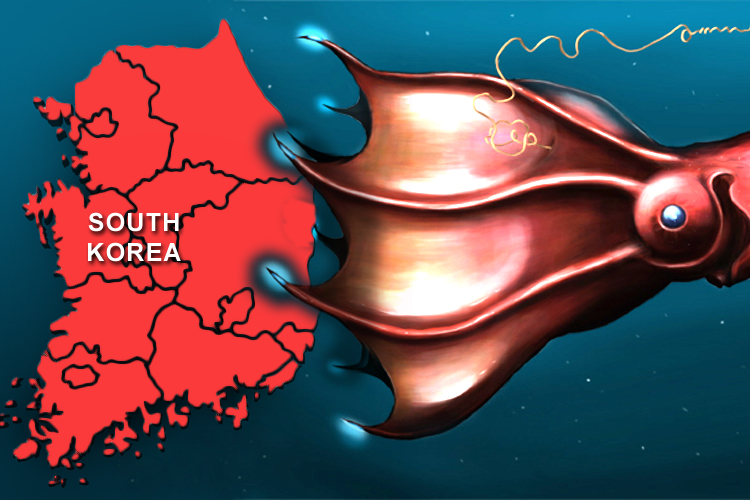
Obama touts the job benefits but the real winners are Big Pharma, Big Oil, and our favorite vampire squid.
By Andrew LeonardTopics: Unemployment, Free Trade, News
On Friday, more than five years after George W. Bush started pushing for the passage of free trade deals with South Korea, Colombia, and Panama, the agreements finally reached President Obama’s desk and were signed into law.
Some sectors of the American economy will benefit from a significant drop in tariff protections across the board, and some will not. But you can throw away all the studies conducted by supporters and opponents pinpointing exactly how many hundreds of thousands of net jobs will be added or lost. Determining the economic impact of trade agreements is fiendishly difficult, and the ideological predispositions of the various parties engaging in the free trade debt are far too fixed to have any confidence in their claims and counterclaims.
But that’s not to say we can’t declare a winner. If you want to know who benefits most from free trade, all you have to do is look at the list of co-chairs steering the U.S.-Korea FTA Business Council — the gold-plated blue chip clearinghouse for corporate support of the biggest of the three trade deals, the South Korea FTA. They include:
- Ted Austell, Vice President, Trade Policy, The Boeing Company
- Lisa Barry, Vice President and General Manager, Chevron
- Joseph Damond, Vice President, International Trade Policy, Pfizer, Inc.
- Matt Niemeyer, Vice President, Office of Government Affairs, Goldman Sachs
Laura Lane, Managing Director and Head of International Government Affairs, Citigroup, Inc
That is some multinational, deep-pocketed, globe-spanning power! The second largest U.S. oil company, the world’s largest pharmaceutical company, two of the most powerful U.S. financial institutions, and one aircraft maker that has long enjoyed a premier position in the U.S. military-industrial complex.
What Boeing stands to gain from the FTA is the easiest to discern. Boeing already sells around $2.4 billion worth of aircraft-related goods and services to South Korea, but faces tariffs ranging from 3 to 8 percent on many of its products. Lower tariffs mean higher profits for Boeing.
Pfizer’s case is a bit different. The influence of multinational pharmaceutical companies on the fine print of free trade agreements has always offered one of the most telling demonstrations of why there is nothing “free” about them. Among the provisions of the South Korea FTA are limitations on South Korea’s ability to authorize generic versions of foreign drugs, get access to safety data about those drugs, and, perhaps mody insidiously, determine which drugs South Korean healthcare plans will provide reimbursement for.
As I wrote, five long years ago:
… Negotiations of the pharmaceutical subcommittee involved with the free trade agreement currently being hammered out between South Korea and the United States were suspended on Tuesday afternoon, due to disagreements about the Korean government’s plan to change its drug reimbursement pricing system. The government wants to move to a “positive list” system, in which it will pre-announce which drugs it will pay for. Big Pharma hates this, because they’re afraid that it will mean that the most expensive, and profitable, drugs, will not make the list.
Simply put, Big Pharma uses free trade agreements to limit South Korea’s freedom to lower its own healthcare costs.
What about Citigroup and Goldman-Sachs? According to a detailed analysis by the United States International Trade Council, the South Korea FTA “would likely generate a substantial increase in U.S. exports of banking, securities, and asset management services to Korea. It would achieve this though such measure as removing obstacles to the “acquisition of existing Korean firms, reduced residency requirements for senior executives, and the elimination of minimum investment restrictions for foreign direct investment.” In other words, the big will just get bigger.
And finally, there’s Chevron. Chevron is already a big player in South Korea, a partner for more than 40 years with GS Caltex, the second largest energy company in Korea. Chevron is on record as supporting the free trade agreement because it will “strengthen investment protections” — which essentially boils down to making it easier for Chevron to legally defend itself from anything the government might do that it doesn’t like.
Employment at these multinational corporations may well increase as a result of the South Korean free trade agreement — although some of those jobs certainly will be in South Korea, not the United States.
The over-riding lesson that is to be learned here is that free trade agreements are crafted to serve the interests of multinational corporations, and those interests, we should have learned long ago, are not necessarily synonymous with the greater good for the largest number.
Andrew Leonard is a staff writer at Salon. On Twitter, @koxinga21. More Andrew Leonard.
Related Stories
More Related Stories
-
Paul Krugman's right: Austerity kills
-
Jon Karl makes things worse
-
How Guantanamo affects China: Our human rights hypocrisies
-
Top 5 investigative videos of the week: Nailing a dictator
-
Alex Gibney: Julian Assange has become like "those he despises"
-
New Yorker launches tool by Aaron Swartz to protect leaks
-
Financial Times hacked by Syrian Electronic Army
-
Gitmo hunger strike reaches 100th day
-
New DSM, new debates over ADHD and autism
-
John Brennan makes surprise Israel trip over Syria concerns
-
Pentagon officials: Drone War on Terror is endless
-
Toronto mayor reportedly caught on video smoking crack
-
Google Glass chief: "You'll know" when someone is spying on you
-
California powers $550 lottery jackpot
-
North Dakota lawmaker: Blame Roe v. Wade for school shootings
-
Take the Pope Francis tour of Buenos Aires and be pontiff for a day
-
U.K. hacker sentencing highlights U.S. overreach
-
Obama leaves room for whistle-blower prosecution
-
Should Obama go Bulworth?
-
Government to share cyber-vulnerabilites info with private sector
-
Lockheed Martin yet another victim of the sequester
Featured Slide Shows
The week in 10 pics
close X- Share on Twitter
- Share on Facebook
- Thumbnails
- Fullscreen
- 1 of 11
- Previous
- Next
-
Lisa Montgomery embraces her nephew Thursday after a tornado tore apart her home in Cleburne, Texas. The twister killed six people and destroyed entire swaths of the North Texas town.
Credit: AP/LM Otero -
Jack McMahon, the defense attorney for abortion doctor Kermit Gosnell, speaks outside the Criminal Justice Center in Philadelphia Tuesday. His client was convicted of killing three babies in his clinic, and will serve multiple life sentences.
Credit: AP/Matt Rourke -
A photo taken Monday captures Vice President Joe Biden's response to a Milwaukee second-grader's innovative proposal to end America's epidemic of gun violence. This guy!
Credit: AP/Jenny Aicher -
Sen. Rand Paul, R-Ky., flanked by a grouper-eyed Michele Bachmann, addresses the IRS' admission that it targeted Tea Party groups in advance of the 2012 election. In an op-ed for CNN Thursday, the Kentucky senator slammed the president for his faux outrage.
Credit: AP/Molly Riley -
Ousted IRS chief Steven Miller is sworn in on Capitol Hill Friday. Miller testified before the House Ways and Means Committee on the extra scrutiny the agency gave conservative groups applying for tax-exempt status.
Credit: AP/J. Scott Applewhite -
Attorney General Eric Holder pauses as he testifies on Capitol Hill before the House Judiciary Committee Wednesday. Holder is under fire, among other things, for the Justice Department's gathering of phone records at the Associated Press.
Credit: AP/Carolyn Kaster -
O.J. Simpson sits during an evidentiary hearing at Clark County District Court in Las Vegas, Nev., Thursday. Simpson, who is currently serving a nine-to-33-year sentence in state prison for armed robbery and kidnapping, is using a writ of habeas corpus to seek a new trial.
Credit: AP/Las Vegas Review-Journal/Jeff Scheid -
Major Tom to ground control: On Sunday astronaut Chris Hadfield recorded the first music video from space, a cover of David Bowie's "Space Oddity."
Credit: AP/NASA/Chris Hadfield -
When it rains it pours. President Barack Obama speaks during a news conference Thursday with Turkish Prime Minister Recep Tayyip Erdogan, inexplicably inspiring an #umbrellagate Twitter meme.
Credit: AP/Jacquelyn Martin -
A smoke plume rises high above a road block at the intersection of County A and Ross Road east of Solon Springs, Wis., Tuesday. No injuries were reported, but the the wildfire caused evacuations across northwestern Wisconsin.
Credit: AP/The Duluth News-Tribune/Clint Austin -
Recent Slide Shows
-
The week in 10 pics
-
The week in 10 pics
-
Mobile Entertainment: 9 Amazing Drive-In Movie Theaters Still Standing
-
The week in 10 pics
-
- Share on Twitter
- Share on Facebook
- Thumbnails
- Fullscreen
- 1 of 11
- Previous
- Next
-
The week in 10 pics
-
Mobile Entertainment: 9 Amazing Drive-In Movie Theaters Still Standing
-
The week in 10 pics
-
The week in 10 pics
-
The week in 10 pics
-
The week in 10 pics
-
Netflix's April Fools' Day categories
-
The week in 10 pics
-
The week in 10 pics
-
The week in 10 pics
-
The week in 10 pics
-
The week in 10 pics
-
Slideshow: Nerd Obama
Related Videos
Most Read
-
Revenge, ego and the corruption of Wikipedia
Andrew Leonard
-
Obstruction will ruin GOP
Jonathan Bernstein
-
Jaron Lanier: The Internet destroyed the middle class
Scott Timberg
-
Is Reddit censoring openly racist users?
Fidel Martinez, The Daily Dot
-
We're living in an Ayn Rand economy
Paul Buchheit, AlterNet
-
The man behind Abercrombie & Fitch
Benoit Denizet-Lewis
-
My "truly remarkable" cancer breakthrough
Mary Elizabeth Williams
-
When the IRS targeted liberals
Alex Seitz-Wald
-
Krist Novoselic: My plan to fix Congress, curb obstruction
Krist Novoselic
-
Will you marry me -- once you're done peeing?
Tracy Clark-Flory
Popular on Reddit
links from salon.com

61 points62 points63 points | 3 comments


Comments
7 Comments