
Parenting
The congressional war on childhood nutrition
House Republicans keep pushing pizza and fries even in the midst of an obesity crisis
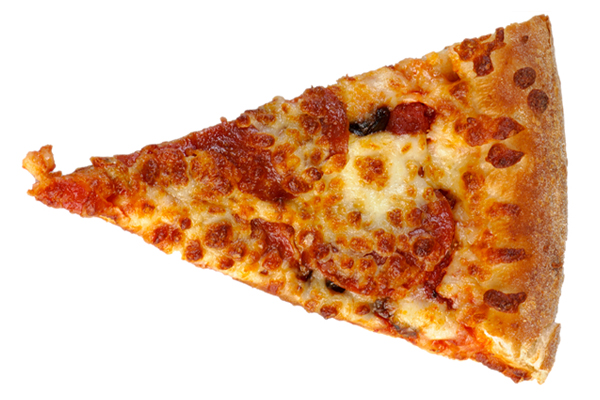
(Credit: B.G. Smith via Shutterstock) School lunch sucks. But now, it’s not just for age-old punch lines about mystery meat and grumpy ladies in hairnets. No, it sucks because on Thursday, the House of Representatives passed a bill that blocked proposals to improve its nutritional quality. Among other things, the changes would have required schools to offer a larger variety of fruits and vegetables, limited the amount of French fries cafeterias can serve, and stripped any pizza containing just two tablespoons of tomato paste of its current status as a vegetable. In related news, up is down, day is night, “Arrested Development” was never canceled, and I am a natural redhead.
The move is a blow to the Obama administration, which passed the Child Nutrition Act in 2010 to improve school food and permit more children to qualify for free meals. Michelle Obama has made childhood obesity the driving cause of her tenure as first lady, with a Let’s Move! initiative to encourage physical fitness and healthy eating.
It’s an apt – and desperately timely – cause. Nearly 12.5 million American children are obese. It’s no coincidence that one in five children live in poverty — a rate that has been climbing steadily since 2000. Faster and cheaper is now a public health crisis, and it’s setting our children up for a lifetime of ills ranging from heart disease to diabetes and beyond. And with the economy in shambles, providing healthy food at home is harder and harder for more families. My younger daughter’s own school recently lost its Wellness in the Schools program, which just two years ago had been working to reduce institutionalized, bland fare and bring fresh, inviting lunches into the cafeteria. It’s back to frozen pizza and chicken nuggets that are only partially made of chicken.
But the news isn’t grim for everybody. Steve Christensen, former deputy director of the USDA’s Food and Nutrition Service under George W. Bush, told the Wall Street Journal this week that “The program was designed to feed hungry children, not as some sort of federal weight-loss program.” Jeez, isn’t it enough to feed them? You want us to give them real food? And the American Frozen Food Institute – which lobbied against reform on behalf of companies like ConAgra Foods and McDonald’s supplier J.R. Simplot — was similarly cheered by the House’s move. Spokesman Corey Henry called the decision Thursday “an important victory” for his industry — a declaration that prompted both Henry F. Potter and Montgomery Burns to announce, “That dude is a massive tool.”
“Our concern,” Henry continued, “is that the standards would force companies in many respects to change their products in a way that would make them unpalatable to students.” Imagine! Changing things! Good thing you dodged that bullet there, ConAgra. Because if there’s one thing a corporation that just bought a pretzel company understands, it’s what’s best for our children. Certainly not nutritional reform.
The debate over school lunch — and the ludicrous semantics of it — is not a new one. Thirty years ago, Ronald Reagan famously attempted to screw over a generation of youths by reclassifying condiments such as ketchup and pickles as vegetables. He was so excoriated for it he reversed his position soon after. So just to be clear – even Ronald Reagan would have caved on this BS.
Our government was created to serve its people – even those not of voting age. But while one in four American children will go hungry today, Congress seems more concerned about the companies that make fries for McDonald’s.
Mary Elizabeth Williams is a staff writer for Salon and the author of "Gimme Shelter: My Three Years Searching for the American Dream." Follow her on Twitter: @embeedub. More Mary Elizabeth Williams.
Why Etan Patz still haunts us
Three decades after his disappearance, as the case is finally solved, a missing child remains our worst nightmare
(Credit: Reuters/NYPD) It was 33 years ago today that Etan Patz left his home in New York’s SoHo neighborhood to walk to his school bus. He was never seen again, and was declared dead in 2001. Two years ago, his case was reopened. And on Thursday, with little physical evidence to corroborate, police commissioner Ray Kelly announced that Pedro Hernandez had confessed and was being charged with the child’s murder.
Continue Reading Close
Mary Elizabeth Williams is a staff writer for Salon and the author of "Gimme Shelter: My Three Years Searching for the American Dream." Follow her on Twitter: @embeedub. More Mary Elizabeth Williams.
Trust me on this: David Bowie’s “Hunky Dory”
The Old 97's singer credits Bowie's brilliant "Hunky Dory" for rescuing his adolescence and inspiring his career
(Credit: Benjamin Wheelock) Dear Kiddos,
Hey, you turkeys. Listen up. I need you to listen for five minutes. I’m going to impart a little wisdom. You can take it or leave it. For what it’s worth, I’d rather you took it.
The advice is this: David Bowie’s “Hunky Dory” is a perfect album, and, since perfect albums are a rare commodity, it is worthy of deep and repeated listenings.
I’m listening to “Hunky Dory” as I write this. How many times have I listened to this, my favorite record? Like a million? And it never gets old.
Continue Reading CloseRhett Miller is the lead singer of the Old 97s. His latest solo album, "The Dreamer," will be released on June 5. More Rhett Miller.
Movie assailant punches a kid, becomes a folk hero
A 10-year-old gets punched in the face for being too noisy at "Titanic" -- and the Internet applauds the beating
(Credit: iStockphoto/IBushuev) It’s a general rule of thumb that a grown man doesn’t get a lot of support for knocking out a 10-year-old child’s teeth. But Yong Hyun Kim has won himself a few fans lately for doing just that.
Back on April 11, the 21-year-old Washington state man settled in with his girlfriend to enjoy “Titanic” in 3D — right in front of a boy known only in police documents as KJJ. What ensued led to a night in jail and a charge of second-degree assault.
Continue Reading Close
Mary Elizabeth Williams is a staff writer for Salon and the author of "Gimme Shelter: My Three Years Searching for the American Dream." Follow her on Twitter: @embeedub. More Mary Elizabeth Williams.
We were breast-fed really late
My mother continued to let us touch her for years after feeding stopped, and now it feels creepy and revolting
(Credit: Zach Trenholm/Salon) Dear Cary,
I don’t know how to put this any way but bluntly, so here goes. My mom let me and my brother breast-feed really, really late– until we were 4 or 5. She let us touch and play with her breasts for years after that. She never told us what sex was, and later when I found out for myself, my body changing on its own, I felt revulsion at the all-too-recent memories of how I touched, and wanted to touch, my own mother. I hated that she hadn’t stopped me.
Continue Reading Close
Cary Tennis writes Salon's advice column, leads writing workshops and creative getaways, publishes books, writes an occasional newsletter and tweets as @carytennis.
- Send me a letter! Ask for advice! Letter writers please note: By sending a letter to advice@salon.com, you are giving Salon permission to publish it. Once you submit it, it may not be possible to rescind it. So be sure.
- Make a comment to Cary Tennis not for publication.
- Send a letter to Salon's editors not for publication.
More Cary Tennis.
“Why won’t you answer me?”
Kids' questions may be annoying -- but they're more crucial to learning than we've ever thought. An expert explains
(Credit: Bonita R. Cheshier via Shutterstock) Children can ask a lot of very annoying questions. Starting at about 2 years of age, they begin barraging their parents with endless queries, from “Are we there yet?” to “Why is the moon round?” — questions that often seem more like desperate ploys for parental attention than anything else. And, to make things worse, cooperative parents are often treated to a relentless barrage of follow-up questions, many of which involve one word: “Why?” Is this process infuriating? Yes. But is it crucial to their development? Far more than most of us think. And furthermore, the frequency and form of those questions can tell us a lot, not only about how children learn but also about cultural and class differences in America.
Continue Reading Close
Thomas Rogers is Salon's Arts Editor. More Thomas Rogers.
Page 1 of 43 in Parenting