Boardwalk Empire

The man’s world of “Boardwalk Empire”

A shocking twist highlights the drama's inability to make space for great female characters

  • more
    • All Share Services

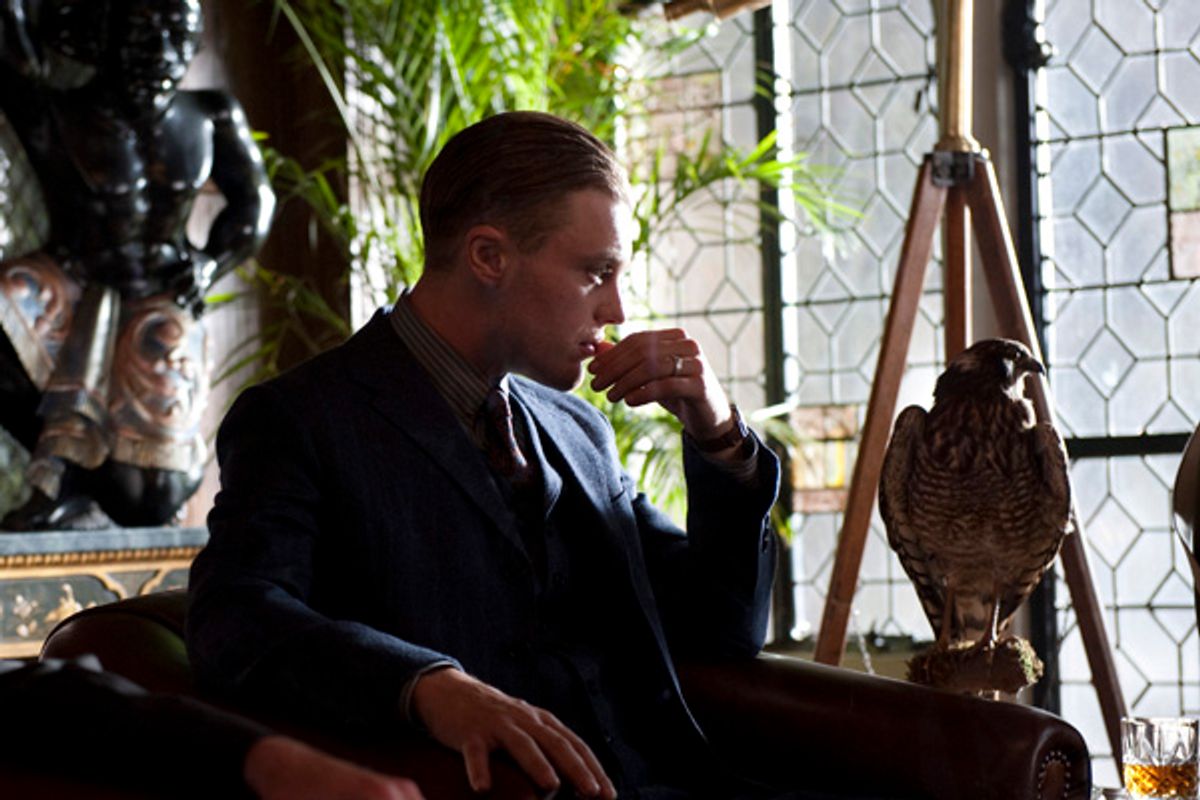
The man's world of Presumptive Atlantic City crime boss Jimmy Darmody (Michael Pitt) strikes a contemplative pose on "Boardwalk Empire." (Credit: HBO)
The following article contains spoilers for "Boardwalk Empire" season two, episode 10 ("Georgia Peaches"). Read at your own risk.

On one hand, yes, oh my God, oh the humanity, poor Angela Darmody (Aleksa Palladino), rest her soul; what a ghastly exit. Philadelphia gangster/butcher Manny Horvitz (William Forsythe) avenged a botched assassination attempt by Angela’s husband, Jimmy (Michael Pitt), by invading the Darmodys’ seaside house and putting Angela and her girlfriend down like livestock. It was obscenely dark, and I mean that as a compliment. Violence that’s supposed to mean something — to feel “real” and hurt the spectator — can’t be clean, abstract or comic bookish. It needs to have that ’70s movie nastiness, and this killing definitely had it. It reminded me of the murder spree that ended “Boys Don’t Cry,” with the bodies on the floor and the bloodstains on the wall. Horrifying.

But on the other hand: sooner or later “Boardwalk Empire” had to kill off somebody who was listed in the show’s opening credits, otherwise it would have seemed like Guest Star Murder Theater, and Angela was definitely the most disposable major character. She never drove important plotlines; mostly she reacted to her husband’s macho shenanigans, sometimes suffering in silence, sometimes acting out. Her appearances tended to tease the same question over and over: “Is Angela being true to herself and flirting with women this week, or trying to pass for straight again?” That’s a fascinating predicament for a female character in male-dominated 1920s Atlantic City, with its boho influence bubbling just under the surface, but “Boardwalk” has yet to address it in a meaningful way. We got a parting taste of Angela’s internal conflict during her final episode, but it ultimately felt like a glorified setup for the surprise of seeing a woman coming out of that bathroom instead of Jimmy. (On TV, when unhappy characters try to set things right with the people who mean the most to them, it often means that death is right around the corner.)

Angela’s demise is mainly notable for what it will or won’t do to Jimmy. He already seems to be in way, way over his head. In the past few episodes, he made a public spectacle of himself by tossing an underling off a balcony at a celebratory party, got outmaneuvered by the supposedly retired Nucky in the liquor business, and failed so miserably at handling the African-American hotel workers’ strike that the stroke-addled Commodore finally blurted out a comprehensible sentence: “Why don’t you show them your cunt?” I’m guessing Angela’s demise will either drive Jimmy to even more hotheaded behavior or send him into a depressive trough of inaction. Either way it’ll reduce Angela to a facet of Jimmy — a catalyst for a gangster’s grief and rage — rather than illuminating her on her own terms.

“Boardwalk Empire” never really knew what to do with Angela, just as it never really knew what do with any of its female characters — except maybe Jimmy Darmody’s mother, Gillian (Gretchen Mol), the Oedipal Lady Macbeth of the seaside. Margaret’s distress over her daughter’s polo paralysis has been more compelling, mainly because it put Kelly Macdonald, one of the best actors in a fine cast, at the center of several episodes in a row. (It also showed a warmer, gentler side of Nucky.) I get the sense that the confession that Margaret really wants and needs to make isn’t that she had sex with that hunky IRA soldier, but that she’s living with (and off) the man who had her husband killed. But as morally and metaphysically fraught as these developments may be, Margaret has never regained the spark that she showed early in Season 1, when she charmed Nucky and proved herself a dazzling social butterfly who could talk politics with actual politicians. Like Angela — and Gillian, and Lucy Danziger, and every other female character of note — she’s diminished by a show that’s ultimately more interested in pissing contests and whackings. It isn’t just Nucky who put her in her place, it’s the series.

The reflexive counter-argument that “Boardwalk Empire” is set in a man’s world almost a hundred years ago — and that deeper, more sharply defined, even autonomous female characters would be unrealistic, or anachronistic — doesn’t wash when you compare it to similarly testosterone-driven but superior shows. “The Sopranos,” “Deadwood,” “Breaking Bad” and even the current “Homeland,” which is set in the male-dominated world of spies, soldiers and politicians, all managed to create women characters who seemed to have a life apart from whatever men they happened to be living with, sleeping with or working for. Carmela Soprano was married to Tony, but she wasn’t overshadowed by him. Alma, Trixie and Calamity Jane on “Deadwood,” Skyler White on “Breaking Bad,” Carrie Mathison on “Homeland” and almost every major female character on “Mad Men” have more depth, more fire, more inner life than any female character on “Boardwalk” save Margaret, and even she often seems to be more of a human pincushion than a character.

U.S Assistant Attorney General Esther Randolph (Julianne Nicholson), who’s loosely based on Mabel Walker Willebrandt, the assistant U.S. attorney general from 1921-29, is a fascinating addition to the show, tormenting Nucky and challenging Van Alden to climb out of his personal shame spiral and recommit himself to law enforcement. But “Boardwalk” also made sure to show her sleeping with a subordinate, and gave us a nice head-to-toe nude shot while they were at it. How long, I wonder, before she ends up in a clinch with Nucky?

“Boardwalk Empire” does not want your forgiveness

In a shocking and beautifully executed second season finale, HBO's gangster drama figured itself out

  • more
    • All Share Services

Jimmy Darmody (Michael Pitt) in a moment of contemplation on "Boardwalk Empire." (Credit: HBO)
The following recap of the second season finale of "Boardwalk Empire" contains spoilers. Read at your own risk.

“To the Lost,” the second season finale of “Boardwalk Empire,” may be remembered as the moment when “Boardwalk” finally, finally hit its stride. This isn’t the first time the HBO drama has impressed me — even the worst episodes have had great scenes or moments — but there was something special about this one. It was dead solid perfect in almost every department. I think a lot of it comes back to the episode’s consistency of tone, and the show’s comfort with having settled on it.

I thought about tone during that haunting close-up of the soon-to-be-late James Darmody smoking a cigarette by an open window. There was really no reason why such a simple moment should have summoned such force. Michael Pitt wasn’t selling the moment at all. He was just sitting there smoking. Yet the accumulated weight of Jimmy’s trauma — his wife’s death and his tragic inability to feel his way through it thanks to his war experience, his Oedipally perverse childhood, and a life spent among super-macho gangsters — came through loud and clear. Pitt’s posture, gestures and slightly mask-like expressions were exactly right, just as his gentleness during the beachside pony-ride scene with Jimmy’s son was exactly right, and as his ego-free coolness during that rain-soaked final sequence was exactly right. I love how Pitt delivered Jimmy’s statement to Nucky about what to expect after your first killing: 48 hours of nausea. It reclaimed a bit of dignity for Jimmy in his final moments — the implication being that this was first time that Nucky, the butcher of Atlantic City, ever personally killed anyone — but it was not particularly boastful or petty. Jimmy was just a guy who had nothing to lose, delivering information.

Pitt’s acting was always good, if a bit vague and guarded early on — an understandable response to being ask to play a character who was whatever the show needed him to be at any given instant — but he was especially strong during the last five episodes, probably because the writing sharpened up, and he hit his peak last night. The performance was free of 21st-century neuroses, which is by no means the same thing as being untroubled. When Jimmy said he died in the trenches during the war, there was nothing self-dramatizing about it. The character was just reporting the facts as he saw them. Pitt’s acting, here and earlier on the show, was retro, but not ostentatiously so. It seemed to be pitched somewhere between 1940s-era Joel McCrea or Dana Andrews and the kinds of performances that Montgomery Clift gave in the 1950s, which were soulful and tormented, but never never over-indicated or begged for sympathy.

In retrospect, I think the tone of Pitt’s performance is the tone “Boardwalk” should have hit, or should have tried to hit, from the beginning. I went back and re-watched sections of season one and the first half of season two before writing this piece, and I was struck by how much less focused and confident it was. The show was bloody and sexy and profane and handsomely produced, and it had great sequences and moments, but it seemed insecure and prone to distraction, forever adding new characters, subplots and locations instead of exploring what it had already created. It had the brash but shallow confidence of a gambler or a con man. Tonally and rhythmically it was all over the place. Its philosophical and theological banter felt forced, and frankly still does. (Margaret to Nucky in “To the Lost:” “So your version of God asks nothing.” Nucky: “There is more God in the love I feel for you and those children than in all the churches in Rome.”) And some of the violence — like a lot of pay-cable violence — seemed to be there just because the show knew it could do it. “Boardwalk” struggled a lot, I suspect, with the legacy of “The Godfather” and “The Sopranos,” and probably all of those purgatorial gangster films by co-executive producer Martin Scorsese, who won an Emmy for directing the “Boardwalk” pilot. There were times when the show seemed as though it was trying and failing to capture the rough magic of its obvious inspirations, instead of finding its own voice in a somewhat lesser mode that it was actually good at: a modern cable version of default old-movie storytelling, lively but not deep and not really trying to be. In that sense, Nucky’s hateful kiss-off to Jimmy felt like a bracing recognition that “Boardwalk Empire” is what it is, and is content to be that thing: “You don’t know me, James. You never did. I .. am not … seeking .. forgiveness.”

That quality came through in this episode, which had the polish and snap of another classic Prohibition-era retro-gangster flick, “Miller’s Crossing,” but mostly minus the flamboyance. A rare exception was the crosscut montage that juxtaposed Esther Randolph rehearsing her opening statement while putting on her courtroom clothes, Jimmy and Richard extracting a Nucky-exonerating confession/suicide note from an alderman at gunpoint, and Nucky and Margaret getting married to inoculate Margaret against having to testify against her husband; the direct address of the camera and the whirling camera moves were very Coen brothers, and in contrast to most of the music on “Boardwalk,” the classical piano score was not “justified” by being, say, performed in a saloon or played on a Victrola.

There was an unabashed movie-ness to the sequence — an exuberant yet controlled showmanship — that the drama has never before attempted. There wasn’t a trace of Coppola-style solemnity; the sequence just flew by, and the camera seemed to be tap-dancing around the actors. Jimmy’s last moments were nearly as old-movie cinematic. Having a psychologically damaged vet buy it in the shadow of a war memorial was already verging on too much; and yet somehow having the shocking double-cross and execution happen on a melodramatically dark-and-stormy night put the whole sequence over the top in a good way. “To the Lost” director Tim van Patten, who helmed some of the best “Sopranos” and “Boardwalk” episodes, is the kind of filmmaker who would have anonymously directed five B-pictures a year under the old studio system, then been discovered in the 1960s by the French. Winter’s script was filled with quotable lines that had an early-talking-pictures hard-boiled cadence. (When the judge asked Esther if she wanted to pursue a case that had fallen to pieces or withdraw and “get your ducks in a row,” she replied, “I’ll take the ducks, your honor.”) The more enthusiastically “Boardwalk” embraces an old movie style and tone, and the less it grasps for “Godfather” or “Sopranos”-like depth, the better it is. The episode even had hints of sneaky Hays Code-era moralizing. Between Margaret’s giving herself a backdoor to redemption by signing the highway land deed over to the church and the revelation that the Commodore left his estate to the housekeeper who was framed for trying to poison him (Jimmy tore up the document, but still — hilarious!), you have wonder if the “Boardwalk” universe is really godless after all.

None of this, of course, erases the fact that “Boardwalk” spent roughly a season-and-a-half figuring out what to be, overloading its narrative with an excess of characterization and incident and putting most of its women into dependent little boxes. (Things got better on all fronts year the end, though, and Esther’s interrogation of Margaret was one of the season’s sharpest, truest scenes.) And they might as well keep whacking major characters, because a lot of them are, dramatically speaking, toast anyway. The writers systematically pulverized Special Agent Van Alden like Chalky’s men whaling on those abducted Klansmen, to the point where his character lay in pieces; he should probably just stay in Cicero with his nanny-wife. And minus Jimmy and the Commodore, I don’t see what the show can do with Gillian. But still! What a great hour. Winter and company seem to have figured out something essential. I hope they build on it.

Continue Reading Close

A bear, a baseball glove and “Boardwalk Empire”

An unusually mysterious, subtle episode of HBO's gangster drama showcases the program at its wily best

  • more
    • All Share Services

A bear, a baseball glove and Two of a kind: The Commodore's stuffed grizzly looms behind Philadelphia gangster Manny Horvitz (Williams Forsythe) on "Boardwalk Empire.)(Credit: HBO)
The following article contains spoilers for "Boardwalk Episode" season two, episode eight, "Two Boats and a Lifeguard." Read at your own risk.

“Powerful” episodes of cable dramas make a huge impression on viewers, and are often acclaimed as the best of their season. Sometimes the praise is deserved; other times it’s a reaction to the sight of characters we like being diagnosed with fatal illnesses, beaten, raped, killed, etc.  Meanwhile, low-key but complex episodes often get short shrift from critics and viewers. I hope that doesn’t happen with tonight’s “Boardwalk Empire” episode, “Two Boats and a Lifeguard,” because in degree of difficulty, it’s impressive, in some ways extraordinary.

As written by Terence Winter and directed by Tim Van Patten — a dynamic duo on a lot of great “Sopranos” episodes — “Two Boats and a Lifeguard” seems like just a  “housekeeping” episode that’s mainly concerned with wrangling subplots and exploring characters. But as I’ll explain in a moment, the episode went way beyond that.

Nucky and Eli buried their father and had an uncomfortable moment of almost-reconciliation at the memorial. (This episode marked the final appearance of the late stage and screen actor Tom Aldredge, who played both Nucky and Eli’s dad and Carmela’s father on “The Sopranos.”) Nucky responded to his dad’s death — the psychological aftershock of the second assassination attempt against him, this one set up by his surrogate son Jimmy Darmody — by declaring that he was quitting his job as Atlantic City treasurer and was going to try to mend his ways and become a respectable citizen. (Fat chance of that happening on a show like this, but it was still a fascinating development that let star Steve Buscemi show us intriguing new shadings.) Nucky even asked Margaret’s son to address him as “Dad” rather than “Uncle Nucky” — a huge step toward commitment and emotional availability, even though it was conveyed in a rigid 19th century manner. Van Alden hired a nanny to take care of his baby with Lucy, in the process confirming his near-total inability to respond to the child as a father should, but revealing very faint glimmerings of potential near the end. (Or was that just wishful thinking on my part? Probably so — Van Alden is such a rancid sour persimmon — and so encrusted with lame graphic novel pathology, from religious fanaticism to sexual hypocrisy to cold sadism and murderous rage — that the writers might be unable to salvage him as a workable character.)

Jimmy had to face up to his ambivalence about his new role as the city’s supreme power broker, but he seemed to reject any misgivings at the end (another denial?) when he ceremoniously tossed Mickey Doyle, the Salacious Crumb of “Boardwalk,” off a balcony. Jimmy’s wife Angela met a bohemian woman at the beach, attended a party at her invitation at which she was able to be herself without fear of censure for the first time. She also had an unexpectedly direct conversation with Jimmy during which Jimmy admitted the depth of his criminality and his role in Nucky’s attempted assassination, and Angela admitted that their marriage was a sham and prodded Jimmy toward admitting it, too.

Angela: “Why did you marry me, Jimmy”?
Jimmy: “Because I love you.”
Angela: “Is that what you tell yourself?”
Jimmy: “It’s what I just told you.”
Angela: “But it isn’t true.”
Jimmy: “I could ask you the same question.”
Angela: “Because we have a child together. Because it’s what society expected of me. It’s what you expected of me.”

A lot happened in this episode, and much of it could be filed under the heading, “Faking it.” Characters who were in denial about one or more aspects of their lives had to face up to reality, then either engage it directly or flee. At the same time, though, there was a confidence and mysteriousness to ”Two Boats and a Lifeguard” that transcended all the detail work.

Nucky’s recurring (and evolving) dream sequence — the son showing his Nucky-like stigmata, the admonition “Daddy eats first,” the moaning deer on the floor — reminded me of some of the more vexing dream-driven episodes of “The Sopranos” and “Twin Peaks.” The images had the inscrutable deadpan quality that I associate with some of my own dreams. Everything felt real and yet not real. The symbols announced themselves brazenly and seemed simple and obvious, but were presented with so drily that we we were not totally sure how to take them. They can in fact be interpreted in different ways, and applied to different characters and scenes.

This isn’t just true of Nucky’s dreams, but of particular anecdotes and lines that occur elsewhere in “Two Boats and a Lifeguard.”

There’s an ongoing theme that pits peoples’ self-serving or self-denying image of themselves against the way others perceive them — a contrast that poses an either/or conundrum, as in, “Are you X or are you Y?” Of course the answer here, as in life, is almost always “Neither .. and both,” humans being such complex mammals. This was movingly confirmed at the end of the memorial, when Nucky, who professed to hate his father without remorse or even a second thought, noticed that one of the old man’s bootlaces was untied, moved to tie it, and broke down in tears.

But the posing of these “X or Y?” questions is still important because it forces people to reflect on themselves, and prompts the viewer to reflect on the characters. Consider Nucky’s opening rejoinder to the elevator operator who mentions the Jack Dempsey fight: “That fight hasn’t happened yet.” The elevator operator’s line referred (within the dream) to the actual Dempsey fight, which has not yet happened in the show. But it could also refer to the struggle between Nucky and Jimmy for control of Atlantic City (which achieved a kind of resolution, however temporary, in this episode) as well as to the psychological/emotional struggles happening within Nucky, Jimmy, Angela, Van Alden and other characters.

Consider also Nucky’s joke about the drowning man and God — a joke whose punchline provides the episode with its title. God sent the drowning man obvious signs — and actual help! — throughout his awful experience, but he was too dense to recognize them. Nucky himself has been repeatedly “rescued” from certain death as if by a higher power, but rather than interpret these rescues as a signal that he ought to thank God, renounce evil and change his ways, he’s continued on as if nothing happened. In this respect, Nucky is gradually turning into a classier Tony Soprano, a gangster who is dimly aware of a world beyond the one we can see — a maybe-spiritual world, a world of symbols and fate, equations and second chances — but then either fails to properly interpret the signs, or else interprets them correctly and changes his ways only to revert to the status quo. Nucky has interpreted the signs correctly in this episode — there are even on-the-nose moments, such as his calling his hand wound “stigmata”, which likens Nucky to the risen Christ– but will he really do anything with them? Does he have that kind of insight, that kind of discipline? Or not? (I personally think Margaret could be Nucky’s God, or savior — a possibility that was hinted as early as episode four of Season 1, “Anatasia.”)

Other literary/visual equations were made in the episode, via moments where characters insisted that one thing was really something else, or that a situation or image they thought meant “X” actually meant “Y.” Nucky’s interrogation by the feds combined an “Are you X or are you Y?” question and a stark moment of denial. Likened by his interrogator to an onion, Nucky replied, “I prefer to think of myself as an artichoke.” (I love that response; artichokes are a hell of a lot tougher than onions.) In a late scene in which somebody read about Nucky’s exit in the newspaper, we got another “this equals that” line: “‘Beleaguered’ — that’s French for completely fucked.”The dream phrase “Daddy eats first” relates directly to Nucky’s relationship with his father; but as my colleague Edward Copeland alludes, it also sums up the essential power dynamic of gangsterism, in which tribute must always be paid upward before the person who collected the money (or bagged the deer) can take his cut.  In the scene at the boardwalk food stand, Van Alden asked an underling to distinguish between “evil in and of itself” and an action “prohibited as wrong, as dictated by statute.” His man replied, “When I first joined the bureau, I was convinced what we were doing was right. But after a while, seeing as how it was harder and harder to enforce the law….” Then he paused, uncertain whether to continue. “We should be going,” Van Alden muttered, not ready to hear the rest of the sentence.

What, precisely, was meant by that image of the child’s baseball glove in the chair? I don’t think it was intended precisely at all,  and that’s why it resonated. A friend described it as a “Rosebud”-like emblem of the “normal” childhood that Nucky — who said goodbye to his cold and cruel dad in this episode — never had. I saw it as a sidelong reference to a much-quoted passage from Corinthians, “When I was a child, I spake as a child, I felt as a child, I thought as a child: but when I became a man, I put away childish things” — which dovetails with Nucky getting out of harm’s way and formalizing his relationships with Margaret and her kids. (This interpretation also syncs up with Jimmy’s subplot, parts of which dealt with Jimmy’s frustration at being treated like a child and addressed as “boychik” by Philadelphia gangster Manny Horvitz.) But you could also point out that the baseball glove mirrors that closeup in the memorial scene of the elder Thompson’s hand — rosary beads place over the spot where the bullet penetrated Nucky’s hand. And you could take it other ways, too — just as you could apply Manny’s story of the hunter hiring somebody to kill a deer for him as a direct slap at Jimmy’s murder by proxy (“You hid behind poppa as he pulled the trigger”), and also every other gangster character’s use of henchmen to do their actual dirty work.

The deer anecdote — first told by Manny, with the Commodore’s stuffed grizzly looming behind him — was forcibly wedded to Nucky’s story near the end of the chapter, in the scene in which Nucky went to his enemies and told them they’d won and that he was backing down. Nucky delivered the statement while standing beside the same bear. I was tempted to call this shot excessive and obvious, but in retrospect it’s only because of Nucky’s weak dialogue, which came across like placeholder language that was meant to be filled in later with something good (“My father’s death and my recent brush with the same have got me to thinking…”, “I have the love of a fine woman and the love of her two wonderful children”, etc). The similarity in posture between Nucky and the bear — and the suggestion that he was on the verge of becoming another trophy in the Commodore’s collection — was perversely funny, the kind of touch that David Lynch or David Chase might have slipped into an otherwise straightforward scene. Like the better moments on “Boardwalk Empire,” it was at once direct and subtle, funny and sick, and you could take it however you liked.

Continue Reading Close

“Boardwalk Empire” takes a cartoonish turn

When fans call last night's episode the best ever, what they really mean is the most needlessly violent

  • more
    • All Share Services

According to a lot of fellow “Boardwalk Empire” fans who have lavishly praised it, last night’s installment (written by Howard Korder and directed by Tim Van Patten) was a cut above the norm, maybe even the greatest episode ever.  That’s news to me. What I saw was typical “Boardwalk,” albeit a bit more tightly structured than usual — a showcase for stunningly detailed sets and costumes, with strong performances by male actors with plenty to do, weak performances by actresses who were given almost nothing to do, and two spectacular acts of violence that played like textbook examples of a show trying to jack up its excitement level with “Oh my God, I can’t believe they did that!” mayhem.

The acts of violence were (1) a drunk Eli Thompson impulsively whacking ward boss George O’Neill across the windpipe with a wrench, then finishing the job by bashing his skull until it split open on the floor of Eli’s workshed like a casaba melon, and (2) the cranky old politico and Indian Wars veteran Mr. Parkhurst, who had previously bashed Jimmy Carmody across the face during a meeting, getting scalped near the end of the episode by Jimmy and the disfigured sharpshooter Richard Harrow. (I knew that would happen to somebody the minute that Parkhurst bragged about serving in the U.S. cavalry during the Indian wars. On a series with no Native American characters, why else bring it up?)

Both these assaults were shocking, not because they came out of nowhere, but because they cheerfully confirmed the show’s allegiance to the worst impulses of Martin Scorsese and “The Sopranos” — the tendency to spotlight pissing-contest behavior between macho guys in the most gruesome terms imaginable. I’m thinking specifically of the moment in “Casino” where Joe Pesci’s character, Nicky, stabs a guy in the neck with a pen until he dies in the middle of a crowded bar — a cartoonish re-hash of the brilliant, complex, dramatically pivotal Billy Batts death in “GoodFellas” — and that episode in season three of “The Sopranos” when a petty thug that we’d never met before put a man in a coma by smashing him in the head with a golf club. That set up a special guest appearance by aging, terminally ill hitman Bobby Bacala Sr., (Burt Young), who ended up drenched in blood after killing the clubber, before dying himself in a car accident. Sure, you can defend these moments as expressing the themes of their respective stories, but you really, really, really have to stretch to do it. Mostly they’re like a lot of the violence on “Boardwalk:” wild and nasty for the sake of being wild and nasty. They’re the handsomely produced, scripted cable equivalent of bum fights on YouTube.

There was also a clumsy brawl between Atlantic City treasurer and chief power broker Nucky Thompson and Eli, who has joined forces with Jimmy and his conniving showgirl mother, Gillian. This confrontation was also, I would argue, mostly unnecessary. By the time Eli burst into tears in the conservatory, he was already a beaten man, pathetic and lost; because so much emotional violence had already been done; the fight was a lot of wasted motion. At least it was exciting and believably raw, and in terms of characterization, it didn’t come out of nowhere. The tension between the politically gifted Nucky and the politically inept Eli had been established very early in season one and teased out a bit more pointedly ever since. And the run-up to the fight confirmed one of Nucky’s very worst impulses, his tendency to respond to revelations of weakness in others by forcing the weak person to abase himself further. Sensing that he was in way over his head, and trying desperately to get back into Nucky’s good graces, Eli told his brother that he knew who was going to testify against him. It was information that no longer meant anything to Nucky, who was already working out a complicated scheme to avoid any legal punishments for his electoral corruption. Yet Nucky’s angry face relaxed at the sight of Eli’s tears, and for a moment you thought he was going to reach out to his brother. Instead he ordered him to kneel down and lick Nucky’s shoes.

The Nucky-Eli tussle ended like a fight in a saloon in an old Western, with Nucky’s special lady friend Margaret holding a shotgun on Eli to break things up. It was nice to see Margaret being given something to do; in most episodes she’s a lovely doormat — a kept woman who’s mainly there to grin and bear her husband’s cavorting, and penny-pinch her household staff; it’s a far cry from the radiant moral compass established (all too briefly) in early episodes of season one. But “Boardwalk” couldn’t resist diminishing Margaret at the end of the scene by having Nucky reveal that there were no bullets in her shotgun. (John Wayne and other Western stars did this sort of thing often in old movies; it was a way of establishing that the woman who saved the hero from death him didn’t “really” save him.)

Gillian was likewise relegated to secondary status in this episode; she was presented mainly as a slinky adjunct to her son as he did his Irish-American Michael Corleone routine, consolidating power that he never imagined he’d acquire. It was a major comedown from last week’s episode, which gave Gillian her most psychologically rich scenes yet, and provided “Boardwalk” with one of its most powerful closing images: Gillian, who had been impregnated with Jimmy at age 12 by Jimmy’s grizzled horndog of a father, the Commodore, confronting the now stroke-damaged and bedridden old man with a long, searing monologue about the first time he raped her, then slapping the hell out of him.

Ironically, “Boardwalk” did run an episode this season that deserves to be called its best ever. It was the episode that ended with the aforementioned slapping — last week’s installment, “What Does the Bee Do?” Written by Steve Kornacki (no relation to the same-named Salon columnist) and helmed by Ed Bianchi — who’s my pick for the greatest American narrative filmmaker that almost nobody has heard of — it was perfect in almost every way, a model of the very best TV drama storytelling; immediately after viewing it, I added it to my running list of the best single episodes of the year.

“What Does the Bee Do?” was less interested in gangster pissing matches than in detailing the power relationships between characters in all walks of life. Its fixation on social rituals and racial, ethnic and class strata reminded me of “Deadwood” and “The Wire.” The central theme was expressed in that deceptively tossed-off-seeming moment where Arnold Rothstein pressed Lucky Luciano into a bit of business he thinks is beneath him. Rothstein said he’d just come from a dinner at which he was served tripe, and that he ate it even though he dislikes tripe because sometimes in life you just have to eat things you don’t want to eat. Without putting too fine a point on it — which is often a risk in “serious” cable dramas — the episode showed us scene after scene in which characters figuratively ate something they didn’t want to eat, or finally got tired of having to eat it over and and instead spit it out.

That’s what was happening in that terrific final scene with Gillian; she would never have dared confront the Commodore over his lifelong exploitation of her while he was healthy, but now that he was paralyzed by a stroke, she was free to act out two decades’ worth of suppressed fury. The African-American gangster Chalky White never seemed more paralyzed than he did in this episode. He was dressed down at a public meeting by the vengeance-seeking female relatives of men who died violently while working for Chalky, ordered to stand down by the more powerful (and lily-white) Nucky, and made to feel like a country bumpkin in the very home that he’d worked so hard to buy and fill with tasteful furnishings. The image of the dark-skinned Chalky fuming at that dinner table spotlit some of the same intra-racial tensions that Spike Lee addressed in “School Daze” and “Jungle Fever.” The slow pan from Chalky’s light-skinned son playing piano in the house to Chalky out in the shed whittling a stick boiled an immensely complex sense of alienation down to a single brilliant shot.

I also much prefer last week’s Richard Harrow scenes — especially the ones in which he sat for a portrait drawn by Jimmy’s wife Angela, and talked about his thorny but deep relationship with his sister — to the ones this week, which were elegantly photographed by way too on-the-nose. (Chasing the stray dog who stole his mask, he exclaims, “I need that mask! I need that mask!”)

I raved about last week’s episode to a friend right after it aired, and he replied, “It was all right, but nothing happened.” I’m starting to think that when fans of a dark cable series complain that “Nothing happened” in an episode, what they really mean is, “There was no violence, and the women talked too much.”

Continue Reading Close

The plot-crazy spectacle of “Boardwalk Empire”

In season two, HBO's Prohibition-era drama has enlarged its scope but still hasn't found its reason for being VIDEO

  • more
    • All Share Services

The plot-crazy spectacle of Nucky Thompson (Steve Buscemi) rules "Boardwalk Empire."(Credit: HBO)

Almost every time an episode of “Boardwalk Empire“ ends, I feel slightly disappointed — not because the hour wasn’t entertaining, but because it failed to deliver the richness, depth and ambition of the great series that obviously influenced it, chiefly “The Sopranos” and “Deadwood.” This is not the least bit fair, I realize, but feelings are feelings. But then the next episode comes on and I’m giddy with anticipation again. Why? Boundless naivete? An unreasonable faith in the creative powers of series creator Terence Winter, one of the secondary architects of “The Sopranos”?

I don’t know — but I’m starting to think maybe it’s that terrifically minimalist opening credits sequence, with Atlantic City treasurer Nucky Thompson (Steve Buscemi) staring out at the ocean and coolly smoking a cigarette, watching the tide roll in bearing thousands of illicit bottles, then turning and walking back toward the boardwalk, his shoes and trouser legs miraculously dry again.  The music — “Straight Up and Down,” by Brian Jonestown Massacre — sounds like the middle section of the greatest single the Rolling Stones never recorded, which of course subconsciously links the “Boardwalk” credits to the oeuvre of executive producer and pilot director Martin Scorsese, and then again to “The Sopranos,” which specialized in touches that were Scorsesean yet somehow didn’t flagrantly rip off Scorsese.

I’ve been watching and re-watching this opening credits sequence in the run-up to season two of “Boardwalk,” and I think I might have finally figured out why it obsesses me so. It’s because — like some of the greatest sequences in Scorsese’s films, and in the two most “Boardwalk”-like HBO series, “The Sopranos” and “Deadwood” — the sequence is not realistic, but expressionistic and dreamy, a slightly mysterious but highly evocative glimpse into the personality of one character. It’s subjective filmmaking, subjective storytelling. It considers a character from the inside out, rather than the other way around.

No actual episode of “Boardwalk Empire” has ever attempted anything quite like it. The closest the series got was some long, silent close-ups of key characters in season one: young Al Capone improbably enraptured by a bar mitzvah, and perhaps thinking that it’s time he, too, finally became a man; treasury agent Nelson van Alden watching a group of black baptists praying down by a river, and savoring his own deep, if conflicted, Christian faith; the slow zoom into the face of Nucky’s kept woman, Margaret Schroeder (Kelly MacDonald), at a meeting of Atlantic City’s League of Women Voters, as she watches Nucky in the audience laughing it up with cronies, rudely oblivious to the speech of the mayoral candidate that Margaret just vouched for.

“Boardwalk” scrutinizes these and other characters from a great and detached distance, considering them mainly in terms of their plot function — which is all right, I guess, if that’s all you want from a TV series. And to be fair, that show’s massive ambition and ever-expanding universe of story lines and characters is dazzling, in the way that an immense diorama or mural is dazzling.  “Boardwalk” is miles ahead of most hour-long dramas, so a part of me thinks, “The worst minute of this is better than the best hour of any broadcast network crime series, so why be ungrateful?” 

Because of the unrealized potential, that’s why. The gifted kids always get criticized more harshly. “Boardwalk” is special, or has the potential to be special. Yet there have been too many times when it seemed to use a knack for period atmosphere and bloody gangster plotting to cover for the fact that it still didn’t know what it’s about.

One of the most powerful moments last season was the scene where Margaret finally walked out on Nucky, telling him, “There’s goodness in you, I know it. How do you do what you do?” To which Nucky replied — in a curiously flat reading by Buscemi — “We all have to decide for ourselves how much sin we can live with.” It was such sub-”Godfather” b.s., so utterly unremarkable, and seemed to bear very little relation to the character of Nucky. He’s a lot of things — clever, ruthless, mordantly funny, surprisingly charming — but there isn’t a spark of Scorsesean or David Chase-ean spiritual torment anywhere in him. He seemed to say that line because it’s the sort of thing that post-”Godfather” gangsters are supposed to say when pressed by women they care about.

You can see this sort of disconnect in other major characters, too — especially van Alden, who’s really a grab-bag of cop-on-the-edge cliches and deranged Christian tight-ass cliches. His rigid determination to observe the letter of the law, his horrifying sadistic streak, his fascination with the angel Margaret and the attraction to the whore Lucy Danziger (Paz de la Huerta), are arresting but faintly ludicrous. He’s like Popeye Doyle crossed with George C. Scott’s character from “Hardcore,” not so much multifaceted as messily fragmented, and apparently very gullible and dumb, otherwise he would have seen through the pathetic lies of that Judas underling that he ended up drowning in the river. (Michael Shannon’s dour magnetism almost unifies the character — but there are still moments where the panic in van Alden’s eyes seems to have less to do with the character’s demons than with the actor worrying that he’s being asked to perform miracles that would not be necessary if the writers didn’t treat van Alden as one-stop shopping for bug-house killjoy pathologies.)

But let’s return to “The Sopranos” for a moment. As some of you know, I used to write about TV and pop culture for the Star-Ledger, the stomping grounds for David Chase’s gangster epic. I covered the first three seasons of the series before handing it off to my brilliant colleague, Alan Sepinwall; during that period — 1999 to 2002 — I got regular emails and and letters from readers. Some were eager to discuss the show’s take on psychology, suburban life, consumerism, the waning of the Baby Boom generation, and other recurring topics. Others — the majority, honestly — wanted only to complain that the show kept wasting their valuable time delving into that when what they really wanted to see was more gangster stuff: set-ups and double-crosses, torture scenes, beat-downs, assassinations, drug orgies, visits to strip clubs. This was the “less yakkin’, more whackin’” contingent.

“Mad Men” is aimed at the first group, “Boardwalk” at the second. Writer-producer Matthew Weiner, whose “Sopranos” scripts zeroed in on psychology and class anxiety, created “Mad Men,” which often feels like “The Sopranos” minus the gangsterism and cruelty — a slightly caricatured TV cousin of John Updike and John Cheever’s fiction, fascinated by the illusions that fuel the American dream, and the lies that its middle class tells itself. Terence Winter, on the other hand, went on to make a series that never seems more alive than when its male characters are engaged in colorful and often violent pissing contests. Not content to explore Prohibition-era Atlantic City as a microcosm of early 20th century America, the show almost instantly widened its focus to cover New York City and Chicago, and added so many gangsters and power brokers to its recurring cast — Nucky Thompson, Al Capone, Arnold Rothstein (Michael Stuhlbarg), Lucky Luciano (Vincent Piazza);  the great, fictional gangster Chalky White (Michael Kenneth Williams); Commodore Louis Kaestner (Dabney Coleman), a domineering tycoon based on German American hotelier and politician Louis Kuehnle — that it started to feel like a “Sgt Peppers Lonely Hearts Club Band” album cover of crime.

The show’s women are adjuncts to the main action — even the moral compass Margaret Schroeder, who briefly threatened to become as central as Nucky, then was quickly reduced to kept woman status, a character defined almost entirely through her relationship to the show’s male lead.  Cable TV is awash in crime dramas, but none has the overwhelming machismo of “Boardwalk Empire”, and none validates the macho code so unironically through its choice of whom to focus on. During its first, twelve-hour season, it never really developed any of its major female characters except Margaret. Lucy Danziger remains a grasping, dimwitted, petty tramp who gets naked a lot; she’s just a bit more sympathetic now because she’s so pathetic, a broken and discarded sex doll. Gillian (Gretchen Mol), the mother of the Commodore’s son and Nucky’s protege Jimmy Darmody (Michael Pitt), started out an aging, manipulative showgirl and has hasn’t developed many new shadings; in the second half of season one, she was defined mainly through her sexual relationship with Lucky Luciano (which enraged her son), and the tidbits she’s been given thus far in season two aren’t exactly harbingers of a well-rounded, non-freakshow character. (“I used to kiss his little winky.”) Compare this to “Breaking Bad”, “Justified” and “Sons of Anarchy,” crime series in which the women routinely affect and sometimes drive the action rather than merely being affected by it, and are complex and intriguing in their own right, and “Boardwalk” seems especially impoverished.

Jimmy’s wife Angela (Aleska Palladino) briefly flirted with going off to Paris with a female lover, and had good reason to flee after Jimmy mistakenly thought Angela was having an affair with the woman’s husband and thrashed him on the boardwalk in front of their son and dozens of onlookers; but she stayed with Jimmy, and it is impossible to discern what, if anything, the show makes of that beyond its immediate value in situating Jimmy, a World War I veteran who wants … well, what, exactly? When Jimmy was in Chicago midway through season one, he didn’t call his wife for months (although, as readers point out, his letters were intercepted by van Alden), and had an affair with a beautiful prostitute whose face was horribly slashed (the show eventually forgot all about her once Jimmy got revenge). Jimmy doesn’t want to be just another gangster, yet he is one, and he’s very good at it, if a bit hotheaded at times. But except for the occasional college-boy locutions — which pleasantly surprised the intellectually vain Arnold Rothstein — Jimmy still isn’t a terribly distinctive character. He wants to escape Nucky’s influence and define himself, but in relation to what, or against whom? In season two he’s making an alliance with the Commodore and Nucky’s resentful brother Eli (Shea Whigham); I can’t decide if it makes sense for Jimmy to be betraying his surrogate father, who for all his faults is still three times the man that Eli or the Commodore will ever be, because Jimmy is still a question mark. The downside of not defining a character is that they’re blobby and unsatisfying; the upside is, you can have them do whatever the plot requires, and nobody can complain that they’re behaving inconsistently.

Michael Pitt’s impossible challenge often reminds me of Michael Shannon’s — and Steve Buscemi’s, and Kelly MacDonald’s. He’s being asked to make sense of a character who often doesn’t make sense, and who often seems to be defined — if indeed he’s defined at all — by the show’s moment-to-moment storytelling needs. Even considering Margaret’s financial problems after her husband’s murder and her growing attraction to Nucky, I didn’t entirely believe it when she became Nucky’s kept woman, remained in that state for the rest of the season, and eventually returned to him even after she learned that it was Nucky who ordered her husband killed — and when the new season began last night, she was still with him. This is not a feminist issue, it’s a dramatic one. Was Margaret so moved by Nucky’s story about losing his wife and baby that she put aside any misgivings she had and decided to try to save his soul and make a good man out of him? Could she be that naive? Is she more weak or hypocritical or damaged than she appears? I can’t judge because the show hasn’t given me enough information. When writing teachers tell students that action defines character, this is not what they mean.

The interior life goes largely unexamined in Winter’s Atlantic City, and it’s not a case where a show has decided, a la “The Wire,” to depict its characters with an almost journalistic detachment. The characters on “The Wire” were defined in terse scenes and bold strokes, but you got a sense of what they were like on the inside, and you never found yourself two seasons in looking at a major character and thinking, “Who is this person?” The the direction, photography, editing and acting on “Boardwalk Empire” are so much more sophisticated than the writing that it’s bewildering. When last night’s season two premiere sent Nucky to jail, shored up a Jimmy-Eli-Commodore alliance, and introduced two new cities into the “Boardwalk” plot axis, I groaned. More locations, more gangster characters and more criminal subplots is really not what this series needs. What it needs is more interest in the characters’ inner lives, and sense of purpose that’s bigger than, “Let’s see how much trouble Nucky can get himself out of this week.” 

I love individual characters on the show as much as I loved anybody on “The Wire,” “Deadwood” or “The Sopranos” — Margaret Schroeder; the Commodore, who has shown us a terrifying new side of Dabney Coleman, and is turning into this show’s version of George Hearst on “Deadwood”; Al Capone, who traded his little-boy porkpie for a proper fedora after his eureka moment at the bar mitzvah; the disfigured sharpshooter Richard Harrow (Jack Houston) with his slurred speech and “Phantom of the Opera” half-mask; Arnold Rothstein with his self-satisfied aphorisms and condescending lectures; Chalky White, who appears to be using his ill-gotten gains to lift himself, his light-skinned, obviously much more educated wife, and their brilliant son into Atlantic City’s upper-middle class. (The scene in the premiere where Chalky, Nucky and Eli listened to the boy playing Claude Debussy’s “Clair de Lune” on piano would have been as beautiful as as any of the suspended lyrical interludes on “Deadwood” if it had made any goddamn sense on a plot level. Terence Winter, are you really telling us that Eli and Nucky went over to Chalky’s house to put him under house arrest and protect him from violent Klan retaliation, and they had small talk and listened to a recital first?)

But even when I’m getting wrapped up in Winter’s world and its people, a misjudged touch will break the spell. The cut from Nucky declaring war on the Klan at a black church to Nucky promising to protect white Atlantic City against the negro menace was an amusing commentary on Nucky’s “I’m whatever you want me to be” political style, but it fell apart when you considered how intimate Atlantic City was. Even if we take extreme racial segregation into account, wouldn’t you think that both the white and black communities would eventually learn that Nucky played them both for fools? Atlantic City had a newspaper, didn’t it? Richard Harrow is simply and powerfully conceived, like a real-world progenitor of the misunderstood monsters that would populate Universal horror films in the 1930s. We already knew that he adores Margaret and her children and covets their domestic tranquility, because we saw how he looked at them and how he acted in their presence. Was it necessary to drive that home with a scene of him going through magazines, cutting out pictures of mothers and children and pasting them into a scrapbook?

“Boardwalk Empire” is a transporting and engrossing series with passages of greatness, but it lacks faith in itself, and it’s simultaneously too much and not enough. And it has yet to show us anything with the eerie power of that opening credits sequence: Nucky Thompson standing on the beach facing the vastness of the ocean, with its intimations of mortality, rebirth and subconscious demons, then turning away from it and loping back toward town. I’m starting to see the credits as an accidental analogy for the shortcomings of this promising, infuriating series, which would rather retreat toward the familiar than venture into the unknown.

Continue Reading Close

“Boardwalk Empire” finale recap

The season reaches its climax as election day comes to Atlantic City -- and secrets are revealed

  • more
    • All Share Services

Michael Pitt and Steve Buscemi in "Boardwalk Empire."

The title of “Boardwalk Empire’s” first-season finale, “A Return to Normalcy,” comes from Warren G. Harding’s singularly uninspiring campaign slogan, one that nonetheless won him a record percentage of the popular vote from a populace looking to put the chaos of the Great War behind them. As it turned out, Harding’s promise of constancy was short-lived; although he died less than two years into his term, he managed to thoroughly corrupt the machinery of his office, presiding over the epic Teapot Dome scandal.

In Atlantic City, corruption is the normal state of affairs, but when the wheels are properly greased, it stays beneath the surface. It’s only when the waters are muddied that women are gunned down on the boardwalk and apprentice bakers turn up in fishing nets. Nucky Thompson rightly saw Prohibition as a king-sized business opportunity, but the booming business has brought unwanted rivals sniffing around. Now, with an election approaching and the season’s plotlines coming to a head, it’s time to settle scores and cut deals, so everyone can go back to getting rich.

Arnold Rothstein’s war with Nucky Thompson has been more a product of their mutual dislike than conflicting business interests, and with an indictment for fixing the World Series hanging over his head, Rothstein swallows hard and turns to Nucky, the one person he knows who can buy off a high-ranking official in Illinois. The move is suggested to him by Meyer Lansky and Lucky Luciano, who after having found themselves at the wrong end of Jimmy Darmody’s pistol have belatedly realized that backing the D’Alessio brothers was the wrong play. Johnny Torrio organizes a seaside summit, and he brings Al Capone (also of Brooklyn) along to help keep the peace. The last time this group of men were in each other’s company, they were joined by the late Jim Colosimo, whose lack of interest in the liquor business got him killed, a fact Lucky recalls with a crass remark. Al, in his grown man’s hat, tells him to stop acting like a kid.

Rothstein is able to put his animus aside only after a talking-to from his henchmen. On Nucky’s side, the dynamic is reversed. Nucky, pragmatic to the last, quickly sees the wisdom in burying the hatchet, although he makes it hurt, demanding a million dollars in cash from Rothstein as well as the location of the surviving D’Alessios. Jimmy is incredulous that Nucky can put a price on personal insult, but he’s learning that for Nucky, nothing — or at least very little — is personal. As they wait for the election returns to filter in, Jimmy confronts Nucky for acting as the Commodore’s procurer, delivering his 13-year-old mother to the old man and caring for their bastard offspring. What Jimmy took for love was merely duty, or perhaps guilt. Which was it, he asks Nucky. Nucky’s reply is laced with exasperation and contempt: “What difference does it make?”

It’s hard to understand sometimes how Nucky can be so casually cruel, especially to those who have made the mistake of getting close to him. But an answer, or at least part of one, comes to light after Margaret joins her fellow Catholics on a Halloween prayer walk through the cemetery and spies the single gravestone for Nucky’s wife and his six-day-old son. Since leaving Nucky, she’s been staying with Nan Britton, Harding’s tragically deluded mistress, and talking about leaving town, perhaps working in a shop in Margate. But she, who has lost two pregnancies herself, needs to know what happened, so she visits Nucky, and he tells her.

His story begins almost innocuously, with the birth of his frail and sickly son — an image that throws new light on the scenes from the pilot episode of him staring at the premature babies in storefront incubators. Having just been made treasurer, he was preoccupied with his work, and terrified to boot, so he stayed away, never laying hands on the baby until more than a week after his birth. When he finally did take the baby from his wife’s shoulder, he realized that the child had been dead for days, and she’d been caring for a corpse. Doctors said she only needed time to reconcile the loss, and although Nucky knew better, he says ruefully, “I was so very, very busy.” A few week’s later, she slashed her wrists with his razor, lashing out at him with her final act.

That, of course, would explain Nucky’s attachment issues, his rage at Hans Schroeder for beating Margaret until she miscarried, and at her for using contraception, foreclosing the possibility that she and Nucky might have a child. As much as he resents Margaret’s intrusion in his affairs, he’s in love with her, or at least her family, and on some level would like nothing more than being compelled to take Hans Schroeder’s place.

Unfortunately, as the product of an abusive household himself, Nucky compulsively pushes away anyone who gets too close. Jimmy’s naked need for reassurance repulses him, and he recoils at his brother Eli’s assumption that the job of sheriff is his so long as Nucky rules the roost. Nobody gets anything for free, not even his flesh and blood. As soon as Nucky’s mayoral candidate is declared the winner, Nucky gets him to reinstate Eli as sheriff, only a few months after unceremoniously removing Eli from his post to make a show of cleaning house. In Nucky’s mind, that squares things, and Eli should understand that the occasional bump in the road is just the nature of politics. But whether or not Nucky had his law enforcement bait and switch planned from the beginning or not, he never let Eli in on the scheme, leaving him to twist in the wind until Nucky’s power base was solidified once again. Nucky’s actions leave a dangerous seed of resentment behind, one that will surely bear fruit. As the episode ends, Jimmy learns that Eli and the Commodore have been hatching a plan to knock Nucky off his throne, one whose details we’ll have to wait until the second season to learn.

Jimmy takes some of his frustrations out on an unlucky D’Alessio brother’s neck, cutting deep into the flesh and wiping his knife on the man’s shirt as he swiftly bleeds to death. Al and Richard Harrow dispatch the others, allowing Nucky to claim that the perpetrators of the woodland massacre that opened the season have finally been brought to justice. Agent Van Alden had Jimmy pegged for the crime, but he couldn’t make his case, and now he has other problems. After murdering his subordinate — a death we now learn is chalked up to a heart attack in the line of duty — he’s looking to get out of the city altogether, buying into his uncle’s feed business in Schenectady. His wife’s protestations have little effect, although she’s sly enough to remind him that fighting bootlegger’s is “doing God’s work,” but when Lucy Danzinger shows up at his office claiming she’s carrying his baby, he may have found a reason to stay in town after all.

Van Alden may be “Boardwalk Empire’s” most tormented soul, or simply its most flagrant hypocrite, but he incarnates its governing principle that no one’s motives are pure, and that what we imagine as “normalcy” is merely a figment. The Commodore’s long-suffering maid turns out to be the one who was poisoning him, and the woman Angela Darmody took to be her fantasy lover has left her with only a postcard from Paris. They’re all hacking their way through the world, trying to get through life without losing themselves in the process. Good and evil coexist in each person, and even those who know them best know only a piece of them — a law that covers self-knowledge as well. “There’s a kindness in you,” Margaret says to Nucky, as she attempts to reconcile his charitable bent with his most inhumane acts. “How can you do the things you do?” Nucky’s response is both credo and confession: “We all have to decide for ourselves how much sin we can live with.”


Continue Reading Close

Sam Adams writes for the Los Angeles Times, the Philadelphia Inquirer, the Onion A.V. Club, and the Philadelphia City Paper. Follow him on Twitter at SamuelAAdams or at his blog, Breaking the Line.

Page 1 of 4 in Boardwalk Empire