
Motherhood

The happiest moms? Working moms

Surprising research says mothers with careers are healthier and more satisfied -- but there's a catch

  • more
    • All Share Services

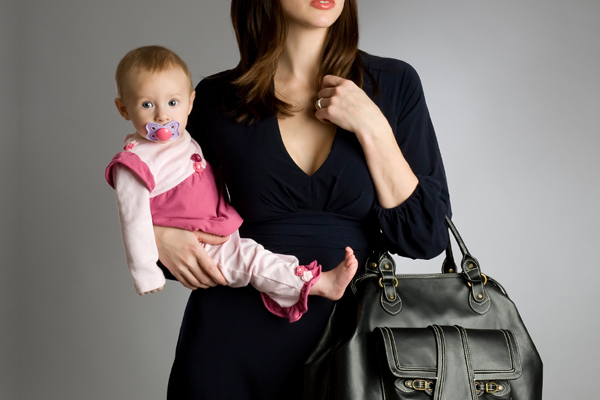
The happiest moms? Working moms (Credit: iStockphoto/FotoShoot)

Ladies, you can have it all.

Just in time for your back-breaking holiday overtime, a new study in December’s Journal of Family Psychology proclaims that working mothers report being healthier and happier than their stay-at-home counterparts. Could it be that the image of the miserably conflicted working woman weeping at her desk because her baby’s first words were “au pair” isn’t quite accurate? The study’s lead author, Dr. Cheryl Buehler, concludes decisively that “A mother’s economic role is central to family life, and it supports her well-being and her parenting.”

Not so fast, Baby Boomers! Though Buehler’s study relies on extensive data from more than 1,300 mothers of young children across the U.S. — tracked over an exhaustive 10-year period — the research is far from flawless. For starters, it’s pretty damn stale, as it covers the decade beginning in 1991. So before we bust out the champagne and breast pumps, it’s fair to ask whether contemporary working moms, whose companies have been radically downsized and whose bosses may well expect them to be fused to their BlackBerries 24/7, are quite as serene as their Clinton-era counterparts. Even more significantly, the study focused on part-time working moms – with part-time defined broadly as anything from 32 hours a week all the way down to just one.

Not so surprisingly, part-timers had fewer scheduling conflicts and were able to do more housework. What’s interesting, though, is that the part-timers showed more sensitivity to their pre-school children than stay-at-home mothers, and that even the more overextended moms who worked full-time didn’t report that their work/home conflicts affected their mental health. In fact, Buehler said, “In a lot of areas, there was no difference in emotional well-being” between full and part-timers.”

But what really makes this study unique is that the focus is on the mothers as well as the children. After decades of research on how working mothers affect their children, somebody’s finally gotten around to investigating how it affects the moms. What makes moms less likely to report depression and sleep disorders? Turns out for many, it’s having a job — a concept that certainly demands further research. The study also takes a big step toward validating the ongoing need for flexibility in the American workplace – and at home. Because what this gets at is the awesome power of balance.

What’s right for any family is what makes the members within it as happy and fulfilled as possible. And that’s not a one-size fits all proposition. But the idea that both work and parenting – especially in combination – can contribute to a woman’s mental and physical health is as good an excuse as any for a general moratorium on the whole ridiculous “mommy wars” meme. We don’t have to be in opposite camps, guilt-tripping each other and over-justifying our life choices. We’re complicated beings and the things that satisfy us are diverse. They’re our children and our careers, our earning power and our rocking version of “Itsy Bitsy Spider.” Nobody said it was easy. But maybe if you want to have it all, a good place to start is by doing it all.

Mary Elizabeth Williams

Mary Elizabeth Williams is a staff writer for Salon and the author of "Gimme Shelter: My Three Years Searching for the American Dream." Follow her on Twitter: @embeedub.

Stop aiming for postpartum hot

Beyonce's lettuce diet is just the latest crazy move by a celebrity mom to get back into bikini shape

  • more
    • All Share Services

Stop aiming for postpartum hotBeyonce (Credit: Reuters/Andrew Kelly)

Dear New Celebrity Mom:

I understand your desire to get your famously hot body back. Even we mere mortals, who somehow managed to get impregnated despite never once making it to the Maxim 100, have gazed longingly at our pre-pregnancy pants, yearned to set our draw-stringed maternity clothes on fire, and gasped a “What the HELL?” when getting a load of our doughy postpartum selves in the mirror. And we never had to get in shape for a Victoria’s Secret show. We didn’t even coin the word “bootylicious” to describe our own assets.

So, Beyonce and company, I can only imagine the disconnect you feel, seeing yourself all squishy after having that baby of yours, and the pressure you must be under. But I am begging you all, knock it off. The world already will hold you under a cruel microscope the second you dare to step out in public. So, Miss Sasha Fierce, you don’t have to joke, as you did during your comeback gig this past weekend, “Y’all have no idea how hard I worked! I had to lose 60 pounds. They had me on that treadmill. I ate lettuce!” Adding that you’re now going to get “chocolate wasted” doesn’t mitigate the message. This is what one does after having a baby: One gets on a treadmill and eats lettuce.

The stampede from sexy, pregnant and naked on a magazine cover to instant bikini body has become a celebrity rite of passage. Last year, Mariah Carey promptly flaunted her abs for Shape — and became a Jenny Craig spokesperson after giving birth to her twins. After having her two children, Melissa Joan Hart — tired of “blogs about me discussing how fat I’ve become” — dropped down to 113 pounds and did the bikini cover for People. Jamie Pressly did one for Shape. Kendra Wilkinson did it for OK! a mere eight weeks after giving birth, showing off both her “easy diet” and her infant. Elisabeth Hasselback appeared on Fitness, swearing she “lost weight without dieting.” Jennifer Lopez showed up on Us, smiling that she had her “best body ever” after her twins. Jessica Simpson hasn’t yet debuted her post-baby body, but her deal with Weight Watchers suggests she won’t be letting herself go all “fat Betty Draper.” Instead she’ll be more January Jones. And Heidi Klum, a multi-time champion of the Skinny Mom Olympics, did a Victoria’s Secret show five weeks after having her daughter Lou. Five weeks!

At five weeks after giving birth, you’re still sitting on inflatable donuts and junk is leaking out of your yoni. If you’re breastfeeding, your rack is engorged, and your nipples are cracked and caked with Lansinoh. Assuming you haven’t had a C-section tummy tuck, your abs look like raw pizza dough. And if you don’t have a personal trainer, it’s going to be like this for a while. That’s the reality of new motherhood.

So what’s the hurry? You could instead be like former Shape magazine cover girl Jenna Fischer, who, after the birth of her son last fall, sanely said:

There’s so much pressure on you as a new mom that the last thing you need to have hanging over your head is some expectation of what your body is supposed to look like. I actually think that the scrutiny of new mothers’ bodies has gotten out of control. Every new mother just gets a free pass. I’m actually angered by the “posing in a bikini six weeks after having my baby” [trend]… Who cares if our boobs are hanging low and we have a little more junk in the trunk? We created a human being, everybody. Let’s celebrate!

This is why Jenna Fischer is fantastic. Sure, being honest and focusing your energy on stuff like getting some rest and taking care of your new baby means you might not make the cover of MILF Monthly. And you might, like Jennifer Garner, have the gossip pages wonder when you’ll ever lose the baby weight a whopping two months after you’ve given birth to your third child. But consider the healthy role model you could be to other mothers — and to your own children.

A woman can have a baby and, in time, be just as fit as she was before. But it’s not a competition. It’s not a race. And the tabloid obsessiveness about mothers and their bodies – and the celebrity culture that feeds into it – is not just unnatural, it’s unhealthy. It tells women that their value in the world, even after the miracle of childbirth, is always exactly how bangable they are. Real life should not be an Alan Tudyk scene from “Knocked Up.” (It should be an Alan Tudyk scene from “Firefly,” but that’s another story.) And right after having a child, any woman — even Beyonce herself — should be entitled to a little extra jelly.

Continue Reading Close
Mary Elizabeth Williams

Mary Elizabeth Williams is a staff writer for Salon and the author of "Gimme Shelter: My Three Years Searching for the American Dream." Follow her on Twitter: @embeedub.

How I met my mother

After our dramatic fights, I swore I'd be a different kind of mom than my mom. I didn't realize how similar we are

  • more
    • All Share Services

How I met my motherA photo of the author with her mom and son. (Credit: Reyna Zack Photography/Melissa King via Shutterstock)

I could say we didn’t get along, but that sounds benign. There are plenty of people I don’t get along with, but we’ve been able to opt out of each other’s lives. This was my mother, and though we both would have opted out if we could, we couldn’t — except for the brief year I went to live with my father, which was a mistake — and so we didn’t.

I wish I could tell you exactly why we didn’t get along. Maybe I resented my parents’ divorce, and because she screamed louder, I blamed her more. Maybe I blamed her for seeming to hate me. (I was what was called, back before all children were pathologized, a “difficult child.”) She felt mothers should be respected universally, and I felt like we should talk everything out. I wanted to be understood. She wanted me to understand that I wasn’t her friend, I was her daughter. When she hears my sister using the parenting language of today on her son – “I hear that you’re frustrated, because it’s frustrating to not be able to own a machine gun, but you just can’t have one” – she rolls her eyes and thinks back to the days when a kid who asked for something unreasonable could just be sent to his room.

As I grew older, I went from “difficult” to “rebellious.” There were accusations, door slams. We are both temperamental and quick toward theatrics, both prone toward shaking our hands at the heavens and screaming, “Why me?!”

Eventually, though, we learned to get along. We still do. When I had children, I promised our home would be calm and reasonable. We would talk everything out. We would never, ever yell.

At first, I was a different kind of mother than she was. My son was quiet and compliant — and sweet. He hugged me when I put my arms out; he never defied me, at least not until much later. My mother would visit, and I would show her how loving and not screamy I was with him. I sat on the floor with him and played with him during those visits, though I find stacking and shape-sorting excruciating. By my example, I would try to teach her how nice and easy it could have been. On our daily phone calls, I would show how I was the model of patience and how I was understanding and not reflexively impatient. I was showing her how she could have been a better mother; in truth, I was waiting for an apology.

Then my younger son was born. He is beautiful — you should see him — and he is charming. He smiled, I swear, the day he was born. He laughed when he was just 4 weeks old. Then, about two months after we brought him home, he opened up his mouth and began screaming, and he didn’t stop for something like 15 months. He has not yet slept through the night for more than a week in a row. He is old enough now to get very angry at me and throw tantrums, and for those tantrums to upend our household. He’ll grow out of them, or maybe he won’t. Maybe he’ll sit at his desk in 34 years and write an essay about what a terrible mother I was.

But that will be his essay. In my essay, I start to scream. I scream so loud that the neighbors want to know if, um, everything’s OK in there? I scream so much that my throat is raw. I give looks that are identical to the ones my mother gave — sharp and pointed — not just to the younger one, but to the older one, who has started testing my limits, too. I send the 2-year-old to his room. I try to speak the way my sister speaks, to tell them that I understand their frustration, but honestly, I don’t, and I don’t think I should have to. I tolerate no amount of disobedience or backtalk. My husband comes home to find me a frazzled mess.

I am, in short, the kind of mother my mother was.

But my mother is a different person than I realized. I first came to understand this after the delivery of my older son. It was traumatic, and I was depressed for months following it. My mother came to stay with me and tried to show me new ways of having perspective on this, but all I kept saying was that she had never had to triumph over anything this difficult. As I sat in a dark trance, rocking my baby, she told me to put him down while he slept. I wouldn’t. I was going to be a calm, peaceful — OK, completely depressed — presence for this kid in a way she never was for me.

Once again, she didn’t understand what I was going for. I wanted to be rock solid. I didn’t want my own emotional limitations to get in the way of being a parent. Not my sadness, not my temper, not anything. I wanted to be better than human. I wanted her to have been better than human.

The day before she returned home from her visit, she had been told that a lifelong heart condition had reached critical condition. I knew nothing about this. She told me about it when she returned home. She called to tell me that she was scheduled for open-heart surgery. I knew she had a heart murmur, but that sounded so — I don’t know — benign.

She told me the whole story: She’d been born with a heart condition. When she was a young child in Israel, the doctors told her she wouldn’t live very long. They didn’t let her play in gym class or ride a bike. They told her she would never have children. When she got to America as a teenager, she decided that she would live on her own terms. She bought a pack of cigarettes and didn’t tell anyone about her heart condition. No one would tell her how to live her life. She married my father, and she spent the next 10 years gestating me and my several sisters and smoking Kents, alternately.

I was stunned. I had never known my mother had such a secret. I’d never know that it was she who was the rebellious one. I started to see my mother as someone about whom I did not have the whole picture. I was starting to find common ground with my mother. We were both rebellious, it turns out, but she was truly brave.

I came to imagine a new side to my mother: The bad-ass side, the take-no-crap-from-anyone side. And here is where I should mention my mother’s looks. She is so, so beautiful. She was devastating to look at. Even with her children in tow, yelling at them in some public mall, men would turn to look and women would comment with envy on some aspect of her body or face. In her jewelry box, I found letters from old boyfriends, begging her to stay.

And you should see the photo albums: The white bikini, the strapless dress, the beehive hairdo with the liquid eyeliner, that trench coat. She did not know how long she would live, but she would live until then. She would live and die according to her own terms. V’ze-hoo, as she’d say in Hebrew: And that’s that.

But we have no idea who our mothers really are. They are mysteries to us, and we don’t ever have all the information. Even my kids, who will one day use their Google brain chips to read my essays — me, the oversharingest woman in the world — still won’t know my entire story.

Yet, lately — maybe because of the behavior that I’ve tried and failed to control — I’ve started to wonder if the kind of mother I had wasn’t exactly the kind of mother I needed. Because I turned out fine. I am a loving daughter, a loyal and warm wife, a doting (if screaming) mother. I am what my mother wished for. So are my three sisters. And we are sure of nothing if not that we are loved by our mother.

Could it be that every bit of tension was aimed particularly at a part of me that required it? Could it be that the screaming and the anger worked like water and sunlight and helped me grow? Could it be that her disapproval was what I needed to learn to parse what I found approvable?

Or could it be that motherhood is far more forgiving than we ever could imagine? Could it be that, later, our children will forgive us our faults because there is nothing like a mother who screams at you and suspects you and checks on you at midnight and is afraid for your future to show you how loved you are?

My older son was just a few months old when my mother’s heart surgery was scheduled. We flew back to New York on a redeye and went straight to the hospital just in time to see my sisters head into the waiting room: It was almost time to begin. I sneaked into the pre-op room, where babies were not allowed, and where she’d been given a drug to relax her as they arranged the IVs and monitors so they could be wheeled into the operating room.

“I’m sorry I made your life hard,” I told her, just in case, as two nurses carefully guided her bed out of the pre-op room and into the hall.

“You made my life a joy,” she told me. I held my son close on my hip as they wheeled her down the long hall, all the way down, until she became so tiny that I couldn’t see her at all.

Continue Reading Close

Taffy Brodesser-Akner has written for the New York Times, Los Angeles Times, Self, Redbook, and other publications.

Finding my mother again

Years after she died, I came to understand the complicated woman I long mythologized, by becoming a mom, too

  • more
    • All Share Services

Finding my mother againA photo of the author, as a baby, with her mother (Credit: Melissa King via Shutterstock)

In the 15 years since my mother has been gone, she has become a mythical figure in my life. She was a woman to be revered, but also one so complicated and so different from me that I fear I’ll never stop struggling to make sense of her and to accept myself within the context of her shadow.

My mother was 37 years old, twice divorced and childless when she met my father. She had been living in Manhattan for 17 years, having grown up in Connecticut and gone to the Rhode Island School of Design to study painting. She had dozens of friends, went to parties and attended art openings. She smoked pot in the Village and spent Tuesday nights in smoky jazz clubs, sipping martinis and recrossing her legs.

My parents had been set up on a blind date by mutual friends, but the night they were supposed to go out, my mother stood my father up. She’d gone to Long Island that day with a friend to pick strawberries, and by the time she came home, the last thing she felt like doing was going on a blind date with some older businessman from Atlanta.

My mother was funny and quick-witted, and she was almost always up for an adventure. She was also uncommonly pretty, with green eyes, blond hair, a symmetrical face and an easy smile. When she went to sleep that night in June of 1975 in her little one-bedroom apartment on 28th Street, she had no idea that her life was about to change.

My father, at 55 years old, was just entering his prime. In spite of (or perhaps because of) two divorces and three grown children, he was happier than he’d ever been.

He flew first-class wherever he went. He stayed at the Watergate Hotel when he was in D.C. and the Plaza when he was in New York. He winked at stewardesses and drank tumblers of scotch on the rocks. He wore hats and suits and left big tips at fancy restaurants.

He wasn’t used to being stood up, so the next morning he rang my mother’s buzzer at 9 a.m. “Who dares call on anyone before noon on a Sunday in New York?” my mother later wrote about that first encounter in a letter to my father, detailing their courtship. “It had to be you, as they say, and I opened the door with wet hair asking if you wanted a Bloody Mary, which you did, thank God.”

I always try to imagine this moment between them. My mother in the doorway with her wet hair, my father on the threshold in his blue leisure suit, the moment of them not knowing each other and then knowing each other eclipsed in one short breath.

They went to dinner and later flew to my father’s place in Atlanta, making daiquiris with the strawberries my mother had picked on Long Island the day before. They swam in the pool and smoked Camels and talked into the night, their legs dangling into the water, lit from below by the pool light.

They were married three months later on Cape Cod. My father whisked my mother away from New York and set her up in a big house in a nice neighborhood in Atlanta. He paid off all her debts, bought her a cream-colored convertible and opened a credit card in her name in every department store. I was born two years after that.

For the next decade — before my father unexpectedly went bankrupt following the stock market crash of 1987, and before my parents were both diagnosed with cancer within months of each other — we lived a blissful and privileged existence. My mother had quickly charmed her way into Atlanta’s upper social echelon, and it wasn’t uncommon for our dining room table to be inhabited by local political figures and foreign dignitaries.

I remained her only child, but motherhood only seemed to enhance my mother’s glamour and sophistication. It added a dimension to her personality and worldview that had, perhaps, been the only thing missing all along. But I wonder what the other carpool moms thought of my mother when she zoomed into the after-school pickup line in her Alfa Romeo, with her blond hair pulled back in a Chanel scarf.

I was 18 when she died of cancer, and I had become the very opposite of my graceful, glowing mother. My teenage years had been rocked by a roller coaster of parental illness, hospitals and private despair. In response, I had become an angst-ridden poet. I wore combat boots, dyed my hair crimson and sported a nose ring. My mother had always embraced these tiny, public displays of rebellion, but the moment she was gone I felt foolish.

I’ll never forget walking down the aisle of a church on the day of her funeral with a shaved head and my first, barely dry tattoo concealed under my shoulder, feeling as though I had utterly failed my beautiful mother in every way possible.

Since she died, I have struggled to forge my own identity in her absence. At times, I have wanted nothing more than to emulate everything about who she was — something I know I could never really achieve. While I may be outgoing and capable of hosting a memorable dinner party, I have inherited my father’s looks and practicalities, not to mention having retained a deep-seated and dark sense of self-reflection following so much loss.

For many years, I was unsure if I wanted children at all. When I finally decided that I did (within days of meeting my husband), I knew that I wanted to be a younger mother than mine was. My daughter was born a few weeks after my 31st birthday — almost a decade before my mother herself bore me — and now, as I approach my 34th birthday, I am due with my second.

Every inch of motherhood, for me, has been stitched with the essence of her. Throughout my 20s, I made valiant and sometimes senseless attempts to bring my mother into my life again. I lived in the places where she once lived. I learned how to cook and throw dinner parties. And more often, I simply took myself to the very brink of life in hopes that if I tottered just enough, she might appear to pull me back from the edge.

But it was truly in motherhood that I found her again, even though our experiences couldn’t be more different. My husband and I live in a tiny rental house in Los Angeles and both work as writers, struggling to pay our child’s preschool dues. I can often be found at the playground, even if I am one of the few mothers actually wearing mascara and earrings. As I write this, my body is swollen with another child, something she never ventured to do.

Despite those differences, motherhood has brought her back into my life, and it has given me an opportunity to embrace my own path as a woman and mother. I hear her in my voice when I comfort my daughter by crawling into bed with her at 3 a.m. when she has woken from a nightmare, when I stop to marvel at a snail traveling through the grass, and especially during dinner parties when I catch myself offering my 3-year-old bits of brie or Marcona almonds.

In adulthood, it has occurred to me that all of us are living reactions to our parents. Whether they loved us or not, whether they were present or absent, whether they kept us safe or recklessly abandoned us to harm’s way, we move forward into life walking paths they etched out decades earlier. It also often occurs to me how grateful I am to the woman who loved me fiercely enough to remain true to who she was, even in the complicated throes of motherhood.

Continue Reading Close

Claire Bidwell Smith is the author of the memoir, “The Rules of Inheritance.” She is a therapist specializing in grief, and lives in Los Angeles.

Time magazine’s breast-feeding cover star: Is he doomed?

A provocative magazine cover doesn't mean the breast-feeding preschooler is in for a lifetime of "Got milk" jokes

  • more
    • All Share Services

Time magazine's breast-feeding cover star: Is he doomed?The cover of Time magazine

In the single, whipped-up day since Time magazine unleashed that cover story about crazed MILFs “driven” to “extremes” by attachment parenting, there’s been plenty of debate over its provocative image of blogger Jamie Lynne Grumet breast-feeding her almost 4-year-old son. And, as so often happens when adults see an image that unnerves them, that anxiety is projected onto kids. In this case, one kid in particular. Grumet’s.

Unshockingly, the National Review Online was quickest to leap into pearl-clutching position. After deeming the image “as bad as it will ever get,” Glenn T. Stanton pronounced that “This poor boy may be diggin’ life now, but will soon be forever teased as the Got Milk? boy that Time magazine and his indulgent mom made infamous.” And in the Contra Costra Times, Tony Hicks decided that all the mothers who appeared in the story’s photos did so “simply to have something really embarrassing to use against their kids when they become teenagers.”

Most of us who live in some degree in the public space – whether it’s our Facebook photo albums or the cover of Time magazine – grapple with how much of our children’s lives we share. The little babies whose adorable smiles are posted swiftly turn into teens who’d like you to cut it out already, Mom. The contract that we have with our children to protect them and respect them is one that has to be constantly renewed as they grow and change. But it’s not the same for any two families, and the boundaries are incredibly varied.

The complicated reality is that our experiences are entangled with those of our loved ones. A woman should have every right to write and talk and present herself to the world. But if we’re going to talk about our lives, there’s no way we won’t be bringing our families along for the ride. That’s not automatically a traumatic thing. If a child, like Grumet’s, grows up in a family that’s very open about itself, and the child’s own nature is of that bent, he may well think nothing of it. The hang-up isn’t his; it’s the journalists transferring their own discomfort onto him. To assume he’ll be mocked about that Time cover is to assume that the image of him breast-feeding is something to be embarrassed about, that there’s something inherently wrong about it.

That’s not to say that profound sensitivity isn’t required. Our children aren’t props for us to use to boost our careers – or even, for that matter, our Facebook statuses. They’re human beings, and when they can’t give consent, it’s our duty to make reasonable choices on their behalfs. Would I appear on the cover of Time, breast-feeding one of my kids? I’m not sure I’d appear on the cover of Time with my kids, period. But that’s my choice and my family’s. Frankly, I’m way more unnerved when I see a soon-to-be ex-Facebook friend post a photo of his toddler’s first poop in the big boy toilet or announce her daughter’s first period than I could ever be by a woman nursing her preschooler. We’ve all got different boundaries.

Last evening I was at an event on motherhood and writing, and the novelist Martha Southgate spoke about how she’d written a very personal essay about her son when he was in elementary school. Now that he’s 18, she wonders if she should have done things differently. And in Tablet last winter, columnist Marjorie Ingall declared that after years of chronicling her life with her family, she was giving her two daughters “the greatest gift of all: I’m not going to write about them anymore.” In my own life I’ve moved, with each passing year, from simply writing abut my children to collaborating with them on what they do and don’t want revealed about their personal lives. I’m grateful when they’re generous and open with their experiences, even though I know they may second-guess that openness later.

On Facebook Thursday, Grumet wrote that “My mother posed for similar images (not as big as TIME obviously) and was a public advocate of breastfeeding. I am so proud of her and loved my upbringing.” So why would her son’s future mortification be a fait accompli?

None of us has a crystal ball. If we did, we’d probably still find ways of making choices that our children will be telling their future shrinks about for years. Life isn’t always about what your child is going to feel when he’s in college. More significantly, isn’t how the child is now a much more tangible and important issue? Was Grumet’s son comfortable when the Time photo was taken? Did he want to nurse then? Was he coerced? Or was he simply doing something that felt comfortable and acceptable? Was he content to pose for the photo? Because if we can allow for the possibility that he didn’t give a damn when the picture was shot, who’s to presume he will in 15 years?

Continue Reading Close
Mary Elizabeth Williams

Mary Elizabeth Williams is a staff writer for Salon and the author of "Gimme Shelter: My Three Years Searching for the American Dream." Follow her on Twitter: @embeedub.

Their moms were crazy about me

My boyfriends' mothers just knew I was The One. Too bad their sons didn't agree

  • more
    • All Share Services

Their moms were crazy about me

Judy’s warm brown eyes sucked me right in. Her son David and I had only been dating four months, but that didn’t stop me from falling for her hard. I was 30, and still reeling from my parents’ recent divorce and the fact that my mom had just moved five floors above me on the Upper West Side of Manhattan. I practically went from shaking Judy’s hand to curling up on her lap in a fetal position. I didn’t feel like a grown woman meeting my boyfriend’s mother. I felt like a kid calling shotgun, desperate to claim a seat at her table.

Over the next five years, I got that seat. I spent Hanukkahs, Passovers, even Purims in Judy’s plant- and music-filled home in Amherst, Mass., my picture hanging on her fridge alongside her children and grandchildren. To her, I was a done deal. I was family. To David, not so much.

After thousands of dollars spent on couples therapy, David still couldn’t make up his mind about me. He kept saying he “wanted to want to marry me.”

“What did I do wrong?” Judy asked me one day, in a stolen, private moment, not understanding why David was unable to commit to me.

I wished I understood. I wanted to blame his ambivalence on something specific. Yet the truth was he didn’t love me enough to make me his wife, and her love wasn’t enough to change his mind or heart.

When David and I broke up, Judy sent me a handwritten note in the mail telling me she was so very sorry and that she wished me everything I wanted for myself. And with one last “Love, Judy,” my picture was no longer hanging on her refrigerator. I no longer had a place at her table. I was no longer part of her family.

My mother, who by this time had moved to a house in Connecticut, came to live with me for a week. She yanked David’s nightstand and lamp from the wall and pushed my bed up against the window, so I wouldn’t be reminded of where he used to sleep. We repainted my living room, ordered in sushi, and she held me as I cried. Then my father invited me down to Florida. He took me out to expensive steak dinners and let me sleep late. We spent hours watching “Planet Earth” until I couldn’t think about anything other than stalactites and snow leopards. I was grateful to both of them for being there for me, but it didn’t erase a nagging aloneness I felt deep inside, the pain I still harbored over their divorce, over our broken family. I was 35 and mad at myself for still being hung up on a long gone childhood home. It was time for me to create my own home, start my own family. I just didn’t know how to do it.

All I knew is that I didn’t want to spend another five years with another mixed-message guy, only to get a “Dear John letter” from another almost mother-in-law. But like a crackhead who can’t shake her habit no matter how hard she tries, I was a goner the second I stepped foot into Susan’s kitchen.

Paper turkeys and streamers were strewn everywhere. Her house smelled of chocolate babka and apple cider. I could call this place home, I thought, sitting down, not wanting to get up.

It was only my sixth date with Jason. But it seemed longer since we’d spent four years of high school together and had been Facebook friends for the past year. I knew I shouldn’t get too excited, but the fact that he had invited me home for Thanksgiving and that I was meeting his mom so early on made me feel special, like he was really considering me as someone he could spend his life with. When he invited me back for Hanukkah a few weeks later, and my picture was hanging on the fridge, I knew I was in.

Susan and I spent hours in her kitchen frying latkes, bonding over how we both give too much and have short necks. She even confided in me that she had never seen Jason so happy. This was the real deal.

Jason and I didn’t end up making it past New Year’s.

Instead of a note, Susan picked up the phone. “It’s not you,” she said. “You’re wonderful, perfect, beautiful.” She was a poet, and explained to me that a poem isn’t possible if the writer isn’t open to the words in the ether. “I’m sorry Jason isn’t open to the poem.”

I dropped my head into my hands as soon as we hung up and burst into tears. I couldn’t believe I had let this happen. I had once again mistaken a mother’s love for the love of her son. I clearly had a problem and could not be trusted around mothers.

I should have been happy when Ethan didn’t introduce me to his mother immediately. He told me he wanted me to himself for a while before bringing me home to meet the family. But after six months of dating, I found myself fiending. When would I get to sit at Rena’s table? When would I see myself hanging on her fridge?

Rena, Ethan and I made plans to meet up for breakfast around the corner from me on the Upper West Side. I wore my favorite navy blue sweater and made sure to blow-dry my hair. I wanted to look pretty for her.

As we sat in a booth eating overcooked eggs, Rena told me about the Holocaust museum where she worked. I told her about the eighth grade girls I counseled on Fridays. Ethan made jokes.

Then the subject of our future came up.

Rena looked at me directly, and said,  “I’m waiting to love you.”

I almost choked on my toast.

Judy and Susan flew to mind. There had been no waiting with them. Just full on, “Let’s do this!” Then I thought back to something David had said at the end of our relationship that I never understood. “I feel like we’re more brother-sister than lovers.”

Sitting speechless in this poorly lit diner, something clicked.

David was right. By slipping into daughter role with his mother, I had become one of the kids. And while that felt good, to be part of a cohesive family, to feel like I fit in, I wanted to be a wife, not a daughter-in-law or sister.

Rena somehow knew this, that her love and approval couldn’t influence her son — and that if we had a shot, she should stay out of it.

I wanted to hug her and thank her for doing the thing I couldn’t do all these years: Wait, see and then fall.

Last May, Ethan and I exchanged vows under a brightly colored Chuppah that Rena had spent hours sewing together for us. But it wasn’t her love that got me there. It was Ethan’s.

As I stared into my soon-to-be husband’s warm blue eyes, smiling so wide my cheeks hurt, surrounded by a patchwork of friends and family, I no longer felt like a displaced kid looking for a seat at someone else’s table. I felt like a woman being claimed by a man.

Ethan made me his wife. And now, at almost 40, I am hoping he can make me a mother too. Our fridge is waiting.

Continue Reading Close

Kimberlee Auerbach Berlin’s memoir, "The Devil, The Lovers & Me: My Life in Tarot," was published by Dutton in 2007. She teaches memoir and humor writing for continuing education programs including Mediabistro, UCLA Extension, Gotham Writers’ Workshop and has a growing private client base. For more info: www.kimmiland.com..

Page 1 of 83 in Motherhood