Super Bowl

Political lessons from this year’s Super Bowl

From jobs to health care, football's big game illustrates the factors that will dominate the 2012 election

  • more
    • All Share Services

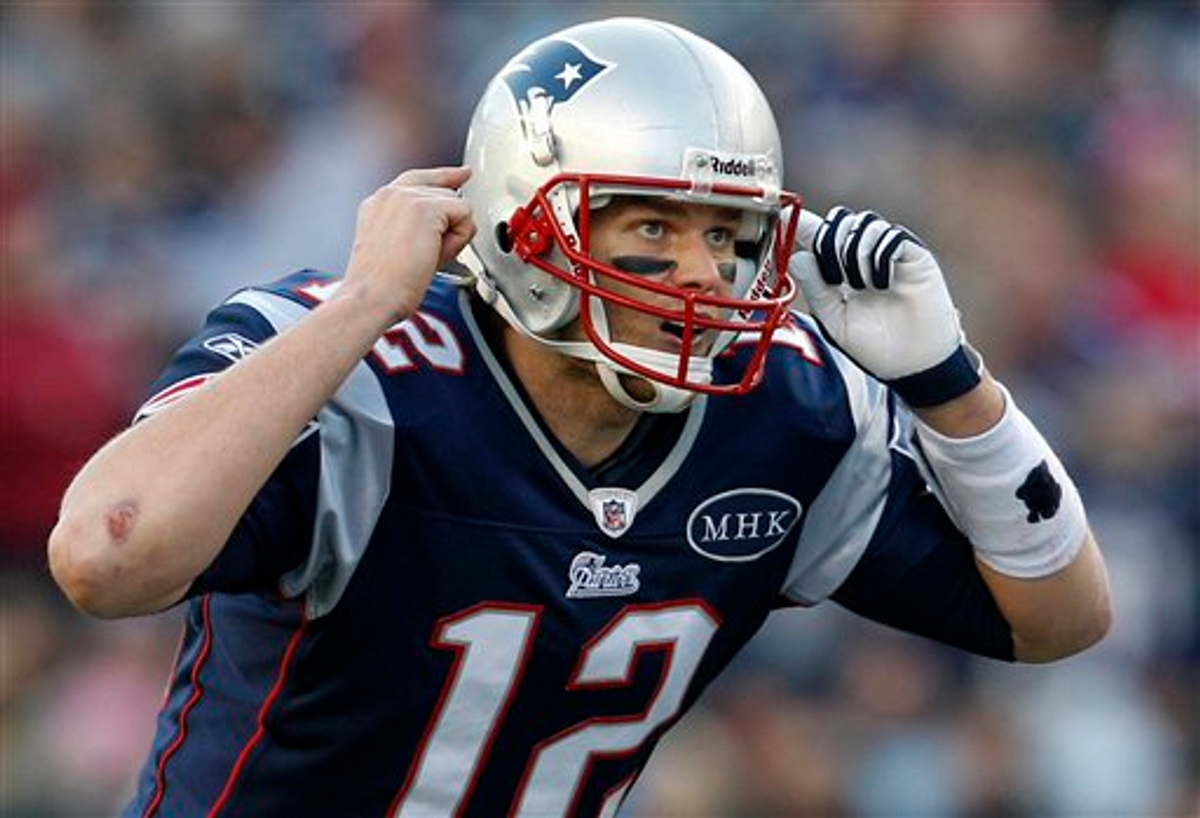
Political lessons from this year's Super Bowl New England Patriots quarterback Tom Brady (Credit: AP Photo/Elise Amendola)
This originally appeared on TomDispatch.

Most Americans won’t need a justification to watch Sunday’s game, but if you’re a Salon reader you might think, even in passing, that celebrating the holiest day of violence, consumerism and class warfare on your couch is a betrayal of your values or a waste of your time. You might even imagine that it would be better to take a hike, read a book or meditate.

Not this Sunday, buster. It’s an election season. You need to watch this game to fully understand how jobs, religion, leadership and healthcare dominate every American contest.

1. Joe Hill will be playing: Where else will be you be able to watch more than 100 young men, most of them African-American, working for high wages in a totally unionized shop? True, their jobs are dangerous (more on that later) and relatively short-term (typically three or four years), but they are also high profile. They can lead to TV gigs, even political office. Buffalo Bills quarterback Jack Kemp became a Republican congressman and vice-presidential candidate. The former New England Patriots running back and ESPN analyst Craig James is currently running for the Republican nomination for Senator from Texas, although to less than universal acclaim.

Fans tend to fixate on the money and glamour of the football job, so that when this past season was threatened by labor-management strife, it was easy for National Football League lackeys to frame the confrontation as “millionaires versus billionaires” so the rest of us thousandaires wouldn’t stand with the workers against the bosses.

Even with a progressive attitude, watching the Super Bowl, which seems to float on rivers of oil — think car ads — and beer, is not exactly like holding a OWS-style general assembly in the red zone. Nevertheless, it’s a terrific visual of the American class divide. In their skyboxes, usually in jacket and tie, eating, drinking and high-fiving — or scowling — are the one-percenters who own the team, which is usually not their only source of income.

Below them, on the field, are their employees (many of them temporary one-percenters, given the median league salary of at least $560,000), using up the capital of their bodies. If you want to root for the Patriots or the Giants, fine. I’ll be rooting for the working class.

2. Tim Tebow will not be playing: Thank God. The season’s most hyped player — the NFL published its first magazine last month with Tebow on the cover — has the looks, personality and backstory of the clean-living, principled, athletic role model we’ve been told we need to help raise our children. Born in the Philippines to Baptist missionaries who refused to abort him despite his mother’s illness, Tebow led the University of Florida to two national championships and became the first sophomore to win the Heisman Trophy, college football’s top individual prize. He also refused to be considered for Playboy’s annual all-American team because the magazine’s values conflicted with his Christian beliefs.

Tebow was a star attraction of the 2010 Super Bowl — in which he didn’t play.  (He was still in college.)  He appeared in a commercial for Focus on the Family in which he tackled his mother.  The ad generated intense controversy because of the group’s stand against abortion and same sex marriage. Neither issue was explicitly mentioned in the commercial, which marked the first time CBS had broken its rule against ads from advocacy groups.

This past season, as a Denver Bronco rookie quarterback, Tebow carried his team to the division playoffs despite his shortcomings as a passer and field tactician. As the saying goes, all he could do was win. He was tough, determined, inspirational and a fine runner. Although he was careful to note that God did not care who won, he prayed publicly so incessantly it was celebrated and mocked as Tebowing.

While his aggressive evangelism turned off some people, no one could deny his confidence and fierce competitiveness on the field, and his humility and niceness off it. Also, he was white (as are most fans, coaches and team executives) in a predominately black sport, a declared virgin in a world where the macho, and sometimes felonious, “playas” get an inordinate amount of attention and criticism. So why was there so much gasbagging about his evangelical faith?  Why was he called “polarizing”?

Tebow is too true to be good. His religious principles may eventually even get in the way of money-making. Playing for a higher team, he is a threat to owners who can’t buy him off (although he has plenty of commercial endorsements, thank you — and Republican presidential contenders are lining up).

He may also disrupt the fantasies of fans.

Dan Levy, writing in Bleacherrport.com, put it well: “Because his faith is so prevalent and because his beliefs have become so much of who he is on and off the field, it’s nearly impossible to separate the two. Can you blindly root for Tim Tebow on the football field without, in turn, tacitly rooting for him in life? And does rooting for him in life — even if that simply means rooting for the underdog to succeed — include implicit approval of his beliefs? Are Broncos fans able to parse the player from the man, the quarterback from the evangelist?”

If he were playing Sunday, it undoubtedly wouldn’t be the Super Bowl, but the Tebowl.

3. JoePa will be there: Once held up as the gold standard of college football coaching, now as the hero of a classical tragedy, the late Joe Paterno will be represented on Sunday by three players and his successor as head coach at Penn State. They will be reminders of what Paterno really represented beneath the iconic image.

The three players, almost a thousand pounds worth of them, are Jimmy Kennedy, a 302-pound defensive tackle, and Kareem McKenzie, a 330-pound tackle — both Giants — and Rich Ohrenberger, a 300-pound guard for the Patriots, who is on injured reserve. Boston College with six players in the Super Bowl and Rutgers with five lead this year’s honors list of colleges that serve as NFL minor league feeder teams, but Penn State has been a perennial supplier of meat on the hoof. No wonder the school has been dubbed Linebacker U.

Paterno became head coach in 1966, the year before the first Super Bowl. At least one player he coached has been in every one of the 46 Super Bowls.  He produced several hundred pro players. At the start of this past season, there were 36 Nittany Lions on NFL rosters.

In other words, Penn State was a football factory as well as a research university, which made Paterno the Geppetto of those over-sized puppets, even while he was touted as a classics scholar (he identified with Aeneas) and a philanthropist — he donated $4 million to Penn State. (How does a coach get that kind of dough?)

His successor will be Bill O’Brien, the current Patriots offensive coordinator. Though he graduated from Brown, as did Paterno, O’Brien has no connection to the Penn State program, which has angered some people, reassured others. A number of former players have threatened to sever their ties with the university because the school went “outside the family” for a new coach, an act seen as a total repudiation of the Paterno era. Others felt that a rigorous cleansing was necessary. After all, Paterno had apparently known for almost 10 years that Jerry Sandusky, once his main assistant and presumed heir, was an alleged child molester. Paterno tossed the matter upstairs and continued to devote his attention to Aeneas and linebackers, while Sandusky allegedly raped more little boys.

Paterno’s powers of concentration or expedience or denial were extraordinary enough, it seems, to qualify for presidential nomination. In his last interview, he implied that he probably couldn’t fully process the tale he was told about Sandusky sexually assaulting a young boy in the football team’s shower-room because he knew nothing about male-on-male rape.

4. You can occupy the Super Bowl: One of the Penn State trustees who voted to fire Paterno, Kenneth C. Frazier, said this:  “[E]very adult has a responsibility for every other child in our community. We have a responsibility for ensuring that we can take every effort that’s within our power not only to prevent further harm to that child but to every other child.”

Frazier, of course, was referring to the lack of leadership — the lack of humanity — at Penn State that allowed fealty to an institution and the power it offers to trump individual responsibility. It was an it-takes-a-village-to-raise-a-child sort of statement.  It’s worth keeping in mind as you watch the Super Bowl, because the subject Frazier raised goes far beyond the charges against Sandusky or the lack of leadership Paterno and others exhibited in the case. It includes our neglect, denial and often encouragement of all the blows to the head that every football player — from peewee to pro — routinely suffers.

Watching those hits, hearing them lauded, feeling them vicariously is the guilty pleasure of football, as marketed by the NFL. Players who can deliver such hits and those who can absorb them, shake them off and play on are extolled as true warriors, as gladiators, as real men. More and more of those “real men” are now being diagnosed with dementia and other conditions caused by the traumas first suffered by Peewee brains.

The “concussion discussion” started with retired NFL players pleading with the league and the players’ union for financial help with their medical bills. It has since trickled down to college, high school and youth football as it becomes ever clearer that all those little insults to the brain that begin so early add up to catastrophe in middle age.

So if you believe in taking responsibility for “every other kid,” go organize in your community against helmet-wearing tackle football — at the very least until high-school age. (If you let your own kid play peewee football, you should be charged with child abuse.) It’s hard to go up against Jock Culture, which you’ll be watching in its full power and glory on Sunday.  Then again, it’s hard to go up against the banks and the war machine, too.  It’s time, in other words, to occupy football.

And if you need a pep talk before you get started, here’s one from Tim Tebow, who marked his eye-black with the numbers of biblical quotations until it was banned by the NCAA last year. (The NFL also bans unapproved logos.) I approve one of Tebow’s – Hebrews 12:1-2. “Let us run with patience the race that is set before us.”

To stay on top of important articles like these, sign up to receive the latest updates from TomDispatch.com here.

Robert Lipsyte is a former New York Times sports columnist. His new memoir, "An Accidental Sportswriter," has just been published.

Super Bowl ads: The good, the bad and the ’80s

There were cars and babes galore. But in a game that rematched teams from four years ago, retro ruled the ads, too VIDEO

  • more
    • All Share Services

Super Bowl ads: The good, the bad and the '80s

Several months ago, a 45-year-old ad executive drove home in his roomy, fuel-efficient SUV, anticipating the watery beer that awaited in his fridge, and thought, “Dammit, I used to be cool. Cool like Lloyd Dobler.” And then he went on to create the ads for the 2012 Super Bowl. Nostalgic much, Gen-X?

Sure, this year’s crop of ads featured hot babes, cute kids, funny animals and Doritos, but they were also heavily tinged with one overwhelming message: Hey, you. Yeah you, the one who once thought your band was going to be the next Love & Rockets. Can we sell you a car? Herewith, Salon’s picks for the Super Bowl’s best, the worst, and the most likely to make John Hughes roll over in his grave.

The Good

H&M: David Beckham

Tattoos. Abs. And the Animals. That’s right, world, there’s more to Super Bowl sex objects than Victoria’s Secret models. More yes please.

Samsung: Thing Called Love

You guys! Samsung has revolutionized communication by inventing … a stylus! But somehow, trotting out every possible celebratory, flash-mob cliché from the gospel choir to the marching band, all to the infectious strains of The Darkness, makes for impossibly giddy fun.

Volkswagen: The Dog Strikes Back

Shameless, yes. But what does the Internet run on? Dogs and “Star Wars”! What does Volkswagen give us? Dogs and “Star Wars”! While it lacks the charm of last year’s Darth Vader kid spot, it’s still a confident, breezy delight.

Skechers: Mr. Quiggly

Why? It helps that the Tone Loc fits in with the whole ’80s theme, but mostly because whoever thought to name the dog Mr. Quiggly is a GENIUS.

“The Voice”: Vocal Kombat

Cheesy as hell. But imagining the likes of Christina Aguilera and Adam Levine as furniture-smashing, ass-kicking action stars, battling it out over an unseen vocal powerhouse, is funny. That the mystery voice turns out to be the ubiquitous, forever awesome Betty White is adorable.

Chevy Sonic: Stunt Anthem

If you’re looking for a vehicle that will go skydiving, kick flipping and bungee jumping, this is definitely, jaw-droppingly, the one. Weirdly, the car also boasts of starring in an OK Go video, though the Super Bowl clip preferred Fun’s anthemic “We Are Young.” Sonic: the good-time car that will cheat on you.

Acura: Transactions

Oh Lordy, who’d have thought there was still comedy to be milked from the Soup Nazi? But casting Jerry Seinfeld as desperate enough to offer up sock puppets and holographic monkeys for a chance to be the first to drive the new Acura – and Leno as the jerk who robs him of the dream – somehow comes off as absurd enough to be fresh.

The Bad

TaxACT: Free to Pee

Accountancy for people who urinate in the pool. If ever there were a metaphor for the 1 percent this was it.

Teleflora: Adriana Lima

Adriana Lima slinks into a pair of stockings, tousles her hair and prowls past an “XOXO”-festooned floral arrangement. “Guys, Valentine’s Day is not that complicated,” she purrs. “Give. And you shall receive.” Hint: She is not talking about a free simonizing. For perpetuating the notion that $29.99 worth of roses and pink carnations entitles a man to a blow job, Teleflora, you win most ridiculous, sexist ad of the night.

Fiat: Seduction

You may be smart enough to know that a lousy bouquet won’t get you laid by a beautiful woman with a foreign accent, but are you dumb enough to try to make out with a car? The Fiat will slap you and drink your latte — and you will love it, you helpless, helpless slave to your penis.

Doritos: Man’s Best Friend

If you’re the kind of dog who kills and buries cats, or the kind of man who can be bought off for some neon orange snack food, have I got a nacho for you.

The End of Days

Hyundai: Cheetah

In a race between a man, a car and a deadly feline, the car will take off and the man will be mauled to death. Epic automobile win, I guess.

Chrysler: Halftime in America

Only 236 years to go, USA! Because Clint Eastwood would like to growl at you that it is “halftime in America.” “We’re all scared, because this isn’t a game.” Somehow, however, we will rally “because that’s what we do.” It seems to involve firemen and dropping the kids off at school. It’s supposed to be hopeful, but when Dirty Harry says, “The world’s going to hear the roar of our engines … yeah,” I just want to hide under my bed and cry till the smoke clears.

Chevy: 2012

When that Mayan apocalypse hits and the world starts looking like a Cormac McCarthy novel, you know what will be left of civilization? Twinkies, Silverados and Barry Manilow music. Better hope you’re one of the raptured.

The Reagan

MetLife: Everyone

So what’s your death and dismemberment plan looking like these days? Is it as good as He-Man and Fat Albert’s?

Honda: Matthew’s Day Off

In a droll spot filled with cinematic Easter eggs (that Red Wings jersey!) and “Oh yeaaaahs,” Honda would like to remind you of that carefree, rebellious scamp Ferris Bueller. But the fact that now he’s a middle-age movie star playing hooky from his overpaid career, not to mention a man who in 1987 was the driver in a head-on collision that killed two people, makes this spot about as easy to watch as your dad jamming in the garage with his buddies. Oh nooooo.

Kia: Dream Car

Keeping up the theme of ’80s icons who’ve killed people with their cars selling you cars, Kia deployed Vince Neil  for a spot that assumes that while ladies dream of rainbows and horseback riding with puffy-shirted Fabio wannabes, dudes even slumber awesomely. Guy dreams, you see, employ Chuck Liddell and Adriana Lima, rhino riding and Motley Crue. And big sandwiches. Yet props to Kia for having its hero bust out of his bikini-babe-saturated reverie to grab his wife from her dream, and speed off into the sunset together.

Audi: Vampire Party

A bunch of bloodsuckers are having a teeth-baring, tree-climbing shindig in the woods, until some yahoo comes along and kills off the guest list with his bright-as-day headlights. Cute, but the big reveal was its use of Echo and the freaking Bunnymen’s “The Killing Moon.”

Budweiser: Eternal Optimism

And for the kids who were a little less emo, Budweiser takes on a stroll through modern history, in a mashup that combines Flo Rida’s “Good Feeling” with the Cult’s classic “She Sells Sanctuary.” The ’70s disco party with the horse was ridiculous, but the fact that a grungy mosh pit is now a sentimental touchstone in a beer ad should definitely drive you to drink.

Continue Reading Close
Mary Elizabeth Williams

Mary Elizabeth Williams is a staff writer for Salon and the author of "Gimme Shelter: My Three Years Searching for the American Dream." Follow her on Twitter: @embeedub.

Super Bowl: A tale of two catches

A taut, novelistic game turns in the space of three plays

  • more
    • All Share Services

Super Bowl: A tale of two catchesNew England Patriots wide receiver Wes Welker drops a pass during the second half of the NFL Super Bowl XLVI football game against the New York Giants, Sunday, Feb. 5, 2012, in Indianapolis. (AP Photo/Matt Slocum) (Credit: AP)

Super Bowl 46 was a tale of two catches – one made, one dropped – that took place within the space of three plays. The catch he dropped will haunt New England Patriots flanker Wes Welker to the end of his days. The one that New York Giants’ wide receiver Mario Manningham caught led to the Giants’ fourth Vince Lombardi Trophy, and will be almost too painful for Patriots’ fans to ever watch. Four years after Giants’ receiver David Tyree’s legendary ball-on-helmet grab led to the Giants’ scintillating victory in Super Bowl 42, the Patriots just got fatally struck by Eli Manning lightning. Again.

It was a taut game, this 21-17 affair, airless and strange and beautiful to watch for purists, a game that lacked surface melodrama but in which the outcome hung on every snap. A baseball-type football game. A novelistic game, inexorable and fatalistic, the football equivalent of Edith Wharton’s “The House of Mirth,” in which any change in the late narrative would have meant a different ending – Lily Bart not dying in despair, Tom Brady riding off into the sunset with four rings. But the fates – it felt like that, anyway, but it was just players making plays – decreed otherwise. Manningham’s gorgeous snag of Manning’s perfectly thrown 38-yard pass on the left sideline, with only a nanosecond to get his feet down and secure possession of the ball as he was slammed out of bounds, will go down as one of the most memorable catches in Super Bowl history, up there with Steeler Lynn Swann’s balletic leap in 1979 and John Taylor’s winning grab in the 49ers’ last-second victory over the Bengals. For Giants’ fans, it will forever be Catch 2.

This was one of the hardest Super Bowls to predict that I can remember (I called it for the Patriots in a close one, but with consummate lack of confidence in my pick) and the actual game revealed why. These two teams are equal in a very odd way. Odd, because for anyone who watched these two teams play at the end of the regular season and then in the playoffs – I admit I saw the Giants play more than the Patriots — it was obvious that the Giants were a more well-rounded team and, just as important, were peaking at the right time. They had a better defense on every level, especially in the secondary and on the defensive line, and their offense was hot, with Manning – an elite quarterback in every way, and now with the two rings to prove it – throwing to a devastating trio of wideouts. Their running game was just OK, but good enough to keep the defense honest. And the Giants were both battle-tested and on a roll, having faced what were almost elimination games since week 12 of the season.

Facing this explosive offense was a flawed Patriots’ defense, its Achilles’ heel its secondary. That should have tipped the odds to the Giants. As announcer Al Michaels pointed out, although the line favored the Pats, most fans around the country seemed to think the Giants would win.

But the Patriots had an X-factor: Tom Brady. Manning is a great quarterback, but Brady is on a different level – he’s one of the greatest of all time. And this killer was running The Machine – an offensive juggernaut featuring an unguardable flanker, first-rate wide receivers and – the trump card – two tight ends, Rob Gronkowski and Aaron Hernandez, who had just completed the greatest season two teammates ever had. Plus, there was the Patriot mystique — their three Super Bowl victories and their brilliant coach Bill Belichick. For me, that made the game a coin toss, maybe slightly tipping to the Pats. But they would be hanging on for dear life all game long and have to win on a last-minute drive.

That’s pretty much how it played out. If the Pats had had a healthy Gronkowski, they’d probably have won this game. But they didn’t. And when the chips were down, Brady and the Patriots couldn’t get the job done – and Manning and the Giants did. It wasn’t the Patriots’ last drive – that never had more than about a 10 percent chance of success, Brady needing to go 80 yards to score a touchdown with only 57 seconds left and one timeout, a situation close to Hail Mary land. It was on the drive before that Brady and Welker could have put the Giants away, and didn’t.

At the start of the game, it looked like the Giants could move the ball almost at will. The Giants received, New England deferring, and they immediately smashed the ball down the Patriots’ throats. They had crisply moved almost 50 yards and were in field goal range when Manning was sacked – a premonition of things to come for the Giants, whose inability to score when on the Patriots’ side of the field almost killed them. But a great punt by Steve Weatherford – who had a superb day, repeatedly pinning the Patriots’ deep – forced Brady to start from his own six-yard-line.

Then something extremely unusual happened. Under heavy pressure in his end zone, but not early pressure – meaning his receivers were well downfield – Brady threw it away deep down the middle. It was pretty obviously a throw-away, but the refs almost never call grounding on deep balls over the middle, because it’s usually vaguely plausible that the quarterback and his receiver are not on the same page. I think maybe I’ve seen it called once, if that. But the refs put their hands over their heads – safety. 2-0 Giants. It was the worst possible start for Brady. And when the Giants immediately marched down the field and scored, Victor Cruz gathering in a 2-yard pass from Manning, the Pats looked a little overmatched. The Giants had run 14 plays to the Patriots’ one. It felt like Brady had to generate at least a field goal on this drive to keep the 9-0 game from getting out of hand.

Brady went to work, a surgeon, methodically carving up the Giants, hitting the quicksilver Welker and wideout Deion Branch and mixing in some effective runs by BenJarvus Green-Ellis. A tipped pass by Giants’ defensive end Jason Pierre-Paul stopped the drive at the 11 but Stephen Gostowski kicked a 28-yard field goal to make it 9-3.

Turning point 1 of what would be a tense succession of turning points, climaxes and pivotal struggles. New England had weathered the storm and was trailing only by six, despite having been physically mauled and having made a crucial error on their very first offensive play. From here to the end of the game, every possession, every down, was critical.

When linebacker-size Giants’ running back  Brandon Jacobs ripped off an 11-yard gain through the center of the Pats’ defensive line, Big Blue appeared to be on the verge of bludgeoning the Patriots into early submission, as analyst Chris Collinsworth pointed out. (Collinsworth was good, as usual, although his flat assertion that Giants’ wideout Mario Manningham was to blame for an incomplete sideline bomb because he ran too close to the sideline was dubious – Manningham could have been reacting to an off-target Manning pass.) But a key holding penalty snuffed out a promising drive, and the Giants had to punt.

The next series was when Brady demonstrated his mastery. Starting at his own 4-yard line, he mixed passes to Welker, Hernandez and Gronkowski, along with some potent runs by tough, undersize back Danny Woodhead, and moved the Patriots all the way down the field, culminating in a sweet TD pass to Woodhead, whose quick right-left juke on a route of the backfield left a Giants linebacker looking for his jock.  At the end of the first half, disconcertingly, the Patriots had the lead, 10-9.

There was one ominous sign for the Pats. Their all-world tight end Rob Gronkowski, playing on a severe ankle sprain, was running like a tight end from 1960 – very, very slowly. Brady’s most potent weapon, the guy with the hands like oven mitts, was little more than a decoy. This was huge. Still, the Giants could have been excused for feeling like they might have made a fatal error in not putting away the Pats when they had the chance.

And when Brady opened the second half by moving his team 79 yards down the field, finishing with a 12-yard strike  to Hernandez, the momentum had completely reversed. Now it was Brady who looked like he was going to score on every drive, and the Giants, trailing 17-9, who absolutely needed to score.

And Manning delivered, leading them to a field goal for 17-12.

The Giants had weathered the storm. They forced Brady and the Pats to punt. And when they stormed back down the field and kicked another field goal for 17-15, it was anyone’s game.

Brady made a rare mistake: flushed from the pocket, he underthrew a long interception intended for Gronkowski. But it was as good as a punt, and the Giants were stymied when defensive back Moore made a great, perfectly timed hit on Manningham, forcing the Giants to punt again.

The two teams had traded punches. Now came the key drive. New England got the ball back with 9:24 left on their own 8-yard line. If Brady could lead them to a touchdown, the Giants would be down two scores with not a lot of time. Mixing runs and passes, he moved them beautifully down the field, burning huge clock.

Then came the key play in the game – at least the one before Manningham’s heroics. There were less than five minutes left, secondand 11, ball on the Giants’ 44 yard line. Welker ran a 20-yardish pattern in the middle of the field, moving left to right. Brady threw it toward Welker’s right, meaning the everyman-size slot man had to leap slightly backward for the ball. It wasn’t an easy catch, but it’s one that’s almost automatic for Welker, who has some of the best hands in football. If he had caught it, deep in Giants’ territory and with the Giants having burned two timeouts, the game would probably be over. It would certainly be over if the Patriots could score a touchdown.

But he didn’t catch it. There was a shot of the Patriot players on the sideline screaming in disbelief after the ball went through Welker’s hands.

For the Patriots, it was 2008 all over again. Just before Tyree made his famous catch, Manning threw a sideline pattern that Patriots’ cornerback Asante Samuel timed perfectly. He leaped for the interception that would have ended the game – and the ball went through his fingers. Safety Rodney Harrison later said that Asante had the best hands of any defensive back in football, and when he didn’t make the catch, he knew this might not be the Patriots’ day. It felt exactly like that when Welker dropped the pass.

The Giants got the ball back at their  own 12, 3:46 to go. And on the very first play, Manning threw an absolutely perfect pass to Manningham on a sideline go route. There were only inches to spare, but Manningham seized the ball out of midair, got possession instantly and got his feet down inbounds at midfield a fraction of a second before the free safety smashed him out of bounds. The 38-yard pass was the longest play of the game. Belichick was forced to challenge the ruling, which cost him a timeout that cost the Pats 45 seconds. That play was the backbreaker, but the Pats could still win if they could stop Manning and his playmakers. They couldn’t. Manning hit Hakeem Nicks, and the Giants quickly moved into field goal range and picked up a critical first down.

The Patriots, facing death by clock, allowed Ahmad Bradshaw to score. They got a break when Bradshaw failed to kneel down before crossing the goal line, but they were now facing extremely long odds with less than a minute left. Brady managed to move them to midfield, close enough to throw a Hail Mary on the last play of the game. Breathtakingly, Gronkowski almost gathered in the deflected pass – a fitting end to a great, well-played game between two evenly matched teams.

For the deserving, never-say-die Giants, their excellent coach Tom Coughlin and their cool quarterback Manning, who outplayed one of the game’s masters in the clutch and now owns one more ring than his more celebrated older brother, this victory moves them into elite company: the Giants are now tied with the Green Bay Packers with four Super Bowl wins, behind only Pittsburgh (six), San Francisco and Dallas (five each). For the Patriots, still stuck on three victories, it is the bitterest of defeats, not least because it is a déjà vu all over again. For fans, it was one of the better Super Bowls, one with its own unique, unrelenting, frustrating tension.

In cultural matters, i.e., the broadcast’s insanely expensive ads, a highly optimistic, genteely Dionysian and extremely sexualized view of reality prevailed. Viewers learned that Chevrolet Silverado trucks can make the Apocalypse go away, which is really cool! Also, if you buy one of those upgraded Fiat “Little Mice” whose tiny predecessors introduced thousands of postwar Italian men to impossible Kama Sutra positions, an outrageous babe will sexually torture you. Come to think of it, a similar babe, actually a whole bikini lineup of augmented babes, comes with every Kia. Also, the end of Prohibition was a really, really rockin’ national party, attended by the most clean-cut people in the most anodyne town imaginable, who at ad’s end are about to get shitfaced, but really politely and without any alteration of their consciousness.

Plus, the ads made it clear that all Americans must accept living “happily” in a David Foster Wallace dystopia in which everything, including the years, is sponsored. Detroit the city is now a wholly owned subsidiary of Chrysler. The automaker ran a deeply creepy “Motor City is firing again” ad that featured, among other sentimental and offensive inanities, an absurd attack on “partisans” waving generic signs. The whole weird spot, which never mentioned cars until the very end and seemed to go on forever, was narrated by Clint Eastwood, who should be profoundly ashamed.  There was also a bizarre ad in which Budweiser and GE merged into a scary, mutually self-congratulating double-headed monstrosity for no apparent reason.

Enjoy tomorrow’s BudweiserTM Monday, everyone!

Continue Reading Close

Gary Kamiya is a Salon contributing writer.

How Madonna liberated America

As the pop icon prepares to play the Super Bowl, a celebration of the way she changed sexual mores forever

  • more
    • All Share Services

How Madonna liberated America

When Madonna takes the stage at halftime of the Super Bowl this Sunday, she’ll be the first female solo performer to do so since Janet Jackson and Justin Timberlake played peek-a-boo in 2004. Ever since Nipplegate, Super Bowl programmers have avowedly played it safe, booking a string of hoary grown-man rockers such as Paul McCartney and The Boss, known quantities not prone to random disrobing.

By and large, the halftime show has become the live-performance equivalent of the Rock and Roll Hall of Fame, an honor bestowed long after an artist’s peak. So Madonna, once the baddest good girl or best bad girl in pop, is now safe prime-time fare? No shocker there. But even if Madonna hasn’t had a mega-hit since Justin Bieber was in diapers, that’s far from the point. Madge will be bringing two other fabulous Ms. M’s — Minaj and M.I.A. — onstage with her, which is exciting, but that’s not the point either.

No, the point is that this Sunday will be an opportunity to celebrate the changes Madonna brought to American culture at the height of her career. Her visionary assault on American prudery, her revelatory spreading of sexual liberation to Middle America, changed this country for the better. And that’s not old news; we’re still living it.

If this sounds elementary to speak of now, it’s only because we’ve spent so long in the world Madonna made that we can hardly imagine it any other way. But throughout the 1980s and into the ’90s, her protean personae and erotic gambits were consistently a step ahead of what Middle America was ready for. She dared us to catch up with her. Remember, she (and the fans who fell in love with her in second grade, ahem) came of age in an era when a U.S. president could reasonably believe that he could confess to having committed adultery in his heart — not in an open marriage or on the Appalachian trail, folks  —without sounding utterly ridiculous.

In the early ’80s, when the Material Girl owned the dance floor at Manhattan nightclubs and reveled in the downtown scene’s polysexual utopia, the political advances of feminism and gay liberation had stalled out and were hurtling toward backlashville. By the end of that decade, when gay rights laws were being repealed in cities across the country, Madonna was bringing the ball culture of gay and transgender blacks and Latinos — the true voguers — to junior high school gymnasium dances worldwide, popularizing an ecstatic ethos of freedom, sexual and otherwise, sprung directly from big-city club scenes that millions of suburban kids might never get to experience firsthand.

In an era when photographers and performance artists were being blasted in the halls of Congress and the courts of public opinion for using religious iconography or homoerotic images or referring to self-gratification, Madonna hit upon danceably glamorous versions of all of these things. She managed to smuggle the values of the sexually fluid, multiracial art underground into the dead center of American culture before the old-school guardians of moral rectitude could gather their forces to protest.

Oh, they did protest — most memorably in 1989, when her “Like a Prayer” video led the pope to bar her from performing in Italy and made Pepsi back out of sponsoring her next tour — but the forces of censorship were no match for the marketing and dramaturgical genius of Madonna. In “Truth or Dare” and “Sex” and the “Justify My Love” video, she brought pervyness into the mainstream, and it remains firmly lodged there to this day, as we can see in everything from the ubiquity of porn stars to Rihanna’s career.

So what if Madonna has been a garden-variety celebrity since then, balancing slight nuttiness (Kabbalah, hydrangeas) with backward-glancing stunts (Britney) amid a backdrop of mostly unexceptional music and the odd cinematic triumph (“Evita”) or flop (“W.E.”)? The woman remade American culture. And that’s more than enough to justify my love for her.

Continue Reading Close

Sara Marcus Sara Marcus is the author of Girls to the Front: The True Story of the Riot Grrrl Revolution." Follow her on Twitter: @thesaramarcus.

Puppies and nostalgia will always sell

In a brand-savvy world, Super Bowl ads attract social media attention with sex and cuteness

  • more
    • All Share Services

Puppies and nostalgia will always sell (Credit: CNET)

“If God manifested himself to us, he would do so in the form of a product advertised on TV.”  –Philip K. Dick

So how did you like this year’s Super Bowl ads? You know, the ones that haven’t aired yet? The ones that have been teased, previewed, screened, deconstructed and parodied days and — in some instances, weeks — before their broadcast  “premiere” during Sunday’s big game?

Which dancing and/or talking, cute, furry piece of CGI wizardry did you like best? Which retro-celebrity comeback performance? Which piece of brilliantly choreographed boomer nostalgia or crowd-sourced slapstick? What offended you more, the GoDaddy boobs or the boobs that represented the prototypical salt, trans-fat, hops-barley-and-corn-obsessed American male, circa 2012?

We once experienced events as they happened and we were surprised or delighted, nonplussed or disgusted, in real time. But now, in a hyper-accelerated world where 4G is just waiting for 5G to supplant it, the speed of light is too slow, and even the sense of immediacy somehow feels inadequate; we prefer to experience our events, particularly the enormous ones, well before they happen.

Trailers for next summer’s blockbuster begin running in December, filled with the funniest gags and the sexiest innuendo, making it feel as if we’ve seen the film before it ever happens. Reviewers give spoiler alerts to preserve the sanctity of a plot, yes, but also to alert the alphas of a future-tense culture that they’ll know what happened before it happens

So it only makes sense that we see the ads for the most-watched television event of the year well before they debut, right? As advertisers profess, extending the customer interaction is a great way to maximize the impact of a $3.5 million, 30-second media buy. Pre-premiering a spot online gives a brand the chance to garner substantial incremental YouTube views (9 million and counting – not including the new extended version! — for Honda’s new “Ferris Bueller” homage). Plus, previewing the same spot on an entertainment show such as “Entertainment Tonight” or “The Insider” further adds to the cumulative number of eyeballs that will see their message. When else can a brand get Billy Bush to dish about its product? Add to this the extensive, ongoing social media engagement campaigns attached to almost every commercial featured in this year’s game and the $3.5 million investment almost seems justified.

But at some point this strategy is doomed to backfire. Doesn’t every sneak peek and online preview undermine the wonder and spontaneity of an event viewed by 110 million viewers, more than half of whom, according to a study conducted by the advertising agency Venable and Partners, are watching primarily for the commercials? Why mess with one of the last DVR-proof pieces of broadcast content? The reason NBC can charge $116,000 per second is because on the 364 days a year that are not Super Bowl Sunday, we’ll do whatever we can to avoid television commercials. Perhaps one year it will take its toll on the ratings and the impact of the ads. Perhaps it will seem so very 2012 to race our friends to first post a soon-to-be buzzed-about ad on Facebook. But curiously, this Occupy-influenced culture is also being convinced to fetishize consumerism this week — to know the back stories, the interesting production facts, even the details about ads that were too controversial to make the cut.

I used to hypothesize that the Super Bowl ads of a given year were a reflection of the zeitgeist, a sort of ideological barometer. For instance, the 1999 E*Trade dancing monkeys that captured the brio (“We just wasted $2 million!) of the pre-Internet bubble burst or, conversely, the 2002 White House PSAs that ominously linked smoking marijuana to, among other things, terrorism. But now more than ever the commercials aren’t as much a reflection of the zeitgeist as they are a reflection of a desperate media reality and the degree to which advertisers and their agencies are asked to exceed the massive expectations of an increasingly brand-savvy, post-ironic culture that is almost impossible to surprise.

Despite all this, most of this year’s ads, on first viewing, do surprise. As a group they are as consistently entertaining and smart as any I’ve seen. Makes me eager to see the 2013 Super Bowl ads when they’re released next week.

Continue Reading Close

James P. Othmer is the author of the novel “The Futurist,” the memoir “Adland: Searching for the Meaning of Life on a Branded Planet” and the forthcoming thriller, “The Last Trade,” written as James Conway.

The Super Bowl is not a job creator

Despite what civic boosters say, hosting the big game provides few long-term benefits

  • more
    • All Share Services

The Super Bowl is not a job creator (Credit: AP/Michael Conroy)

Roger Goodell, the commissioner of the National Football League, argued on “60 Minutes” last Sunday that the NFL is one professional organization designed to appeal to the economic interests of the little guy: Its revenue-sharing model, he said, gives a fighting chance to squads from Green Bay and Buffalo as well as to those from large media markets like New York, Los Angeles and Boston.

On the eve of the Super Bowl, Goodell was touting the familiar idea that the sport’s biggest game is a boon to economic development. But with the cost of a ticket now averaging  $3,982 and 30-second television spots selling for $3.5 million, the Super Bowl can appear to be more an occasion for ostentatious excess than an engine of development.

This year’s Indianapolis Super Bowl Host Committee, which has a budget of $25 million, predicts the game will inject anywhere from $150 million to $400 million into the local economy, according to Dianne Boyce, communications director for the host committee.

Amid the continued economic uncertainty, this may sound like a lot of money. But for a major metropolitan city, the impact will likely be  short-term only.

Consider last year’s game at Cowboys Stadium in Arlington, Texas. The North Texas Host Committee’s executive summary from April 7, 2011, summed up its belief that the game was an unprecedented economic catalyst for the region, declaring grandly:

“North Texas will forever celebrate Super Bowl XLV, the most impactful event in the region’s history and the most important sports event in the world in 2011.”

But  the Dallas News reported last February that the “Super Bowl was not a rising tide that lifted all boats … Hotels and restaurants that were part of official NFL activities, or apt to attract A-listers, reported full rooms and brisk business. Other food sellers and hoteliers said great expectations faded as the week wore on and the hoped-for masses failed to materialize.”

According to Bureau of Labor Statistics data for Dallas-Fort Worth-Arlington, a small portion of steady job growth in the 10 months that followed could be attributed to the game. The  Dallas Business Journal reported last week that unemployment in Dallas has dipped from 8.5 percent last January to 7.1 percent. But Bill Lively, the president and CEO of the 2011 North Texas Super Bowl, conceded in an interview the 2 million-plus population of Dallas made it unlikely that the game would be responsible for extended increases in employment.

To Lively, the game served an important community function: unifying three important regions of Texas. The cooperation between Fort Worth, Dallas and Arlington was a “real triumph” that catapulted a city to greatness. He hopes that the Super Bowl will return to the area soon.

Duane Dankesreiter, the vice president of the Dallas Regional Chamber of Commerce, also stressed the secondary benefits of hosting the big game. “The global exposure of an event of that size is tremendous. It gave us an opportunity to introduce North Texas to millions of people and to spread the word about what a great place DFW is to live and work,”  he said.

But the Super Bowl did not figure in the city’s long-term economic planning, says Daniel Oney, who works in the Dallas Office of Economic Development. He told me that his office did not  engage in broader strategic thinking about hosting it.

“I’m not aware of anything we did to support or hinder the Super Bowl,” he said.

Dennis Coates, a professor of economics at University of Maryland with a specialty in sports, said that all evidence from “benefits, employment, tax revenue generation and so on … indicates that proponents wildly exaggerate the impact of the Super Bowl.”

Mark Rosentraub, a professor of sports management at the University of Michigan, urges the public to “resist trying to make the argument that there are any meaningful or long-term economic effects” from hosting a Super Bowl.

The Dallas Host Committee did boast of a $7.15 million surplus from last year’s game. Texas journalist Scott Nishimura reported in the Fort Worth Star-Telegram that the windfall was redirected toward charity and a new Super Bowl bid, rather than broader economic development. According to the committee, the funds supported:

the NFL Youth Education Town (YET) center for at-risk youths, which is being built in Arlington as the league’s “legacy” project for the area; the North Texas Food Bank; the Tarrant Area Food Bank; and the NFL’s Slant 45 service projects in North Texas. The YET center, scheduled to open early next year, will receive half the surplus beyond the $2 million reserve; the food banks will get 20 percent each; and Slant 45 will get 10 percent.

Like Dallas, Indianapolis is relying on the hope that the secondary perks of the game will translate into future business. Boyce has told me and other journalists that the “NFL estimates that over 60 percent of those people are corporate decision makers, so those are key people who, if they come to Indianapolis and have a positive experience, will come back.”

For Indianapolis restaurateurs and business owners, the hope is that the economic surge crosses class lines this year. That forecast is more plausible in Indianapolis, where the events are centralized in the city, whereas the commerce generated by last year’s game was spread across three localities of metropolitan Dallas. But in Indianapolis, Boyce said that there is no comprehensive economic strategy for channeling the short-term economic gains into the long-term development of  the city.

The economic benefits of this year’s Super Bowl will not be tallied until after the Lombardi Trophy is awarded on Sunday. But don’t be surprised if they are modest.

Continue Reading Close

Alexander Heffner is a freelance journalist whose writing has appeared in the New York Times, Washington Post, and Boston Globe.

Page 1 of 17 in Super Bowl