
Love and Sex

The (real) secret to hot sex

It has little to do with the body and everything to do with the mind. A sex therapist shares what he's learned

  • more
    • All Share Services

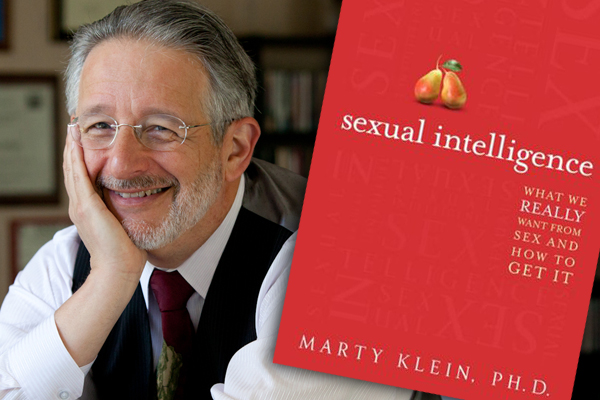
The (real) secret to hot sexMarty Klein

Looking for the hot new position that will transform your sex life? The bedroom technique that will bring ultimate satisfaction? Look no further.

Not that sex therapist Marty Klein is actually selling any of those things — but his new book, “Sexual Intelligence: What We Really Want From Sex and How to Get It,” offers something better: an alternative to chasing that erotic mirage. His message is antithetical to the sex advice found everywhere from self-help books to the supermarket checkout line: The secret to a fulfilling sex life is mental, not physical.

It isn’t the sexiest directive, but it might actually get you somewhere. Klein has drawn on more than 30 years of counseling experience for this smart handbook on how to develop what he calls “Sexual Intelligence,” which he describes as the thing that “gets you from hormone-driven sex to sex you choose,” “from ‘sex has to validate me’ to ‘I validate my sexuality.’” The challenge here is to let go of notions of what “successful” and “normal” sex looks and feels like. The reward is a sex life where “failure” is virtually impossible.

Salon spoke to Klein by phone from his office in Palo Alto, Calif., about why so many sexual problems can be blamed on idealizing sex and our bodies as they were in our youth.

What is it, based on your experience with clients, that people most want from sex?

Well, if you ask people what they want from sex, they say some vague thing — some combination of “pleasure” and “closeness.” But while a lot of people say that, I find from my practice that what a lot of people really want is emotional satisfaction; sometimes it has to do with the connection with their partner and sometimes it has to do with their own sense of themselves. What a lot of people want from sex is to feel youthful, graceful, manly, normal, adequate or competent.

What should we expect from sex? What expectations are more realistic and more likely to bring actual satisfaction?

Well, partly that depends on what people are willing to put into it. You could say, “What’s realistic to expect from a meal?” and if you have very little in the refrigerator and you only spend five minutes cooking and you don’t have a decent pot or pan and you’re talking on the phone while you’re doing it and not paying attention, it’s unrealistic to expect a gourmet or satisfying meal. On the other hand, if you put enough time and effort and care into it, it’s not unrealistic to expect a good dining experience.

So, when it comes to sex, clearly it’s unrealistic in long-term relationships to expect the kind of heat and desire and passion that we typically experience in the early days of a relationship and in our youth. One of the reasons that grown-ups in long-term relationships don’t have much sex is they’re waiting to feel incredibly horny. What’s more realistic to expect from sex, if you put some effort into it, is to feel connected with somebody, to feel a sense of ownership of your body, a sense of a vacation from real life for half an hour. What’s not reasonable to expect is that sex at 45, with the same person you’ve been with for 10 years is the same as sex was at 25 when you were first getting to know somebody.

Why is it so hard to move away from that ideal of sex as it was in our 20s?

I have a few answers for that. One is that we live in a youth-obsessed culture where whatever our experience is in young adulthood, we assume that’s the best experience. So, we don’t prepare for a different experience and we don’t envision a different experience and we don’t want a different experience. If we experience the transition from adolescence to young adulthood as a dreadful loss of the best that life has to offer, then we’re not going to ask ourselves, “OK, how do I make sex at 35 the best sex of my life?” Most people are saying, “How do I make sex at 35 as near to what it was at 20?”

Most of us develop our vision of sexuality between 15 and 20. At that time we have a very particular kind of body: it’s young, it’s healthy, it’s flexible, it’s conventionally attractive. And so we associate that body and that body’s abilities with good sex. We say that good sex is the kind of sex you can have if you’ve had five margaritas, or you can have good sex when someone has a face without any lines on it.

The model of sexuality that we develop between 15 and 20, it just doesn’t work for us when we have the body of a 47-year-old, when you have to take ibuprofen an hour before you have sex. There’s also a different emotional and psychological context. There’s a different ecology. You have responsibilities, you don’t have a lot of time to kill, you have to wake up early the next morning, you have children you don’t want to wake up when you’re having sex. When we’re young, we don’t have to develop the skill of planning for sex, of being patient, of waiting for when it’s going to be the right time.

They want spontaneity.

Well, you know? You can’t have that. How many 40-year-olds who have any sort of a life do anything spontaneously? I mean, look at you and I, we wanted to have a conversation and we had to plan it. We didn’t say, you know, when you’re in the mood, give me a call.

This yearning for spontaneity is so poignant, because what people are really saying is, ” I yearn for the uncomplicated life that I used to have where sexuality was at my disposal 24 hours a day, rain or shine.”

You also write about how a lack of desire is a major concern for most of your clients —

Most couples, when one or both of them don’t feel incredibly horny, they think of that as something that only one of them is going to fix. “You lose weight and that will make me more horny” or “I’ll have fantasies or come up with a new position and that will make me more horny.” They don’t talk about it as a couple. The couple needs to sign up for it together — but that requires them to talk honestly about sex. Most couples would rather chew glass than talk honestly with each other about sex. They’re willing to say things like, “I wish you’d lose weight, I wish you didn’t bring work home, you’re always on the phone with your mother,” but most are not willing to say, “I used to have more desire for you than I have now, do you want to work with me to do something about that?”

Why is that? Obviously, there’s the desire to not hurt your partner’s feelings, but it also seems there’s more there.

I wouldn’t be quite so generous. I think it’s more like, “I don’t want to say these things to you because I don’t want to hear them from you.”

So, we’re afraid of having these conversations because if we start being honest with our partner, they might start being honest with us, and that might validate our deepest insecurities?

I think that’s part of it. I think people are afraid that if they start talking honestly about sex, they’re going to be opening Pandora’s box. I also think that not everybody has the vocabulary, not everybody can say exactly what they want or how they feel. A lot of people find it easier to say, “You did something wrong,” rather than to say, “Let me tell you how that felt to me.” Instead of saying, “You’re frigid” or “You’re too kinky,” you say, “I feel unattractive” or “it’s not that I don’t like oral sex, it’s just that whenever you’re going down on me I feel so exposed, I feel so foolish.” If only people would talk more about feeling foolish in bed, rather than what the other person is doing wrong. A lot of people talk about what’s wrong with sex, like sex did something wrong. When people say that in the office, I say, “Well, rather than telling me what’s wrong with sex, why don’t you tell me how you feel?”

Why is it that the typical self-help approaches don’t work when it come to sex? Why isn’t it as simply as the ten hot new moves you need to try tonight?

Let’s compare it to something else — say you want to take care of your health. What we know is that articles like “five ways to burn fat better” just don’t work. There’s a step before that and that’s creating the emotional environment in which people can take advantage of that information. For most people, the emotional environment for taking advantage of those “hot new moves” just isn’t there. People aren’t up to what moves they should do, they’re stuck thinking, “I’m afraid that if we have sex with the lights on he’s gonna think that my butt is too big.” If someone is stuck on “My penis is the most important thing that I bring to sex,” then talking to them about what to do with this finger or that hand or this foot is just pointless. But that’s what self-help books focus on constantly when it comes to sex: what to do with your body.

Obviously, there is so much bodily insecurity going around — how do you even start toward that point of feeling sexy in your own skin?

Part of it is getting the idea that it is possible to detach how you look from how you feel and that sexiness is not a product of what your body looks like from the outside, that sexiness is a product of how you feel on the inside. Part of it is acknowledging that somebody somewhere has the ability to feel sexy independent of how they look on the outside. We have to get the concept that it’s possible for some people to feel sexy based on what’s on the inside rather than what’s on the outside. From there it’s a question of a person tuning into what do I have to offer somebody else sexually, and what do I have to offer myself sexually? If a person enjoys kissing a lot, regardless of what they look like they could say to themselves, well, that’s part of what makes me sexy.

You write so much in the book about how people worry about being sexual normal. What is sexually normal?

Most people who want to know what’s sexually normal, they’re not going to use that information in a wholesome way. Most people want to know what’s sexually normal so that they can compare themselves or their mate to that standard. If I say 80 percent of 30-year-olds have oral sex at least once a month, somebody’s gonna compare themselves to that and say, “What’s wrong with me that I don’t do that?” Or they’re going to look at their mate and say, “What’s wrong with you?”

Now if you want to know what’s statistically common when it come to sex, as I say in the book, it’s that people have sex when they’re tired and when they feel self-conscious about their bodies.

Tracy Clark-Flory

Tracy Clark-Flory is a staff writer at Salon. Follow @tracyclarkflory on Twitter.

50 shades of Shutterstock

Slide show: Everyone's favorite light-bondage bestseller illustrated by inexplicable stock photography SLIDE SHOW

  • more
    • All Share Services

50 shades of Shutterstock

View the slide show

This week, for roughly the millionth time, E.L. James’ romance-bondage trilogy “50 Shades” nabs the No. 1, 2 and 3 spots on the New York Times bestseller lists. We don’t get it either. Every page of that book, which famously began as “Twilight” fan fiction, elicits a sigh of confusion and weird secondary embarrassment. The question is: Who would read this? (The answer is: Apparently everyone.) It’s the same baffled, helpless feeling we get when we sort through stock photos on a daily basis. Stock photos – which have been the subject of recent outstanding Internet satire – are used by this site, and many others, to illustrate our flood of content. Many are plain and simple, but a good portion are flat-out mind-blowing. Why did anyone think that photo was a good idea? It only made sense to join these forces. And so, we present to you passages from the most head-scratching bestseller of our time, illustrated with the assistance of inexplicable stock photography.

View the slide show

Taxing strip clubs for rape

Politicians are holding adult entertainment venues responsible for funding sexual assault services

  • more
    • All Share Services

Taxing strip clubs for rape (Credit: iStockphoto/wragg)

It used to be that strip clubs were merely blamed for society’s ills. Now they’re actually being charged for it.

In recent years, measures have been introduced in Georgia, Pennsylvania, Texas, Illinois and, most recently, California to apply special taxes to strip clubs — specifically to fund sexual assault services. Now, even if you aren’t inclined to view erotic entertainment as the source of all evil, this might seem an appropriate aim — who wants to argue against additional support for rape survivors? It would seem even more so when you consider politicians’ and activists’ repeated claims of solid scientific evidence showing a link between strip clubs — specifically those that sell alcohol — and sexual violence.

That is, until you look at the alleged proof.

The key study advocates point to is one commissioned by the Texas Legislature in 2009. But that very report states, “no study has authoritatively linked alcohol, sexually oriented business, and the perpetration of sexual violence.” What’s more, when I talked to Bruce Kellison, director of the Bureau of Business Research at the University of Texas at Austin, and one of the authors of the report, about the alleged link between strip clubs and sexual assault, he said, “That’s not really what our study was trying to do.”

What it was trying to do was review the research on whether clubs have a “negative secondary effect” (in other words, harmful side effects). “Most of the [research] has found that there is a moderate amount of increased criminal activity outside of clubs,” he said. That’s a point contested by some: Daniel Linz, a communications and law professor at the University of California, Santa Barbara, says studies used to support restrictive zoning or special taxes on strip clubs are methodologically flawed — they fail to use appropriate controls and rely on inconsistent and unreliable data sources. Take, for example, that zoning laws often relegate strip clubs to shadier parts of town, where, of course, there is greater crime. Without an appropriate control, that crime can’t be attributed to the club itself.

According to a study Linz conducted, “Those studies that are scientifically credible demonstrate either no negative secondary effects associated with adult businesses or a reversal of the presumed negative effect.” He tells me, “We’ve done crime map after crime map after crime map of many cities and there just aren’t clusters of crime around [strip clubs]. Most crime in most cities tends to occur around high schools.” Tax the teens!

That’s just to speak of crime in general. The important thing here, given the aim of these tax initiatives, is sex crime. The Texas report looked at the incidence of sexual violence in particular inside the clubs and found that there wasn’t “additional sexual assault violence going on in the clubs,” says Kellison, or even around the clubs.

Again, as with many things in this arena, that’s contested by some. Richard McCleary, a criminology professor at the University of California, Irvine, whom Linz says he’s had a “10-year scientific battle with,” argues that there is a sexual violence impact, but not the kind that these initiatives imply. He cites a 1998 survey of “a small sample” of adult entertainers that found a high rate of reported sexual victimization inside or nearby the club. This contradicts the findings of the Texas report, however. It’s also important to note that the proposed special taxes don’t go directly toward victimized dancers; the intended target is much broader than that.

McCleary also backs up his assertion saying that street prostitutes “are attracted to the neighborhood because of the clientele and that tends to be an extremely violent trade.” Even if we’re to presume that street prostitutes are driven to strip club neighborhoods in droves, and that they in general experience a high level of violence in their work, it isn’t a direct consequence of the venue itself. As Judith Hanna, an anthropologist and author of “Naked Truth: Strip Clubs, Democracy and a Christian Right,” told me, decriminalizing prostitution would be a much more effective way to address the violence that street prostitutes face.

Hanna is particularly sympathetic to the cause. She’s worked as a volunteer for over a decade with a program for victims of sexual assault, and yet she says, “I never, nor have others in the program, known of a sexual crime victim related to a strip club.” She’s quick to point out that “there is a plethora of evidence that clergy have committed sexual crimes against women, boys and girls.” Where’s their sexual violence tax?

Kellison cuts to the chase: “The reason that many advocates say the strip club industry is being tied directly to the effort to raise funds for rape crisis centers is not because there is increased sexual assault behavior going on inside the clubs or outside the clubs or as a result of a guy going to a strip club,” he says. “That is a very difficult argument to make. What the advocates will say is that it’s an industry that is primarily run with the use of women for, generally speaking, male purposes, male benefit. And that’s why advocates have seen it reasonable to ask the industry to support a tax that would fund services that are primarily geared toward women.”

Well, they rarely actually come out and say it so plainly without the cover of alleged evidence, but that is the fundamental moral judgment behind these initiatives.

Now, there is a strong link between alcohol consumption and sexual violence, but, as Linz says, “any location that is serving drinks, whether it’s a strip club or a regular bar is going to have this societal effect.” He adds, “Compared to other businesses that serve alcohol in the community, these places are no better and no worse.” In other words, it’s the booze, not the boobs.

McCleary, on the other hand, argues that there’s evidence that those who have consumed both alcohol and adult entertainment are more violent than those who have consumed only one or the other. But this is based on laboratory research, which McCleary admits is a far cry from the real world. He also says “it’s very difficult to establish a causal link.”

Critics say these measures have advanced because of courts holding them to a low standard of proof. While some circuits require “reliable social science evidence” to establish negative secondary effects, says Linz, others essentially say, “The city can pick and choose among findings and come to whatever conclusion they want.” Some argue that secondary effects — which were originally used to justify zoning restrictions but have since been applied to even regulations on the content of dances and the degree of nudity — have trumped First Amendments rights. David L. Hudson Jr., a research attorney at the First Amendment Center, calls exotic dancing “a First Amendment stepchild” and writes in a report on the topic, “Many free-speech advocates claim that the secondary-effects doctrine has allowed municipal officials an easy path to censorship.”

Speaking of censorship, Hanna sees crusading religious moralism at work. “A segment of the politically active Christian right are not only opposed to these clubs but they are working like the Tea Party works,” she says. “They have alliances, they have big money and they’re fighting it. Sometimes it’s indirect, they’re electing their people to legislative bodies — you only need one person to start making big noise.”

These measures are a crystal clear reflection of extreme conservative views of sexuality and gender. As Hanna tells me, “The Christian right believes that if you see a nude woman you’re gonna go out and rape the first woman you see.” She also points to the stereotype of “men as a volcano of testosterone ready to be ignited.” From that vantage point, the leap from strip clubs to rape makes intuitive sense — but it doesn’t make it fact.

There’s also just plain financial desperation behind these initiatives. Several sponsors have admitted that the tax is a response to devastating budget cuts to sexual assault resources. Sin taxes — those applied to alcohol, cigarettes and gambling — are not new and have only increased as cities face severe budget cuts. What’s unique about the strip club taxes is not only that boozy adult entertainment venues are being singled out — as opposed to the broader category of liquor — but also that the taxes are being directed toward a cause that is empirically unrelated.

When it comes to adult entertainment, though, critical thinking often falls by the wayside. Strip clubs are an easy target for religious moralizing and political pandering — and one few are willing to defend.

Continue Reading Close
Tracy Clark-Flory

Tracy Clark-Flory is a staff writer at Salon. Follow @tracyclarkflory on Twitter.

Sex ads: It isn’t just Backpage.com

From Facebook to Twitter and once again on Craigslist, a new study shows adult advertising permeates the Web

  • more
    • All Share Services

Sex ads: It isn't just Backpage.com (Credit: Advanced Interactive Media Group)

A new report could defend the besieged Backpage.com — and it comes from the same research organization that has been used in the campaign against the classified-ad site.

Activists calling for the site to shutter its adult classifieds section on the grounds that it promotes sex trafficking — like New York Times columnist Nicholas Kristof — have seized on research from Advanced Interactive Media Group (AIM) showing that across a handful of sites carrying prostitution ads, 70 percent come from Backpage. Another significant finding from the organization is that the site’s parent company, Village Voice Media, makes $22 million from such ads. Again and again, critics of the site trot out these, and similar, statistics drawn from AIM research — but the organization’s latest study highlights just how far online prostitution spans beyond Backpage.

In fact, the first lines of the report return to the supposedly resolved issue of sex ads on Craigslist: “Prostitution ads are back on Craigslist. If they ever left in the first place.” As the report explains, shortly after the adult section was shuttered, AIM reviewed the classified site and found that “there were few if any blatant ads for prostitution.” But now, AIM has found that “ads that appear to be for paid sex work are posted regularly” on Craigslist. Granted, the numbers are much lower than they were before the site closed its “adult services” section — and specific stats weren’t available ahead of this writing — but “some [ads] were as blatant as they were” before the closure, and a subset included terms like “barely legal” (which is often used to signal the opposite: underage girls).

In addition, AIM found sex ads on mainstream sites like Facebook, Tumblr and Twitter. Mostly, these ads come in the form of Facebook pages, blog posts or tweets advertising an escort service or individual sex workers. Researchers also found such ads on YP.com and About.com (interestingly, the latter is owned by the New York Times Co., which employs Kristof, arguably the most vocal critic of Backpage).

The release lays out the financial benefit to hosting such ads: “Whether free or paid, listings and ads for escort services and similar adult content frequently serve a business purpose for sites like About.com and YP.com,” the report explains. “They drive traffic and page-views; they deliver legitimate results for seemingly (or pseudo-) legitimate businesses; and they provide search results with adjacent paid or pay-per-click ads, which can generate revenue as they are served.”

The volume of these ads is nowhere near that on Backpage, but AIM’s finding shows how easily sex ads proliferate online, even in “legitimate” online venues. Keeping these ads from popping up online is like trying to keep frogs in a bucket.

Asked to comment on whether this latest research poses a challenge to the effort to shut down Backpage’s adult section, Peter M. Zollman, founding principal of AIM, said, “Ads for prostitution are in hundreds or thousands of places online, and anyone looking for them can find them. Backpage and Craigslist are just two sites, and both have taken pretty aggressive steps to eliminate ads involving trafficking in children.” The AIM report doesn’t look specifically at the existence of trafficking ads, as opposed to general sex ads, but as anti-trafficking activists have told me, they see the two as inseparable.

Update: A publicist from About.com tells me the site is “in the process of removing any pages from About.com that include links to escort services” and says “they represent a very small percentage of overall pages on About.com.”

Continue Reading Close
Tracy Clark-Flory

Tracy Clark-Flory is a staff writer at Salon. Follow @tracyclarkflory on Twitter.

Massage therapists rubbed wrong by sex talk

A Jennifer Love Hewitt show and the Travolta allegations have masseuses tired of being confused for sex workers

  • more
    • All Share Services

Massage therapists rubbed wrong by sex talk (Credit: iStockphoto/sybanto)

Joe, a licensed massage therapist, knows what it’s like having a famous client who expects something extra. He had an Academy Award-winning actor begin gyrating on his massage table before raising his hips in the air to show off his erection. “He was hoping that I would play with him in some shape or form,” he says.

Needless to say, Joe isn’t surprised by allegations by two masseurs that John Travolta got handsy during massages. (Travolta’s attorney has denied all the allegations, and called them “ridiculous.”) “It happens all the time,” he says, and not just with celebrity clients. He frequently encounters men who try to fondle him, usually while he’s working on their glutes or lower back and their hand happens to be level with his crotch. “They think they’re so original, but they’re all so much the same,” Joe says, his voice rising. “They all use the same tactics, the same body movements, the same gyrations and grinding my table, the [heavy] breathing.”

Usually it’s men, but he’s had a couple of women do it, too: One grabbed his crotch and then pulled his sweat pants down before he could stop her. Then there’s the woman who had an orgasm just from him massaging her thighs. “All of a sudden her knees locked and her legs became straight and I thought, ‘Oh no, maybe I hurt her, maybe she has boundary issues.’” Afterward, though, she made it clear what had happened — and that it was the best massage she’d ever had.

Even massage therapists who haven’t personally experienced sexual harassment or abuse on the job are fed up with the need to constantly reaffirm the fact that they are licensed medical professionals. Shows like Lifetime’s “The Client List,” which stars Jennifer Love Hewitt as a single mom trying to make ends meet by providing happy endings, certainly don’t help to diminish the nudge-wink side of massage, nor does the ubiquity of euphemistically driven ads for massage parlors. And, for the record, many object to the use of the terms “masseuse” and “masseur” because they leave too much room for misinterpretation.

Even still, some question the legitimacy, or at least earnestness, of the allegations against Travolta and suggest that it’s the massage therapist’s responsibility to avoid sketchy situations. Barbara Joel, a massage therapist and former president of the New York State Society of Medical Massage Therapists, tells me, “I disagree how he is being portrayed as the brute and the therapists as the innocent victims … I doubt that the therapists were unaware as to what they were walking into.” Joel says experienced massage therapists understand that “many male politicians, celebrities and men of power feel a sense of self-righteousness and that they are above the law.”

To others, that sounds too much like blaming the victim. Turning down clients — particularly high-powered clients that could make your career — is challenging. Joe was voted the best masseur in New York several years in a row, but when the economy tanked his business did too, and he moved to Kentucky for the affordable rent. Now he finds it hard to reject new clients during the initial screening process because he sorely needs the gigs. “It’s difficult when you’re a therapist trying to make money in this economy,” he says. Usually, he simply tries to dodge the wandering hands. “I move my legs away from the table and after a while they’ll mellow out,” he says. “If it starts to get really bad, I’ll grab their hand and press it firmly down onto the table and say, ‘C’mon now, I’m a licensed massage therapist, this is not about sex.’”

Like Joe, Cameron Richards, a massage therapist in New York, describes encountering inappropriateness from both genders. He recently had a male client ask to be undraped during the massage. “This was all red flags,” says Richards, who’s only been in the business for four years. “To make a long story short, he wanted me to fondle him.” Once, he had a female client try to urgently book a session within the hour and then she attempted to get him to massage her breasts. “She told me when she went on a cruise they massaged everything, which I knew was a lie,” he says. Richards also knows a massage therapist in Florida who is thinking about quitting the industry because “she is getting lots of phone calls from men looking for happy endings.”

In over a decade of massage therapy, the worst Eva Pendleton has ever encountered is a client grabbing her butt. “I just quickly stepped out of the way,” she says. But Pendleton had plenty of clients get “a little frisky or flirty” when she worked in a health spa. Now she specializes in geriatrics and end-of-life care, but still she’s encountered a hospice client who asked flirtatious questions like, “Who massages you?” He was also “really into having his abdomen rubbed, hinting about wanting me to work lower.” (That’s an example of the hospice saying, “You die as you lived.”)

Massage therapists often become accustomed to the hint of an erection under the sheet. “It’s tricky because the male body sometimes sends a signal just as part of the relaxation response,” says Pendleton, “not because they’re having a sexual reaction, so I learned to ignore erections and I usually gave the client the benefit of the doubt,” she says. “It’s rarely as obvious as perhaps some of Mr. Travolta’s massage therapists experienced.”

On the whole, the female massage therapists I spoke with reported less frequent in-person sexual harassment, maybe because they are more motivated to screen aggressively. Whenever she gets a call from a potential client, Denise mentions that she offers both massage and martial arts classes — which is not easily confused as a sexy euphemism. Most people who are looking for sex hang up after that, but the ones who stay on the line usually send up red flags by asking for “adult” or “full body” massage, or asking what she looks like or what she wears during the treatment. Recently, she had a man call to ask if he could “confess his bad behavior.” She suggested that he seek “psychological or spiritual counseling” and he hung up.

Elise Constantine has been working as a licensed massage therapist for 14 years and only once had a client cross the line: He kept asking to be naked during a Thai massage, which is usually done on a clothed body. “I was infuriated,” she says, “but did not engage in any further discussion beyond saying, ‘There is the exit. No payment is expected. Do not contact me again.’” Since then she’s developed strict policies to avoid inappropriate clients and dangerous situations. She only books new male clients when one of her colleagues will be in her office suite and never does outcalls for men unless they come with a direct, reliable referral. Constantine also makes a point of dressing “modestly” and not posting photos of herself on her professional website.

The erotic plagues the industry for some of the same reasons that massage is a good cover for sex work: the intimacy of nakedness and the sensuality of healing touch. We have a hard enough time separating nudity from sex, let alone naked touch. So it’s no surprise that there’s a genre of porn that eroticizes the tension between the legitimacy of massage therapy and the naughtiness of a paid-for hand-job. “Some people don’t get touched very often, they don’t have a love life, and to them it’s like, ‘Oh my god, this feels so good,’” says Joe. “It’s synonymous with sex or foreplay to them.” Of course, there’s a crucial difference between the occasional boner on the massage table and trespassing on another person’s body. One represents a natural physiological response, the other a raging dick.

Continue Reading Close
Tracy Clark-Flory

Tracy Clark-Flory is a staff writer at Salon. Follow @tracyclarkflory on Twitter.

A night at the vibrator museum

Early vibrators were hand-cranked, two-person jobs -- and prescribed by doctors. How far we've come since then

  • more
    • All Share Services

A night at the vibrator museum (Credit: Antique Vibrator Museum)

I can now say that I’ve used a turn-of-the-century vibrator — on my hand, but still.

The silver, hand-cranked contraption is usually kept behind glass at Good Vibrations’ Antique Vibrator Museum in San Francisco — but staff sexologist Carol Queen made a rare exception. “This is very special,” she whispered, unlocking the case and carefully pulling out Dr. Johansen’s Auto Vibrator, a relic from 1904. The “auto” part is not so much: It was a two-person job, with her having to crank the device’s handle to get it thrumming. Pressing my finger tips to its inch-wide circular platform of pleasure, I was pleasantly surprised by its power.

As I was by the two other vintage vibrators that I got to try out — the White Cross Electric Vibrator from 1917, which has a pronged aperture that makes it seem like the ancestor of Jimmyjane’s Form 2, and the Beautysafe Vibrator from the 1940s, which is reminiscent in look, feel and sound to a car waxer.

The U.S. release this week of “Hysteria,” a Maggie Gyllenhaal flick about a Victorian-era doctor who invents an electric massager and uses it to bring about “paroxysms” of relief in female patients with “hysteria,” seemed like a good excuse to get a private tour of the museum, which provided vibes that appear in the film, to learn about the history that’s left out of the movie’s fictionalized story line — and, of course, to try out antique pleasure devices while on the clock.

While the movie is set in the 19th century, doctors’ “manual manipulation” as a treatment for female hysteria goes back as far as the second century. “That took too long,” said Queen. “So doctors started training midwives to do it.” In Rachel P. Maines’ “The Technology of Orgasm: ‘Hysteria,’ the Vibrator, and Women’s Sexual Satisfaction,” she quotes a 1653 medical book that advises:

When these symptoms indicate, we think it necessary to ask a midwife to assist, so that she can massage the genitalia with one finger inside, using oil of lilies, musk root, crocus, or [something] similar. And in this way the afflicted woman can be aroused to the paroxysm.

Of course, this paroxysm was orgasm, but it was rarely acknowledged as such. Instead, it was said to be the exorcism of hysteria, a vague, catch-all diagnosis for female ailments thought to arise from a displaced uterus or, charmingly, a “wandering womb.” “Some of these women probably had PTSD, some of them were overworked, some of them had extreme stress in their lives, some of them almost certainly had sexual issues going on,” Queen explains. As Maines points out, “many of its classic symptoms are those of chronic arousal: Anxiety, sleeplessness, irritability, nervousness, erotic fantasy, sensations of heaviness in the abdomen, lower pelvic edema, and vaginal lubrication.” Married women were often given the prescription of sex with their husbands.

Eventually, doctors turned to technology to speed up the laborious treatment. “It started with hydraulic devices, water jets, but that really only worked well at spas,” said Queen. In 1869, an American physician patented the Manipulator, a padded table with a steam-powered vibrating mound that rested between the legs. A decade later, British physician Joseph Mortimer Granville – who’s at the center of “Hysteria,” albeit heavily fictionalized — patented a battery-operated vibrator for treatment of muscle pain. Interestingly, he was vehemently against the device being used for hysteria. He wrote, “I have avoided, and shall continue to avoid the treatment of women by percussion, simply because I do not wish to be hoodwinked, and help to mislead others, by the vagaries of the hysterical state.”

Ads selling vibrators as home appliances began to appear in women’s magazines, often showing “women in attractive nightclothes, using it on their chest,” Queen said. “You see facial massage shown from time to time.” These spots referred to them as “aids that every woman appreciates” and promised “all the pleasures of youth … will throb within you.” But when vibrators started showing up in stag films in the 1920s, the ads started to disappear, Queen says.

“Within the next 10 years or so, the doctors close up shop,” she said, perhaps in part because it became impossible to deny the sexual nature of these therapies. “In 1952, hysteria is taken out of medical books,” Queen explained. “The medical associations voted to say, ‘Nothing to see here, there’s really not a disease – no, no, no, we haven’t been treating this with clitoral and vulva massage.’”

Vibrators were still sold direct to consumers, but manufacturers made no mention of hysteria and instead “talked about body massage and vague promises of health, vigor and beauty.” The ’60s did away with the subtlety and euphemisms: Maines explains in her book, “When the vibrator reemerged during the 1960s, it was no longer a medical instrument; it had been democratized to consumers to such an extent that by the ’70s it was openly marketed as a sex aid.”

Asked whether doctors or patients saw the treatment as sexual, Queen said, “One of the schools of thought is, ‘How could they not?’ They’re touching the genitals, she starts to sweat and flail around and vocalize and her breathing changes and she gets a flush.” But others argue that “the definition of sex and sexual functioning for a woman was so associated with intercourse,” it was so male-centric, that this treatment, which was most often external, wasn’t seen as sexual. As Maines puts it, “Since no penetration was involved, believers in the hypothesis that only penetration was sexually gratifying to women could argue that nothing sexual could be occurring when their patients experienced the hysterical paroxysm during treatment.”

Paradoxically, Queen explains that hysteria was overtly linked to sex “in that they said women without husbands who were spinsters or widows or whose husbands had become incapacitated were more likely to suffer from it,” she said. “So there was a subtext of, ‘What this lady needs is a good fuck and, sadly, she can’t have one — but this is the next best thing.’” Maines attributes the demand for the treatment to two sources: “The proscription on female masturbation as unchaste and possibly unhealthful, and the failure of androcentrically defined sexuality to produce orgasm regularly in most women.”

We haven’t exactly escaped the expectation that women should be able to climax from penetration alone, but we’re slowly improving on that front — and the mainstreaming of vibrators has played a big part. That point was only driven home as I left the museum, which is located in the back of a Good Vibrations store, and walked past scores of sleek and sexy toys in every color of the rainbow, all unabashedly advertised as what they are: Tools for sexual pleasure.

Continue Reading Close
Tracy Clark-Flory

Tracy Clark-Flory is a staff writer at Salon. Follow @tracyclarkflory on Twitter.

Page 1 of 1169 in Love and Sex