
Life stories

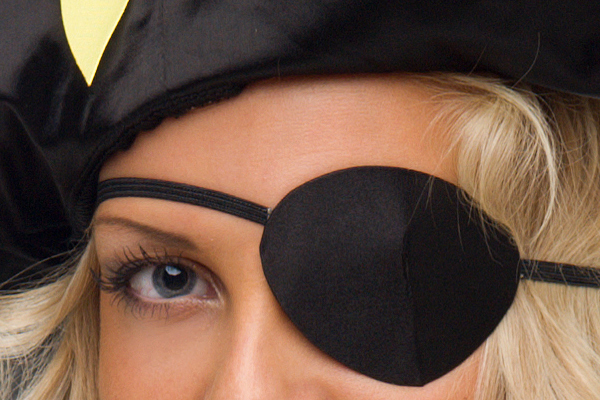
Lessons of a very sexy pirate costume

When I took the job at the bar, I looked down on it -- and the women who worked there. But I had so much to learn

The job description had me at “wear a pirate costume.” A sexy pirate costume, for the very sexy pirate-themed bar on Bleecker Street. The fact that the bar promised hundreds of dollars a night for selling people shots sounded quite all right, too.

I grappled for a few moments over what anyone would find sexy about an eye patch. It implied my eyeball had been gored in a fearsome bayonet fight with a British grenadier. I asked the manager whether I should look for a parrot. She was not charmed.

But by God, I was. I’d grow up on a steady diet of country club sandwiches and tennis lessons, and this was what I came to New York for: to do odd things, and see interesting people. People who went to pirate bars, for fun. I had been a model for art classes, but I had never been a pirate. I kept thinking of the Dorothy Parker poem “Song of Perfect Propriety” where she wrote:

I should like to strut and curse
Among my blackguard crew . . .
But I am writing little verse
As little ladies do

There would be time for a little verse years later, once I doffed my absolutely hilarious eye patch. Before I went in for my first day, I received a list of rules on ways to be a good shot girl. The first was:

Make up: Black mascara, lip-gloss, GLITTER around your eye.
Dress code: short black skirt and heals [sic].

So by “pirate” they meant “shiny eyed slattern with a rare gift for healing.” Like Mary Magdalene, maybe. Other tips just made me think that selling shots was going to be a weird, weird job.

Some people have fun eating from their own hands. Do not force feed anyone!

It had not occurred to me that I would deliberately force shots down people’s throats, though, years later, I find it hard to watch any romantic couple feeding one another without thinking, “Some people have fun eating from their own hands!”

But I imagined the women working at the bar would take such a list seriously. After all, women who make a living peddling shots weren’t going to be smart. They wouldn’t see the humor in any of this. I assumed my co-workers would be girls who spoke very, very slowly and thought that Puccini was a type of pasta. To their credit, I also imagined they’d have great hair, and I double-conditioned accordingly.

I was in love with my own incongruity — being a poetry-spouting college graduate in a pleather miniskirt. And I loved this notion of doing something at which I was entirely unsuited, and which seemed to go so much against my personality. I would never have said it at the time, but I very much believed I was above being a fun-loving pirate wench selling shots. I had read Meno and lived in cardigans and went to museums for fun.

I was a terrific little snob who thought she knew everything, and subsequently, I was about to learn a great deal.

As soon as I started, I realized I had no idea what I was doing. Fortunately, the other cocktail waitresses were quick to make suggestions. My first night on the job, a fellow shot girl offered practical advice. “You have to be a little cold,” she explained. “Make them feel like you’re doing them a favor by letting them buy shots.” But it’s difficult to maintain a Queen of Sheba demeanor while trying to rub globs of green glitter out of your eyes. Instead I became a level of friendly you typically only see at Disneyland, if Disneyland reeked of vomit and spilled appletinis. I doled out shots as people in cartoon costumes offer hugs. The manager would point out that I wasn’t being sexy enough, which was surprising, because I was wearing 6-inch heels and less clothing than I ever had.

It quickly became clear that I was not the first literate person to don a miniskirt. Sometime during that first week, I was hiding in the backroom reading Margaret Atwood. I was sitting on the counter next to baskets of party mix because my feet hurt, which they did for the entirety of my shot-selling career. One cocktail waitress swept in, asked what I thought of Atwood’s novel “Oryx and Crake,” did a tricky little analysis where she compared it to “The Handmaid’s Tale,” mentioned some other female dystopian writers I’d never heard of, and then went out balancing a tray of shots on one hand.

As ridiculous as it sounds, that was the first time I became aware that clever people are buried in every nook and cranny of life. It is astonishing that no one pointed this out to me sooner. The girls working at the bar — they were so bright. Another shot girl had a journal that she filled with poetry that was — that rarest of all rare things — crisp and clean and very, very good. This was never a bar where everyone knew your name, but the cocktail waitresses came to know one another’s reading lists, and pitch letters, and audition schedules extremely well.

Of course, we were all there for the money. Shots were sold starting at $3 — the bar received a dollar, the shot company another one and then one for the girl. But once you realized how comically overpriced $3 is for a shot, it’s just as easy to sell them for $4. A customer once suggested I try selling them for $5 and see what happened.

Taking price variations into account, and often considerable tips, and the fact that if you were good you could expect to sell around 100 shots in a six-hour evening, the money was — well, it was the kind of money that teachers in America really ought to make. Periodically, I compare how much I made on an hourly basis as a shot girl to what I make at a job that doesn’t require eye glitter and fishnets, and, barring the possibility that there is a job opening for “wildly corrupt dictator,” I think the result will depress me for the rest of my life.

I don’t mean to make the bar sound friendlier or more glamorous than it was. A great many customers were precisely the kind of people that you would expect to find at a pirate bar buying shots at 2 in the morning. Bottoms got grabbed. Bodies got groped. One customer rolled in nearly every night, wearing a pair of Ray Bans. One of the waitresses always served him while loudly humming “I wear my sunglasses at night.” I wondered aloud if he ever noticed that he was being mocked through Corey Hart’s soothing sounds, and the waitress laughed and said, “Oh, I just do it for me.”

And that’s when you realize that everyone — not just me and my superiority — knows they’re too good for this sort of job.

One night, an older woman came into the bar. I can’t imagine why; I suspect it wasn’t the beer pong. She was one of those very elegant ladies who put their hair up with bobby pins instead of elastic and wore a perfectly cut black dress. I assumed she was lost. She smiled, and gave me $100 and said, “You know, I used to work in a bar when I was younger. It won’t last forever.”

She was right, of course. It’s been years since I’ve been in that bar. But even now I cannot go into a bar or a restaurant without scanning the waitress’ shoes to see if they look comfortable. Every time anyone says something slightly dismissive to a cocktail waitress I am immediately, instinctively on her side, as if we were members of a blood-bonded clan.

I think about that older woman often, usually when I am pinning up my hair. I hope that, like her, I will not forget that strange period in my life, especially as I move past it. I think of the girls in the bar when I am — as I still am — too quick to dismiss people. When I am about to write someone off for their choice of eye shadow, I remember that they might be a fellow Atwood reader, and I wonder if she and I are in the same boat. Once in a while they are, and if that makes me feel slightly less special, it also makes the world seem much less lonely.

And in that way, the lady was quite wrong. Those times, and those alliances with a blackguard crew: Thank goodness, they do last forever.

Jennifer Wright is the editor in chief of TheGloss.com. She has written for The New York Post, Maxim, Popular Mechanics, Time Out New York, Gourmet and The New York Observer. You can follow her on Twitter at JenAshleyWright.

Finding my mother again

Years after she died, I came to understand the complicated woman I long mythologized, by becoming a mom, too

A photo of the author, as a baby, with her mother (Credit: Melissa King via Shutterstock)

In the 15 years since my mother has been gone, she has become a mythical figure in my life. She was a woman to be revered, but also one so complicated and so different from me that I fear I’ll never stop struggling to make sense of her and to accept myself within the context of her shadow.

My mother was 37 years old, twice divorced and childless when she met my father. She had been living in Manhattan for 17 years, having grown up in Connecticut and gone to the Rhode Island School of Design to study painting. She had dozens of friends, went to parties and attended art openings. She smoked pot in the Village and spent Tuesday nights in smoky jazz clubs, sipping martinis and recrossing her legs.

My parents had been set up on a blind date by mutual friends, but the night they were supposed to go out, my mother stood my father up. She’d gone to Long Island that day with a friend to pick strawberries, and by the time she came home, the last thing she felt like doing was going on a blind date with some older businessman from Atlanta.

My mother was funny and quick-witted, and she was almost always up for an adventure. She was also uncommonly pretty, with green eyes, blond hair, a symmetrical face and an easy smile. When she went to sleep that night in June of 1975 in her little one-bedroom apartment on 28th Street, she had no idea that her life was about to change.

My father, at 55 years old, was just entering his prime. In spite of (or perhaps because of) two divorces and three grown children, he was happier than he’d ever been.

He flew first-class wherever he went. He stayed at the Watergate Hotel when he was in D.C. and the Plaza when he was in New York. He winked at stewardesses and drank tumblers of scotch on the rocks. He wore hats and suits and left big tips at fancy restaurants.

He wasn’t used to being stood up, so the next morning he rang my mother’s buzzer at 9 a.m. “Who dares call on anyone before noon on a Sunday in New York?” my mother later wrote about that first encounter in a letter to my father, detailing their courtship. “It had to be you, as they say, and I opened the door with wet hair asking if you wanted a Bloody Mary, which you did, thank God.”

I always try to imagine this moment between them. My mother in the doorway with her wet hair, my father on the threshold in his blue leisure suit, the moment of them not knowing each other and then knowing each other eclipsed in one short breath.

They went to dinner and later flew to my father’s place in Atlanta, making daiquiris with the strawberries my mother had picked on Long Island the day before. They swam in the pool and smoked Camels and talked into the night, their legs dangling into the water, lit from below by the pool light.

They were married three months later on Cape Cod. My father whisked my mother away from New York and set her up in a big house in a nice neighborhood in Atlanta. He paid off all her debts, bought her a cream-colored convertible and opened a credit card in her name in every department store. I was born two years after that.

For the next decade — before my father unexpectedly went bankrupt following the stock market crash of 1987, and before my parents were both diagnosed with cancer within months of each other — we lived a blissful and privileged existence. My mother had quickly charmed her way into Atlanta’s upper social echelon, and it wasn’t uncommon for our dining room table to be inhabited by local political figures and foreign dignitaries.

I remained her only child, but motherhood only seemed to enhance my mother’s glamour and sophistication. It added a dimension to her personality and worldview that had, perhaps, been the only thing missing all along. But I wonder what the other carpool moms thought of my mother when she zoomed into the after-school pickup line in her Alfa Romeo, with her blond hair pulled back in a Chanel scarf.

I was 18 when she died of cancer, and I had become the very opposite of my graceful, glowing mother. My teenage years had been rocked by a roller coaster of parental illness, hospitals and private despair. In response, I had become an angst-ridden poet. I wore combat boots, dyed my hair crimson and sported a nose ring. My mother had always embraced these tiny, public displays of rebellion, but the moment she was gone I felt foolish.

I’ll never forget walking down the aisle of a church on the day of her funeral with a shaved head and my first, barely dry tattoo concealed under my shoulder, feeling as though I had utterly failed my beautiful mother in every way possible.

Since she died, I have struggled to forge my own identity in her absence. At times, I have wanted nothing more than to emulate everything about who she was — something I know I could never really achieve. While I may be outgoing and capable of hosting a memorable dinner party, I have inherited my father’s looks and practicalities, not to mention having retained a deep-seated and dark sense of self-reflection following so much loss.

For many years, I was unsure if I wanted children at all. When I finally decided that I did (within days of meeting my husband), I knew that I wanted to be a younger mother than mine was. My daughter was born a few weeks after my 31st birthday — almost a decade before my mother herself bore me — and now, as I approach my 34th birthday, I am due with my second.

Every inch of motherhood, for me, has been stitched with the essence of her. Throughout my 20s, I made valiant and sometimes senseless attempts to bring my mother into my life again. I lived in the places where she once lived. I learned how to cook and throw dinner parties. And more often, I simply took myself to the very brink of life in hopes that if I tottered just enough, she might appear to pull me back from the edge.

But it was truly in motherhood that I found her again, even though our experiences couldn’t be more different. My husband and I live in a tiny rental house in Los Angeles and both work as writers, struggling to pay our child’s preschool dues. I can often be found at the playground, even if I am one of the few mothers actually wearing mascara and earrings. As I write this, my body is swollen with another child, something she never ventured to do.

Despite those differences, motherhood has brought her back into my life, and it has given me an opportunity to embrace my own path as a woman and mother. I hear her in my voice when I comfort my daughter by crawling into bed with her at 3 a.m. when she has woken from a nightmare, when I stop to marvel at a snail traveling through the grass, and especially during dinner parties when I catch myself offering my 3-year-old bits of brie or Marcona almonds.

In adulthood, it has occurred to me that all of us are living reactions to our parents. Whether they loved us or not, whether they were present or absent, whether they kept us safe or recklessly abandoned us to harm’s way, we move forward into life walking paths they etched out decades earlier. It also often occurs to me how grateful I am to the woman who loved me fiercely enough to remain true to who she was, even in the complicated throes of motherhood.

Continue Reading Close

Claire Bidwell Smith is the author of the memoir, “The Rules of Inheritance.” She is a therapist specializing in grief, and lives in Los Angeles.

Their moms were crazy about me

My boyfriends' mothers just knew I was The One. Too bad their sons didn't agree

Judy’s warm brown eyes sucked me right in. Her son David and I had only been dating four months, but that didn’t stop me from falling for her hard. I was 30, and still reeling from my parents’ recent divorce and the fact that my mom had just moved five floors above me on the Upper West Side of Manhattan. I practically went from shaking Judy’s hand to curling up on her lap in a fetal position. I didn’t feel like a grown woman meeting my boyfriend’s mother. I felt like a kid calling shotgun, desperate to claim a seat at her table.

Over the next five years, I got that seat. I spent Hanukkahs, Passovers, even Purims in Judy’s plant- and music-filled home in Amherst, Mass., my picture hanging on her fridge alongside her children and grandchildren. To her, I was a done deal. I was family. To David, not so much.

After thousands of dollars spent on couples therapy, David still couldn’t make up his mind about me. He kept saying he “wanted to want to marry me.”

“What did I do wrong?” Judy asked me one day, in a stolen, private moment, not understanding why David was unable to commit to me.

I wished I understood. I wanted to blame his ambivalence on something specific. Yet the truth was he didn’t love me enough to make me his wife, and her love wasn’t enough to change his mind or heart.

When David and I broke up, Judy sent me a handwritten note in the mail telling me she was so very sorry and that she wished me everything I wanted for myself. And with one last “Love, Judy,” my picture was no longer hanging on her refrigerator. I no longer had a place at her table. I was no longer part of her family.

My mother, who by this time had moved to a house in Connecticut, came to live with me for a week. She yanked David’s nightstand and lamp from the wall and pushed my bed up against the window, so I wouldn’t be reminded of where he used to sleep. We repainted my living room, ordered in sushi, and she held me as I cried. Then my father invited me down to Florida. He took me out to expensive steak dinners and let me sleep late. We spent hours watching “Planet Earth” until I couldn’t think about anything other than stalactites and snow leopards. I was grateful to both of them for being there for me, but it didn’t erase a nagging aloneness I felt deep inside, the pain I still harbored over their divorce, over our broken family. I was 35 and mad at myself for still being hung up on a long gone childhood home. It was time for me to create my own home, start my own family. I just didn’t know how to do it.

All I knew is that I didn’t want to spend another five years with another mixed-message guy, only to get a “Dear John letter” from another almost mother-in-law. But like a crackhead who can’t shake her habit no matter how hard she tries, I was a goner the second I stepped foot into Susan’s kitchen.

Paper turkeys and streamers were strewn everywhere. Her house smelled of chocolate babka and apple cider. I could call this place home, I thought, sitting down, not wanting to get up.

It was only my sixth date with Jason. But it seemed longer since we’d spent four years of high school together and had been Facebook friends for the past year. I knew I shouldn’t get too excited, but the fact that he had invited me home for Thanksgiving and that I was meeting his mom so early on made me feel special, like he was really considering me as someone he could spend his life with. When he invited me back for Hanukkah a few weeks later, and my picture was hanging on the fridge, I knew I was in.

Susan and I spent hours in her kitchen frying latkes, bonding over how we both give too much and have short necks. She even confided in me that she had never seen Jason so happy. This was the real deal.

Jason and I didn’t end up making it past New Year’s.

Instead of a note, Susan picked up the phone. “It’s not you,” she said. “You’re wonderful, perfect, beautiful.” She was a poet, and explained to me that a poem isn’t possible if the writer isn’t open to the words in the ether. “I’m sorry Jason isn’t open to the poem.”

I dropped my head into my hands as soon as we hung up and burst into tears. I couldn’t believe I had let this happen. I had once again mistaken a mother’s love for the love of her son. I clearly had a problem and could not be trusted around mothers.

I should have been happy when Ethan didn’t introduce me to his mother immediately. He told me he wanted me to himself for a while before bringing me home to meet the family. But after six months of dating, I found myself fiending. When would I get to sit at Rena’s table? When would I see myself hanging on her fridge?

Rena, Ethan and I made plans to meet up for breakfast around the corner from me on the Upper West Side. I wore my favorite navy blue sweater and made sure to blow-dry my hair. I wanted to look pretty for her.

As we sat in a booth eating overcooked eggs, Rena told me about the Holocaust museum where she worked. I told her about the eighth grade girls I counseled on Fridays. Ethan made jokes.

Then the subject of our future came up.

Rena looked at me directly, and said,  “I’m waiting to love you.”

I almost choked on my toast.

Judy and Susan flew to mind. There had been no waiting with them. Just full on, “Let’s do this!” Then I thought back to something David had said at the end of our relationship that I never understood. “I feel like we’re more brother-sister than lovers.”

Sitting speechless in this poorly lit diner, something clicked.

David was right. By slipping into daughter role with his mother, I had become one of the kids. And while that felt good, to be part of a cohesive family, to feel like I fit in, I wanted to be a wife, not a daughter-in-law or sister.

Rena somehow knew this, that her love and approval couldn’t influence her son — and that if we had a shot, she should stay out of it.

I wanted to hug her and thank her for doing the thing I couldn’t do all these years: Wait, see and then fall.

Last May, Ethan and I exchanged vows under a brightly colored Chuppah that Rena had spent hours sewing together for us. But it wasn’t her love that got me there. It was Ethan’s.

As I stared into my soon-to-be husband’s warm blue eyes, smiling so wide my cheeks hurt, surrounded by a patchwork of friends and family, I no longer felt like a displaced kid looking for a seat at someone else’s table. I felt like a woman being claimed by a man.

Ethan made me his wife. And now, at almost 40, I am hoping he can make me a mother too. Our fridge is waiting.

Continue Reading Close

Kimberlee Auerbach Berlin’s memoir, "The Devil, The Lovers & Me: My Life in Tarot," was published by Dutton in 2007. She teaches memoir and humor writing for continuing education programs including Mediabistro, UCLA Extension, Gotham Writers’ Workshop and has a growing private client base. For more info: www.kimmiland.com..

We had all the time in the world

My sabbatical offered a quiet and calm I'd always wanted. Then I discovered what a challenge that could be

(Credit: Hofhauser via Shutterstock)

One of the enviable perks of the academic life is the funded year off that comes every seven years, and my husband and I were miraculously scheduled for sabbatical at the same time. The year fell during what was technically the second year of our “empty nest,” but it was the first time we’d be without children and day jobs. Unlike our colleagues, who head to dusty provincial church archives to research the something-something in medieval Spain, we were free to go wherever. Filled with ideas for almost every medium — play, essay, screenplay, pilot, humor pieces — I dreamed of untold productivity and an endless summer at my in-laws’ lake house in New Hampshire. I would finally have the time and quiet I’d been hungering for after 19 years of teaching and raising children.

Staying on in a summer community is like being in a department store after closing, or the zoo after dark. I wanted the place to empty out. I wanted to turn at the flashing light without waiting for the endless line of cars piling in from Boston. And yet the weekend after Labor Day, when I showed up at the flea market ready to bag the bargains that await the locals, I discovered there was no flea market after Labor Day. In high summer I bitterly complained about the busy, noisy beach where it was impossible to read undisturbed. But when I took a late September swim, it was eerie to find myself alone there. I felt like a ghost, condemned to wander the places where I was happiest.

The lake was quiet now, and we recognized the few year-round sails we saw in the distance. Taking our canoe down the Saco River, where in summer there are flotillas of canoes and beer rafts, we were now the only ones there. Arriving at Crescent Beach in Maine, where the parking lot is usually full of camp buses hugging the shade, we counted only 10 cars. By November, we were the only ones left on the lake, kayaking with hot tea in our thermoses, floating among the feathers left behind by the migrating Canadian geese. It was hard to shake the feeling that there was someplace we were supposed to be.

Without the academic calendar organizing our lives, there was a sense of unreality about where we were and what season we were in. Our life had the logic of dreams: “It was the New Hampshire house, but it wasn’t the New Hampshire house.” Brown leaves fell on the front porch, giving it an abandoned, haunted house feel – an effect heightened by our black cat, who sat on the porch railing watching the chipmunks. The weather further confounded us with a late October snowstorm (the headline in the local paper read “SNOWLIAGE!”). Watching the snow melt and the dirt roads growing muddy, it felt more like spring than autumn.

While new second homes are outfitted with every appliance, in this Cheever-y summerhouse it was considered a virtue to do without — to do without showers, dishwashers and dug wells. The water from the cistern had a bitter taste, and a washcloth left in the sink overnight would mysteriously turn blue. Whether it was the dubious water or the Dr. Bronner’s biodegradable soap, my hair was never entirely clean. Our clothing smelled like wood smoke and the cuffs of our jeans were perpetually muddy. When we went to town we were like Peruvian miners returning to daylight, blinking hard at civilization. The previously magical path to the lake became woodsy and damp and a late day swim now seemed medically ill advised. The milky sunset was moving earlier and earlier, but when we complained about the shortening days and the dark mornings, a year-rounder friend replied briskly: “What difference does it make if you don’t have to get up for work?”

The travails of a year off and the exigencies of an 18th-century summerhouse are a privileged set of problems to explore. But a sabbatical demands a kind of self-directed work that’s very different from an articulated class schedule and a proscribed roster of tutorials and department meetings. It requires a daily discipline, especially in the face of a beautiful New England fall. I careened from feeling stupid for staying indoors while the lakes and mountains beckoned, to feeling irritated that I hadn’t committed to a hard and fast writing schedule. Normally I worked on projects for someone; this year I was simply writing. There was no guarantee that anything I wrote would be produced or published and I was forced to confront the daily uncertainties of the freelancer.

I became obsessed with other writers’ schedules. I read an interview with Haruki Murakami in the New York Times Magazine in which I learned that he lived a “monkishly regimented life.” He ran or swam long distances, went to bed at 9 p.m. and woke up “without an alarm” at 4 a.m. to sit down to five to six hours of “concentrated writing.” It was implied that “concentrated writing” did not include answering emails or reading reviews and I remembered how Jonathan Franzen had famously put glue in his Internet port in order to avoid temptation.

As a professor one is perpetually needed, putting out logistical fires for the students on a daily basis, expected to respond immediately to their angsty, hormonal emails. Now when my BlackBerry blinked, it was only an email advertising a geographically irrelevant college lecture or the arrival of the new Athleta catalog. While we all fantasize about uninterrupted days, in practice there was something about the open calendar that inspired existential dread. Now when I had no students, and my two sons were both away at school, I missed the various human obstacles that used to stand between me and my writing. In the Nick Hornby book “About a Boy,” the wealthy, unemployed protagonist divides his days into 30-minute “units” to keep himself sane. How many times have you heard about the lottery winner whose life falls apart once he gives up his day job?

Writing full-time, my wardrobe was reduced to pajamas, jeans and the same red plaid flannel shirt. I’d put sneakers on to take a walk and then return to the same shearling-lined Merrell clogs. Once I discovered how little clothing I needed when I wasn’t teaching, the siren song of the nearby outlets was stilled.

In late October we moved into a winterized house that we’d planned to rent out, but our young tenants were blind-sided by medical bills, caught without health insurance after a complicated ectopic pregnancy, and moved out unexpectedly. Unsure how soon we’d be able find another renter, we decided to move into the unfurnished house ourselves.

When the snow finally flew, our world was enveloped in silence, compounded by the extra insulation of a new house. The only sounds I heard were the wood furnace kicking in or the occasional flying squirrel in the walls. This sepulchral quality was the aural equivalent of our empty nest, and the newfound quiet made it remarkably easy to concentrate. My husband painted in the heated basement while I worked long hours in the living room by the wood stove. When I looked out the window at a snowcapped Mount Washington, my heart swooned like a teenage girl spotting her crush at a party.

I often remind my playwriting students to ask the Passover question: What makes this day different from all other days? Talking to our children on the phone I struggled to answer that question myself. A writing routine requires, well, routine. When life is uneventful — when you don’t get dressed, go to work or see other people — there are suddenly many hours in the day for writing.

As the pages stacked up, I began to see how this sabbatical thing worked, and the twinges of guilt and embarrassment I’d felt about a year off went away.  Teaching not only takes up the time that might otherwise go to writing, but the short-term ego gratification can supplant the need to write. Posterity can come to seem less important than the student in your office insisting that your class is “awesome.”

I subscribed to a website called I Done This that emailed me at 6 every evening asking me to account for my day. Replying with the list of tasks I’d accomplished opened up the larger question of what counted.  Did grocery shopping count? Laundry? Taking a walk?

I also wanted to use the year to check off a private bucket list that included reading Dickens, learning Spanish and returning to figure skating.  Middle-aged fear had supplanted my pre-pubescent skills so I took lessons at the local ice rink to recoup what I’d lost. Children were now being taught to skate by pushing milk crates around the ice so I skated among the jangling, periodic clatter of the falling stacks. I knew that Murakami or Franzen would never take time away from their writing to learn how to do a Lutz but I also knew that being a student, being bad at something, is the best way to remind yourself how to be a teacher, both because it’s humbling and because it reminds you that teaching involves breaking something down into manageable steps. How do you go from the security of skating on two feet to lifting one foot up and crossing it over the other while moving? Like writing, like everything, it’s harder than it looks.

A sabbatical too is harder than it looks. A sabbatical reminds you that humans are like working dogs. We like tasks; we like to be where we’re supposed to be at a certain time. A sabbatical also makes you confront the fact that you are replaceable. (A tone-deaf junior colleague emailed me early on to tell me what a great job my replacement was doing.) And a sabbatical forces you to articulate your definition of time well spent. If there were nothing standing between you and your writing, what would you write? And what else would you want to do? Is happiness grounded in geography? Is life about checking off bucket lists?

By the time April rolled around we knew that back in Ohio our colleagues were in the home stretch. We became nostalgic for those hooky-playing autumn days when we were floating around in kayaks with the year off stretching ahead of us. A sabbatical wasn’t quite as sweet once everyone had the summer off. Though I’m only halfway through “Bleak House,” I can still point to a respectable stack of pages written. I’m speaking some present-tense Spanish and skating with the 13-year-old divas in the center of the rink. Come August, I will have to repeatedly answer the question “How was your sabbatical?”

This essay is the long answer. The short answer will be: “It was great.”

Continue Reading Close

Wendy MacLeod's plays have been produced Off-Broadway at Playwrights Horizons and at The Goodman and Steppenwolf Theaters in Chicago. Her play "The House of Yes" was made into a Miramax film. Her prose has appeared in McSweeney’s Internet Tendency, The International Herald Tribune, The Washington Post, The Rumpus, The Awl, NPR’s All Things Considered and POETRY magazine. She is the James E. Michael Playwright-in-Residence at Kenyon College. Her new play "Women in Jep" will premiere in July at the Arden Theater in Philadelphia.

When Lindsay Lohan moved in

The actress turned my Venice Beach neighborhood into a media circus, but also brought us all together in a new way

Amid a stream of confetti, Lindsay Lohan arrives at court in Beverly Hills, Calif., on July 20, 2010. (Credit: AP/Jason Redmond)

When Lindsay Lohan moved two doors down from me last year, I had briefly fantasized about some sort of feel-good neighborly encounter between us. This happened on the night when I spotted the first of many satellite vans that would defiantly park in the red zone in front of my house. The van, coupled with the all-male paparazzi contingent prowling the alley behind my garage with an abundance of video equipment, provided me with a fresh understanding of what it means to live under siege.

And so, hunkered down inside my house, I had imagined the following scenario: The actress, fleeing down the alley from these men and unable to enter her own home, would accept my offer of temporary shelter. I’d quickly usher her into my living room where I’d offer her a non-alcoholic beverage. My cats, who normally hate strangers, would allow her to pet them and she would feel inspired to reveal some shard of a more authentic self that existed beneath her celebrity train wreck veneer. She would confide her secret fears, gripes and vulnerabilities and I would nod with empathy.

My ability to just listen to her, to treat her like any other human being, would move her to tears. She would confess that she had never met anyone like me since becoming famous, someone who could just interact with her without any other agenda other than offering assistance. I would modestly dismiss this compliment yet secretly bask in a newfound sense of warm and fuzzy altruism. We would hug goodbye, and I would proceed to tell friends and family: Wow, Lindsay is so down-to-earth! The media has her wrong!

A year later, the actress has fled my neighborhood and I never once spoke to her. I never rescued her from the paparazzi hordes. I never knocked on her door bearing a homemade fruit pie. And I never found out whether discrepancies existed between the LiLo of the tabloids and the young, often harried-looking woman who darted in and out of her garage as if she were a soldier en route from the minefield to the relative safety of the barracks.

Instead, my year-long experience as the actress’ nearly next-door neighbor can be summed up in three missed opportunities for potentially friendly interaction, all of which occurred in the alley behind our houses.

Missed opportunity No. 1: While taking out my trash, I spotted her engaged in the identical task. It was a Sunday afternoon and we both had our hair in ponytails and wore sweat pants and T-shirts. Our sartorial similarities made her seem all that more approachable. Be neighborly, I told myself. Go over there and say hello! Tell her you don’t really believe she shoplifted that necklace. But before I could act, she had disappeared into her garage. After that, I only saw her assistants take out the garbage, along with the many strangers who combed through it.

Missed opportunity No. 2: Driving my car one day, I almost ran her over. She had been speed-walking down a sidewalk that intersected the alley, and I had to brake hard to avoid a collision. I raised my hand in apology, and she gave me an uninterested glance before walking onward. Up close, I could see the roots of her bleached blond hair, and she looked tired, fragile and older than her 25 years. After that, I couldn’t help feeling sorry for her despite my increasing resentment that she had transformed my street into a media circus and necessary tourist detour from the nearby Venice Beach boardwalk.

Missed opportunity No. 3: My husband and I had just wheeled our bikes outside for a morning ride and could not help noticing the actress’s black Cadillac Escalade idling in front of our garage. So we stood there with our bikes and waited until she emerged from her own garage. We pretended not to watch her get into her vehicle and she pretended that we didn’t exist.

Recently, I told my sister that I had never met my famous former neighbor. She was shocked and not because she took me for a celebrity brown-noser. Rather, she lives in a New Jersey town where to be a good neighbor means to interact with the people who live among you. “I can’t imagine not knowing my neighbors,” she said.

I, on the other hand, have lived my entire adult life in either New York City or Los Angeles, in apartment buildings and on streets where most of my neighbors remained nameless if recognizable strangers. For the most part, I’ve lived in places that bear not even the slightest traces of the era where people traded gossip over clothing lines and knew when to knock on each other’s doors bearing cakes and casseroles. Today, I know much more about the lives of remote acquaintances who frequently post on Facebook than I do about the people who physically inhabit my street.

Of course, my neighbors and I knew plenty about the actress in our midst, no matter that she had installed a bamboo fence to obscure her roof deck. So when we did run into each other, we finally had a common topic of conversation to which we could collectively shake our heads and say things equal parts blasé and judgmental like: There goes the neighborhood. We could say these things with authority, because even though we couldn’t see beyond our neighbor’s bamboo fence, someone else could, since we could get online updates on the actress’ troubled life from dozens of celebrity news sites. Thanks to the actress in our midst, we now had a reason to gather on a street where privacy and anonymity generally trumped interaction. And we could mock her with impunity. Hadn’t the tabloids made it clear that she deserved it?

In truth, my fantasy of rescuing and bonding with the actress didn’t stem from a desire to be a good neighbor but from my own conflicted relationship with celebrity. As the actress’ year on my block progressed and people camped out on beach chairs hoping for Lindsay sightings, I had to ask myself whether I was any different from those interloping looky-loos I wanted off my street. Because while I might have physically avoided the actress all those months, giving her the privacy she seemed to desperately need, I also sucked up all the tabloid information on her I could in the name of wanting to know what was happening two doors down.

When meeting new people at parties, I could mention my famous neighbor and, boom, we’d have something to talk about for at least the next 10 minutes. I could feel special when friends told me they just spotted a fraction of my house in some TMZ photo that mostly depicted the side-by-side townhouses of the actress and on-again, off-again flame Samantha Ronson. My physical proximity to the actress made me interesting to other people and so I mattered in a way that could only apply in a world obsessed by celebrity and inundated by the public gossip of Internet tabloid culture.

A few months ago, I noticed the actress’ overflowing mailbox, much of its contents soggy from rain. So I did what I always did whenever I saw a crowd amass on the sidewalk in front of my house or spotted more than one news van parked across the street. I consulted TMZ and E! Online to help make sense of what I saw, and I learned, along with the rest of the world, that the actress, fed up with all the gawkers and stalkers, had evacuated Venice Beach for the Chateau Marmont.

Several days later, I watched two moving trucks cart away her belongings and observed her assistants darting in and out of her townhouse on last-ditch errands. Afterward, I went online to read more articles about the actress’s departure featuring anonymous quotes from my “rejoicing” neighbors who basically pronounced the nightmare over. The anonymous neighbors said other mean things about the actress that made me briefly resurrect my fantasy of rescuing her from peril. And then I said goodbye to the actress from a distance, in very much the same way I had not exactly welcomed her to the neighborhood.

Continue Reading Close

Susan Josephs is a Los Angeles-based writer. She frequently writes about dance for the Los Angeles Times and is at work on a new play.

Hot, naked and pregnant

How a nude photo shoot at nine months changed the way I see my own body -- and my role as a "mommy"

(Credit: Loskutnikov via Shutterstock)

I’m standing in front of my house in a light rain, in the altogether, eight-and-a-half months pregnant, while a photographer snaps photos. I’m tucked into the hedge, hoping the neighbors don’t have a view from their windows. I’ve never been so happy to be naked.

A year earlier, I had tumbled into a mid-life crisis. I had one child who was nearly three, and my husband and I were planning for a second. This had always been our intention, and I approached this second foray without much anxiety. But when my younger sister called to tell me she and her boyfriend were going to London, something inside my head was knocked loose. “Damn,” I thought. “I’m going to be a MOMMY.”

Yes, I know what you’re thinking: You’ve been a mommy for three years. Get over it.

But it wasn’t the prospect of becoming a parent that freaked me out. I loved my little boy and wanted to add another goofball to the family. What threw me into a tizzy was the prospect of being a mommy and all the cultural baggage that came along with it. With one child, you could be that interesting woman with the cute kid who still retained a modicum of cool. But the second child would define you. This is faulty logic, I know, but I believed it nonetheless: A mommy is invisible. A mommy has bad jeans and a minivan. Twenty-five-year-old boys would never check me out. I would never take off to London on a whim.

Our culture certainly didn’t help these insecurities. “Mommy” is used to denigrate female parents. Professional women planning to have children are on the “Mommy track.” When we write about our experiences, we are “Mommy bloggers.” When we differ about parenting, we engage in “Mommy wars.” When we get into a little erotica, it becomes “Mommy porn.” Once identified as a “mommy,” we’re identified as little else.

No matter that I was never that cool or adventurous in the first place. I was the high school valedictorian, the Goody Two-Shoes. I’d had two boyfriends and married one of them. I always win “I’ve Never” because, really, I’ve never. But now I had no chance to be cool. Any possibility was off the table. I considered getting a tattoo or tarting up my wardrobe, but then I realized that doing these things to avoid being a mommy cliché was a cliché in and of itself.

Eventually, I realized I needed to get over myself. The demands of parenting a small child did not leave time to wallow, and at lucid moments I recognized that I would not have young kids forever. I would be able to go to London someday, and I didn’t have to drive a minivan. But my mommy fears still nagged.

A year later — pregnant as can be and irreversibly a mommy — I learned that a favorite local photographer was looking for models for a project on pregnant women. It was an appealing proposition, but there was a catch: She wanted nudes. I dismissed the idea; I couldn’t do a nude photo shoot. But I also realized I did not want to be the type of person who would say no to this.

This is how I found myself in my yard in the nude. I had spent an hour posing with my clothes on — the black bike shorts and black tank that had become my uniform in those sweltering final weeks. The photographer, Ellen, posed shots of me contemplating my belly on the back deck, family portraits in front of a nearby dilapidated barn, and shots of my boy and me frolicking in the neighboring cemetery. We chatted while she clicked away: about pregnancy, our kids, our town, and her work, and I tried not to think about where this was leading.

Eventually it started to rain and we ducked into the front yard, sheltered by a tall hedge. I ignored my misgivings, summoned a little confidence, and shed my clothes.

All along, I hadn’t been sure I could strip. I may not be the person so neurotic she changes in the bathroom at the gym, but I’m also not the woman who wanders around the locker room stark naked. I’ve often struggled with my weight, and I fight the urge to hide my body: too much belly, too much breast, flab and curves where I don’t want them.

But pregnancy gave me a freedom with my body that I didn’t have before and haven’t had since. At nearly nine months, my body was supposed to look like this. I was supposed to have an enormous belly, giant breasts, and a little something extra in the back. I could have done without the tree-trunk thighs, but I could live with those, too. Much to my surprise, revealing this body felt fine. So did the rain on my skin — it was awfully hot being pregnant in June.

Once Ellen began shooting, I adopted a strategy of “don’t look down.” It was best to ignore the absurdity of standing in our tiny front yard, separated from the sidewalk and street by only a hedge. As the shoot progressed, I felt an amazement that I could do this, that I was doing this. I can still see it in the small, pleased smile I’m wearing in the photos. It is equal parts relief, surprise and satisfaction.

Looking at the photos now, years later, I feel a bittersweet pang for those last few days when we were just three, before we became something new. I’m gobsmacked not only by the size of my belly and breasts but also by my nerve.

Later that day, after Ellen left and I had dressed, my husband observed, “Now you’ll never have to get a tattoo.” I’m grateful for that. And I’m grateful that the postman didn’t choose that moment to deliver the mail.


Continue Reading Close

Megan Rubiner Zinn lives in Western Massachusetts with her husband and two sons. Her work has appeared in Jezebel, the Daily Hampshire Gazette (Northampton, MA), VisualThesauraus, and her blog, life in the little city.

Page 1 of 89 in Life stories

www.salon.com/topic/life_stories/