
Parenting

Reefer madness

Middle-school anti-drug campaigns have barely changed in decades. Are they too lame to work with today's preteens? VIDEO

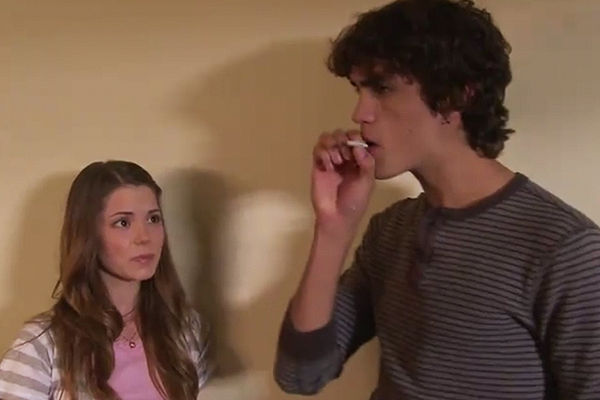
A still from "Pot, the Party Crasher"

It’s a middle-school rite of passage. One day, you’re sitting in class learning about Alexander the Great and wondering how to grab the optimum real estate in the lunchroom. The next, you’re getting the drug and alcohol awareness lesson. For my 12-year-old, that day just arrived. “We saw a movie in school today,” she drawled over dinner recently, eyes already engaged in full eye roll. “It was called ‘Pot, the Party Crasher.’” Then she made a familiar sputtering sound of contempt.

We live in a world that is changing at a breakneck pace. Yet drug awareness is still stuck somewhere around the “Saved by the Bell” era. And it was lame back then too.

Though “Pot, the Party Crasher” sounds like a lesser-known B-side by the Wiggles, it is in fact an educational film developed by Project Alert, a substance abuse prevention curriculum that also incorporates classroom activities and exercises. It was developed by the think tank RAND Corp. and boasts “measurable results” in reducing drug, tobacco and alcohol use that are “grounded in solid science.”

Science isn’t exactly art, though. Maybe that’s why the acting and dramatic resonance of “Pot, the Party Crasher” flat-lines at roughly the level of a local mobile home ad, and the score seems straight out of a 1979 video game. Did you know that teenage boys, crazed on their jazz cigarettes, still say things like “Chillax! Take a hit!” and “Quit being a buzzkill”? They do! Spoiler alert: The evening busts up when our heroine declares, “Nobody’s ordering any cheese bread because this party is over!” Take that, party-crashing pot.

It’s been a mighty long time since my own adolescence, right at the height of D.A.R.E. (Drug Abuse Resistance Education) and Nancy Reagan’s “Just Say No” campaign. Yet I’ve got to tell you, of all the reasons I ever turned down anything, wondering, “What would Nancy Reagan do?’ was never one of them. On the contrary, “Just say no” was a phrase most often bandied about jokingly, usually heralding the appearance of someone’s bong. But I also know that one little word is almost all it’s ever taken to decline an offer.

What’s surprising is how little drug awareness seems to have changed since we parents were rocking the acid wash. Why is D.A.R.E., with its ongoing efforts and successes, still as cheesy as its current campaign, “Keepin’ it REAL”? Sure, if by REAL, you mean something Marky Mark and the Funky Bunch might say. And if you want to get really absurd, behold the intense spots from the Scientology-front “Foundation for a Drug-Free World” or the “horrors” that the conservative Family Life International’s “Hugs Not Drugs” campaign is still cranking out.

And the success rate of these initiatives is unclear. Two months ago, a University of Michigan study found that teen alcohol use hit an all-time low in 2011, but that marijuana use was on the rise.

The reality of modern parenting is that most parents themselves have  experimented with drugs and alcohol — and may continue to. Frankly, as a nonsmoking social drinker who asks her doctor how to dispose of the Percocets she didn’t finish, I’ve never been one who particularly needed help resisting too many substances. But I don’t have strong feelings one way or the other about the recreational habits of others. And I can certainly distinguish between the person running a meth lab in his basement and the cancer patient who uses some party-crashing pot for pain and nausea relief. That’s why I suspect I’m not the only parent who’s rolling her eyes as much as her kids at the profound unsubtlety of substance abuse campaigns, or the hard lines organizations like the Partnership at Drugfree.org often take on issues like medical marijuana.

Make no mistake: I’m glad my child and her peers are having conversations about drinking, drugs and smoking. My firstborn, on the cusp of adolescence, is entering a world fraught with vices and potential hazards, and she’s doing it with a family history of substance abuse on both sides. I want her equipped to deal with decisions and their consequences. I’m glad that their eminently artsy school, where the images of John Coltrane, Joey Ramone and John Lennon – men not exactly known to for their strict abstinence policies — adorn the walls, is preparing kids for how to deal with the choices that will be offered to them. But how we can teach kids reason and responsibility if the tools we’re using are so outdated and corny?

There’s no easy way to talk to kids about drugs and alcohol. But there’s got to be a better way. And in all the conversation about how to teach them, I wonder how much anyone is listening to the kids themselves. I wonder where all the humor and weirdness and spirit of authentic 12-year-olds is. Because it’s there, waiting to be tapped. I love that when my daughter’s teacher suggested everyone in the class pledge simply to not drink alcohol just for today, one of my daughter’s friends raised her hand and cracked, “Come on. I’m Italian.” Better still, I love that when one of her classmates was recently offered pot in the park near the school, the kid disdainfully directed the guy to “Go back to your mother’s basement.” It was simple, direct and effective. And, I’d wager, delivered with a hell of an eye roll.

Mary Elizabeth Williams

Mary Elizabeth Williams is a staff writer for Salon and the author of "Gimme Shelter: My Three Years Searching for the American Dream." Follow her on Twitter: @embeedub.

Mother-daughter sexperts

Susie Bright and her daughter, Aretha, make parental talks about sex look easy -- and fun

Most parents loathe talking to their kids about the birds and the bees, let alone pubic hair grooming, faked orgasms and “water sports” — but most parents are not legendary “sexpert” Susie Bright.

Better than talking about these things, she penned an advice column in 2009 with her daughter, Aretha, then 19, for the ladyblog Jezebel. Their answers to questions about everything from porn to Paxil were unflinching but playful, and at times controversial. Now the pair have collected those columns into a new e-book, “Mother/Daughter Sex Advice.” Together, they read as an irreverent version of “Our Bodies, Ourselves” for the Internet age. The mother-daughter team also reflect on what the experience of writing the column was like, and it turns out it wasn’t as weird as many would think: For the most part, it was just a continuation of conversations they had been having throughout Aretha’s life.

I spoke with them both by phone about sex-positive parenting, where they draw the “TMI” line with each other, and their tips for making “the sex talk” less awkward.

Aretha, this might be an annoying question, because I’m sure you’ve gotten it for most of your life, but: What’s it like having a “sexpert” for a mom?

Aretha: I’ve been getting this question since second grade. Kids brought it up in the line at the cafeteria. I remember being way more defensive about it then, because just saying the word “sex,” it was like a four-letter word.

But now? It’s the same answer I always give, which is that it was pretty cool. I was the envy of all of my friends throughout puberty and high school. It’s interesting because now that I’m college-aged, I can see differences in how kids were brought up and, you know, I can see how my upbringing has affected me.

Did you have friends in high school who desperately wanted to come over and ask your mom for advice?

Aretha: I started community college when I was 13, so I had college friends who were in their 20s and late teens, and they felt really comfortable talking to my mom. Sometimes I got really jealous because they’d want to have alone time with her to talk about their relationship problems. With my high school friends, they felt too shy and inhibited. It was more that they’d come to me with a crisis and then I’d bring it to my mom.

Were you ever uncomfortable talking to your mom about sex when you were younger?

Aretha: No. Never. From age zero to now, I don’t think it’s ever been uncomfortable.

Susie: There’s an important distinction between “Do you feel comfortable talking about your personal sex life with your parents?” and “Do you feel comfortable talking about other people’s sex lives and sex in general, sex in the news and ‘what if’ sex, where you say, ‘I have a friend …’” All of that we’re very comfortable with. I think anybody would be shy when you feel like you need a little distance between you and your parents.

Sometimes I talk to kids and they tell me, “I have the opposite problem. My parents confide to me as if I was their little friend.” For me, that isn’t a healthy, sex-positive parental frame any more than being uptight and refusing to let a single word be said about it. Somehow, it’s the opposite but the same thing. A good parent says, “You can talk to me about anything and it can be in general terms. If you’ve got a physical problem and you’re uncomfortable talking, can I help get you to a clinic or a doctor that you would feel comfortable talking to?” Don’t get all hurt that they don’t want to tell you, just help them find someone that they can talk to instead of getting all sulky about it and saying, “You have to tell me everything or else I won’t help you!”

Aretha: I think we’ve always been sensitive about talking about each other’s sex lives. Except for when it comes to things that happened earlier in her life. I remember being really curious about how my mom lost her virginity. I could hear that story a million times.

Susie: There’s so many different levels of what it’s like to have conversations about sex, and because so many families don’t discuss it at all, they think that once you open the door it’s somehow like there’s no privacy, there’s no boundaries, there’s no self-respecting way to talk about anything. But I knew that wasn’t the case, even from my own growing up. My mom told me about getting her period, which I thought was fascinating, because she told me about the nuns stuffing a rag down her pants and they wouldn’t tell her what was happening. Her moral was, “I’m telling you this because you’ll never have to go through that, because I’m going to tell you the scientific reason for menstruating.”

My dad was the same. He would say, “I was so shy, I never kissed anyone until I kissed your mom, and I was in college,” but there were other things he wouldn’t have expressed to me — and of course not. It just starts to feel creepy, and I guess not everyone’s creep line is in the same place.

It’s just knowing that you can hold your privacy and yet you can share things that are part of a valuable conversation. Part of what I liked so much about writing the Jezebel column, and writing this book, was that I could hear Aretha’s reactions to things and it made me realize how strongly she felt about certain topics. I wasn’t going to just say to her, “So, Aretha, what do you feel about oral sex personally?” No way, I would have been too embarrassed and she would have been like, “Are you out of your mind?” When I heard her sticking up for other girls getting satisfied in bed and not just lying there and crying afterward …

Aretha: Why would I want them to do that? That makes no sense!

Susie: Well, you say that, but I know plenty of women who would say, “What do you expect, you shouldn’t be so romantic or you should try harder.” There are some really negative, shaming answers. The fact that you were such a good advocate, it just made me so happy inside. It wasn’t like I had dragged you over to a desk every day and said, “Now, Aretha, how do you spell ‘orgasm’?”

Susie, what sort of parental anxieties did you have about sex?

Susie: Well, I still have them in the sense — this is more dating and relationships — when she meets someone new, I wonder if I’ll like her boyfriend. If I don’t think they did something right or they hurt her feelings, there’s part of me that wants to run over and slap them — even though I’m supposed to just listen and be cool because they’re probably going to make up in 10 minutes and then I’ll look ridiculous.

Aretha: From my side, I see my mom worrying, like, “I want Aretha to feel like she can ask for what she wants with anyone, because not everyone’s had the same upbringing she’s had, so they might not know that everything’s supposed to be egalitarian.”

Susie: Yeah, but you haven’t had any really terrible sweethearts. You’ve had pretty open-minded people in your life so far.

Aretha: Well, there might be ones that maybe you don’t know about …

Susie: OK, now it all comes out! [Laughs] When you first asked that question, Tracy, I wondered what you meant, if it was, “Were you worried that Aretha would get pregnant too young?”

Well, here’s another question: What do you think most parents are afraid of when it comes to sex and their kids — is it the fear of them getting pregnant, of them having sex too soon?

Susie: I think the fear of having sex too soon is this big, tender topic that covers a lot of things. On the surface, they would say, “An early pregnancy or some sort of STD could be tragic and wipe my kid’s life out.” But if you scratch at that a little bit, lots of times it’s because the parent identifies with the kids and is having memories about regrets, about things they did or didn’t do when they were teenagers. So their child’s coming of age is like their chance of doing it over again.

As much as it’s true that I could just jump in there and completely micromanage every detail for Aretha, it is so important not to do that, to be a good listener and let them know that you hear them, to respond if they want your help but to mostly just be really solid and say, “I’m there for you.” You have to take every lesson you ever learned from a good therapist and bring it to bear and give them the space to figure it out on their own — not to be neglectful but not to be a busybody either. It’s such a hard line to walk, I’m not trying to make it sound easy.

Why is it so hard for most parents and kids to talk about sex with each other? We make such a big deal about the Sex Talk, as though it’s one talk that happens, ever, between parents and their kids. Why is that?

Aretha: Where to even start?

Susie: There’s so many fingers you want to point. For me, it had a lot to do with being raised in a religion that was very condemning of sexuality outside of procreation and women’s subjugation.

That sure covers a lot territory. So how can you make talking about sex with your kids, or with your parents, less awkward?

Susie: I got some of my first lessons of how to handle this when I worked in a vibrator store and someone would say, “How do I raise this with my husband?” or “How do I raise this with my wife?” I got really good at answering this: First of all, if talking is the part that freaks you out, buy a book and leave it in the bathroom or on the coffee table.

Aretha: I think you have to be careful with that, though! So many people complain, “My parents left a book under my bed about our changing bodies and they never said word one, they just expected me to find the book and come to them with questions later.” And guess what, they never came to them with any questions because they figured, “My parents are too shy to talk to me about it so I shouldn’t talk to them.” Not to, like, totally slam your suggestion, mom.

Susie: But they did something! People are always asking me, “Are there any particular books I should have in my house for sex education?” and I say, “You know what? If you have books at all, that’s great.” Books! Newspapers! Talk about what you’re reading on the Web! Sex will inevitably come up if you’re talking about it like you’d talk about anything else — in politics, in science, in arts. It’s not a ghettoized topic.

Here’s another thing: I call it “the cool aunt theory.” You realize that you, the parent, are too upset and uptight about sex to say anything, but your sister or friend or ex or someone you know very well has a sense of humor and has a good head on their shoulders and you go to them and ask, “Could you do this?” Or here’s another thing, when your kid raises an uncomfortable question, to just say, “You know, that is a really good question and I’m not sure I know the answer.” You’ve given yourself some time, but you’ve been friendly about it and then you can decide if you bring in somebody in the family or you get a book or find a documentary on PBS. The point is you don’t just freeze like a deer in the headlights and go, “Ahh!”

You can use that for a million things. People act like this is the only difficult topic — try talking about death in the family or money issues. There are so many things where people feel tense and if you can find some calming, loving ways to handle touchy questions in one area, you can pretty much apply it to everything.

Aretha: And definitely you can never start too early. Kids are talking about sex in one way or another starting in kindergarten.

Generationally, how were your youthful sexual experiences different?

Aretha: My mom was in high school in the ’70s — you know, a lot of free love everywhere. Seriously, when I was in high school and I liked two boys at the same time, my mom would suggest that we have an open relationship, like it was the most normal thing in the world! And she was like, “Why are you so possessive of each other? You’re so young, you don’t know who you are yet, so just experiment! They can’t even say they’re straight yet.” I just remember feeling like, “She does not understand. It is so different now.”

There’s also way, way more virgins and people who are waiting to have any sexual experiences. In some ways, I think kids know more, but they also know less, practically speaking.

Susie: I knew I was being kind of snotty when I was saying, “Why not have an open relationship?” but I just had to make my little feminist point.

Aretha: Well, you said it a lot.

Susie: I have a lot of feminist points to make, I guess. You know, all these people that are trying to live out the romance bible are going to grow up and realize that life is more complicated, and why not be exposed to reality? People either are having open relationships or they’re cheating, and here are these people in ninth grade acting like they’ve got to take their vows and it’s just so silly!

I not only came of age in the ’70s, I was also in a major urban high school and I was in a feminist consciousness-raising group, I was involved in an underground commie anarchist newspaper. So it’s like, yes, I was in an extremely different scene, but the tenderness, the inexperience, the shyness and all the drama that happened every day, that was the same.

Did you notice any themes in the questions that you got for the column?

Aretha: Um, that they have horrible boyfriends and that they should dump them?

Susie: The funniest line was people would always say, “Our sex life is awesome, but …” and then they would tell me this problem that would negate it being “awesome.” This is from my crabby old feminist dyke warrior lady position, but I was constantly saying, “Why would you give a fuck what he thinks?” Or I’d think, “What you need is a nice, big lesbian experience.” I would think that the lesbian cure, if you were in a lesbian milieu, you wouldn’t be so second-guessing yourself and your femaleness all the time, but I realized that’s a generation gap too. I get some questions from young lesbians and some of them are just as fragile as any straight girl. I realized it’s more my feminist point of view rather than gay or straight.

What was your favorite question that you got for the column?

Aretha: This wasn’t my favorite question, it was what happened afterward: Someone sent us a picture of her hand and an engagement ring on it and I was like, “Yes! It worked out!” I liked the throw-up column, the girl who throws up every time her boyfriend comes in her mouth. I liked the boyfriend who asked how he could ask his girlfriend to shave her pubic hair, politely.

Susie: Aretha’s answer to that is, “There is no polite way!”

Aretha: I stand by that.

Susie: My favorite was we answered a question from a girl who was given a Paxil prescription after a five-minute intake and it had a terrible impact on her libido. We wrote her a super-sympathetic, supportive thing that basically said, “Go see someone who will pay attention to you.” We thought it was a great answer, but it got a lot of pushback from people who are using and approve of the SSRI’s in their life. The Paxil cheerleaders were enraged!

But the girl who wrote the question really, really liked our answer and felt encouraged. It felt good, it makes you feel great when you’re a total stranger and you’re able to make a positive difference in someone’s life or their health. That’s what I like about my job in general, and it was even more poignant to do it with Aretha. It was like suddenly having a million daughters instead of just one.

Continue Reading Close
Tracy Clark-Flory

Tracy Clark-Flory is a staff writer at Salon. Follow @tracyclarkflory on Twitter.

Baby sitter’s got a rap sheet

I thought my daughter was safe until I checked with the police

(Credit: Zach Trenholm/Salon)

Dear Cary,

This problem has been eating away at my brain and heart for a while. I cannot decide what to do. I know your answer will help me, even if you also don’t see a clear answer.

One of my children was recently diagnosed with a rare disease. That is not the problem, but helps to explain how I developed a close, trusting friendship with the mother of a child with the same disease. She has helped us so much and has given good medical advice and emotional support. She also works as a baby sitter. For us, the arrangement was perfect: this kind, well-informed person needs money and we need her special medical skills. For months, my husband and I considered her the only possible baby sitter.

Recently, we were tipped off through the school PTO grapevine that she has a criminal record and is an addict, and that stories about her have appeared in the town paper, and also that she has been banned from volunteering in the school because of this.

I didn’t believe it, but asked a librarian if there was a way to find out. The librarian gave me a link to a criminal records database for our state. All I had to do was type in her name. A long list of arrests came up for both the baby sitter and her spouse. Most were driving without a license or marijuana possession. Two were for domestic violence. I called our police station to ask if I could find out more about someone’s arrest on a domestic violence charge. I explained I wanted to know if a rumor about our baby sitter is true. The police gave me a copy of one of the domestic violence case documents. The date was just over a year ago.

It’s pretty bad: She and her husband were beating each other up in front of their kids, blood was spattering all over the kids’ toys, they were swearing at each other. The mug shot was awful. I guess mug shots usually are, but she doesn’t look at all like the person I know. I mean, it’s definitely her, but she has a weird look in her eyes.

This is as far as I got with what to do: I am not comfortable having her as a baby sitter. Whether that’s right or wrong, I am OK with my decision. I know some people might focus on her kindness and think she has moved on from her troubles, especially since there’s no record of arrests within the year.

I got halfway to this: I am ethically required to tell the people I recommended her as a baby sitter to about this. (I’ve told some of them, but only the ones I trust to not gossip.) Do I need to tell everyone?

I am completely stuck on this: Should I tell her what I know? Would she want to know? Or would it just be rude and unnecessarily confrontational of me to bring it up? She still thinks we are friends. And I guess we are. But I have stopped asking her to baby-sit (obviously) and also have stopped asking her for medical advice. I never reach out to her anymore. She is a nice person. She is kind and smart. Her arrests are from over a year ago. Should I, as her friend, let her know that the PTO grapevine is sharing her criminal record info with the rest of the town?

Thank you for reading and considering my question. I value your advice!

Need a New Sitter

Dear Need a New Sitter,

When you ask your daughter where she picked up that new vocabulary and she says, “It’s prison lingo, Mom,” it makes you feel kinda funny inside.

So I completely understand your decision to stop using this baby sitter.

There’s just something about the person who’s making sandwiches in the kitchen while your kids are watching TV that doesn’t go with “mug shot.”

Generally, when I find out somebody has an arrest record, I give them the benefit of the doubt.

But parents are funny. They’re really touchy about who tucks their kids in at night. While they’re out having dinner, they like to imagine some clean-scrubbed honors student doing her homework on the couch while the kids are watching TV or tucked into nice, clean, warm beds.

So yeah, sad as it is, I think you gotta be the snitch. You got to drop a dime on this character.

You gotta tell. Seriously. You may be depriving this person of work, but hey.

The Buddhists say we ought to seek our right livelihood. Baby sitter isn’t the right livelihood for this person.

Nobody loves a snitch. But your reputation would suffer more if it came to light that you knew about this and didn’t tell anyone. It’s like you’re endangering their kids. So tell.

Domestic violence is a definite no-no for baby sitters. Sure, she’s innocent until proven guilty. But a baby sitter can’t afford to even get arrested for such a thing. It’s a well-understood professional liability and a common-sense deal-breaker. She should find a new line of work that’s not “domestic” anything.

Continue Reading Close
Cary Tennis

Cary Tennis writes Salon's advice column, leads writing workshops and creative getaways, publishes books, plays guitar, performs in art galleries, writes an occasional newsletter and tweets as @carytennis.

Join Cary's Online Writing Workshops

How I met my mother

After our dramatic fights, I swore I'd be a different kind of mom than my mom. I didn't realize how similar we are

A photo of the author with her mom and son. (Credit: Reyna Zack Photography/Melissa King via Shutterstock)

I could say we didn’t get along, but that sounds benign. There are plenty of people I don’t get along with, but we’ve been able to opt out of each other’s lives. This was my mother, and though we both would have opted out if we could, we couldn’t — except for the brief year I went to live with my father, which was a mistake — and so we didn’t.

I wish I could tell you exactly why we didn’t get along. Maybe I resented my parents’ divorce, and because she screamed louder, I blamed her more. Maybe I blamed her for seeming to hate me. (I was what was called, back before all children were pathologized, a “difficult child.”) She felt mothers should be respected universally, and I felt like we should talk everything out. I wanted to be understood. She wanted me to understand that I wasn’t her friend, I was her daughter. When she hears my sister using the parenting language of today on her son – “I hear that you’re frustrated, because it’s frustrating to not be able to own a machine gun, but you just can’t have one” – she rolls her eyes and thinks back to the days when a kid who asked for something unreasonable could just be sent to his room.

As I grew older, I went from “difficult” to “rebellious.” There were accusations, door slams. We are both temperamental and quick toward theatrics, both prone toward shaking our hands at the heavens and screaming, “Why me?!”

Eventually, though, we learned to get along. We still do. When I had children, I promised our home would be calm and reasonable. We would talk everything out. We would never, ever yell.

At first, I was a different kind of mother than she was. My son was quiet and compliant — and sweet. He hugged me when I put my arms out; he never defied me, at least not until much later. My mother would visit, and I would show her how loving and not screamy I was with him. I sat on the floor with him and played with him during those visits, though I find stacking and shape-sorting excruciating. By my example, I would try to teach her how nice and easy it could have been. On our daily phone calls, I would show how I was the model of patience and how I was understanding and not reflexively impatient. I was showing her how she could have been a better mother; in truth, I was waiting for an apology.

Then my younger son was born. He is beautiful — you should see him — and he is charming. He smiled, I swear, the day he was born. He laughed when he was just 4 weeks old. Then, about two months after we brought him home, he opened up his mouth and began screaming, and he didn’t stop for something like 15 months. He has not yet slept through the night for more than a week in a row. He is old enough now to get very angry at me and throw tantrums, and for those tantrums to upend our household. He’ll grow out of them, or maybe he won’t. Maybe he’ll sit at his desk in 34 years and write an essay about what a terrible mother I was.

But that will be his essay. In my essay, I start to scream. I scream so loud that the neighbors want to know if, um, everything’s OK in there? I scream so much that my throat is raw. I give looks that are identical to the ones my mother gave — sharp and pointed — not just to the younger one, but to the older one, who has started testing my limits, too. I send the 2-year-old to his room. I try to speak the way my sister speaks, to tell them that I understand their frustration, but honestly, I don’t, and I don’t think I should have to. I tolerate no amount of disobedience or backtalk. My husband comes home to find me a frazzled mess.

I am, in short, the kind of mother my mother was.

But my mother is a different person than I realized. I first came to understand this after the delivery of my older son. It was traumatic, and I was depressed for months following it. My mother came to stay with me and tried to show me new ways of having perspective on this, but all I kept saying was that she had never had to triumph over anything this difficult. As I sat in a dark trance, rocking my baby, she told me to put him down while he slept. I wouldn’t. I was going to be a calm, peaceful — OK, completely depressed — presence for this kid in a way she never was for me.

Once again, she didn’t understand what I was going for. I wanted to be rock solid. I didn’t want my own emotional limitations to get in the way of being a parent. Not my sadness, not my temper, not anything. I wanted to be better than human. I wanted her to have been better than human.

The day before she returned home from her visit, she had been told that a lifelong heart condition had reached critical condition. I knew nothing about this. She told me about it when she returned home. She called to tell me that she was scheduled for open-heart surgery. I knew she had a heart murmur, but that sounded so — I don’t know — benign.

She told me the whole story: She’d been born with a heart condition. When she was a young child in Israel, the doctors told her she wouldn’t live very long. They didn’t let her play in gym class or ride a bike. They told her she would never have children. When she got to America as a teenager, she decided that she would live on her own terms. She bought a pack of cigarettes and didn’t tell anyone about her heart condition. No one would tell her how to live her life. She married my father, and she spent the next 10 years gestating me and my several sisters and smoking Kents, alternately.

I was stunned. I had never known my mother had such a secret. I’d never know that it was she who was the rebellious one. I started to see my mother as someone about whom I did not have the whole picture. I was starting to find common ground with my mother. We were both rebellious, it turns out, but she was truly brave.

I came to imagine a new side to my mother: The bad-ass side, the take-no-crap-from-anyone side. And here is where I should mention my mother’s looks. She is so, so beautiful. She was devastating to look at. Even with her children in tow, yelling at them in some public mall, men would turn to look and women would comment with envy on some aspect of her body or face. In her jewelry box, I found letters from old boyfriends, begging her to stay.

And you should see the photo albums: The white bikini, the strapless dress, the beehive hairdo with the liquid eyeliner, that trench coat. She did not know how long she would live, but she would live until then. She would live and die according to her own terms. V’ze-hoo, as she’d say in Hebrew: And that’s that.

But we have no idea who our mothers really are. They are mysteries to us, and we don’t ever have all the information. Even my kids, who will one day use their Google brain chips to read my essays — me, the oversharingest woman in the world — still won’t know my entire story.

Yet, lately — maybe because of the behavior that I’ve tried and failed to control — I’ve started to wonder if the kind of mother I had wasn’t exactly the kind of mother I needed. Because I turned out fine. I am a loving daughter, a loyal and warm wife, a doting (if screaming) mother. I am what my mother wished for. So are my three sisters. And we are sure of nothing if not that we are loved by our mother.

Could it be that every bit of tension was aimed particularly at a part of me that required it? Could it be that the screaming and the anger worked like water and sunlight and helped me grow? Could it be that her disapproval was what I needed to learn to parse what I found approvable?

Or could it be that motherhood is far more forgiving than we ever could imagine? Could it be that, later, our children will forgive us our faults because there is nothing like a mother who screams at you and suspects you and checks on you at midnight and is afraid for your future to show you how loved you are?

My older son was just a few months old when my mother’s heart surgery was scheduled. We flew back to New York on a redeye and went straight to the hospital just in time to see my sisters head into the waiting room: It was almost time to begin. I sneaked into the pre-op room, where babies were not allowed, and where she’d been given a drug to relax her as they arranged the IVs and monitors so they could be wheeled into the operating room.

“I’m sorry I made your life hard,” I told her, just in case, as two nurses carefully guided her bed out of the pre-op room and into the hall.

“You made my life a joy,” she told me. I held my son close on my hip as they wheeled her down the long hall, all the way down, until she became so tiny that I couldn’t see her at all.

Continue Reading Close

Taffy Brodesser-Akner has written for the New York Times, Los Angeles Times, Self, Redbook, and other publications.

Hot, naked and pregnant

How a nude photo shoot at nine months changed the way I see my own body -- and my role as a "mommy"

(Credit: Loskutnikov via Shutterstock)

I’m standing in front of my house in a light rain, in the altogether, eight-and-a-half months pregnant, while a photographer snaps photos. I’m tucked into the hedge, hoping the neighbors don’t have a view from their windows. I’ve never been so happy to be naked.

A year earlier, I had tumbled into a mid-life crisis. I had one child who was nearly three, and my husband and I were planning for a second. This had always been our intention, and I approached this second foray without much anxiety. But when my younger sister called to tell me she and her boyfriend were going to London, something inside my head was knocked loose. “Damn,” I thought. “I’m going to be a MOMMY.”

Yes, I know what you’re thinking: You’ve been a mommy for three years. Get over it.

But it wasn’t the prospect of becoming a parent that freaked me out. I loved my little boy and wanted to add another goofball to the family. What threw me into a tizzy was the prospect of being a mommy and all the cultural baggage that came along with it. With one child, you could be that interesting woman with the cute kid who still retained a modicum of cool. But the second child would define you. This is faulty logic, I know, but I believed it nonetheless: A mommy is invisible. A mommy has bad jeans and a minivan. Twenty-five-year-old boys would never check me out. I would never take off to London on a whim.

Our culture certainly didn’t help these insecurities. “Mommy” is used to denigrate female parents. Professional women planning to have children are on the “Mommy track.” When we write about our experiences, we are “Mommy bloggers.” When we differ about parenting, we engage in “Mommy wars.” When we get into a little erotica, it becomes “Mommy porn.” Once identified as a “mommy,” we’re identified as little else.

No matter that I was never that cool or adventurous in the first place. I was the high school valedictorian, the Goody Two-Shoes. I’d had two boyfriends and married one of them. I always win “I’ve Never” because, really, I’ve never. But now I had no chance to be cool. Any possibility was off the table. I considered getting a tattoo or tarting up my wardrobe, but then I realized that doing these things to avoid being a mommy cliché was a cliché in and of itself.

Eventually, I realized I needed to get over myself. The demands of parenting a small child did not leave time to wallow, and at lucid moments I recognized that I would not have young kids forever. I would be able to go to London someday, and I didn’t have to drive a minivan. But my mommy fears still nagged.

A year later — pregnant as can be and irreversibly a mommy — I learned that a favorite local photographer was looking for models for a project on pregnant women. It was an appealing proposition, but there was a catch: She wanted nudes. I dismissed the idea; I couldn’t do a nude photo shoot. But I also realized I did not want to be the type of person who would say no to this.

This is how I found myself in my yard in the nude. I had spent an hour posing with my clothes on — the black bike shorts and black tank that had become my uniform in those sweltering final weeks. The photographer, Ellen, posed shots of me contemplating my belly on the back deck, family portraits in front of a nearby dilapidated barn, and shots of my boy and me frolicking in the neighboring cemetery. We chatted while she clicked away: about pregnancy, our kids, our town, and her work, and I tried not to think about where this was leading.

Eventually it started to rain and we ducked into the front yard, sheltered by a tall hedge. I ignored my misgivings, summoned a little confidence, and shed my clothes.

All along, I hadn’t been sure I could strip. I may not be the person so neurotic she changes in the bathroom at the gym, but I’m also not the woman who wanders around the locker room stark naked. I’ve often struggled with my weight, and I fight the urge to hide my body: too much belly, too much breast, flab and curves where I don’t want them.

But pregnancy gave me a freedom with my body that I didn’t have before and haven’t had since. At nearly nine months, my body was supposed to look like this. I was supposed to have an enormous belly, giant breasts, and a little something extra in the back. I could have done without the tree-trunk thighs, but I could live with those, too. Much to my surprise, revealing this body felt fine. So did the rain on my skin — it was awfully hot being pregnant in June.

Once Ellen began shooting, I adopted a strategy of “don’t look down.” It was best to ignore the absurdity of standing in our tiny front yard, separated from the sidewalk and street by only a hedge. As the shoot progressed, I felt an amazement that I could do this, that I was doing this. I can still see it in the small, pleased smile I’m wearing in the photos. It is equal parts relief, surprise and satisfaction.

Looking at the photos now, years later, I feel a bittersweet pang for those last few days when we were just three, before we became something new. I’m gobsmacked not only by the size of my belly and breasts but also by my nerve.

Later that day, after Ellen left and I had dressed, my husband observed, “Now you’ll never have to get a tattoo.” I’m grateful for that. And I’m grateful that the postman didn’t choose that moment to deliver the mail.


Continue Reading Close

Megan Rubiner Zinn lives in Western Massachusetts with her husband and two sons. Her work has appeared in Jezebel, the Daily Hampshire Gazette (Northampton, MA), VisualThesauraus, and her blog, life in the little city.

Rise of the Dad Wars

Increasingly, women aren't the only ones being criticized for choosing to stay at home with their kids

(Credit: hartphotography via Shutterstock)

“It feels like we’re supposed to have it all, and we’re not supposed to bitch about it,” an Austin stay-at-home parent of two tells me. “We’re not supposed to say how hard the job is.” His name is Doug. When it comes to raising children, it’s not just women who receive criticism and second-guessing.

Spurred by flexible work situations, mates with a more lucrative income, a sluggish job market, or simply the desire to be the one in the family who does the bulk of the child rearing, the population of fathers who stay at home with their kids is small but growing. The U.S. Census notes that 16 percent of our preschoolers are cared for by their fathers while their mothers work. In America in 2010, there were 154,000 stay-at-home dads caring for 287,000 children. We see them not only on the playground but also in popular culture on shows like “Up All Night” and “Modern Family,” with prominent dad characters who’ve scrapped the career fast-track for play dates and preschool interviews. Yet just as decades of feminism haven’t eradicated sexism, the glass ceiling and the elusive dream of “having it all,” the growing numbers of men who challenge traditional gender roles on the domestic front haven’t yet wiped out a different share of deeply rooted biases.

Doug is a veritable trailblazer. For the past 12 years — first when his wife was sole breadwinner and now as a work-at-home entrepreneur — he’s handled “all the home-related stuff, such as laundry, cooking, shopping, getting the kids to school, taking the kids to the dentist, etc.” When his family was living in the Bay Area a dozen years ago, “I’d be the only dad dropping off his kid at school,” he recalls. “Nobody was mean to me, but they’d look at me like, ‘What are you doing here?’ There was not a lot of community for me.” However, now that “my entire work group is all men, and all of them work from home,” he says, “people don’t seem as stunned” by his lifestyle anymore.

Even as things are changing, though, old expectations persist. We experience them in dated, stupid references to 30-year-old Michael Keaton movies. We see them in ads that suggest that dads are innately incompetent at simple tasks like changing diapers. We hear it in the subtle jabs about what a dad’s role is. Chris Read, who runs Canadian Dad, says he deals with “negativity from backseat parents who still feel like I am ‘babysitting’ when I watch my kids and feel the need to interject with their advice on what I’m doing wrong.” And sometime HuffPo blogger Dave, who’s home with three young sons, says, “People ask my wife, ‘Do you worry about the kids home with him all day?’”

Along with the assumption of male domestic ineptitude, SAHDs deal with the persistent equation of masculinity with income and career achievement. Stay-at-home dad Christopher admits, “You hear from a wide variety of sources that it’s a man’s duty to provide for his family, and it stings when I hear it. I get teased in my own family about it sometimes.” But, he adds, “When I’m with my daughter and watching her grow up and not missing it, it’s then that I really don’t give a flip what anyone might think of me.” And Russ, a Minnesota stay-at-home father of two young daughters, thinks that “When you overlay the gender role a man is supposed to have in our society with the notion of being a stay-at-home parent, there’s a lot that’s very hard for people to understand.” He says that one of the first misconceptions is that a man at home is a man who has it easy. “It’s really hard,” he says. “It’s really, really hard to be a man in a traditional women’s role. Nurturing children is an extremely difficult job. I have guys say to me, ‘How did you get this gig?’ My response is that if more men stayed home with their children, they’d be getting their wives a lot less pregnant.”

It’s not just other men who have a hard time getting their heads around a guy in the domestic sphere, either. When mothers create support networks for one another, dudes are often iced out of them. Russ says, “There is no question that isolation is huge. I was in a community that had a play group they called Mom’s Morning Out. When I joined, they changed it to Parent’s Morning Out. But then they decided to limit the size of the group, and the women met and let me go. This was a pretty progressive group. It’s not like they had no experience with discrimination. But I was the only man in the group, and I was the only one who was excluded.” And blogger Dave echoes the experience, saying, “I was involved in play groups, and some of the women were very angry that there was a man there. They felt invaded. There were several people who gave me stinkeye, so I decided it wasn’t worth it.”

I’ve certainly witnessed the dad snubs myself, the circling of the lady wagons. I often suspect there’s a fox-in-the-hen-house aspect to it — the unspoken concern that any daytime interaction between hetero men and women will inevitably bust out in a Tom Perrotta novel.

There’s also a likely darker excuse for the shunning: our unfortunate modern uncertainty of men who spend time with children. There’s a sadly pervasive assumption they’re all predatory until proven otherwise. Stephen, an Illinois father of two young daughters, says, “If I take the kids to the playground, I’ll wave and say hi — and the moms will stay in their circle. I’ve wondered, do I look like a creepy weirdo? Am I not part of the clique? I’d understand if I rode my bike to the playground by myself, but I’ve got kids with me.” And Ryan McLuen, who writes the Dad’s Misadventures blog, says that even though “More often than not people are respectful of the fact I’m home with the children … there’s kind of a stigma to being a male who loves kids. In a lot of people’s eyes it’s creepy.”

So why do SAHDs put up with it — the skepticism and the criticism and plain old everyday bafflement? The same reason so many of us make the choices we do. Because it’s what’s right for us. Daniel, a work-at-home father of five kids ranging in age from 23 months to 19 years and the brains behind Post Post Modern Dad, says that his kids have “a happier parenting duo” with his family’s arrangement — one that makes for a more harmonious family all around. He says that he hopes his kids will someday “look back on their childhoods and appreciate that I was able to be part of their lives so much more.” Stephen, meanwhile, calls his choice to stay home with kids quite simply “the best decision I ever made.” And Ryan says, “My wife needs her work. Knowing her, and knowing me, this was a natural fit.” What’s natural isn’t always what’s traditional. It’s what works best and what creates the most nurturing environment for each member of a family.

You don’t have to be at home all day to be loving and supportive and involved with your children. But it should be more than OK if you are home all day — and that’s true whether you’re a man or a woman. A father, even a father who doesn’t go into an office, is not a babysitter. He is not Mr. Mom. He is Mr. Dad. He has his own way of doing things. He has his own set of challenges and struggles and frustrations. But diaper changing and peek-a-boo playing and being a loving human and a parent aren’t skills unique to women. Both men and women need to work together to remember that and to practice it. As Chris Read says, “I couldn’t imagine life without the joy of knowing that I did more than just create my kids.” And, he adds, “I’m hoping the non-believers start to see that we dads are not only capable participants in our children’s lives, we’re willing ones.”

Continue Reading Close
Mary Elizabeth Williams

Mary Elizabeth Williams is a staff writer for Salon and the author of "Gimme Shelter: My Three Years Searching for the American Dream." Follow her on Twitter: @embeedub.

Page 1 of 42 in Parenting

www.salon.com/topic/parenting/