Our Picks
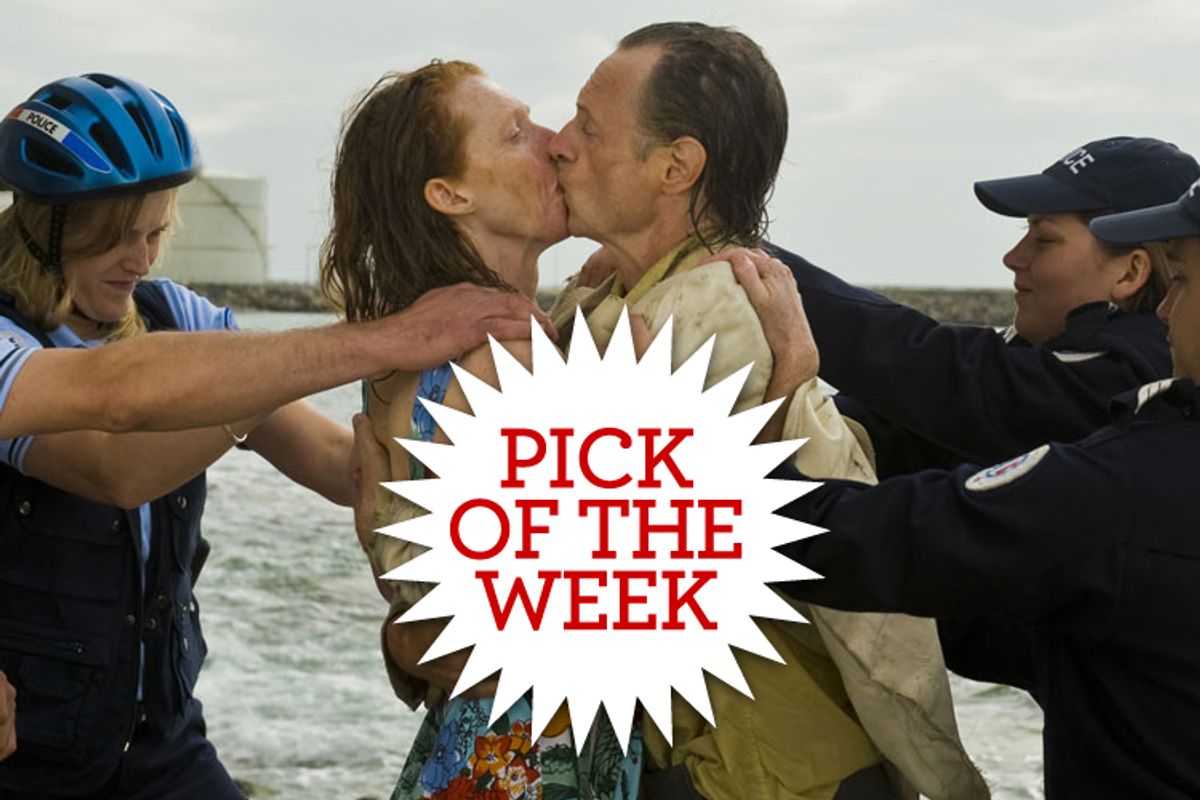
Pick of the week: Another French film inspired by silent comedy
Pick of the week: Effervescent, delirious and delightful, "The Fairy" blends slapstick, romance and modern dance
Here’s a question I’ve been asked several times during this Oscar season: Where in the H-E-double-hockey-sticks did “The Artist” come from? Whether people love it, like it or can barely tolerate it, the very existence of a French film made in half-loving, half-mocking tribute to the forgotten American dramas from the tail end of the silent era is distinctly puzzling. One answer to the question, of course, is to look at the previous work of soon-to-be-Oscar-winning director Michel Hazanavicius and actor Jean Dujardin, who were well known in France for their tongue-in-cheek approach to classic cinema long before making “The Artist.”
Only a handful of American viewers bothered to catch “OSS 117: Cairo, Nest of Spies” or “OSS 117: Lost in Rio,” Hazanavicius’ pair of spy farces featuring Dujardin as Hubert Bonisseur de la Bath, a venerable James Bond knockoff (who was Franco-American in his original incarnation, but is reinvented here as a thoroughly clueless, sexist and bigoted 1960s Frenchman). Those movies are hilarious, although you have to know at least a little about French culture to get the jokes. “The Artist” may actually have more in common with Hazanavicius’ 1993 “La Classe Américaine,” a Situationist-style pastiche in which clips from vintage Warner Bros. movies are spliced together and dubbed with new French dialogue. Since it’s a copyright violation of epic standards — the “cast” includes John Wayne, Robert Redford, Paul Newman, Clark Gable, Orson Welles, Charles Bronson (as an Indian chief) and Elvis Presley (as “le putain d’énergumène,” or the damned weirdo) — I know of no legal or even possible methods to see it.
But the weirdness of Hazanavicius’ obsessions seems slightly less peculiar set against the overall French fascination with the forgotten detritus of American pop culture, and particularly with silent film and vintage comedy. I’m delighted to report, for example, that “The Fairy,” the latest offering from the weird and charming Franco-Belgian-Australian comedy team of Dominique Abel, Fiona Gordon and Bruno Romy, is hitting American shores during Oscar week, lending valuable context to the triumph of “The Artist.”
It would be going way too far to claim that Abel and Gordon are stars in the French-speaking world, but at least this long-limbed, long-faced, sweetly retro dance-comedy duo — the spawn of Buster Keaton and Jacques Tati, mixed with Fred Astaire and Ginger Rogers — have something of a following. (They may yet find one here; if “The Artist” can happen, then anything can.) Mind you, “The Fairy” is not a silent film. As always, Abel, Gordon and co-director Romy make tremendous magic out of simple sound cues, most notably the theme song from some totally forgotten American cowboy musical. There’s even some talking; compared to “Rumba,” their delirious Latin-dance extravaganza from 2008, it’s a veritable gabfest. But hardly any of the dialogue is important as information, at least after Gordon, playing a self-described fairy named (as always) Fiona, shows up at the sad-sack Le Havre hotel where Abel (playing a character called Dom, as always) works to offer him three wishes. He wants a scooter, a lifetime supply of gasoline and, well, you’ll have to see the movie for No. 3, but you can probably guess.
As in their previous features, “Rumba” and “L’Iceberg,” this trio sticks to the simplest and most archetypal kind of storytelling. Boy gets girl, boy loses girl, brokenhearted boy will do what he must to get girl back. The magic of the film lies elsewhere, in the ectomorph frames of Abel and Gordon in motion, in the unfettered imagination and distinctively odd vision, in the wonderfully silly humor. Along the way we get several exquisite dance numbers, one of them on the bottom of the ocean and another on a rooftop (that one ends with the birth of a baby, and no, I’m not kidding). There a host of overtly ludicrous sight gags — a hospital, its front door barely visible through the fumes emitted by all the cigarette-smoking doctors and patients — a severely nearsighted waiter attempting to serve glasses of draft beer, and any number of slapstick chase sequences on foot, by scooter and even by car (employing old-fashioned rear projection, of course). There’s a heartbreaking musical number involving a women’s rugby team that just lost a big match by 57 points. I suppose it’s unnecessary to point out that a movie called “The Fairy” is a fairy tale, even if it’s not entirely clear that Fiona really is a fairy rather than, say, an escaped mental patient with a forceful way of affecting the world around her.
To cite a film that a few people have actually heard of, “The Fairy” is an obvious companion piece, in terms of mood, setting and rundown seaside surrealism, to Aki Kaurismäki’s “Le Havre,” which should have gotten a foreign-language Oscar nomination but didn’t. How’s that for a tie-in? Simultaneously artful and innocent, wistful and effervescent, hilarious fun with an undercurrent of almost bleak surrealism — and French down to the level of its DNA — “The Fairy” is surely not everyone’s glass of Pernod. But if you’re looking for another refreshing palate-cleanser after “The Artist,” I thoroughly recommend it. It’s wonderful to be reminded that the film universe is more diverse than the Oscars normally suggest — and also that movies can be lightweight entertainments and also deeply strange.
“The Fairy” opens this week at the Elinor Bunin Munroe Film Center and the Quad Cinema in New York, and then opens March 9 in Milwaukee; April 5 in Hartford, Conn.; April 20 in Boston; April 27 in Seattle; May 4 in Minneapolis, Salem, Mass., San Francisco and St. Louis; May 11 in Atlanta; and June 1 in Denver and Philadelphia, with more cities to be announced.
Blockbuster fatigue? A summer alt-movie guide
Summer movies beyond Batman, from male strippers to a Depression neo-noir to Matthew McConaughey's big comeback
From top: stills from "Beasts of the Southern Wild," "Take This Waltz" and "Lawless" It may feel to you as if the summer moviegoing season has only just begun and many months of popcorn-munching delight lie ahead. That’s both true and not true. There’s a degree of pseudo-Calvinist predestination about the whole thing this year that’s unusual even by the standards of Hollywood, where conventional wisdom and guesswork-in-advance count for actual knowledge.
I mean, nobody knows for sure how much money the 1980s big-hair musical “Rock of Ages” will gross or whether “The Dark Knight Rises” will beat out “The Avengers” as the top box-office hit of the year. (My answers: Not enough to be a huge hit, and no.) But pretty much any idiot with a computer — me, for instance — can look at the calendar and figure out what the biggest hits of the summer will be. As I just mentioned, the summer’s No. 1 movie, in all probability, has already been released. (I’ll save the trollery about how it wasn’t really all that great for some other time.) After we get through “Prometheus” and “Abraham Lincoln: Vampire Hunter” in June, followed by “The Amazing Spider-Man” and “The Dark Knight Rises” in July, well, that’s pretty much it. I exaggerate, but only a little — these days, blockbuster season commences in early May and is over by the end of July, with August reserved as usual for offbeat genre movies, the fourth chapters of trilogies, and the continuing careers of Sylvester Stallone and Jackie Chan. (In other words, the good stuff.)
Continue Reading ClosePick of the week: Haunting, gorgeous “Oslo, August 31st”
Pick of the week: "Oslo, August 31st" is a wrenching voyage of discovery in Norway's suddenly trendy capital
“Oslo, August 31st” is, as the title suggests, an evocation of one day in the Norwegian capital, as experienced by a troubled young man who’s facing the end of summer and the end of his youth. It’s a marvelously constructed personal journey, both wrenching and bittersweet, whose emotional ripple effects stay with you for days and weeks afterward. While much of international art cinema can seem overly talky or conceptually alien to American viewers, this second feature film from Norwegian director Joachim Trier is a dynamic, even breathtaking visual experience without much dialogue or any philosophical heavy lifting, following the bony, handsome, exceedingly vulnerable Anders (Anders Danielsen Lie) through coffee shops, nightclubs and bodies of water, en route to an ambiguous final destination.
Continue Reading Close“Moonrise Kingdom”: Wes Anderson’s mid-’60s love story
Bruce Willis and Ed Norton are at their best in the rapturous summer fantasy "Moonrise Kingdom"
Tilda Swinton, Bruce Willis and Edward Norton in "Moonrise Kingdom" All the details of Wes Anderson’s rapturous and hilarious mid-1960s New England summer romance “Moonrise Kingdom,” taken one at a time, are plausible. Indeed they are more than plausible; they’re perfect, from the fitted uniforms and yellow canvas tents of the troop of “Khaki Scouts” headed by cigarette-smoking Edward Norton to the achingly picturesque island home where the brood of children belonging to Bill Murray and Frances McDormand sit around listening to the Leonard Bernstein recording of “A Young Person’s Guide to the Orchestra.” (I’m not going to bother questioning whether that record existed in 1965; some production intern probably spent half a day tracking down its history.)
Continue Reading ClosePick of the week: A class-war thriller from Putin’s Russia
Pick of the week: A middle-aged wife and mom contemplates the unthinkable in the masterful, mysterious "Elena"
Nadezhda Markina in "Elena" As readers of Chekhov and Gogol and Dostoyevsky are well aware, the pervasive melancholy of Russian culture long predates the Soviet era, and there was no reason to believe that the end of communism would lift the gloom. Some Western reviewers have described “Elena,” the mesmerizing new family drama from the brilliant Russian filmmaker Andrei Zvyagintsev, as an updated film noir. That may be a workable shorthand, in that “Elena” is about an ordinary person who persuades herself to commit a terrible crime, with uncertain consequences. But it attaches the movie to the wrong heritage and the wrong set of expectations. “Elena” is a moral drama, all right, but one pitched in a dark and ambiguous Russian register reminiscent of a 19th-century short story or a fairy tale, with no clear lesson delivered at the end.
Continue Reading ClosePick of the week: Childhood adventure from a Japanese master
Pick of the week: "I Wish" is an art-house rarity -- a lovely, bittersweet Japanese yarn for all ages
A still from "I Wish" “I Wish” is an old-fashioned kind of movie about a subject that might sound, at first, both worn-out and a little retrograde: the dislocating and disorienting effects of a family breakup. It’s also a movie whose principal actors and characters are children, that tries to view the world from a child’s point of view — and that’s an enterprise so perilous, so prone to easy gags, cheap tears and nauseating sentimentality, that hardly anyone ever gets it right. But “I Wish” is a wonderful adventure film that’s no less thrilling for its modest scale, and a film whose emotional power and intelligence sneak up on you. Thoroughly accessible and rewarding, it might finally mark the mainstream breakthrough (relatively speaking) of Hirokazu Kore-eda, one of the finest living Japanese directors. I should add that “I Wish” is that rarest of fauna in the international art-house market, a genuine family movie that will charm both adults and children, albeit for somewhat different reasons. If your kids have the patience for a picture with subtitles where nothing explodes, don’t hesitate to bring them. (There’s no sex or violence.)
Continue Reading ClosePage 1 of 108 in Our Picks