How do Americans deal with religious zealots?
In the case of the Amish, many take bus tours through their compounds, buy their goods, take snapshots of their kids from afar and make a weekend trip out of watching their spiritual direction.
There are 250,000 Amish in America in hundreds of different communities, the beautifully made and instructive film “The Amish” points out, in its Tuesday premiere on PBS’ “American Experience.” But they are visited by nearly 20 million Americans annually.
Some of the Amish wonder if this is particularly good idea, since they have to rub shoulders so much with “the English” -- as they call the outside world -- with their excess weight, leisure time and unusual questions.
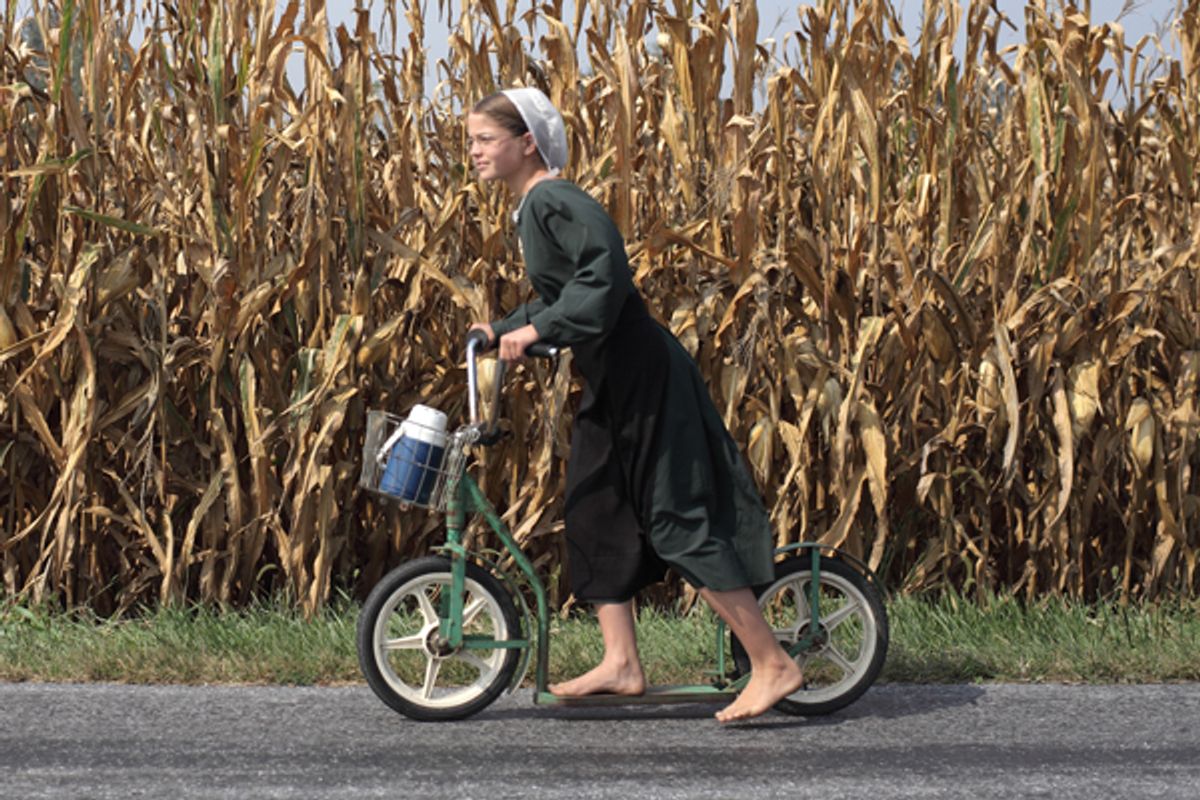
Surrounded by the supercharged evils of modern America, they live in rural settings of hard work and simplicity that must not be so different from life 200 years ago. But it's different enough to make some striking images: Bands of one-room school-bound kids in bonnets and straw hats but carrying matching new red mini-coolers lunchboxes; a scene of potato pickers at dawn that seems right out of a Corot painting; kids playing outdoors in their old-fashioned clothes but on a new-fangled trampoline.
It may be true that Puritans fled England for religious freedom, but only to a place where they could practice their beliefs and prevent others from practicing theirs. So in the early days of the Amish, according to the film by David Belton, thousands were killed for the outlawed behavior of adult baptism.
That led to these tight-knit communities in outposts that allowed such behavior, and the survival of it today depends on shunning outside temptations, especially for the young people.
Because of a belief not to be photographed, no Amish speak on camera in the documentary; they sit in shadows or more often speak off camera as remarkable, mesmerizing, slow-paced agricultural footage unspools before us. One speaks of the daily schedule as we see a group of young Amish women from afar walking up a road. It seems we see them go about a quarter mile. The voices of the elders explain their thinking, augmented by sociologists and anthropologists (whose faces we do see), speaking with some insight and little condescension.
The Amish have successfully shunned the mainstream all these years, with general success. There are compromises: They’ve had to put those orange triangles indicating a slow vehicle on their buggies (and they generally hate bright colors like pink and red).
There have been local skirmishes about obtaining building permits before a barn-raising or adhering to smoke detector requirements. But they famously won a 1971 Supreme Court case that defended their practice of educating until the eighth grade and that’s it. (Though at the time the sect was so little known that Walter Cronkite, reporting the news, called them AIM-ish).
The key to understanding the rules of the Amish is to understand that each of the communities make their own set of rules and revise them regularly. One community may ride bikes while the next one down the road bans them.
There is a brutality to the choice given to young people: Join forever or forever be shunned, and a couple of people who decided against the Amish lifestyle speak of their experiences.
The Amish have had to adjust, too, to national economic realities. It’s not practical for so much of the community to rely on agriculture as their sole income. So some have enlisted at local factories and a shot of Amish men scrambling at a factory building trailers is the most fast-paced moment in the film.
Shares