
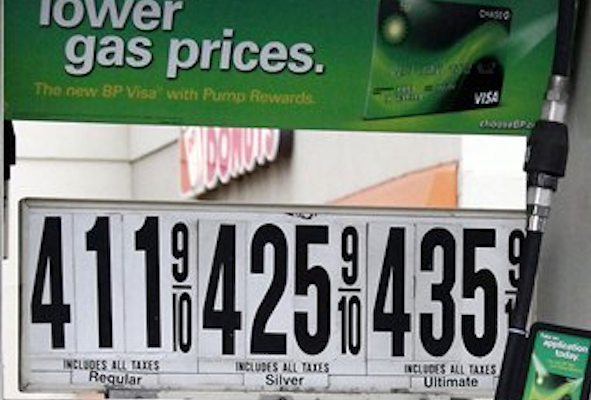

Oil prices are now higher than they have ever been — except for a few frenzied moments before the global economic meltdown of 2008. Many immediate factors are contributing to this surge, including Iran’s threats to block oil shipping in the Persian Gulf, fears of a new Middle Eastern war and turmoil in energy-rich Nigeria. Some of these pressures could ease in the months ahead, providing temporary relief at the gas pump. But the principal cause of higher prices — a fundamental shift in the structure of the oil industry — cannot be reversed, and so oil prices are destined to remain high for a long time to come.
In energy terms, we are now entering a world whose grim nature has yet to be fully grasped. This pivotal shift has been brought about by the disappearance of relatively accessible and inexpensive petroleum — “easy oil,” in the parlance of industry analysts; in other words, the kind of oil that powered a staggering expansion of global wealth over the past 65 years and the creation of endless car-oriented suburban communities. This oil is now nearly gone.
The world still harbors large reserves of petroleum, but these are of the hard-to-reach, hard-to-refine, “tough oil” variety. From now on, every barrel we consume will be more costly to extract, more costly to refine — and so more expensive at the gas pump.
Those who claim that the world remains “awash” in oil are technically correct: The planet still harbors vast reserves of petroleum. But propagandists for the oil industry usually fail to emphasize that not all oil reservoirs are alike: Some are located close to the surface or near to shore, and are contained in soft, porous rock; others are located deep underground, far offshore or trapped in unyielding rock formations. The former sites are relatively easy to exploit and yield a liquid fuel that can readily be refined into usable liquids; the latter can only be exploited through costly, environmentally hazardous techniques, and often result in a product which must be heavily processed before refining can even begin.
The simple truth of the matter is this: Most of the world’s easy reserves have already been depleted — except for those in war-torn countries like Iraq. Virtually all of the oil that’s left is contained in harder-to-reach, tougher reserves. These include deep-offshore oil, Arctic oil and shale oil, along with Canadian “oil sands” — which are not composed of oil at all, but of mud, sand and tar-like bitumen. So-called unconventional reserves of these types can be exploited, but often at a staggering price, not just in dollars but also in damage to the environment.
In the oil business, this reality was first acknowledged by the chairman and CEO of Chevron, David O’Reilly, in a 2005 letter published in many American newspapers. “One thing is clear,” he wrote, “the era of easy oil is over.” Not only were many existing oil fields in decline, he noted, but “new energy discoveries are mainly occurring in places where resources are difficult to extract, physically, economically and even politically.”
Further evidence for this shift was provided by the International Energy Agency (IEA) in a 2010 review of world oil prospects. In preparation for its report, the agency examined historic yields at the world’s largest producing fields — the “easy oil” on which the world still relies for the overwhelming bulk of its energy. The results were astonishing: those fields were expected to lose three-quarters of their productive capacity over the next 25 years, eliminating 52 million barrels per day from the world’s oil supplies, or about 75 percent of current world crude oil output. The implications were staggering: either find new oil to replace those 52 million barrels or the Age of Petroleum will soon draw to a close and the world economy would collapse.
Of course, as the IEA made clear back in 2010, there will be new oil, but only of the tough variety that will exact a price from us all — and from the planet, too. To grasp the implications of our growing reliance on tough oil, it’s worth taking a whirlwind tour of some of the more hair-raising and easily damaged spots on Earth. So fasten your seatbelts: first we’re heading out to sea — way, way out — to survey the “promising” new world of twenty-first-century oil.
Deepwater Oil
Oil companies have been drilling in offshore areas for some time, especially in the Gulf of Mexico and the Caspian Sea. Until recently, however, such endeavors invariably took place in relatively shallow waters — a few hundred feet, at most — allowing oil companies to use conventional drills mounted on extended piers. Deepwater drilling, in depths exceeding 1,000 feet, is an entirely different matter. It requires specialized, sophisticated and immensely costly drilling platforms that can run into the billions of dollars to produce.
The Deepwater Horizon, destroyed in the Gulf of Mexico in April 2010 as a result of a catastrophic blowout, is typical enough of this phenomenon. The vessel was built in 2001 for some $500 million and cost around $1 million per day to staff and maintain. Partly as a result of these high costs, BP was in a hurry to finish work on its ill-fated Macondo well and move the Deepwater Horizon to another drilling location. Such financial considerations, many analysts believe, explain the haste with which the vessel’s crew sealed the well — leading to a leakage of explosive gases into the wellbore and the resulting blast. BP will now have to pay somewhere in excess of $30 billion to satisfy all the claims for the damage done by its massive oil spill.
Following the disaster, the Obama administration imposed a temporary ban on deep-offshore drilling. Barely two years later, drilling in the Gulf’s deep waters is back to pre-disaster levels. President Obama has also signed an agreement with Mexico allowing drilling in the deepest part of the Gulf, along the U.S.-Mexican maritime boundary.
Meanwhile, deepwater drilling is picking up speed elsewhere. Brazil, for example, is moving to exploit its “pre-salt” fields (so-called because they lie below a layer of shifting salt) in the waters of the Atlantic Ocean far off the coast of Rio de Janeiro. New offshore fields are similarly being developed in deep waters off Ghana, Sierra Leone and Liberia.
By 2020, says energy analyst John Westwood, such deepwater fields will supply 10 percent of the world’s oil, up from only 1 percent in 1995. But that added production will not come cheaply: most of these new fields will cost tens or hundreds of billions of dollars to develop, and will only prove profitable as long as oil continues to sell for $90 or more per barrel.
Brazil’s offshore fields, considered by some experts the most promising new oil discovery of this century, will prove especially pricey, because they lie beneath one and a half miles of water and two and a half miles of sand, rock and salt. The world’s most advanced, costly drilling equipment — some of it still being developed — will be needed. Petrobras, the state-controlled energy firm, has already committed $53 billion to the project for 2011-2015, and most analysts believe that will be only a modest down payment on a staggering final price tag.
Arctic Oil
The Arctic is expected to provide a significant share of the world’s future oil supply. Until recently, production in the far north has been very limited. Other than in the Prudhoe Bay area of Alaska and a number of fields in Siberia, the major companies have largely shunned the region. But now, seeing few other options, they are preparing for major forays into a melting Arctic.
From any perspective, the Arctic is the last place you want to go to drill for oil. Storms are frequent, and winter temperatures plunge far below freezing. Most ordinary equipment will not operate under these conditions. Specialized (and costly) replacements are necessary. Working crews cannot live in the region for long. Most basic supplies — food, fuel, construction materials — must be brought in from thousands of miles away at phenomenal cost.
But the Arctic has its attractions: billions of barrels of untapped oil, to be exact. According to the U.S. Geological Survey (USGS), the area north of the Arctic Circle, with just 6 percent of the planet’s surface, contains an estimated 13 percent of its remaining oil (and an even larger share of its undeveloped natural gas) — numbers no other region can match.
With few other places left to go, the major energy firms are now gearing up for an energy rush to exploit the Arctic’s riches. This summer, Royal Dutch Shell is expected to begin test drilling in portions of the Beaufort and Chukchi Seas adjacent to northern Alaska. (The Obama administration must still award final operating permits for these activities, but approval is expected.) At the same time, Statoil and other firms are planning extended drilling in the Barents Sea, north of Norway.
As with all such extreme energy scenarios, increased production in the Arctic will significantly boost oil company operating costs. Shell, for example, has already spent $4 billion alone on preparations for test drilling in offshore Alaska, without producing a single barrel of oil. Full-scale development in this ecologically fragile region, fiercely opposed by environmentalists and local Native peoples, will multiply this figure many times over.
Tar Sands and Heavy Oil
Another significant share of the world’s future petroleum supply is expected to come from Canadian tar sands (also called “oil sands”) and the extra-heavy oil of Venezuela. Neither of these is oil as normally understood. Not being liquid in their natural state, they cannot be extracted by traditional drilling materials, but they do exist in great abundance. According to the USGS, Canada’s tar sands contain the equivalent of 1.7 trillion barrels of conventional (liquid) oil, while Venezuela’s heavy oil deposits are said to harbor another trillion barrels of oil equivalent — although not all of this material is considered “recoverable” with existing technology.
Those who claim that the Petroleum Age is far from over often point to these reserves as evidence that the world can still draw on immense supplies of untapped fossil fuels. And it is certainly conceivable that, with the application of advanced technologies and a total indifference to environmental consequences, these resources will indeed be harvested. But easy oil this is not.
Until now, Canada’s tar sands have been obtained through a process akin to strip mining, utilizing monster shovels to pry a mixture of sand and bitumen out of the ground. But most of the near-surface bitumen in the tar-sands-rich province of Alberta has now been exhausted, which means all future extraction will require a far more complex and costly process. Steam will have to be injected into deeper concentrations to melt the bitumen and allow its recovery by massive pumps. This requires a colossal investment of infrastructure and energy, as well as the construction of treatment facilities for all the resulting toxic wastes. According to the Canadian Energy Research Institute, the full development of Alberta’s oil sands would require a minimum investment of $218 billion over the next 25 years, not including the cost of building pipelines to the United States (such as the proposed Keystone XL) for processing in U.S. refineries.
The development of Venezuela’s heavy oil will require investment on a comparable scale. The Orinoco belt, an especially dense concentration of heavy oil adjoining the Orinoco River, is believed to contain recoverable reserves of 513 billion barrels of oil — perhaps the largest source of untapped petroleum on the planet. But converting this molasses-like form of bitumen into a useable liquid fuel far exceeds the technical capacity or financial resources of the state oil company, Petróleos de Venezuela S.A. Accordingly, it is now seeking foreign partners willing to invest the $10-$20 billion needed just to build the necessary facilities.
The Hidden Costs
Tough-oil reserves like these will provide most of the world’s new oil in the years ahead. One thing is clear: even if they can replace easy oil in our lives, the cost of everything oil-related — whether at the gas pump, in oil-based products, in fertilizers, in just about every nook and cranny of our lives — is going to rise. Get used to it. If things proceed as presently planned, we will be in hock to big oil for decades to come.
And those are only the most obvious costs in a situation in which hidden costs abound, especially to the environment. As with the Deepwater Horizon disaster, oil extraction in deep-offshore areas and other extreme geographical locations will ensure ever greater environmental risks. After all, approximately five million gallons of oil were discharged into the Gulf of Mexico, thanks to BP’s negligence, causing extensive damage to marine animals and coastal habitats.
Keep in mind that, as catastrophic as it was, it occurred in the Gulf of Mexico, where vast cleanup forces could be mobilized and the ecosystem’s natural recovery capacity was relatively robust. The Arctic and Greenland represent a different story altogether, given their distance from established recovery capabilities and the extreme vulnerability of their ecosystems. Efforts to restore such areas in the wake of massive oil spills would cost many times the $30-$40 billion BP is expected to pay for the Deepwater Horizon damage and be far less effective.
In addition to all this, many of the most promising tough-oil fields lie in Russia, the Caspian Sea basin and conflict-prone areas of Africa. To operate in these areas, oil companies will be faced not only with the predictably high costs of extraction, but also additional costs involving local systems of bribery and extortion, sabotage by guerrilla groups, and the consequences of civil conflict.
And don’t forget the final cost: If all these barrels of oil and oil-like substances are truly produced from the least inviting of places on this planet, then for decades to come we will continue to massively burn fossil fuels, creating ever more greenhouse gases as if there were no tomorrow. And here’s the sad truth: if we proceed down the tough-oil path instead of investing as massively in alternative energies, we may foreclose any hope of averting the most catastrophic consequences of a hotter and more turbulent planet.
So yes, there is oil out there. But no, it won’t get cheaper, no matter how much there is. And yes, the oil companies can get it, but looked at realistically, who would want it?
To stay on top of important articles like these, sign up to receive the latest updates from TomDispatch.com here.
