I tweet a lot. Sometimes I feel like I tweet more often than I have face-to-face conversations -- and therein lie multiple issues that will not be addressed here (but perhaps one day, in therapy). However, in the course of constructing these 140-character-or-less nuggets of opinion, information or political agitation, never did I give much thought to whether these tweets were mine. It turns out they're not, in the eyes of the law. For all the clamor about Twitter's revolutionary potential in the Middle East, we have a reminder right here in New York of its revolutionary limitations.
On Monday, a Manhattan judge ruled that writer, Occupy Wall Street participant and prankster (and, for the purpose of full disclosure, my good friend) Malcolm Harris will not be able to block a subpoena on his Twitter account, including "any and all user information including email addresses" tied to it because, according to the judge, our tweets are not ours at all.
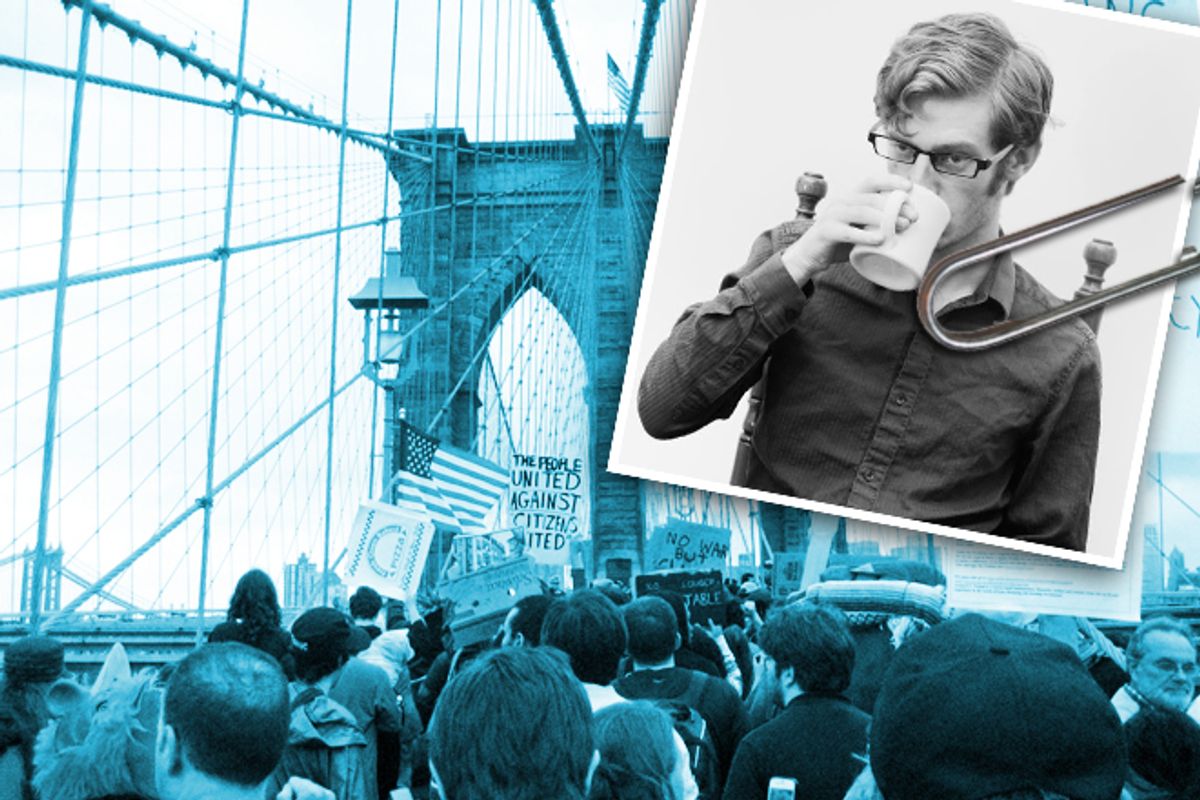
Harris, like me and more than 700 others, was arrested on the Brooklyn Bridge roadway last October in one of Occupy Wall Street's most headline-grabbing days of action. He, like most of the bridge arrestees, was charged with disorderly conduct (a violation equivalent in legal terms to a traffic ticket) but, refusing to plea out, is taking the charge to trial. In January, the Manhattan D.A.'s office sent Twitter a subpoena. Twitter promptly informed Harris, who decided to fight the subpoena with his lawyer, Martin Stolar of the National Lawyers Guild.
In his decision Monday to deny the motion to quash the subpoena, Criminal Court judge Matthew Sciarrino Jr. revealed some potentially worrisome issues about how the law views our relationship with our tweets, which raise further questions about speech, privacy and self-representation. As Stolar explained to me, the judge decided that Harris has "no standing" to fight the subpoena in the first place -- because his tweets (including direct messages, which are not publicly published) are not his, but belong to Twitter. The judge also rejected Stolar's claim that Harris has a privacy interest in quashing the subpoena.
The question whether an individual has the standing to intervene on their own behalf to fight a subpoena served to a third party (in this case Twitter) is an interesting one. It should come as no shock that our tweets actually belong to the social media company; we agree to as much when we join Twitter and accept its terms of use. However, as Stolar points out, there's long legal precedent for individuals intervening in subpoenas relating to, but not served to, them. For example, patients often intervene to quash subpoenas served to doctors regarding their medical records. Stolar plans to argue that Harris should have a standing in whether the government can (without a warrant) go through his accumulated, even in some parts deleted, Twitter history. Indeed, as the laywer also noted, the subpoena is both so broad and so vague that it's hard to know how much access it would grant to Harris' private messages and communications related to his Twitter account.
Which moves us on to the issue of privacy. It's true that our Twitter behavior is in the public domain. But does this mean there's no privacy interest when it comes to handing over the accumulated records of all our Twitter behavior to the authorities? Stolar offers this helpful but striking comparison: Say you have car -- all your actions, driving around, parking, etc., are in public. However, the government would still need a warrant to track your car using a GPS to get an accumulated record of all your driving activity. Stolar argues that our accumulated Twitter activity should be equally considered in terms of privacy and what the authorities can or cannot demand access to.
"It's very annoying that the judge said that no one has a privacy interest in their own communications here, their own speech," said Stolar. I'd say it's more than annoying -- it's downright worrisome. It should have long been obvious that Twitter is a powerful but limited tool for radical political organizing and agitating -- the social media leviathan readily admits it will turn over information to legal authorities. (To its credit, Twitter has rejected gag orders in order to inform Wikileaks followers that the government had requested their Twitter information.) However, the fact that we as users are (legally) considered to have no standing or privacy interest when it comes to our own Twitter histories should serve as a chilling reminder that the nuggets of tweeted speech we send out -- our very social media identities -- are very distinct entities from our legal selves and the protections those selves are granted.
Of course, the lesson to take away is to tweet with caution. It's also worth keeping in mind that, although throwing up some important insights, this court battle began over a charge for marching on a bridge. As Stolar puts it, "It's prosecutorial overkill; using a sledgehammer to squash a gnat." Harris agrees. He is (as he tends to be) disappointed in the state and surprised that a Harvard Law-trained ADA's time is being used to pursue his minor charge. The precedent set, however, should give pause to those of us who live (perhaps too much of) our lives through Twitter.
Shares