
A Facebook lesson for terrorists

Be careful when you "like" that video of a suicide bomber in Afghanistan. The FBI is watching

Topics: Facebook, Terrorism, like button, Al-Qaida, Taliban, Afghanistan, terrorists, Social Media, ,

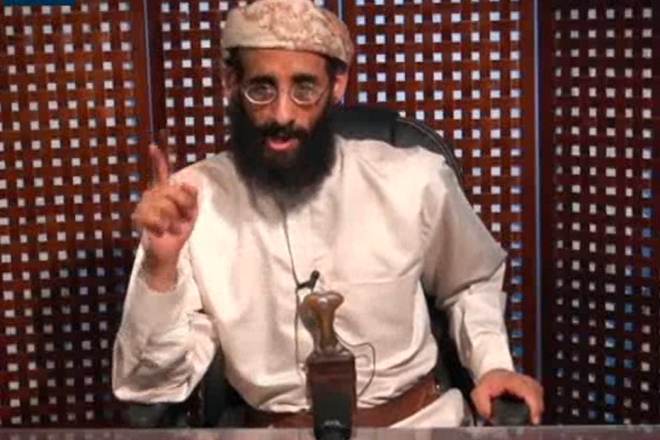
A Facebook lesson for terroristsAnwar al-Awlaki speaks in a video message posted on radical websites. (Credit: AP)

On January 19, 2012, 23-year-old Ralph Deleon, a legal permanent resident of the United States living in Ontario, Calif., “liked” a link to a video shared on Facebook by Sohiel Omar Kabir, a naturalized citizen of the U.S. originally from Afghanistan.

The link in question was one that might have given many Facebook users pause. According to an affidavit filed by N. T. Elias, a special agent with the FBI, the video, titled “Dua of Sheikh Muhammad al Mohaisany masjid al haram makkah,” appeared “to be a prayer for the success of the mujahideen and features various photos including Al-Qa’ida leaders Usama Bin Laden and Ayman al Zawahiri, 9/11 attacks, bloodied adults and children, and Islamic fighters.”

There isn’t — and shouldn’t be — anything illegal about “liking” anything posted to Facebook. But if you happen to be a person who has expressed interest in actually going to Afghanistan and engaging in armed and deadly activities against U.S. military personnel, it’s probably not a very good idea. Who knows, it might even end up being considered as evidence contributing to your arrest on charges that you were planning to provide “material support” to terrorists and wage “violent jihad” with al-Qaida and the Taliban. (Hat tip to TechDirt for the link to the affidavit.)

There is no limit to human stupidity; the four Southern Californians who were arrested on November 20 on the above charges, in addition to posting and “liking” videos of suicide bombers driving into Army bases, videos depicting improvised explosive device attacks, and articles regarding the death of American soldiers in Afghanistan, also organized a trip to a paintball facility in September to practice their assault-weapon handling skills as part of their “preparation for jihad.”

But careless Facebook liking has to rank up there in the top-ten list of things not to do when planning to demonstrate material solidarity with al-Qaida, doesn’t it? Assuming, of course, that the four gentlemen are actually found guilty of their charges. Because one could easily argue that people who disseminate on Facebook the lectures and teachings of the radical American-born Islamic cleric Anwar Al-Awlaki are simply too dumb to be considered realistic terrorist threats.

But maybe not. Because there’s a funny thing about Facebook’s like button. Facebook’s ability to generate profits hinges, to a paradoxical extent, on Facebook users failing to realize that when they “like” commercial products or entities, they are inviting Facebook to deluge themselves and their friends with a flood of advertisements. Encouraging wanton and indiscriminate use of the like button is crucial to Facebook’s goal of monetizing “engagement.” The more we actually understand the consequences of what we’re doing, the less likely we are to click on that button.

The four bumblers arrested two weeks ago were thus demonstrating solidarity, not just with al-Qaida, but also with the vast Facebook masses, when they clicked “like” on IED how-to videos without considering the consequences. If anybody should have known better, you would think it would be a group of people seriously entertaining the notion of “waging jihad.” But don’t most of us, all the time, post things online that we shouldn’t and engage in promiscuous Facebook “liking” without thinking our actions through?

Continue Reading Close
Andrew Leonard

Andrew Leonard is a staff writer at Salon. On Twitter, @koxinga21.

Next Article

Featured Slide Shows

What To Read Awards: Top 10 Books of 2012 slide show

close X
  • Share on Twitter
  • Share on Facebook
  • Thumbnails
  • Fullscreen
  • 1 of 10
  • 10. "The Guardians" by Sarah Manguso: "Though Sarah Manguso’s 'The Guardians' is specifically about losing a dear friend to suicide, she pries open her intelligent heart to describe our strange, sad modern lives. I think about the small resonating moments of Manguso’s narrative every day." -- M. Rebekah Otto, The Rumpus

  • 9. "Beautiful Ruins" by Jess Walter: "'Beautiful Ruins' leads my list because it's set on the coast of Italy in 1962 and Richard Burton makes an entirely convincing cameo appearance. What more could you want?" -- Maureen Corrigan, NPR's "Fresh Air"

  • 8. "Arcadia" by Lauren Groff: "'Arcadia' captures our painful nostalgia for an idyllic past we never really had." -- Ron Charles, Washington Post

  • 7. "Gone Girl" by Gillian Flynn: "When a young wife disappears on the morning of her fifth wedding anniversary, her husband becomes the automatic suspect in this compulsively readable thriller, which is as rich with sardonic humor and social satire as it is unexpected plot twists." -- Marjorie Kehe, Christian Science Monitor

  • 6. "How Should a Person Be" by Sheila Heti: "There was a reason this book was so talked about, and it’s because Heti has tapped into something great." -- Jason Diamond, Vol. 1 Brooklyn

  • 4. TIE "NW" by Zadie Smith and "Far From the Tree" by Andrew Solomon: "Zadie Smith’s 'NW' is going to enter the canon for the sheer audacity of the book’s project." -- Roxane Gay, New York Times "'Far From the Tree' by Andrew Solomon is, to my mind, a life-changing book, one that's capable of overturning long-standing ideas of identity, family and love." -- Laura Miller, Salon

  • 3. "Billy Lynn's Long Halftime Walk" by Ben Fountain: "'Billy Lynn's Long Halftime Walk' says a lot about where we are today," says Marjorie Kehe of the Christian Science Monitor. "Pretty much the whole point of that novel," adds Time's Lev Grossman.

  • 2. "Bring Up the Bodies" by Hilary Mantel: "Even more accomplished than the preceding novel in this sequence, 'Wolf Hall,' Mantel's new installment in the fictionalized life of Thomas Cromwell -- master secretary and chief fixer to Henry VIII -- is a high-wire act, a feat of novelistic derring-do." -- Laura Miller, Salon

  • 1. "Behind the Beautiful Forevers" by Katherine Boo: "Like the most remarkable literary nonfiction, it reads with the bite of a novel and opens up a corner of the world that most of us know absolutely nothing about. It stuck with me all year." -- Eric Banks, president of the National Book Critics Circle

  • Recent Slide Shows

  • Share on Twitter
  • Share on Facebook
  • Thumbnails
  • Fullscreen
  • 1 of 10

More Related Stories

Comments

5 Comments

Comment Preview

Your name will appear as username ( profile | log out )

You may use these HTML tags and attributes: <a href=""> <b> <em> <strong> <i> <blockquote>