
Two ways of looking at robots

Influential technologists weigh in on the rise of the machines

Topics: technology, robots, Keith Kelly, Wired, MarketPlace, Business, , ,

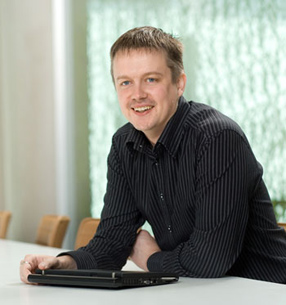
Two ways of looking at robots Jaan Tallinn (Credit: via Ambient Sound Investments)

Who welcomes our new robot overlords?

This week brings two radically different perspectives on how robots are changing the world. Marketplace quotes Jaan Tallinn, an Estonian programmer who helped develop Skype, on the dangers of self-replicating technology: “Once we have something that is no longer under control” says Tallinn, “once technological development is yanked out of our hands, it doesn’t have to continue to be beneficial to humans.”

Machines which we can’t control, which sounds a lot like the grey goo problem, is just one of the topics that will be studied at Cambridge University’s Centre for the Study of Existential Risk, an organization co-founded by Tallinn to examine threats to the continuing existence of humanity.

Tallinn explains:

Humanity is seriously under-invested in them. For example, we’re spending more money in lipstick research than we are in making sure that we survive this century as a species. Worrying about long-term issues is definitely something that very few people are doing. Therefore my time and my money can actually make a big difference in that area.

A sunnier take comes on the cover of Wired’s January issue. Kevin Kelly, the magazine’s “senior maverick” has an article subtitled “Robots are coming to take our jobs. We should be happy about it.” He writes “70 percent of today’s occupations will likewise be replaced by automation. Yes, dear reader even you will have your job taken away by machines. In other words robot replacement is just a matter of time.” Sidebars in the article go on to describe how automatons are usurping professions as diverse as musician, cop, therapist, comedian, artist, teacher, waiter, athlete, nurse and more.

This is a good thing, Kelly argues, because with robots doing all the boring things we do now (for money) we’ll come up with better jobs, the way farmers who were replaced by mechanized agriculture did. If that’s unsettling to folks who have lost their work due to outsourcing or other technology-enabled developments, well you’re really not going to like the rest of what Kelly has to say. “This is not a race against the machines. If we race against them we lose. This is a race with the machines…they will let us focus on becoming more human than we were. Let the robots take the jobs, and let them help us dream up new work that matters.”

Could that just be a different way to describe an existential threat to humanity?

Continue Reading Close

Alex Halperin is news editor at Salon. You can follow him on Twitter @alexhalperin.

Next Article

Featured Slide Shows

What To Read Awards: Top 10 Books of 2012 slide show

close X
  • Share on Twitter
  • Share on Facebook
  • Thumbnails
  • Fullscreen
  • 1 of 10
  • 10. "The Guardians" by Sarah Manguso: "Though Sarah Manguso’s 'The Guardians' is specifically about losing a dear friend to suicide, she pries open her intelligent heart to describe our strange, sad modern lives. I think about the small resonating moments of Manguso’s narrative every day." -- M. Rebekah Otto, The Rumpus

  • 9. "Beautiful Ruins" by Jess Walter: "'Beautiful Ruins' leads my list because it's set on the coast of Italy in 1962 and Richard Burton makes an entirely convincing cameo appearance. What more could you want?" -- Maureen Corrigan, NPR's "Fresh Air"

  • 8. "Arcadia" by Lauren Groff: "'Arcadia' captures our painful nostalgia for an idyllic past we never really had." -- Ron Charles, Washington Post

  • 7. "Gone Girl" by Gillian Flynn: "When a young wife disappears on the morning of her fifth wedding anniversary, her husband becomes the automatic suspect in this compulsively readable thriller, which is as rich with sardonic humor and social satire as it is unexpected plot twists." -- Marjorie Kehe, Christian Science Monitor

  • 6. "How Should a Person Be" by Sheila Heti: "There was a reason this book was so talked about, and it’s because Heti has tapped into something great." -- Jason Diamond, Vol. 1 Brooklyn

  • 4. TIE "NW" by Zadie Smith and "Far From the Tree" by Andrew Solomon: "Zadie Smith’s 'NW' is going to enter the canon for the sheer audacity of the book’s project." -- Roxane Gay, New York Times "'Far From the Tree' by Andrew Solomon is, to my mind, a life-changing book, one that's capable of overturning long-standing ideas of identity, family and love." -- Laura Miller, Salon

  • 3. "Billy Lynn's Long Halftime Walk" by Ben Fountain: "'Billy Lynn's Long Halftime Walk' says a lot about where we are today," says Marjorie Kehe of the Christian Science Monitor. "Pretty much the whole point of that novel," adds Time's Lev Grossman.

  • 2. "Bring Up the Bodies" by Hilary Mantel: "Even more accomplished than the preceding novel in this sequence, 'Wolf Hall,' Mantel's new installment in the fictionalized life of Thomas Cromwell -- master secretary and chief fixer to Henry VIII -- is a high-wire act, a feat of novelistic derring-do." -- Laura Miller, Salon

  • 1. "Behind the Beautiful Forevers" by Katherine Boo: "Like the most remarkable literary nonfiction, it reads with the bite of a novel and opens up a corner of the world that most of us know absolutely nothing about. It stuck with me all year." -- Eric Banks, president of the National Book Critics Circle

  • Recent Slide Shows

  • Share on Twitter
  • Share on Facebook
  • Thumbnails
  • Fullscreen
  • 1 of 10

More Related Stories

Comments

4 Comments

Comment Preview

Your name will appear as username ( profile | log out )

You may use these HTML tags and attributes: <a href=""> <b> <em> <strong> <i> <blockquote>