
One of the most disturbing trends in law enforcement in recent years is the hyper-paramilitarization of local police forces. Much of the funding for tanks for Fargo's hometown cop shop comes from the Department of Homeland Security. The feds have a lot of money to throw around in the name of preventing terrorism, and municipalities want to get that money. As anyone who has done budgeting knows, the best way to ensure your funding stays high is to request a lot of money and spend it all.
As a result, every year the police get more tools, gadgets, weapons, and surveillance technologies that, whatever their stated purpose, serve to give cops greater capabilities to curtail the rights of anyone unlucky enough to be standing in their path.
We were going to list these in order from least to most creepy, but that proved far too challenging. So here are some cop tools you may not be familiar with, in no particular order.
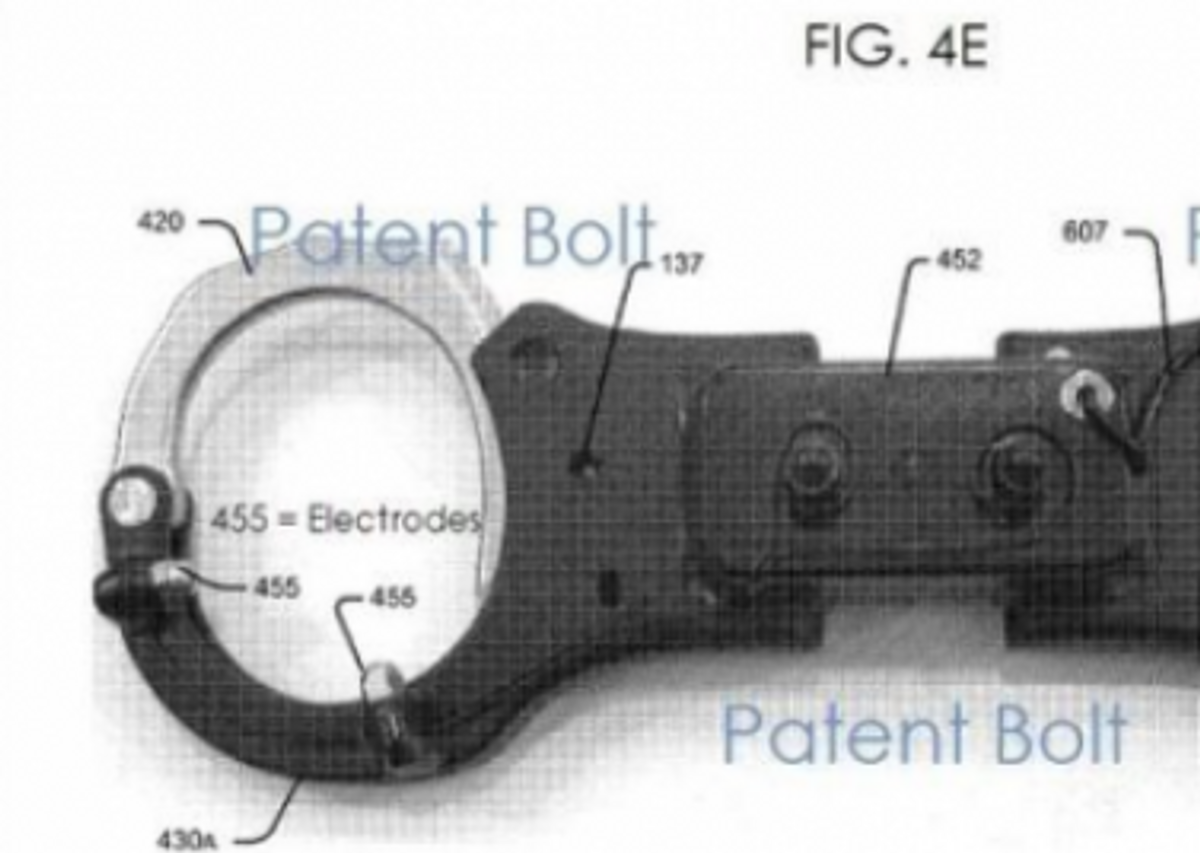
1. Shock-cuffs.These made a splash in late 2012 when it was reported that Scottsdale Inventions had submitted a patent for metal handcuffs capable of delivering “high-voltage, low amperage shocks to disrupt a person’s voluntary nervous system," much like Tasers. Depending on the model used, the handcuffs could shock a detainee at the will of his captor, or if the detainee wanders past a certain border – like an invisible fence for dogs.
Even more disturbing is the potential to arm the handcuffs with needles capable of injecting medications, sedatives or any number of liquid or gas substances into the detainee. But don't worry – some models may include a flashing light or sound-alert to warn the person that a shock is about to happen.
2. Rapid DNA analysis. One of the main stories of the future of policing will be cops' ability to collect biometric data in the field, instead of at the downtown precinct. EFF reported earlier this month on a potentially troubling technology called Rapid DNA analysis, being developed by contractors with the federal government. The machine, which is about the size of a laser printer, has the ability to collect, analyze and catalog your DNA onsite in about 90 minutes.
The stated purpose of the technology is to help identify family relationships between refugees, which could be beneficial if used in limited ways. According to EFF, however, the US Citizenship and Immigration agency suggests “that DNA should be collected from all immigration applicants—possibly even infants—and then stored in the FBI’s criminal DNA database.” As with all data collection in the US, the wrench only goes one way, and once local police forces obtain this technology the potential for abuse is huge.
3. Mobile fingerprinting. Police forces across the country have become enamored of smart phone-sized fingerprint scanners. The police use the devices to scan two fingers of the suspect and transmit the data via Bluetooth to the officer's laptop in his cruiser. The laptop then checks the image against criminal databases for a match.
The ACLU of Washington is concerned that the devices could be used to collect fingerprints, not simply scan them, though Seattle police insist they don't keep the scanned fingerprints.
4. Iris scans.When I was arrested covering Occupy in December 2011, a livestreamer who was an old hat at political arrests warned me about the iris scan. Beginning in 2010, the NYPD started scanning arrestees' irises on intake and immediately prior to arraignment. The stated purpose of these scans is to ensure that the person brought before the judge is the right one (there were some instances of mistaken identity), but in practice the scope of the iris scan is much broader. It's plainly an example of collecting biometric data of people who haven't been convicted of a crime, as well as a mechanism to punish those who refuse the scan.
The scan isn't mandatory, but as I wrote about my own experience, “if you don’t submit to it, you will be punished.” In my case, I refused the scan on intake, but was told I would be held in jail for an extra night if I didn't allow my eyes to be scanned before I saw the arraignment judge, despite the fact that there was no initial scan to compare it with.
This technology, like DNA analysis and fingerprinting, can now be used in the field. BI2 Technologies has developed a device that slides over an iPhoneand allows officers to scan a suspect's face and eyes, and then check that scan against a criminal database. Critics say the tool is problematic because it can scan a person's face from up to four feet away, possibly without their awareness. Beyond that, there is a disturbing partnership emerging between BI2 Technologies, the FBI and local police forces, with reports that the FBI plans to launch an iris national database in 2014.
5. License plate recognition.It's not just your eyeballs and fingertips that law enforcement wants to scan. Relatively new technology called license plate recognition allows police to run thousands of tags a day, all while just driving around. Cameras mounted on cop cars constantly scan the area and check plates against databases, and alert the officer if there's a match.
A Long Beach police officer describes the scope of LPR this way:
In our case we are running multiple databases -- we have "wanted felony vehicles," "be on the lookout," "24 hour hotsheet," "wanted by detectives," "LA County warrants," and our gang unit. In addition to this we have "stolen vehicles," which are available to everybody in the state. Currently in our database we have 24,000,000 plus reads.
Just like the other surveillance tools, police departments expect use of LPR to increase in the coming years. According to a Police Executive Research Forum (PERF) survey, “71 percent of responding agencies already have LPRs,” though often just on a handful of cruisers. Tellingly, “almost every police agency expects to acquire or increase their use of LPRs in coming years, and that five years from now, on average they expect to have 25 percent of their cars equipped with LPRs.”
As Kevin Goztola notes, this kind of technology isn't inherently inappropriate, but without strict regulation many innocent people could be surveilled unconstitutionally. The Wall Street Journal recently reported on a US person who discovered through requests for public records that his daily routine had been monitored automatically. The WSJ concludes, “The rise of license-plate tracking is a case study in how storing and studying people's everyday activities, even the seemingly mundane, has become the default rather than the exception.”
When it comes to drones, the future is wide open. From proposed surveillance in Seattle to assisting arrests in North Dakota, police drones are here and they aren't going anywhere. NYPD commissioner Ray Kelly recently told a crowd that his department was “looking into” using drones to surveil political protests, though “a drones program is not being actively pursued at this time.” Recently obtained FOIA documents, however, show that the NYPD counter-terrorism unit may be in the early stages of developing the use of drones.
As drones get smaller, more versatile and increasingly capable of behaving "autonomously," it's not difficult to imagine a time in the future when drone surveillance is integrated with LPR technology, all in the name of increased security.
Shares