In hard times a man must consider new options, and right now I'm thinking about going on disability. I read in the Washington Post about the wonderful deals that police in Montgomery County, Md., negotiated for themselves way back when, whereby after a few years on the force if you twist your back reaching for a jelly doughnut and are no longer able to dash down dark alleys and leap picket fences while firing your revolver with deadly accuracy, you apply for disability and a committee of gentlemen who report to nobody whomsoever and whose deliberations are highly confidential award you $50,000 per year tax-free. And then, though disabled, you pass the physical and are hired as a security guard at John F. Kennedy High School, named for the man who said, "Ask not what your country can do for you, but on the other hand don't turn it down when it's easily available," and all this at a time when they are cutting music and art out of the schools and children must start classes at 7 a.m. due to a shortage of buses.
Meanwhile, in and around Long Island, N.Y., everyone who's been working on the railroad is collecting disability for paper cuts, motion sickness, acid reflux and halitosis.
The Authors Guild, of which I am a member, has done zilch to secure disability protection for writers. In my line of work, disability comes down to two things: memory loss and something else, I forget what. You lose the vocabulary retrieval skills you had when you were 30 and interesting words such as "parietal lobe" and "sedimentary rocks" flocked to your brain, and now you sit inert at the laptop for a number of horrendous minutes trying to remember the word for the thing that if you picked it up and dropped it on your foot it would be very, very bad -- anvil! This is a disability, and a writer should be able to receive payments, and also for the other thing, whatever it is.
When it comes to disability pensions, you ought to include congressmen, especially these remarkable Republicans who, in the midst of a serious banking crisis, are recycling Herbert Hoover and decrying socialism and paying homage to a fat sweaty guy living alone with his cat in a five-mansion compound in West Palm Beach. At the moment, he seems to be steering the Republican Party like it's his personal power boat and Mitch McConnell is the girl in the bikini on water skis.
"I am at the top of the mountain of what I do. Everybody underneath it wants what I've got," Rush said on his show the other day. "As such, they'll do what they can to take me down or to criticize me or what have you. It is beneath my dignity to be critical of those beneath me. It's just a waste of time."
For similar delusional megalomania, you have to go back to the rock stars of yesteryear, but they were 30 or so, and Rush is somewhat north of there. You have to wonder if the man doesn't need to get out of the compound more and converse with real people and not just talk to his cat. Has he ever sat at a bar and talked to other men over a beer? One of the problems with OxyContin is that it's such a lonely drug: Guys don't get together to toss back a few pills and tell jokes, so an Oxhead like Rush is missing the social skills that one might develop over beer and bourbon. At the bar, a man can rant and rave about Obama and hope he will fail, but when he stops for breath, he has to listen to someone else point out that we are in an economic crisis and the country seems to want a change of course.
But delusion is no disability in broadcasting, my friends. Au contraire, it is the very lifeblood of the trade, and so there will be no pension check for the fat man. But what about me? It's almost spring and a big winter storm is about to sweep across the tundra and here I sit trying to bring this piece of writing to a -- what is the word for it? I think it starts with C. I think it's a C-word. Conniptions. Connecticut. Cougars. The U.S. Coast Guard. Sorry -- I am no longer able to function as a columnist and I respectfully request that I be compensated for it.
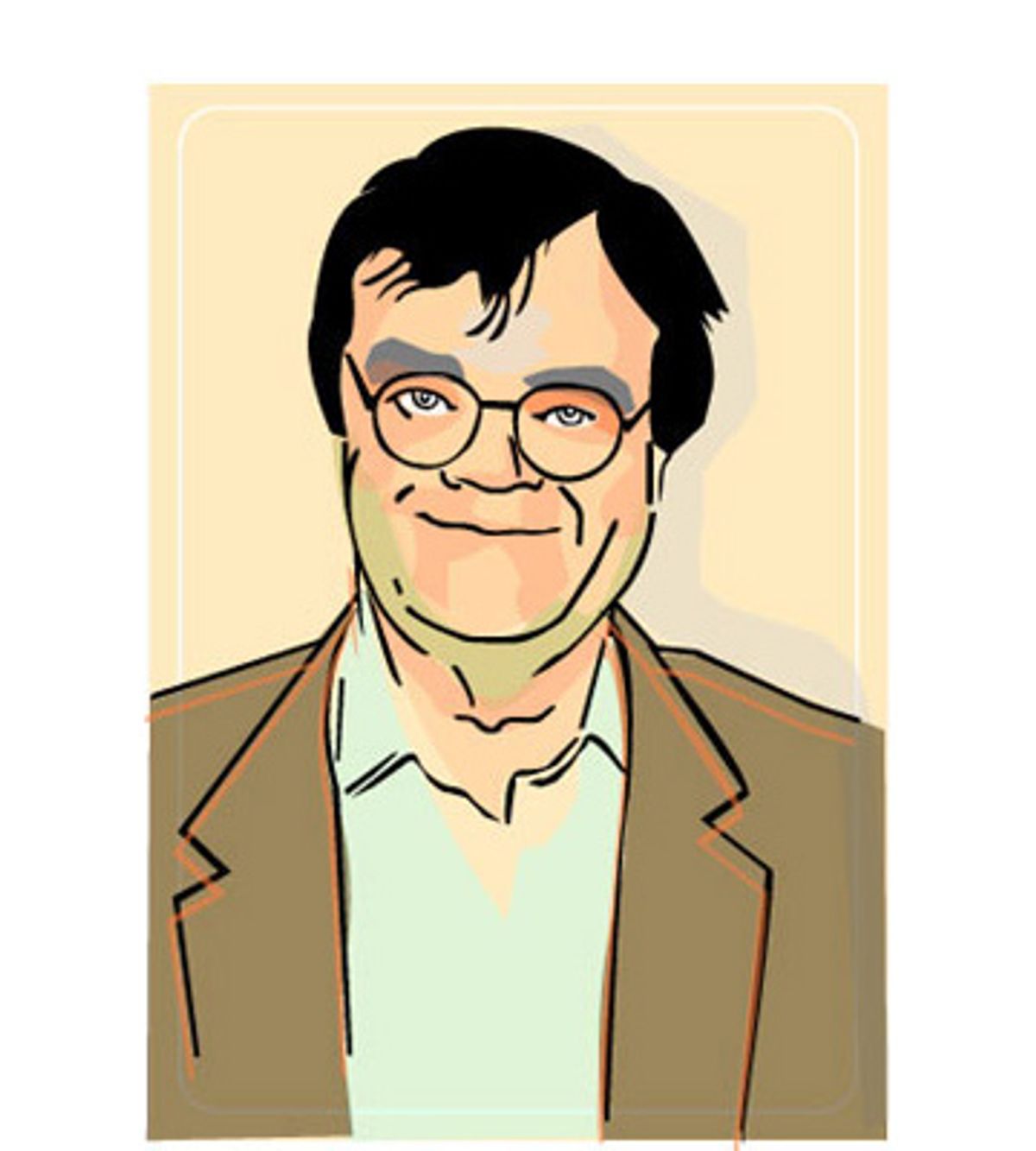
(Garrison Keillor is the author of a new Lake Wobegon novel, "Liberty," published by Viking.)
© 2009 by Garrison Keillor. All rights reserved. Distributed by Tribune Media Services, Inc.
Shares