

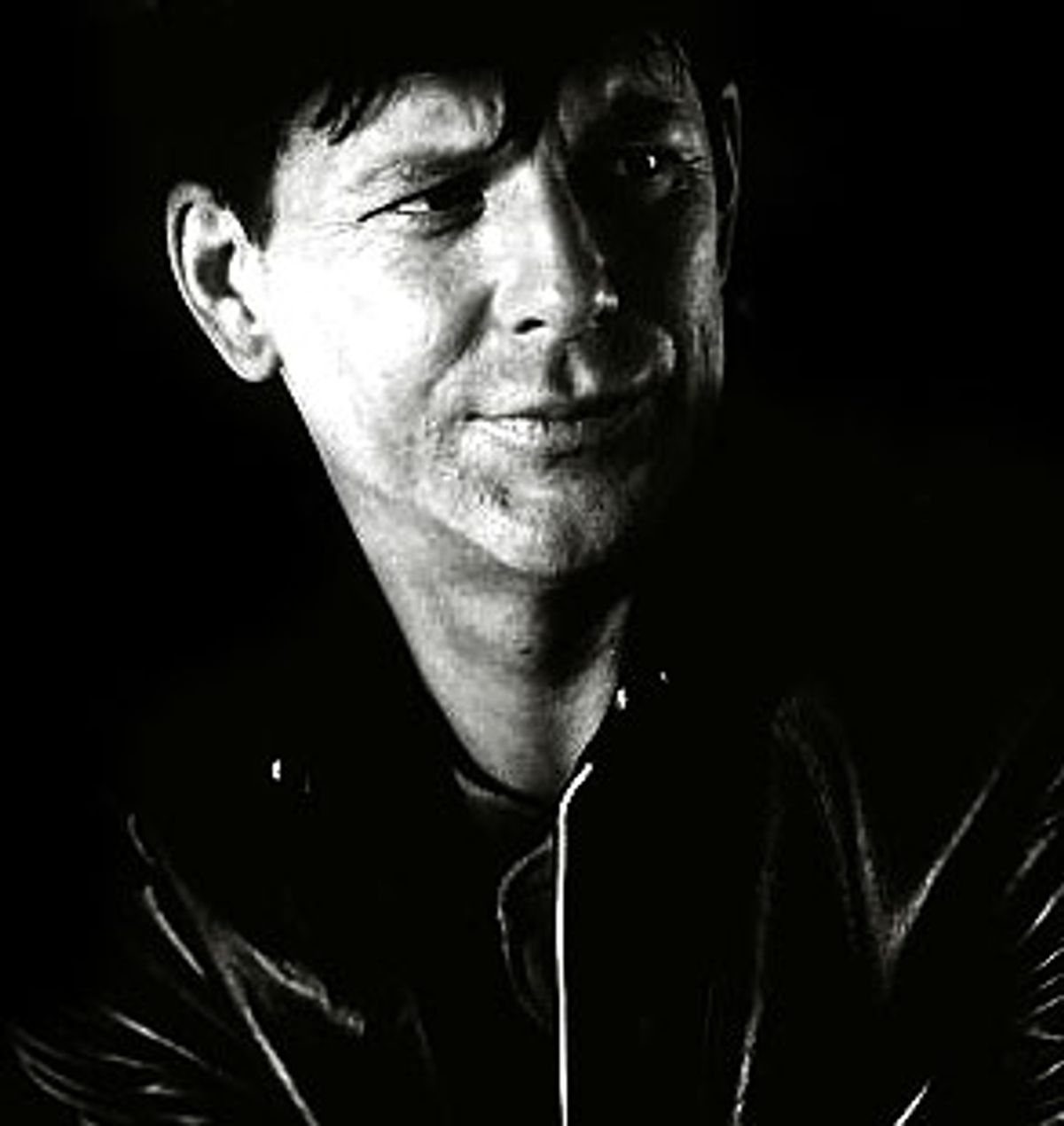
Philip Andre Rourke Jr. was born Sept. 16, 1950, although some reports claim it was 1953 or 1956. He was a tough kid from Schenectady, N.Y.: a boxer who studied acting at the Lee Strasberg school, then went back to boxing, and is presently trying to get back into acting. At his peak, women loved him because he was better than anybody else at smirking in a way that looked like his hard-on gave him terrible emotional pain. Rourke's career is notable for the heady price he paid for his eccentricities, the most expensive of which being that his credibility as an actor was labeled with a scarlet question mark. But this, by and large, is a bad rap.
Good dramatic actors, who need to access a vast color wheel of emotion, are often intolerably volatile, hypersensitive nut jobs in real life. To inhabit characters of dubious artistic value, it is also helpful if they aren't terribly smart. Rourke appears to have both of those qualities; it's an equation that spells temporary magic on-screen and usually results in terrible suffering off-screen.
The same explosive emotionality that attracts Hollywood executives at the beginning of an actor's career is the seed of the actor's own demise when he is inevitably labeled "difficult" by the corporate drones who run the movie business. Personal histrionics, a "difficult" reputation and a bad habit of ridiculously sleazy script choices have overwhelmed Rourke's public image to the point that nobody thinks of him as a serious actor with a wide dramatic range. Although many of his 43 movies are disposable, a look at the defining films of his career with an objective X-ray eye reveals that his acting is a lot better than he got credit for.
Rourke broke through in 1981, Brad-Pitt-in-"Thelma and Louise"-esquely, as an arsonist in the sweaty erotic thriller "Body Heat." His tough-guy posturing and glowering, pretty-boy menace made the Hollywood Beast think he might come in handy for a while.
Rourke hit his early Rourke-ish stride in 1982's "Diner" as Boogie, the inveterate gambler-cum-playboy hairdresser. He doesn't fit in with the overall flavor of the film; all the other actors are on a chatty 78 rpm and Rourke is on a self-consciously heavy 33. He seems to need to be too cool for the movie. As a result, he looks isolated, coming off like the one actor who didn't dine with the other actors and demanded to eat in his own trailer. But he does have a certain gravity.
His pouty lower lip is used to great effect. There is an almost androgynous appeal to him here; he wears more eyeliner than Ellen Barkin. Female audiences went ape for him as a slimy, effeminate cockmaster, and so did the National Society of Film Critics, who gave him a trophy for the role.
When my friend and I were teens in 1983, we saw "Rumble Fish." We had never seen a male movie star the compellingly enigmatic sexual equivalent of Mickey Rourke as "the Motorcycle Boy." We were angsty and thought we were sophisticated. The commercial constructs of teen lust didn't work on us; we were immune to Matt Dillon. But Mickey Rourke pressed all the right teen-heartache buttons -- not the actor so much as the role: a soft-spoken, self-loathing peer leader, poetically depressed, colorblind, half deaf; a torturously sober and intellectual hipster doomed to an ignominious small-town fate. Francis Ford Coppola was in his S.E. Hinton phase and nicely inspired; "Rumble Fish" is an art film for teenagers, and it works.
Time-lapse photography skitters black-and-white clouds fast across the sky to vamping snare drums, to suggest the overabundance of time in youth quickly becoming the lack of time in old age. The sad smile on Rourke's elfin, acne-scarred face reveals that the Motorcycle Boy, with his greasy hair and unfiltered cigarette, intimately knew the secrets of Man's Frailty, and it confined him to the hell of infinite pity. "That's a deep motherfucker, man," says the old black guy in the pool hall (as we angry beatnik girls liquefied in the audience). "He's like ... royalty in exile."
The role, now, is exemplary of the best use of the damaged charm of Mickey Rourke: existential Fonzie. Sensitive, empathetic and sorrowful, with a junkie's whisper-soft voice during even the worst emotional violence.
Rourke's next big role, in "The Pope of Greenwich Village" (1984), is more of his tough-cookie, sexy criminal shtick. The oily pompadour that is his hair in virtually every movie reaches its most outrageous elevation here.
Daryl Hannah is his dimwit aerobic instructor girlfriend, whose role primarily consists of pulling her pants on and off. This film marks the beginning of a standard Rourke movie theme: a basic dislike for women, or at least the stupid female roles that always seem to disgrace his scripts. He has all the power: Daryl slaps him, he smiles that fuck-you smile, flips up the collar of his leather blazer, and walks away. She bleats "Charlie!" in her midriff leotard, he keeps walking. It seems this role inspired Hollywood to cast Rourke whenever they needed a guy to casually and cruelly dominate whimpering, undressed females.
If any one sin could be said to be responsible for the downfall of Mickey Rourke, that sin would probably be Vanity. While managing, to his credit, not to fall into the single-character, one-dimensional tough-guy glue trap that macho actors like De Niro or Nicholson sank into, Rourke suffered from a different kind of hubris: Though essentially an emotionally fearless actor with a commendable flair for vulnerability, naked despair and believable accents, he continually chose characters who were either fucking or fighting.
Rourke's credibility was most harmed, it seems, by his slide into mainstream softcore.
"9-1/2 Weeks" (1986), Rourke's recognized star turn, features him as John, a smirking Wall Street sadist. He feeds Kim Basinger like a baby, he buys her toys and balloons and does cruel and nasty sex to her. The movie is grotesque; Basinger's character is shriekingly infantile, down to pigeon toes and white ankle socks, and absurdly obedient; Rourke is just creepy, and the role seems to tap into a dangerous reservoir of abject misanthropy and scumminess in the actor. It's not all his fault; Basinger comes off so shrill, moronic and embarrassing that at a certain point you are rooting for Mickey to hit her with a belt (Basinger is said to have referred to her costar, for unspecified reasons, as "the human ashtray").
Rourke comes off as ugly and jaded in "9-1/2 Weeks" in a way that suggests a deeper level of psychic disease than his character alone is responsible for. Perhaps he resented being the vehicle that brought S/M home to the office girls of America. Who could blame him?
Nineteen eighty-seven was, for cabalistic Hollywood reasons, the Year of the Rourke, with three of his better movies coming out one atop the other.
"Angel Heart" offered Rourke a meaty role and a healthy return to being actorly -- but his respectable performance was buried beneath the public's tittering shock at his willingness to enact "controversial," "X-rated" pumping-buttock sex shots with a thrashing Lisa Bonet.
Rourke pulls off an entirely believable Brooklyn accent and has a very legitimate moment of bottomless despair as the Faustian plot is revealed. "Angel Heart" is a good example of Rourke's ability to pull off emotionally gymnastic roles; he never shrank from painful and weepy territory that fellow tough-but-pretty actors, like Steve McQueen, deliberately avoided. Sensationalism and soft porn robbed him, here, of what might have been real kudos for his skill.
Rourke is most universally beloved for his portrayal of Charles Bukowski's alter ego Henry Chinaski in "Barfly." While a bit over the top, the role is funky, ugly and lovable in a way his other characters were not. Audiences must have breathed a collective sigh of relief to see Rourke in a role that wasn't consumed by self-loathing.
"Barfly" contains the closest Rourke comes, in his entire career, to a moment of unqualified happiness, during the oft-quoted victory toast: "To my friends!" Bukowski wrote about Rourke, giving him the name Jack Bledsoe in his roman á clef "Hollywood," a book about the making of "Barfly." Bukowski liked Rourke and was fairly dazzled by him. There is a good scene in which Bledsoe (Rourke) has brought his obnoxiously fabulous Hollywood Harley-Davidson crew to the set, and is introducing them to Bukowski:
"His buddies leaned against the bar, backs to the bar, facing the crowd. They each held a beer bottle, except for Jack who had a 7-Up. They were dressed in leather jackets, scarves, leather pants, boots ... Jack introduced us to each of his buddies.
"This is Blackjack Harry ..."
"Hi, man ..."
"This is The Scourge ..."
"Hello there ..."
"This is the Nightworm ..."
"Hey, hey!"
"This is Dogcatcher ..."
"Too much!"
"This is 3-Ball Eddie ..."
"God damn .."
"This is FastFart ..."
"Pleased to meet ya ..."
"And Pussykiller ..."
"Yeah ..."
And that was it. They all seemed to be fine fellows but they looked a little on-stage ...
Starring in "Prayer for the Dying" (1987) gave Rourke a lifelong affection for the Irish Republican Army -- he bears a tattoo of the paramilitary organization's emblem.
"Homeboy" (1988), which Rourke helped write, lands the actor close to himself; he plays dumb-ass, luckless boxer Johnny Walker, a punchy, feral, kicked junkyard dog. One gets the feeling that this is a character Rourke really identifies with: turbulent, violent and rebellious in an ill-advised, quixotic way. He utilizes a "Caddyshack"-style Bill Murray dislocated jaw and a totally acceptable Southern accent. The scene with the most unctuous music involves Johnny having an argument and jumping out of a car on a bridge. He tries to beat up the car; he rails, he threatens traffic, and ends up walking home drunk through driving rain in the middle of a busy road. One feels these raging moments of worthless self-sabotage are familiar Rourke territory. His costar, flat-faced Deborah Feuer, became his wife for a little while -- their chemistry seems lopsided and doomed, even on-screen.
"Johnny Handsome" (1989), while a dumb movie, probably features Rourke's most moving performance. During a scene when the doctors take his bandages off, the man who was formerly a hydrocephalic monster with massive cranio-facial deformities is suddenly revealed in a post-surgery miracle as having Mickey Rourke's face. He cries with joy and gratitude. It is particularly moving when you consider that in Rourke's real life, shortly thereafter, he started out as a man with a beautiful face and ended up undergoing numerous surgeries and voluntary beatings to become unusually scary-looking. One imagines what he felt like when his real bandages came off, after having lived this moment on film.
"Francesco" (1989), wherein Rourke is cast in the unlikely role of St. Francis of Assisi, is notable only for a scene where the saint is rolling around naked in snow and his tattoo is visible.
"Wild Orchid" (1990) is a miserably stupid and sleazy wank film with the dubious distinction of being the place where the lives of Rourke and model Carré Otis collided head-on, as if in a big motorcycle accident.
Here, Rourke's outside began to match his tumultuous inside.
His face-lift looks too fresh -- he's having trouble moving his mouth, and his forehead, so expressive in "Diner" and "Rumble Fish," is way too smooth, motionless and shiny, like a balloon dipped in Clinique bronzer. He can't smirk anymore. His eyes seem pinched; his crow's feet are disturbingly gone. His eyebrows are too light, and they don't move. Eye jobs, for the first year at least, make the recipient's eyes appear smaller; they lose any roundness below during the surgical elimination of under-eye bags. Rourke's black eyes lost their ability to transmit emotion.
The movie is wretched in that it isn't even viable as smut; there's way too much abysmally stupid dialogue and plot. It boasts perhaps the worst script ever, not helped by the fact that Otis delivers lines the way a one-armed UPS guy delivers aquarium tanks. The entire movie is one long wait for the smutty finish.
There are a whole lot of panting Foley effects, particularly during the "controversial" final scene wherein Rourke's box-browned abdominal muscles gnash and dilate while grinding into Otis' pornographically rectangular strip of pubic hair.
The legend that was "leaked" from the "set" was that the two "actors" couldn't "control themselves" during this big sex scene, and despite the presence of the entire camera crew had "actual penetration." Yeah, right.
What did happen was that Rourke and Otis ended up together, sharing, by all reports, a bloody kind of soul connection. "We were both really wounded kids," a now sober and "deliberately celibate" Otis recently explained to Christopher Goodwin of the London Times.
This is the period of time when Rourke stopped having anything effeminate about him at all. One wonders whether the inevitable rumors that he was gay triggered some kind of barbaric, street-kid homophobia that made him kill off the sexily feminine, feline aspects of his persona.
Otis was a Calvin Klein model around this time, when the designer was going through his "biker" phase. Arguably this was inspired by the heavy Harley-Davidson-fetishizing scene that was happening in Hollywood at the time, spearheaded by Rourke and Otis. I was unable to find any information on Rourke's artistic-photography hobby, which flourished during this period and primarily featured nude black-and-white shots of Otis covered in motor oil.
In 1991, in addition to making the appalling (and double-appallingly popular) "Harley Davidson & the Marlboro Man," the film where Rourke's abysmal tough-guy hubris came to roost and killed his artistic credibility, Rourke quit acting, which he derided for being "a womanly profession," and started boxing professionally again. Whatever his loutish comments, a closer investigation suggests that he was deeply hurt by the fact that Hollywood was not a meritocracy, and that the system, media and machine alike, never recognized that he really was a good actor.
Though he won several fights, he suffered a broken cheekbone, two broken ribs, a broken toe, four broken knuckles, a split tongue and a mashed nose. By the time he stopped boxing in 1995, he was broke and his Beverly Hills home had been repossessed. He had to go back to the movies.
Rourke and Otis were deeply in love, but really, really bad for each other. They married in 1992 and divorced in 1994, but reconciled shortly thereafter. He stalked her. There was a well-publicized incident of Otis being beaten black and blue that resulted in Rourke's arrest in 1994; previous to that there was an "accidental shooting" wherein Otis took a bullet while hanging around a film set with Rourke in Arizona. Otis now claims she was strung out on heroin a good deal of that time in response to Mickey's numerous infidelities. She is now a sober, rehabilitated Buddhist and in-demand plus-size model. Rourke has spent a good deal of time over the years groveling to get her back.
I used to see them at Gold's Gym in Hollywood a few times a week in 1995; it was the general consensus that they looked like they'd been living on nothing but Ho-Hos and bourbon for the previous 18 months, and in Mickey's case, steroids. Rourke once became enraged at "China Beach" star Jeff Kober for speaking to Otis and gave him a black eye in front of the gym.
In 1997, Rourke was reduced to making "Another 9-1/2 Weeks," aka "Love in Paris," wherein sadistic John is still looking for kicks but discovers that rubbing blondes' nipples with a straight razor just doesn't do it for him anymore.
Rourke's face is ruined. His upper lip is freakishly swollen, his nose puffy and flat, and one cheekbone protrudes like a purple walnut, presumably from a combination of boxing and ill-advised surgeries. Like a bad portrait tattoo of himself, Rourke is only recognizable when you squint. His voice has a strangely alcoholic gasping lilt, like Jan-Michael Vincent's or Harry Dean Stanton's. The producers would have been wise to replace Rourke: He has no chi left. Angie Everhart drags him around the screen like an arthritic dog. This worthless if artily shot film is a horrifying document of how much Rourke's inner demons had defaced him. The French, apparently, had no problem with this devolved version of Rourke and loved him more than ever.
I saw him once in 1997, in the Harry Cipriani restaurant at the Sherry Netherland in New York. He looked like his head had been sculpted out of wet cat food. He was huge and red, his face looked minced and swollen; his hair had been aggressively re-blonded, and he resembled no one so much as the apocalyptic cartoon character RanXerox. He was almost wholly unrecognizable.
One wonders if Rourke might have been happier if he could have stomached more bad, cartoonish, Hollywood Stallone roles like "Rambo," or Russell Crowe roles that called for more acting, fewer fisticuffs and less sexual boasting. His magazine portraits now, puckering in thuggy gymwear and stocking cap, suggest that he has become in real life a character much less complex and interesting than most of those he played on-screen. He consciously and aggressively gives off the impression that he is a dumb-ass tough guy; this seems to underline that he is insecure and haplessly needy. The tougher a guy looks and acts, as a general rule, the more frightened he is by life's searing personal confrontations.
The gym muscles, cosmetic surgery and box-tanning that have become Rourke's armor only suggest how thin his skin really is. This is a man crucified by an emotional volume knob that is always on 11, who, I reckon, has done more than his share of crying. Ultimately, all the available information on Rourke paints a sad picture of an incurable pussy hound who stuck his pretty face in front of fists and butchers until it wasn't pretty anymore, who fucked up the biggest love of his life by having no self-control, and screwed up his career by being unable to exact a mature compromise with the contemptible Hollywood status quo.
But for an actor superficially labeled as an idiotic bad boy, he didn't spare himself by coasting on a ridiculous image. His heart was full of bloody holes that he generously shared with audiences, much the way a cat brings headless chipmunks to the door as an act of love. He worked hard and turned out some pearls that the swine never picked up on.
I read one report about Rourke staggering down the street in Los Angeles with several Chihuahuas, talking to himself. He got kicked out of a coffee shop for bringing his little dogs in, and without argument went staggering off, mumbling, unable to ungrip his little dog friends long enough to buy coffee. Men with torrential feelings invariably become lonely monsters. One can only hope that now that nobody wants to see Mickey Rourke's vigorously clenching white ass in flagrante anymore, Hollywood can begin to appreciate and nurture his genuinely interesting and flexible talent for a certain flavor of desperate truth.
(For more information on Mickey Rourke, I recommend the excellent article "Call of the Mild," by Jessica Berens, available on the Simply Mickey Rourke Web site.)
Shares