

In "Six Feet Under," Alan Ball created a show about death that was exuberantly full of life. His characters were maddeningly self-absorbed, over-expressive and haunted by loss; they were also unforgettable. One of the best TV series of the last decade, "Six Feet" set mundane elements of life -- eating breakfast, bickering with a parent, taking out the trash -- against the creepy backdrop of a funeral parlor. Ball proved that he could weave morbid extremes into subtle drama: Whole conversations sometimes took place over corpses splayed on marble blocks, or with mourners sobbing just around the corner.
The family saga was widely celebrated for reaching places that few series even contemplated, which is why the stakes are so high for Ball's next foray into television. But instead of probing further into the territory he opened up with "Six Feet Under," Ball has chosen a more whimsical TV project: the oddball genre drama "True Blood," premiering on HBO Sept. 7. Based on Charlaine Harris' "Southern Vampire" books, the new show blends sly humor and gory violence, politics and the supernatural. This is a world where the living drink vampire blood to amp up their libidos, and vamps try to stay out of trouble by drinking synthetic blood (which might already be familiar to you from the show's hilariously ubiquitous viral ad campaign, found here, here and here ); where civic-minded bloodsuckers campaign for undead rights ("we pay taxes, we deserve basic civil rights just like everyone else," one activist tells Bill Maher) while their more brutal brethren stalk the streets of Louisiana in search of their next fix.
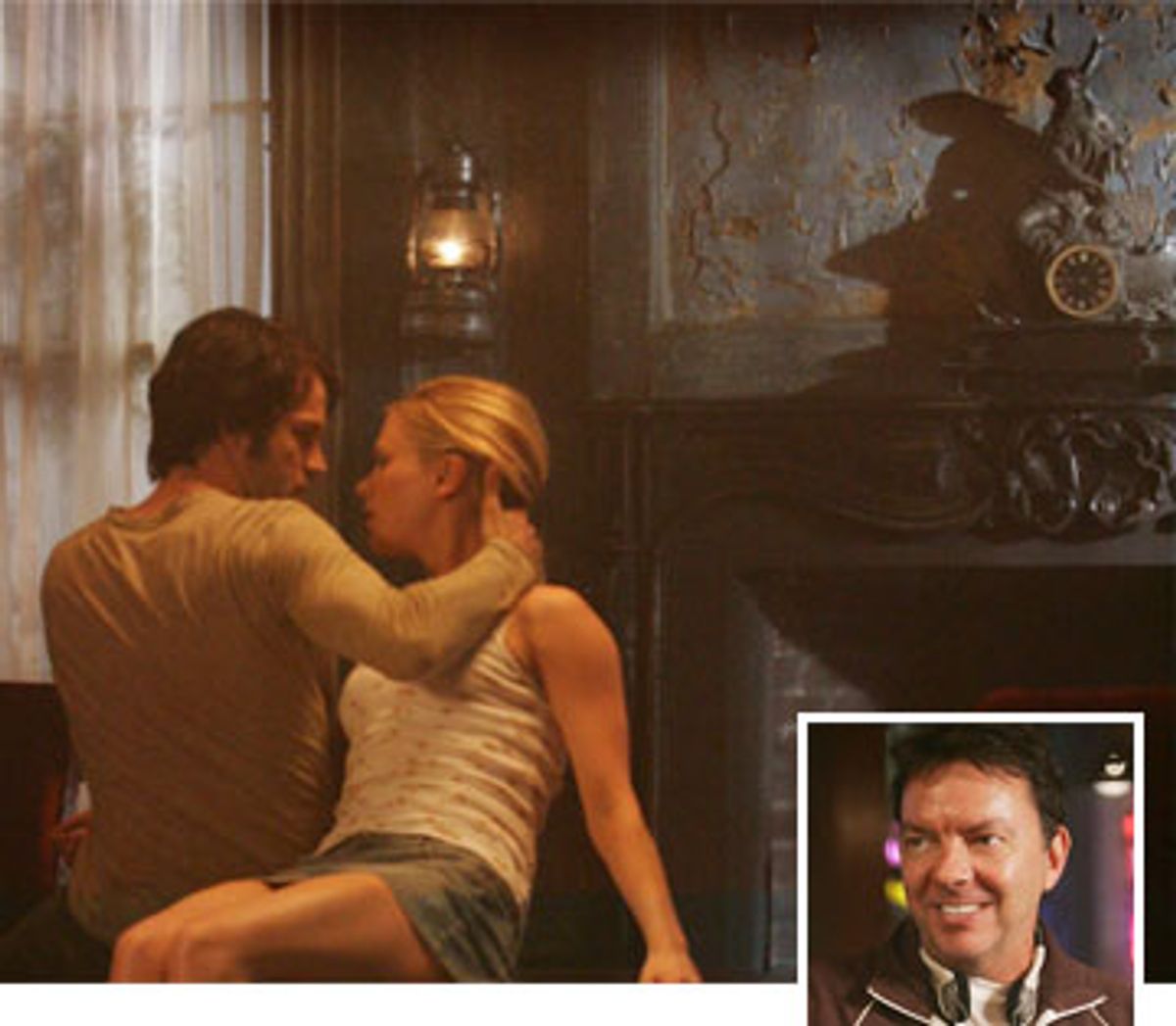
"True Blood" heroine Sookie Stackhouse (played by Anna Paquin) is a virgin clad in nymphet's clothing. A telepathic waitress in small-town Louisiana, Sookie spends much of her mental energy blocking out the base, awful thoughts of everyone around her. While her horndog brother is stumbling into the dangerous world of fangbangers (mortals who chase the exotic experience of screwing the undead), Sookie meets Bill Compton (Stephen Moyer), who happens to be the most genteel, courtly vamp since Angel, or maybe "Twilight's" Edward. "I've been waiting for this to happen ever since they came out of the coffin two years ago," Sookie burbles, referring to the political changes that have allowed vampires to become part of mainstream society. But Bill is not the perfect boyfriend: He comes with a century's worth of emotional baggage. And through him, Sookie is thrust into an underworld riddled with sensuality and peril. It's a fantastical universe, and yet in some ways it's not so different from the one inhabited by the central character of "Towelhead," Ball's perturbing forthcoming movie about a teenage girl learning to cope with her burgeoning sexuality, and with others' interest in it.
Ball spoke to Salon by phone from Los Angeles about the appeal of fanged sex, vampirism as a political metaphor and how to have fun with death. As one of the characters remarks, "If we can't kill people, what's the point of being a vampire?" (Listen to the interview here.)
You've spent all those years on a show about undertakers and now you've moved on to a show about dead people -- or, that is, undead. Are you a secret goth?
I'm not! I just chanced upon these books by accident almost. I was wandering through the bookstore and I saw this book and the tag line was, "Maybe having a vampire for a boyfriend isn't such a good idea." I thought that was funny. They were so incredibly entertaining that I got really pulled into the world of the books.
The series is an interesting mix of light and dark. Clearly, there are funny elements, and yet it is literally ghoulish subject matter.
Oh, absolutely. It's incredibly violent, and there's a huge body count. At the same time, it's vampires, so you can't take it too seriously. There's something so fun about the pulpiness -- the genreness. It kept me so entertained and at the same time I thought there were really great, deeper themes. I ended up really caring about these characters.
Did you sit down and map out the mythology of this particular world?
Actually, no. Charlaine had done that. Instead of the supernatural being something that exists outside of nature, I wanted it to be something that was almost like a deeper manifestation of nature. Deeper and more primeval. Something that maybe humans, with our brain structures that we've created as a way to filter reality, can't comprehend or sometimes even perceive.
If you actually look at a lot of the more recent vampire movies and TV shows, that mythology is pretty fluid. We decided a lot of the myths about vampires were misinformation that the vampires themselves willfully disseminated so that they could pass. Like in the 15th century, if everybody believed a vampire couldn't be seen in a mirror, then, here I am, you can see me in a mirror, and so I couldn't possibly be a vampire.
So the vamps have just been scamming us all these years?
Pretty much.
In the opening episode you introduce us to "fangbangers" -- regular people who want to sleep with vampires. So I'm guessing that vampire sex is pretty intense. Is that part of vampires' appeal?
Well, they've had a lot of years to perfect their techniques, to learn things, and also as creatures who are more deeply connected to nature. Definitely within the books and within our world, usually vampires are pretty good sexual partners.
There must be some duds in there, though?
Oh, absolutely. We haven't gotten to them yet, but we will.
Also, clearly, the sexual encounters in this world are freighted with danger. That seems to be something that Sookie is drawn to.
I don't know that she's drawn to dangerous sexual encounters. I wouldn't say that. I think she's drawn to a man that she can relax and be herself around and not have to have this constant defense mechanism, wall, around her consciousness so she doesn't hear what people are thinking.
Right, because for some mysterious reason he's the only person whose thoughts she can't hear.
Absolutely. That is the biggest turn-on of all.
I was thinking about the sexual component because I just saw a screening of your forthcoming movie, "Towelhead." In the movie, a young woman is discovering sex in a way that feels quite chilling and a little bit out of her control. How does that work when you're making two projects in fairly close proximity; do the themes bleed into each other at all?
I'm sure that they do. I'm sure they're obviously themes that I'm attracted to because they have a certain resonance for me personally and psychically. However, "Towelhead" I shot and finished a long time before I even started working on the show. They feel like two very distinctly different worlds. It certainly wasn't conscious. I'm not that kind of writer anyway, where I sit down and say, I want to explore this theme, because that kind of academic approach is not the way my brain works. It's a much more unconscious, organic thing.
It also got me thinking about one of the most controversial episodes of "Six Feet Under," probably one of the most intense hours I've ever spent in front of the TV. It's the famous episode when David is held captive and brutalized by a man he tries to pick up for casual sex. It made me wonder, what do you try to achieve with TV generally, and what do you want to evoke with "True Blood"?
I learned a long time ago that moments when I'm successful are when I try to create television that would engage me as a viewer, or film, or whatever. I've certainly tried to do other things -- I wrote a bunch of screenplays and I thought, well, this is what will sell, or this is what the market is looking for now. I did a sitcom for ABC 10 years ago and thought, well, this is a nice hybrid of "Friends" and this and this, and maybe it will be really successful.
I think I just find the pop culture landscape so barren in terms of seeing things that excite me on an intellectual, emotional and entertainment level all at the same time. I don't want to just sit there and let something that is predigested wash over me and not really think about all of the weird, ambiguous and scary parts of life. I think trying to avoid those is ultimately self-destructive and also destructive in a global sense, because as a race we face a lot of really, really terrifying problems, and we live in a violent, irrational world. I like to confront that in symbolic ways through entertainment. I'm interested in things that reach down into your soul and your psyche and force you to confront the monsters that live there.
That's probably why a show like "Six Feet Under" really made an impact, because we are so used to having TV wash over us.
I also think that predigested washing-over TV just makes us more and more passive as citizens.
Do you feel like you have to keep pushing things further in order to reach people?
No. I think you have to get real. A lot of people accuse me of shocking people just for the sake of shocking people. I don't believe that. Personally, a lot of the things that people get shocked by I don't find shocking. I'm shocked in the way that our country is drifting very steadily toward fascism. I find that shocking. I find the fact that criminals have hijacked America and everybody seems to be OK with it, for the most part, I find that incredibly shocking. Seeing blood on TV or something -- wow, that's what people get shocked by?
Is doing a show about vampires an easier way for you to get at some real issues and emotions?
Maybe. I love the way that the vampires are a really fluid metaphor in the show. On the one hand, they're a metaphor for any misunderstood or feared or hated minority. On the other hand, they're a metaphor for any sort of organization that has an agenda to amass power and if you get in their way, they'll get rid of you.
So you can see them as a metaphor for gays and lesbians. Or you can see them as a metaphor for the Bush administration. I think that's kind of fun. I just like that complexity and at the same time you can't take it too seriously because ... they're vampires!
I read somewhere that you liked the fact that the vampires were struggling for assimilation. At this point in time, there is certainly more leeway for young people to come out and be comfortable with their sexual identity, but obviously there are still huge issues facing gay men and women.
Yeah, we can't serve in the military -- not that that's the biggest issue for me. And you can't get married. If you are in a committed partnership, you don't have the same financial and legal rights as other citizens. That is institutionalized.
And you've found a fun way to play with those serious issues.
If you get all earnest and everything, then it just becomes boring.
Will we see a lot of vampire activism on the show?
Well, as we go on with the series, that's sort of not what the show is about. That's part of the texture of it. Certainly as we move into next season, the church, which is very anti-vampire and is focused on vampires, becomes a much stronger part of the story.
"True Blood" is appearing on HBO at a transitional time for the network, with so many of its successful shows having come to an end, including "Six Feet Under." I also think it's a really weird moment for television in general. There are so many changes in terms of who's watching, how they're watching. Have you given any thought how or whether to use the changing medium?
I personally don't find the notion of webisodes or online games exciting. I'm 51. I would rather spend what little free time I have actually in the world rather than in the virtual world. Having said that, the whole viral marketing campaign for this show has been really fun. It's served two purposes, in that it's become a little bit of a destination in and of itself and it's completely telling all the back story of our show so that once the show starts, the audience is educated. That, I think, is really interesting.
I've seen posters for the fake drink brand Tru Blood all over my New York City neighborhood. I'm guessing that some people think it's a real product, so you're successfully blurring reality and the show. Did you realize when you started production just how much vampire craziness there was going to be this year, with the movie and books from the "Twilight" series and the upcoming Diablo Cody movie "Jennifer's Body"? Vampires seem to be everywhere.
No, I had no idea. I don't think it's possible to grow up in a media-saturated culture and not be aware of vampires. They're really a mythic idea of surprising endurance. But I was never one of those people who's like, Oh, anything vampire, I love. I have since become aware of just how many of those people there are and I hope they love our show.
What do you see as the reason for the vampires' enduring appeal? Is it just the pure romanticism of it?
One of the real seed issues at the base of a lot of humanity's psychic suffering is the denial of death. I certainly think the idea of death makes that a little more palatable. It softens it, especially as vampires have evolved into the reluctant vampire, the vampire who has ambivalence, who doesn't want to be a vampire, who yearns for humanity. Certainly the idea of being immortal has always been attractive to the human psyche. I think we fear oblivion and ending more than anything else. I also think there's obviously something very erotic about it -- the penetration, the merging of bodily fluids, of course it's a huge metaphor for sex. Also, we've all known people who have sucked the life out of us. That's all part of why it's such an enduring idea.
Did your ideas about and relationship to death change when you were working on "Six Feet Under"? The finale for the show was so final, as we watched every character we loved or hated grow old and die: Every door was shut.
I had a lot of people die throughout my life starting when I was very young. I'd developed this fear of death, this fear of grief. I think I became more comfortable with grief and the realization that it is part of life. The idea that we should go through life being productive and happy 24 hours a day is, first of all, unachievable and, second of all, limited thinking. I do believe if one is able to fully embrace one's mortality, it is an incredibly liberating experience and it allows you to really live, because then life is really precious. You do know on a fundamental, on a cellular level, that it is finite, that it is not just a concept.
Right, it should inform everything you do. And part of the contemporary mythology of the vampire is this sadness of having to go on and on.
In a way, being immortal is not a picnic.
You have all that misery that you have to carry around with you endlessly.
Absolutely. Everything that you love and grow attached to leaves, but you don't.
Shares