Editor:
Updated: Today
Topic:

Crime

4 police officers shot dead at cafe

Washington officers were reportedly ambushed

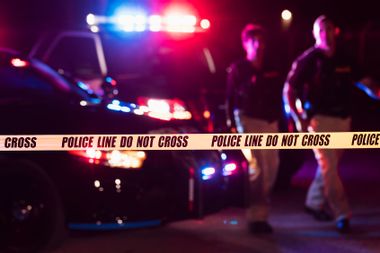
One of four police officers killed in an ambush at a coffee house Sunday fought with the gunman and may have wounded him before the officer died just outside the doorway, a sheriff's spokesman said.

Pierce County sheriff's spokesman Ed Troyer told reporters that investigators were asking area medical providers to report any people wounded by gunshots.

Troyer said investigators believe two of the officers were shot dead while sitting in the shop, and a third was killed after standing up. The fourth apparently struggled with the gunman out the doorway and "gave up a good fight," getting off a few shots before he was either shot there or succumbed to earlier wounds.

"We believe there was a struggle, a commotion, a fight ... that he fought the guy all the way out the door," Troyer said.

He added, "We hope that he hit him."

The gunman burst into the coffee house Sunday morning and opened fire on the officers as they sat working on their laptops, killing the three men and one woman in what Troyer described as a targeted ambush.

Troyer said officers were looking for one male suspect who fled the scene and haven't ruled out an accomplice, possibly a getaway driver.

Troyer said investigators determined that a hoax call from a person in nearby Tacoma led officers to believe the gunman was on foot and still near the coffee shop. A number of officers spent part of the afternoon carefully searching buildings close by.

Troyer said the attack was clearly targeted at the officers, not a robbery gone bad.

"This was more of an execution. Walk in with the specific mindset to shoot police officers," he said.

Troyer said the officers -- all from the Lakewood Police Department -- were catching up on paperwork at the beginning of their shifts when they were attacked at 8:15 a.m. Sunday.

"There were marked patrol cars outside and they were all in uniform," Troyer said.

With no known suspects, there was no indication of any connection with the Halloween night shooting of a Seattle police officer. The suspect in that shooting remains hospitalized.

"We won't know if it's a copycat effect or what it was until we get the case solved," Troyer said. "We don't even have a suspect ID right now."

Troyer would not release the names of the victims in Sunday's shooting. He said Lakewood has a small police force and the deaths represent a loss of 10 percent to 15 percent of the department.

Troyer estimated that a couple of hundred officers from the Washington State Patrol and multiple surrounding police agencies in the area were at the crime scene, with some coming on their own time.

"We have no motive at all," Troyer said. "I don't think when we find out what it is, it will be anything that makes any sense or be worth it."

Two employees and a few other customers were in the shop during the attack. All are being interviewed by the Pierce County Sheriff's investigators.

"Some are in shock. They are very upset," Troyer said. "They are the ones who are going to put together for us how this happened."

The Forza Coffee Shop, part of a popular local chain, is on a side street near McChord Air Force Base in Tacoma, about 35 miles south of Seattle. The shop is in a small retail center alongside two restaurants, a cigar store and a nail salon.

Brad Carpenter, founder and owner of Forza Coffee, said his staff was OK and being interviewed by police, and that his main concern was for the families of the police officers.

"I'm a retired police officer, so this really hits close to home for me," said Carpenter, of nearby Gig Harbor.

Troyer said the Lakewood officers were two blocks outside their jurisdiction, and the coffee shop was a popular place for officers from surrounding jurisdictions to meet and share information.

Streets around the coffee shop were blocked off late Sunday morning, and a police helicopter hovered over a large crowd of investigators. TV video showed police taking possession of a pickup truck parked in a grocery store in Parkland.

"We are looking at some people. We are looking at some cars. We are looking at some residences," Troyer said.

Troyer said investigators were checking surveillance video from multiple sources, trying to identify a possible getaway car.

Dave Gabrielson, a clerk at Foot Mart about a block away from the coffee shop, told the newspaper all was quiet when he opened the store at 8 a.m. About 30 minutes later, "All of a sudden a million cops were zooming up and down the road," Gabrielson said.

He said he saw officers bring a police dog into a nearby apartment complex.

Last month, Seattle police officer Timothy Brenton was shot and killed Halloween night as he was sitting in a cruiser with trainee Britt Sweeney. Sweeney was grazed in the neck.

Authorities say the man charged with that shooting also firebombed four police vehicles in October as part of a "one-man war" against law enforcement. Christopher Monfort, 41, was arrested after being wounded in a firefight with police days after the Seattle shooting. He remains hospitalized in stable condition, the hospital said Sunday.

The officers killed Sunday were a patrol squad made up of three officers and their sergeant. No threats had been made against them or other officers in the region, sheriff's officials said. Their families have been notified.

"We lost people we care about. We're working to find out who did this and deal with him." Pierce County Sheriff Paul Pastor told reporters at the scene.

Washington Gov. Chris Gregoire said she was "shocked and horrified" by the killings.

"Our police put their lives on the line every day, and tragedies like this remind us of the risks they continually take to keep our communities safe," she said in a written statement. "My heart goes out to the family, friends and co-workers of these officers, as well as the entire law enforcement community."

At Rollies Tavern near the coffee house, the plasma TVs usually tuned to football had Northwest Cable News on. Three bar patrons live next door to the coffee house.

Jerry Arnold, 45, was in bed when he was awakened by sirens. He's lived there seven years and never seen anything close to Sunday's scene.

"I hope they get them. I can't sleep until they do," he said. "Those guys could be hiding in my backyard."

------

Associated Press Writer Rachel La Corte in Olympia and Photographer Ted S. Warren in Parkland contributed to this report.

Anti-gay, religious-motivated crimes up

FBI data shows 11 percent increase in crimes based on sexual orientation

Reports of hate crimes against gays and religious groups increased sharply in 2008, according to new FBI data released Monday.

Overall, the number of reported hate crimes increased about 2 percent. These same figures show a nearly 11 percent increase in hate crimes based on sexual orientation, and a nearly 9 percent increase in hate crimes based on religion.

The largest category, racially-motivated hate crimes, fell less than 1 percent.

Among all categories of hate crimes, roughly a third are vandalism or property damage. About 30 percent involve intimidation of some kind, and another 30 percent were physical attacks against people.

The FBI does not compare year-to-year trends in hate crimes, saying the number of agencies reporting changes too much. And in fact, the bureau cautioned that the increase reported Monday might well be due to more agencies tracking such incidents.

In 2008, 2,145 different agencies reported hate crimes incidents, while the year before 2,025 agencies did this reporting.

In total, there were 7,783 hate crimes reported to the FBI last year, and seven murders were categorized as hate crimes.

Half of all hate crimes are motivated by race, according to the FBI. One out of every five is driven by religious bias, and one out of every six is based on sexual orientation bias.

The new statistics come less than a month after President Barack Obama signed a bill expanding those covered by the federal law against hate crimes. Previously, the law had protected those attacked on the basis of race, color, religion, or national origin.

The new law signed by Obama now covers crimes based on gender, sexual orientation, gender identity or disability. It also removes the restriction that federal authorities can launch investigations of victims who were engaged in federally protected activities like voting or free speech.

Marine assaults priest, claims gay, Arab panic

Attacker's lawyer actually tries for a Muslim, gay harassment defense
This column originally appeared on the blog Dissenting Justice.

Jason Bruce, a Marine reservist in Tampa, Fla., attacked an innocent Greek Orthodox priest with a tire iron. Bruce has initiated a shameful legal defense: the priest grabbed his crotch.

The actual story is quite different. Apparently, Father Alexios Marakis, who speaks little English, became lost after his car's GPS system led him astray. Marakis followed several cars into the parking garage of a condominium in order to seek instructions. He approached Bruce, who was retrieving items from the trunk of his car. Bruce responded by chasing Marakis and hitting him several times with a tire iron. Video footage shows a tire iron-wielding Bruce chasing Marakis. Marakis's GPS records confirm his assertion that he came to the area while trying to reach another destination.

Police arrested Bruce after he gave several inconsistent explanations. According to the St. Petersburg Times, Bruce said that:

  • The man tried to rob him.
  • The man grabbed Bruce's crotch and made an overt sexual advance in perfect English.
  • The man yelled "Allahu Akbar," Arabic for "God is great," the same words some witnesses said the Fort Hood shooting suspect uttered last week.
  • "That's what they tell you right before they blow you up," police say Bruce told them.

Bruce's allegation that Marakis grabbed his crotch is an example of the controversial "gay panic defense." The gay panic defense allows defendants to claim provocation as justification for violent acts they committed. The defense is not uniformly recognized, and it is widely criticized by legal scholars.

The gay panic defense is homophobic because it rests on the assumption that a gay sexual advance is so provocative and threatening that, with or without physical contact, it warrants a violent response. This is not the law regarding heterosexual sexual advances.

Furthermore, Bruce's conflicting explanations suggest that the defense is a complete fabrication. Nevertheless, his lawyer, Jeff Brown, is running with it. According to Brown the following series of events took place:

The bearded man wearing a robe and sandals was clearly trespassing in the garage. In a sudden move, the stranger made a verbal sexual advance and grabbed Bruce's genitals. The Marine defended himself. And immediately, he called 911 as he chased him.

Brown is actually trying to peddle a gay Islamic Arab rapist terrorist defense. Brown's argument is a gross example of shameful lawyering.

Finally, this was not Bruce's first brush with the law. Although this information will probably get excluded from evidence if Bruce is prosecuted, in 2007, Bruce "was charged with misdemeanor battery ... for hopping over the bed of a tow truck and shoving its driver. He pleaded no contest." Today, Bruce remains violent.

Prosecutor pushes smear campaign against students

Cook County D.A. uses the long arm of the law to harass journalism students working on exonerating prisoners
This column originally appeared on the blog Dissenting Justice.
Anthony McKinney is serving a life sentence for a 1978 murder. Another individual, Tony Drakes, confessed to the murder in a taped interview with Northwestern University journalism students.

Recently, major news outlets reported that Anita Alvarez, the district attorney for Cook County, Illinois, had subpoenaed the grades, grading standards and electronic communications between students and professors in the Medill Innocence Project. Northwestern University runs the Medill project, which, during its 10-year history, has helped to secure the release of 11 innocent inmates.

Medill journalism students in the project research claims of innocence by incarcerated individuals. If the students believe the claims have merit, they give the information to lawyers who then decide whether to pursue legal relief. Medill students have gathered evidence that seems to exonerate Anthony McKinney, who is serving a life sentence for the 1978 murder of a security guard. Another individual, Tony Drakes, confessed to the murder during a videotaped interview with students.

The prosecutors' subpoena has sparked almost universal condemnation. Many commentators view it as a blatant attempt to harass the students and their professors and to chill advocacy on behalf of wrongly convicted individuals.

The prosecutors, however, will likely get the documents they seek -- unless a judge determines that the students are "journalists" under Illinois law. If the judge treats the students as journalists, then Illinois law would shield their communications from disclosure.

Full smear campaign

The merits of the subpoena depend solely upon the status of the students under the Illinois journalistic shield statute. Nevertheless, Alvarez has apparently decided to launch a full smear campaign against the Medill project.

First, Alvarez defended the subpoena by claiming that she wanted to know whether students received higher grades if they concluded that inmates were innocent. Now, Alvarez has made the salacious claim that Medill students paid two witnesses for their testimony.

According to an article in the Wall Street Journal, Cook County prosecutors argued in court yesterday that Drakes received $40 from a cab driver hired by the Medill project and that he used the money to purchase "crack cocaine." Prosecutors also argued that students paid Michael Lane, a friend of Drakes and possible accessory to the murder, between $50 and $100  and "took him out for cocktails and dinner and flirted with him." Prosecutors, however, provided no other details regarding the payment to Lane. These assertions reflect absolute hypocrisy and desperation by the prosecutors.

Prosecutors "pay" witnesses all the time. In exchange for testimony from witnesses, prosecutors pursue lesser charges, or they give them full or partial immunity. They also drop pending charges in other cases. Prosecutors also threaten harsher penalties if witnesses refuse to cooperate. Indeed, it is probably likely that prosecutors threatened Drakes, who confessed to a murder, with severe penalties before he "recanted." In order to question the students' credibility, Alvarez must also question the credibility of prosecutors across the nation.

Furthermore, the prosecution's assertions seem highly unlikely. Indeed, the Medill project has a simple explanation for the payment to Drakes, which suggests that prosecutors made the allegation purely for shock value, rather than substance. David Protess, the professor who runs the Medill project, says students paid a cab driver to transport Drakes and that he retains the receipt.

Protess also questions the sincerity of Cook County prosecutors who seem to believe that Drakes would confess to murder for $40. But these prosecutors are so desperate to conceal the truth that they apparently do not care about their own reputations or the reputations of the Medill students who pursue justice for wrongfully convicted individuals.

Census worker hanging may have been suicide

It was too easy to fit Bill Sparkman's death into a storyline we already knew

When news broke in September of the apparent violent death of a Kentucky census worker, it raised some red flags. In addition to being horrifying and gruesome on its own merits, the case seemed to point toward the dangerous side of extreme anti-government sentiment. The census, after all, has been singled out on the right as a threat to liberty, and the worker who was found hanged in a forest reportedly had the word “fed” written on his chest. Nobody wanted to jump to conclusions, but frankly, it seemed open-and-shut.

Well, now the AP has a report that’s a reminder against making those kinds of assumptions. Apparently, investigators are doubtful that Bill Sparkman was killed because of his job, and instead have begun to suspect that it was a suicide.

Apparently, Sparkman’s body showed no signs of struggle, and his hands were bound in a way that would have left him able to manipulate a rope. Still, his son, his colleague and the man who found his body all believe that he was killed, based on what they saw of him before and after his death.

It’s all quite disturbing, and obviously does have some potential political implications. Many on the left have spent the year sizing up the resurgent far-right to determine just how worried they ought to be. The death of Sparkman seemed like another entry, and a tragic one, in the “be afraid” category.

Today’s AP story doesn’t necessarily refute the broad trend (or even the specific theory about Sparkman), but it’s still a good corrective. Sometimes we really don’t know the details, and should have the humility about these things. It's a particularly useful lesson in light of how many have responded to yesterday's shootings at Fort Hood.

Opposing the death penalty is not about innocence

Fighting the death penalty should not hinge on proving that innocent people have been sentenced to die
AP Photo/Kiichiro Sato
The death chamber at the Southern Ohio Corrections Facility in Lucasville, Ohio.

In the last several weeks, two major events have reignited the controversy that engulfs capital adjudication in this country. First, the U.S. Supreme Court took a potentially significant step in expanding the role that federal courts play in superintending how states mete out the death penalty. Second, the New Yorker published a devastating article by David Grann about the execution of Cameron Todd Willingham, a man convicted and capitally sentenced for his children's murder on the basis of junk science and a mentally troubled jailhouse informant. Each of these events called attention to what the public perceives as our capital punishment system's signal failure -- its inability to ensure that those who are executed are actually guilty.

As the attention paid to systemic failure grows, so too does the apparent need to posthumously exonerate a capital convict. It is now fair to say that a posthumous exoneration is the pièce de résistance of death penalty opposition. But ardent defenders of capital punishment appear comfortable to defend on this territory. Justice Antonin Scalia wrote in a 2005 Supreme Court opinion that there is not "a single case -- not one -- in which it is clear that a person was executed for a crime he did not commit." For at least two reasons I discuss below, we must be careful not to overstate the importance of posthumous exoneration.

First, our system of capital adjudication is terrifically screwed up for reasons that have nothing to do with whether a state has accurately identified a murderer in a specific case. For starters, the death penalty is not colorblind. All other things being equal, nonwhite offenders are more likely than white offenders to be executed, and offenses against white victims are more likely to be punished capitally than are offenses against nonwhite victims. Racially motivated jury selection amplifies each of these problems. That similarly situated offenders are not being sentenced the same way is troubling enough; that race frequently accounts for that difference is morally revolting.

Moreover, some jurisdictions are derelict in enforcing Eighth Amendment restrictions on capital punishment that do not involve questions of guilt. For example, although the Constitution forbids the execution of offenders who are either incompetent or mentally retarded, a number of states have systematically undermined these prohibitions by adopting overly restrictive or nonscientific tests for these clinical phenomena. Another example involves mentally ill offenders, who may be executed only if a court's charge to the jury allows it to consider whether the defendant's illness mitigates culpability. For almost two decades, Texas fought tooth and nail to carry out executions imposed under jury instructions that unconstitutionally failed to permit sufficient consideration of mitigating evidence.

The role of race, and the way states undermine capital eligibility restrictions, are two problems that have nothing to with how accurately the criminal justice system identifies murderers. The unrelenting emphasis on identifying a person who has been executed for a crime he or she did not commit runs the risk of sidelining these otherwise powerful critiques of the death penalty.

Second, attempts at posthumous exoneration in individual cases can be counterproductive because they can create what I call the "Coleman effect." In 1992, Virginia executed Roger Coleman for murdering his sister-in-law. Coleman had insisted on his innocence until his dying breath, and his sentence drew considerable attention when he appeared on the cover of Time magazine. In 2006, then-Gov. Mark Warner ordered that the DNA evidence in the case be retested using more advanced methods. Death penalty opponents hoped that, by conclusively establishing Coleman's innocence, the posthumous tests would erode the legitimacy of capital punishment in the United States. The testing had precisely the opposite effect. It conclusively established Coleman's guilt, and reinforced a competing narrative -- that government institutions effectively prevent executions of the wrongfully accused.

Ad hoc posthumous inquiry into the accuracy of capital dispositions is a high-risk endeavor. If the test comes back the wrong way, then the result only further legitimizes the death penalty. To eliminate the Coleman effect, a posthumous exoneration program would require enough money to finance testing on a large sample population, so that we can be statistically confident that some tests will establish innocence. The reason we don't have such comprehensive posthumous testing has to do with how groups that seek exonerations allocate scarce resources; these groups sensibly commit limited resources to exonerating prisoners who are still alive. There are one-off posthumous inquiries into the accuracy of specific executions, but the Coleman effect often limits the outlays that groups are willing to make for these types of investigations.

There is something unsettling about the very idea that posthumous exoneration is a burden that death-penalty opposition must assume. We don't need posthumous exonerations to tell us something that we already know from available evidence -- that considerable error inheres in the way we administer capital punishment. We know that many noncapital defendants are wrongfully convicted, and there is no reason to believe that capital adjudication is any more accurate. We know that the Innocence Project has used DNA testing to exonerate at least 17 death-row inmates, and it is inconceivable that there are not other cases that have slipped through the cracks. And we know that incompetent attorneys, junk science, false confessions, self-interested informants, prosecutorial abuse and unreliable eyewitnesses render wrongful executions a statistical certainty. In other words, we already know that we execute innocent people.

Case-by-case posthumous inquiry tells us only one thing that we don't already know: the identity of the wrongfully executed convict. But when we evaluate the institutional implications of wrongful executions, why is identity so important? Shouldn't it be enough that we know that such executions happen, and shouldn't posthumous testing be conducted comprehensively to discern trends and determine things like frequency? Justice Scalia might have been correct in pointing out that we cannot conclusively specify the identity of a wrongfully executed person, but he's certainly wrong to infer on such a basis that wrongful executions do not happen.

The hunt for the identity of a wrongfully executed person reflects the need to put a face on one particular critique of capital punishment. That hunt is admirable and, if structured the right way, well worth the cost. But the "innocence" critique need not have a face to be right, and the myriad other critiques of our perverse capital punishment system should not all stand or fall on our ability to specifically identify a wrongful execution.

Page 1 of 34 in Crime Earliest ⇒

Crime in the news

Loading...

Currently in Salon