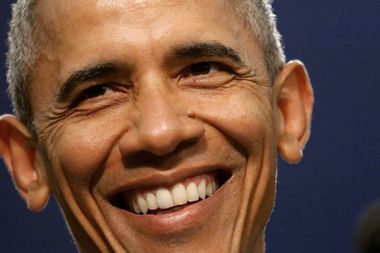
Dear Mr. Obama,
I hate to complain, and I certainly do not want to sound cranky. But time is awasting, so here goes: Nearly 70 million people voted for you because we supported your commitment to ending the war in Iraq, closing Gitmo and creating universal healthcare. Only a couple thousand of them were passionate about the whole bipartisanship thing, and based on my scientific research, exactly 38 believed that Olympia Snowe's vote on the healthcare reform bill would even make it bipartisan. Thirty-eight people! (And you should see them.) So now the other approximately 66,999,962 of us are left wondering, Why did you lose so much time courting her vote?
I mean no offense, but the belief that Snowe's vote made the bill bipartisan was delusional from the start. It was exactly the sort of thing my mother would have come up with -- and she was from Liverpool. I rest my case: Those of us with English parents faithfully attend special 12-step meetings to break through the uniquely English forms of denial. The vote of one extremely withholding woman -- and I say that without judgment -- never changed the nature of the bill, no matter how much you and your staff convinced yourselves it did. It is a Democratic bill -- a quintessentially Democratic bill, in that it's about trying to help those in need. It is about fairness, decency and the common good, the values most Americans were raised on. But you can't even mention those words and ideals these days without getting laughed at by the Republican leadership -- or, worse, tea-bagged.
A great pastor in New York City once said that if you wanted to get into heaven, you needed a letter of recommendation from the poor. Teddy Kennedy got his. So did Lincoln, FDR, Shirley Chisholm. And now it's up to you.
To get Ms. Snowe's mingy vote, you would have needed to include her little pet rock, the trigger option. But the trigger option was the emperor's new clothes. Perhaps a more precise way of saying this is that the trigger option was a figment, a dodge from greatness. My mother would have called it a "crock." My 20-year-old son, "Totally bogus."
I am not saying that continuing to waste our time -- while people die every day from lack of healthcare -- will keep you out of heaven, although you may get an inferior seat, possibly in the room serving only nursery snacks. How will you face Teddy if you muff this historic moment? Do you think he will share his eclairs with you? His brie?
It's OK that you wanted Ms. Snowe's vote so desperately, but the truth is that she was getting high on not giving it to you. She was getting a hit, like a junkie, from withholding. Believe me, I have dated men like her. She had a chance to participate in greatness, which does not happen all that often anymore in American politics, but the possibility is there now -- for you, for us, for our country.
A huge majority of people in America and specifically in Maine want the public option. For a few months there, she had the power to kill it. Dude, what was that about? Was it some form of Kabuki theater, wherein you knew she would never give you her vote, but you needed to pretend she might for another week? Was it a multilevel chess game that all the people who voted for you were too dumb to figure out? She didn't want decent medical care for the poor and middle class: She wanted power. She, like so many of us, is hungry for what she is not giving -- for generosity of spirit, the only thing that can fill us up. And yet, she chooses to withhold, this woman who happens to have great government healthcare. I bet she and her extended family never worry when they get sick, or even when they need psychiatric care. Not to mention dental, which just kills me to think about -- me and my family, with our terrible English teeth.
So we've lost two or three months to that business. And now we have Lieberman. In some ways, he's even worse, because of -- well, you know -- the voice.
We do not personally blame you for the fact that we have to listen to him. It's political life, on political life's terms. And maybe his therapist or rabbi will help staunch his latest episode of swerving sickness. But recently on "The Rachel Maddow Show," the great Jane Hamsher compared the healthcare debate to a beauty contest in which the contestants who feel ignored start stripping and said that, at some point, one of the directors will convince Lieberman to put his shirt back on. So I am wondering, why can't that be you? Why can't you do what Leon on "Curb Your Enthusiasm" keeps urging Larry to do? Take him the ruckus.
Use your most reliable parenting skills: Joe Lieberman is acting like a petulant, icky little kid -- I say that with love. Use those classic parental standbys, bribes and threats. Back-channel him. Try reverse psychiatry -- "Thank God you stepped in, Joe. Otherwise, we would have been responsible for all those slacker poor people. All those feverish babies and children. All those English expats, with their bad teeth." If that doesn't work, maybe you could just remind him of the famous story from 15 years ago, that family with a 5-year-old girl with leukemia who needed blood in massive quantities to stay alive. You remember: Everyone in her family except her older brother was tested and found to be incompatible. But the boy was afraid of having blood drawn in order to test it, and his parents respected him enough to let him come to the decision by himself.
One day he came to them and told them he was ready. They took him to the doctor, his blood was tested, and it was an almost exact match with his little sister. So the two of them were put on beds side by side in a hospital room, and the nurses withdrew blood from his arm, and let it flow into his sister's. He lay with his eyes closed, in silence for the entire procedure, until the doctor gripped his shoulder and asked how he was doing. The boy opened his eyes.
“How soon 'til I start to die?” he asked.
This kind of profound and innocent moral courage is the most attractive characteristic a person can display, especially a politician. It is time for you to come out vigorously and loudly for Harry Reid by getting your people in line. Reid has managed, with a lot of help from liberals and progressives and too much time lost, to whip most of the Senate Democrats behind what you campaigned for. Now it is time for you to roar. Ms. Snowe and Joe can still choose greatness, too: They have free will, and they may surprise us all. Or, hey, while we are at it, why not hit up George Voinovich? He is not running for reelection and is -- or should be -- rooting around for a legacy. Otherwise, people will scratch their heads while trying to remember who he was. "Oh, Voinovich? Wasn't he the guy up on Laurel who had to tent his house for termites?" He could go out a hero, by simply doing what public servants are supposed to do -- stand up for the people, for greatness, for compassion, fairness and the common good.
So again I ask you, do the right thing, and do it now. Shoot the moon, Boss: right between the eyes.
The Senate vote on Democrats' healthcare reform bill Saturday night was close -- maybe too close. Majority Leader Harry Reid won an important victory, no doubt, but he had only the 60 votes needed to invoke cloture and move the legislation to the floor, no more. He may not have all 60 when the next cloture motion, the one to break a Republican filibuster and force an up-or-down vote, comes around.
One member of the Senate's Democratic caucus, Sen. Joe Lieberman, I-Conn., has already said he intends to support a filibuster if the bill includes a public option. And he's not the only one saying something like that -- Sens. Blanche Lincoln of Arkansas and Ben Nelson of Nebraska are also talking defection.
That means that unless Reid can work out some sort of deal, he'll need to look for votes elsewhere: specifically, across the aisle. The New York Times reported Monday that he's already done that; along with the White House, he's courting Maine's two senators, Republicans Susan Collins and Olympia Snowe. Both voted with their party on Saturday, but both have also shown signs that they're willing to defect for the right bill. Snowe, for instance, became the only Republican to have voted for any of the Democrats' proposals when she supported the Finance Committee's version of reform legislation.
And Collins is quoted in the Times as saying, "“I have ruled out voting for this bill, but I still very much want to vote for a bill and that is why I am continuing to have discussions. I still cling to the belief that it is possible for a group of us to come together and rewrite the bill in a way that would cause it to have greater support.”
Senate Democrats on Sunday sparred with each other over how to fix the nation's troubled health care system, the moderates threatening to scuttle legislation if their demands weren't met and the more liberal members warning their party leaders not to bend.
The dispute among Democrats foretells of a rowdy floor debate next month on legislation that would extend health care coverage to roughly 31 million Americans. Republicans have already made clear they aren't supporting the bill.
Final passage is in jeopardy, even after the chamber's historic 60-39 vote Saturday night to begin debate.
"I don't want a big-government, Washington-run operation that would undermine the ... private insurance that 200 million Americans now have," said Sen. Ben Nelson, a conservative Nebraska Democrat.
Nelson and three other moderates -- Democratic Sens. Mary Landrieu of Louisiana and Blanche Lincoln of Arkansas and Connecticut independent Joe Lieberman -- agreed to open debate despite expressing reservations on the measure. Each of them has warned that they might not support the final bill.
One major sticking point is a provision that would allow Americans to buy a federal-run insurance plan if their state allows it. Moderates say they worry the so-called public option will become a huge and costly entitlement program and that other requirements in the bill could cripple businesses.
"I don't want to fix the problems in our health care system in a way that creates more of an economic crisis," said Lieberman.
The sway held by such a small group of senators has annoyed their more liberal colleagues, who could vote against a final bill if it becomes too watered down.
Sen. Sherrod Brown, D-Ohio, said he didn't think rank-and-file Democrats would feel compelled to go that far. At the same time, Brown warned Democratic leaders not to make too many concessions.
"I don't want four Democratic senators dictating to the other 56 of us and to the rest of the country -- when the public option has this much support -- that (a public option is) not going to be in it," said Brown.
The Senate bill would require most Americans to carry insurance and provide subsidies to those who couldn't afford it. Large companies could incur costs if they did not provide coverage to their work force. The insurance industry would come under significant new regulation under the bill, which would first ease and then ban the practice of denying coverage on the basis of pre-existing medical conditions.
Congressional budget analysts put the legislation's cost at $979 billion over a decade and say it would reduce deficits over the same period while extending coverage to 94 percent of the eligible population.
The House approved its version of the bill earlier this month on a near party-line vote of 220-215.
Sen. Dick Durbin of Illinois, the No. 2 Democrat in the Senate, said the health care bill must be passed by the end of the year so that President Barack Obama and Congress can to shift their attention to the economy and improving employment rates.
Such a timeline also would enable Obama to claim victory on a major domestic priority when he delivers his State of the Union speech in January. With one-third of Senate seats up for election in 2010, politics will factor heavily into the outcome of the debate over health care.
Sen. Michael Bennet, a junior Democrat who will be seeking his first full term next year in Colorado, where many districts lean conservative, said he would support the health care overhaul even if doing so means losing his seat.
"The thing that our working families need more than anything else is to end these double-digit cost increases that they're having every single year with health insurance," Bennet said.
Democratic Sen. Chuck Schumer of New York said he believes there are enough votes to include a public insurance option in the bill as long as states were allowed to opt out. To do so, all 58 Democrats and independent Sens. Lieberman and Bernie Sanders of Vermont would have to support it.
Lieberman and Nelson have said they object to the public option. On Sunday, Nelson said he is open to negotiating the provision; he said he would prefer allowing states to opt into the program, instead of having to remove themselves.
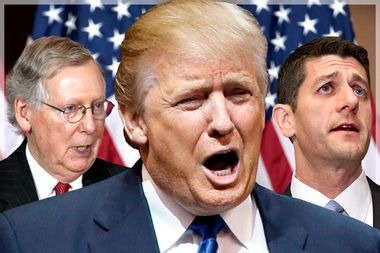
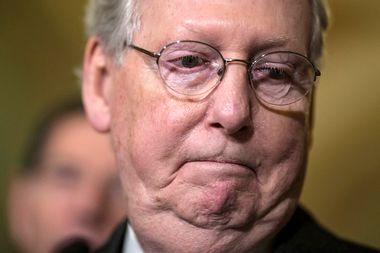
Senate GOP leader Mitch McConnell said the lingering reservations by moderate Democrats indicate that the party's leaders have gone too far. On Saturday, no Republican voted to begin debate on the bill, which they said would cripple industry and drive up costs for the average American.
"I believe there are a number of Democratic senators who do care what the American people think and are not interested in this sort of arrogant approach that everybody sort of shut up and sit down, get out of the way, we know what's best for you," said McConnell.
Brown, Bennet and McConnell appeared on CNN's "State of the Union." Lieberman appeared on NBC's "Meet the Press." Nelson appeared on ABC's "This Week."
----------
Associated Press writers Lolita C. Baldor and Philip Elliott contributed to this report.
A moderate Democratic senator who voted to allow debate over a health care bill says he might not support the bill in its next hurdle in the Senate.
Sen. Ben Nelson of Nebraska says he has serious problems with the bill. He says he wants tougher restrictions on what services taxpayers pay for.
The Nebraska Democrat says he wants an overhaul of the nation's health care system but still needs to be convinced that the Senate bill is the right path to that goal.
On Saturday night, Democrats mustered the minimum 60 votes needed to advance the Senate bill to debate after the Thanksgiving break. After that debate, the bill faces another vote that requires 60 senators in support.
Nelson appeared Sunday on ABC's "This Week."
Invoking the name of Edward M. Kennedy, Democrats united Saturday night to push historic health care legislation past a key Senate hurdle over the opposition of Republicans eager to inflict a punishing defeat on President Barack Obama. There was not a vote to spare.
The 60-39 vote cleared the way for a bruising, full-scale debate beginning after Thanksgiving on the legislation, which is designed to extend coverage to roughly 31 million who lack it, crack down on insurance company practices that deny or dilute benefits and curtail the growth of spending on medical care nationally.
The spectator galleries were full for the unusual Saturday night showdown, and applause broke out briefly when the vote was announced. In a measure of the significance of the moment, senators sat quietly in their seats, standing only when they were called upon to vote.
Republican Sen. George Voinovich of Ohio missed the vote.
In the final minutes of a daylong debate, Majority Leader Harry Reid, D-Nev., accused Republicans of trying to stifle a debate the nation needed.
"Imagine if, instead of debating whether to abolish slavery, instead of debating whether giving women and minorities the right to vote, those who disagreed had muted discussion and killed any vote," he said.
The Republican leader, Sen. Mitch McConnell of Kentucky, said the vote was anything but procedural -- casting it as a referendum on the bill itself, which he said would raise taxes, cut Medicare and create a "massive and unsustainable debt."
For all the drama, the result of the Saturday night showdown had been sealed a few hours earlier, when two final Democratic holdouts, Sens. Mary Landrieu of Louisiana and Blanche Lincoln of Arkansas, announced they would join in clearing the way for a full debate.
"It is clear to me that doing nothing is not an option," said Landrieu, who won $100 million in the legislation to help her state pay the costs of health care for the poor.
Lincoln, who faces a tough re-election next year, said the evening vote will "mark the beginning of consideration of this bill by the U.S. Senate, not the end."
Both stressed they were not committing in advance to vote for the bill that ultimately emerges from next month's debate. Even so, their announcements marked a major victory for Reid and the White House in a year-end drive to enact the most sweeping changes to the nation's health care system in a half-century or more.
The legislation would require most Americans to carry insurance and provide subsidies to those who couldn't afford it. Large companies could incur costs if they did not provide coverage to their workforce. The insurance industry would come under significant new regulation under the bill, which would first ease and then ban the practice of denying coverage on the basis of pre-existing medical conditions.
Congressional budget analysts put the legislation's cost at $979 billion over a decade and said it would reduce deficits over the same period while extending coverage to 94 percent of the eligible population.
It's done: Senate Democrats gathered 60 votes and got their healthcare reform bill through the first test it will face.
All 60 members of the Senate's Democratic caucus stuck together for this vote, a cloture motion that opens debate on the legislation. Similarly, all 39 of the Republicans who voted opposed the motion. Sen. George Voinovich, R-Ohio, was the lone senator not voting.
Actual debate on the bill won't begin until after Thanksgiving, and it won't be easy. Already, two members of the Democratic caucus -- Sens. Joe Lieberman and Blanche Lincoln -- have threatened to support a Republican filibuster if it includes a public option, and more could follow.
Later Saturday night, the Senate Democrats' healthcare reform bill will pass its first test. Majority Leader Harry Reid officially has the 60 votes needed to win on a cloture motion that will open debate on the legislation. The last two members of the Democratic caucus to announce their intentions, Sens. Mary Landrieu of Louisiana and Blanche Lincoln of Arkansas, both said Saturday that they'll be voting with their party.
But this is just one procedural vote. The more daunting hurdle of the cloture vote to break a filibuster and hold an up-or-down vote on the bill itself still lies ahead, and there Reid may have serious trouble, especially if a plan to create a government-run insurance provider -- the public option -- remains in it.
Sen. Joe Lieberman, I-Conn., who is a member of the Democratic caucus, has already said he'll vote to filibuster a bill that contains any form of the public option. (He is voting for cloture tonight, but not, he says, the next time around.) And on Saturday, Lincoln too threatened to support a filibuster of the legislation if it includes the public option.
Both will be tough nuts for Reid to crack. Lieberman's not up for re-election next year, and has already been taunting liberals by saying he's not afraid of possible retribution. Lincoln, on the other hand, is up for re-election -- and that's the problem. She's seriously vulnerable, and is looking at polling numbers that seem to indicate voting with her party to support a public plan would only put her in a more precarious position.