Breaking Bad

Emmy nominations: Who got snubbed?

Thank goodness Conan beat out Leno -- but what about "True Blood's" acting stars and "Modern Family's" big papa?

  • more
    • All Share Services

Emmy nominations: Who got snubbed?Ed O'Neill from "Modern Family" and Nelsan Ellis from "True Blood."

Joel McHale and Sofia Vergara aren’t a bad way to wake up at 5:30, what with the boobs and the height and the funny, but it’d be nice if a distinctly West Coast medium like television could have the decency to operate on a more humane West Coast time. Please.

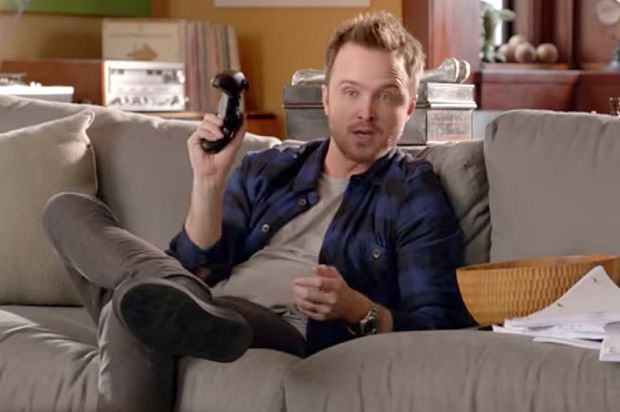
That said, I was pleasantly surprised a few times with the 2010 Emmy nominations, and was, per usual, irritated just as often. Tony Shalhoub, again, for real? (eye roll) “Two and a Half Men” taking up valuable space in any category? (bigger eye roll) And why Aaron Paul of “Breaking Bad” didn’t submit his reel in the lead actor category is confounding and shameful — Bryan Cranston is, arguably, the star of that show but this was Paul’s year. His performance as the now-sober meth cooker Jesse Pinkman was, in a word, eviscerating.

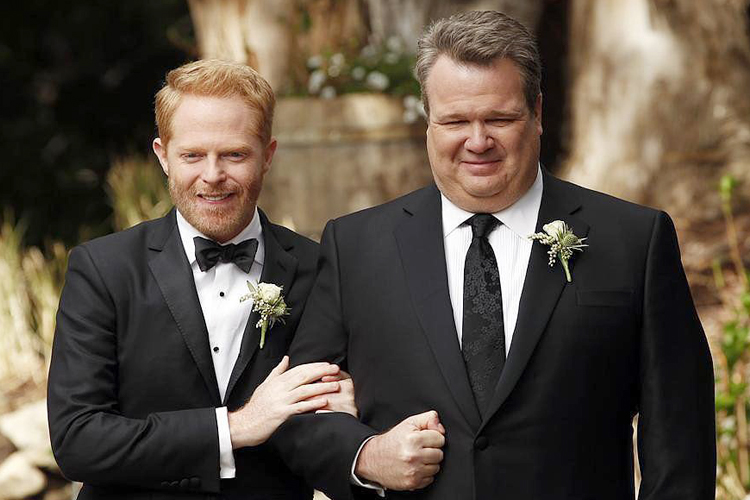
But plenty of awesome rose from the ashes of the “eh” this morning. I was fairly certain I heard Triumph the Insult Comic Dog poop on Jay Leno’s “Tonight Show” when Conan O’Brien’s version got the nod for outstanding variety, music, or comedy series. The entire main cast of “Modern Family” submitted their names in the supporting categories, and it paid off for almost everyone. The supporting actor in a comedy field is 66 percent gay, or acting gay, with nominations for Jesse Tyler Ferguson and Eric Stonestreet (“Modern Family”) Neil Patrick Harris, and Chris Colfer from “Glee,” which was one of the most surprising and delightful developments of the morning. Add to that NPH’s guest star nomination for playing has-been Bryan Ryan on the Fox musical, Jane Lynch’s double nominations (Sue Sylvester, of course, and a guest spot on “Two and a Half Men,”) and the nom for Ian McKellen’s turn as Number 2 in the otherwise-dreadful AMC “Prisoner” remake, and you get a better-than-usual representation of the LGBT community this year. We were also spared, thankfully, the torture of Charlie Sheen being nominated. As for the rest…

Today’s big winners:

  • “Glee.” Lea Michele and Matthew Morrison were recognized as lead actors, Jane Lynch and Chris Colfer were deservedly recognized, and the show itself is up for best comedy, among 19 total nominations.
  • Funny women: Tina Fey and Amy Poehler will go head-to-head in the lead actress in a comedy group, and Kristen Wiig is up for her myriad memorable “SNL” characters in the supporting actress category. That girl is gold, and deserves it, but Jane Lynch will be tough to beat — Sue Sylvester would chop Gilly into little tiny pieces and blend her in a smoothie.
  • “Lost.” I felt that series finale, “The End,” while poignant and worthy of seven hankies, wasn’t quite on the level of the series premiere, “LAX,” since I much prefer the bafflement, but Matthew Fox’s portrayal of Jack Shephard was impeccable, and I’d love to see him take home the lead actor trophy. Terry O’Quinn could’ve taught a master class in menacing eyebrows, and belongs at the top of the supporting field, and Michael Emerson (last year’s winner) is right there with him. The best drama series nomination was welcome, and if “Lost” wins, it’ll be emphatic validation for an oft-derided yet fervently loved program.
  • “Friday Night Lights.” This show about high school football in Texas has been operating under the “underrated” mantle for so long it almost seemed like it would go the way of “Buffy the Vampire Slayer,” with rabid critical praise but no Emmy love to shore it up. And while there was no room in the crowded best drama series group (“True Blood,” “Mad Men,” “Breaking Bad,” “Lost,” “Dexter” and “The Good Wife” sucked all the air out of the room), lead actors Kyle Chandler and Connie Britton were given a chance to represent their show, even though Chandler’s chances are between slim and pigs-will-fly-out-of-my-butt. He’s up against Bryan Cranston, Jon Hamm, Hugh Laurie, Michael C. Hall and Matthew Fox — although it’d be a bookie-immolating upset if he did take the trophy home.
  • The women of “Mad Men.” January Jones is up for lead actress, and Betty Draper’s complete and total meltdown last season was a study in human-being-as-pressure-cooker. Elisabeth Moss and Christina Hendricks are both in the running for their supporting roles, and their diametrically opposed character arcs make for a lively comparison. Peggy slept with a rival, gained confidence in the workplace and generally found her voice, while Joan Harris (nee Holloway) thought she had it all figured out by marrying a doctor and playing Holly Homemaker until she saw the monster she was in bed with and had her idea of “perfect” get its ears boxed.

Today’s big snubs :

  • Josh Holloway. Sawyer’s arc in the first half of “Lost” this season was wrenching to watch, the complete undoing of a man who lost the love of his life, and Holloway was never, ever better. A terrible oversight.
  • “True Blood.” Yeah, it’s great that the series was nominated for best drama, but not one actor stood out enough to garner an individual nomination? Are you kidding me? Nelsan Ellis alone should have a shelf weighed down with accolades. Boo.
  • Ed O’Neill. The actor-formerly-known-as-Al-Bundy seems to be carrying quite the Emmy curse on his back — he’s arguably the star of “Modern Family,” yet he was the only one who didn’t get nominated for his work as the grumpy patriarch. O’Neill’s gruffness and good-old-boy back slapping as Jay Pritchett successfully masks his creamy center, and after 10 Emmy-less years on “Married With Children,” well, it’s looking like someone’s got a voodoo doll with his face on it.

Watch NBC on Aug. 29 to see how this all turns out, but please consider the “Breaking Bad” video I’ve included here before you believe a single prediction that doesn’t include Aaron Paul pillaging the awards. It’s the last scene of the captivating third season, and you must watch the whole thing (the setup — Bryan Cranston’s character is in steaming heap of trouble with his meth distributor, who is about to replace him permanently with another chemist):

“Breaking Bad,” “The Sopranos” and the fall of the Dark Cable Drama

Tales of nihilism and irredeemable men offer up artsy violence, but they can't touch David Chase's epic series

  • more
    • All Share Services

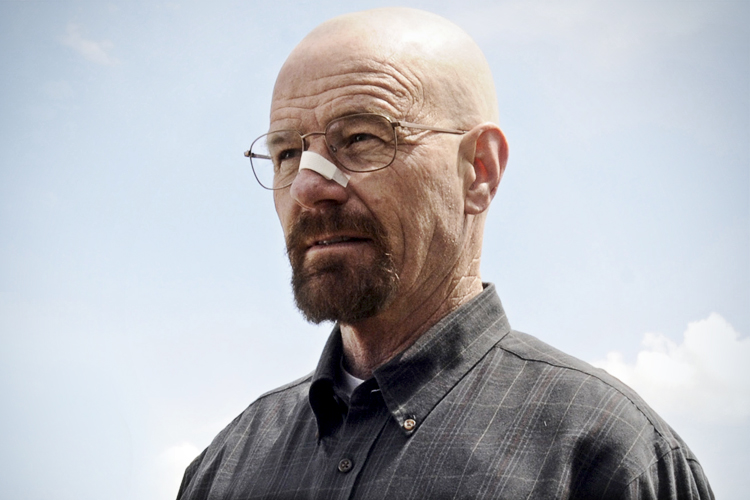
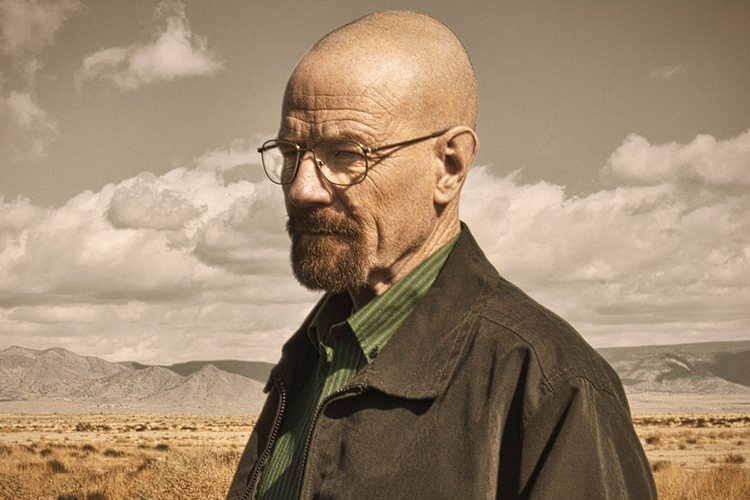
Bryan Cranston in "Breaking Bad."

[Spoiler Alert! This article contains spoilers for the 4th season of "Dexter" and the 2nd season of "Sons of Anarchy." Do not read this if you're planning to watch those shows.]

During these dark times, do you prefer TV that plumbs the impoverishment of modern culture for comic relief (“30 Rock”) or twists it into a horrific narrative in which every character is doomed to suffer until the final curtain call (“Breaking Bad”)? Do you enjoy your gloom and nastiness softened by sly humor and nostalgia (“Mad Men”), or splattered with several gallons of fake blood (“Dexter”)? Would you rather watch heartless lady lawyers trying to hurt each other with a subtle game of disconcerting gestures and veiled insults (“Damages”), or witness biker gangs plotting to blow each other’s heads off as soon as possible (“Sons of Anarchy”)?

Personally, as much as I once craved a dark tragidramedy back when every channel was filthy with hugging and learning, these days I find myself repelled by the unrelenting nihilism of a handful of the darker-than-thou cable shows: “Dexter,” “Sons of Anarchy,” “Breaking Bad,” all well-written, imaginative dramas with wonderful casts that nonetheless present us with the same scenario, week after week: Things go from bad to worse to unthinkable, lead characters flinch and cringe and sweat and sigh deeply and then dig themselves in deeper, and everyone around them suffers.

And that’s not to mention the bad guys. Since these shows revolve around likable but deeply flawed, not-very-good guys, the actual bad guys have to be very, very bad, indeed, straining during most of their time on-screen to embody pure evil. In fact, the narrative arc of these shows is propelled mostly by the looming threat of what these Very Bad Guys are capable of: We see them torturing their underlings or their wives or their dogs; we watch as one Very Bad Guy forces a woman to jump off the side of a building to her death, then witness another Very Bad Guy verbally taunting the man whose wife and daughter he stole, hinting that he might molest the girl. Then, as the tension mounts, the Very Bad Guys make spectacular displays of their cruelty: One decapitates his enemy, then uses explosives to blow his head to smithereens when the DEA finds it; another slits the throat of a pretty wife and leaves her baby sitting in a pool of her blood; another pulls a knife on a baby then absconds with him as he cries piteously and his father panics and then crumples into a heap.

See how, in the fallout of these hideous acts, we’re meant to gasp and shake our heads at the unthinkable cruelty of it all. I can’t wait to see how our Not Very Heroic Hero will respond to this one, we say to ourselves and each other.

Now that the Dark Cable Drama season is just beginning, we can look forward to the same opening scene on each show: Stunned, shaken, guilty, devastated Not-Very-Good Guys sit around, staring into the middle distance, trying to come to terms with the wreckage around them. We can guess that Jax (Charlie Hunnam of “Sons of Anarchy”) will be despondent over the loss of his baby son, shaking his head and wondering how he could’ve let it happen, then snapping unnecessarily at Tara (Maggie Siff). Presumably Dexter (Michael C. Hall) will stumble, aghast and detached, through his new reality in the wake of his wife’s murder, struggling to figure out how to take care of his baby and explain to his stepkids the nightmare that their waking lives have just become. Likewise, Walter (Bryan Cranston) spends the third season premiere of “Breaking Bad” (10 p.m. Sunday, March 21, on AMC) reeling from his wife’s discovery of his gig cooking meth, not to mention the midair jet collision that he basically caused — you know, the one that sent bodies flying to the ground in his neighborhood?

Oh, but don’t worry, there’s comic relief ahead! Walter goes to a high school assembly where the kids are asked to share a few words about the horrible tragedy they endured when the jets crashed over their heads. After listening to the kids say emotionally tone-deaf kid things, Walter takes the microphone and tells everyone to look on the bright side.

“First of all, nobody on the ground was killed and that … I mean, an incident like this in a popular urban center? I mean, that’s got to be a minor miracle. Plus, neither plane was full.” This is exactly the sort of thing a scientist who doesn’t know himself and walks around in a state of confused alienation might say, of course. This contrast between Walter’s circumstances as a meth “manufacturer” and his polite, professional manners, the gap between his lying and ethical lapses as a husband and his insistence that he loves his wife and that they have a great marriage, form the tension that gives “Breaking Bad” its unique spark. But the intelligence and cleverness of this picture doesn’t make up for an overriding feeling that creator Vince Gilligan and the other writers are hell-bent on torturing us with maximum bleakness and horror. After each blow to the gut, we wonder, Must I endure this purgatory, just to find out what happens next?

And if we aren’t bothered by this running habit of serving up the most spectacularly devastating, soul-crushing moments possible, if we aren’t unnerved by the fact that we’re meant to chuckle or marvel at clever moments as the human suffering is at an all-time high, if we can still appreciate the artful, sly approaches to people fucking up their lives flatter than hammered shit (as “Deadwood” creator David Milch might put it, always leavening his particular flavor of darkness with so much charm and flair that you found yourself drawn into the picture rather than continually repelled by it), then that must mean that we’re just as confused, alienated and detached as Walter himself is.

I’m not suggesting that blood and gore and tragedy and darkness don’t form the core of plenty of dramatic works of art. From Hamlet to “The Sopranos” to Charles Dickens’ novels, tragicomic explorations of the human condition have always helped us to navigate our own tragicomic lives. Nonetheless, there’s something different about the Dark Cable Drama: Maybe it boils down to shocking CGI effects, or the supreme alienation of its lead characters, or the ways that the misery sustains itself over the course of several long, drawn-out seasons, or those peculiar strains of ironic distance and macho posturing, which insist that, despite making one messed-up choice after another, despite actively cobbling out his hellish fate, our distinctly UnHeroic Hero is a hero, just the same.

And in the context of a culture that loves its horror movies and savors two hours of creepiness and gore and pained screams, maybe the Dark Cable Drama can be viewed as a relatively thoughtful and richly layered and suspenseful exploration of the darkness that lives in human souls.

Nonetheless, there’s an enormous difference between, say, “The Sopranos,” and “Breaking Bad” or “Dexter.” Even though all of the Unheroic Heroes of these shows, just like Tony Soprano, are constantly struggling with their humanity, always trying to find some way around their hideous responsibilities, always trying to emancipate themselves from the ignorance and cruelty of their worlds, the grim core of the Dark Cable Drama is pure agony, where escape is futile and hope is a mirage. There is no wider perspective offered, there are no insights into regular, everyday life reflected in these depraved scenes, there’s nothing to learn about hubris or ignorance or greed here.

Or, as Jesse (Aaron Paul) tells Walter in the third season premiere of “Breaking Bad,” “You either run from things, or you face them, Mr. White. I learned that in rehab. It’s all about accepting who you really are. I accept who I am.”

“And who are you?” Walter asks him.

“I’m the bad guy,” says Jesse.

This is the heart of the Dark Cable Drama, the rotten core of its swooning love affair with horrific murders and big flashy plane crashes and splintered marriages and traumatized children and a cascade of terrible mistakes piled on top of more mistakes: In the end, no matter what glimmers of humanity or sweetness you might encounter, you’re a fool to do more than surrender yourself to your own worst instincts.

No one is aching for another Big Moral Lesson, but the slightest hint of a wider perspective beyond bewilderment and learned helplessness would go a long way. Simply training a camera on heartbreak and gore and destruction and never pulling back, except to tease out the inept and uncomfortable and utterly insufficient ways that human beings handle despair? As Livia Soprano would say, “It’s all a big nothing.”  

Continue Reading Close

Heather Havrilesky is Salon's TV critic and author of the rabbit blog. Her memoir, "Disaster Preparedness," published in 2010.

I Like to Watch

The unrelenting darkness of "Breaking Bad" makes the homicide detective show "Castle" look like a fairy tale by comparison.

  • more
    • All Share Services

I Like to Watch

Don’t be fooled by the gloom and doom in the headlines. America has always had a knack for beating back the darkness with a collective, willful suspension of disbelief. Denial is part of our national character. While the Japanese embrace melancholy through poetry, the Irish greet despair with boozy enthusiasm, Siberian nomads acknowledge countless dark omens in their midst, and the French curse and weep over red wine and strong cigarettes, Americans spackle over the darkness with the manufactured cheer of “Happy Days” and Happy Meals, Dance-a-thons and Toyotathons, Love Bugs and “Love Boat.”

No matter what you read on the front page of the paper, it’s nothing that a few soothing nacho platters and a visit to the local multiplex can’t erase. When Americans congregate in groups, some bad man with a microphone is always there to encourage us to Do the wave! Raise the roof! Get jiggy wit it! Celebrate good times, come on! From movie theaters to baseball games to state fairs to pep rallies, we’re not allowed to simply stand in one place, feeling ambivalent.

Americans are made uncomfortable by simple expressions of indifference — or worse yet, open, direct admonitions of fear, dread or sadness. We leave upbeat, one-line Facebook-status-update suicide notes. We don’t suffer, we “remain strong.” More than anything else, we deeply appreciate the outpouring of support we have received during this difficult time.

Bad company

Against this backdrop of forced optimism, AMC’s “Breaking Bad” (premieres 10 p.m. Sunday, March 8) stands out like a chain-smoking cutter at cheerleading camp. “Breaking Bad” isn’t an American TV show. It’s not a TV show at all. It’s a ruthless, rambling art film that stumbled out of your local indie theater and wandered into cable’s scrappy, untamed back country.

Watch a few minutes of “Breaking Bad” and it’s not hard to see why Bryan Cranston’s restrained performance as Walt White, a chemistry teacher-turned-drug-kingpin in suburban Albuquerque, N.M., won him an unexpected Emmy last year. At the start of the first season, Walt was teetering on the brink of financial collapse in the wake of a dire cancer diagnosis. Faced with insolvency, an unexpectedly pregnant wife and a teenage son with cerebral palsy, Cranston did what any man in his position might do: He teamed up with a no-account loser of a former student, Jesse Pinkman (Aaron Paul), and started cooking up high-grade crystal meth out of the kid’s Winnebago.

The first season yanked viewers into Walt’s crumbling life with brute force, taking us along for one depraved encounter after another with Albuquerque’s unsavory drug underworld. All the while, Walt neglected to inform his wife, Skyler (Anna Drum), or son, Walt Jr. (R.J. Mitte), of his diagnosis, not to mention his freelance career as a meth lab chemist. As a result, Walt’s anguish was unrelenting from the beginning of the season to the end, from struggling with whether or not to kill a drug dealer in Jesse’s basement who was sure to kill Walt if he was set free, to dodging the growing suspicions of his overgrown frat boy brother-in-law Hank (Dean Norris), who also happens to be the head of the DEA. Aside from Hank and his compulsive, cheery-but-merciless wife, Skyler’s sister Marie (Betsy Brandt), show creator Vince Gilligan offered us hardly a glimmer of hope over the course of those first seven episodes. So why couldn’t we look away? Sinking into a pit of despair every time we watched, we’d have to remind ourselves after each episode, “At least I’m not that guy.”

But even with its occasional forays into comedy, “Breaking Bad” remains far too oppressively bleak to approach the giddy darkness of schadenfreude. When Nate of “Six Feet Under” hit the floor with a brain ailment right after cheating on Brenda, we giggled in spite of ourselves. When Tony looked poised to have his brains blown out while scarfing down onion rings, we sat on our hands in breathless anticipation. When Don Draper lights up his 15th cigarette of the day and opts out of returning home to his wife and kids, we live vicariously through those strong martinis and illicit affairs, even as we can see Don turning his back on everything that’s genuine and real in his life for an escapist fantasy.

Walt doesn’t have the same flair as his fellow cable antiheroes, or their ability to infuriate us with their slippery charms, even as we begrudgingly forgive them their trespasses. Instead of possessing the more common cable-leading-man combinations of charisma and impulsiveness, Walt is reserved and uncomfortable and in most episodes, he sweats more than he actually speaks. Walt is the ordinary guy in the ugly plaid shirt and cheap khakis. He’s a pragmatic dying man, desperate to provide for his family once he’s gone. It’s this ability to show us Walt’s inner turmoil, instead of turning him into an explosive, colorful live wire, that won Cranston the Emmy.

But can we hang on for another tour through this cheerless landscape? The second season begins with some small hope that Walt and Jesse might score some serious walking-around money in a matter of weeks. Could Walt actually end up in his wife and son’s good graces? Could Jesse suddenly be empowered to do something meaningful with his life?

No way. Instead, a simple drug-for-money exchange with a local kingpin turns unexpectedly ugly, and Walt and Jesse find themselves fearing for their lives and desperately clawing their way out of a series of increasingly dire situations, from trying to get a homicidal maniac drug dealer to snort some poisonous crystal meth that’s sure to kill him to attempting to cover their tracks as an increasingly suspicious DEA begins circling. The bleakness of this picture is summed up nicely by Walt when he finds himself having to explain his erratic behavior to a psychiatrist: “My wife is 7 months pregnant with a baby we didn’t intend. My 15-year-old son has cerebral palsy. I am an extremely overqualified chemistry teacher. When I can work, I make $43,700 per year. I have watched all of my colleagues and friends surpass me in every way imaginable, and within 18 months, I will be dead.”

But most of the time, Walt is far less explicit. One night when Walt looks distraught and Skyler asks him if there’s something wrong, all he can say is, “I don’t even know where to begin.” More than the disturbing scenes with sadistic thugs or thoughtless addicts, the scenes between Walt, a dying man, and Skyler, his depressed, lonely wife, are almost too much to bear. It’s never been quite clear what drew these two together, or why they stick together now. Sometimes you just want them to break a smile or share a moment of connection. Instead, every scene seems to end either in silent suffering and abject misery.

The mostly comical scenes involving Hank, then, offer a rare reprieve from hell. But that makes sense, since even hell is a big joke to Hank. Even as he’s rallying the troops around hunting down a drug kingpin, Hank can’t help chuckling when he recounts the story of the kingpin’s associate who “got his arm crushed clean off” and bled to death: “Anyone see the photos? They’re on my Web site. Hilarious.

“Breaking Bad” has so many redeeming qualities, from its low-key, almost mean-spirited sense of humor to its stark, artistic shots of the Albuquerque sky to the patient pace with which its story unfolds, that it seems a shame to miss any of it just because we’re accustomed to more sugary, cheerful tales. Even so, watching this show can feel like stumbling onto online photos of a poor guy who bled to death from a crushed arm. As much as you admire the gall of the guy who put those photos up, you’ll still end up depressed anyway.

Murder, he wrote

If “Breaking Bad” represents how the heaviness of cable dramas often needs to be leavened with a little charm and humor, ABC’s “Castle” (premieres 10 p.m. Monday, March 9) reflects how charm and humor can sometimes take over a network drama so entirely that it’s easy to lose sight of the substance beneath the witty banter.

In fact, “Castle” may be the most lighthearted, carefree procedural drama in the history of television. Following in the flirtatious, love-hate footsteps of “Moonlighting,” “Castle” presents the story of a sassy, beautiful homicide detective who’s forced to allow a dashing, famous author of bestselling murder mysteries to accompany her on the job for the sake of his research. Rick Castle (Nathan Fillion) is beginning a new series of mysteries, and Kate Beckett (Stana Katic) is going to be the basis for his new character.

Not a terrible premise, and as I’ve said, “Castle” certainly has its charms. Rick Castle brings a murder mystery author’s perspective to crime solving. “That would make a better story,” he sometimes blurts when he considers a more far-fetched alternative explanation for a murder in the middle of an investigation, and of course, half the time he’s right. Fillion does a nice job of capturing Castle’s mixture of earnest good guy and slick, famous author on the make. The dialogue is reasonably smart and funny.

Even so, it all feels so written at times. Take this exchange:

Rick: When I’m writing a new character, there’s no telling when inspiration might strike.

Kate: I thought I was your inspiration.

Rick: Oh you are, detective, and in so many ways.

Kate: Yeah, well, your inspiration might strike you sooner than you think.

Cute and clever, sure, but this isn’t the way real people talk. There are lots and lots of scenes like this one, scenes where Rick and Kate say things like, “Why can’t you just admit I was right?” and “You know, for a minute there, you actually made me believe that you were human.” It’s all so “Moonlighting,” so David and Maddie, so utterly, thoroughly played.

I’d like to fall for “Castle,” but ultimately there’s not that much there to love. The show is a lot like one of the bestselling murder mysteries its title character pens: You might stay up late reading furiously, but minutes after you put down the book, you’ve forgotten half of it.

Then again, with so many dark clouds on the horizon, it’s no shock that viewers might prefer a fluffy, forgettable page-turner like  “Castle” to a disturbingly dark, unforgettable indie film like “Breaking Bad.” Our world has changed dramatically overnight, and suddenly front-page stories about former executives taking jobs as janitors, former NFL players lost at sea and homeless children sleeping in unheated garages feel less like depressing headlines to sidestep on the way to the funny pages, and more like inauspicious omens at a moment of extreme reckoning. Bestselling author and sexy divorcé Rick Castle may represent the American dream incarnate when he signs autographs on fawning fans’ bodies or chats breezily about golf with notable judges, but our new reality may be closer to Walt White’s: broke, haggard, sick, alienated and desperate. Oh, what a feeling!

Continue Reading Close

Heather Havrilesky is Salon's TV critic and author of the rabbit blog. Her memoir, "Disaster Preparedness," published in 2010.

I Like to Watch

Crisis incites change, from AMC's alarmingly dark dramedy "Breaking Bad" to the History Channel's hilariously ominous special "Life After People."

  • more
    • All Share Services

I Like to Watch

Remember the midlife crisis? It was all the rage 20 years ago. Suddenly confronted with their crow’s feet and their irrelevance in a youth-dominated culture, 40-something men and women across the country joined the gym, dumped their spouses, purchased sparkly metallic-colored Japanese sports cars with sunroofs, and attended the Forum seminars in which they tearfully confessed that they’d been living like obedient livestock all these years (aggressively led to this realization, of course, by their overbearing, authoritarian Forum leaders).

These days, we’re far too self-involved and far too aware of our status as suffering, braying, googly-eyed moo-cows to be susceptible to such a dramatic epiphany. Instead of waking up and smelling the shit hitting the fan after 35 or 40 years in the dark, we face down our demons and wrestle with our bad habits and tackle big, important existential questions at least once a day. The midlife crisis has been replaced — by the midafternoon life crisis.

Here’s how it works: At around 2 p.m. each day, the caffeine levels in our blood drop precipitously, while all of the blood in our brains is diverted to our digestive systems in order to tackle that burrito the size of a handbag we ate for lunch. At around the same time, we stop idly perusing our e-mail and come to the realization that we’re not going to accomplish even half of we what set out to that morning. The stress of this realization, paired with our compromised physical state, creates the illusion that we cannot possibly continue to toil away at such a pointless job for another second (let alone another day!), which in turn causes our hands to sweat and our minds to race at the thought of wasting what little time we have left on Earth half-assing a bunch of meaningless, arbitrary tasks while steadily falling behind financially despite our best efforts to get ahead. Finally, we focus our merciless, under-caffeinated minds on our bossy spouses, our ungrateful children and our hopelessly self-involved friends (who, unbeknownst to us, are experiencing their own midafternoon life crises in sync with ours). As our disillusionment and disappointment and angst and fidgety stress grow, we feel a sudden urge to take action!

Three hours later, we quit out of YouTube, dust off the crumbs from our Very Special Emergency Glazed Donut, and go home with a stomachache vowing to get more work done first thing tomorrow.

Dancing in the dark
Now, I know what you’re wondering: Does the midafternoon life crisis lead to real, lasting life changes the way the midlife crisis did?

The answer is no. While the midlife crisis led to a new job, a new body, a new wardrobe, a new condo and a brand new trophy wife, the midafternoon life crisis only leads to heartburn and hours of wasted time reading speculative psychological profiles of Britney Spears.

In fact, studies show that, like a pressure gauge that lets off excess steam to prevent an explosion, the midafternoon life crisis indefinitely delays the sort of sweeping epiphany that might incite an honest attempt to improve ourselves and our standing in life. (Of course, some researchers feel strongly that it’s the increased consumption of glazed doughnuts that thwarts any attempt at self-improvement.)

Walter White, the lead character of AMC’s latest original drama series, “Breaking Bad” (premieres at 10 p.m. on Sunday, Jan. 20), may be experiencing a midlife crisis, but he’s determined to skip the soul-searching and handle his problems with all of the distracted, grabby mania typically used to tackle a midafternoon life crisis. Warning: Some spoilers ahead! Instead of telling his pregnant wife, Skyler (Anna Gunn), that he can’t stand teaching chemistry to bored, uninterested high school students and he wants to quit his afternoon job at the car wash, instead of letting her know that he’s been diagnosed with lung cancer and he only has, at most, two more years to live, Walter (Bryan Cranston) gets an idea, the kind of idea that’s about as carefully considered as the Very Special Emergency Glazed Donut: He’ll go into business with one of his former students, Jesse (Aaron Paul), and make crystal meth!

This very bad decision soon brings a new kick to Walter’s step. He seems temporarily liberated, his demeanor echoing the memorable words of Ellsworth, from “Deadwood”: “I may have fucked my life up flatter than hammered shit, but I stand here before you today beholden to no human cocksucker.”

Even so, from the very start, Walter and Jesse are a match made in hell. While Jesse alternately swaggers and whines and can’t wait to smoke their product, Walter seems determined to create the world’s most responsible meth lab: “This is lab safety equipment,” he pertly explains to Jesse. “We’re also going to have an emergency eye wash station!”

And just when you think they might actually succeed in their efforts, just when you think this life as a meth dealer might be vaguely exciting and empowering for poor Walter, everything starts falling apart. The tragicomic kick of the pilot episode gives way, in the second episode, to an unrelenting sensation that there’s no way out of this mess for him. Our minds race, our hands sweat and we ask ourselves: Does it pay for us to invest more than an hour or two of our viewing time on such a desperate, depressed, dying man?

Yes, dark dramedies about criminals struggling to live the good life are all the rage these days, but much like overrated indie bands and poorly written graphic novels that no one can shut up about, we’re expected to think that these sad, desperate tales are exciting simply because they’re edgy, even though they’re ubiquitous at this point, even though we don’t always like the characters and don’t think it’s hysterical when the dead body falls down the stairs or the neighbors come over just as our hero is trying to poison his boss. While Showtime’s “Dexter” and “Weeds” are two of the obvious standouts in this category, the less compelling contenders include FX’s “The Riches,” Showtime’s “Meadowlands” and FX’s “Dirt.” All have the same old poorly realized characters making the same zany, ill-considered mistakes that are supposed to have us rolling on the floor. It’s like being forced to watch “Trainspotting” over and over again. These pathetic but lovable ne’er-do-wells just won’t bloody grow up and live the straight life!

“Breaking Bad” falls into some of the same predictable traps: Partners in crime, bickering about what to do with a dead body? Sorry, that’s not automatically funny, and there’s a little too much of it here. Straight-laced chemistry teacher dad, getting high? Also not a recipe for instant laughs. And let’s not forget the requisite body falling down the stairs. How many times have you seen that one? By the time Jesse plunges his hand into the toilet to save his crystal meth, I’m jonesing for a Very Special Emergency Glazed Donut.

But “Breaking Bad” shows serious promise nonetheless. About halfway through the second episode, Walter is panicking over the stresses of the drug trade while his wife is getting an ultrasound. Finally, she demands to know what his problem is, and he makes up a lie — which only makes her more angry. Unable to take it anymore, Walter takes a deep breath, grits his teeth and turns to her:

“I haven’t been myself lately, but I love you. Nothing about that has changed, nothing ever will. So right now, what I need is for you to climb down out of my ass. Can you do that? Will you do that for me, honey? Will you please, just once, get off my ass? I’d appreciate it. I really would.”

Whether he’s cutting the crusts off a sandwich for a drug dealer or lecturing Jesse on refusing to follow his very clear instructions, Walter is an undeniably great character: a cautious, careful man whose life is careening out of control. Bryan Cranston embodies Walter’s average-guy rage with believability and restraint. While the darkness of the second and third episodes were a disappointment after the careful tragicomic balance of the pilot, it’ll take a little time to see whether this series develops the right mix of comedy, thoughtful moments and tragic turns. With its imaginative take on a midlife (or end-of-life) crisis, let’s hope “Breaking Bad” can avoid becoming just another empty, dark dramedy to add to the messy, growing pile.

Animal planet
Speaking of messy, growing piles, if you’re wondering how planet Earth’s midlife crisis might resolve itself, you really must tune in for the delicious hysteria of “Life After People” (9 p.m. Monday, Jan. 21, on History), a two-hour special that rides the wave of books and movies, like “The World Without Us” and “I Am Legend,” examining what life on Earth might look like if human beings were to disappear or die off suddenly.

Here’s what would happen first: The power would go out everywhere! Then, our pets would feel really lonely at home without us, staring out the window and wondering when we’ll ever come home! (Um, but where are all the dead bodies?) Yes, this truly pleasing “television event” presents one juicy morsel of finely crafted sensationalism after another:

Voice-over: Food is rotting on supermarket shelves, home refrigerators become nothing more than containers for decaying food, but melt water from defrosting freezers may provide a temporary lifeline for some of the creatures we’ve left behind!

Cut to a lonely German shepherd, licking up water on the floor by a refrigerator.

Voice-over: What will be the fate of our family pets, once there are no humans left to care for them?

Behavioral expert Ray Coppinger: Right from the get-go, there’s going to be a massive die-off of dogs … They can’t open cans, they can’t get in the refrigerator. The family dog has got to get out of the house or he’s going to die there!

(OK, hold it right there. Food is rotting on supermarket shelves, but dead bodies aren’t rotting in homes across the globe? Fido may not be able to operate a can opener, but I bet he can rip his master’s foot off and eat it for dinner, no problem!)

Voice-over: There are estimated to be 400 million dogs in the world, and 300 different breeds. But very few of them are suited to surviving in a life after humans!

Cut to fluffy handbag dog with a bow in its hair, looking a little desperate.

Voice-over: The smallest dogs probably won’t last a week without us!

Coppinger: Dogs with really short legs, dogs with really short faces or long faces? I think that they’re all doomed. They’re not going to move well. They’re not going to be able to search and explore.

Cut to an exhausted, limping bulldog, panting and looking around helplessly.

See, when people post letters about how bored and frustrated I must get watching so much TV every day, they really don’t consider the sweet, nourishing delights of one-of-a-kind television events like this one. I mean, if exquisitely imagined gems like this don’t give you a pure, raw thrill, then you don’t have blood flowing through your veins.

Onward: Did you know that rats and mice are very dependent on people? How will they ever survive without our big boxes of untended Oreos? (Here we watch as a bunch of mice turn over some huge boxes of cereal and eat what’s inside.) Did you know that, if we were all were vacuumed off the planet by invading aliens, leaving no trace behind, bears and deer might wander freely about the streets of New York City? Did you know that Hoover Dam would keep running normally for a couple years, but then mollusks would clog up its cooling pipes, thereby shutting down the generators?

Next, we see a CGI of the Eiffel Tower collapsing! Ominous chords! The narrator gasps: “Unchecked, nature’s most powerful elements reclaim their supremacy on Earth!”

And then, my favorite part: “Chicago burns! San Francisco’s stately wooden Victorians are now only useful as kindling! And just as it did during the time of the ancients, Rome is burning again!” That’s it — I want a job writing this stuff.

“Five years after people,” we’re told breathlessly, “the roads of the world are disappearing like a green map that spreads like some relentless monster!” Hmm. What exactly is so monstrous about a bunch of crappy pavement being covered in grass and moss? We’re the assholes who paved paradise and put up a parking lot — shouldn’t we be comforted to see bridges falling into the water and tall buildings covered in kudzu and ivy? Wouldn’t it represent justice, at long last, if tigers from the zoo were roaming the streets of San Diego?

Ultimately, “Life After People” is a magnificent testament to the immense self-centeredness of the human race. I’m sure all the animals will watch it at their annual “Smell Ya Later, Suckers!” Festival, and they’ll have a good laugh and high-five over the sudden disappearance of their clumsy, hairless, self-congratulatory oppressors.

Midafternoon delight!
Uh-oh. Are you experiencing a midafternoon life crisis right now, as you read this? Do you now feel that your stately figure and clever mind are only useful as food for your little doggie, who probably won’t survive on Earth without you — that is, unless she eats your face off? Are self-loathing and inertia spreading across the pavement of your self-esteem like some relentless monster? Do you long to reclaim your supremacy at home and at work? Do you also long to dump out a huge box of Oreos and eat them right off the floor, like a hungry rat?

Well, don’t be alarmed. Just stay calm, take a deep breath and relax: You don’t need a new job, a new wife, a new condo and a new Japanese sports car with a sunroof. You can fall short of your own expectations, stay in debt and continue to trudge along like the suffering, braying, googly-eyed moo-cow that you are. All you need is a cup of strong coffee and a Very Special Emergency Glazed Donut, and the sweet sustenance of sugar and caffeine will automatically renew your commitment to maintaining your mediocre existence for your ever-shrinking balance of days on Earth.

Next week: I really will get to HBO’s new therapy drama, “In Treatment,” but right now, I need a doughnut. And late Sunday night, be sure to look for our weekly collaborative recap of “The Wire.”

Continue Reading Close

Heather Havrilesky is Salon's TV critic and author of the rabbit blog. Her memoir, "Disaster Preparedness," published in 2010.

Page 4 of 4 in Breaking Bad