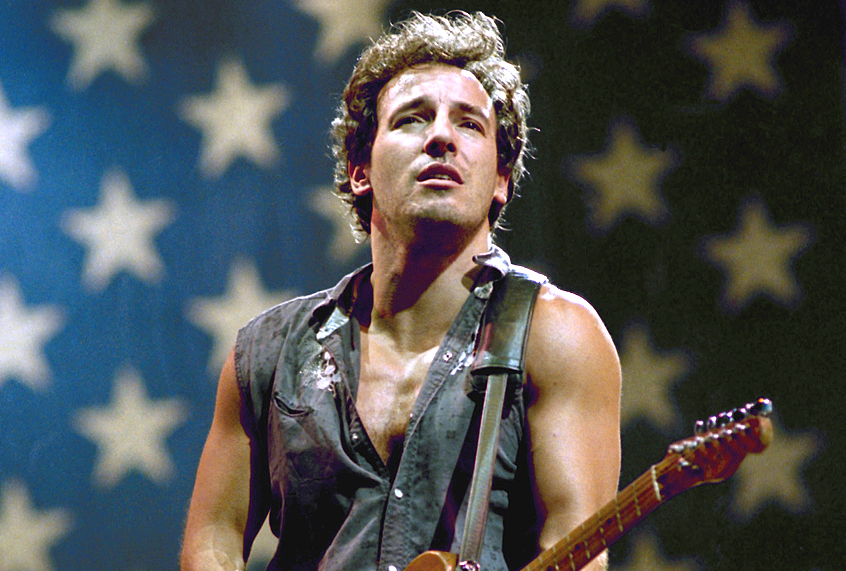
Bruce Springsteen

“This Is It” and “Elvis: That’s the Way It Is”

Remarkable, rare glimpses of the tortured souls behind the fame and self-delusion we're well aware of

  • more
    • All Share Services

British director Peter Hall once said of another British Peter, one named Sellers, “It’s not enough in this business to have talent. You have to have the talent to handle the talent.”

This dark art of handling the talent and dealing with deification is the tie that binds this week’s Double Bill, which would be today’s release of “This Is It,” and its doppelgänger, the 1970 documentary “Elvis: That’s the Way It Is.”  Obviously, it does not take any particular genius to point out connections between Michael Jackson and Elvis Presley. Haunted relationship with parent, incomprehensible musical genius, pet chimps, oh yeah, Lisa Marie, to count off just four of the easiest ones.

But this one-sided Death Match between legend and life is what ultimately tied these men together. Elvis and Jackson brought an impermeable membrane of fame and self-delusion with them that kept the real world outside their experience. Both “This Is It” and “The Way It Is” shoot through that membrane, and those rare glimpses of the tortured soul inside are what give the films their real power.

This “splendid isolation,” in the words of Warren Zevon, made the end of their careers a slow-motion bus wreck — and we were all bozos on that same bus.

“To me,” wrote Bruce Springsteen the week Elvis died, “he was as big as the whole country itself, as big as the whole dream. He just embodied the essence of it and he was in mortal combat with the thing.”

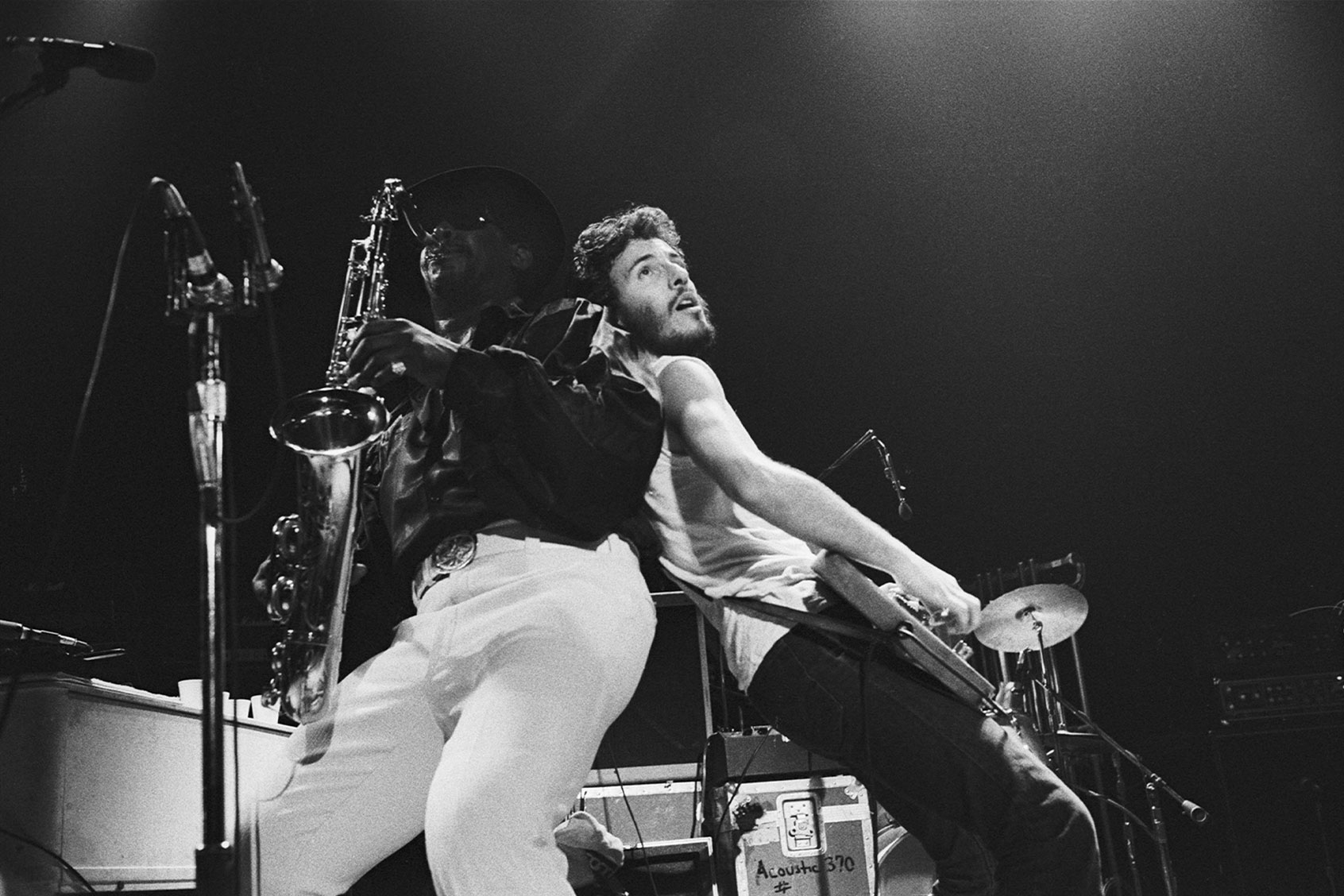
From about that moment on, Springsteen consciously crafted that growth industry called his career on Elvis’ shaky foundation. The lessons he has articulated over and over again in both song and interviews are his attempts to try to live outside that bubble of fame. But it isn’t easy. In a recent small book by Big Man Clarence Clemons, the only truly insightful and honestly disillusioning images that emerge are Springsteen’s private jets flying from concert to concert, and the alpha celebrity decorum of who sits just where along the way. And, oh yeah, a second jet for the wife and her entourage. And special planes dispatched for the likes of Brian Williams. But, as Clemons (actually, probably, his hack ghostwriter) points out, Springsteen does make a point of personally greeting everybody in all rows, on every flight, so, it’s a start.

I guess.

Springsteen’s talent has been very comprehensible, and his career arc tightly controlled. Bob Dylan’s talent belongs more in the incomprehensible category, and he has somehow made it work for him. For the last 20 years, Dylan has conducted a bold experiment in hiding in plain sight, called the “Never Ending Tour.” Night after night, Dylan appears in State Fairgrounds and minor league stadiums in minor league towns, and at night, according to at least one local police report, roams the streets in hooded sweatshirts, searching for Dylan knows what.

Nobody is more closely guarded than Dylan both on- and offstage, in all senses of that word, but somehow, he stays connected to his muse, and it, somehow, to him. If anything, one of his many particular geniuses has been turning the very act of retreating from legend into accelerant for its fire. It’s only in the last 20 years where Dylan finally carries the burden he promised he would heft in the notes to his second album. “I don’t carry myself yet the way that Big Joe Williams, Woody Guthrie, Leadbelly and Lightnin’ Hopkins have carried themselves. I hope to be able to someday, but they’re older people.”

Bob Dylan made that legend thing work for him, and only went a little crazy along the way. But as we all know, Elvis and Jackson went big-time crazy, and if you know where to look, you can see in these two films just where — and maybe, why.

While Elvis was in mortal combat with some kind of dream of America, Michael Jackson became the poster boy for an even more devolved America, one where self-delusion, narcissism and grotesque materialism are somehow mistaken for canny career management. He even had the spectacular bankruptcy thing going for him, with the promise of an impending bailout, if he could pull off that one last desperate deal.

Which leads us to this week’s release of “This Is It” — a film swept off the cutting-room floor of Jackson’s last hurrah, and last rehearsals.

To be clear, this film was originally conceived of as a home movie, financed by Jackson personally. Had things gone differently, an abbreviated version might have appeared as a supplement on some future holo-hagiographic 3-D monolith box set commemorating Jackson’s 10th year onstage at the Luxor in Vegas. And like so many DVD supplements, there is a cheap, offhand quality to the production.

But what keeps this “This Is It” from being a shameless exercise in commercial necrophilia is the sheer joy of watching a performer, if not at the top of his game, in the bullpen warming up. Based on the performances here, Jackson had it until the end. Just what “it” was remains open to debate, and this movie does not help the discussion.

Throughout the two hours, Jackson stands alone, surrounded by indifferent technicians, a puppet being put through his paces by the Geppetto of his own ego. Many of the production numbers look as if they were choreographed by Albert Speer, and the fascist architecture of the proceedings don’t shed much light on their creator.

It helps that much of Jackson’s dialogue is subtitled, for he seems to be speaking a private language. “I’m trying to adjust to the inner ears,” whispers Jackson at one point, “with the love — L.O.V.E. It’s not easy, though.”

Tell me about it.

Director Kenny Ortega cajoles Jackson like a toddler being coaxed to eat his broccoli. Jackson is clearly phoning it in, but one is often reminded, what a phone.

One such moment occurs at the end of “I Just Can’t Stop Loving You,” where Jackson takes off at the end of a duet with an anonymous background singer. This sequence is intimate, sexy, and we see Jackson momentarily possessed by the music and his muse. But then, the song ends, and Jackson crashes back to Earth, clearly angry at being led to this kind of self-revelation. You see for an aching moment the raw talent that Jackson had all the way to the end, and then, the door slamming shut on it.

Which brings us to our second feature.

“Elvis: That’s the Way It Is (Special Edition)” was shot in the summer of 1970 and reworked by TCM for this 2001 rerelease. It is perhaps the best surreal evocation of the ’70s since “Zodiac,” except, of course, this is a documentary. Shot by the great Lucian Ballard, it brings you as close to the real Elvis as you want to go.

The film begins with some more tantalizing rehearsals. The musicians look at Elvis like the borderline hysteric family looked at demon child Billy Mumy in that great “Twilight Zone” episode. It feels like everyone always laughs a millisecond too late at his jokes, and you can feel his entourage praying that they too don’t get wished into that cornfield. Why is it not at all surprising that Rod Serling’s opening narration from this “Twilight Zone” episode was sampled in 2001 for a song called “Threatened” — by Michael Jackson? In one particularly gruesome sequence, Elvis has an onstage water fight with members of the Memphis Mafia. When Elvis, in a flash of feigned anger, picks up a mike stand, as if to impale them with it, you get the idea that this, in fact, could happen.

It is clear that Elvis just had nowhere to go, no one to talk to about the hellhounds on his trail. Every conversation is a transaction, and Elvis knows it. The striking thing is how little is different backstage from onstage. Same jokey nervousness, same nonchalant diffidence to his musical gifts. Elvis was always on, and could just never get off. In all of the footage, he can’t stop moving, looking for distraction from the Sisyphean task of just being himself. One can see his genius emerging like the chest buster from “Alien,” and at times, Elvis looks as shocked at the results.

At least Bruce Springsteen can get it off his chest with Brian Williams.

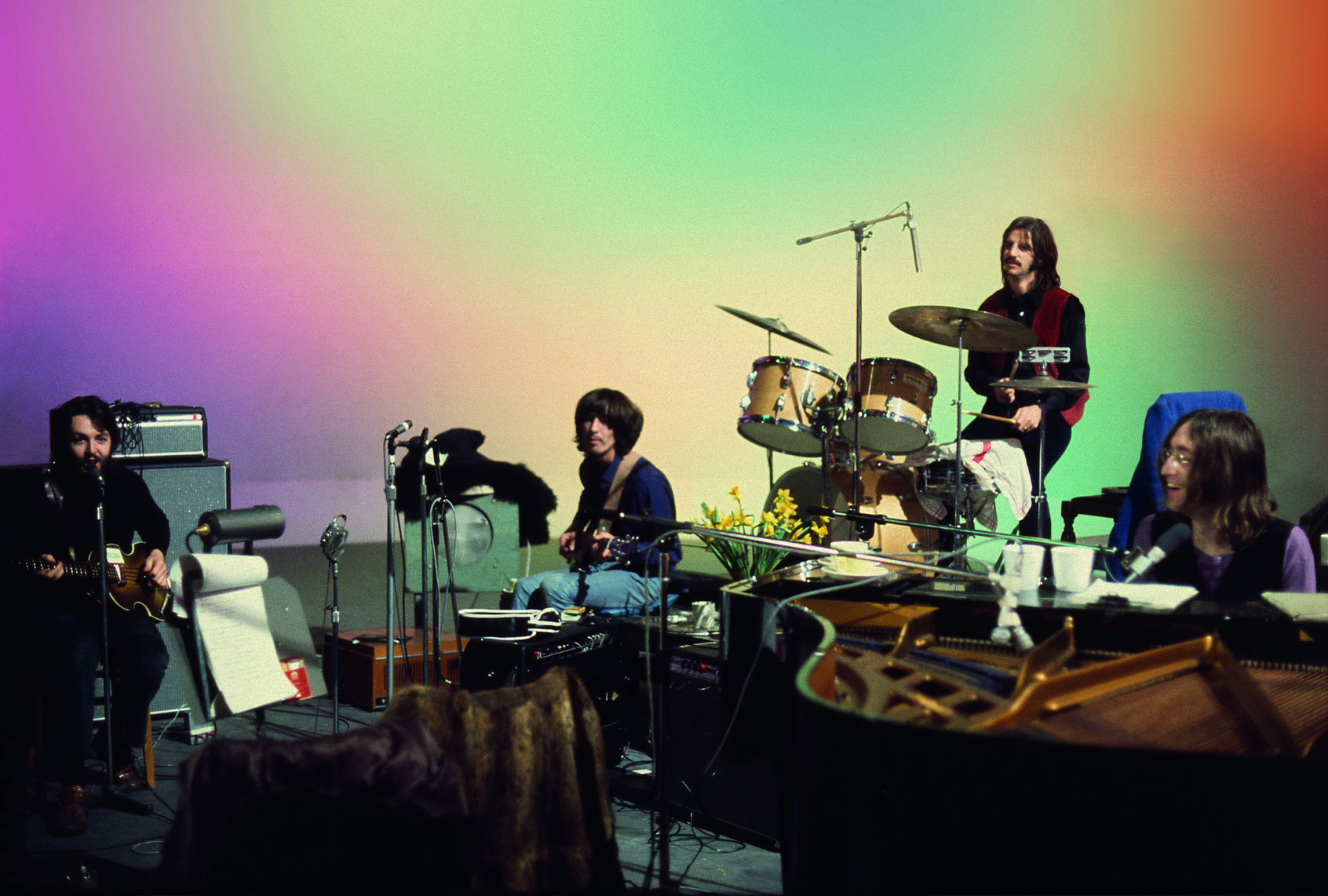
But there are compensating musical treasures. Where Elvis is all looseness and evasiveness, lead guitarist James Burton is all paisley precision, spitting out chicken-licking’ licks and anchoring the proceedings like the Country Gentlemen he is. “Play it, James,” Elvis regally commands, and Burton does just that, brilliantly. When they swing into an impromptu medley of “Little Sister” sliding into “Get Back,” one wishes that the Beatles, instead of breaking up that same summer, had dropped by this rehearsal studio instead.

They might have changed their minds.

When we move to Las Vegas for the pre-show rehearsals, you can feel the dingy surroundings and smell the fossilized cigarette smoke in the carpets of the “International Hotel” where the show had to go on.

Shot across six nights, the performance footage is a Groundhog Day’s nightmare of the same songs, same fans, same jokes. Here we stand by helplessly as Elvis, as described in some other lyrics of Zevon, throws it all away for that “porcelain monkey,” and his face on Velveteen. There is a viscous quality in the film, like you are trapped in the amber with Elvis, and after about an hour, you just want to get out of there. At one juncture, during “Love Me Tender,” as Elvis leaves the stage and walks deep in the ballroom it feels like nothing so much as watching grainy footage of a Bigfoot sighting.

Watching him kiss one bouffant fan after another, on the lips, you truly get a feeling of what hell must be like. At one point, one hysterical, crying fan almost swallows Elvis alive. He pulls back in shock and discomfort, but then, moves to yet another predatory encounter. And another.

Six nights, and then, 600 more nights, until it all ran down.

It is clear from both of these films that Michael Jackson and Elvis Presley were getting everything they wanted, and nothing they truly needed.

As William Carlos Williams so famously wrote, “The purest products of America go crazy.”

That was the lecture.

These films would be the lab.

Got any fly-on-the-wall-of-musical-train-wreck “Double Bill” ideas for “This Is It”? That Wilco film, “I Am Trying to Break Your Heart?” “Don’t Look Back,” or better, a bootleg of Dylan’s 1966 surreal masterpiece, “Eat The Document”? Kirk Douglas IS a chin-dimpled Bix Biederbecke in “Young Man With a Horn”? Do tell!

The GOP can’t hold a tune

Jackson Browne, one in a long line of musicians to tangle with Republicans, settles suit against the McCain camp

  • more
    • All Share Services

Tuesday, singer Jackson Browne settled a law suit with the Sen. John McCain, R-Ariz. and the Republican Party over the McCain campaign’s use of Browne’s song “Running on Empty.” Browne received apologies from both McCain and the GOP, but perhaps even more unfortunate for Republicans was that the settlement also included a pledge requiring the party to ask for a musician’s permission before using his or her music in any future campaign. To be fair, singer Sam Moore also asked President Obama’s campaign to stop using “Soul Man,” but when it comes to recent political-musical run-ins, pop has certainly had a liberal bias. Here’s a look at the musicians who have caused the GOP the biggest headaches over the past few years.

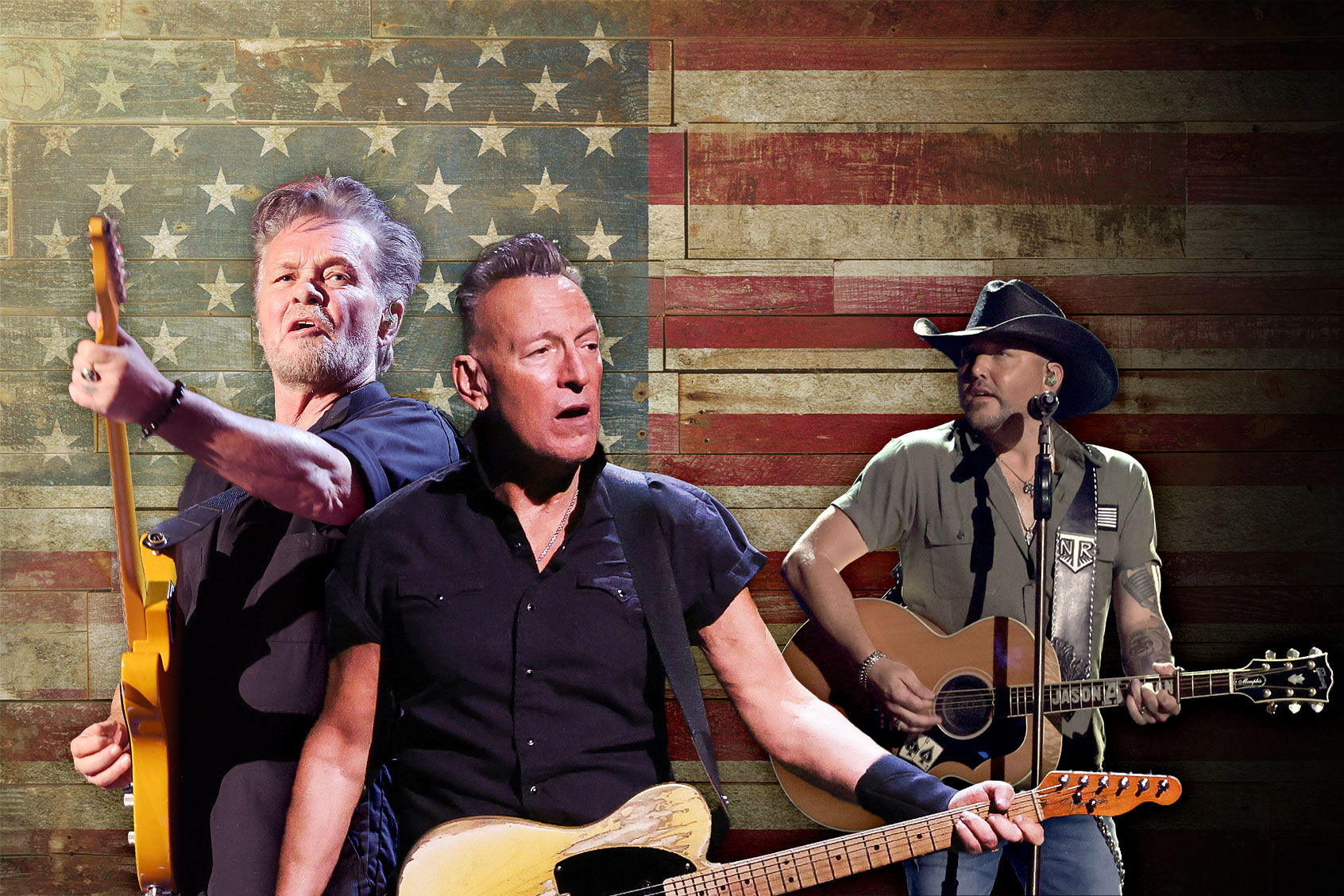
  • John Mellencamp — It seems like every four years, Republicans try to claim the staunchly Democratic Mellencamp’s music as their own. In 2008, the singer, who had been a supporter of John Edwards at the time, told McCain to stop using his tunes “Our Country” and “Pink Houses” at campaign rallies. But it wasn’t the first time Mellencamp has rebuked a Republican politician for what he considered improper use of his songs. Mellencamp drew the ire of the right wing in 2003 when he criticized former President George W. Bush on one of his albums. But the singer/songwriter had a history with Bush — during the 2000 presidential campaign, Mellencamp tussled with the GOP over what he considered the Bush campaign’s improper use of “R.O.C.K. in the USA.”
  • Van Halen — He might not have been the most successful presidential candidate, but McCain did have a talent for ticking off musicians. Legendary rockers Van Halen became incensed after McCain’s campaign used the band’s “Right Now” at the August 2008 rally in which he introduced Gov. Sarah Palin to those of us who live outside Alaska.
  • Tom Petty — Petty told Bush not to do him like that in 2000 when he demanded that the Bush campaign stop playing his “I Won’t Back Down” at rallies. The campaign complied and instead decided to use a Billy Ray Cyrus track.
  • Orleans — Both McCain in 2008 and Bush in 2004, received the wrath of band member John Hall for using the group’s “Still the One” without permission.
  • Don Henley — In June of this year, the lead singer of the Eagles sued Chuck Devore, a Republican running for Sen. Barbara Boxer’s seat in California in 2010, for copyright infringement. Devore created musical parodies that criticized Boxer and Obama using two of Henley’s songs. 
  • The Dixie Chicks — In 2003, country radio stations across the nation pulled the Dixie Chicks from the airwaves after the band’s lead singer, Natalie Maines, said that she was “ashamed the president of the United States is from Texas” during a concert in London. The ensuing controversy involved Fox News and Bill O’Reilly, but in the end, the Dixie Chicks had the last laugh, generating huge sales with a 2006 album that refused to back down from Maines’ criticism.
  • Kanye West — In one of the most iconic moments of the TV coverage of the fallout from Hurricane Katrina, in 2005, Kanye West had a very simple message about Bush’s priorities.

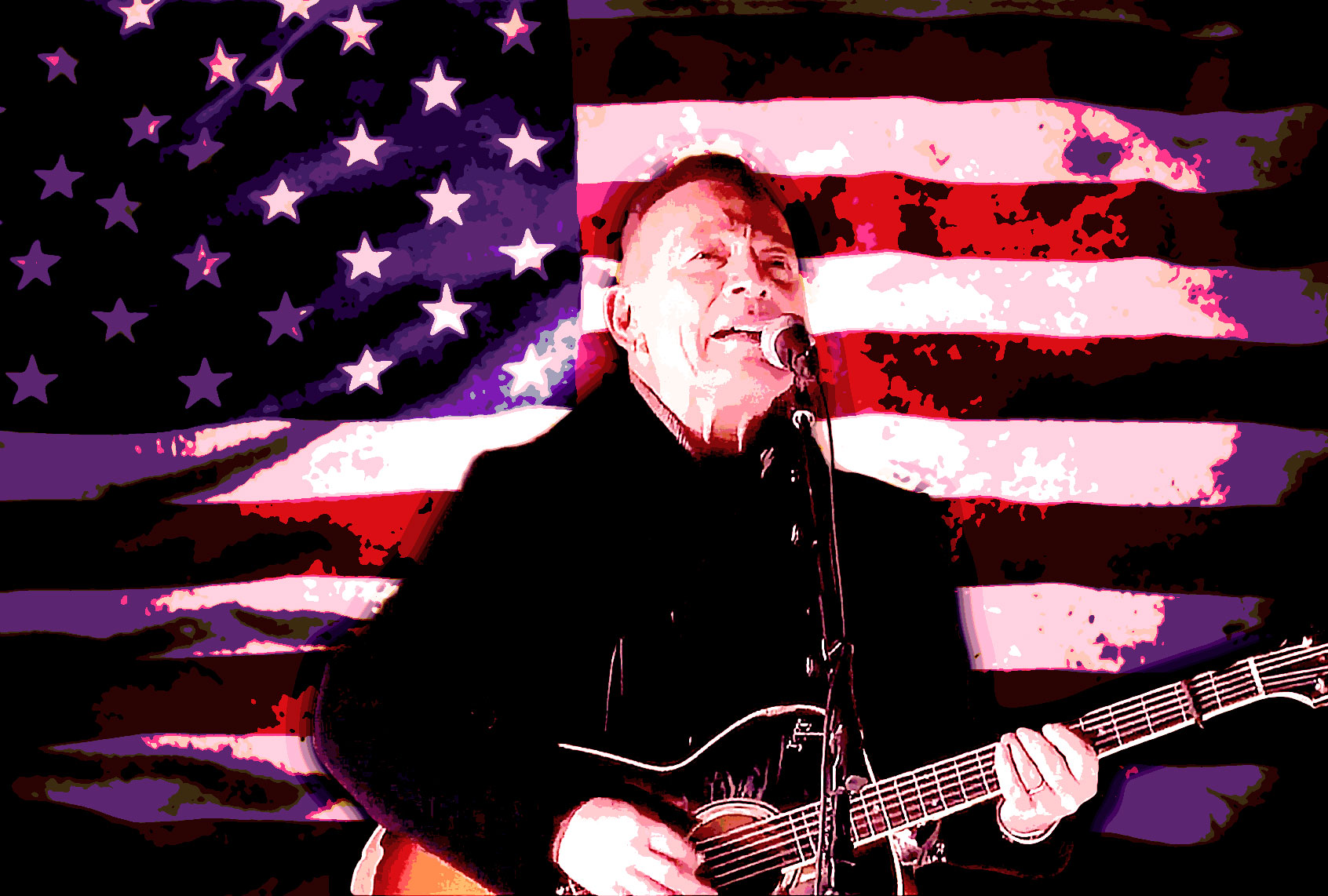
  • Bruce Springsteen — There’s no love lost between the Boss and the GOP. Springsteen constantly criticized Bush throughout his presidency, including during a memorable performance on the Today Show in 2007. “Born in the U.S.A.” has also been misinterpreted by presidents as a patriotic jingle since Ronald Reagan first made the mistake in 1984.

 Update: An earlier version of this post incorrectly referred to Don Henley as the former lead singer of the Eagles — the band has reunited and is currently touring. 

Continue Reading Close

Vincent Rossmeier is an editorial assistant at Salon.

Springsteen can’t save us

This should be Bruce's promised land. So why is his vision of America still so bleak?

  • more
    • All Share Services

Springsteen can't save us

Bruce Springsteen at the Super Bowl. It doesn’t get much better than that for a self-described “attention whore” — unless, of course, you are invited to play the president’s inauguration concert. Oh yeah, he did that. Far from the 26-year-old kid who was initially embarrassed at seeing himself on the covers of Time and Newsweek in 1975 and who tore down posters put up by his record company that announced, “Finally, the world is ready for Bruce Springsteen,” he seems at peace now with his role as America’s rock ‘n’ roll prophet. Amazing what time and therapy can do. What hasn’t changed, through all the success, has been his exploration of America. “My songs,” he told Rolling Stone in 2007, “they’re all about the American identity and your own identity and the masks behind the masks behind the masks, both for the country and for yourself.” He further elaborated to “60 Minutes,” “I’m interested in what it means to live in America.”

If an artist is lucky, his work will rhyme with the times. If an artist is especially attuned, his work rhymes over and through different times, again and again: “Born to Run” in 1975, “Born in the USA” in 1984, “The Rising” in 2002. Springsteen writes a song for a movie (“Streets of Philadelphia”) and wins an Oscar. Does another (“The Wrestler”) and wins a Golden Globe. What makes Springsteen’s popular success all the more astonishing is his bleakness. At its most searing, his work probes the underside of the American dream — its elusiveness for everyday Americans, the price we pay for chasing it, even the need to escape it altogether in order to survive. By offering up the American promise as a lie, Springsteen belongs alongside such diverse writers as F. Scott Fitzgerald, John Steinbeck, Arthur Miller, Thomas Pynchon and Toni Morrison, all of whom have probed the darkness of the American condition.

His 16th studio album is titled “Working on a Dream,” and in the context of Obama’s inauguration and Springsteen’s performance at the Lincoln Memorial, it is impossible not to think about the best-known use of the word in American history: Martin Luther King Jr.’s “I Have a Dream” speech.

The word “dream” appears repeatedly in the Springsteen songbook. “Born to Run” first diagnosed the problem of the “runaway American dream,” and Springsteen then planned an escape from “dreams that tear you apart” (“Promised Land”), a “dream where everything goes wrong” (“The Price You Pay”), a world that “slowly grinds your dreams away” (“Blood Brothers”). For Springsteen, dreams of love go unrequited (“One Step Up”), people dream of fields of blood (“Devils and Dust”), dreams are only good for reuniting with the dead (“Mary’s Place”).

Most people don’t like hearing that the struggle to make it is bound to fail and that the American promise of happiness is a lie. So how does he transform despair into such undeniably popular anthems? Springsteen’s art lies in a deception, a tension between the verse lyrics and the chorus. He sings to our heads, but rocks to our hearts. In the verses, he explains, he sings the blues. But the chorus is gospel. And so we shout, “Born in the USA,” fists pumping in celebration, yet the lyrics (“born in a dead man’s town”) depict a defeated patriotism. We sing, “Don’t worry Darlin’,” but “Livin’ in the Future” is an apocalyptic vision (“a bloody red horizon”) of a totalitarian nation. The music is so exhilarating it sometimes masks the message.

The title song off the new album continues the convention. It opens “out here” where “nights are long, and days are lonely.” But then a lilting voice croons, “working on a dream.” There is even whistling. Some commentators have called the album sweet and optimistic, but it is the music that has taken them in: There is nothing sweet and optimistic about loneliness and exile.

Springsteen’s infatuation with pop saturates the album. Musically, the best songs feature orchestral walls of sound and clever hooks. Echoes of a dozen groups and riffs from the 1960s, especially the Beatles, Byrds and Beach Boys, can be heard here, and for good measure Springsteen throws in some folk, blues and soul. But lyrically the songs are no joyous romp. There is very little happiness here. In “This Life” Springsteen recalls “This emptiness I’ve roamed/ Searching for a home,” a place that he has been looking for ever since his characters began fleeing the “death trap” and “suicide rap” from which they were born to run. The most poignant song off his last album, “Magic,” is “Long Walk Home,” an attempt to recover “who we are” and to begin again.

Now the search continues, but he hasn’t made it home yet. In one song, he can’t turn a “black sky blue”; in another, he can’t return from “the dark of fierce exile.” And when he finally arrives someplace, as on the last song of the new album, a melancholy tribute to band mate Danny Federici, who died last year, he discovers “empty are the fairgrounds.”

In August 2004, Springsteen embraced a public political persona when he published an editorial in the New York Times titled “Chords for Change” and took an active role in the election. “I’ve tried to think long and hard about what it means to be an American,” he said, and now it was time to fight for “the country we carry in our hearts.”

He meant giving flesh to abstractions such as justice, equality, fairness and freedom. “What it means to be an American”: It used to mean the work ethic, individualism, democracy and the frontier, all undergirded by a spiritual sense of providential destiny, which is fine as long as it doesn’t metastasize, as it seems to have of late, into hatred and oppression.

Springsteen knows being American stands for something, but he is still searching for connection, for a path from despair to hope. His characters tried the highway and ended up lost or wounded or dead. But the answer isn’t back home either, because the place is forever changed from what it once was. Springsteen’s message on “Working on a Dream” seems to be that the answer is love. He knows the Beatles delivered the news more than 40 years ago, which is perhaps why so many of the song titles on the new album evoke the Fab Four: “Tomorrow Never Knows,” “This Life,” “Life Itself” and “Surprise, Surprise.” (Recall that John Lennon whistles at the end of “The Two of Us,” a song about a relationship and going home.) Half of the new songs have the word “love” in them. And the others include lines such as “with you I have been blessed” and “you’re mine for always.”

In “Working on a Dream,” Springsteen’s music avoids overt politics. He has said, “I’m interested in the kind of country that we live in and leave to our kids. I’m interested in trying to define what that country is. I’ve got the chutzpah or whatever you want to say to believe that if I write a really good song about it, it’s going to make a difference.” But these songs are not going to do that, not in the way a ’60s generation raised on protest songs might like to imagine. Instead, Bruce has returned to an original faith in rock ‘n’ roll as the music of liberation. He once observed that Elvis freed our bodies and Dylan freed our minds. Springsteen is working on our souls.

The saving grace of rock ‘n’ roll will not revolutionize society, and it certainly will not deliver the American dream, but it has changed many a person’s life. Springsteen knows this because he is one of the saved. He got religion after seeing Elvis on the Ed Sullivan show in 1957, and he got his first electric guitar after seeing the Beatles on the show in 1964.

Springsteen turns 60 this September. He has sustained his career and maintained his integrity, for the most part at least. Some fans of late aren’t happy with an exclusive deal he made with Wal-Mart for a new greatest hits collection. But he never sold “Born to Run” to Nike or “Born in the USA” to Chrysler. And in performances, as much revivals as concerts, he has never just gone through the motions.

Springsteen continues to keep his promise to himself and to his fans. What he said in 1992 remains true today: “I didn’t get burned out. I didn’t waste myself. I didn’t die. I didn’t throw away my musical values.” Springsteen’s music can make us feel alive, but it cannot save the country or restore the American dream. That part is up to us.

Continue Reading Close

Louis P. Masur teaches American Studies at Trinity College (CT). He is the author of "The Civil War: A Concise History."

This land is our land

Beyonce, Bruce Springsteen, Bono and Pete Seeger topped the talent at the "We Are One" concert -- but Garth Brooks almost stole the show.

  • more
    • All Share Services

This land is our land

Nora Walsh-DeVries

I was supposed to be Tweeting from the Lincoln Memorial concert today, but it turns out Tweetin’ ain’t easy, in a crowd estimated at 400,000. I couldn’t get on the Internet most of the time, could rarely text, e-mail or get a cell signal. It seemed strange to be so technologically thwarted on a day celebrating the victory of the world’s most wired politician and campaign. But that meant ultimately I could stop trying to communicate and just enjoy it, and I did (once I tuned out the sight of sharpshooters lining the top of the Lincoln Memorial).

If you’re looking for snark, go elsewhere. (OK, the bald eagle thing was kind of hokey.) I am officially over my Rick Warren tantrum (at least until I see him Tuesday); between Episcopal Bishop Eugene Robinson’s moving blessing to open the concert, to the San Francisco Gay Men’s Chorus singing “My Country Tis of Thee” where Marian Anderson sang it almost 70 years ago (after the Daughters of the American Revolution kept her out of Constitution Hall because she was black), followed shortly thereafter by the Navy Men’s Glee Club. Rick Warren, you can’t take that away from me. When the openly gay Robinson called on God to “bless us with anger — at discrimination, at home and abroad, against refugees and immigrants, women, people of color, gay, lesbian, bisexual and transgender people,” I knew we’re not in Dick Cheney’s America anymore.

If you’d told me that Garth Brooks would sing more songs than any other entertainer, including Beyoncé, Bono and Bruce Springsteen, I’d have been prepared to be disappointed. But for me one high point was Brooks doing the Isley Brothers’ “Shout” — it helps if you saw the movie “Wedding Crashers’” great montage showing lame cover bands doing “Shout” at weddings of every race and culture, Jewish, Indian, Irish, African-American. Yes, I’ll admit that made me think of Obama presiding over a sappy interracial wedding, and watching that sea of arms flying up every time Brooks said “throw your hands up” was one of my favorite moments of the day.

The genius of the whole event was the culture mashup — readings presented by duos like Steve Carell and Jamie Foxx, Jack Black and Rosario Dawson, Laura Linney and Martin Luther King III, Forest Whitaker and Ashley Judd — yes, Jack Black. Likewise, Jon Bon Jovi and Bettye LaVette’s duet on Sam Cooke’s Obama anthem “A Change Is Gonna Come” was extraordinarily moving. My personal high point — I’d have braved the cold and crowds for this moment alone — was Pete Seeger and his grandson, joined by Springsteen, singing all the lyrics to “This Land Is Your Land” — and watching Obama sing along. The only remotely controversial note (beyond Robinson’s prayer for anger at discrimination) was when Bono called the values embodied in Obama’s election “an American dream, an Irish dream … a European dream, an African dream, an Israeli dream,” and then added: “And also a Palestinian dream.”

Obama himself called the celebration an expression of “just what it is that we love about America.” And where I was disappointed that Obama only slightly nodded to Dr. Martin Luther King Jr. in his Denver acceptance speech (on the 45th anniversary of King’s “I have a dream” speech), today his praise and attention to the parallels of their cause was full-throated and moving. Obama’s voice deepened and grew louder as he talked about King’s dream “that his children might be judged on the content of their character.” He also praised “the man who made this day possible,” Abraham Lincoln, and said American progress will come “if we could just recognize ourselves in one another.”

And yes, then there was Garth Brooks. The entire crowd — young, old, black, white, Latino, Asian, everyone — seemed to sing along to “American Pie,” including Obama, which could mark him, generationally and culturally, more than anything else that happened today. Who knew they knew all the words? I didn’t until today (actually, Brooks wisely shortened it). And I couldn’t help seeing Brooks, singing along with a multiracial youth choir, as another part of Obama’s outreach to red America, a real reminder that he doesn’t plan to be president of blue America, or red America, but the United States of America. I hope Republicans get the message.

I think this will go down as one of the best days of my life for a long time, except for the fact that I had to make a kind of comic “Sophie’s Choice”: I had a press credential and my college-student daughter didn’t, so she headed for steerage when I got to the press tent. I told her I’d probably just come out and join her in the crowd, how could I see it without her — until I saw that the press area had uniquely awesome views (they don’t always) and I couldn’t imagine leaving. We texted throughout, and she shared her great stories of the real event — topped by people climbing on Porta-Potties to get a better view, then being ordered down by police, then being unable to get down, then being rescued by men in camoflauge. I missed her when Pete Seeger sang “This Land Is Your Land,” because I used to sing it to her 19 years ago, when she was a baby.

It was the kind of event that made you want to share TMI personal details like that — and also the kind of event where you didn’t need to know a soul to suddenly be surrounded by friends and family. Nora and I met up afterward for the long trek home, and we felt lucky to have two sets of views of this historic day. For the first time in my adult life, to paraphrase Michelle Obama, I am crazy in love with my country, and it was fun to attend this schmaltzy sort of wedding to celebrate the change that’s gonna come. I reserve the right to update this post later, when I slap my forehead and say, “How could I not have written about that?” Or maybe I’ll just Tweet it.


Continue Reading Close
Joan Walsh

Joan Walsh is Salon's editor at large.

Vedder’s Cubs ditty a hit

The Pearl Jam leader manages the rare sports song that's actually pretty good. What are some others?

  • more
    • All Share Services

Eddie Vedder’s song about the Chicago Cubs has been making the Web rounds since the weekend. You’ve probably been sent a link. My friend David Mlodinoff sent me one. If Dave’s not your pal, Google Vedder’s name and the song’s title, “All the Way.”

I’m not a fan of Eddie Vedder in the least. Guy bugs me. But I have to admit, “All the Way” is a nice song. It’s a folky singalong in three-four time, recorded live. It sounds a little like a sea shanty.

And, most crucially for a song about sports, it does a nice job of avoiding the hackneyed. There is an obligatory “Yeah Ernie Banks said, ‘Oh let’s play two,’” but beyond that, Vedder, a Chicago native and lifelong Cubs fan, obviously put a little more than five minutes’ work into this. “There’s magic in the ivy and the old scoreboard,” he sings, “The same one I stared at as a kid keeping score.”

Not Shakespeare, but a deft way to sum up the appeal of Wrigley Field in 20 words. And besides, Shakespeare couldn’t keep score worth a damn.

It’s a tough assignment, writing a song about sports, about a team or an event or an athlete, without inducing cringes. Try it. It’s hard to write verse about sports without dipping into rah-rah clichés or drippy nostalgia.

As if to illustrate that point, my friend Dave also sent a link to a farewell song to Yankee Stadium by Bruce Springsteen sideman Nils Lofgren. The song, co-written by Lofgren and his wife, Amy, is called “Yankee Stadium,” and features the chorus

In Yankee Stadium
In Yankee Stadium
In Yankee Stadium
Everyone is beautiful

Which leads me to ask two questions: Why hasn’t Springsteen instituted drug testing for his band members, and what did I ever do to my friend Dave?

Let’s take up a collection in the comments section. What are the best songs about sports? Let’s hear about the songs that avoid cliché and sappiness, that really illustrate something about sports, or a sports figure or event.

I’d like to limit it to songs that are really about sports, not just tangentially. So Bob Dylan’s “Catfish,” which is about Catfish Hunter as a pitcher, would qualify, but Dylan’s “Hurricane,” which is about how boxer Rubin Carter was wrongly convicted of murder, would not.

I’d also like to disqualify songs that are sort of generically or metaphorically about a sport, such as “Basketball” by Kurtis Blow, which is about how great basketball is, or “Centerfield” by John Fogerty, which is an extended metaphor. But you’ll do what you want anyway, so go ahead.

We’ll take the best suggestions, get a band together, work up the songs and take the act on the road. Or maybe just publish a big list.

Continue Reading Close

King Kaufman is a senior writer for Salon. You can e-mail him at king at salon dot com. Facebook / Twitter / Tumblr

King Kaufman’s Sports Daily

The ice is jammed with broken heroes: Springsteen to host a curling reality show? That's rockstar.

  • more
    • All Share Services

The problem with “Rockstar Curling,” the reality show that the Toronto Star reports NBC is planning to air, is that it’s redundant.

Curling is rockstar, baby. It’s rocketship. It’s monkeylove, darling.

The Star reports that the Peacock has an exclusive option to air the 10-week series, the aim of which will be to form and train a team that will compete for the U.S. championship and a spot in the 2010 Olympics in Vancouver. The hook, the “Rockstar” part, is that the show’s producers are trying to get Bruce Springsteen or Jon Bon Jovi involved, possibly as hosts.

“According to sources,” Star columnist Chris Zelkovich writes, “the two rock stars are among a group of entertainment types who rent arena time on occasion to pick up brooms instead of guitars.”

We will now pause, right here on the brink of like half a dozen zingers about curling, which I love but which according to typists union rules must be zinged in American publications, and another couple about how Bon Jovi trading in his guitar for a broom would constitute the Olympic Movement’s greatest contribution to civilization, for a brief meditation on celebrity.

From time to time this column has noted that we, the public, really can’t know public figures through their portrayal in the media, though it often feels like we do. This isn’t exactly an earth-shattering or original observation, but it’s accompanied by insouciant hand gestures you can’t see that give it a little oomph.

One of my favorite stories to illustrate this point was my own occasional mid-’80s observations of ballplayer George Hendrick, who had a reputation as a surly guy, largely because he refused to speak to the media. He didn’t speak to me, but I couldn’t help noticing whenever I was around him that he seemed to get along famously with his teammates. It was an early object lesson for me that the media can distort as well as illuminate.

Another favorite story of mine involves Springsteen himself acknowledging the phenomenon. I have a bootleg recording of a concert at which a woman yells out “I love you, Bruce!” After a little cheer dies down in the crowd, Springsteen says, “But you don’t really know me.”

Now whether you love Springsteen or not, I want you to think about all the things you know about him and all the things you might have guessed. Of course we don’t really know celebrities we’ve never met, but come on, a guy like Springsteen, who’s written hundreds of often personal songs and given thousands of interviews and been the subject of more thousands of profiles and the occasional academic symposium over a 35-year-plus recording career, we have a pretty good idea if we want to have one, don’t we?

So come on, biggest Springsteen fans in the world: Did you ever once imagine that the guy is into curling? Reportedly.

In a follow-up piece Tuesday, Zelkovich writes that if the two Jersey rockers are dumb enough to pass up this obvious career move, “there’s a long list of celebrities who’ve hurried hard at one time or another, according to thecurlingnews.com.” I love it when Canadians talk curling.

This column, not a Canadian, was unable to find that report on that Web site, but was able to enjoy this headline: “Regina will rock! Can any Scotties Hotties upset the Kelly show?”

Curling is big on wordplay involving the word “rock,” you see. That’s why Springsteen’s such an obvious fit. He’s big on wordplay involving the word “Mary.”

The list of third-choice hosts, according to Zelkovich, includes country singer Toby Keith, who digs the rock, as well as Pittsburgh Steelers quarterback Ben Roethlisberger, who has publicly curled before. American skier Picabo Street and speedskater Dan Jansen competed in a made-for-TV curling event last year, the Sun reports. That one obviously did boffo ratings.

Picabo Street, if I may digress again, is my second favorite winter Olympics subject, after curling. In my musician days I made up a song inspired by her name: “Peekaboo Street.” My baby lived on it. It was writing songs like that that made me the man I am today: a former musician.

A far more likely choice, and I’d bet a better host, would be Bill Clement, the hockey commentator and former player who loves him some curling.

But I want to throw my hat in the ring, or slide my stone in the house, or something. I would venture that this column is the sport’s most enthusiastic proponent in the American mainstream national media, except maybe Bill Clement, who once almost kissed Jim Lampley on the mouth on NBC in his excitement over Olympic curling.

I’ve even thrown stones, and, unlike with Springsteen, Bon Jovi or even Picabo Street, I wouldn’t detract from the curling excitement with any of that pesky star power.

“Rockstar Curling” figures to air on Saturday afternoons leading up the Olympics in 2010. I’m free. I think the American viewing public would love me.

Then again, they wouldn’t really know me.

Previous column: Bad college hoops finishes

- – - – - – - – - – - – - – - – -

  • Bookmark http://www.salon.com/sports to get the new Kaufman column every day.
  • Get a Salon Sports RSS feed.
  • To receive the Sports Daily Newsletter, send an e-mail to kingnewsletter@salon.com.

  • Continue Reading Close

    King Kaufman is a senior writer for Salon. You can e-mail him at king at salon dot com. Facebook / Twitter / Tumblr

    Page 2 of 12 in Bruce Springsteen