Consumerism
Why Coke’s new can infuriated the Internet
Regular Coke in a white can? Someone forgot the lesson of New Coke -- don't mess with our soda
The misleading package has long been a go-to marketing move for off-brands. Who among us has not inadvertently picked up a bottle of John Adams beer in her time, or a big box of Special J cereal? Usually, it’s a clever – and quite deliberate — exploitation of our expectations. Corporations know that it’s the design that sells, that our eyes beeline for the familiar. But what happens when the original messes with our heads? Customers know that a green circle means Starbucks coffee, the golden arches mean McDonald’s. A red can is a Coke. Well, not so fast…
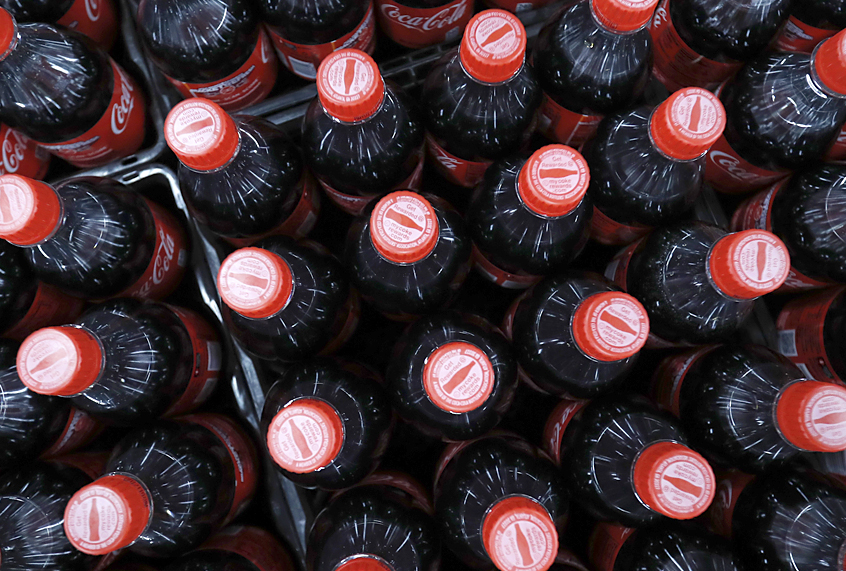
Just in time for the holidays, the cola titan recently rolled out a festive new can design — an homage to its seasonally iconic polar bear cans, and a reminder of Coke’s relationship with the World Wildlife Fund. As the Wall Street Journal reported Thursday, “the company has frequently rung in the holiday with special can designs” in the past. But this time was different. This time all hell broke loose. So let’s just get a few things straight so we never have to go through anything like this again: You don’t win friends with salad. Stop trying to make “fetch” happen. And regular Coke does not belong in a white can. How are we supposed to distinguish regular and diet?
It didn’t take long for irate consumers to register their confusion and displeasure. A Twitter and Facebook backlash against the “blasphemy” promptly ensued. A diabetic customer in Denver told ABC News that “I purchased three six-packs because I thought they were diet,” adding that “they need to make it so it is not confused.” Anecdotally, a friend reports today that when she was out recently with another pal, the woman sent back a white can of Coke, assuming it was the dreaded diet version. Diet Coke, by the way, doesn’t even come in a white can. It’s silver. But at a glance, the polar bear version and the diet can do look mighty similar.
Of course, plenty of fans like the white cans just fine, and as one user noted on Facebook, “It is still the same great stuff on the inside!” And the contentious cans, inevitably, are now selling on eBay. Company spokesman Scott Williamson, meanwhile, told the WSJ that “The white can resonated with us because it was bold [and] attention-grabbing.” But though the company insists the white can is a success, it is now rolling out red polar bear cans as well – something it hadn’t mentioned when the white holiday cans first arrived weeks ago.
Sure, there’s Cherry Coke, Coke Zero, Coke with lime, low-carb Coke and more. But those of us who are particular about our colas know that diet and regular Coke are two very different beasts. (And then there’s Mexican Coke, the most beautiful Coke of all. But that’s another story.) They are different heart and soul, outside and in. Pepsi, the “choice of a new generation” that “refreshes everything,” may play fast and loose. But Coke? As in “the real thing”? As in “Coke is it”? As in “always” Coca Cola? You do not screw with that.
Companies forever refine and tweak. If they didn’t, Betty Crocker would still look like Laura Bush.It may seem a trifling matter, but as we recall from the great New Coke fiasco of ’85, there are some things that should not be messed with. And that’s the real reason for the outcry. It’s not about a lazy inability to distinguish regular from diet. It’s about the potent ideal Coke itself perpetuates – solid, dependable, and goddammit, red. Coke fan Mel Cyr explained to the Journal this week, “You can’t change something that’s classic.” But as Coke has learned, you can. You just can’t guarantee that consumers will swallow it.
Mary Elizabeth Williams is a staff writer for Salon and the author of "Gimme Shelter: My Three Years Searching for the American Dream." Follow her on Twitter: @embeedub. More Mary Elizabeth Williams.
The argument against thrift
During economic hardship, we need to save less and spend more -- and rethink our relationship to consumer culture
(Credit: Ye via Shutterstock) We’re the most affluent people on the planet, us Americans — our choices among foods, ideas, clothes, schools, and destinations are almost without limit — and we love to shop. But we also know that consumer culture is bad for us. How come? In a word: excess. We’re afraid that we consume too many resources, that we save too little of our incomes, and that meanwhile we produce almost nothing of real value. We’re afraid that we can’t observe any limits on our consumption of goods, so that every substance, even food, begins to feel addictive, and every urge, even sex, begins to feel compulsive. When armed with credit cards, it seems, we’re unwilling to defer the immediate gratification of our desires, and we’re thus unable to “save for a rainy day.” We’re also afraid that we’re mere cattle — herded by corporations and “branded” by their admen. We’re especially afraid that consumer culture is making us fat.
Continue Reading CloseJames Livingston is a professor of history at Rutgers University -- New Brunswick, where he has taught since 1990 on American economic, cultural and intellectual theory. He has received fellowships from the Smithsonian Institution, the Fulbright Foundation, and the Cullman Center for Scholars and Writers at the New York Public Library. He is the author of four previous books and is a regular contributor to the History News Network. He lives in New York City. More James Livingston.
The new age of consumer activism
Our understandable rage at corporations is behind customer-driven like Bank Transfer Day
Occupy Oakland protesters stand outside of a Wells Fargo bank in Oakland, Calif., Weds., Nov. 2, 2011. (Credit: AP/Paul Sakuma) As we all know, America is angry. Really angry. To put it in pop culture terms, we’ve moved from the vaguely inspiring agita of Peter Finch in “Network” to the wild-eyed, primal-scream rage of Sam Kinison in “Back to School.”
When we pay attention to politics, we get peeved at Congress and the presidential candidates. When we tune into sports, we’re annoyed with squabbling players and owners. When we turn on the news, we fume at the smug pundits. And when it comes to the economy, we’re in a tizzy at big corporations.
Continue Reading Close
David Sirota is a best-selling author of the new book "Back to Our Future: How the 1980s Explain the World We Live In Now." He hosts the morning show on AM760 in Colorado. E-mail him at ds@davidsirota.com, follow him on Twitter @davidsirota or visit his website at www.davidsirota.com. More David Sirota.
Barbie gets a tattoo makeover
Barbie's inked-up and rocking a pink bob. Is this the 53-year-old's midlife crisis? Either way, it's a step forward VIDEO
The world is full of middle-aged women eager to youthfully reinvent themselves. And towering above the Real Housewives, standing tippy-toe taller than even Madonna, there is, always, Barbie. But though the blond icon has been a cashier, a model, a United States president and a cyborg-like half-human, half video camera, is the world ready for America’s sweetheart to be a tattooed bad-ass?
In a partnership that could only evolve from teaming up with an Italian-created, Japanese-inspired and Los Angeles-based company, Mattel has partnered with the cult brand Tokidoki to create a limited-edition Barbie with a Harajuku twist. This “cutting edge” Barbie rocks a pink bob, a slouchy crossbones top — and a swath of retro-themed ink that climbs across her shoulders and up her neck. She’s so popular that she’s on back order till the end of the month. Jesse James, we’ve found your next girlfriend.
Continue Reading Close
Mary Elizabeth Williams is a staff writer for Salon and the author of "Gimme Shelter: My Three Years Searching for the American Dream." Follow her on Twitter: @embeedub. More Mary Elizabeth Williams.
My iPhone foreclosure
As the world clamors for the latest upgrade, I finally resolve to surrender mine. If only it were that simple
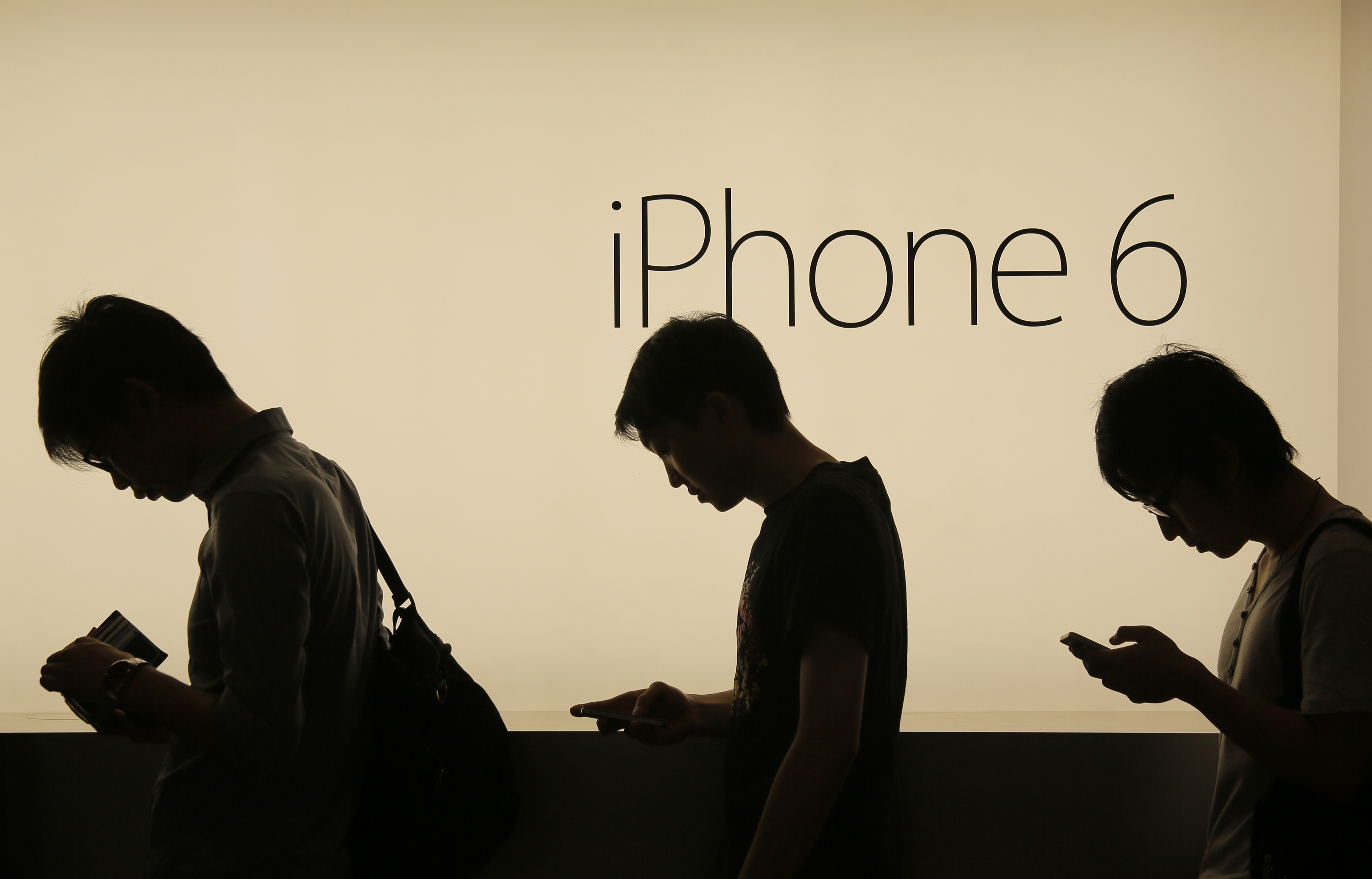
(Credit: calvindexter via Shutterstock) Last Saturday night at 10 p.m., I parked my car in the driveway, hustled myself inside as it began to rain, and locked the door behind me when I realized: I did not have my iPhone.
So weird. I’d just had it, like, 10 minutes ago, when I checked my voicemail at a friend’s place. I started to call her to ask if it was lying around, which is when I realized: Not having an iPhone means you can’t actually use your iPhone.
That night, even as rain pelted the windows, my home felt eerily silent. Like so many people, I do not have a separate landline, and I do not have cable TV. Without that small and all-powerful device within arm’s reach, I was in exile. Typing emails on my laptop (because I still had wireless) seemed a bit like scribbling on parchment in the amber glow of an oil lantern. I would send the emails and receive nothing in response. Gah, is this thing even on???
Continue Reading CloseSarah Hepola is an editor at Salon. More Sarah Hepola.
Netflix’s folly and the imperial consumer
In an era when saying no has never been easier, there is only one golden rule: Don't annoy your customers
(Credit: Tom Denham and 3drenderings via Shutterstock/iStockphoto) A week ago I cancelled Netflix streaming. After the price hike that went into effect in September it seemed the economically prudent thing to do. I had to make a choice between access to the huge catalog of movies and television shows available on DVD, or the smaller variety of options available to watch on my laptop. I wasn’t happy at the thought of being a subscriber to a service with the Neolithic branding image suggested by “Qwikster” — Netflix’s new DVD-by-mail subscription service — but the choice was still obvious.
Continue Reading Close
Andrew Leonard is a staff writer at Salon. On Twitter, @koxinga21. More Andrew Leonard.
Page 2 of 14 in Consumerism