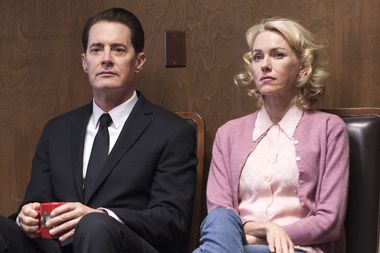
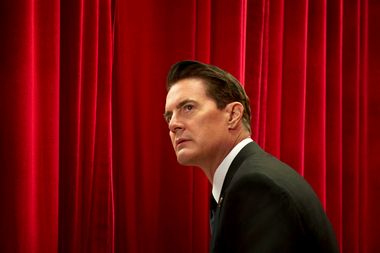
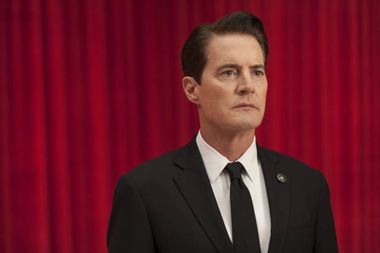
David Lynch

Celebrities weigh in on the debt ceiling

From David Lynch to Denis Leary, Hollywood stars tell the government how to do its job

  • more
    • All Share Services

Celebrities weigh in on the debt ceilingDavid Lynch has an opinion on Congress...we just can't figure out what it is.

Celebrity activism usually comes around every four years … right around election time, you’ll notice. But sometimes issues are important enough that even Hollywood has to stop counting its money for a moment and weigh in on our political system. The debt ceiling debate has provided just such an opportunity. (If the day comes when I am forced to ask Snooki about fiscal policy, however, just remind me that I always keep a cyanide capsule in one of my molars. I’ll be ready.)

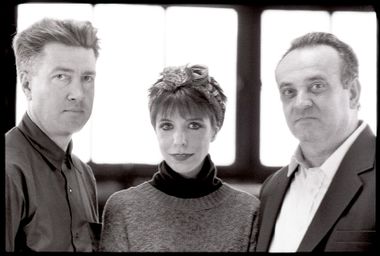
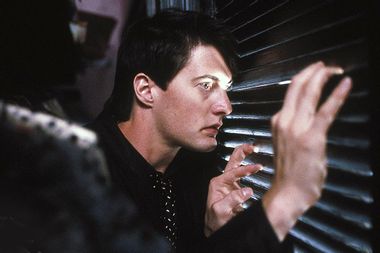
David Lynch’s ambient, ambiguous video called “How Things Have Been Going” shows that the director knows as much about this crisis as the rest of us.

 On the other side of the spectrum, you have Matt Damon, who always keeps abreast of current affairs … especially when they concern the GOP using his buddy Ben Affleck for its videos.

 ”The Office’s” Rainn Wilson chose Twitter as his megaphone, agreeing with Damon that as a wealthy person, he should be taxed more.

Denis Leary also chose to tweet his opinions about cigarettes, debt and taxes.

And last but certainly not least, Harry Belafonte admonishes Obama on CNN:

“There has never been such a void in moral truth as it now exists,” Belafonte said. “And what the expectation has been for many of us was that Barack Obama would bring to the table a great sense of moral fortitude. I think were he to apply that in the decisions that he would have to make, he would find that his presidency might touch on a level of greatness that he has not yet considered.”

He added, “He [Obama] has only listened to the voices that shout the loudest, and it’s all those reckless right-wing forces. It’s almost criminal.”

Cold words from the crooner, but maybe he has the right of it after all. Thoughts?

Drew Grant is a staff writer for Salon. Follow her on Twitter at @videodrew.

Five pop culture items we missed

Today's catch includes: A "Muholland Drive" nightclub, Louis C.K.'s Twitter rage, and a LeAnn Rimes non-sex tape

  • more
    • All Share Services

Five pop culture items we missedThe "Muholland Drive" night club...opening in Paris!

1. Movie-themed nightclub of the day: Club Silencio, a new Parisian nightspot brought to you by David Lynch and based upon the Rebekah Del Rio room from “Muholland Drive.”

It kind of looks like half the nightclubs in the Meatpacking District already.

2. Sex tape rumors of the day: LeAnn Rimes claiming that a video of her changing in front of a mirror doesn’t count as a “sex tape.” We are inclined to agree. She still wants to sue the guy who put the footage online, though.

3. Reneged runaway bride of the day: The Crystal Harris-dumping-Hugh-Hefner story of yesterday turned out to be part of a media plot involving Harris getting $250K. Guess we all fell for it. Now Harris is dating Dr. Phil’s son? Couldn’t have seen that one coming.

4. Twitter outrage of the day: Louis C.K. on why we shouldn’t give a crap about Tracy Morgan’s gay comments. 


5. Worst burger of the day: The Japanese poop burger. Not kidding. (Wish I was.) It takes human poop, mixes it with soya and steak sauce, and feeds it back to you in some horrible “Human Centipede”-like concoction.

Continue Reading Close

Drew Grant is a staff writer for Salon. Follow her on Twitter at @videodrew.

David Lynch phones it in with dismembered Barbie head commercial

In his new coffee commercial, the "Eraserhead" director can't even be bothered to be vaguely unsettling

  • more
    • All Share Services

David Lynch phones it in with dismembered Barbie head commercialDavid Lynch and a special friend want to talk to you about overpriced coffee.

As much as it pains me to say this, David Lynch has been totally phoning it in for the last couple years. Ever since his last feature, “Inland Empire,” David’s just been coasting: doing his lecture circuit about Transcendental Meditation, an occasional art show or music concert, and then updates to his web page. Which is fine! You are no longer a young Eraserhead, David, if you want to go retire to the red room or hang out on a deserted beach while Robert Blake paints his face white and laughs manically behind you, no one is going to say you didn’t earn it. Plus, we have “The Killing” now, so we can finally dust off our ole Laura Palmer Lil’ Autopsy Kits (TM) and give it another go.

All that being said, its completely unacceptable for you to doing such a half-hearted job with these coffee commercials, Mr. Lynch:

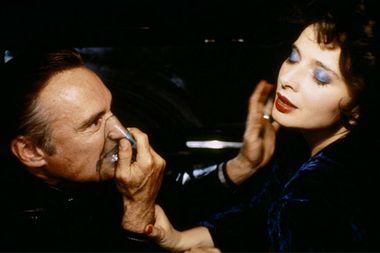
Talking in a baby voice to a Barbie head? Is that you’re trying to pass off as deeply disturbing imagery these days? The only person that this upsets is your little sister, and if you do that again mom is going to catch you and you’ll be grounded from going to Dennis Hopper nitrous-huffing birthday party this weekend. (Parents just don’t understand.)

You want to see what kind of commercials David Lynch used to make? How about that Marion Cotillard video for Dior? Or this overseas cigarette commercial?

Now that’s a damn fine commercial. Go back to your room and think about what you’ve done, Mr. Lynch. Don’t make me regret getting those “Twin Peaks” and “Eraserhead” tattoos from college that I would otherwise be very proud of. If it wasn’t for these stupid commercials, I’d be able to look in the mirror every morning and say “I’ve made some really great life choices.”

So fix this. Now. Call up Rebekah Del Rio, a glittery hobo and some chick in red lipstick smoking a long cigarette and have them come down to make this right.

Continue Reading Close

Drew Grant is a staff writer for Salon. Follow her on Twitter at @videodrew.

10 year time capsule: The puzzle movie hits made possible by DVD

"Memento," "Donnie Darko," "Mulholland Drive." The link between them may go deeper than their release dates

  • more
    • All Share Services

10 year time capsule: The puzzle movie hits made possible by DVDThe least coherent films of 2001.

In 2001, DVD players outsold VCRs for the first time ever. I can’t claim that this advent of home technology was the reason that “puzzle films” like Christopher Nolan’s “Memento,” David Lynch’s “Mulholland Drive” and Richard Kelly’s “Donnie Darko” caught on, but it’s a reasonably sound guess. With VCRs, you could watch a film at home, you could pause it, and you could rewind it. But DVDs were made to withstand intense scrutiny: high-res freeze-frames, replaying and jumping chapters, and of course those neat little bonus features that held the promise of providing supplemental material to the film.

Before “Memento” was released to the public on March 16, 2001, the most popular thriller mysteries of the past several years had been films like “The Sixth Sense” and “The Usual Suspects.” Both great movies, sure, but both included clear expository endings to make sure the audiences understood what the hell they had just paid good money to see. But when Andy Klein wrote his definitive “Everything You Wanted to Know About ‘Memento’” essay for Salon and created a numerical and alphabetical system to use to watch the scenes of the film in chronological order, it was only because DVDs had recently given us the ability to do so. As Andy says:

So, if you want to look at the story as it would actually transpire chronologically, rather than in the disjointed way Nolan presents it — oh, will this ever be fun to do on DVD! — you would watch the black-and-white scenes in the same order (1 to 21), followed by the black-and-white/color transition scene (22/A). You would then have to watch the remaining color scenes in reverse order, from B up to V, finishing with the opening credit sequence, in which we see Teddy meet his maker at Leonard’s hands:

1, 2, 3 ,4 ,5, 6, 7, 8, 9, 10, 11, 12, 13, 14, 15, 16, 17, 18, 19, 20, 21, 22/A, B, C, D, E, F, G, H, I, J, K, L, M, N, O, P, Q, R, S, T, U, V.

But maybe that’s getting overly technical for someone who just wanted to know what just happened. Even then, DVDs allowed a much more complex film to gain a second life. “Donnie Darko,” the first film by writer/director Richard Kelly, owes its cult success even more to DVDs than “Memento” does: When the film came out in October of 2001 (starring two unknown siblings, Jake and Maggie Gyllenhaal), it was practically buried in theaters. No one saw it, no one I knew had even heard of it. But when it came out on DVD, it was a revelation, a terrifying 6-foot-tall rabbit whispering about the apocalypse while a Sparkle Motion dance team headed up by Patrick Swayze and his kiddie porn dungeon danced in the background, an honest to god revelation.

What the hell was this movie about? Time travel? Schizophrenia? Was everything a clue — from the movies being shown in the theater where Donnie goes on his date to the numbers written on his arm after he wakes up in a golf field? Or was the point that it was all meaningless, that no sense could be made of the seemingly “Act of God” tragedies that bookended the film? (One of the reasons “Donnie Darko” didn’t fare well in theaters may have been its two plane crash sequences coming just one month after Sept. 11). My friends and I would gather for weekly rewatchings of “Darko” and discuss its possible meanings the way intense rabbinical students would parse the Torah.

Three years later, when “Donnie Darko” finally got a “Special Director’s Cut” DVD that allowed you access not only to extra scenes but also to chapters of the book “The Philosophy of Time Travel” (a fictionalized text written by one of the characters in the movie), it was something of a coup for our super-fandom. As Dan Kois writes in his definitive Salon essay on the film’s plot, “Years of midnight screenings at theaters around the country and the film’s impressive success on DVD — taking in more than $10 million to date in U.S. sales alone — have turned what was once a confusing and oblique failure into a confusing and oblique cult hit.”

Which brings us to “Mulholland Drive,” perhaps the least-sensical of all the puzzle films to come out that year. David Lynch isn’t one for wrapping his stories in a nice, neat package (no matter how many times you rewatch the DVD of “Lost Highway” or “Eraserhead,” that shit isn’t going to be any less confusing), and the evolution of the film — from a failed ABC pilot to a mainstream theatrical release — lent the mysterious movie a sprawling quality that really couldn’t be explained by a 15-minute ending that was tacked on after the show was nixed. (Everything that happens after Naomi Watt’s character opens the blue box was created specifically to give the show a movie ending.) To make matters worse, Lynch refused to put chapters on his DVD, so there was no jumping back and forth between scenes like you could do with “Memento,” and there was no bonus text to explain the film, as with “Donnie Darko.” But that didn’t stop thousands of people from trying, and the film received its own analysis in Salon by Bill Wyman, Max Garrone and Andy Klein. In fact, their explanation of the film that confused so many people can be whittled down to two paragraphs:

“Well, it seems that Diane had her girlfriend murdered. Then, in a masturbatory fantasy cum fever dream in the moments before she commits suicide, she reimagines her ruined career and failed relationship with the woman she loves.

The dream begins with Camilla/Rita miraculously escaping the hit Diane had taken out on her. From there, Diane, a product of Hollywood, imagines the story in cinematic fashion: She sees herself as the naive wannabe starlet Betty, who succeeds on sheer talent and solves whatever problems are thrown her way. She even gets the girl!”

It’s possible that films like “Mulholland Drive” would have become cult classics even without DVD treatment, but Lynch is the special case of a cult cinema director. For Nolan and Kelly, their 2001 puzzle films helped launch careers that would have been impossible if their complex visions had to be compromised for the sake of making sense the first time around. Could you imagine a world without “Inception” or “Southland Tales“? OK, maybe the latter, although Kelly’s second feature is highly underrated. Maybe you need to go back and watch it again. It’s out on DVD right now. 

Continue Reading Close

Drew Grant is a staff writer for Salon. Follow her on Twitter at @videodrew.

David Lynch to direct Duran Duran interactive concert

The '80s New Wave band teams up with "Eraserhead" director for a live streaming film/concert/conceptual art piece

  • more
    • All Share Services

David Lynch to direct Duran Duran interactive concertStart making sense

Before last year, watching a concert on TV was a bitter-grapes kind of experience: Sure, it was entertaining, but it also served as a reminder that you weren’t actually in the audience. All that changed last when the National hired D.A. Pennebaker to “direct” their live-streaming concert on the Internet. That led to Terry Gilliam and Arcade Fire joining  forces in August during a Madison Square Garden show, where they turned the conert into an interactive multimedia experience on YouTube that went beyond the auteurism of “Give Me Shelter.” People watching the show online could interact with the performance by choosing camera angles and submitting images that would show up onstage, creating a participatory experience that took full advantage of the medium as a two-way receiver. It was a definite game changer, and something Marshall McLuhan would have especially loved.

Now David Lynch plans to do something similar — although we suspect much weirder — with Duran Duran’s March 23 concert, “Unstaged.”  Though that may seem like an odd pairing, choosing Lynch was a smart move on the band’s part. The director  has a vested interest in both music production and new media (his recent film “Inland Empire” was shot all on digital, and his last album was released exclusively on his pay website), and a Web-streaming concert would be the perfect showcasing of his recent experiments in those fields.

In addition to the ability to switch camera angles, viewers (or are they users now?) can also ask questions to the band on Twitter, upload pictures of body parts for the show’s background, and use something called the “Now Pulse Visualizer,” an Easter Egg diversion that “monitors real-time online chatter until a particular crescendo that unlocks special content.”

If this sounds like too much smoke and mirrors masking a lack of substance, Lynch isn’t too worried. “The idea is to try and create, on the fly, layers of images permeating Duran Duran on stage, a world of experimentation and hopefully some happy accidents,” said the “Blue Velvet” director. “The stranger it is, the more beautiful it will be,” added Duran keyboardist Nick Rhodes. We hope so, because this sounds very, very weird. 

Continue Reading Close

Drew Grant is a staff writer for Salon. Follow her on Twitter at @videodrew.

Watch David Lynch’s new video

Meet the "Mulholland Drive" auteur's new prot

  • more
    • All Share Services

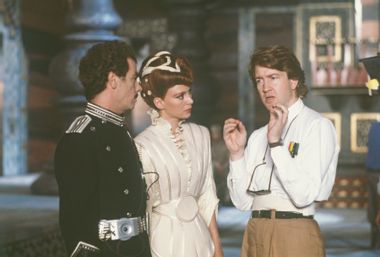
Watch David Lynch's new videoDavid Lynch directing Ariana Delawari

Whatever you make of David Lynch’s eerie, visionary films or his numerous extracurricular projects — from his 20,000-mile road trip across America interviewing ordinary citizens to his enthusiastic support of Transcendental Meditation — you can count on the director of “Blue Velvet” and “Mulholland Drive” to avoid the conventional and the predictable.

We’re delighted to host the result of Lynch’s latest fascinations, his collaboration with singer Ariana Delawari. Born in Los Angeles to Afghan immigrants who fled the Soviet invasion in the 1980s, Delawari returned to Kabul after the fall of the Taliban to record with Afghan musicians on her debut album, “Lion of Panjshir.” Says Lynch: “Ariana writes great songs. They are filled with feelings and thoughts from her life — her life in Hollywood and life in Afghanistan, where her roots are. Ancient and modern flow together here. This mixture of cultures and her melodies and lyrics conjure a great unique feeling in people.”

Lynch produced one of the tracks on “Lion of Panjshir,” and is distributing the album on his record label, David Lynch MC. Here’s the video Lynch directed to promote Delawari’s release — as veteran Lynchophiles will note, it specifically recalls the Black Lodge from Lynch’s TV series “Twin Peaks,” and also may suggest the Club Silencio sequence from “Mulholland Drive.”

For more on Delawari’s life and music, and her collaboration with David Lynch (yes, she’s also a T.M. practitioner), go here.

Continue Reading Close

Paul Hiebert is an editorial fellow at Salon.