John Waters

“Role Models”: Filth king John Waters dishes the dirt

The film legend and memoirist on his fight for a Manson family member and why reality TV is the worst kind of bad

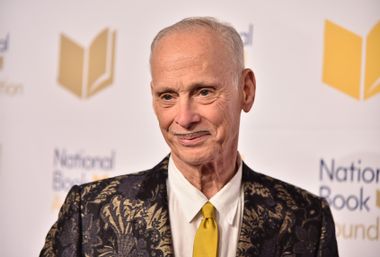
Maybe the most disorienting thing about meeting John Waters in person is realizing what an old-school gentleman he is. The kind who gives your hand a courtly shake, fetches tea for you, and never lets on that this is his gajillionth interview of the day. By now, the self-proclaimed king of puke has earned the right to be a book-tour paragon. Which makes it fitting that his new essay collection, “Role Models,” celebrates some of the paragons in his own life.

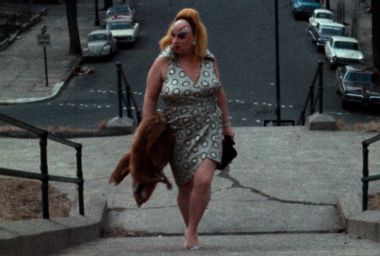
As you might expect from the director who brought us Odorama and Divine eating dog shit, these role models are a raffish lot: lesbian stripper moms, foul-mouthed barmaids, pornographers, perverts. Not to mention the occasional cult celebrity (including “Monster Mash” singer Bobby “Boris” Pickett and former child actress Patty McCormack, star of “The Bad Seed”). Loitering as always on the edges, Waters finds inspiration where others see squalor and makes provocative points about art and morality and the good life — without losing an ounce of his ironical cheer.

Salon spoke with Waters in Washington, D.C.

Here’s a problem I hope you’ll resolve. Your name does not lend itself to an adjective. With other directors, it’s Spielbergian, Wellesian, Hitchcockian … but the only thing I can come up with in your case is Watersesque. Which sounds like a perfume.

You’re right. That doesn’t work. Watersian? Watersish? Waters-like?

It must be a sign you’ve arrived, I guess, when you have your own adjective.

No, you know you’ve arrived when they name a sex act after you. Like the Marquis de Sade. That’s arriving. And that guy Sacher-Masoch, who gave us “masochist.” St. Catherine of Siena helped cause the Reformation — that’s famous.

“Role Models” introduces us to people who have been, for lack of a better word, your ethical compasses. I did a comparative analysis with William Bennett’s “Book of Virtues,” and I find no overlap between your books.

No, but I think my book is very moral in its way. I picked the people for moral reasons — the basic goodness of people, which I do believe in.

One of those people is former Manson family member Leslie Van Houten. What attracted you to her story?

I didn’t talk about Leslie for 25 years, and now I’m talking about her all day, every day. And I so much wish she could talk, because no one defends her better than she does. Not “defends” — that’s not the word — she takes responsibility for every single action that happened in the [LaBianca] house, even though she did not participate in all of it. She doesn’t blame it on drugs. She doesn’t even blame it on Manson. She says, “It’s my fault for being in a cult. He wouldn’t have been a leader if he didn’t have followers.” She hasn’t had any contact with Manson in 30-something years. She won’t give him the power even to hate him. I think the family members that have survived him, almost every one of them looks back on that time with great horror and shame.

I was really struck by the fact that the Manson killers have been in prison longer than Nazi war criminals.

They’ve been in prison longer than William Calley, longer than the Baader-Meinhof Gang. And the Baader-Meinhof Gang didn’t even say they were sorry! Leslie has been saying she’s sorry for decades — and eloquently and with great believability. No one thinks she’s a danger to any community. She’s a 60-year-old woman who has spent 40 years in therapy, N.A., A.A., every possible thing to better herself. You think she’s going to go out there and hook up with a cult? If anything, she could help people not be in cults. But she doesn’t even want to do that. She wants to have a quiet, humble life away from everything. Somebody once said to me, “Is she going to be in your movies?” And I said, “You really don’t understand the whole thing. That’s not even an issue that would ever come up.”

Maybe they were thinking of Patty Hearst, who’s appeared in five of your movies.

But Patty Hearst is a very different story. I mean, she was brainwashed, too, but she was kidnapped. There are some similarities, though. They both did what they did to stay alive. The people who join cults, they all think they’re doing something right, which is almost mind-boggling to imagine. The Manson family believed they were elves, the Beatles were talking to them, it was the end of the world. It was insanity: a hippie nightmare dreamt up by a madman.

Do you believe Leslie will ever be paroled?

I have to believe she will. Bruce Davis, another member of the Manson family who was just as involved as Leslie was, he just got a parole day. All I can do is try to write her out of prison. Every year I write a letter to the parole board. I don’t know if they read it. But I’ve told her, if she gets out, she doesn’t ever have to see me again. I think that’s the best gift I could give her.

You’ve said in the past that your movies have no redeeming social or moral value, but the Van Houten chapter is a really nuanced example of moral reasoning. You give all due honor to the feelings of the LaBianca family.

As much as I can. I don’t know that anyone can completely. And I understand why certain people think Leslie should never get out. If you don’t believe in rehabilitation, if it was your family … I can’t criticize that. Who am I to say what they should believe?

You’re a well-documented cultural figure, but your book still manages to spring some surprises. I wouldn’t have guessed you were a fan of Johnny Mathis.

I remember, when I was 11, I went to a party across the street, and they were playing Johnny Mathis music, and all the older kids were making out to it. He makes everybody in the world want to make out, even 80-year-olds, and that’s kind of hilarious to me. He doesn’t participate in the fame game, and he’s still incredibly famous. Do you ever see him at a premiere? Or on a talk show? I went to his Christmas show, and it was completely sold out. And there was no interview with Johnny Mathis in the local paper.

I asked him, “Don’t you get sick of singing the same songs?” He said, “No, you pretend you’re the audience every night, and you haven’t heard it.” So I respect him, and I still like to hear him sing.

What kinds of things do you read?

I used to get 150 magazines. I get everything from Death Penalty News to the New York Review of Books to Butt, which is actually a fairly intellectual gay magazine.

You’ve embraced honorifics like the Pope of Sleaze, you’ve declared “a war on taste,” you’ve instructed readers to have faith in their own bad taste. In “Role Models,” there’s a lot of good taste on display.

Oh, there’s no bad taste.

There’s some fairly graphic stuff…

But I write about it in a refined way. I’m trying to give it grace — a word I would never normally say. I also hate the word “journey.” And “craft” and “rigorous.” And “openly gay,” which always makes me laugh. Do they say, “Openly heterosexual So-and-So is appearing tonight”?

And that phrase “practicing homosexual.” Like, if he keeps practicing, he’ll get it right…

They used that with Little Richard. Also “flamboyant” and “outrageous.”

To judge from this book, your artistic role models are a sharply opposed group. You wax just as enthusiastic about Bobby Garcia, who filmed himself giving blow jobs to Marines, as you do about author Ivy Compton-Burnett and artist Cy Twombly. Clearly, you embrace both high and low.

Yeah, the middle is where I’ve always had trouble.

So it’s an aesthetic of extremes?

And a joy in that extreme. And a style that makes you think about the extreme in a new way. Bobby Garcia has no choice but to make his movies. If no one noticed them, he’d still be doing them.

If you had to define your sensibility as an artist, would it be queer or gay?

Neither. First of all, I never call myself an artist. History decides if you’re an artist. I certainly think I’m equally right for gay and straight people. I don’t have a gay agenda, although I vote gay. If someone said they were against gay marriage, I wouldn’t vote for them. But I have no desire to mimic something Larry King does eight times, and I like Larry King. Good for him! He’s helping us. I hope he gets married 10 more times. I think I should be allowed to marry your tape recorder right now. Just don’t make me do what you want to do.

Do you consider yourself a role model?

Yeah, a filth elder. It’s funny, I get older and my audience gets younger. I do these book signings, and there are kids there who weren’t born when I made my later films. And I like kids. I mean, who else is going to take care of me when I’m sick?

Speaking of kids and role models … you mention in your book that your film “Pecker” inspired a hazing incident where a 15-year-old boy was tea-bagged by some upperclassmen. How does that make you feel?

Well, it’s bullying, which I’m very against, but being tea-bagged is not the worst thing. I mean, he was trying out for a fraternity. What do you expect? Assholes are in fraternities!

What do you think of other shock artists? Sacha Baron Cohen? Sarah Silverman?

I’m a fan of both. I liked “Bruno” even better than “Borat.” I like Todd Solondz a lot. There’s a new movie coming out called “Dogtooth” that I loved. A Greek movie, really strange.

Have you seen “Glee“?

Yes. I’m happy for its success. “Glee” and “The Wire” and “Treme” are the only TV shows I’ve seen in the last 30 years, since “Pee-wee’s Playhouse.”

In the pantheon of bad taste, where does reality television fit?

I don’t like it, because it’s real bad taste. It makes the viewer feel superior to the people in it. It’s naked pathology, and it doesn’t work. And I think no matter how big the shows are, do people ask them for autographs? I’d like to see a show about the balloon boy. He puked on the “Today” show, and they just kept talking. I wish his family had gotten a reality show — I mean, that’s why they did it. I guess that means I like reality shows that are not picked up.

Living in Baltimore … every house is a reality show, and I don’t think I’m better than any of those people. Most reality shows on TV now, you’re laughing at them. Even those shows where people lose weight. Wouldn’t you be terrified if you were that fat and outside was Richard Simmons with a crane to get you out? Oh, my God, is there anything more frightening?

Your movie “Pink Flamingos” is about two families vying to be the filthiest people alive. If that competition were happening today…

I don’t know if it would work. I did a radio show in New York, one of these shock jocks, and they offered $500 to anybody would come down and eat a dog turd. And no one came. I said, “What’s the matter with junkies? One turd for $500?” When I made that movie, 30 people would have been lined up.

It’s just a higher class of junkie now.

They wouldn’t do it. And Johnny Knoxville has done it all. He’s doing “Jackass” in 3-D, and they’re going up Steve-O’s butt. And what’s great about it is, these are all straight boys who are the most gay-friendly people. They have things about their ass and nudity, and straight men and their fathers watch and laugh, and it works!

So they’re subverting from within?

And so beautifully because the people who would probably be the most uptight about this are cheering and laughing when they shove things up their ass. Or cook their puke and eat it. It’s amazing to me. I think it’s a great, great series. It’s the Three Stooges, and I love them.

You like the Stooges more than Chaplin.

They’re more fun, and they have a better fashion sense. I hate people who wear top hats, they look like assholes, but Moe with his bangs? He inspired the shoe-bomber fashion. The shoe bomber looked exactly like him. Imagine if you got on the plane, and he sat down next to you with Moe Howard’s haircut and shoes with big fuses sticking out of them and dynamite. Trying to light the match and it wouldn’t go off.

At the risk of using another hated word, is there a “message” you’d want people to take away from this book?

Be interested in other people’s behavior and try to figure out why they did it. That’s what’s so interesting to me, and it’s not quite so obvious, and everybody has horror stories, everybody has secrets, everybody has things they’ve done that they’re still trying to explain why they did. So if you can understand why other people did it, then maybe you’ll be better with yourself and you can be a happy neurotic, which is what I’m trying to be.

There’s one quote I particularly loved: “True success is figuring out your life and career so that you never have to be around jerks.” Does that include journalists?

I haven’t had jerk journalists for really a long time. I’ve had dumb ones, like the one who asked if I had hobbies. How dare you ask me that question? Do you think I’m sitting around collecting Pez machines? Stamps? I hate people with hobbies. You should have a passion for whatever interests you and try to make it your life’s work — not dabble!

Can you tell us what’s coming next?

I have one big project that’s in development. I guess it’s like straight people trying to get pregnant: You don’t tell people until you are. I’m still trying to make “Fruitcake: The Movie.” I have another one that’s called “Liar Mouth.” I don’t know if that one’s going to get made, either.

Is it easier or harder to get film projects off the ground now?

Much harder for me, but I think it’s much harder for everybody in independent film right now. I think it’s the worst it’s ever been since I started. It’s a great time if you’re a kid and making your first movie for $100,000, and it’s an amazing time for Hollywood movies. It’s like the ’30s: They’re all making billions of dollars and doing well. It’s medium-priced independent films that are very bad right now. But I’ve been doing this for a long time. Who knows? You throw enough shit on the walls, something sticks. A “no” is free, that’s what I tell kids. Keep asking.

Louis Bayard is a novelist and reviewer. His books include "Mr. Timothy" and "The Black Tower."

“Hairspray”

John Travolta is no Divine. And this shiny musical just doesn't have the crazy, messy charm of John Waters' original.

I occasionally receive scolding letters from readers when I compare, unfavorably or otherwise, a recent movie with an older one, particularly if the earlier one isn’t a picture they’ve seen or even heard of. Some people believe critics ought to go into each new picture with the gooey, unfocused eyes of a newborn, the better to blink in wonder at the magic and awe before us. Some of those people have never had to sit through a Nick Cassavetes movie, but never mind: The gist of that logic, I think, is that experience is the enemy, while blind innocence is king. In other words, critics who don’t turn themselves into willing amnesiacs, cheerfully erasing everything they’ve seen before, are doomed to become jaded creatures who enjoy nothing.

So maybe it’s necessary to go into Adam Shankman’s “Hairspray” — an elaborate, enthusiastic movie musical based on a Broadway musical, which was itself based on John Waters’ sweetest and most entertaining movie — pretending that a performer as beautiful, and as magnificent, as Divine never existed. But is that even possible? In Waters’ 1988 movie, the late Divine played Edna Turnblad, the mother of the socially conscious “hair-hopper” hero, Tracy (originally played by Ricki Lake). Divine’s Edna, her arms emerging from her drab, sleeveless housedresses like pudgy sausages, wasn’t realistically feminine; if you walked into “Hairspray” cold, you wouldn’t for a minute be fooled into believing that this he was really a she. Even so, femininity hovered around Divine’s Edna like a cloud of Shalimar. And by the time she emerged with Tracy, post-makeover, from Mr. Pinky’s big-gal store Hefty Hideaway, her feet stuffed into dainty pumps, her hair swept up into a monster-truck tousle of curls, suspension of disbelief was no longer necessary. Divine — whose real name was Glen Milstead — was more woman than most men could comfortably handle.

Shankman’s new “Hairspray,” of course, has no Divine, and John Travolta, looking believably pretty and sweet under layers of fondant Latex, is a wholly different incarnation of Edna. And he’s not bad. But that right there is the problem with “Hairspray”: It’s all so “not bad” that it isn’t nearly enough, even when Shankman and his cast work hard to send it soaring over the top. Waters is the least subtle of directors, and the meaning of his movie rang out loud and clear enough to dissolve the ozone layer: In Baltimore of the early 1960s, integration had to happen, obviously for humanitarian reasons, but also to save white kids from being doomed to eternal squareness. Waters’ optimism, his faith in human beings, is rooted in a sturdy practicality: He suggests that our motivation for changing the world can begin with a single dance step.

Waters’ “Hairspray” was also, of course, a lot of fun, which made it good source material for Broadway. Although I live in New York, I see a musical only once every four years or so: The tickets are expensive, and I can’t bear the aggressive desperation of most of these shows, the vibe emanating from the actors and even from the sets that works overtime to reassure me that I really am being given a lot of fun for the money I’ve just shelled out. I saw “Hairspray” on its opening night (I was fortunate enough to be able to tag along with a friend who had press tickets), and while Harvey Fierstein’s Edna Turnblad had enough cranky wit and personalized style to keep me from mourning Divine, and the songs were relatively free of that lacquered show-tuney quality that makes so much show music unbearable, I still couldn’t help feeling that the Waters version, with its shoestring-budget aesthetic, its wear around the edges, its resolute unshininess, was infinitely better.

The new movie version of “Hairspray” at least has the virtue of being a democratic entertainment: You can take your whole family to see it without bankrupting yourself; the same couldn’t be said of the Broadway show. The picture has a quiet, muted glow — it doesn’t make the mistake of going for garishness. (The cinematography is by Bojan Bazelli; and, for what it’s worth, although the story is set in Baltimore, the movie was shot in Toronto.) In its first half, at least, there are enough sharp, clever moments to suggest that the filmmakers (the screenplay is by Leslie Dixon, adapted from Waters’ original story and Mark O’Donnell’s musical version) took some care in adding detail to Waters’ original instead of just leeching off it. One of my favorite moments is a shot of two heavily pregnant women in beehive hairdos, perched on bar stools and smoking up a storm as they hoist martini glasses in the air.

But this “Hairspray” does take significant liberties with Waters’ plot, and when those changes start to kick in, about two-thirds of the way through, the picture begins to feel more pedestrian and less exhilarating — even as it continues its trajectory of exhausting peppiness. Here, as in the original, Tracy Turnblad is an upbeat, intensely likable teenager whose chubby physique is more a strength than a liability: A tiny body just wouldn’t be right for that big personality. (Tracy is played by newcomer Nikki Blonsky, who brings the right kind of vivacious confidence to the role — she’s never guilty of overtwinkling.)

Tracy may not have the “perfect” body of her classmates, but she’s a better, hipper dancer than all of them, and her dream is to land a slot on an afternoon teen dance program, “The Corny Collins Show.” (Corny, the ingratiating but weirdly appealing host, is played by James Marsden.) Mom Edna tries to discourage Tracy from pursuing that dream — she doesn’t want to see her daughter disappointed. But her father, Wilbur (Christopher Walken), urges her to go for it, and she does manage to make it onto the show, a development that angers Velma Von Tussle (Michele Pfeiffer), a former Baltimore beauty queen who fears Tracy’s bold personality will outshine that of her own daughter, the bitchy blond Amber (Brittany Snow).

Velma also wants to make sure that both the show and the city she lives in will remain safely segregated. Young people of color are allowed on the show only once a week, on “Negro Day,” the day on which the show is hosted by a local R&B diva named Motormouth Maybelle (Queen Latifah). Tracy, who has befriended Maybelle’s charming, smooth-talking son, Seaweed (Elijah Kelley, in a marvelous, perfectly tuned performance), is determined to integrate “The Corny Collins Show” — a goal that means even more to her than earning the love of the dreamboat white guy she has a crush on, Link Larkin (Zac Efron).

Waters, always one to add rather than subtract, made his story crazier than it had to be. But that was part of its charm. Shankman’s “Hairspray” streamlines the story considerably, doing away completely with some of its nuttier, more memorable elements: There’s no ticking-time-bomb beehive here. And when Tracy organizes a desegregation march, Link, instead of simply joining in (as in Waters’ original), makes a dud of a speech about having to opt out, lest he lose his big chance to become a star. The writers apparently thought they needed to add some tension to the story, and to the relationship. But in the loopy idealism of Waters’ original, this whitest of white kids wouldn’t even hesitate to join a desegregation march.

In some places, “Hairspray” is admirably bold; in others, it’s just aggressively broad, embroidering its “segregation is wrong” message with unnecessary extra threads. The musical numbers (Shankman also did the choreography) are well staged; they’re lavish without being too cluttered. And most of the songs (written by Marc Shaiman and Scott Wittman) at least have words and melodies that allow for singing as opposed to belting. (The songs have none of the gleaming, offensive whiteness of those in “Dreamgirls,” a show that’s ostensibly about black music but appears to have been written by people who’ve never heard of Otis Redding or Marvin Gaye — let alone the songwriting team of Holland Dozier Holland.)

But even though it would be impossible to sit through “Hairspray” and miss its antiracist sentiment, we still get a very serious Sam Cooke-style musical number, sung by Latifah, set against a candlelit anti-segregation march. The filmmakers may believe they’re adding an extra layer of seriousness to the material. But the casual obviousness of the movie’s visual and verbal jokes — even the way the black kids are required to dance in a separate, roped-off area on Negro Day — is precisely what makes them effective. The inclusion of this big production number only suggests that the filmmakers fear the audience won’t get the movie’s message unless it’s spelled out for them.

“Hairspray” has plenty of fine individual moments: Walken — who began his career as a Broadway chorus boy — gets a rare song-and-dance routine. Jerry Stiller, who played Wilbur Turnblad in Waters’ original, appears as Mr. Pinky here, and although he doesn’t have much to do, it’s still wonderful to see his face. Pfeiffer, an ice princess frozen in time, shimmies her way through a slick, sharp production number. Waters himself has a cameo as the town flasher — and what’s not to love about that?

“Hairspray” is reasonably entertaining. But do we really need to be entertained reasonably? Waters’ original was a crazy sprawl that made perfect sense; this “Hairspray” toils needlessly to make sense of that craziness, and something gets lost in the translation. But the one thing that’s truly wrong with “Hairspray” isn’t the fault of the filmmakers: It simply has no Divine. Still, her ghost, dressed in a muumuu of moonlight, insists on shimmering over the proceedings. It’s little wonder everything below her pales in comparison.

Continue Reading Close

Stephanie Zacharek is a senior writer for Salon Arts & Entertainment.

Sex crazed!

Tracey Ullman, Chris Isaak and Selma Blair (fitted with watermelon-size prosthetic bazoongas) play hyper-horny suburbanites in "A Dirty Shame," John Waters' latest naughty, naughty offering.

There’s an HBO show, which virtually no one else I know has ever seen (or admitted to seeing), called “Real Sex,” which gives viewers a glimpse into the lives of regular people as they pursue that peculiar pursuit of happiness known as sex: Typical segments might feature a company that makes eerily realistic (and very expensive) sex dolls, or a summer sex camp populated by perfectly nice people who save up their money and vacation time so they can gather in some national park once a year and mix it up with other sex-loving couples.

“Real Sex” isn’t particularly sexy — for one thing, these are “real” bodies we’re talking about, of all ages, shapes and sizes. But “Real Sex” is an exceedingly cheerful show, not because I particularly want to watch a naked old codger in a cowboy hat sidling up to a chain-mail-clad dowager in the Ran-D-Ranch chow line, but because I find their lack of embarrassment wonderful. Groups of concerned parents tell us sex is everywhere in the media, which is true if you believe that buff midriffs in a music video necessarily equal sex. But “Real Sex” reminds us that the really interesting stuff still goes on behind closed doors. It’s doing its part to keep sex dirty.

And you can say the same for John Waters’ terrible and terrific “A Dirty Shame,” in which Tracey Ullman, as frazzled small-town convenience-store clerk Sylvia Stickles, gets conked on the head and turns into a sex maniac. Like many, if not most, of Waters’ movies, “A Dirty Shame” has no discernible sense of rhythm or pacing, features loads of hammy acting, and just doesn’t know how to resolve itself. But with big Hollywood movies getting glossier and more mechanical, and indie movies increasingly mistaking drabness for seriousness, we need Waters’ sub-B-movie aesthetic more now than ever.

Waters is generally characterized as an exploitation filmmaker, a gleeful button-pusher who’ll do anything for shock value. But even though “A Dirty Shame” offers a bottomless rain barrel of euphemisms for cunnilingus (“sneezing in the cabbage”; “going below 14th Street”) and features several instances of full-frontal nudity (male and female), Waters’ outrageousness is no longer the most outrageous thing about him. In fact, his most perverse characteristic is his relentless innocence.

Waters may acknowledge the existence of Internet porn, but skin mags and stag reels are where his heart really lies. He doesn’t want to bring sex into the open; he wants to make sure it continues to be filthy and infinitely exploitable, for future generations to enjoy. He’s the Johnny Appleseed of smut. If I ran the country, I’d put his face on a cereal box.

The reality is that the people who run the country, or at least the MPAA ratings board, believe Waters is a danger to society rather than a credit to it, which is why they’ve swaddled “A Dirty Shame” in a protective NC-17 bunting. No matter: It just means that Waters has done a true patriotic turn by giving kids something to sneak into, which probably suits him fine.

“A Dirty Shame” is set in a blue-collar Baltimore suburb that suddenly, inexplicably, goes sex-crazed. Actually, many of its denizens have been sex-crazed for a long, long time — it’s just that its more normal inhabitants, like Sylvia and her husband, Vaughn (Chris Isaak), have just been tuning all that erotomania out. As desperately normal as they are, their daughter, Caprice (Selma Blair), is something of a problem: With her enormous bazoongas (Blair wears prosthetics the size of watermelons — an unintentional but fitting tribute to the recently deceased Russ Meyer) and her, ahem, outgoing personality, Caprice has gotten into so much trouble that Sylvia and Vaughn have been forced to lock her in the garage.

But then, Sylvia suffers that fateful clunk on the head, and awakens to discover that her long-dormant libido is desperate for the wild thing. Out of nowhere steps the charismatically Elvis-y greaser Ray-Ray (Johnny Knoxville, of “Jackass”), a seductive sex fiend who enfolds Sylvia in his flock of willing disciples — which already contains many of the seemingly normal townsfolk, including a police officer whose kink is infantilization (his fave get-up is a lacy christening gown).

Ray-Ray’s goal is to discover the one sex act that has never been done before, which will elevate him and all his followers to a higher plane. Meanwhile, the townspeople who haven’t fallen under Ray-Ray’s spell — the “neuters,” led by Sylvia’s mother, Big Ethel (Suzanne Shepherd), and local busybody Marge (played by beloved Waters vet Mink Stole) — try to put a stop to sexual tolerance, which they believe has gone too far.

While it may seem as if Waters is making a statement about society’s increasing efforts to limit our sexual freedoms, I don’t think he’s particularly interested in anything so dull. As always, Waters cares less about the plot than he does about decorating it with gags (most significantly, a scene in which Sylvia visits a nursing home and performs a hootchie-cootchie dance with a water bottle clenched in her, as the movie tastefully refers to it, cooter).

Waters uses this celebration of licentiousness as an excuse to rustle around in his beloved William Castle Bag o’ Tricks (TM), and he pulls out some good ones. He finds plenty of pockets (perhaps ultimately too many) in which to stuff old “dirty” black-and-white film clips: a leering devil pawing nubile naked cuties, for example, or a row of robust, topless damsels doing healthful exercises. Over certain key images, he flashes subliminal messages spelled out in shadowy block letters separated by emphatic dashes (“W-H-O-R-E,” “H-O-R-N-Y,” and, most delectably, over the boyishly innocent face of Isaak, “E-R-E-C-T”). For the soundtrack, he’s dug up real-life oddities from the ’50s and ’60s, songs with lyrics like, “I’ve got hot nuts, 10 cents a bag!” (My personal favorite, the Treniers’ 1952 “Poon-Tang!” is curiously absent, but you can’t have everything.)

“A Dirty Shame” works itself into a cartoonishly erotic frenzy in which squirrels court and spark lasciviously, and even the town’s tree trunks seem to have human orifices nestled in their crooks and crannies, just waiting to be taken advantage of. The movie isn’t about our need to fight repressive society — its view is that repressive society is merely a nuisance that must be dealt with. It has always been with us, and it will never go away, but in the end, the overactive imagination triumphs over boring old farts every time.

In the world of “A Dirty Shame,” even the trees are willing participants in our sexual fantasies. And how is anyone going to restrict or legislate that?

“A Dirty Shame” is a mess — I’d give it a 3 out of 10 on the craftsmanship meter. But it also represents a spirit of old-fashioned stick-to-itiveness and resourcefulness that even the far right should admire: The movie gets to where it needs to go by good, honest humping. What could be more American than that? In these troubled times, “A Dirty Shame” is just the movie the nation needs. It’s good clean fun for unrepentantly dirty minds.

Continue Reading Close

Stephanie Zacharek is a senior writer for Salon Arts & Entertainment.

Art as turn-on

A new book, coauthored by John Waters, is like looking behind the scenes at a perverted gallery opening.

It takes a special someone to find contemporary art sexy. It’s not difficult to find someone who gets a little frisson of pleasure from a photo of the naked and nubile, or the unflinching documentation of a subversive act of penetration. But there’s something rarer and more perverse about being turned on, both physically and mentally, by complex, perhaps obtuse works at the Museum of Modern Art or those crazy galleries in Chelsea.

That is one of the premises of the brain- and sometimes groin-titillating new volume by filmmaker-artist John Waters and critic-curator Bruce Hainley. In “Art: A Sex Book” the kind of contemporary artworks that usually lead unseasoned viewers to simply scratch their heads and dismiss the whole arena of hoity-toity galleries are sprayed with an alluring conceptual scent of musk. The authors give a new and often sexy spin to images that don’t initially scream with sensuality, and they offer more serious consideration to images with uncloaked porno roots — for example, Claude Wampler’s indelible photograph titled “Scrotum Yarmulke,” a wacky image of a guy pulling his balls over the head of his lapdog.

Like beauty, the notion of sexiness is in the eye of the beholder, and here the eyes belong to a pair of art world denizens with well-articulated, somewhat exclusive tastes that careen from high to low and back again. It’s fairly common knowledge that John Waters has a thing for the perverse as well as contemporary art — passions that came together in his 1998 film “Pecker,” wherein he satirizes both the making and the consumption of contemporary art. Besides making films, he’s a noted collector and has some fun with gallery-world conventions by making his own photo pieces and clever sculptures (which will be the subject of an exhibition at New York’s New Museum in February).

L.A.-based Bruce Hainley, who spearheaded this publishing project and invited Waters to collaborate, is one of the most interesting and opinionated voices in contemporary art criticism. His writing for Artforum offers a particularly queer eye for art and culture. (In his 2003 top 10 list in the current issue of the mag, he cites the So Cal soap “The O.C.” as “Douglas Sirk on Ecstasy,” a notion that deeply resonates in certain circles.)

“Art: A Sex Book” is a collaboratively organized group exhibition — one with a perversely carnal theme — in book form. The idea that the author-curators are creating a “sexual space” is made evident by titling the book’s chapters “rooms.” Each contains thematically or visually connected artworks that enhance an erotic reading. These spaces are simply numbered, and behind each “door” are provocative visual morsels that reveal the pleasure in curating, in pointing to unexpected connections between unlikely images. Given Waters’ involvement, it’s not surprising that the tone of the project is queer, as in peculiar.

How else can one term the inclusion of inherently unsexy works like a reproduction of a one-hour-photo receipt by “Kids”-meister Larry Clark or a deadpan color image of a generic airport tarmac by the Swiss art duo known as Fischli & Weiss? You’ll have to read the transcripts of the often entertaining, sometimes pretentious conversation between the two authors to get the context, which is intermittently convincing. These interview-style texts, however, also point to the erotic allure of a good dialogue, one that meanders from the hipster sacred to the profane.

Waters and Hainley introduce the volume revealing their stance as collectors and critics:

“JW: Contemporary art is sex. The artists, the cute kids working in the galleries, the paperwork from the galleries, the crating and shipping, all the young ‘hangers on’ crashing the openings — it’s all about sex.

“BH: Sex is a prime motivator for making contemporary work, even when the art doesn’t seem to have anything to do with sex or nudity. Making art — especially if it’s interesting art — is a sexy occupation.”

But they’re not above getting irreverent about things. Here they are discussing a thick, oozing 1992 painting:

“BH: What do you imagine the drips and stains in Carl Ostendarp’s Pillow Talk to be?

“JW: Well, they’re brown. So I always think it’s what they used to call a ‘log jam.’ However, someone I know said ‘cum.’ I don’t think anyone would ever say ‘Jello.’ Maybe it’s ‘skid marks.’”

Of course, there are more graphic iterations of flesh and curious practices here. There are a few pop artifacts like the cover of the gay-for-pay Old Reliable video catalog, with its selection of naked, cigar-chomping str8 dudes brandishing hard-ons, and a good selection of male stripper snapshots by the infamous fan with an Instamatic, Gary Boas (who also offers a fantastic 1975 picture of thespian goddess Geraldine Page with truly scary hair).

But more often the carnality is filtered through more artistic eyes. Jeff Burton, who has created an interesting body of work by photographing from the sidelines of gay porn shoots, is represented here with more explicit imagery than he’s published before. The pictures, most dated 1999 and scattered through the book, are shots that while graphic aren’t necessarily erotic. One pinkish-hued photo shows two dicks docking (that is, one tucked into the other’s foreskin); another depicts a side view of a formidable but limp penis dangling disembodied in a dark glory hole. The curved dick contrasts with a grid of chain that dominates the composition. In the parlance of contemporary art history, the picture evokes Eva Hesse’s merging rigid modernist structure with the pliable uncertainty of genitalia.

A queer heterosexual viewpoint is represented by pervy images of women by Richard Kern, who contributes a memorable image of a voluptuous mother-daughter duo who fondle their large breasts and genitals on a couch. Waters aptly comments that it’s difficult to tell which woman is which. Another of Kern’s images, of a woman whose rope-bound breasts are reddening balls, is paired with a more enigmatic formalist sculpture by Vincent Fecteau — an artist that Hainley fervently champions and Waters collects — a piece that features two small wooden spheres set within a vaguely architectural space. This kind of unexpected juxtaposition is Waters and Hainley’s more usual trope in this volume, and quite often it leads us in fascinating, eye-opening directions.

That said, this Sex Book doesn’t always transcend the chilliness of its art-world-insider position, even if the art-speak is peppered with references to funky things like camel toes and trade. But the authors aren’t necessarily aiming for mass appeal. Waters has described his playful interest in equating a gallery’s back room, that place with the secret stash of goodies that dealers reserve for special customers, with the similarly named grope chamber in a smoky gay bar. If those two locations have meaning for you, “Art: A Sex Book” will feel just like home.

Continue Reading Close

Glen Helfand writes about art and culture for the San Francisco Bay Guardian and other publications.

Asia Argento’s XXX sex dreams

Diesel's co-star gets wet in slumberland; meow: Justin's granny disses Britney; John Waters' Big Apple pot bust; Paltrow says Brit blokes blow!

Asia Argento would like you to know about her XXX-rated dreams.

She has, she tells Rolling Stone, “Many wet dreams, all the time, very sexual dreams.”

She also dreams a lot about her “XXX” costar, Vin Diesel, but these, she insists, are perfectly dry.

“Never sexy dreams, but magical, dreamy dreams, symbolic dreams,” she says. “One I saw his soul and I was in awe of him.”

Soul-sighting aside, Argento says she prefers the wet kind of dreams.

“They are the best,” she says. “Recently, I had one about a love I’d had, and actually the sex with him wasn’t really great. But in the dream he was very good. So maybe I was trying to help him in some way.”

Perhaps by talking about his lack of prowess to the press?

- – - – - – - – - – - -

Paltrow on men

“While the English man beats nervously around the bush, the American suitor goes for the female jugular.”

Gwyneth Paltrow comparing the dating habits of men on different sides of the Atlantic, in the British magazine Now.

- – - – - – - – - – - -

Granny gets gabby

All that speculation about lingering antipathy between Britney Spears and Justin Timberlake? Spears says it’s a crock.

Their split, she tells InStyle magazine, was totally amicable.

“We’re climbing two different mountains. His priorities are different from mine right now,” she says. “It wasn’t a bad break-up, we still talk all the time.”

Funny, that’s not what Timberlake’s grandmother, Sadie Bomar, says.

“Were delighted they aren’t dating anymore,” Bomar tells the U.K. Sun. “The break-up has been good for him. He has been able to do a lot of songwriting. Britney was a distraction.”

Bomar says she’s planning to visit Timberlake in his new Hollywood Hills home.

“I have an invitation to go up there and stay next week,” she says. “But Britney won’t be getting one.”

Geez, Granny, retract them claws!

- – - – - – - – - – - -

Terminate this

“We did talk to Arnold recently. And we did talk about running for statewide office.”

– Orange County, Calif., assistant sheriff George Jaramillo on rumors that he and his boss, sheriff Mike Carona, discussed with Arnold Schwarzenegger the actor’s purported plans to run for California governor, to the Associated Press.

- – - – - – - – - – - -

Harsh toke

Baltimore boy John Waters may be the toast of New York this week, basking in the rave reviews of the Broadway musical adaptation of his flick “Hairspray.” But the Big Apple hasnt always embraced his quirky self quite so warmly.

“When I was 19 at NYU, I got caught by the school security smoking pot in my room,” the filmmaker told celebrity researcher Baird Jones at the “Hairspray” premiere party the other night. “This was back in 1965 when something like that was shocking since grass was so new. It was the first pot bust ever on a college campus. It was written up everywhere: ‘John Waters, film student from Baltimore, kicked out of NYU for smoking pot.’ There was even a book with a chapter about my bust called ‘One in Seven: Drugs on Campus.’”

But Waters says he “wasn’t upset at all” about his sudden notoriety.

“As I was packing my bags to leave, NYU kept threatening to have me arrested,” he recalls. “Frankly, I was hoping they would send me to jail so I could do the ultimate 16-millimeter prison film.”

In Odorama?

Continue Reading Close

Angelina and Billy Bob become parents!

Jolie and Thornton adopt baby boy; John Waters says Hollywood will go hardcore. Plus: Moby -- "Who else simulates sex with a robot?"

Expect a flurry of cloying “I love him so much and can’t survive without him” sound bites from Angelina Jolie any minute now. And not about Billy Bob Thornton, either.

According to Jolie’s father, Jon Voight, Jolie and Thornton are now the proud parents of a bouncing baby boy, whom they’ve adopted from Cambodia.

“Angelina just got a baby yesterday,” Voight told reporters at the annual luncheon for Oscar nominees on Monday. “Angelina adopted a Cambodian baby. I’m a grandfather today.”

Voight says Jolie is currently doing the single mom thing in Africa, where she took custody of the tyke and is currently filming a movie. Thornton, who has children from three previous marriages, is still stateside.

But while the chatty gramps says he has yet to be told the child’s name, he’s all in for lending a hand where it’s needed.

“I’d be happy to go to Africa and baby-sit, change diapers,” he says.

Someone’s clearly feelin’ like hot shit.

- – - – - – - – - – - -

Promises, promises …

“Never, ever, ever, never wear them again. I’ll break them on the last show.”

Sally Jessy Raphael on what she plans to do with her trademark big, red specs now that her long-running talk show’s been canceled, in the New York Post.

- – - – - – - – - – - -

Pecker up for porn

Will Hollywood go hardcore before you can say XXX?

John Waters apparently thinks so. In honor of his upcoming gig as host of the Independent Spirit Awards on March 23, the maverick director offers this bold prediction in an interview on the Independent Film Channel’s Web site: Hollywood will show a major celebrity participating in hardcore sex before the year 2010.

“I promise you … by the end of this decade, a Hollywood star will show penetration,” he says.

Place your bets now on just who that “Hollywood star” might be …

- – - – - – - – - – - -

Moby?

Actually, maybe Waters won’t have to wait that long — and maybe it won’t be a “Hollywood” star after all. Maybe it’ll be … Moby.

In the diary he keeps on his official Web site, the boundary-pushing musician confesses that he was recently photographed having sex with a robot.

Well … sorta.

“My job is weird,” he says. “Who else simulates sex with a robot in a seedy hotel room at 2 in the morning while getting photographed?

“Oh, porn stars. But this was simulated. Really,” he insists.

After all, he muses, “Actual penetrative intercourse with a robot would be painful, I imagine.”

Thanks for the image, Mobe.

- – - – - – - – - – - -

Miss something? Read yesterday’s Nothing Personal.

Continue Reading Close

Page 1 of 4 in John Waters