Law and Order

“Law and Order: SVU” diagnosed my Parkinson’s

Watching a rerun, I saw my own strange symptoms. Three years later, I'm still navigating a mysterious disease

  • more
    • All Share Services

Topics: , ,

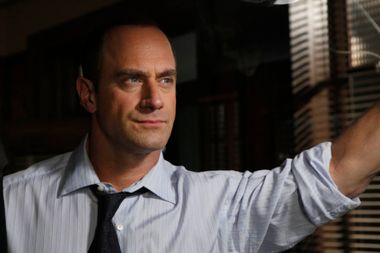
Christopher Meloni as Detective Elliot Stabler (Credit: NBC/Will Hart)

People always want to know how you got a certain disease. They’re thinking of themselves, of course — the sore throat, the odd bruise on the wrist, that lingering cough. But people are surprised when I tell them how I discovered I had Parkinson’s. I was watching “Law and Order: SVU.”

I had flipped on a rerun, which I do when I’m tired and bored. It’s better than reality TV, and it’s reliable. There’s always an episode of “Law and Order” playing somewhere.

I’d seen this one before, so I was paying minimal attention. I flipped through a magazine. A man, shaking badly, was telling the detectives about his disease, Parkinson’s. Years ago he’d started having symptoms. He listed them.

I put down the magazine. A chill ran up the back of my neck. I had every single one.

Why hadn’t I suspected anything was wrong until then? Easy. I had found a way to explain away every problem I encountered. My car key didn’t open the door without a struggle? It must have gotten bent somehow. My can opener didn’t work anymore? Ditto. My favorite cutting knife couldn’t seem to do the job right? Fine, I’d replace it one of these days. What did any of this have to do with me?

There was one thing that did, though, and it puzzled me — my right arm didn’t swing anymore when I walked. It wanted to bend itself at the elbow, jutting out stiffly. I wondered about that one, even mentioned it to a friend, a longtime nurse practitioner. She chalked it up to another manifestation of my long-term back problem. I figured it might be punishment for the way I gripped my computer mouse.

Only now, the man on the show explained issues that were all too familiar — he had a stiff arm, too, and difficulty with the simplest motor skills. And more: exhaustion, odd aches, a suddenly clumsy gait.

And hearing him, I knew. I knew with a rare clarity. The clean pop of a ball into a glove: connection complete. I called no one. Tomorrow I’d search the Internet; tomorrow I’d find a neurologist. But none of that was strictly necessary, not for diagnosis, anyway. Finding the specific traits on the Internet the following day, hearing the neurologist confirm it a few days later -all of that was anti-climatic. Sitting there, watching that damn rerun, I knew the truth: I had Parkinson’s.

Everyone knows something about Parkinson’s, thanks to Michael J. Fox. It’s a progressive neurodegenerative disease that involves shaking, rigidity, weakness. What I hadn’t known was that apparently Parkinson’s can affect your mind, too.

“Any problem with word retrieval?” asked the neurologist the first time I saw him, his eyes sharp with interest. Well, sure, I had some now and then, like everyone who is over 60. I dismissed it, airily.

“Any problem with word retrieval?” asked the neurologist the second time I saw him. What was this, a mantra? Again, I said calmly I was doing fine. As a matter of fact, better than him. He was not all that young himself, and an extremely slow talker. Several times I found myself filling in words for him; a couple of times, analogies as well.

“Any problem with word retrieval?” asked the neurologist the third time I saw him. This was beginning to grate. Was it supposed to be some kind of hypnotic suggestion? If you ask something enough times — in a paternal tone of voice, eyes twinkling expectantly, with a distinct aura of anticipation — well, hey, aren’t you going to end up causing it? No, no problem, I said.

That week, I received a long form in the mail for a movement disorders clinic where I had an appointment. It chilled me. Are you able to turn over in bed by yourself / with help / not possible. Are you still able to form sentences (usually/rarely/never). Can you swallow?

Has anyone in the field ever heard of the tyranny of low expectations? Personally, I don’t appreciate these hints, if that’s what they are, that I’m about to descend into mouth-foaming dementia any minute.

Michael Kinsley had a long piece in the New Yorker a few years ago, which dealt with his Parkinson’s. (He’s had it 20 years; he still seems, against all odds, to have plenty of words at his disposal.) He was enthralled by one of the side effects mentioned in the literature, an urge to take up gambling. I haven’t gotten that one myself, but not long after I dumped the first neurologist, I was intrigued by a book in my new doctor’s office, “How to Win at Poker.”

“And what is this?” I challenged him when he finally showed up. (He had the grace to blush, insisting a patient must have left it.)

This neurologist doesn’t bring up the cognitive issue, but he does make sure one of his associates gives me the test every time I drop by.

Not heard of the test? Obviously you’ve never had a relative with Parkinson’s or Alzheimer’s, like my dad, who died of that latter disease 10 years ago. It’s the same test they gave him at each appointment. You’re told to draw a clock, poised at 10 after 11. You’re told to count backward from 100 by sevens, list all the words you can think of starting with an F. (After a few go-rounds you stop trying to avoid the obvious ones — what the hell.) Most irritatingly, you have to remember five disconnected words for five minutes, then spew them back.

I decided to engrave the words (they’re always the same ones) on my brain. And it worked. I may eventually forget the date, the current president, the names of my grandchildren. But what I will never forget — I’ve made sure of that — are those five words, which I generously pass on to anyone with similar concerns: red, velvet, face, church, daisy.

Six months after my initial test, when the associate told me she was going to give me five words, I interrupted her and reeled them off. She was suitably impressed. A year later, accompanied by an intern, she had me do it again, which I did, feeling a bit like a circus seal. Would I manage so well if they changed the words? I don’t know. But for now, silly as it sounds, this hurdle does make me feel like I’m holding my own. Of course I do other things: take my meds, undergo physical therapy, go to the gym, have intensive sessions with a Parkinson’s exercise guru, even take a few drum lessons. Do what I can, in other words.

Parkinson’s has a lot in common with other neurodegenerative diseases: To be blunt, they don’t really know a damn thing about it. Early on I posed this question to a Parkinson’s specialist: I suffered a fairly serious head injury six years ago. Could that have been the cause?

His answer? A giant shrug. Unfortunately, no one else knows either. The Internet is crawling with possible cures. It’s not a week that a friend doesn’t send me one. Tincture of marijuana? Lyme disease treatment? Tandem bike riding? Wet battery packs, whatever those are. I appreciate their concern, even if I’m not necessarily up for trying this stuff.

Of course, Parkinson’s is an extremely individual disease, different for every case. For some, it can be fast moving and brutal. The mother of one of my son’s friends was diagnosed the same week I was, and can no longer live on her own.

Michael J. Fox, our beloved patron saint, calls himself lucky. I wouldn’t go that far, but when it comes to having Parkinson’s, I know I’m one of the fortunate ones.

It’s been over three years since that “Law and Order” rerun. I get exhausted easily, I move more slowly than I did before, I have various aches and pains. But I’m still reasonably intact, still mobile, and I have a handicapped placard, a true advantage for anyone living in D.C.

Some people prefer to keep medical information to themselves. But when people ask how I’m doing, I tend to blurt out my diagnosis. I can’t stand the idea of someone treating this like a deeply unmentionable horror. My candor can lead to confusion sometimes, because people don’t understand Parkinson’s, though maybe that will dissipate over time. After I told one woman, she later informed a party of people that I was dying.

I’m not, OK? Not even close.

Continue Reading Close

Judy Oppenheimer is the author of "Private Demons: The Life of Shirley Jackson" and "Dreams of Glory," the tale of a high school football season. A longtime freelancer, her work has appeared in the Washington Post, Baltimore Sun and Baltimore Jewish Times. She lives in Washington DC.

“Law & Order” takes aim at “Spider-Man” musical

Cynthia Nixon shows up as a demanding director when "Turn Off the Dark" gets the Dick Wolf treatment

  • more
    • All Share Services

Topics: , , , ,

Vincent D'onofrio on "Law and Order: Criminal Intent."

“Law and Order: Criminal Intent” certainly had some hubris this week, making a “Spider-Man: Turn Off the Dark”-like musical the scene of the crime and placing “Sex and the City” star Cynthia Nixon in the center of suspicion as a drunken Julie Taymor stand-in. “Icarus,” the season finale, is set in a world where “Turn Off the Dark” already exists, so there are various references to both its massive flop and Taymor’s illusions of grandeur. In the opening scene, we see a bleached-blond  sitcom star absolutely ruining Nixon’s vision!

No Cobb salad for her! She needs a drink!

Who is that shady Bono wannabe who accompanies Mark on the sing-along? And what kind of song is that anyway? None of these questions are answered in the next scene, where Mark is eulogized with an equally terrible number called “Hubris” from the fake “Icarus” musical, which Vulture point out is also a dig at Taymor, since “the programs for ‘Turn Off the Dark’ included a section about the “hubris” of Arachne.”

Did we mention Patti Smith was also in this episode? The singer wanted to make this her TV debut since she watches L&O in different languages while on tour to “dispel the loneliness“? Maybe next season, “Criminal Intent” can have an episode about her.

Continue Reading Close

Drew Grant is a staff writer for Salon. Follow her on Twitter at @videodrew.

TV spot for “Hot Genius Jerks With Quirky Jobs”

Television is cashing in on its most popular commodity: Brilliant SOBs

  • more
    • All Share Services

Topics: , , , ,

TV spot for They hate you, but they might just save your life.

Between “House,” “Law & Order: Criminal Intent,” “Bones,” “Lie to Me,” and now this new show “

The Finder

” (he’s a guy who is the best at … finding stuff), I’m starting to sense a TV trend here. I am over shows where actual science and police work are treated like magic tricks, as if magicians were all horrible people with perfect teeth. Are show creators running out of good ideas? Because it’s not too long till we see this spot for this upcoming network season:

Hot Genius Jerks With Quirky Jobs Promo

Announcer:

Coming this summer, your favorite characters are back …

Int: Hospital, zoom in on House’s cane, tapping impatiently.

Announcer:

He’s the world’s most brilliant diagnostician …

House is in hospital, limping away from patient’s room trailed by Hot Nurse.

Nurse:

How did you know that replacing her blood with Draino was the only way to save this child’s life?

Announcer:

The only thing he can’t fix … is his horrible social skills.

House Guy:

Screw you.

He shoves her to the ground. She gets up. They start making out.

Cut to: Crime Scene, “Law & Order-style.” Detective Robert Goren is interrogating a witness next to a body under a sheet.

Announcer:

He’s a cop with an uncanny knack for getting the bad guy …

Goren:

I like your watch, Senator. I have a watch just like that. Funny thing about the Jewel Shanghai Mechanic SMIA … that the model with the off-centered movement and triangular structure … the model you’re wearing … only came out in limited editions in China between May 1979 and July 1980. Now, how would a man like you end up with a rare Shanghai watch like that when you spent the late ’70s and early ’80s campaigning in Iowa?

Senator:

(Sobbing) I stole it from the Chinese hooker after I killed her.

Announcer:

The only crime he’s guilty of … is being criminally insane.

As senator is being led away, Hot Partner comes up to Goren.

Hot Partner:

Great job. Want to grab a drink?

Goren: (Distantly)

All that man wanted to do was be loved. Damn shame. (To partner) Cool if I take the body home and lie with it for awhile?

Cut to: Forensic crime lab

Announcer:

She’s a brilliant forensic scientist …

Bones:

We can tell he was killed by his father at 8:15 Sunday night, five years ago today.

David Boreanaz:

How?

Bones:

By the way his skull is fractured inward and his left ear is pierced.

David Boreanaz:

But how …?

Bones: (Impatient)

The left side is the gay side for male earrings, and his father was a general dishonorably discharged after beating up a homosexual man in service. After that incident he went to church every Sunday night until approximately 8 p.m., until 2006 when he mysteriously stopped attending. You do the math.

Announcer:

The only bones she can’t touch … are the ones in dudes’ pants.

Bones:

I’m an orphan with daddy issues. Want to make out?

Boreanaz:

Nope. Well … maybe. No.

Cut to: Office building of “Lie to Me”

Announcer:

And he’s a brilliant psychologist who can read your micro-expressions.

Cal Lightman:

Oy, so you did embezzle all that money from the charity, Ms. Morrison?

Rich woman:

How did you know?

Cal:

Your eye twitched when I asked if you wanted some water.

Announcer:

The only emotions he can’t read … are his own.

Cal: (Stares into mirror)

WHAT AM I FEELING?!!! ARGGGH!

Announcer:

But if you thought we were done milking this concept, you were wrong. Dead wrong. This summer, Walter Sherman is “The Finder,” a side character on “Bones” whom we’ve given his own show.

Cut: I don’t know, a squad car? Sure.

Hot Partner:

So what’s your deal?

Sherman:

I can locate stuff very quickly.

Hot Partner:

That’s it?

Sherman:

Yeah, well, also, I am extremely paranoid. Because of the military.

Announcer:

The only thing he can’t find … is his ability to trust.

Hot Partner:

What happened to you?

Sherman:

I’ll never tell. The government is reading my brain thoughts. By the way, here are your keys. You left them on your kitchen table again.

Hot Partner:

I love you.

Announcer:

And if none of these characters do it for you, what about a genius associate professor who is the best paper-grader in the business. The only thing he can’t teach himself … is how to get tenured? Maybe? And we’ll get one of the Culkin kids to do it, or maybe a Savage brother.

Or what if there’s like this really smart IT Guy who understands computers better than other people?

You know what? We’ll work on that one and get back to you. Just remember, on this summer’s hottest television: Caricatures welcome.


*Which we know was just canceled, but let’s say for argument’s sake it’s on reruns.

Continue Reading Close

Drew Grant is a staff writer for Salon. Follow her on Twitter at @videodrew.

“Law & Order’s” 10 greatest clich

Slide show: The iconic show's cancellation prompts a trip through the beloved plot gimmicks we could all see coming

  • more
    • All Share Services

Topics: , ,

On Thursday, news shot around the Internet: Famous original “Law & Order,” aka “the Mothership,” aka “L&O: Rasputin” — canceled? Who thought we’d live to see the day? This is the show that survived the wood laminate known as Elisabeth Röhm, Fred Thompson’s presidential aspirations, repeated attempts to bury it in crappy time slots, Rey almost cheating on his wife with Lauren Graham, and the bungling of former NBC head Ben Silverman — and now, when the channel is desperate for prime-time programming thanks to the Leno debacle, now it gets the heave-ho? It’s a television institution!

Not that the Mothership hasn’t bumbled off-course somewhat in the last few seasons. But given enough time, “Law & Order” always found its way back to form: a straight-ahead police procedural, populated by self-serious civil servants, their afterthought haircuts, and a smorgasbord of serious issues couched in a reliable formula. “Law & Order” has its weaknesses — and how — but the Mad-Libsian predictability of those weaknesses is, weirdly, its greatest strength. Familiarity breeds comfort. And thanks to 20 years and constant syndication, we’ve all become pretty familiar with the clichés of “Law & Order.”

Today, with official word of the show’s demise, let’s celebrate the 10 greatest of those clichés now!

Sarah D. Bunting is a pop-culture writer in Brooklyn, N.Y. Help her out with the “Briscoe Inferno” video at TomatoNation.com.

View the slide show

Continue Reading Close

Sarah D. Bunting is a pop culture writer in Brooklyn, NY. Help her out with the "Briscoe Inferno" video at TomatoNation.com.

“Law & Order’s” anti-choice propaganda

The latest "ripped from the headlines" episode smears the memory of slain late-term abortion provider Dr. Tiller

  • more
    • All Share Services

Topics: , ,

On Friday night’s “Law & Order,” the abortion debate was represented by two separate, yet equally important, groups: The anti-choicers, who believe fetuses’ rights trump women’s, and the pseudo-pro-choicers, who are conveniently persuaded to agree with them by the end of the episode.

That sound? It’s my head exploding.

Despite the usual “This story is fiction, any resemblance, blah blah blah” disclaimer, the episode was blatantly “ripped from the headlines” about Dr. George Tiller’s assassination by an anti-choice activist in May. Our fictional victim, Dr. Benning, is a late-term abortion provider who’s already survived one attempt on his life and is shot to death at his church, just as Dr. Tiller was. But in an episode titled “Dignity,” Tiller’s memory, remaining late-term abortion providers, and women who choose to terminate pregnancies are afforded none. The writers made a weak pretense of “balance” by having two of the series regulars — Detective Lupo and Assistant D.A. Rubirosa — espouse pro-choice views, but both are ultimately shamed into thinking they just might be wrong. See how even-handed?

After Lupo’s partner, Detective Bernard, goes around asking questions that underscore anti-choice propaganda (e.g., late-term abortion providers are indiscriminate baby killers who aren’t too fussy about staying within the law; women choose abortion because the irresponsible men they stupidly spread their legs for won’t step up and offer to help), Lupo calls him out, mentioning that perhaps a murder investigation might not be the most appropriate context for arguing with strangers about abortion. And here we learn the moral of this episode: The question of whether it’s morally correct to kill a living human being just for doing his job actually cannot be separated from the question of whether it’s morally correct to terminate a pregnancy! This message will be delivered repeatedly throughout the episode, via a series of painful blows to the head the “edgy” “dialogue” representing “both sides” of the issue. 

Sample exchange: 

Lupo: If you think forcing an 11-year-old rape victim to give birth is OK, then you and I got nothing to talk about. 

Bernard: You got it backwards, man. The horrible thing is the rape, not the bringing of a life into the world!

Point (according to the writers): Bernard. Seriously. Rape is bad and all, but an 11-year-old child enduring pregnancy and life-threatening labor to give birth to her own sibling is totally cause for celebration.

Lupo, to his credit, is unconvinced — until Bernard hauls out the big guns. His mother didn’t want to have him! He was born two months premature, because she threw herself down a flight of stairs in hopes of ending the pregnancy. There is no mention of what drove his (poor, single) mother to such a desperate act — no money for an abortion? Was Bernard born before Roe v. Wade? — or who paid for the medical care such a premature baby requires, or how lucky he was to grow up with no apparent complications, or how the hell his mother got by in the years between her risking her own life because she felt so ill-equipped to raise a child and his becoming a productive, upstanding citizen. He lived, ergo, happy ending!

Lupo hangs his head in shame, imagining a world without Bernard. And the episode’s just getting started.

Over the course of the investigation and trial, we will learn the following:

– As long as a man offers to “get three jobs” to pay for round-the-clock healthcare, there is no reason on earth why a woman in her right mind would consider terminating a pregnancy just because the fetus has been diagnosed with a rare, devastating, potentially fatal illness.

– The tide has turned! The majority of Americans are pro-life now! This news comes from Executive A.D.A. Cutter (who, incidentally, believes “an unborn child is a life and a soul.”) Here are a few points Rubirosa, representing the pro-choice viewpoint in this scene, might have made in response: 1) And yet abortion remains legal in New York, whereas murdering doctors in church is not; 2) That’s based on a Gallup poll in which 51 percent of those surveyed self-identified as “pro-life,” yet only 22 percent believed abortion should be illegal in all circumstances; 3) What do you expect after 30 years of rhetoric and laws designed, as Frances Kissling put it, “by anti-abortion advocates eager to play up the public distrust of women, teens and poor people”? Here’s what Rubirosa actually says in response: “Most Americans don’t live in New York. I doubt we’ll draw an anti-choice jury here.” Because everyone knows that all 8 million people in New York City are godless liberals, LOL! And that is so totally what a committed pro-choice woman would point out!

– Big boss (and “L&O” moral center) Jack McCoy’s “daughter was pro-choice until she taped a sonogram of [his] grandchild-to-be on her refrigerator.” Here is one salient point Rubirosa, still representing the pro-choice viewpoint in this scene, might have made in response: That’s nice, but about 60 percent of women who have abortions are already mothers, so it turns out even having hard evidence that fetuses sometimes turn into real, live babies doesn’t make every pregnancy a wanted one! Here’s what Rubirosa actually does in response: Look chagrined.

– Dr. Benning once (or was it only once?) botched a late-term abortion, causing the woman to go into labor and deliver a live baby. So, as any good abortion provider would, he asked the accidental mother if he should “finish the job” and then stabbed the live baby in the head with a pair of scissors. We learn this from the nurse who attended the homicide, then subsequently left the clinic and went to work in a neo-natal unit at a hospital, symbolically converted to the pro-life cause. No one representing the New York criminal justice system ever thinks to ask this nurse why she didn’t, you know, report the murder she witnessed. The important thing, obviously, is that the experience changed her heart. (Also, may we remind you that this story is fiction, any resemblance, blah blah blah? Because this is totally not meant to viciously assault the memory of Dr. Tiller or confirm anti-choicers’ deranged fantasies about him or anything. The disclaimer was right there, people!)

– Speaking of which, when Dr. Hern Carhart Something or Other, one of the only remaining late-term abortion providers in totally fictional America, takes the stand, we get about 30 seconds on the reality of late-term abortion — only to set up the big question from the killer’s lawyer: Be honest, doc, would you perform an illegal abortion? The doctor loses it: “Even if the politicians bow to the hypocrites and fools, it won’t stop us!” Then he twirls his mustache, leaps over the witness stand, and runs out of the courtroom screaming, “You’ll never stop us! Not until all of your precious babies are dead!” OK, maybe not all of that happened — my eyes were so sprained from rolling by that point, I couldn’t see clearly — but enough of it did.

– It’s wrong to kill doctors and stuff, but the good news is, if an abortion provider is murdered the day before a woman is scheduled to have an abortion because the fetus was diagnosed with a rare and potentially devastating illness, and you live in a country where there are almost no late-term abortion providers to begin with? That baby will get itself born and be so damned cute everyone will be thrilled and see no point in even thinking about how ill he is, how young he might die, how much care he’ll need, how that care will be paid for, how his single mother will cope with being his constant caregiver, how she’ll earn an income, or how her choice about her own body and life was made irrelevant by a homicidal zealot. JUST LOOK AT THE FACE! Oh, and if you’re a woman whose fetus is diagnosed with a fatal disease and you don’t choose to terminate the pregancy? Your baby will live for 21 hours and die painlessly in your arms, after which you can mourn her death and “feel clean.” Because that’s exactly how it works when you don’t choose a dirty abortion: The child never suffers, her life ends peacefully in less than a day, and everyone goes home grieving but changed for the better. It is just that simple.

Except for how none of it is anywhere near as simple as this episode makes it out to be. Late-term abortion providers are not murderers by every possible definition, removing any doubt about the morality of their work. They do not operate outside the law or announce in court that they believe they’re above it. Women forced to give birth do not just magically find the will and resources to care for a child — in many cases, another child — no matter how sweet a baby’s face is. Lifelong pro-choicers are not often hit with the epiphany that golly, fetuses can turn into babies, after which they can no longer be sure where “[their] privacy ends and another being’s dignity begins” — but you can bet that’s what happened to Rubirosa, just like McCoy’s daughter. Babies born two months prematurely to poor women of color who tried desperately to end their pregnancies do not automatically grow up to be New York’s finest, and never you mind the in-between stuff. An 11-year-0ld rape victim’s pregnancy is not some unexpected yet joyful miracle. And a woman who gets a terrible fetal diagnosis late in a wanted pregnancy will not clearly be better off, emotionally, physically or otherwise, if she gives birth.

But hey, this story is fiction, after all. The writers had no obligation to balance out the most egregious anti-choice propaganda with anything resembling the reality of people who choose late-term abortion, doctors who endure constant threats on their life to keep offering it, or doctors who are murdered in cold blood because they dared to trust women’s personal medical decisions. If you’re interested, though: These are their stories.


Continue Reading Close

Kate Harding is the co-author of "Lessons From the Fatosphere: Quit Dieting and Declare a Truce With Your Body" and has been a regular contributor to Salon's Broadsheet.

Fred Thompson announces his latest announcement

The former senator and TV D.A. will make his presidential candidacy official next week, but he's already in reruns.

  • more
    • All Share Services

Topics: , , , , ,

Fred Thompson announces his latest announcement

You know the myth of Fred Thompson, the lurking dark horse, the “Law and Order” actor with big hands, big ideas and a bright red pickup truck. Next week you can finally meet the candidate.

The thespian/lobbyist/senator/attorney put out word Thursday that he was going to announce his presidential campaign in one week via a Web video. This was earth-shattering news for the campaign press corps, because it meant the certain end of nearly six months of pre-announcement announcements.

Back in March, friends of Thompson announced that he was considering a run for the White House. A few months later, the Republican non-candidate announced he was officially “testing the water,” which meant raising money to pay for further announcements. Then he announced that he found the water “feeling pretty warm,” even though he badly underperformed his announced fundraising goals. He made unannounced campaign swings around the country, where he coyly dodged questions about future announcements.

Epistemological dilemmas raced through the pundit class: “When he announced that he would soon announce his announcement, wasn’t that actually making the announcement?” the philosophers pondered. “If a tree announces it has fallen six months after it announced it might fall, does the forest even care?” the poets wondered.

For sure, the announcement game was as tedious as yet another Dick Wolf cop show. But the desperation of Republican voters kept everyone paying attention. After a long, hot summer, the Grand Old Party looked like it might sour on the vine without more announcements promising announcements of better times. The top four Democratic candidates raised about 50 percent more money than the top four Republican candidates. John McCain, once the party’s heir-apparent, had to trade his private jets and chartered buses for commercial flights and living room mixers. Mitt Romney, the corporate Boy Scout, had to dig deep into his own nine-figure fortune to keep his “Truman Show”-style campaign ads running on the air.

Thompson, meanwhile, swiveled back and forth in his leather chair, munching a cigar, unannounced and intriguing. Occasionally he would blog on his Web site or meet with the conservative press, dropping hints about what an announcement might look like. His staff whispered that he was reading books at home, speaking to advisors in private. It all suggested an announcement to end all announcements. “We’re not having the kind of conversations we need to have,” he wrote in his blog about politics in America. “We’re pointing fingers rather than finding solutions.” He announced that he wanted to take on entitlement reform. He announced that he wanted to shrink the size and power of the federal government. He announced that he wanted to seal the Southern border — the one with Mexico, not the one with Tennessee. He announced that he wanted to defeat radical Muslim fundamentalism. He left the details of his plans unannounced.

But the public responded anyway. He soared into second place in the national Republican polls. In Iowa and South Carolina, he cracked the top three. With his alter ego, the reasonable District Attorney Arthur Branch, still in heavy rotation on cable television, he inhabited a kind of no man’s land, the uncandidate candidate, all potential and no punch. Campaign reporters pooh-poohed his rambling, languid performance on the stump. They pointed out that he shuffled his unannounced campaign staff like playing cards. They wrote stories showing he had once worked for groups that favored abortion, supported campaign finance reform, and opposed amending the Constitution to ban gay marriage. But nothing stuck, because he hadn’t yet announced, so he wasn’t really real.

Frustrated, the pundits dueled on in the electronic ether. Did he have what it takes? Was this all hype before the fall? What was he thinking wearing Gucci shoes to the Iowa State Fair? This week in Iowa, Mike Huckabee, who is rising in the polls to become the Horatio Alger hero of the Republican field, stated the obvious, with a sort of plucky glee. “I frankly don’t get it,” he said of Thompson’s popularity. “People aren’t sure whether they are electing a former senator or Arthur Branch.” Even Larry Sabato, Virginia’s premier political scientist, wondered whether Thompson was simply riding on a cloud of pre-announcement hype. “He doesn’t have the intensity of others,” Sabato said. “The fact is he may have done better in the polls because he waited.”

But the unannounced Thompson ends next Thursday, when he swivels into our personal computers to make his pitch to the American people. His campaign has planned a three-state barnstorm the following weekend, with visits to Iowa, New Hampshire and South Carolina. The whole road show is timed to fill the news hole between a Republican debate in New Hampshire next Wednesday, and the six-year anniversary of Sept. 11, when America’s generals will come before Congress to plead their case on Iraq. It’s a window of exactly five days, when the political world will sit captive.

Fred Thompson will finally announce. And then we will know if he actually has anything to say.

Continue Reading Close

Michael Scherer is Salon's Washington correspondent. Read his other articles here.

Page 1 of 2 in Law and Order