Nick Hornby

Right-wing rising star

Meet S.E. Cupp, conservative pundit beloved by Tucker Carlson and Nick Hornby alike

  • more
    • All Share Services

Topics: , , , ,

Right-wing rising starS.E. Cupp

Attempting to describe Tucker Carlson’s new online magazine, the Daily Caller, Colin Delany writes at the Huffington Post: “one friend of mine referred to it as a cross between ‘Politico, Drudge and the NY Post’; while another suggested ‘Pajamas Media meets The Daily Beast.’” So far, says Delany, the Daily Caller is light on original reporting, heavy on “copy/paste substituting for actual journalism” and sexy page-view magnets. (As far as the latter goes, I do look forward to seeing whether they’ll ever top my all-time favorite HuffPo headline, “Megan Fox Wears Panties, Lifts Foot Above Head.”) “Nice work on the business front,” he writes, noting that ad sales have gone tremendously well, “but that situation’s unlikely to last unless this sucker ups its ante on the content side.”

The Daily Caller does have one intriguing bit of regular content its competitors don’t, though: A diary by S.E. Cupp, one of the latest young, white conservative women to make a career of saying inflammatory things while looking really pretty. Cupp’s own Web site boasts a blurb from Carlson: “If anyone can make conservatism cool again, it’s S.E. Cupp, one of the smartest, most energetic and interesting people I know under 30.” And while I’m not one to take Tucker Carlson’s word on pretty much anything, my own investigation into his protégé – i.e., a good half-hour of checking out what Google turns up on her (Salon pays other people to do unimpeachable reporting, thanks) — suggests she is indeed smarter and more interesting than your average conservative pundit. 

For one thing, she can write, and she’s genuinely funny. In today’s diary, she hopes for a Rick Warren/Pat Robertson Twitter war, decides that the “idea of President Beck balancing the budget on a blackboard, in a Thomas Paine costume, crying, is kind of awesome,” engages in “about four minutes of relatively shallow introspection, questions about technology-dependence and a little womb-nostalgia” after being separated from her BlackBerry, and spends “three minutes thinking of a way to meet Judge Judy and convince her to become my second mother.” She seems to be a fan of my favorite novelist, Nick Hornby, and he’s publicly called her “charming.” In an interview with a besotted blogger, she said, “I like to write about politics as it appeals to a certain American value — whether it’s self-sustainability, independence, common sense, fiscal responsibility, community, decency — but not in a saccharine or pollyanna way, but in a way that gets to the root of what makes us all human.” Out of context, all that makes S.E. Cupp sound like the kind of woman I’d love to hang out with. In context — the one where, say, the serious thought of a President Beck doesn’t necessarily make her blood run cold, or where her political writing explores the relationship between our common humanity and “the reasons we should want a Sarah Palin in a position of power” — I think we’re probably both OK with living 800 miles apart.

It’s the contradictions that make Cupp an equally interesting and irritating personality. Her forthcoming book has the Coulteresque title “Losing Our Religion: The Liberal Media’s Attack on Christianity,” but Cupp says she’s an atheist. She’s just an atheist who feels comfortable barely tweaking standard Christian talking points about the religious foundation of the human conscience. (“It’s an understanding of and a respect for [Judeo-Christian] values that keeps me moral … even if we agree that nonbelievers can be moral people, how would you know?”) Despite those religious-but-not values, in her first Daily Caller diary, she introduces herself as “a terrible person” and “a misanthrope.” OK, I have to admit you don’t often hear that from a conservative pundit — tell me more! “That’s because most of the people I meet fall far short of the examples my mother and father set decades ago. Whereas they are compassionate, hard-working, down-to-earth, unpretentious, God-fearing common folk, you are an entitled, self-important, elitist and condescending snot weasel who wears his empty moral relativism and cheap ‘Daily Show’ pieties like they are Olympic medals.”

The “you” in question here is a pretend first date she’s concocted, which might prompt the thoughtful reader to wonder, “Why did you accept a pretend date with me when you already know you hate everything I stand for? Is it that difficult to be a single woman in New York?” (Oh yes, she lives in New York — and is an Ivy League graduate and former professional dancer currently working on a master’s at NYU — but she is totally not an artsy East Coast intellectual elitist, on account of how her god-fearing, common parents raised her to be a god-fearing, common atheist ballerina turned author and pundit.) But to dwell on such questions would be to miss the beauty of what Cupp has accomplished here: Instead of inventing a friend or blogger or liberal media whose imaginary views she loathes, like a lesser conservative personality might, she’s invented a reader! You are the straw man! Now, how are you going to argue that such a person doesn’t really exist, when you’re sitting right there? Well played, S.E. Cupp. Well played.

She’s smart. She’s funny. She’s charming. She’s honest enough at least to admit she doesn’t believe in a god and (in the second video below) to give George Bush, of whom she’s “a fan,” only a C grade on fiscal responsibility and cutting taxes. But then she gives him a B+ on limited government, which … what? What? And then you remember, this is a woman who says that in liberal New York, walking into the Fox News building “is like slipping into a warm bath.” A woman who wrote on that august organization’s Web site about an imaginary “slew of gay parties and inaugural balls” planned to welcome President Obama. Whose future column ideas include: “Shouldn’t it be the conservative creationists who want to save the polar bears and all of god’s creatures, and the liberal Darwinists who say ‘Screw ‘em — survival of the fittest, bitches’? Can’t we just drop a bomb on Yemeni al-Qaida camps? Is Avatar un-American and anti-military?” And who has said with a straight face to Sean Hannity (first video below), “Frankly, the rhetoric on the left has gotten so ugly.” So yeah, she’s basically just another Ann Coulter in someone sort of interesting’s clothing. But for better or worse, it looks like she’s here to stay.


Continue Reading Close

Kate Harding is the co-author of "Lessons From the Fatosphere: Quit Dieting and Declare a Truce With Your Body" and has been a regular contributor to Salon's Broadsheet.

What was the best book of the year?

Hornby, Blume, Lamott, Diaz, Kidder, Sittenfeld and others share their 2009 favorites

  • more
    • All Share Services

Topics: , ,

What was the best book of the year?

Nick Hornby, the author of “Juliet, Naked”

Jess Walter is one of your country’s most interesting younger novelists, and one of my favourite contemporary writers. And his latest book, “The Financial Lives of the Poets,” seems to me to contain most things that one can reasonably expect from a good novel: It’s wise, moving, very funny and timely, dealing as it does with economic calamity and how that whole mess impacts our lives and relationships and souls. Oh, and it’s a joy to read, too — a sine qua non, given the darkness of the times, both within the book’s pages and out here in the world.

Judy Blume, children’s book author, most recently of “Soupy Saturdays With the Pain and the Great One”

What I look for, what I always hope for, especially when I pick up a first novel, is an original voice. In Nicola Keegan’s “Swimming” I found not only the most original voice I’ve read in a long time, but a fantastic story of one girl’s journey from splashing infant to Olympic champion. But it’s not really about those gold medals. It’s about a life, it’s about a family — and what a family! Not that any of it is what you expect. That’s the thing about this book. It’s never what you expect. You know how the best fiction plunges you deep into another world? I would happily have stayed in Pip’s world.

Come to think of it, it’s time for me to read “Swimming” again. And no, Nicola Keegan was never an Olympic swimmer. But she sure fooled me. Kind of the way Wally Lamb fooled me in his first book, “She’s Come Undone.” I was convinced when I finished it that Wally was a woman. Had to be a woman. If you enjoy books and movies that make you work, you won’t be disappointed. And you’ll come away wanting to know everything you can about Nicola Keegan, especially when we can read her next book.

Anne Lamott, author of “Grace (Eventually): Thoughts on Faith”

One book I loved this year was “What I Thought I Knew” by Alice Eve Cohen, a memoir of an impossible and misdiagnosed pregnancy by a mother (already in her 40s) with a much younger man, and the ultimate knowledge that the fetus had Major Issues. It is just lovely, everything we love in a book — profound, honest, hilarious, humane, surprising. It’s the book I foisted on everyone.

Matthew Klam, author of “Sam the Cat: And Other Stories”

Lowboy,” by John Wray, is a really tight thriller and love story told in short scenes about a young man who believes that in 10 hours global warming will destroy the world unless he (and only he) does what he believes he must do to stop it. It’s an amazing view of city life as seen through the eyes and the wanderings of a schizophrenic young man with a history of violence, off his medications and hiding out in the sewers and subway tunnels of New York. In “Lowboy,” Wray is so deeply living inside his work that it hums and shivers, echoes and drips with authentic believable and gorgeously wrought dialogue and scenes. Wray etches his details and inhabits all nature of humanity with ghostly power and can surely see up his characters’ noses, can see the geography of their tongues. This is a sometimes light, sometimes horrifying, pitch-perfect and lovingly rendered thing.

Junot Diaz, author of “The Brief Wondrous Life of Oscar Wao”

Here’s a I book I fought hard for during the National Book Award judging, but to no avail: Chloe Aridjis’ “Book of Clouds.” A hypnotic first novel about a young Mexican gal in Berlin who stumbles into friendship with an eccentric historian and the madness that ensues. This book has the power of dreams and still hasn’t left me.

Lydia Millet, author of “Love in Infant Monkeys”

Robert Olmstead is one of the most sublime novelists we have. His work is under-recognized, I suspect, because his subject matter — Western and violent and horsey and manly — shares some ground with the better-known and highly talented Cormac McCarthy, and possibly there isn’t enough room in the culture for both of them to be famous at the same time. But to my mind Olmstead is the even greater artist and the more compassionate of the two writers; his style is more restrained, his language more perfect.

Far Bright Star” tells the story of some brothers on horseback and some people who die — its set in 1916 during the search for Pancho Villa, and the plot has to do with revenge and is full of death and solitude. I’m purposefully vague here because in the end I didn’t much care about the details of the story, though in fact the narrative was well-crafted in its rhythms and suspenses. Rather I was repeatedly startled and taken in by the raptures and ecstasy of the prose, its philosophical qualities, its space and imagination and sculptural beauty and terrible sadness.

Chimamanda Ngozi Adichie, author of “The Thing Around Your Neck”

I deeply admired the talent, ambition and courage it must have taken to write “Zeitoun.” Dave Eggers has appropriated — in the best possible sense — the story a Syrian-American family’s experience of Hurricane Katrina. His writing is spare and precise, with respect for both the reader and the story, and underlying the narrative is a wonderful sense of outrage made all the more powerful because of how light his touch is.

Juan Cole, author of “Engaging the Muslim World”

My pick for 2009 is Barry Eisler’s “Fault Line.” Eisler has reinvented the spy thriller for the 21st century. His fast-paced plots and action sequences are not slowed down by his careful exploration of moral ambiguity and the space he gives his characters to develop. His Iranian female lead is smart, frighteningly competent and creamily gorgeous. His tough-guy protagonist, Ben Treven, can take down Russian mafiosi in a nanosecond but can’t escape the legacy of family tragedy. Treven lives the contradictions of our time — the fight against terrorism and the outrage against torture, the need for ruthlessness and the perdurance of American values, the patriotic commitment and disillusionment at the betrayals of our leaders. Eisler’s ability to write both as an intelligence insider and a perceptive social critic allows him to create a gripping and believable universe in which you would just remain if only the book wouldn’t end.

Colum McCann, author of “Let the Great World Spin” and winner of this year’s National Book Award for fiction

It’s impossible to pick an absolute favorite — there are so many — but one book that I think deserves a very loud shout-out is “The Book of Night Women” by the young Jamaican novelist Marlon James. It’s a slave narrative, a story of rebellion, beautifully written, brave, smart, incisive and, yes, even funny. James has been called “a Jamaican Diaz” — it’s a nice phrase, and it also happens to be true.

Laura Lippman, author of “Hardly Knew Her”

By this point in my reading life, I have two mantras: “Surprise me” and “Have a take and don’t suck.” Jim Rome coined the latter, but the former is the result of more than a decade as a crime novelist. I’m a hard reader to surprise. I’m not talking about traditional plot twists, but something almost indefinable, a resolution at once true and earned, yet not entirely expected. In Jess Walter’s fifth novel, “The Financial Lives of the Poets,” he sets up a hilarious situation — former reporter/would-be Internet entrepreneur decides to become a pot dealer to forestall his family’s financial crisis — and brings it to a ruefully understated ending. Bonus: A succinct and, yes, poetic description of what’s happened to newsrooms over the past few years. It actually reminded me why I loved being a newspaper reporter, once upon a time.

Amy Sohn, author of “Prospect Park West”

Sparer than some of his other books, fast-paced and full of heart, Nick Hornby’s “Juliet, Naked” centers on the relationship between Annie, an emotionally adrift English woman of 39 — and the reclusive Bob Dylanesque musician Tucker Crowe, who her boyfriend has idolized for years. The proscriptive fan boy is a Hornby archetype (“High Fidelity”), but here he shows the darker side of this personality: zealous narrow-mindedness and a total lack of generosity.

The real triumph, though, is the protagonist, Annie. Hornby has always been good at writing women, but Annie is his richest female character to date — a woman of childbearing age (just) who wakes up one day and realizes that 15 years have passed without her getting anything she wants. There’s also a hilariously inept shrink and a perfectly pitched 6-year-old boy. This book, combined with Hornby’s screenplay for “An Education,” which focuses on a 16-year-old schoolgirl in early-’60s London, work well together as a dual portrait of lost women at different stages of life.

Sean Wilsey, co-editor of “State by State: A Panoramic Portrait of America” and author of “Oh the Glory of It All”

I’m not always a fan of the memoir. But “The Kids Are All Right” reinvents the genre. It’s a choral book, with the point of view shifting between four siblings — Amanda, Liz, Dan and Diana Welch — who recount, and disagree about, the disintegration of their family. After their father’s sudden death in a car crash comes their mother’s slow death from cancer, and then the narrative explodes into pure bedlam: children on their own! The setting is suburban New York and Manhattan, and the time is the ’80s, in all their forgotten glory — no clichés, just detail after detail that eerily reconjured my own childhood in cars, TV, music, products, as I’d long since forgotten it. This is a memoir that always feels alive and true, and one that exists for no other reason than that the story needed to be told.

Maud Newton , books blogger

My favorite book published this year was also one of the most disillusioning. R. Crumb’s “Book of Genesis” combines the fire-and-brimstone flavor of Jack Chick’s fundamentalist tracts with peerless artistry and painstaking attention to historical detail and produces a straightforward but incredibly immersive retelling of the first book of the Old Testament. “The Bible doesn’t need to be satirised,” Crumb has said. “It’s already so crazy.” In relying on Robert Alter’s (very thoughtful) translation, though, Crumb casts doubt on my longtime admiration for Eve, who in some renderings chose to eat of the fruit of the forbidden tree because the serpent convinced her that it was “desired to make one wise.”

Contemplating this rationale for a Bible as Literature class years ago, I concluded that God excoriated Eve more roundly and punished her more severely than he did Adam not because she was more wicked, but because she represented an actual threat. Seeking knowledge, she chose to eat the fruit, whereas Adam ate passively and only because she handed the fruit to him and had tried it first. Adam would never of his own accord betray or compete with God the way Satan had. Eve, on the other hand, aspired to be godlike. Crumb’s rendering of my hero doesn’t support this reading, however; he ascribes her actions to the temptations of the serpent and emphasizes only that the fruit was pleasing to the eye.

Tracy Kidder, author of “Strength in What Remains”

I think my favorite book of 2009 is Alice Munro’s new collection of stories, “Too Much Happiness: Stories.” I’ve long admired her writing. I think she’s one of the best writers alive. I’m not sure there’s much more to say.

Dave Cullen, author of “Columbine”

I loved the idea of “Sum: 40 Tales From the Afterlives,” but did I actually want to slog through 40 of them? How many novel conceptions of the afterlife are there — wouldn’t this be about 35 too many? No, actually. David Eagleman has got a million of them.

Eagleman did his undergrad in literature and his Ph.D. in neuroscience. He runs a brain lab by day and writes fiction at night. It shows. His provocative little vignettes play like brainstorms between alien hemispheres: playful, intriguing and full of emotional surprises as well as ideas. When his over-specific gods in charge of spoons, bacteria and chewing gum look down at our traffic jams and find comfort in our disarray but also our desire to reach out to find comfort through a cellphone … there is tenderness here, and perception, too.

The conceit is different, but the effect kept summoning up the delightful “Wearing Dad’s Head.” No one has ever reminded me of Barry Yourgrau before. I never thought they would.

I’m still making my way through Jeannette Walls’ “Half Broke Horses,” loving every sentence of it. I felt Texas from page one, and Texans, who I couldn’t wait to know better. Her style recalls, lovingly, the late great working-class short-story teller Lucia Berlin. I’m taken, particularly, by Walls’ ability to write children: not book children, or film kids — actual mini humans with the complexities of their parents, and even less predictable.

Geoff Dyer, author of “Jeff in Venice, Death in Varanasi”

It’s been a great year for fiction and nonfiction alike, but for sheer page-turning excitement, knowledge-gained per page turned, and sustained admiration for what the writer was doing, I will go for Richard Holmes’ magnificent “Age of Wonder.” I should have added, as well, that it’s an incredibly original idea: a biographical relay in which the baton of scientific exploration is passed from Joseph Banks in Tahiti in 1769, to William Herschel and his sister at their telescopes, to Humphry Davy in his lab (yeah, I know, I didn’t have any particular interest in this stuff either) and beyond. Set against a blazing firmament in which the great stars of the Romantic movement are plainly visible, it’s a flat-out masterpiece of historical and biographical narrative.

Curtis Sittenfeld, author of “American Wife”

The book I’m obsessed with right now is “Tinsel: A Search for America’s Christmas Present” by Hank Stuever. Stuever is a Washington Post reporter who spent the 2006 Christmas season following three people in Frisco, Texas, a wealthy suburb of Dallas: One is a single mom who’s very involved in her megachurch, one is the guy who lives in a house that’s decked out with a billion Christmas lights (and it turns out he’s more tech geek than Christmas diehard), and one is a simultaneously savvy and un-self-aware woman who decorates other people’s McMansions for the holidays.

Stuever, who is something of a Christmas cynic, spent months with these people, and he shows them in all their glorious, complicated humanity. I love this book so much that I’ve literally bought seven copies (so far) to give as gifts, which is to say I’ve broken the personal record I set in the mid-’80s for giving the same present to the maximum number of people — back then, all the members of my family were recipients of identical reindeer ornaments made out of clothespins. I like to think my taste has improved in the last 25 years.

Continue Reading Close

Jed Lipinski is an editorial fellow at Salon.

“An Education”: Romance with an older man

Carey Mulligan shines as a teenager exploring the minefield of love -- and sex -- in a film written by Nick Hornby

  • more
    • All Share Services

Topics: , ,

Jenny (Carey Mulligan)

Even when we’re not talking about outright child molestation, the idea of a sexual relationship between a young woman and a much older man is likely to freak people out. Statutory rape is itself a vague term, with the specifics varying from state to state (and from country to country). And even if the sex is consensual, the question of “How young is too young?” invariably comes up.

One of the best things about “An Education” — in which the superb young actress Carey Mulligan plays a teenager in early ’60s Britain who has an affair with a much older man, played by Peter Sarsgaard — is that it never gets hung up on that question, even as it acknowledges the emotional consequences that either party might suffer in this kind of affair. The picture, made by Danish director Lone Scherfig (“Wilbur Wants to Kill Himself”), and adapted by Nick Hornby from a memoir by Lynn Barber, is for the most part refreshingly nonjudgmental: It prefers to treat a woman’s entree into the world of adult love as a saga of mystery, adventure and possibly heartbreak, not as an event that needs to be scripted or legislated by her elders. The picture tacitly accepts that when it comes to first love, someone always gets hurt — not necessarily because one party is taking unfair advantage, but because sex leaves us vulnerable, period.

Mulligan plays 16-year-old Jenny, a bright student who lives with her mother and father (played by Cara Seymour and Alfred Molina) in the suburbs of London. Her parents, as well as one of her teachers, Miss Stubbs (Olivia Williams, of “Dollhouse”), have high hopes for her: The plan is that she’ll go to Oxford, and her father, in particular, orchestrates her life with that goal in mind. He doesn’t even want her to practice the cello too much, seeing it as a diversion that isn’t wholly necessary for academic success. Jenny finds solace lounging alone in her room, listening to French pop music — the enormous, romantically sooty eyes of Juliette Greco stare out from one of the album covers scattered about her room — and dreaming of a sophisticated, cultured life that’s far beyond her reach.

And then she meets David (Sarsgaard), a fellow music lover who takes what is at first a rather harmless interest in her, even though it’s clear he’s approximately twice her age. He charms her parents into letting him take her to a concert. Before long, he’s also taking her out to nightclubs with his upscale friends, Helen and Danny (Rosamund Pike and Dominic Cooper). David has money (although, it turns out, his line of work isn’t particularly savory), and he knows how to enjoy it. Jenny thrives under his tutelage and in the glow of his attention. And to Jenny’s delight, Helen, a cool blonde with a taste for fitted brocade and snowy furs, remakes her into a sophisticated gamine: Jenny loves flitting about London — and, at one point, Paris — in trim sheath dresses and Audrey Hepburn updos, a far cry from her usual schoolgirl gear.

Eventually, of course, there will be a crisis, and we’ll learn that David isn’t exactly what he seems — or maybe the point is that he is exactly what he seems, and Jenny just can’t see it. Either way, Scherfig treats the affair as a real relationship, not as a schoolgirl fantasy; she doesn’t patronize her lead character by making her seem foolish or flighty. The point is that Jenny’s desires are real — they may be shallow or misguided, but that doesn’t diminish their hold on her, and she’s the one who has to work them out of her system.

Scherfig and Hornby understand that, which also frees the actors. Sarsgaard, in particular, has a challenging role. He’s a handsome question mark; we know he’s too good to be true, and deep down, Jenny probably does, too. The movie doesn’t quite know what to do with him, and in the end, it makes him into the worst kind of coward — when, really, he needs to be only a minor coward to make the story believable. Even so, he isn’t an easy figure to pin down. David is Jewish, and he knows how to make money: The movie is clear about that fact. But that may not be so much a mark of anti-Semitism as it is of plainspoken emotional logic. The idea, I think, is that being Jewish in 1961 Britain is enough to put a chip on your shoulder. No wonder David is a social climber, aspiring to prove himself worthy of a certain class of people, or of a certain kind of girl who has more innate class than he does.

The love scenes between David and Jenny are sweet: David doesn’t seem predatory so much as perpetually confused, and Jenny, despite her romantic expectations, is in many ways more realistically grounded than he is. The two do sleep together, and the sequence is handled delicately and intelligently — Jenny may be inexperienced, but she’s not a pushover. Scherfig takes care to make it clear that Jenny’s choices are risky for the time in which she’s living — she doesn’t frame Jenny as an anachronistic, pre-sexual-revolution heroine. At the same time, she doesn’t pretend shock and dismay that young people actually had sex in the days before sexual liberation. Her approach doesn’t treat sex as a novelty, but as a fact of life. And the movie is compassionate toward nearly all its characters: Helen, as the crisp and wonderful Pike plays her, looks like a class act, but she’s dismayed by Jenny’s attempts, awkward as they are, to speak French — it’s clear she doesn’t have anything close to Jenny’s smarts, and she hides her insecurity with a veneer of coolness.

Scherfig makes it easy to see why Jenny would be seduced by the life of culture and glamor that David offers. The movie, shot by John de Borman, shows London and Paris as beautiful, lavish playlands. It’s pleasurable to watch Jenny enjoy herself in this newfound paradise: Mulligan has just the right blend of coltish awkwardness and ageless common sense. And although Jenny is clearly enjoying David’s attentions, Mulligan makes us see that the character is always working hard to read the people around her. She wants to be in love, and she wants it to be easy; but there’s always a shadow of uncertainty in Mulligan’s eyes — as inexperienced as Jenny is, she knows deep down that love can never be easy. And while the movie’s conclusion may be a little too facile, it doesn’t hold even a whiff of “I told you so” lecturing. Scherfig allows Jenny both her youthful joy and her dignity. And it allows that one of the bittersweet gifts of sexual adulthood is the freedom to make your own mistakes.

Continue Reading Close

Stephanie Zacharek is a senior writer for Salon Arts & Entertainment.

Jim Carrey’s epic romance (in prison)

At Sundance, a star-studded, utterly deranged gay love story caps the opening weekend. But a dazzling tale of girlhood in '60s London steals the show.

  • more
    • All Share Services

Topics: , , ,

Jim Carrey's epic romance (in prison)


Ewan McGregor and Jim Carrey in “I Love You Phillip Morris,” (left) and Carey Mulligan in “An Education.”

PARK CITY, Utah — From somewhere in the middle of the 1,300 people packed into the Eccles Center here after the premiere of “I Love You Phillip Morris,” somebody yelled out to Jim Carrey, “What was it like to kiss Ewan McGregor?” Wearing clunky, ’70s-style glasses and his trademark pert expression, Carrey considered this with the attentive manner of a hunting hound. I wanted him to ask the questioner why every single straight actor who ever plays a gay character has to be asked the same stupid thing, but he didn’t. Like all celebrities Carrey seeks to remain genial but vague in his interactions with civilians. Then a response came to him. “A dream come true!” Carrey crowed. “I mean, look at the guy!”

That got the audience eating out of his hand like tame reindeer at Santaland, and then a moment later it got better. Someone else asked a rambling, accusatory question that went something like this: OK, you made a completely crazy but compassionate film in which you and McGregor play lovers, but how are you serving the LGBT community as allies? Carrey and McGregor looked at each other; would either one rise to this bait? Toothy smile unwavering, and then Carrey stepped forward again. “I’ll tell you how I’m serving the gay and lesbian community,” he said. “With love and tolerance and treating everyone equally.” The place fell apart. Such is the power of celebrity: An ordinary human response becomes a veritable utterance of Jesus.

It’s been an exceptionally strong opening weekend at Sundance, long on themes of sexual exploration and on eccentric but well-constructed entertainment, rather than the downbeat minimalism or naturalism of recent years. On all those counts, “I Love You Phillip Morris” was a highlight or lowlight, depending on how you look at it. Although the film premiered here on Sunday night to an ecstatic reaction, it’s also likely to spark some strongly negative reactions out in the real world. although it’s impossible to know how far that will translate to a real-world audience.

Written and directed by “Bad Santa” screenwriters Glenn Ficarra and John Requa, “I Love You Phillip Morris” tells the unbelievable but somewhat-true story of Texas con man Steve Russell (Carrey’s character), a onetime police officer whose long-running love affair with the eponymous Phillip (McGregor) led him to commit any number of outrageous criminal scams. Perhaps because Russell’s story defies all logic, the movie refuses to follow any normal narrative conventions, becoming a pell-mell, can-you-top-this odyssey beyond madcap farce into total derangement. It’s like a Coen brothers movie, if Joel and Ethan did a ton of crank and decided to flush story structure down the crapper.

Within the first 15 minutes, Steve goes from being a married, Christian cop in Virginia to a gay playboy in Miami Beach to a prison inmate in Texas, which is where he meets Phillip. At least I think it’s Texas — Steve goes to prison so many times in so many places (and then escapes) that I can’t keep it all straight. Whether you find this dizzying pace invigorating or just exhausting will pretty much determine your reaction to the film. I was on the fence; I admired Ficarra and Requa’s blend of glossy Hollywood surface and dirty-minded, chaotic, criminal love story, but I also felt beat up by the end of the film. Then again, it was my fourth film of the day and I was flying on very little sleep and inadequate nutrition. This is a movie to see when well-rested and healthy.

You could say that adjusting to Steve’s pace — and particular pitch of insanity — is the key question for Phillip too. McGregor gives a rather sweet performance, playing him as a shy, mellowed-out Southern boy who knows next to nothing about his boyfriend’s various fraud and embezzlement schemes, impersonations of attorneys, prison escapes and efforts to fake his own death. He simply gets overwhelmed by Carrey, who gives perhaps the most amped-up and overcommitted performance of his amped-up and overcommitted career. He’s great and he takes enormous chances and he’s kind of too much, which I guess is how I feel about “I Love You Phillip Morris.”

You could well ask what big stars like Carrey and McGregor are doing at the alleged hotbed of independent film in the first place, and perhaps the peculiar but powerful sexual chemistry between them in “I Love You Phillip Morris” is one answer to the question. Sure, there have been plenty of straight-playing-gay movies by now, but I can’t think of another one that strives to be so trashy and hot. On a larger level, though, this has been a festival rooted in strong acting and propulsive storytelling, and even in films that embrace their own artificiality. For whatever combination of aesthetic and sociological reasons, it’s as if the “new American realism” of the last two years — which has never much interested the public — has simply vanished.

If films like “I Love You Philip Morris” and the Ashton Kutcher gigolo drama “Spread” and the cop opera “Brooklyn’s Finest” were the obvious big events at Sundance this weekend, there’s no movie in this festival that’s quite as ravishing, as witty, as well-acted or as satisfying overall as “An Education,” an early-’60s London coming-of-age fable from writer Nick Hornby and director Lone Scherfig. (This is a surprise of a different sort, in that Sundance has only started to become a major showcase for non-American films.) In a performance of Audrey Hepburn-esque starmaking intensity, young English actress Carey Mulligan plays 16-year-old Jenny, a precocious student, talented cellist and aspiring woman of the world who’s trapped in the middle-class suburban dreariness of Twickenham, circa 1961.

As writer Hornby (the author of “High Fidelity” and “About a Boy”) explained after the vastly oversold downtown screening I attended, England in the early ’60s wasn’t yet, you know, ’60s England. When Jenny meets a charming and handsome older guy who we can instantly tell is bad news, he knows about jazz and Ravel and art auctions and supper clubs and weekends in Paris; Carnaby Street and Twiggy and Brian Jones are still in the future. David, the smooth operator, is played by Peter Sarsgaard, who does such a good Ewan McGregor I convinced myself he was McGregor for a while.

David is in the vicinity of 30 and drives a sports car and has nice clothes and knows “colored people.” He tells outrageous lies and charms Jenny’s parents and gradually steers her off her track of Oxford-bound academic excellence and onto one of his own devising. On one hand, clearly a bad idea. On the other, as Jenny demands of her school headmistress (a forbidding cameo for Emma Thompson), what the hell can Oxford do for young women in profoundly unliberated early-’60s England? A long, dull grind of study followed by a long, dull grind behind a desk at spinsterish jobs like hers? At least hanging out with David is fun.

You could say that there’s nothing surprising in the oft-told tale of the seducer and the schoolgirl — hanging out with David is indeed fun, until the dynamic between them begins to shift subtly — but this one’s told superbly, with heart, humor, a marvelous supporting cast and a dazzling recreation of a long-lost, pre-Mod London. It’s a movie with many wonderful small moments, courtesy of Alfred Molina as Jenny’s dad or Dominic Cooper as David’s more cautious best friend or the beautiful Olivia Williams as Jenny’s favorite teacher. Fundamentally it belongs to the irresistible Mulligan as Jenny, a mouthy, awkward, almost-sexy combination of innocence and wisdom. You almost never see movies about teenagers that treat them with this much respect; sure, Jenny is governed by her hormones and her half-realized dreams of the future, but she’s also much smarter than the grownups around her. As her relationship with David grows murkier, it becomes less and less clear which one is the adult and which the child.

Among the other premieres I don’t have time to elaborate on right now: Paul Giamatti plays himself (without his soul) in Sophie Barthes’ gloomy and peculiar Charlie Kaufman-meets Kubrick farce “Cold Souls,” which posits a new craze among affluent New Yorkers: offloading your soul into cold storage and/or buying someone else’s, perhaps smuggled in from Russia. Joseph Gordon-Levitt and Zooey Deschanel are a charming not-quite couple in “500 Days of Summer,” a neat twist on the romantic comedy that wears out its welcome with too much “Garden State” meets “Juno” cuteness. Gael García Bernal and Diego Luna reunite for the comedy “Rudo y Cursi,” which is very funny in patches. Given that it’s a farcical satire about A) soccer and B) contemporary Mexican culture, two things Americans don’t know or care much about, it’s likely to be a big hit among Latino audiences and little seen elsewhere.


Continue Reading Close

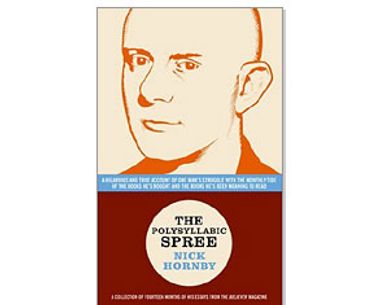
“The Polysyllabic Spree” by Nick Hornby

From the author of "High Fidelity," a delightful celebration of the joys of reading that reminds us why most literary criticism is so bad.

  • more
    • All Share Services

Topics: ,

Nick Hornby’s new collection of his essays from the Believer, the literary magazine edited by Heidi Julavits, is named in homage to the rock collective the Polyphonic Spree, who dress in choir robes and perform feel-good, orchestral pop. It’s Hornby’s gentle way of tweaking the magazine’s earnestness. When he writes that the Believer staff’s promise of a night on the town in New York resulted in their dragging him to a two-and-a-half-hour reading of the nominees for the National Book Critics Circle, you mourn for Hornby and his evening. His description of the Believer staff’s behavior at the event is a gag: “They stood, and they wept, and they hugged each other, and occasionally they even danced — to the poetry recitals, and some of the more up-tempo biography nominees.” It isn’t hard to believe that the event was the literary equivalent of Up With People.

Sometimes Hornby and the Believer butt heads. He writes in one column that he and the magazine’s editors reach an agreement “that if it looks like I might not enjoy a book, I will abandon it immediately, and not mention it by name.” Listed at the top of that column are “Unnamed Literary Novel” and “Unnamed Work of Nonfiction.” In the magazine’s debut issue, Julavits wrote an essay arguing that most book criticism is too snarky and negative, and Hornby has more or less been instructed to avoid negative reviews.

Julavits wasn’t completely wrong; it’s a snarkiness you see in film and TV and music criticism as well. Usually, but not exclusively (see Lane, Anthony), this snarkiness is expounded by younger critics who have not yet discovered that you start to do good criticism only when you realize how little you know. But I’m not sure Julavits knows that difference between deserved sharpness and showoffy meanness.

A book critic I know, someone not at all given to meanness, once confessed to me that she felt guilty when panning a book because the writer had gone to “all that work.” I told her that she had gone to a lot of work as well, “the work of turning the pages.” Reading a book you don’t like is miserable toil; the sensible thing to do is abandon it and find something you enjoy. But a critic has to read all the way to the end — unless you believe reviews should only be positive.

It’s true that critics often do their best work when they get to write on what they love. And there’s no point in knocking a small book that isn’t getting any attention from the press or any publicity from its publisher. But a critic should be free to say honestly that something is bad, how bad it is and why it’s bad. Even when that is gently done, it doesn’t make friends, and it doesn’t honor hard work or good intentions that, if the result isn’t up to snuff, count for bupkis.

The Believer has made space for good critics. Where it deserves credit for bucking a trend that is harming contemporary criticism isn’t in its attitude toward negative reviews but in the freedom it has given Hornby for his column.

At a time when editors are obsessed with what’s hot, and with what New York Times ombudsman Daniel Okrent called “the overwhelmingly meaningless desire to be first” (as if all other reviews of a work are redundant after the first one appears), the Believer has allowed Hornby to write about whatever he’s reading, whether it’s the hot new novel, a classic he wants to reread or some obscure title he has always meant to get around to.

This is important for two reasons. Unlike critics in any other art, it’s possible for book reviewers to write piece after piece without talking about what people are actually reading. A book critic free to write about classics, old favorites, new books or whatever stands a better chance of connecting with more readers than someone who’s just striving to keep up with what comes down the literary poop-chute.

Second, Hornby is writing about the day-to-day process of being readers as most of us practice it — not following some neat scheme but reading without premeditation, going higgledy-piggledy from one subject to another, based on whim, recommendation, chance.

The result is less a column to read for insight into any one book (though there is that sometimes) than a column in which to recognize the habits that bind readers together, no matter the differences in what they read.

That recognition starts with the two lists that headline every Hornby column: “Books Bought” and “Books Read.” Sometimes entries in the former end up on the latter that month, a few months later or not at all. Anyone who buys more books than he or she can read (i.e., any reader), and who then lets those acquisitions hang around for months or years, will look at those lists and sense a kindred spirit. (The surest way to spot a nonreader: someone who comes into your house, looks at your books and asks, “Have you read all these?”)

Hornby is terrific on the haphazard way we’re led to books. An example: He’s a big fan of the Philadelphia band Marah. (They figured in his wonderful New York Times Op-Ed column last May about what it feels like for a pop fan to fall out of sync with contemporary music.) Marah’s latest album, “Twenty Thousand Streets Under the Sky,” takes its name from a trilogy of novels written in the 1930s by English writer Patrick Hamilton. Thus is Hornby led to Hamilton.

For me, it doesn’t end there. I had come across Hamilton’s name last year, in reading B.R. Myers’ “A Reader’s Manifesto” (one of the only pieces of cultural criticism of the past few years that really matters), and ordered both “Twenty Thousand Streets Under the Sky” and Hamilton’s later “Hangover Square” from Amazon U.K. When they came, I looked them over, kept them on my night table for a few days, then shelved them and forgot about them. When I came upon Hamilton’s name in this book, I got out “Hangover Square” and found, just as my Penguin edition blurbed, “one of the great novels of the 20th century.” (Suffice it to say that Hamilton writes about street life with an honesty and lyricism, an absence of sentimentality or fetish for squalor, that should make nearly every hard-boiled writer hang his or her head in shame.)

That is the circuitous process by which we come to books. And with the supermarket nature of the modern book megastores impeding the interaction of customers, and seeming to offer so much that nearly any choice you make is going to feel wrong, we need to value all the quirks of fate and coincidence that lead us to particular books.

Many of Hornby’s best insights are tossed off, such as this from his discussion of Pete Dexter’s “Train”: “It seemed to me as though poor Norah lost her nipple through a worldview rather than through a narrative inevitability.” Hornby admires Dexter’s novel. But his offhand remark on the grisly fate of Dexter’s character is an obituary (and not a loving one) for every novelist who has ever tried to impress us with his or her toughness (what I call the “Jump up and down so we can hear ‘em clank together” school of writing).

Hornby isn’t always on target. Some of his insights are the sort of silly things we say and later have the good sense to retract, as when Hornby realizes he was foolish to claim that a good literary experience trumps most other good cultural experiences. He does not, sadly, back down from this really dumb statement: “Usually, books have gone out of print for a reason, and that reason is they’re no good, or, at least, of very marginal interest. (Yeah, yeah, your favorite book of all time is out of print and it’s a scandal. But I’ll bet you any money you like it’s not as good as ‘The Catcher in the Rye,’ or ‘The Power and the Glory,’ or anything else still available that was written in the same year.)”

I’m not the person to whom you should make an argument using J.D. Salinger as a measure of greatness (“‘sincere” in the manner of an advertising man’s necktie,” said Mary McCarthy of “Franny and Zooey” in 1962). But does Hornby really believe that nothing great goes out of print? The New York Review of Books has established an entire imprint dedicated to books that have gone out of print, and in just the last year they’ve given us, among others, Rose Macaulay’s “The Towers of Trebizond” and John Horne Burns’ “The Gallery,” great books both. Perhaps, in 20 or 30 years, when Hornby’s best novel so far, “How to Be Good,” is out of print, it would be worth asking him if he still believes this? (He may be modest enough not to think that prospect is any big deal.)

What’s most valuable about this collection, though, is that Hornby, by dint of his sensibility and the variety of his choices, shows that the distinction still made between reading for the sake of “enrichment” (as that gasbag Harold Bloom insists upon) and reading for pleasure is a phony divide. After encountering Dennis Lehane’s novels, Hornby wonders why no one has ever recommended the writer to him, and answers, “Because I don’t know the right kind of people, that’s why. In the last three weeks, about five different people have told me that Alan Hollinghurst’s ‘The Line of Beauty’ is a work of genius” — he’s right, he doesn’t know the right kind of people — “and I’m sure it is … I’m equally sure, however, that I won’t walk into a lamppost while reading it, like I did with ‘Presumed Innocent’ all those years ago … I’m happy to have friends who recommend Alan Hollinghurst, really I am. They’re all nice, bright people. I just wish I had friends who could recommend books like ‘Mystic River,’ too. Are you that person? Do you have any vacancies for a pal?” (It’s your lucky day, Hornby. Get Denise Mina’s “Garnethill” trilogy, Val McDermid’s “Killing the Shadows” and “A Place of Execution,” Ace Atkins’ “Dark End of the Street,” Kris Nelscott’s Smokey Dalton series and Ruth Rendell’s “A Judgement in Stone.” Then let’s talk.)

What I like about that passage is that it’s not an either/or opposition. There’s no assuming that someone who walks into a lamppost because of a thriller is not going to have time for a literary novel. And, in my experience, there are very few readers who are either/or sorts of readers. (To be fair to Hollinghurst, I didn’t poop out on “The Line of Beauty” halfway through because it’s too literary. I quit because there’s no payoff to the structure he sets up in the first half of the book. There’s just more of Hollinghurst’s minor, calibrated observations, and a jump ahead in time that saves him from writing the novel’s transition, one that makes no emotional sense anyway. The English novels to read on the Thatcher era remain Jonathan Coe’s “The Winshaw Legacy” and Ian McEwan’s “The Child in Time.”)

In a stroke typical of Hornby’s approach, his best insight into the insularity of the literary mindset comes in an aside prompted by a quote from Janet Malcolm’s “Reading Chekhov,” a book Hornby likes. Malcolm wrote: “Everyone has seen a ‘Cherry Orchard’ or an ‘Uncle Vanya,’ while very few have ever heard of ‘The Wife,’ or ‘In the Ravine.’” To which Hornby responds, “Perhaps this isn’t the right time to talk about what ‘everyone’ means here, although one is entitled to stop and wonder at the world in which our men and women of letters live — not ‘everyone’ has seen a football match or an episode of ‘Seinfeld,’ let alone a nineteenth-century Russian play.”

Malcolm was, of course, pointing out that Chekhov’s plays are better known than his short fiction, and chose a clumsy way of saying that. But the assumption behind that clumsiness deserves comment. Why is it that those who have the most vested in encouraging people to read are often the ones least suited for the job? Saying that “everyone” knows Chekhov is, whether intentionally or not, one of those statements guaranteed to make people feel out of it, to make them feel that culture is a closed circuit to which they can find no point of entry. I’m not advocating the opposite, that idiotic state of affairs where you assume that no one knows anything and even common cultural references have to be identified, for fear of insulting the reader.

What Hornby does so beautifully here is to assume the intelligence of his readers, and to obliterate the literature/pleasure divide by acting, sensibly, as if it didn’t exist. The implicit message of these columns is that nothing that is not pleasurable has a right to be considered art. It certainly doesn’t have a right to your time.

Continue Reading Close

Charles Taylor is a columnist for the Newark Star-Ledger.

“About a Boy”

Rascally Hugh Grant, a beyond-awkward little boy and the makers of "American Pie" team up for a near-perfect comic delight.

  • more
    • All Share Services

Topics: ,

The loveliest movies are often the ones with a nasty kick — pictures that don’t gloss over human flaws and folly with a deadly coating of gloop, but instead sculpt them into high relief, so we can see exactly what we’re getting in a character and make our decisions about him or her with open eyes. Jean Renoir was the master of that kind of filmmaking, and no contemporary director can touch him. But every once in a while, in the most unlikely places, you see his legacy carried out in a bright and original way. Every now and then a picture reminds you how easy and pleasurable it is to love mankind — once you’ve come to terms with the fact that it’s wholly wretched.

Love is all around in “About a Boy,” but it’s tucked into the nooks and crannies between wicked wisecracks, cruel-to-be-kind words and lots of eye-rolling. The movie doesn’t so much envelop us in love as kick us in the butt with it, sending us on our way feeling awake and alive and a little bruised. Sometimes love hurts; other times it just smarts.

When you have to describe the plot of “About a Boy” in 25 words or less, you say it’s about an immature lout who learns how to be a grown-up by befriending an odd little boy — which is essentially true, although it makes the story (as told in both the movie and the Nick Hornby novel it’s based on) sound much gloppier than it is, like “A Christmas Carol” crossed with “Peter Pan.”

More specifically, “About a Boy” is about the way human beings trade information and observations and feelings with one another, and about how others can sometimes make you see your way toward being the person you didn’t even know you wanted to be. It’s also about the ways parents unwittingly cripple their own children with their love, even by doing something as seemingly small as making them wear a goofy sweater to school.

When parents tell their children (as they rightly should), “Individuality is wonderful! Embrace it!” it’s sometimes their own individuality they’re championing, after having firmly imprinted it on their kids. Without being churlish or mean, “About a Boy” shows us how hard it is for parents to grow up, too, suggesting that letting your child become his or her own person might be the final and most important (not to mention the most difficult) act of shedding your own childhood.

Hornby’s novel is sweet, if slight, and eminently enjoyable as a pop-culture snapshot. It’s also an honest rumination on the way material goods, as expressions of our own personal style, sometimes have a value far beyond their actual cost. But while Hornby’s characters were sharply drawn, his story was diffuse and meandering. The movie, directed by the team that gave us “American Pie,” Paul and Chris Weitz, captures the essence of Hornby’s story and sharpens the edges: It’s faster and funnier and sleeker than the book, and its distinctive stylization really makes Hornby’s ideas gel.

The Weitzes’ “About a Boy” moves along swiftly, swerving and curving around every obvious pothole; the directors take care of every detail without spelling out the obvious for us. For once, we’re simply left to use our intelligence and wits as the story unfolds before us. That should be the rule, and not the exception, in mainstream movies, yet it has become increasingly rare. “About a Boy” is as close to mainstream perfection as I’ve seen all year. It gives us everything we want, need and deserve without batting an eye.

Hugh Grant plays Will, a spoiled arrested adolescent who doesn’t have to work because his dad wrote a hit Christmas song years ago; the royalties keep rolling in as sure as December keeps rolling around. (When a prospective girlfriend asks him, with wide-eyed curiosity, if even door-to-door carolers need to pay for the privilege of singing “Santa’s Super Sleigh,” Will responds tartly, and at least half-seriously, “They should, actually, but you can’t always catch up with the bastards.”)

Will has a slick London apartment loaded with lots of cool toys, and nothing to do but fill his days with TV watching, pool playing and hunting around for women whom he’ll date for a while and then unceremoniously dump. After a friend hooks him up with a recently divorced single mom, he realizes he’s hit the jackpot: Single mothers are exceedingly grateful for every bit of attention shown them, which makes them much less demanding than your ordinary, garden-variety girlfriend.

To meet more of these spectacular creatures, Will invents a child for himself and attends a meeting of a local single-parents group called SPAT, for Single Parents Alone Together. That’s how he eventually comes to meet 11-year-old Marcus (Nicholas Hoult), the shuffling, Peruvian-knit-sweater-wearing child of a perennially depressed arrested hippie and music therapist, Fiona (Toni Collette).

To call Marcus an awkward kid is an understatement: At school, even the little Pakistani computer nerds, the lowest fishies in the schoolyard pond, inform him solemnly that he can’t hang out with them anymore. We know the kid’s really in trouble when we see his mother, her ethnic earrings dangling cheerfully in cruel contrast with her dour, tear-stained face, sprinkling the morning breakfast cereal into bowls: It’s called Ancient Grains.

It takes forever for Will to warm up to Marcus, which is one of the great joys of “About a Boy”: Any transformation that’s going to stick can’t be easy, so we relish the long, stretched-out moments in which Will finds dozens of ways to tell Marcus to buzz off. Their friendship isn’t a sudden click; it’s more of a gradual erosion, the sort of thing that eventually turns beach glass back into sand, with Marcus doing the grinding. The evolution of their friendship is charted cleverly in a montage that shows Marcus, day after day after day, ringing Will’s doorbell after school and plopping himself down on the couch, despite Will’s obvious protestations, as if it were the world’s most eminently reasonable act.

Marcus isn’t immediately lovable: He’s as weird and annoying to us as he is to Will, with his assertively all-wrong clothes and his tendency to blurt out the lyrics of soppy ’70s songs at inappropriate times. But as Marcus is written (the screen adaptation of Hornby’s book is by Peter Hedges) and, even more important, as Hoult plays him, you can’t help warming to him.

Marcus’ walk, a kind of flat-footed shuffle in which his legs move independently from his rigid torso, at first represents everything about him that’s closed off and fearful: By the movie’s end, you see it as something different, a natural trait that somehow matches how open and funny and free this kid is. Hoult, with his devilishly unkempt eyebrows and cherubically too-red lips, plays one of those pre-teens who still looks too much like his mother’s little boy, and your heart goes out to him — Hoult doesn’t try to grab it from you, as so many child actors do.

Collette, as Fiona, has an even tougher job: Here in the early 2000s, we all recognize that it’s perfectly acceptable to laugh at hippies who just can’t let go of their security ponchos. Collette actually invites us to; indeed, how can we avoid it, when Fiona shows up for a lunch date with Will in a hairy monstrosity of a sweater that Will later characterizes as a “Yeti costume”?

But Collette also pulls off the more difficult feat of making us feel something for her every step of the way. Fiona is suicidal, but even though we’re aware of her pain, we also see how much it hurts Marcus. (“I feel better now,” she says simply, beaming calmly at him after she returns from a stay at a mental hospital, as if his loneliness and confusion were mere accessories to her own smoothed-over feelings.) Collette forces us to acknowledge both Fiona’s suffering and her selfishness, a tricky line to walk.

She bounces brilliantly off Grant’s Will, whose annoyance with her boils into frustration and then full-blown rage, when he confronts her with the ways in which she’s “made” Marcus so weird. “You daft fucking hippie!” he hurls at her, and the line is as funny as it is cruel and weirdly poignant. Grant, who used to hide far too coyly behind his public-schoolboy stammer and floppy forelock, has turned into a marvelously unself-conscious actor. He’s best when he’s playing a bit of a bastard: The evil glimmer in his eyes when he spied Renée Zellweger’s giant granny underpants in “Bridget Jones’s Diary” was one of the sexiest things I’ve seen at the movies in years.

Grant’s also an incredibly game actor: He gives it the full throttle, in his inimitably understated way, when he explains to two of his sunshiney, new-parent friends that he can’t possibly be their infant’s godfather because he’ll only be trying to put the make on her when she turns 18. It’s a hilarious moment, but even more remarkable is the way Grant’s resolute orneriness meshes with the person he becomes later in the movie.

When Will notices that Marcus is wearing the dorkiest shoes on planet Earth, he buys him cool new trainers — Will is grimly determined that the shoes will be what helps this kid through the roughest years of his life, and in a roundabout way, he’s right. Grant is wonderful here because he recognizes that a character can soften without turning into a marshmallow. He’s also, I have to note, aging beautifully: He has never looked as handsome as he does here. Those few inklings of crow’s feet are the best thing that could have happened to his impishly good-looking face.

Every performance in “About a Boy” moves naturally and beautifully in concert with the others. It’s a movie that works on every level, starting at its very core. It’s the movie the Weitzes were destined to make. They aren’t known as subtle directors, although they should be: “American Pie,” at first written off as a shallow teen gross-out comedy, has actually found an audience that sees its larger value; for one thing, no teen movie since “Fast Times at Ridgemont High” has shown so much sensitivity toward teenage girls in the face of boys’ sexual cloddishness. The Weitzes’ second feature, “Down to Earth,” didn’t resonate as clearly but was nonetheless wrongly overlooked: It’s a sweet-natured and well-made entertainment.

But neither picture comes together as wholly as “About a Boy.” Its apparent lightness is actually many-layered: The Weitzes are masters at playing two (or, more often, many) emotions off one another at once. When we see Fiona and Marcus gathered round their tinkly home piano, belting out a rousing and stupendously earnest rendition of “Killing Me Softly,” we wince, just as Will does. Then, just as it does with Will, our vague amusement at the ridiculousness of it all transmutes into something like horror. And yet, even as we’re howling with laughter at them, it’s impossible to feel derision — their belief in the power of this lousy song transcends its innate crappiness, and we see them, and the bond between them, as something inherently wonderful despite its corny trappings.

That’s a pretty subtle thing for two directors, best known for a movie in which a teenager humps a piece of pastry, to pull off. But then, “About a Boy” is all about the process of becoming something that no one, least of all yourself, ever thought you could be. The Weitzes have topped themselves, and their movie is an invitation to us to tap the better parts of our nature, without resorting to cheap self-congratulation. The not-so-secret message of “About a Boy” is that people are bastards. And bastards are so much easier to love than saints.

Continue Reading Close

Stephanie Zacharek is a senior writer for Salon Arts & Entertainment.

Page 1 of 4 in Nick Hornby