Tony Awards

Tony Awards: Video highlights

Top moments from the 65th annual Broadway awards ceremony

  • more
    • All Share Services

Tony Awards: Video highlightsChris Rock presenting the award for Best Musical at the Tony Awards on Sunday night.

In case you missed last night’s Tony Awards, here are clips of five of the highlights — from Neil Patrick Harris’s “Spider-Man” joke extravaganza to Mark Rylance’s poetic but baffling acceptance speech. For the full list of winners, click here.

1. Host Neil Patrick Harris tries to fit as many “Spider-Man” jokes as possible into 30 seconds:

2. Nikki M. James, winner of the award for Best Featured Actress in a Musical (one of nine total awards taken home by “The Book of Mormon”), gives an acceptance speech that is rambling, emotional, spontaneous — and delightful:

3. Mary Rylance, named Best Leading Actor in a Play, baffles the audience with a seeming non sequitur of an acceptance speech (AP explains that he was quoting a poem by Louis Jenkins):

4. Chris Rock brings down the house with his hilarious presentation of the award for Best Musical (“Come on, we know what the best musical is. This is such a waste of time — it’s like taking a hooker to dinner.”)

5. Neil Patrick Harris sums the whole evening up in a rap:

Emma Mustich is a Salon contributor. Follow her on Twitter: @emustich.

“The Book of Mormon” leads Tony Award nominations

"South Park" creators lead the field for Broadway's biggest prize

  • more
    • All Share Services

In this theater publicity image released by Boneau/Bryan-Brown, Andrew Rannells, center, performs with an ensemble cast in "The Book of Mormon" at the Eugene O'Neill Theatre in New York. (AP Photo/Boneau/Bryan-Brown, Joan Marcus)(Credit: AP)

When the Broadway season began last year, a big brash musical about Spider-Man was supposed to muscle its way to multiple Tony Award nominations. Instead, a pair of goofy Mormons may be the ones to beat.

“The Book of Mormon” nabbed a leading 14 Tony Award nominations Tuesday morning, earning the profane musical nods for best musical, best book of a musical, best original score, two leading actor spots and two featured actor nominations.

The musical, about two Mormon missionaries who find more than they bargained for in Africa, was written by Trey Parker and Matt Stone, the creators of “South Park,” and Robert Lopez, co-creator of the Tony Award-winning musical “Avenue Q.” The trio teamed up with Casey Nicholaw, who co-directed with Parker and choreographed.

It has received 12 Drama Desk Award nominations, six Outer Critics Circle Award nominations and a Fred & Adele Astaire Award nomination, which recognizes excellence in dance. The musical is also grossing more than $1 million a week and is selling out — the place “Spider-Man: Turn Off the Dark” was supposed to be before its implosion.

“The Scottsboro Boys,” a searing tale of 1930s injustice framed as a minstrel show, received 12 nominations, including best musical, best book of a musical, best original score as well as a leading actor and two featured actor nods.

Among others who earned nominations were Al Pacino, who played Shylock in “The Merchant of Venice,” Vanessa Redgrave in “Driving Miss Daisy” and Sutton Foster for “Anything Goes.”

“There’s absolutely nothing cookie-cutter about this season,” said Charlotte St. Martin, executive director of the Broadway League, which jointly produces the Tony awards with the American Theatre Wing. “The theme is that there is no theme.”

Of the 42 new productions this season, there were 14 musicals — 12 new ones and two revivals — and 25 plays, a whopping 16 of them brand new. The last time there were 16 new plays produced in a single season was 1986-87.

It is also shaping up to be a lucrative time for Broadway, with total box-office grosses already at more than $987,057,484, or 3.6 percent more than the same time last year. Attendance this season is at over 11.4 million, up 3 percent from this time last year.

The awards will be handed out June 12 at a new location: the Beacon Theatre on the Upper West Side of Manhattan after producers lost their long-term space at Radio City Music Hall. It will be broadcast live by CBS.

Continue Reading Close

Hands off that Tony, Scarlett!

Hollywood actresses are ruining Broadway. It's time to take back the stage from the slumming starlets

  • more
    • All Share Services

Hands off that Tony, Scarlett!Actress Scarlett Johansson accepts her award for Best Performance by a Featured Actress in a Play during the 61st annual Tony Awards in New York, Sunday, June 13, 2010. (AP Photo/Richard Drew)(Credit: AP)

Hollywood actresses need to stay the hell away from the theater. Broadway is no place for them. At last night’s Tony awards, Oscar winner Catherine Zeta-Jones won best actress in a musical for her role in “A Little Night Music,” while the best featured actress in a play prize went to the plasticine Scarlett Johansson. Those women belong to the world of perfect studio lighting, multiple takes and on-location shoots — not to the full-throated world of American theater. As a breed, Hollywood actresses gained stardom by compressing their emotions before the pitiless lens, by flattening their affects — or, in Johansson’s case, sliding by on the slight modulation of one facial expression. It’s not fair for them to just swoop on to our stage, let down their hair, stamp about and then steal the spotlight from us.

We can no longer tolerate this invasion. We need to reclaim Broadway. By “we” I mean actual true theater girls. The ones who were swooning over Sondheim while other fifth graders were prattling on about boy bands; the ladies who cut their buckteeth on hysterical renditions of “Night, Mother” at theater camp. Bawdy, bold bitches who have been playing to the back of the balcony since they were old enough to emote. We are a special type, never able to politely conceal our emotions. Our common mantra to friends who wanted to go to Halloween parties or the mall was “I can’t, I have rehearsal!” We pantomimed, for godsake! We are imbued with the emotional dexterity to understand everything from the unyielding ambition of Lady Macbeth to the plight of a redheaded orphan to the sexual pathos of a Fosse number. And now the community we spent years in sweltering black boxes performing for is elbowing us out for film actresses who want to dip their toes in some theater? Outrageous!

Theater actresses have a special gift that cannot be created by a film actress. Not only are they give full range of their body, but the relationship between an audience and live performance is collaborative and spontaneous. Film actresses are objects in a big shiny machine that can be reproduced in perpetuity while theater actresses give their audiences unrepeatable performances. There are no exotic locations or montages to enhance the theater actress’ hold over her audience. The static, fixed position of the audience member means that illusion and empathy rests solely on the actress on stage.

We lot have graciously taken our lumps through the years when shows made the leap to celluloid. Chita Rivera, a short-stacked musical theater dynamo, lost her slot as Anita in the film version “West Side Story” to Rita Moreno. Gwen Verdon, the leggy, red-headed vamp and Fosse veteran was passed over for the movie version of “Sweet Charity” for Shirley Maclaine. Fine, let those broads have the movie house. Such overpowering displays of female personae the likes of Rivera and Verdon belong in front of live crowds. But now, high-wattage Broadway actresses are descending on the stage for their boho adventure in working for scale, like some Hollywood version of studying abroad?

There is no excuse for this kind of disrespect. The birthplace of so much of America’s culture has devolved into a showroom of tired old retreads and desperate attempts to cash in on the lower expectations of risk-averse tourists. This collective failure of nerve is snuffing out the dreams of girls belting out “Little Shop” in their teenage bedrooms across America. Why struggle to be a bit player to the Chekhov matriarch when Ashlee Simpson can just put in a call to her publicist and dabble in a bit of theee-tahhh? Broadway, hear our cries! You are draining the marrow of the stage with your reliance on bloodless big-name stars. There is no purer sound than a chorus girl’s rendition of “Let me entertain you.” Come on, Broadway: Will you have the balls to let her?

Natasha Vargas-Cooper is the author of the upcoming guide to the popular TV show, “Mad Men Unbuttoned.”

Continue Reading Close

“Red,” “Memphis” win big at the Tonys

The Mark Rothko play, starring Alfred Molina, and the musical about 1950's segregation dominate the ceremony

  • more
    • All Share Services

The cast of "Memphis," which received eight Tony Award nominations, performs during the 61st Tony Awards, Sunday, June 13, 2010 in New York. (AP Photo/Richard Drew)(Credit: AP)

“Red,” the anguished two-man drama about painter Mark Rothko and the timeless tug of war between art and commerce, was a big winner Sunday at the 2010 Tony Awards, receiving the best play prize and five other honors.

“This to me is the moment of my lifetime,” said “Red” playwright John Logan.

The play picked up Tonys for Michael Grandage, who won for best director of a play, and Eddie Redmayne, for featured performance by an actor in a play. Redmayne portrayed the young, increasingly disillusioned assistant to Rothko, the abstract expressionist who agonizes over whether to accept a lucrative commission for the Four Seasons restaurant in New York City.

“This is the stuff dreams are made of. Wow,” Redmayne said, clutching his prize.

“Red,” starring Alfred Molina as Rothko, was also awarded a Tony for best lighting design of a play, best sound design and best scenic design.

“Memphis,” the rhythm ‘n’ blues musical set in the American South in the 1950s, won four Tonys, including best musical. A tale of segregation and integration, “Memphis” was also cited for its orchestration, original score and book of a musical.

Three Hollywood stars, Catherine Zeta-Jones, Denzel Washington and Scarlett Johansson, were first-time nominees and winners.

“Fences,” a revival of August Wilson’s deeply personal drama about family, won for best revival of a play. Its two stars, Washington and Viola Davis, won for best actors in a play. Even their acceptance speeches seemed to complement each other.

“My mother always says, ‘Man gives the award, God gives the reward.’ I guess I got both tonight,” Washington said after winning for his performance as the sanitation man who might have been a baseball star.

“I don’t believe in luck or happenstance. I absolutely believe in the presence of God in my life,” said Davis, honored for playing Washington’s all-sacrificing wife. “It feels like such a divine experience eight times a week.”

Zeta-Jones won for best actress in a musical as the amorous actress in the revival of Stephen Sondheim’s “A Little Night Music.” She thanked many, including her husband, fellow actor Michael Douglas, who she “gets to sleep with every night.”

“Fela!” — the innovative Afro-beat biography of Nigerian superstar Fela Anikulapo-Kuti — and “La Cage aux Folles” — a revival of the classic Jerry Herman-Harvey Fierstein musical farce — each had 11 nominations, but won just three Tonys apiece.

“La Cage Aux Folles” won for best revival of a musical, for David Hodge as best lead actor in a musical and director Terry Johnson for best direction of a musical. “Fela!” won for Bill T. Jones’ choreography, best costume design of a musical and best sound design of a musical.

Johansson won for best featured performance as an actress in a play for her Broadway debut, the object of her uncle’s lust in Arthur Miller’s “A View From a Bridge.”

“Every since I was a little girl I wanted to be on Broadway and here I am,” said Johansson, the voluptuous Hollywood star best known for such films as “Matchpoint” and “Lost in Translation.”

The ceremony, from Radio City Music Hall and telecast on CBS, was hosted by Sean Hayes, who didn’t win as lead actor in a musical for “Promises, Promises,” but did put on a memorable show of song, jokes and costumes, dressing up as everyone from Spiderman to Little Orphan Annie.

“I have actually managed to combine a good chance of losing with a good chance of bombing,” he joked during his opening monologue, which was widely applauded.

Hayes began with a playful piano medley circling around “Give My Regards to Broadway,” then stepped up the beat and segued into a stomping “Blue Suede Shoes,” as performed by cast members from “Million Dollar Quartet.” Segments from “Promises, Promises,” “Come Fly With Me” and others followed, capped and stolen by a shouting medley from Green Day.

One of Hayes’ co-stars in “Promises, Promises,” scene-stealing Katie Finneran, won for best featured actress in a musical. Best featured actor in a musical went to Levi Kreis as rock ‘n’ roll wild man Jerry Lee Lewis in “Million Dollar Quartet.”

Five-time Tony winner Angela Lansbury, a nominee Sunday for “A Little Night Music,” was named the first-ever honorary chairman of the American Theatre Wing. Special Tony Awards for lifetime achievement were given to playwright Alan Ayckbourn (“The Norman Conquests,” a trilogy that won the play-revival Tony last year), and actress Marian Seldes (“A Delicate Balance,” “Equus,” “Deathtrap,” “Three Tall Women”).

The Eugene O’Neill Theater Center in Waterford, Conn., received the regional theater award.

Continue Reading Close

Everyone hates the Tonys

But those big-belting dames and over-the-top dance numbers bring out my inner theater geek -- and give my heart a wedgie.

  • more
    • All Share Services

Everyone hates the Tonys

Of all the major awards shows, the Tonys may be the most unloved. If the Oscars are the night of a thousand stars, then the Tonys are a mostly dark and windswept night. “People whose names and faces I didn’t recognize from shows I haven’t seen” — that’s how writer David Marchese described the experience of being backstage at the Tonys on Salon last year. And for most people, that pretty much sums it up; the Tonys are the broadcast equivalent of someone else’s summer camp story. Hosted by Whoopi Goldberg.

“Do they even still have the Tonys?” my friend asked the other day. It’s a fair question.

From 2001 to 2004, the show lost 30 percent of its viewership, and the audience keeps skewing older. With so many channels on cable, so many exciting things to do on a Sunday — laundry, for instance — it’s hard to believe that anyone outside the chattering classes of the New York theater world cares too much about another black-tie circle jerk. Is anyone really tuning in to see what the cast of “August: Osage County” is going to wear? While it’s true that corny, old-fashioned song and dance is enjoying a resurgence thanks to “High School Musical,” that phenomenon has nothing to do with the Great White Way. For kids with a throbbing thing for Zac Efron, I suspect the Tonys is a square, graying old dame, like spending an evening with the school librarian. I’m not saying no one young likes the show. There is a Facebook group called “I Love Tony Awards.” It has 249 members.

But I love the Tony Awards. Love love the Tony Awards.

Let me be clear: I don’t care who wins; I’m not even certain who’s nominated. What I look forward to are the performances — those high-kicking dance numbers, the soprano busting out with a high C, the finger snaps (oh, the finger snaps!), the painted set pieces rolled out on pulleys, the key changes, the four-part harmony blasts that give my heart a wedgie. It’s like getting the greatest hits of Broadway without the midtown traffic, the annoying tourists or the whopping entrance fee. Is “Cry-Baby” as cringe-inducing as I suspect it must be? Can Patti Lupone still shred the stage in her turn as “Gypsy’s” Mama Rose? These answers, and more to come on Sunday! The Tonys are the pu-pu platter of American musical theater, a genre that I still love, and will always love, regardless of how many Adam Sandler or Reese Witherspoon comedies have been set to music and plopped onstage. Look, people have been saying for ages that Broadway is dead; all I know is that the funeral sure is expensive.

In order to understand my dedication to the Tonys, you must first understand something else about me: I am a theater geek. I haven’t been on a stage since college, and don’t plan to return — unless, wait a second, did someone say karaoke? — but my theater geekdom is something branded on me, as deep and true as any formative childhood experience. I may one day forget the names of every loved one I ever met; my teeth may rot and become lodged in a chewy ham sandwich; but I feel like you could come to me on my deathbed at 85, and I would still know the hand-jive routine from “Grease.”

I’m not exactly sure where this fever originated. At 6 years old, I was performing numbers from “Sound of Music” for my family in our Dallas home. And at 8, I fell in a swooning, all-encompassing love with the movie musical “Annie.” Children are obsessives, as any parent can tell you, and I was a stone-cold fiend for that soundtrack, practicing the dance moves in my room for an audience of no one, placing the needle back at the beginning just as soon as it began to skid off the last track. This is the kind of fire my brother and his friends felt for “Star Wars,” for “Indiana Jones” — movies I liked, sure, but they would have been a lot better with a swinging dance number! These days, a little girl might go to bed dreaming of being the next “American Idol,” of being Miley Cyrus. But in 1982, I went to bed praying that I would make it to Broadway and play the world’s pluckiest redheaded orphan. Hey, I had a shot. In two more years, I’d be 10!

Eventually, I was one of the legion of suburban kids who found a little home-away-from-home tucked away in the wings of the high school auditorium. I was a shy kid, who used to throw up every night before I took the stage, but I found a voice and a persona in the plays and musicals and one-act competitions that occupied all my time. I sometimes get a sense that theater people are looked down upon. Maybe it’s because I have friends who say things like, “God, I hate theater people! They’re so obnoxious!” And I do suppose that theater geekdom predisposes one to burn extra oxygen in the room, to laugh a bit loudly, to make a few too many jokes — or a few too many jokes about Sondheim — to occasionally burst into song or wear a feather boa for no particular reason. But those were the reasons I fell in love with theater people, quiet and anxious as I was, always questioning myself, always questioning what others thought of me. These people, on the other hand, wouldn’t shut up.

It was this brassiness, this indomitable quality that I saw in the women of Broadway, on those occasions when I caught a show like the Tonys, which my mother watched every year. Like I said, most kids aren’t interested in the broadcast, and I was no exception. None of it made sense to me. What were these shows? Who were these people? (Where the hell was “Annie”?) But there was something interesting happening. I’d been taught by Hollywood that leading ladies had to be purring bombshells like Kathleen Turner and Sigourney Weaver — I wasn’t quite sure what to make of dynamos like Liza Minnelli and Patti Lupone. (And I certainly didn’t know what to make of Harvey Fierstein.) It didn’t matter if they were blond or beautiful or had legs that went for miles; what mattered was that they could squeeze a note that reached into the rafters. I remember seeing Jennifer Holliday perform her famous barnburner, “I Am Telling You I’m Not Going” from “Dreamgirls,” at the 1982 Tonys. Good lord, she scared the shit out of me.

As I grew older, I became interested in the New York theater world — in knowing the players and the shows in the same way that I carefully dropped the names of New Yorker writers into casual conversation. Nothing seems more glittering and spectacular than a life to which you have no access, and I certainly had no access to Broadway. I was landlocked, marooned in my wonderful little college town in Texas, where hot-ticket shows migrated our way with the speed of a wagon train, maybe two years after they hit. Reading Hilton Als and Ben Brantley reviews became a painful tease, fabulous parties to which you have not been invited. And the Tonys were the best, fastest way to stay au courant. (Because, by this time in my life, I was using the phrase “au courant.”) I may have been living in Texas, but once a year, thanks to the Tonys, I still got to see Alan Cumming in “Cabaret,” Kristen Chenoweth and Idina Menzel in “Wicked,” Bernadette Peters in “Gypsy.” Sure, the abbreviated performances were the artistic equivalent of a trailer, but still. It was something.

These days, I live in New York. I probably see a show a year; I really can’t afford much more. Last year, I saw “Spring Awakening,” which is a Tony performance I like to think could have lit my “Annie”-loving heart aflame as a little girl. (“Bitch of Living” is, after all, like the adolescent middle-finger version of “Hard Knock Life.”) This year, I went to “Xanadu,” which was just as silly and wonderful as I expected. But I have to admit I’m getting lazy in my theater geekdom. I know precious little about “South Pacific.” I have only the vaguest sense of “Passing Strange.” I’m not even sure what “In the Heights” is about, even though I briefly lived in that neighborhood. My ignorance, of course, is indicative of a larger trend — people uninterested in the stage, the New York theater scene talking to itself, Broadway being devoured by jukebox musicals aimed at tourists and starring a hundred reality television has-beens. On Saturday afternoon, I turned on the television to find a Tonys promotional show, hosted by … Mario Lopez? Good lord, people, if you want to bring respect back to the stage, I suggest not starting with Slater from “Saved by the Bell.”

“It’s clear that Broadway is going strong and that the talent has never been better!” Lopez said with his winning smile. It was so sad, like a used-car salesman singing the praises of a lemon whose hubcab has just rattled to the ground.

And yet, I know that when I watch the Tonys on Sunday, some musical number will thrill me. We’re so accustomed to watching pop stars lip-sync, to hearing albums tweaked by ProTools and various robots, that it is actually novel to see performers really, for real, performing. I know some electric current will pass through my system and I will feel the familiar tug of the rhythm, the dancing, the songs, the blissful silliness. I will think, that’s right — these are my people. And so what if my people include Mario Lopez and a hundred reality television has-beens? You know what they say; you can’t choose your family.

Continue Reading Close

Sarah Hepola is an editor at Salon.

Strange but true

Composer Stew bares all about his raucous Broadway hit "Passing Strange" -- and why his song "We Just Had Sex" won't be on TV on Tony night.

  • more
    • All Share Services

Strange but true

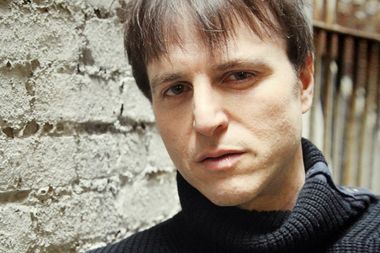
Stew, composer and star of “Passing Strange,” which has been nominated for seven Tonys, would have had a tough time pitching his semiautobiographical musical to Broadway investors if it hadn’t already done smashingly well at New York’s Public Theater. The coming-of-age story concerns a young, gifted and black man called only “The Youth” who rejects his church upbringing in Los Angeles, flees his earnest, Lola Falana-ish mom and heads off to the Netherlands, then Germany. Tossing convention to the skies, the musical explores radical politics, performance art and experimental music, and encourages young Americans to have lots of illicit sex with Europeans. The orchestra — technically a rock band, some of them from Stew’s L.A.-based pop group the Negro Problem — performs all the songs on the stage. The actors, in a homage to Brecht, move among them, sometimes interacting with the narrator, played by Stew himself, a short, self-described “chubby black man” with odd ears and a fondness for fedora hats. Hooked?

Well, no matter. Broadway’s eager to fill the void that will be left by the closing of “Rent” this fall, and while last year’s Tony darling, “Spring Awakening,” has brought some much-needed rock attitude to the Great White Way, “Passing Strange,” which premiered at California’s Berkeley Rep, has an even more staunchly alternative aesthetic, a downtown pedigree and a cast of mixed-race folks who can play Germans — convincingly. It has come along at the perfect moment. Accordingly, the quirky musical Stew referred to as “the black, gay, rock ‘n’ roll cousin of ‘The Color Purple’” has garnered Tony nominations for best musical, best featured actor (Daniel Breaker, who plays “The Youth”) and best featured actress (de’Adre Aziza, who gives life to the protagonist’s diverse love interests). The other four nods — best book, best original score, best orchestrations and best lead actor — are for Stew himself, sometimes with collaborator Heidi Rodewald, with whom he wrote the music. This ties him with one of his similarly offbeat heroes, Anthony Newley (songwriter of “The Candyman” and “Goldfinger” among other accomplishments), and composer Elizabeth Swados for the record number of Tony nominations in a single year.

You’d think that by now Stew would be getting beverage service on his ego trip, but the 46-year-old still conceives of himself as an outsider and a nonactor, and remains convinced that “Passing Strange” isn’t even a musical. The show’s director, Annie Dorsen, he says, nailed it when she referred to the goings-on as a rock concert from which a play emerges. When he says he doesn’t think he’s going to win anything, it smacks of denial rather than false modesty. Stew sat down with Salon at an exposed-brick bistro near the theater where “Passing Strange” has been knocking out audiences including celebs like Rosie O’Donnell, Lauren Bacall and Harry Belafonte. In person, Stew was effervescent, not to mention exceptionally chatty — more than once, he repeated the same sentence four times in a row.

“Passing Strange” is one of the few shows I’ve ever seen and thought, “Oh, I’ve had experiences like that.” I said to myself, this must be what white people think about culture on a regular basis.

We made it for you! Most plays I see don’t tend to speak to the so-called outsider. We did our play assuming that everybody had smoked pot as a teenager, that they knew what Amsterdam was all about, that they’d experienced racial alienation, and assuming they’d been as oppressed by their own community as they had by the outside world. We didn’t go in thinking, “Oh my God, we’re going to Broadway now — we have to make it understandable for everyone.” We assumed that everybody had a little bit of outsider in them.

That was the idea from the beginning?

Yeah, what the director liked was that when Heidi and I did our club act, when we talked to an audience of 250 people at Joe’s Pub [the cabaret embedded in the Public Theater where "Passing Strange" had its New York debut], we said, “You’re at this rock club at midnight. Odds are you’re the kind of person we can talk to directly.” Now, not everybody in the Broadway crowd has maybe snorted coke with a transvestite at 4:30 in the morning. But I’m like, “Well, if they haven’t, I’m going to try to make them know what that’s like.” I’m not going to pretend that didn’t happen. I think that’s why we end up getting these 75-year-old ladies who come out of the play saying they really relate to it. And we ask them, “Oh, because you’re a mom?” And they’re like, “No, because I came to Greenwich Village in 1959 and freaked out!”

You started working on “Passing Strange” three years ago. Where did you see your career going before this?

Well, as a rock band, the Negro Problem had a lot of critical acclaim, which of course translated into millions of dollars — you know critical acclaim always translates into millions of dollars. I’m just taking a break from my swimming pool in Hollywood to be on Broadway with the regular people. Actually we don’t consider it “going” anywhere, Heidi and me. We’re artists. We’re lifers. We’re not doing this to get famous or rich.

What did you know about theater or Broadway before you developed this show?

Very little. I had a lot of respect for people like Bertolt Brecht. I had read Brecht, and he touches a lot of rock performers more than any other theorist or writer in the theater world, I think, because his theories are very rock ‘n’ roll. Like the way he talks about the way an actor plays a role without trying to make anyone think that they are that character, and reminds the audience that they’re watching a play. In high school, when you’re a rock ‘n’ roll stoner, your mortal enemies are the thespians. We thought that musical theater was the dorkiest thing in the world and had nothing to do with the music we listened to. And quite frankly we still feel that way. I mean, uh, we don’t understand why Broadway doesn’t, for the most part, utilize the music of the street, the car, the headphones.

Who encouraged you to think independently when you were young?

There was this Jehovah’s Witness kid in my second-grade class, and he wouldn’t stand up for the Pledge of Allegiance. I thought that kid was the most badass, punk rock … I’m not saying that Jehovah’s Witnesses are revolutionary, but you couldn’t stand up to those 50-year-old black ladies who were like 6-foot-seven with wigs on and say, “I’m not doing anything.” You did exactly what they told you to do or you got taken into the broom closet and slapped. But wow … I would say I was influenced to think independently by everybody from Angela Davis to John Lennon to my mom.

In “Passing Strange,” the father doesn’t come into the story at all, I noticed.

No, he doesn’t. One of my private subtexts for this play was the relationship between this kid and the women in his life. Forget about the race stuff, the politics, the artist thing; I just wanted to examine the relationship between a young man and the women in his life. Honestly, in the writing I did not feel the need [to explain the father's absence] — that’s another play. And I love the mystery, too. You don’t know if he died, you don’t know if he left — and it’s not a cliché, you know, the ramblin’ man crap. He might be on an extended vacation.

Unlike the show’s main character, you didn’t go to Europe immediately. The first time you left home, you went to New York, in 1982. When so much exciting stuff was happening here culturally, what made you leave for Europe?

Because all of my conscious life, the lure of this myth of Europe as the promised land for black artists was deeply embedded into the psyche of every black artist from my generation. We read Baldwin and Wright and Ellison; we learned about Dexter Gordon and other musicians. We always heard the same thing: “When I went to Europe, I was treated as a human being.” As a teenager I went to see all these foreign films — Godard, Truffaut, Fellini. I didn’t look at these films like fiction; I looked at them like documentaries, and in a sense, they were documentaries. They were documentaries of a mentality. I really wanted to see if the myth was true.

Obviously your perception of it changed, since you’re calling it a myth.

Oh, very quickly. I recently opened a suitcase of writing I was doing at the time and I was shocked at how cynical I was within weeks of arrival. I would like to think that the honeymoon phase lasted a little longer. I was already tired and hyperconscious of the objectification thing.

Yes, a lot of Europeans aren’t shy about expressing their fascination with black Americans, sexual and otherwise. My first night in Paris, a woman exclaimed to me, “So, you are ze black man in Paris, and in Paris, we love ze black man!”

Even before I moved to Berlin, in Amsterdam, where there are more blacks, you would think there’d be a little less of that.

You have called “Passing Strange” “the black, gay, rock ‘n’ roll cousin of ‘The Color Purple.’” What did you mean by that?

Well, I was definitely trying to have a good time. But I meant that if black theater is a family, and “The Color Purple” is the box-office hit that everybody’s proud of — you know, that’s accepted by the mainstream and pushes all the right buttons and does all the right things and tells a certain truth — we are that cousin in the corner at the family reunion, who maybe gets a little tipsy and has a few drinks and decides to tell his truth.

Speaking of telling truths, didn’t CBS censor one of your songs from the taping of the pre-Tony telecast, which will include numbers from a lot of the other nominees?

It’s so typical of these large stations who have advertisers that they’re scared of offending. We have a song called “We Just Had Sex.” The song features no curse words whatsoever, not even implied curse words. It’s basically a celebration of being open about sex. And of course, [CBS] deemed it inappropriate for a 7 p.m. viewing audience. In the New York area. Trust me, there are no teenagers who don’t know what we’re talking about. And who are these teenagers that watch TV at 7 p.m. but don’t watch TV at 10 p.m.? Every kid I know watches TV till all hours of the goddamn night! It’s a really boring subject at this point because we know how puritanical and hypocritical we are.

It must be especially boring for someone who, on one of his solo albums, “Guest Host,” recorded a song about a guy who gets his girlfriend to plow him with a dildo.

Well, at least I understand why they wouldn’t put that on. Because maybe that’s actually controversial. I will accept that dildos are actually controversial. I would support them being on TV — because dildos are an important part of a lot of American people’s lives — but when do you see a dildo on TV? Maybe never.

Dildo or no, do you think you’ll win big on Tony night?

I don’t think I will win a single Tony. I used to think that people were liars when they said, “It’s just great to be nominated,” but in my case it’s really true. All those other nominees are musicals. I think we are something new. We’ll be forever filed in the musical category if you look us up in the encyclopedia or whatever, but I don’t think we’re a musical. So I’m not going to walk into that Tony place expecting them to go, “The crazy rock ‘n’ roll guy is our poster boy!”

Stranger things have happened.

Stranger? No. You’re wrong.

Didn’t Doug Wright win the Pulitzer for “I Am My Own Wife”? That was strange.

But he’s an actual playwright. I’m an outsider.

You’re working on another musical, though. Will you be an insider when that opens?

I’m not going to suddenly become a playwright and get a sweater with leather patches and a pipe and an old typewriter and start walking my dog on the beach. I’ll never become that.

But will you be an outsider anymore?

That’s up to them, I think, to decide.

Maybe as an outsider you can create a new inside.

That would be fun.

Continue Reading Close

James Hannaham is a staff writer at Salon.

Page 1 of 2 in Tony Awards