Americans love tomatoes. As our second-most-popular produce item, we’re accustomed to the sight of them: plump and bright red, marble to soft-ball sized, and piled in abundance year-round in the refrigerated fruit and vegetable aisle of the grocery store. Many of us eat tomatoes every day: if not au natural, in ketchup, salsa, or marinara sauce.
Yet our favorite fruit may not be quite as innocuous and delicious as it appears. In his new book “Tomatoland: How Modern Industrial Agriculture Destroyed Our Most Alluring Fruit,” journalist Barry Estabrook writes the biography of the modern tomato, revealing the environmental and human costs of big agribusiness. Estabrook traces the history of the tomato from the wild tomato berries that once grew in abundance in the rocky foothills of the Andes to the most familiar salad staple on the planet. A true tomato devotee, Estabrook explains why our love for tomatoes is hurting not only field workers and the environment, but our taste buds, too.
Salon spoke to him over the phone about what the tomato—and its taste—really says about us.
Why did you decide to write a book about tomatoes?
I wanted to write about our screwed up food system, and if you’re looking for the poster child for everything that’s wrong with modern industrial agriculture, you can’t get any better than a supermarket tomato. Supermarket tomatoes are generally tasteless and grown at a tremendous cost to the workforce.
How did tomatoes get to be so flavorless and have so many hidden production costs?
A tomato grower said to me: “Barry, I don’t get paid a cent for flavor, not one cent. I get paid for weight.” The horticulturists I talked to all agreed that over the past fifty years or so commercial tomato breeding has been geared towards weight. To do that, they need to grow quickly, and they need to have resistance to disease. So, the genes that give tomatoes the wonderful flavor of a summer tomato from your garden or farmer’s market have simply been lost in commercial breeding.
As for labor abuses, these enormous chains, Walmarts, supermarkets, and fast food companies, are driving tomato prices as low as they can go. At the same time, the makers of chemical pesticides and fertilizers are pushing prices upwards. The only place farmers can squeeze their budgets is the workforce. They’ve been doing that steadily. Even now, a tomato picker makes the same wage he did in 1980. And every week, workers are sprayed with chemicals while they’re picking.
You write that 1/3 of industrial tomato production takes place in Florida, where they’re basically grown in sand.
They are grown in sand. The agricultural officials would like to call it sandy soil, but it’s sand, every bit as sandy as Daytona Beach. Florida is the worst place in the world to grow a crop of tomatoes. It never gets winters, so bugs are present year-round, it’s notoriously humid, and fungi thrive. Everything in the ground is killed before the tomatoes are planted. All Florida tomatoes live off of are fertilizers and chemicals that are injected into the soil. Like broiler chickens, Florida tomatoes are designed to grow, grow, grow. They don’t have the genetics to pack in a lot of flavor. When these tomatoes are picked, they’re absolutely green and hard. They’re still hard by the time they get to the grocery store, but by then, they’re also orange. They’re called “mature greens,” the slang for them is “gas greens.”
Because they’re gassed with ethylene, right?
Right, they’re bathed in ethylene until they turn the right color. It doesn’t give them any more flavor, though. It doesn’t add any acids or sugars or flavor compounds. That means that even though they’re called mature greens, a certain percentage of them are not mature. A tomato is not meant to be picked today and then eaten three weeks from now. When you pick a tomato, sometimes it bursts on contact; the seams split. You go to a farmer’s market and buy tomatoes, and they’re ready to eat.
Do you think that’s part of the solution? People growing more, or any, of their own food?
I encourage anyone to grow tomatoes. They really want to grow! If you’ve got a sunny place, you can grow tomatoes, whether you put them in a pot, or put half a dozen plants in your backyard. This will do two things: it will connect you with the soil. And it will also give you amazing tasting tomatoes. If for some reason you can’t or don’t want to grow your own tomatoes, buy them from the local farmer’s market. And if you must buy an out of season tomato … I hesitate telling people to do this, but if you are geographically and financially able, shop at a Whole Foods store. I hate to advertise for Whole Foods, but the fact is, they’re the only grocery store chain that’s made any effort to alleviate the problems of the workers.
It sounds like you’re saying that we shouldn’t eat tomatoes at all when they’re not in season.
You wonder why someone would.
Well, I think because we go to the grocery store and we expect to be able to get everything all the time. We’re used to convenience and variety. People expect to be able to get arugula, and bananas, and tomatoes and mangos at the supermarket whenever they want them.
There’s also an element of food pornography in the true sense of the word. People see these beautiful, flawless bright red tomatoes, and they don’t go through the thought process: wait a second, those look nice, but they don’t taste like anything. It’s odd.
What do you think it says about the way Americans eat that we’re willing to buy tomatoes that taste like nothing and are so bad for workers and the environment?
The reaction I get when I give talks or from people who’ve read the book is “I can’t believe this is happening.” I don’t think word has gotten out. I don’t think tomato pickers get the kind of media coverage they would if the workers were fair-skinned American citizens. They’re a group that doesn’t vote, doesn’t go to the police, tries to be as low profile as possible and that makes it very easy to take advantage of them. As for the question of taste, you can Google tomatoes and consumer complaints, or consumer satisfaction, and you’ll come up with dozens of academics studies that show that tomatoes are at or near the top of the list of produce people buy but are disappointed in.
And yet we still continue to buy them. How did tomatoes become so popular in this country?
Tomatoes became medicinal novelties in the early nineteenth century. Then, during the Civil War, canning technology became widespread. Soldiers in the Civil War ate tons of canned tomatoes. By the end of the nineteenth century, plant breeders created fruits that were uniform and tasted better, and tomatoes became very popular.
In general, do you think Americans are becoming more or less aware of the costs of factory farming?
A small sector of the population definitely is more aware. But it’s easy when foodies get together to think that the whole world is that way, and it’s not. It’s a small percentage of the population.
That seems to be the larger problem inherent in the locavore movement, the organic movement, slow food, etc. These tend to be privileged food conversations.
On the other hand, a growing segment of the population is concerned with these issues, just look at farmer’s markets. Ten years ago, if I’d recommended that people try to buy tomatoes at farmer’s markets way more people would say “What Farmer’s markets?” Now there’s what, five thousand of them? Now no one can say, “You can’t buy good tasting tomatoes anywhere,” because you can, when they’re in season.
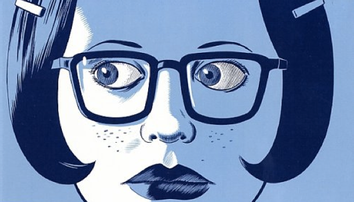
For our senior prank, my best friend and I papered the high school auditorium with photocopied, blown-up images from Daniel Clowes’ comic book “Ghost World.” While our classmates inserted porn in between the pages of the library’s encyclopedias and parked teachers’ cars in the middle of the quad, Nikki and I thought broadcasting our love for “Ghost World” was the ultimate act of rebellion: We took particular pride in posting the image of the book’s heroines, Enid and Rebecca, in commencement caps and gowns, giving their alma mater the finger. I knew even back then that I wasn’t as edgy and outspoken as Enid, but I really, really wanted to be.
I loved “Ghost World” in part because I could relate to it. “Oh my fucking God,” was a favorite expression of ours that Enid and Rebecca used ad nauseam, and like them, we sat around and complained about what huge losers everyone we knew was while concocting elaborate schemes. Enid and Rebecca are abrasive, they talk about sex all the time; they hang out with creepy losers. Like bored teenagers everywhere, we got a kick out of people-watching and snickering under our breath, had a comeback for every situation, and thought our one-liners impossibly witty.
In many ways, my life didn’t look much like Enid and Rebecca’s. Even if I felt emotionally adrift, I was a good student and had a post-high school plan: college. Enid and Rebecca spend much of “Ghost World” at loose ends, wondering what exactly to do now that they’ve graduated. Both girls come from unusual family situations: Rebecca lives with her grandmother, and Enid with her single dad. I grew up in a fairly conventional family: my parents, little sister and me.
My parents and I fought a lot during high school, about curfews and older boyfriends and whether it was a huge deal that I’d had a beer at a party, but we were always close. They insisted on eating dinner together every night. My dad helped me with my Algebra II equations, my mom edited my rambling English papers (“‘Hamlet,’ ‘The Godfather,’ and ‘The Lion King’”), they both bore witness to my lack of physical coordination at lacrosse practice, and even knew which boy I was obsessed with from month to month. Enid’s dad loves her, but they fail to connect.
Though much of my high school sufferings consisted of the usual slings and arrows of adolescence (six years of orthodontia, getting dumped the day before my 16th birthday) serious stuff happened, too. I was assaulted at 17, and too freaked out and ashamed to tell my parents for several weeks.
During that time, I spent a lot of time holed up in my bedroom, trying to stave off panic attacks. I took solace in reading “Ghost World” over and over. I copied Enid’s freckled nose into my own sketchbook, and drew myself (short, curvy, braces, ashy-blond hair, perpetual scowl) Clowes-style. It was relieving and refreshing to spend time with Enid and Rebecca: teenage girls who weren’t happy all the time, but still managed to turn their angst into something other than lying face-down on the bed, listening to Counting Crows and sobbing. There are plenty of frames in “Ghost World” where Enid does just this, but she also creates eerie, odd adventures for herself: driving to a dinky dinosaur sculpture park in her hearse, investigating a sleazy sex shop, and inventing back stories for the weird people she sketches in cafes. She might be miserable, sometimes, but she’s still capable of seeing the world on her own terms, marveling at the strangeness of what she sees.
Still, most of Enid’s responses to being young and in pain are not “healthy.” She doesn’t throw herself with manic dedication into stage-managing the high school production of “South Pacific,” volunteer for wilderness trail maintenance, take up knitting, or see a shrink, all things I tried during my senior year in efforts to distract myself. But Enid did teach me that it’s OK to live with a little darkness. I didn’t feel like being nice, or pretending that everything was cool, and neither did Enid. I felt like being angry, at least for a while.
Enid is damaged, but she’s more complicated than the average snarky smart aleck. She can be mean (orchestrating pranks against lonely men who post personal ads) but she’s also vulnerable (see crying face-down on the bed). Her love for Rebecca is real even after their friendship falls apart — the last words she speaks in the book, looking at an unsuspecting Rebecca through a cafe window, are: “You’ve grown into a very beautiful young woman.” While this last snatch of dialogue is sincere, Enid’s humor and intelligence come in part from her insecurity, from feeling out-of-step with the rest of the world. Enid brought me back to ordinary levels of angsty adolescence (“I just hate all these obnoxious, extroverted, pseudo-bohemian losers!”) when I couldn’t do it by myself.
At the end of the book, when she gets on a bus and leaves town for good, Enid also proves that she’s brave. For me, being brave meant accepting that something shitty had happened, but that it was only one piece of my experience.
Eventually, I told my parents what had happened. They were devastated, but never angry with me. They sent me to therapy; I continued with life as usual both the good and the bad. I continued to get in minor trouble with my friends (we were caught by security guards scrawling “Fuck Bush” on street signs in waxy red lipstick) but I also managed to do my homework and get my college applications in on time.
Throughout that fall, I was acutely conscious of my parents’ support, how much they loved me. Unlike Enid, I had parents I could talk to, even when talking was uncomfortable and awful. My mother’s always made a big thing of saying “I love you” every day, and as a teenager, I found this irritating, obvious and excessive. Still, it helped to hear it over and over, mantra-like, even if I only mumbled it back. Sometimes, the best you can do for someone else, indeed the only thing you can do for them, is to tell them that you love them.
When I left for college, I brought “Ghost World” with me. When I look at it today (coffee stains and doodles in the margins, black and blue-tinted frames transport me to my bedroom at seventeen, sitting cross-legged on my unmade bed, surrounded by pictures of Han Solo and Cary Grant and Meryl Streep tacked up on my walls with scotch tape. I trace the simple lines that form Enid’s mouth into a defiant pout when she dyes her hair green, or the fine crosshatching of her furrowed brow when she cries, and I remember my utter certainty that everything sucked absolutely forever. Being a teenage girl is not for the weak.
When I graduated from high school, I wore a white dress and smiled in photographs. Enid, stuck in her dual-chromatic world, never gets to grow up, or if she does, we don’t get to see it. I moved out, went to college, lived in new towns and uncharted places. I never once took a bus to get there. Part of me still wants to copy the final frames of “Ghost World”: to pack my worldly goods in a vintage valise and skip town without telling anyone where I’m going. I know I won’t do this. I can’t. Not because I didn’t learn how to be brave, but because unlike Enid, I found reasons to stay.
Continue Reading
Close
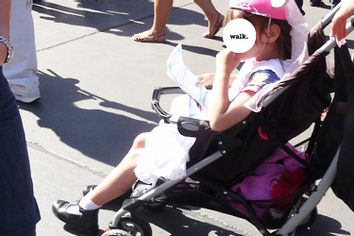
Maybe you’re stuck in O’Hare during a particularly hellish travel season. Or you’re strolling through downtown on a warm spring afternoon. Suddenly, you see it, and it just looks wrong: a child who is way too big and way too old being carted around in a stroller.
There’s something hilarious and deeply grating about a child who can walk– and, for that matter, do his multiplication tables — being chauffeured via Bugaboo. It hits so many cultural hot buttons at once: a sense that we’re overindulging a younger generation, the eyeroll-inducing eccentricities of parenting culture, an American tendency to take the escalator rather than the stairs. Maybe fellow parents see kids like these and feel sympathy. As someone without kids, I’m baffled and irritated — and I was a nanny for two years.
That’s why Too Big for Stroller is so gratifying. Its creator, Laura Miller (not the Salon book critic, by the way), was working in Manhattan’s crowded Herald Square when the constant presence of huge tots in strollers inspired her to start the blog, which documents the trend in its own simple and snarky way. We talked to her by phone.
I think you’ve hit on something that bothers a lot of people. A friend sent me a link to the blog and said: “You’re not the only person in the world that has this pet peeve!” Why do you think parents do this? Is it a particular type of parent?
I can’t say it’s a particular type. Often, it happens in tourist attraction type areas — where you know you’re going to be walking around a lot, and you know your kid might not be able to walk that much without whining. I get a lot of pictures from New York City, Times Square and Disney World. It’s incredible in some pictures, because it looks like the kid is 8 years old. A few parents have sent me some emails in defense of this situation. They’ll be like “You don’t understand,” and they’re right. I don’t have a kid. Maybe I don’t fully understand. I understand the purpose and necessity of a stroller when you have a child, but I can’t see the excuse when your kid is way too big to carry, and the stroller is way too small for that child anyway.
I don’t have kids either, and so maybe this is naive, but when I see a kid who’s way too big in a stroller, I think: “I’m never going to do that.” Maybe there’s something that happens after you have kids where you realize you can’t deal and you need a stroller, but right now, it just doesn’t make sense.
I wrote a caption at one that said: “When I have a kid, it will be strapped to me as an infant, and then walking, no middle ground.” You know, a joke. And someone commented: “I said the same exact thing and I really meant it. But then my two-year-old started walking and she never walks in the same direction twice. The stroller is necessary.” The blog is all kidding around. I do think that at some point I will have a kid and I will push a stroller but there’s still this impractical or immature side of me that thinks there’s something fundamentally un-cool about strollers. I mean, you could be the world’s best businesswoman, but when you’re pushing a stroller it just screams: “I’m a parent, this is all I am.” I get why strollers are around, I don’t hate them, they’re appropriate for babies and toddlers. I just think it’s funny when kids who are way too big for them are in them.
Where’s the line when a kid is just too big for a stroller? How do you decide?
I don’t know! When the kid’s knees are bent up, when their feet are dragging on the ground. When I see some of these pictures, I wonder, aren’t these kids a little embarrassed?
Where do you get the pictures? You said your friends send you some — do you get them from random people now? How many submissions do you get?
A few I had taken myself. The more word got around, strangers started to send them too, especially now that the site’s been getting more attention. I went from getting a few a week to at least one a day. Not all of them are usable, but I’ve been seeing a lot of enthusiasm. I had one woman, for a while, who sent me a ton. I don’t know if she worked at Disney World, or was just going there a lot, but she was constantly sending me 10 pictures every week, at least. Without these submissions, I’d never be able to collect all these pictures myself, because it’s a really hard thing to take a picture of.
It is. I’d assume most parents don’t want people taking pictures of their child.
It’s a tricky thing. It’s never comfortable to be taking pictures of someone’s kids on the down-low. It’s a little creepy. I want to be clear, too, that I obscure the children’s faces, and I make sure not to include (and I’ve never really gotten) pictures where the kid has a physical disability. I want to be very careful not to cross that line. And that is something that I’m a little worried about as far as reactions to the site. But you’re never going to please everybody, especially when something becomes popular.
Right. This is something people are going to be sensitive about no matter what. Even if this is a site about able-bodied kids who are way too big.
It’s mostly the aesthetic of it. It’s just funny. There’s nothing funny about a baby or a 2-year-old in a stroller. There is something funny about a giant child crammed into something that’s meant for a toddler. That’s what it comes down to.
What do people say when they see your blog?
Most people who reach out say that this is something that bothers them, too. I think lots of people are delighted to see that someone has homed in on this. I have gotten very little negative feedback, which I’m kind of surprised about. The response has been lighthearted and funny, because it’s a funny thing to see. Especially in an urban area, where strollers are more predominant.
Have you ever had a personal encounter with a too-big-kid in a stroller?
I was walking down the subway stairs, and this lady was leaning over a stroller, like she was about to pick it up and carry it down the stairs. A gentleman approached her to help, and then he didn’t. He walked away, and I remember thinking, what a dick, he didn’t help her. Then I saw that the girl in the stroller was grown enough to get out of the stroller, help her mom carry it down the stairs and then climb back in it and strap herself in. She was 6, 7? I was like, are you kidding? Carrying your own stroller down the stairs and strapping yourself back into it? There’s something wrong with this situation.
Continue Reading
Close
On a visit home a couple of years ago, I was sifting through a cardboard box of unsorted family photos when I came upon one in particular that gave me pause. “What the hell is this?” I asked my mom, who was sitting across from me at the kitchen table. The photograph I held up, incredulously, was of my mom, circa 1980-something, at a cocktail party. She was wearing a splashy floral dress with puffy sleeves, red lipstick, and she was trapped in the sideways embrace of a leery Michael Douglas, who was leaning in to kiss her cheek. My mom peered over her reading glasses to study the picture. “Oh, that?” she said. “Daddy and I were at some party for something. Michael Douglas was extremely … friendly.”
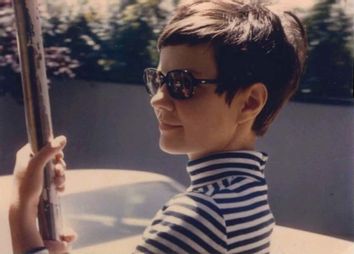
Some version of this realization — that your mom had a life before her offspring showed up — is central to “My Mom: The Style Icon” a new book by Piper Weiss. Originally conceived as a blog when Weiss found her mother’s old photo albums, “Style Icon” is composed of submissions from all around the world: ’70s jumpsuits, ’50s fedoras and ’60s beehives are all modeled by women who later became known as “Mom.” Accompanying many of the photographs of stylish ladies are anecdotes about the story behind the leather jacket, miniskirt or velour leisure suit. Each picture conveys not just a particular moment in a woman’s life, but a fashion story. (We’ve included some of the most memorable photos and anecdotes in this slide show)
Salon spoke to Piper Weiss about the process of collecting other people’s family photos, raiding Mom’s closet, and figuring out just what makes a style icon.
How did you get the idea to start the blog on which the book is based?
The blog started when I was at my parents’ house looking at old photo albums. I never really bothered looking at photos that I wasn’t in, like a total narcissist. Then two years ago, I found two photo albums of my mom alone, before I was born, before she met my dad. She’s in her early 20s, late teens. I’d seen a few photos of her as a little girl, but I’d never really seen her in her 20s as a single, independent woman. All of a sudden, I was so much more interested in these photos — it opened up all of this conversation between us — stories that she had never told me before. I didn’t know that she went to Morocco; I didn’t know that she would take off for the weekend. She picked up items of clothing wherever she went — she was totally broke, but she spent any money she had on whatever item of clothing was chic in the area.
These photos were from the late ’60s?
Yes, ’69, ’70. My mom was really savvy, and kind of up for anything because she was a single person. She was at a point when she was making decisions and kind of figuring out who she was, and part of that was through these costumes. My mom and I never really got along in terms of clothing. I’m kind of a mess and I like things that are really cheap, and all of a sudden, we had this common ground. We would find the item of clothing and then talk about the story behind it.
And what does she dress like now?
My mom dresses beautifully. She’s changed her style with her age and with what she’s feeling. It made me look at her again as a separate person and not just mom. I like that in one of the pictures she’s wearing fake glasses. I always wanted fake glasses, but I feel like I can’t tell a lie. She also has a hair fall in one of the pictures, which is a high ponytail that was completely fake. I haven’t actually found either of those.
Were you surprised by how many amazing submission you got when you launched your blog?
I was super surprised and psyched by the response, because it’s very international. I wasn’t surprised by how many beautiful, coolly dressed moms there were. Even if a lot of the moms weren’t glamorous, they had their own angle. I am surprised by how much their personalities come through. But I think people posed for pictures differently back then — it was a little bit more special.
Right, you didn’t take pictures constantly on your phone.
And you couldn’t edit them!
What’s your favorite photo in the book?
One of my favorites is of this woman who was getting married for the sixth time. Her son, who sent in the photograph, is in the picture, throwing rice, and he’s so cute. I remember looking at the picture and thinking that it was Gena Rowlands, or someone from a Hitchcock movie. I wrote to him and asked, who is your mom? He said no, she wasn’t famous, but she was getting married for the sixth time. This woman had a roller-coaster life; she’d been in and out of rehab and all along her son stuck by her side. This was her sixth and final marriage, and he helped her pick out the dress. It was beautiful, the way he remembers being 10 years old, looking at her coming out of the dressing room in that gold dress.
What’s the best piece of fashion advice that your mom’s ever given you?
My mom is all about balance. She says: If you’re going to wear a big top, then show your legs. If you’re going to wear a long skirt, then show a little cleavage. Don’t get so consumed with the clothing that you can’t find yourself in it. It’s not really about the clothes; it’s about owning whatever you’re wearing.
View the slide show
Continue Reading
Close
Americans are obsessed with high school. Whether you were the head cheerleader or president of the math club, whether you’re still trying to forget that time you got a swirlie or you wish you could relive your glory days as homecoming king, those years take up a lot of space in our minds. In movies from “Sixteen Candles” to “Ten Things I Hate About You” to this week’s “Prom,” social life is determined by where one sits in the cafeteria. Labels (cool kids, freaks, emos, even Twihards and Gleeks) are especially important when you’re a teenager, and can be powerful enough to define an entire high school experience.
In the new book “The Geeks Shall Inherit the Earth,” author Alexandra Robbins goes back to high school (seven of them, actually) and follows the lives of six outsiders and one self-proclaimed “popular bitch” in order to document the experience of adolescent popularity from hallways and classrooms and football fields, the locker-lined trenches of high school. Robbins has made a career of writing about social behavior in the context of academia. Her previous books “Pledged” and “Overachievers” are similarly immersive examinations, delving into the hazards of sorority life and high-achieving kids, respectively.
High school has changed quite a bit in the past few years. Bullying has become a huge topic of discussion. The rise of social networking sites like Facebook have become part of student’s daily rituals, something to be monitored and adjusted between homeroom and social studies. But some things remain the same — namely, there are cool kids and there are losers. In “Geeks,” Robbins suggests that being popular in high school is not all it’s cracked up to be and can be detrimental to students. She coins the term “quirk theory” (the idea that the very traits that make students outsiders in high school will be beneficial to them as adults) as a means of reconsidering how important it is for others to think you’re cool.
Salon spoke with Robbins about conformity, being different and the dark side of popularity.
Do you think that our culture is unusually concerned with popularity in high school?
Our culture is unusually and increasingly concerned with popularity. Part of the reason is our obsessive celebrity culture, and there also seems to be a trend to define young people as either smashingly successful or not, which comes into play in academics and in the social world. The number of outsider labels in schools is increasing, while the ideal image of a mainstream popular kid is narrowing. While perhaps 2 percent of the students in high school are popular and mainstream, the rest of them are outsiders. Either you’re popular or you’re not. There’s no middle ground any more.
Since so few people are popular in high school, most of us know what it feels like to be an outsider, at least temporarily. How do high school social hierarchies continue to affect us into adulthood?
I’m saying that they don’t affect us after high school. Once you get out of that atmosphere, the world opens up. As glib as that sounds, it’s true, because school is one of the most conformist, rigid atmospheres — both because of the way high school operates and because of the psychology of the age group. After high school, the same qualities that cause a student to be an outsider suddenly become appealing.
You point out that it’s the kids on the fringe that eventually do best, because they’re able to distinguish themselves later in life.
Right. In high school, popularity is more important than anywhere else, but popularity is not a measure of likability. Popularity is composed of three elements: visibility, recognizability and influence. The people in school who have those three qualities are often that way because they conform to a standard. Meanwhile, the kids who won’t or can’t conform are the ones who are left out. Nonconformity is a wonderful trait, and it’s going to be valued in adulthood. If you’re different in school, that makes you an outsider. If you’re different as an adult, that makes you interesting, fun and often successful.
You refer to the kids who are excluded as the “cafeteria fringe,” and they’re the ones you primarily follow in the book. What different “types” of kids did you identify?
I followed a loner, a gamer, a band geek, a new girl who was also foreign, a nerd, a weird girl, and then to contrast their experiences I also followed a popular bitch. I didn’t label the popular bitch. I said “maybe you want to be the cheerleading captain?” and she said, “No, I’m proud of being a bitch.” So I said, “OK, fine.” There are a lot of new labels. I had heard of emo and indie when I started the book, but I hadn’t heard of Twihards, which got really popular. I hadn’t heard of scenes — they’re similar to hipsters. Bros is another new one. All this is to say that there are an increasing number of labels. These labels are distressing, because they are no longer just used to describe what students do; now these labels also describe how people feel. Or how they are. And that’s sort of scary. The level of conformity is expanding to describe students beyond their appearances.
What role do teachers play in popularity? What are the “teacher cliques” that you describe in the book?
That was one of the biggest surprises for me — the adults who are supposed to be modeling social behavior for students are in some cases openly forming their own cliques, with names. That blew my mind. Even schools where they’re paying thousands of dollars to sponsor anti-bullying programs and trying to ease social tension among the student body — these same schools have teacher clique issues that they’re not addressing. There was one teacher clique called Teachers Against Dumbasses. They actually go around wearing T-shirts advertising their clique! The students are aware of which teachers are allied with others. They hear teachers grumbling; they know when teachers are dating each other. Even worse, often the teachers are making associations and judgments and in some cases explicit descriptions about students based on their labels. You can’t expect students to know what appropriate social behavior is when the teachers aren’t following that model themselves.
Bullying has become a much-debated topic. Do you think that bullying has really gotten worse over the past few years, or has it just become different?
Bullying has gotten worse partly because of narrowing ideals, meaning that more students are seen as people who can be picked on because they’re not in the popular crowd. What I call the “online cafeteria” (social networking sites like Facebook and MySpace) also plays a role. These sites serve the same purpose as the cafeteria. They’re public spaces, mostly unsupervised, where students can clearly define who belongs with which group. Facebook can be hugely demoralizing. A lot of students feel like they have to be their own publicists — constantly updating their statuses, and making sure they have the best photos of themselves tagged, and sometimes creating a false social life so they can seem more popular than they really are. That’s exhausting. I’m so glad I’m not in high school anymore!
You posit that the social hierarchies you examine don’t exist after high school. Would you say that bullying gets better after high school, too? What do you think of the Dan Savage “It Gets Better” campaign? Do you think that’s true?
The book does say that it gets better, but for all outsiders, including and not limited to LGBT kids. It gets better because school is part of the reason there is a social hierarchy in the first place. One thing that hasn’t been discussed much in the bullying debate is that schools often address bullying with little Band-Aid campaigns. They try to address it on a case-by-case basis. But the schools themselves often have traditions or policies that in and of themselves point students to which ones should be elevated in the hierarchy and which ones should be lowered down the ladder. For example, whom do schools highlight at pep rallies? Athletes and cheerleaders. They are making those students visible, and one qualification for popularity is visibility. That brings up another issue — politicians are always complaining about the lack of scientists produced in this country. Well, if schools celebrated student scientists the same way they celebrate student athletes, then more students might be encouraged to pursue science. Instead, science is geeky, and schools are partly responsible for painting it that way.
How do you think that pop culture depictions in movies like “Mean Girls” or series like “Gossip Girl” and “90210″ have changed how we think about high school?
I do think that certain shows have paved the way for girls to think it’s cool to be a bitch. “Bitch” is such a mainstream term now, and it’s almost seen as a badge of honor. I think there’s a connection between the Machiavellian strategizing on reality television where people will do anything in order to be famous, even if they’re portrayed as a villain, and certain girls who apply this to their race for popularity in schools.
How did you see race and class fitting into conceptions of popularity? For some of your subjects that’s a bigger deal than it is for others.
It all depends on who comprises the popular crowd of a school, and what the racial and economic demographics are at that school. In some cases, being a minority automatically puts you at a different table than the popular crowd. There are some schools I studied in which certain cafeteria tables are referred to as “Asia,” “Mexico” or “Africa.” At one Southern school, some popular kids keep the price tags on their clothing so that classmates can see that they paid full price at a nondiscount store.
What are things you think should be done to change the culture of high school popularity?
Schools could vary cafeteria seating options so that groups of different sizes have a place to eat — put four chairs at one table and 10 chairs at another. That automatically says only a certain sized group can sit here, and if you don’t get early enough you’re automatically an outsider for the day. A more radical idea is to try assigned lunch seating, at least once a week.
I thought your focus on lunchtime was really interesting. It immediately made me think of myself in ninth grade. I was new, and the two or three other kids I did know had a different lunch period than I did. Lunch became this thing I dreaded. It was the hugest deal in the world.
It is absolutely the hugest deal in the world if you’re a high school student. Because that’s the one physical place where you are expected to choose where you belong, and find where you belong and then fit in there. That’s scary. While I can imagine that some students wouldn’t be thrilled with the idea of assigned seating at lunch, even once in a while, it is a way to give students the opportunity to connect with someone different.
It also takes off a lot of pressure of where to sit and with whom.
There’s assigned seating at lunch in elementary school, where classes sit together at specific times. But just when students are starting to form cliques, that’s when we say, OK, sit wherever you want. It exacerbates the problem. I’m not saying they need assigned seating every day; just that it’s something to try some of the time. Beyond the cafeteria, I think it’s important for parents not to worry too much about their kid’s social status. If your kid is happy having one or two close friends and not being in the popular crowd, leave it. Popularity can be destructive. To be popular does not mean to be liked, and it also does not mean to be happy. Encouraging your child to be “popular” and “cool” can be hugely destructive to a student’s psyche. It can actually be much better for students to be outside the popular crowd.
Continue Reading
Close
In his epic ode to sex, “Don Juan,” Lord Byron wrote: “Pleasure’s a sin, and sometimes sin’s a pleasure.” Apparently, not much has changed since the early 19th century. No matter our era or nationality or creed, we humans like pleasure. The pleasure may take different forms. But whether it’s chocolate cake or morning jogs, vodka or volunteering, we’re all ultimately in search of the next hit.
Recent science has found that different kinds of pleasure are surprisingly similar in terms of brain chemistry and physiology. The buzz derived from a yoga class or a bump of cocaine look almost exactly the same on a neurological level. Perhaps unsurprisingly, our brains are also susceptible to liking pleasure a little bit too much, leading to behaviors we characterize as addiction.
In his new book “The Compass of Pleasure,” David J. Linden, brain scientist and professor of neuroscience at Johns Hopkins University, unravels what’s going on in our brains when we indulge in food, sex and drugs, or when we meditate or perform a good deed. As Linden describes brain circuitry through anecdotal evidence and lab-based research, he charts the evolution of pleasure from a primal instinct we pass on through our genes to the more complex co-opting of dopamine receptors through substances like drugs and alcohol.
After all, we’ve never had so much easy access to pleasure as we do now. What exactly is it doing to us? Why do some people become addicted to pleasure and others do not? Salon spoke with Linden to find out what a brain hooked on pleasure looks like.
What made you decide to write a book about pleasure?
Because what we do, we do for pleasure. Pleasure is our compass no matter the direction we seek. Social things, like exercise and generosity and learning for the sake of learning, give us a pleasure buzz that at the anatomical and chemical level is nearly indistinguishable from that we get from our vices.
The subtitle of your book, “how our brains make fatty foods, orgasm, exercise, marijuana, generosity, vodka, learning and gambling feel so good,” speaks to this idea — that our vices and virtues might have more in common than we realize.
The subtitle was designed to provoke, by juxtaposing things like orgasm, marijuana and vodka with things like exercise, generosity and learning. We have a distinct circuitry in our brains called the medial forebrain pleasure circuit that critically depends upon the neurotransmitter dopamine [neurotransmitters are chemicals that submit signals to the brain]. Portions of this circuit are activated in all of these behaviors, both the vices and the virtues. The pleasure that we get from doing good deeds or by learning is underpinned by the same series of electrical and biochemical steps behind the pleasure of fatty food or alcohol.
We tend to be a culture of excess. What do you think of someone like Charlie Sheen who seems to have become the poster boy for all kinds of pleasure? Is this part of a larger trend? Do you think we’re addicted to dopamine?
Well, stepping back from Charlie Sheen for a moment, pleasure and reward are absolutely necessary in order for the species to be perpetuated. That’s why there’s a pleasure system in our brains, to make behaviors like eating and drinking and sex pleasurable. However, we’ve found artificial ways to short-circuit the pleasure center, like alcohol, nicotine and cocaine. But the circuit didn’t evolve for things like alcohol, nicotine and cocaine. When you combine the ability to feel pleasure with our human ability to learn, to make associations between one event and another, then a miracle happens — utterly arbitrary things can be rewarding to us. Take some extreme examples: If you hold a particular set of political or religious views, you can be just as rewarded by abstaining from sex as you can by having sex. You can be just as rewarded by fasting as by eating. This is what happens when learning and the pleasure circuitry interact.
What happens in the brain during addiction?
We have cultural ideas about addicts, for instance, that they derive more pleasure from a particular behavior than other people would. The truth actually seems to be the opposite. People who are at greatest risk for addiction seem to like these pleasurable stimuli less, but want them more. Liking and wanting are two sides of the pleasure coin.
We see remarkable similarities in addicts’ stories. If you take the autobiographies of a sex addict and a heroin addict, for example, and remove all the words that make specific reference to sex or heroin so you’re left with the most general descriptions of feelings and emotions and sensations, you find that people start out really liking their stimulus, but as the addiction develops, the liking goes away and is replaced entirely by wanting. In the later stages of addiction what people talk about is not, “I have to shoot heroin every night so that I feel really great because I love it so much.” They instead say, “I have to have these things to feel normal, just to feel healthy.”
The idea that addiction is a disease and not a personal failing isn’t particularly new. What’s changed in our understanding about the way addiction works?
What’s new is our understanding of the biology behind it. About 40-60 percent of the variation in addiction — not just drugs, but food, gambling, etc. — is accounted for by genes. Repeated drug use produces a long-lasting physical and chemical rewiring of the brain that appears to drive tolerance and cravings. Stress causes release of hormones that bind specific receptors in the pleasure circuit and this is likely to cause cravings.
So, what does this mean for someone in recovery?
Many addicts will tell you that relapse is almost always triggered by stress. This means if you’re a former addict trying to stay clean, one of the best things you can do is engage in behaviors that reduce your stress level — things like exercise, meditation, prayer or interacting with pets. We know that when you undergo stress, your adrenal gland secretes stress hormones, which bind to receptors within your pleasure circuitry and produce a set of alterations that make you crave your drug or behavior of choice. In the future, helping addicts stay clean may involve pharmacological intervention to reduce stress hormones.
As of now, though, there’s no magic pill to cure addiction. Aside from the development of drugs that interfere with stress hormones, what other implications does pleasure research have for recovery? AA uses community service as part of its treatment program. Is it possible to rewire the pleasure circuitry again in the brain of an addict? Can you replace the buzz one gets from alcohol with an exercise buzz, or a volunteer work buzz? Does this actually work?
We really don’t know if pro-social pleasures like exercise or meditation or prayer produce lasting changes in the pleasure circuit that can counteract the changes produced by drugs or gambling or other vices. What we do know is that they reduce stress, which reduces relapse. Also, in some cases it’s really not so bad to replace a destructive addiction, like alcoholism, with a constructive one, like running or learning.
On a societal level, here in the United States our moral code and laws are based on puritanical values. Pleasure can make us uneasy. How do we regulate pleasure as a culture?
When you think about it, a lot of our laws are dopamine laws. Our jails and legal system are full of people who have broken certain laws related to pleasure. Societies love to regulate pleasure because it is transgressive; it is anti-authoritarian. We have these ideas, “pleasure is best in moderation,” “pleasure must be earned,” “if you deny pleasure it can lead to spiritual growth,” that are not just Western or American. But we also have these incredible mixed messages. We have a hyper-sexualized media, for instance.
And we have access to so much.
Right. We have access to so much, and it’s so inexpensive. If you want to have a snort of crystal meth or a dose of ecstasy, that’s not going to cost more than a large cappuccino at Starbucks. We simultaneously are telling people that you have to be very careful about pleasure, that you should not overindulge, and yet our media celebrates overindulgence, whether it is sexual or alcoholic or nicotine or what have you. There are enormous corporate interests involved in the dopamine world.
How should pleasure research inform the way we think about addicts?
In spite of the oft-stated idea that “addiction is a disease” we don’t treat it as such. We lock folks up for simple possession and usually fail to offer them medical treatment. The biological basis of pleasure tells us that we must be compassionate towards addicts. Given the right situation, genes, stress, life experiences, anyone — and I do mean anyone — can become an addict. We humans are very invested in the idea that we have absolute free will in all things, and it’s very threatening to us to imagine that there are these strong subconscious forces compelling our behavior, but there are. This is scary in a deep and profound way.
In your chapter on sex, you write, “The first thing to say about orgasms may be obvious, but it bears repeating: orgasms occur in the brain, not the crotch.” I don’t think that necessarily is obvious, especially where men are concerned. What is happening in the brain when an orgasm occurs?
Male and female brains during orgasm are extremely similar — you see a very strong activation of the pleasure circuitry. Not very surprising. In that way, orgasm is not unlike having a hit of heroin. When the band Roxy Music sang, “Love is the drug,” they knew what was going on. Orgasm and heroin really do have a lot in common. During orgasm, while you’re having a strong activation of the pleasure circuitry, you’re also turning down activity in the parts of the brain having to do with cognition, social reasoning, evaluation of outcomes, executive function and rational choice. Also not very surprising when you think what an orgasm feels like. You’re pretty much in the moment.
Continue Reading
Close