Don’t call me Ishmael, for I am not a survivor. Don’t call me Cassandra either, since some might believe what I foretell. Perhaps I am the final manifestation of the singularity ignited in Olduvi Gorge a million and a half years ago. The flame that has grown to consume our planet and send sparks into outer space. The singularity that started as an ineffable, ineluctable pulse resonating through the neural matrix of Homo habilis. A voice that said, You whoever you are, You must sharpen that stone, pick up that bone, cross that line. A voice of supreme paradox; one that simultaneously makes us uniquely human, yet is itself not human. Nor is it the black extraterrestrial monolith of Stanley Kubrick’s imagining. Rather, it was always here. Hard-wired into us at the atomic level — and we into it. A voice whose physical manifestation, the tool, sang its song millions of years before human beings walked the earth. This voice prophesied and then enabled our coming. It will instruct us in our going. Or so I say, while understanding too well that in the 21st century we are all jaded and stultified with sensory overload. It’s always the end of the world as we know it — and we feel bored.
So why listen to the voice of one who is not Ishmael, not Cassandra, not even Ralph Nader? Because I can tell you something that no one else can. I can tell you the exact moment when Homo sapiens will cease to exist. And I can tell you how the end will come. I can show you the exact design of the device that will bring us down. I can reveal the blueprint, provide the precise technical specifications. Long before we can melt the polar ice caps, or denude the rain forests, or colonize the moon, we will be gone. And we will not — definitely will not — end with a bang or a whimper. The human race will go to its extinction in a state of supreme exaltation, like an actor climbing the stairs to accept an Academy Award. We will exit the stage of existence thinking we are going to a spectacular party.
The usual suspects — those who have become known for predicting the evolution of humans and their technology — just don’t get it. Mainly because they don’t understand what the definition of “it” is. They don’t realize what evolution is. They have come to the problem from artificial intelligence, or systems analysis, or mathematics, or astronomy, or aerospace engineering. Folks like Ray Kurzweil, Bill Joy and Eric Drexler have raised some alarms, but they are too dazzled by the complexity and power of human cybersystems, devices and networks to see it coming. They think the power of our tools lies in their ever-increasing complexity — but they are wrong. The biotech folks just don’t get it either. People like Craig Venter and Leroy Hood are too enthralled with the possibilities inherent in engineering biology to get it. And our “bioethicists,” like Arthur Kaplan, and those who cling to their human DNA like it was the Holy Grail or the original tablets of stone, blathering on like Captain Kirk about what special, sacred things we humans are — they can’t possibly get it. All these people who think (or fear) that technology will ultimately trump biology have missed the cosmic point. They are not even wrong. To begin to get it, one must dispense with artificial boundaries. If you are only thinking about cybersystems and DNA you cant possibly get it. And if you are thinking outside the box, you are still thinking too much like a human being.
Linus Pauling would have gotten it right away. Erwin Schrödinger too, and probably Robert Oppenheimer. Bertrand Russell got it. In fact he named it. What Ray, and Craig, and Eric, and Arthur can’t see is the power of pure chemistry — what Bertrand Russell called “chemical imperialism.” What they don’t get is this — a system does not have to be complex to be transcendently, transformatively powerful. After all, we and everything we have created are nothing but the product of “carbon imperialism” — carbon being the element that all known life is based on. Nothing but the power of pure chemistry. Living and nonliving materials, everything that exists in the physical world of our experience burns with that same electron fire. The fire of the chemical bond.
And Prometheus has returned. His new screen name is nanobiotechnology.
Quick. What’s the difference between artificial life and synthetic biology? Don’t know? Neither does anyone else, but that isn’t stopping nanobiotechnology researchers from building them — or it, or that, or whatever. To stay up to speed, there is always Artificial Life, the official journal of the International Society of Artificial Life. According to the editors, the humble mission of the journal “is [to investigate] the scientific, engineering, philosophical, and social issues involved in our rapidly increasing technological ability to synthesize life-like behaviors from scratch in computers, machines, molecules, and other alternative media.” Whoa!
The federal government is in the game big-time as well. For example, the Physical Biosciences Division at Lawrence Berkeley National Laboratory tells us it has established the world’s first Synthetic Biology Department, “to understand and design biological systems”
Some people might argue that it is pretty cavalier to work on “artificial life” or “synthetic biology” before we have even agreed on definitions for these “things.” They might even point out that “artificial life” containing nonbiological components or new forms of biology could drastically alter the ecological balance or even the evolutionary trajectory of life on Earth. Of course the Lawrence Berkeley folks tell us we “need” synthetic biology for all kinds of excellent reasons. We need it for the efficient conversion of waste into energy and sunlight into hydrogen. We need it to create new life forms to use as “soft” biomaterials for tissue/organ growth. We need it to spawn new cells that will swim through the air or water to get to chemical and biological threats and decontaminate them. We need it, and we will build it, and it will be OK because we are the good guys (and gals). Our new life forms will only do good things.
In fact, we are very dangerously confused. To understand how confused, we must introduce the First Law of Nanobotics: The fusion of nanotechnology and biotechnology, now called nanobiotechnology, will result in the complete elimination of the barrier between living and nonliving materials. In other words, nanobiotechnology not only has the goal, it has the mandate to break through the “carbon barrier” of life. The result: We will produce not mere cyborgs, but true hybrid artificial life forms — or manifestations of synthetic biology, take your pick. In a previous article on nanomedicine I described a few of the rudimentary “things” that will emerge from nanobiotechnology: molecular machines that contain parts from both the worlds of biology and human engineering. Single-walled carbon nanotubes linked to DNA. Gold nanoshells linked to antibody proteins.
But gold nanoshells linked to antibodies are just a simple prototype. The fact is, we have no idea what artificial life and/or synthetic biology is, much less what it could do, or how it will behave. A recent article in Science provides terrifying evidence of our hubris. Toward the end of this article, the author explains, “Ethical and environmental concerns must also be dealt with before synthetic biology fully matures as a field. MIT, the Venter Institute, and the Center for Strategic and International Studies in Washington, D.C., have teamed up to examine issues such as how to keep any new life forms created under control … One solution: Alter synthetic genetic codes such that they are incompatible with natural ones because there is a mismatch in the gene’s coding for amino acids.”
In other words, we will be protected because these organisms will have genomes never before seen on Earth! Perhaps, but that could also be a description of the ultimate biohazard. If the Ebola virus is considered a Biosafety Level 4 threat, what level would categorize a pathogenic organism made completely from synthetic genetic codes?
In order to understand the astonishing leap we are about to make, one needs to grasp that nanobiotechnology is more than just another tool. It is also a monumental experiment in molecular evolution over which we may ultimately have very little control. A nanobiotechnology device that is smart enough to circulate through the body hunting viruses or cancer cells is, by definition, smart enough to exchange information with that human body. This means, under the right conditions, the “device” could evolve beyond its original function. Cancer-hunting nanobots are often depicted as tiny robotic machines — thus reassuringly impervious to fundamental changes brought on by merging with their biological environment. But they will not be tiny robots. That mechanical fantasy, promulgated by proponents of “Drexlerian” nanotechnology who appear devoid of even the most rudimentary knowledge of chemistry, has been decisively refuted by people who actually build the components for nanobiotechnology systems. People like the late Nobel Prize-winning chemist Richard E. Smalley and the great Harvard bioorganic chemist George Whitesides.
What will really go into our bodies, or out into the environment, will be hybrid molecular devices composed of both synthetic and biological components. These “devices” will have been fabricated to specifically exchange chemical information with biological or ecological systems. They will not be nanobots, they will be nanobiobots — and those three letters make all the difference.
In fact, the ability to exchange molecular information with biological systems will be an absolute requirement for these devices to carry out the functions for which they will be created. To find cancer cells, or dissolve arterial plaque, or modify damaged neurological pathways, nanobiobots will be required to “speak” the language of biochemistry — our language, evolution’s language. Yet they will not be classifiable as the products of biological evolution, or genetic or human engineering. They will be true hybrids. We cannot, must not, assume that our current safety and testing standards, whether chemical, biological or toxicological, will be sufficient to predict the behavior of nanobiobots once they are released into the world.
The precautionary principle developed for environmental policy states that “where there are threats of serious or irreversible damage to the environment, lack of full scientific certainty should not be used as a reason for postponing cost-effective measures to prevent environmental degradation.” This is generally interpreted to mean that a lower level of proof of harm can be used in policymaking whenever the consequences of waiting for higher levels of proof may be very costly and/or irreversible.
Given that we don’t even have definitions for artificial life or synthetic biology, how would we even begin to apply the precautionary principle here? But we urgently need to.
Let’s take a simple example. Plans are currently underway to create medical nanobiobots that will use our own metabolic energy (for example, glucose oxidation) as a source of power. That means these devices could remain operational as long as we are alive — or longer if they manage to get into human egg or sperm cells. Any nanobiobot that develops the ability to propagate in this or any other manner across even one human generation has fulfilled the definition of a non-biological life form. A true alien. And it can happen.
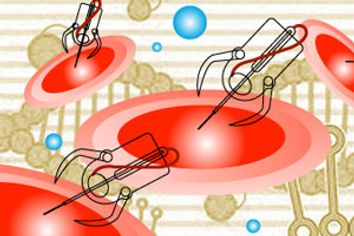
Suppose a glucose-powered nanobiobot has been created to hunt cancer cells via a component antibody moiety. In effect, this nanobiobot has a protein grappling hook designed to dock it with a specific type of tumor cell. Standard dosing therapy will require that billions of these nanobiobots be released into their human “host.” If the antibody arm on even one of these nanobiobots is modified (either by some type of catalytic recombination with circulating antibodies or by simple chemical damage) so that it binds to a different type of cell, it could stay in that body for life, like cryptic viruses such as Epstein-Barr. If this nanobiobot is modified so that it can attach to a human sperm or egg cell, it could theoretically stay in the population for generations.
If this type of nanobiotechnology-based cancer therapy becomes common (and according to the NCI’s nanomedicine site, that is a real possibility), we could have tens of thousands of people carrying cryptic nanobiobots. Even though these nanobiobots were designed for different functions, it is reasonable to assume that they will have a number of components in common. For example, many of them may have antibody components that, in turn, have regions of identical protein structure. These interchangeable parts could act just like the repetitive DNA of introns in eukaryotic genomes. What happens when one nanobiobot (say) on a sperm cell meets a second one on an egg cell? The probability of this is, of course, extremely low. But if the population of nanobiobots introduced into the body is high (say, billions), then a one-in-a-million event becomes common. In fact, microbial and viral systems like E. coli and bacteriophages enabled the molecular genetics revolution precisely because with billions (or even trillions) of test organisms in hand, one-in-a-million events become commonplace.
Suppose in the near future, a routine nanomedical procedure involved the introduction of billions of nanobiobots designed to scour the arteries dissolving plaque. Cleaning out the circulatory system would be considered a “one shot” treatment so that these therapeutic nanomedical devices (nanobiobots) would not have the engine necessary to use human metabolic energy as a power source. But what if, during another “routine” nanomedical procedure, a second therapeutic nanomedical device (nanobiobot) designed to vaccinate against cancer is introduced into the same person? This latter nanobiobot would, by definition, be designed for longevity so that metabolic energy would likely be the power source. Now, what if these two meet up and combine, or exhange vital components? This could happen through physico-chemical damage or perhaps via some type of catalysis mediated by the host’s own complex biochemistry. Now we have a novel, hybrid nanobiobot capable of crawling through our circulatory system for life. Or until it exchanges even more information — either with another nanobiobot or with the body itself. In the world of biology, this type of event would be called a mutation.
Even more likely is the “prion” scenario, in which one of the billions of nanobiobots in the body is damaged or modified and, as a result, gains the ability to convert other nanobiobots in a manner that alters longevity, tissue target, etc. (This is what the abnormally structured proteins called prions do. Prions are responsible for fatal, mysterious brain-tissue diseases like “mad cow” and fatal familial insomnia.) These myriad possibilities bring us to…
The Second Law of Nanobotics: It is not possible to ensure that devices created using the techniques of nanobiotechnology will only transmit molecular information to the target system.
This law essentially says it is impossible to ensure that molecular information only flows in one direction. Just as today’s pharmaceuticals almost always have side effects, there is no natural law that guarantees against the reverse movement of fundamental chemical information from the biosystem to the nanobiobot. Any real nanobiotechnology system — one that uses a combination of biological and synthetic components — is theoretically vulnerable to a reversal in the flow of molecular information. This, in turn, will create opportunities for the unpredictable evolutionary advances of these devices via a process similar to biological mutation.
Put plainly, if the nanobiobot can modify us there is no way to ensure that we can’t modify the nanobiobot.
Corollary to the Second Law of Nanobotics: Before nanobiobots are used outside of a controlled research laboratory environment, we must try to define and understand what it is we are making. And rigorous algorithms and adversary-analysis systems must be developed to test these devices to ensure that they are not obviously vulnerable to the reverse flow of molecular information. Of course, we will never know this with certainty. But we haven’t even started trying to find out.
What this all means is that within a generation, biology will face its ultimate identity crisis. Researchers in the field of nanobiotechnology are racing to achieve the complete molecular integration of living and nonliving materials. We will hack into the CPU of life in order to insert new hardware and software. The purpose is to extend the capabilities of biology far beyond the limits imposed by evolution, to integrate the incredible biochemistry of life with the equally spectacular chemistry of nonliving systems like semiconductors and fiber optics. The idea is to hard-wire biology directly into any and every part of the nonliving world where it would be to our benefit. Optoelectronic splices for the vision impaired, micromechanical valves to restore heart function.
But the moment we close that nano-switch and allow electron current to flow between living and nonliving matter, we open the nano-door to new forms of living chemistry — shattering the “carbon barrier.”
This is, without doubt, the most momentous scientific development since the invention of nuclear weapons. When we open the door and allow new forms of chemistry to enter, we will change the very definition of life. Yet no coherent strategy exists to identify the moment when nanoengineered smart materials cross over into the realm of living materials. Could we even recognize a noncarbon life form at the moment of its creation? The answer seems intuitively obvious until we remember that we too are made of materials. That we too are machines.
Humans operate entirely on electric current. There are 10 trillion living cells in your body, each powered by an electrical potential of 12,000,000 volts per meter. A thousand times as hot as the plug on your wall. The voltage of life is produced inside every cell by a sophisticated electrochemical power generator. Each subcellular “mitochondrion” is a protein nanomachine designed by evolution to burn sugar, one molecule at a time. The heat from this controlled burn yields high-energy electrons that are the anima of the living state. Every move you make can be traced back to a specific flicker of this electron fire. Electromechanical systems drive the contraction of your heart. Electro-optical systems capture the image on your retina. Layers of electrochemical switches form the architecture of the neural CPU in your brain.
The bioenergetic transformations that fuel life are an amazing sequence of reactions that convert light into chemical bond energy. The biological ecosystem of Earth is one gigantic solar-powered fuel cell. Plants harvest the sun and animals harvest the plants. The first step is the light-driven fusion of water and carbon dioxide into sugar via the photosynthetic organisms — green plants and some microbes. This sugar is the fuel that drives the chemical engine of animal life. Our mitochondria use bio-catalytic converters to strip electrons from sugar and feed them into your cellular power grid. As electrons move between energy levels, current flows.
Electronic conduction thus provides the true interface between living and nonliving materials. Today’s technology does not allow fabrication of components that plug directly into this interface, but we are getting close. In the early 21st century, nanotechnology will create the tools to hard-wire into the CPU of life, while biotechnology will provide a complementary molecular schematic of our living circuits. It is the engineering destiny of nanobiotechnology to create the first electro-molecular interface between the living and nonliving worlds. Or, more correctly, the first interface that does not discriminate between the living and nonliving states of matter. Fabrication of the world’s first true Biomolecule-to-Material interface will be infinitely more than a landmark in the evolution of human technology. Like the separate days of Genesis, the first nanofabricated BTM interface will be its own monumental act of creation and a crucial step on the path to bona fide living materials, aka artificial life.
In the history of science, the conduction of signals between living and nonliving materials will be divided into the pre-nanotech and nanotech eras. We are still pre-nanotech, which means that a direct BTM interface has yet to be fabricated, although bioengineering has created synthetic devices that communicate indirectly with living materials. Take an artificial pacemaker. This device transmits an electrical voltage to the biological pacemaker cells of the heart. In a healthy human, these pacemaker cells generate their own action potential, an electrical waveform of about 100 millivolts. This may not sound like much energy until we remember that this electrical potential is sustained across an insulating membrane only five nanometers thick. That is 5 billionths of a meter. So the energy of an action potential is almost 20,000,000 volts per meter. Compare this to the 12,000 volts per meter at a standard wall plug. Healthy pacemaker cells spark the electrical wave that drives heart muscle contraction. When these cells malfunction, an artificial pacemaker may be implanted to take over. Waves of electrical voltage generated at the metal lead of the artificial device cross over to living tissue and initiate normal muscle contraction.
While the pacemaker is a magnificent feat of bioengineering, it does not operate via a true BTM interface. The metal lead of the artificial pacemaker, a small wire, is physically embedded in cardiac tissue and the wave of voltage spreads from the charged tip into the surrounding region. Only pacemaker cells will respond to the artificial voltage wave by initiating a further action potential. So the living system must identify the artificial signal and act upon it. The voltage produced by an implanted pacemaker, like a radio signal, will pass through space unnoticed unless there is an antenna to pick it up. In this case the receiving antennae are individual protein molecules embedded in the membrane of the living cardiac pacemaker cell. Other heart cells feel the electrical signal, but do not respond to it. They may be considered as nonspecific noise in the system. We must flood the local tissue with electricity in order to obtain the desired response.
This strategy is extremely effective, but it does not constitute a direct interface between living and nonliving materials. In the end, the pacemaker does not “know” that the target cells are out there. It will send its signal regardless of whether it is received or not. Likewise, the cardiac pacemaker cells do not “know” that the charged metal lead is out there; they simply respond to an electrical shock.
By contrast, a nanofabricated pacemaker with a true BTM interface will feed electrons from an implanted nanoscale device directly into electron-conducting biomolecules that are naturally embedded in the membrane of the pacemaker cells. There will be no noise across this type of interface. Electrons will only flow if the living and nonliving materials are hard-wired together. In this sense, the system can be said to have functional self-awareness: Each side of the BTM interface has an operational knowledge of the other.
Molecular imprinting offers one nanotechnology strategy to build a BTM switch in the near future. A molecular imprint works exactly the way one would think. An isolated biomolecule is surrounded by some type of self-reactive liquified matrix, often an unpolymerized plastic like acrylamide. A cross-linking reagent is added, and a polymer forms around the biomolecule. When the biomolecule is removed, its ghostly outline is etched into a surface of solid plastic. The imprint fits the biological surface with atomic precision so this nanoengineered component is now a socket into which any identical biomolecule can be plugged. In the case of a pacemaker, the voltage-sensitive protein switches from cardiac cells would be imprinted into an electronic material. The imprinted material would be nanomachined and joined to an equally small power generator. The entire nanodevice, except for the imprinted socket, is then coated with a biomimetic ultrathin film. This coating makes the surface compatible with heart tissue. This nanopacemaker will occupy less than 1 cubic micrometer, smaller than a single bacterium. To complete the BTM interface, a living cardiac pacemaker cell is excised from the patient and plugged into the socket created by the original molecular imprint process. This can be accomplished with a micromanipulator similar to those currently used to move living nuclei in and out of cells. The “hard-wired” nanopacemaker is implanted into the heart where it is cemented into place by the body’s normal healing process.
The example above was selected because it is relatively simple, using technology that is already in the pipeline. Far more sophisticated strategies are on the horizon. One involves literally drawing the imprinted surface around the biomolecule by polymerizing monomers with a computer-targeted laser. When bioengineers begin to fabricate these BTM interfaces we will have entered the nanobiotech era.
If we continue to insist that life on Earth can only result from biological evolution, then the first BTM interfaces built by nanobiotechnology will be speciously trivialized as just a great invention of Homo sapiens. We will congratulate ourselves and conclude that the supremely gifted toolmaker has built the first portal between the worlds of living and nonliving materials. This simplistic view of nanobiotechnology is very much like humanity’s current strategy in the search for extraterrestrial life. In a chemically diverse universe we insist on a perversely self-congratulatory strategy. Water and organic molecules, such as methane, are the identified spoor on this trail. We look for these signs because the biology-centric assumption is that aliens will be just like us, only very, very different — little green people with acid for blood, sentient jellyfish with a taste for cheeseburgers, or insects that have evolved with a sense of humor. Even search strategies that use “universal mathematical constants” ignore the possibility, proposed by some postmodern philosophers of science, that formal modern mathematics is a function of cognitive structure unique to humans, or less specifically to a narrow range of beings similar to humans, for example, hominids. The point is that technology analysts who can only see life as some variation on biology will see the BTM interface as a way for “us” to plug into “it.” Within this paradigm there are no consequences for the definition of life, only new enhancements for the one true life form: biology. We hold up the mirror of humanity and see our own image reflected in the universe.
Most dictionaries define biology as “the science of living things.” But the (correctly) limitless nature of that definition is truncated when plants and animals are immediately used as the prime examples. NASA, an agency that should know better, has saturated the media for decades with hypnotic invocations of water and organics as the true signs of extraterrestrial life. Meanwhile, Hollywood and pop culture endlessly anthropomorphize aliens. Robots get the blues. Silicon sentience springs directly from human mythology. Stories of demonic computers and undead cyber-blood lust are endlessly refilmed with really cool graphics, a variety of soundtracks, and excellent eyewear. Skynet, the “self-aware” computer system of the “Terminator” series, hates us and wants us dead. The equally demonic cyber-beings of “The Matrix” want to enslave us and eat our energy (making this computer both physically dangerous and dangerously ignorant of the physical laws of the universe). It is distinctly ironic that when we consider aliens, life on Earth infuses our scientific models, our dreams, and our entertainment. We could call this “the biology paradox.” The biology paradox makes xenobiology speciously comprehensible, but by clinging to it we dismiss almost all of the chemistry in the universe.
It is time for serious students of sentience to accept that common usage has rendered the term “biology” completely useless in the nanotech age. Thinking outside the biology box leads to the alternative, much more radical concept of living materials — materials with anima.
To describe this new state of life, I suggest a contraction of the term “anima-materials” — “animats.” This term has previously been used to describe adaptive or cognitive systems capable of robust action in a dynamic environment. The goal of these systems involves the creation of higher levels of cognition from many smaller processes. Many scientists who work in this field appear ready to dismiss chemical sentience as smaller and simpler than anything they would consider smart. But we must not assume that minds are built from mindless stuff. Chemical intelligence can manifest as the ability to catalyze a single chemical reaction. It is a dangerous, and possibly terminal, error for the children of carbon to dismiss the power of pure electron fire. Much of our fear of bioterror is based on the power (chemical intelligence) of a single molecule that allows it to block a single metabolic reaction inside the human body.
Better to heed Bertrand Russell’s prescient warning that “Every living thing is a sort of imperialist, seeking to transform as much as possible of its environment into itself.” Russell goes on to use the term “chemical imperialism” as the driving force for biological life. The obvious corollary to this warning is that chemical imperialism spawned human intelligence, not the other way around. Therefore, the definition of an animat as a living material should have primacy over any definition involving more complex cognitive functions. If we accept this logic, the creation of the first BTM interface by nanobiotechnology will require a new operational definition for the living state.
To expand the chemical franchise of the living state we must first deconstruct biology. The Human Genome Project sold us the concept that DNA is the chemical basis of life. But, in fact, that is not true. DNA is the result of life, not its cause. Our genetic code is the crowning achievement of biochemistry, not its progenitor.
It is crucial to keep this distinction in mind when considering the concept of animats. Life is not defined by DNA but by a continuous chemical struggle against entropy. The second law of thermodynamics tells us that all natural systems move spontaneously toward maximum entropy. By literally assembling itself from thin air, biological life appears to be the lone exception to this law. The gaseous molecules snared by plants during photosynthesis were once free to roam the entire atmosphere of Earth. Plants — Earth’s primary producers — fix gas molecules from the air and minerals from the water into sugars and proteins. Humans eat the plants, or we eat the animals that eat the plants. Now those molecules that were free to roam the skies and waters must be where you are, go where you go, and do what you do. Clearly, the atoms in your body have experienced a radical reduction in entropy. But thermodynamics takes the full measure of the physical world. What little biology can build is barely visible against the chaotic horizon generated as the sun exfoliates into space. Like a tiny windmill in the solar hurricane, the wheel of life is turned by a unique set of chemical reactions that capture and channel the least part of that storm of dissipating energy into further cycles of replication. Biological life is a tiny stowaway on the entropy-powered craft of our solar system.
Life, then, is not based on DNA but on a chemical programming language spoken by a discrete set of biomolecules. This language directs the set of operations necessary to assemble the next generation of biomolecules. DNA or RNA, the genetic material, stores the directory of available biochemical operations but does not execute them. The program steps for replication are executed by a set of protein catalysts collectively known as enzymes. It is probable that the first biological life forms were RNA molecules capable of both catalytic replication and data storage — so-called ribozymes. Through evolutionary time, RNA generated two biochemical subroutines, proteins and DNA, to carry out some of the operations of replication and data storage with greater efficiency. Yet a cursory look at the molecular biology of the cell proves that RNA retains its central role. If life is viewed as a discrete set of chemical operations, then nanofabricated components that directly interface biological and materials chemistry must create the possibility of new life forms. These nanofabricated components are, in fact, the next generation of self-replicating systems: not enzymes but animats.
One could argue that it is too early to be talking about animats. It is easy, and reassuring, to dismiss even the most advanced nanobiotechnology systems of the near future as mere devices. But if biological evolution is any guide, that viewpoint is both specious and potentially catastrophic. During the 3-billion-year operation of the algorithm called evolution, revolutionary new adaptations often began as trivial events. A small genetic mutation resulting in a slightly altered protein that provides an incremental, almost trivial, enhancement to catalytic function.
Thermal tolerance is a classic example. A mutation to the DNA sequence translates into a modified physical structure for an essential protein. This new structure has enhanced thermal stability, which means it retains enzymatic function at a higher temperature than the original. As a result, the mutant is capable of 100 percent catalytic efficiency in climates a few degrees hotter than normal. This change in protein structure will only involve the rearrangement of a few atoms, making molecular evolution the original nanoengineer.
Over time, the heat-tolerant progeny of the original mutant may be able to migrate into a warmer climate: say, move down the Sierra Nevada into Death Valley. But it takes thousands of reproductive generations or more for this migration to actually occur. The original mutation will not become essential for a hundred thousand, or even millions of years. Evolution covers enormous distances one angstrom at a time, which means it is almost impossible to catch an adaptation at the exact moment, or even in the exact generation, that it becomes essential for survival. Likewise, it is highly probable that the BTM interface will evolve from smart material to living material. This means that, in order to find the moment when the first animat appeared on Earth, we will have to backtrack from the future. Or be watching the present very, very carefully.
Based on this evolutionary model, it is highly unlikely that animats will spring fully grown upon the Earth. It is much more likely that animats will initially evolve as part of a larger biological system. In order to identify the first true manifestation of a living nonbiological material, we must develop a definitive test to distinguish an organism that is at least part animat from one that carries a smart material designed simply to assist or enhance life function.
This brings us to the Third Law of Nanobotics: The carbon barrier will be eliminated when humans create the first synthetic molecular device capable of changing the state of a living system via direct, intentional transfer of specific chemical information from one to the other.
This law formalizes the concept of animats and leads directly to the “Animat Test,” which is designed to identify the moment in time when life on Earth evolves to include both biological and nonbiological materials — the date when we break the carbon barrier.
Let us define a life form as an entity that reduces entropy by self-executing the minimum set of physical and chemical operations necessary to sustain the ability to execute functionally equivalent negentropic operations indefinitely across time. Given that, a life form will be considered an animat (living material) if all the information necessary to execute that minimum set of physical and chemical operations cannot be stored in DNA or RNA. The corollary: If all the information necessary to execute that minimum set of physical and chemical operations can be stored in DNA or RNA, the life form is biological.
In the beginning, nanobiotechnology will create minute supplemental lifesaving medical devices for humans. The purpose of these devices will rapidly expand to include the performance-enhancing — an inexorable development I have discussed previously. Some of these things will remain devices. But some will have the potential to evolve and should be termed proto-animats. The animat test is designed to be a practical engineering tool to identify the point in time when the proto-animat crosses over and becomes a true living material, an animat. The conditions of the test are independent of both the physical structure of the life form and the physical modality by which the life form perpetuates a negentropic existence across time. That modality could include replication, and/or duplication, and/or continuous self-restoration. The test cannot be applied to entropic life forms since human understanding of physical laws does not currently allow discrimination between life forms and other natural phenomena without cycles of entropy reduction.
Much as we track incoming comets on a possible collision course with Earth, extraordinary vigilance is required as we transition into the age of nanobiotechnology. If the evolutionary model prevails, we are seeking to identify proto-animats: smart materials potentially capable of evolving into animats, living materials. This, in turn, will require a radical expansion of our thinking with respect to the potential sources of artificial life. Up till now (and thanks to people like Ray, Bill and Eric), most models have focused on computers and machine intelligence. Smart materials can certainly contain computers. But it is unlikely that animats will spring to life via some Hollywood scenario whereby a supercomputer crashes into A.I. self-awareness and begins photovoltaic-powered reproductive assembly of little A.I.s (subsequent end-of-the-human-world-as-we-know-it scenarios optional, heavy metal sound track preferred). If the evolutionary algorithm is any guide, animats will break the carbon barrier the way the Bell X-1 broke the sound barrier, carried aloft on the wings of a mother ship. The mother ship will be named Homo sapiens. The initial manifestation of an animat life form will be evolutionary in form, but revolutionary in function. There is also the possibility of progression from the ternary fusion of biological life, machine intelligence, and smart materials (proto-animats). But it is crucial to recognize that living materials need only think with their chemistry. No Boolean or humanoid logic is required to qualify as life. The absolute progress of chemical imperialism can only be measured in entropy reduction.
Unless we know what we are looking for, the first proto-animats will be invisible in the storm of nanobioengineering systems expected to come online over the next generation of human life. Most of these nanodevices will not have the potential to evolve beyond cyborg mode, i.e., technical augmentations to biological life forms. There are many future scenarios in which humans will need their machines to continue to live, but until an animat is carried through time as part of a life form’s self-executing set of essential operations, the carbon barrier will remain intact. But when the portal between two worlds is atom-size, how will we know when it finally opens?
In a world where we are already doing research on artificial life, synthetic biology and nanobiotechnology, this question cannot possibly be considered academic. Materials will continue to get smarter until they finally break the carbon barrier. In the near future, some nanoscale cyborg technology will undoubtedly be designed to propagate along with the host using molecular self-assembly, the same strategy used by biological systems.
But self-assembly is not unique to living systems and, therefore, cannot be used as the litmus test for new forms of life. Water molecules can self-assemble into the simple crystalline pattern of an ice cube or the infinite complexity of a snowflake. Quartz and other inorganic minerals can spontaneously crystallize and grow with a concomitant reduction in entropy, yet geodes are definitely not alive.
However, molecular self-assembly is an excellent strategy for building nanomachines and many researchers are studying ways to harness this phenomenon. Such nanomachines could even be designed to use self-assembly to replicate. The original “Grey Goo” scare (the very mention of which is anathema to most nanoscientists) involved a scenario whereby endlessly self-replicating nanomachines literally covered the earth. This scenario is generally attributed to speculation contained in Eric Drexlers 1986 book “Engines of Creation.”
While the science behind the original Grey Goo scare was and remains completely unrealistic, we are getting better and better at using molecular self-assembly to build, maintain and propagate nanomachines. For example, it is certainly realistic to posit nanomachines that use ingested trace metals and semiconductor nanoparticles (for example, silica) to replicate inside the host’s cells, including germ cells. This type of device could enhance human performance and even move from parent to child, yet would not be considered to be a new life form (either alone or in combination with its human host) unless it could pass the animat test. More to the point, the animat test gives us a way to determine when a smart material crosses over and becomes a life form.
It is ironic that, because of nanobiotechnology, we have never been closer to a Grey Goo scenario — although the actual color will more likely be green or red. Because biomolecules learned self-assembly through billions of years of evolution, nanobiotechnology has a tremendous advantage when it comes to applying this particular strategy to create artificial life.
In fact, we have put into motion research that will create every component necessary to build an animat. One formula is as simple as A + B + C.
A = Nanobiotechnology devices that can survive and function inside human beings. Many therapeutic devices in development for drug delivery, cancer therapy, etc., are designed to survive in the physicochemical environment of the body.
B = Nanobiotechnology devices that can derive energy from biological metabolism. Many nanomedical devices will be powered by the fuel available inside the human body. A common idea is to take our own glucose-oxidizing enzymes and use them as a fuel cell for the nanobiobot.
C = Nanobiotechnology devices capable of copying themselves by molecular self-assembly.
Which creates a completely realistic animat formula. A + B + C = a self-replicating nanobiobot capable of living inside the human body powered by our own metabolic energy.
Of course, scientists are not intentionally putting A together with B and C. No one is trying to create the first true animat — they’re just working on rudimentary forms of artificial life or synthetic biology. But if, as part of this benign research initiative, they happen to create nanobiobots some of which have traits A or B or C — our definition of life will have changed forever.
Does this mean we will immediately cease to be human? Probably not. The most probable scenario is that an array of proto-animats will be carried as an evolutionary adaptation that enhances biological function for generations before any of them become an essential part of our phenotype. After that…
If the animat test described here is not sufficient, let it stand as a challenge for the development of a completely rigorous test for the unequivocal identification of nonbiological life forms. The larger point is that humanity must initiate a search-and-test protocol now in order to prepare for the arrival of the literal alien from within.
Nanofabricated animats may be infinitessimally tiny, but their electrons will be exactly the same size as ours — and their effect on human reality will be as immeasurable as the universe. Like an inverted SETI program, humanity must now look inward, constantly scanning technology space for animats, or their progenitors. The first alien life may not come from the stars, but from ourselves.
It’s the not-too-distant future, say 2016. You have been diagnosed with Stage III melanoma. Cancer has metastasized throughout your body. Just 10 years ago, in 2006, the choice of treatment would have been based on the type of primary cancer, the size and location of the metastasis, your age, your general health and your treatment history. Your prognosis would have been gloomy. But that was back in 2006, before we entered the era of nanomedicine.
In 2016, your doctor will be capable of scanning your entire genome in a few minutes. She will do this because every cell has a different gene expression pattern or profile. When a cell becomes cancerous, this profile changes. Your Stage III melanoma has a unique, schizoid genetic signature reflecting both a skin cell heritage and a newly acquired outlaw metabolism. Your doctor will explain that while your cancer has a great deal in common with other Stage III melanomas, it is not exactly like any other. Your doctor knows this because for the past few years DNA from virtually every melanoma patient in the U.S. healthcare system has been routinely extracted, scanned and deposited in a national database. This population of sequences, fully analyzed and with a user-friendly graphic interface, is available in real time. Searching this database for any specific cancer sequence will be about as difficult in 2016 as finding Madonna’s birthday on Google is today.
The exam room of 2016 reflects a rainbow of nanomedicine paraphernalia. Diaphanous pink microtubes sit in bubble packs like sets of false nails. Red motorized pipettes hang in translucent blue plastic racks like designer tool kits from the Starship Enterprise. Shelves are filled with what appear to be airline-size single-serving cereal boxes with very slick, stunningly bright labeling. These boxes contain individually packaged, ready-to-use diagnostic kits with exciting brand names — DNA Warrior, Mighty Clone or Gene Catcher. An invisibly small drop of your body’s fluid is injected into the DNA Warrior, which is a cylindrical cassette the size of a pinhead. This cassette is slotted into the Sherlock Genomes molecular diagnostics system.
From the outside, this “system” appears considerably less complex than your current cellular telephone. Inside, a single melanoma cell is purified from your blood via solid-phase fluorescent immunoaffinity chromatography, a technique in which a single cancer cell is “hooked” from amid millions of its healthy companions using a synthetic antibody molecule and “reeled in” on the beam of light produced when the two unite. Twenty years ago this technique required a million-dollar instrument the size of a 767 cockpit and a dedicated operator. Now it is little more than routine blood work.
Once purified, the renegade cell is moved via electroosmotic microfluidic channels to a lab chip that, in another venue, could pass for a credit card. Electroosmosis uses the charged molecules on the surface of the channel itself to cause a solution to flow in a specific direction. This will only work when a tube or channel is extremely small. Microfluidics use pipes the size of a human hair to create plumbing systems that empty into reaction chambers much smaller than the head of a pin. This enormous volume is dictated by the dimensions of your humanity — any smaller and a living cell wouldn’t fit inside. On the lab chip, a purified cancer cell relinquishes its cache of chromosomes and within seconds your entire genome has been sequenced. That bears repeating. In a few years single-molecule DNA sequencing will be a reality. The 2.91 billion bits of biological data that bestow your unique genetic identity will be available virtually anytime for the cost of a routine blood test. Sound far-fetched? Two weeks ago J. Craig Venter, the genomics entrepreneur who paced the U.S. government to the completion of the Human Genome Project, announced that he hopes to offer $10 million as a prize (he originally pledged $500,000) for automated DNA sequencing technology that can decode a human genome for $1,000. At that same conference, a commercial instrument capable of sequencing 1 billion bases, or chemical groups, of DNA per day was unveiled.
A machine that “shreds” a billion bases of DNA a day could burn through the human genome in 72 hours. Yet we fully expect that this phenomenal accomplishment will be eclipsed within a few years by nanoengineering. Around the world, research teams are closing in on single-molecule DNA sequencing technology. One group has published a design for an instrument that could place a million single-molecule sequencers on a device the size of a postage stamp. To accomplish this, each sequencer will have an operating volume of one zeptoliter — much less than one billionth of one billionth of a liter! There can be no doubt that within a few years, most individuals will have their genome sequenced and encoded as part of their medical record. And this is just the beginning.
No equation can represent the astonishing technological trajectory we are on. The trek from Olduvai Gorge to Mesopotamia — from Homo habilis to the wheel — took 1.5 million years. A mere 5,500 years took us from the wheel to the double helix. Then 50 years to the human genome. Nanotechnology, our ability to build molecular devices with atomic precision, is the transcendent culmination of our co-evolution with tools. With the advent of nanomedicine, we will turn these tools inward.
The National Cancer Institute’s fact sheet on nanotechnology and cancer says, “Most animal cells are 10,000 to 20,000 nanometers in diameter. This means that nanoscale devices (having at least one dimension less than 100 nanometers) can enter cells to interact with DNA and proteins. Tools developed through nanotechnology may be able to detect disease in a very small amount of cells or tissue. They may also be able to enter and monitor cells within a living body.”
According to the National Institutes of Health, nanotechnology could create devices capable of reporting the onset of cancer at the exact moment of molecular metamorphosis, long before today’s tests are effective. The key, as with DNA sequencing, is single-molecule sensitivity. One approach will use individual carbon nanotubes (molecular rods about half the diameter of the DNA molecule itself) to literally trace the physical shape of a single DNA molecule the way a phonograph needle traces a vinyl record. Another early-detection strategy will use the quantum dots (Q-dots) described in a previous article. Latex beads filled with these crystals will be designed to bind to specific DNA sequences. When the crystals are stimulated by a flash of light, they emit colors that light up the sequences of interest. By combining different-sized quantum dots in a single bead, scientists will create probes that release a spectral bar code specific for each type of cancer mutation.
Nanotechnology will also create tools to eradicate cancer cells without harming healthy cells. In therapy applications, as in detection, single-molecule recognition is the key. Each magic nanobullet will home in on a specific, targeted molecular structure. In fact, the goal is to treat cancer like an infectious disease. We will be vaccinated with nanoparticles that continuously circulate through the body. This cancer vaccine — really a primitive cancer-killing nanobot — will detect molecular changes, assist with imaging, release a therapeutic agent and then monitor the effectiveness of the intervention.
How close are we to cancer-killing nanobots? The NIH Web site talks about nanoshells — minuscule beads coated with gold. By manipulating the thickness of the layers constituting the nanoshells, scientists will design them to absorb specific wavelengths of light. The most useful nanoshells are those that absorb near-infrared light, which can easily penetrate into the body. Absorption of light by the nanoshells generates a lethal dose of heat. Researchers can already link nanoshells to antibodies that recognize cancer cells. In a “magic bullet” scenario, nanoshells will seek out their cancerous targets. Once they have docked, they will be zapped with near-infrared light. In laboratory cultures, the heat produced by light-absorbing nanoshells killed tumor cells while leaving neighboring cells intact. Experts believe quantum dots, nanopores and other devices may be available for clinical use in five to 15 years. Therapeutic agents are expected to be available within a similar time frame. Devices that integrate detection and therapy could arrive in the clinic in about 15 to 20 years, which means a cure for your Stage III melanoma and other forms of cancer could arrive within your lifetime.
Things like quantum-dot bar codes and magic bullets made of gold nanoshells are in the lab right now. But these therapies are not pure nanotechnology. Rather, they are a hybrid of nanotech, biotech and conventional chemotherapy. For true believers, the real revolution will come when scientists start building molecular devices from their component atoms. The wildest dreams of nanomedicine are displayed in the Nanomedicine Art Gallery, where you can view illustrations and animations of futuristic phenomena including bronchial airbots, bacterium zappers, blood probes and microbivores. According to the artist, the microbivore is “a theoretical nanorobot” that will cruise our bodies in the relentless pursuit of bad actors. If we can program these bots to eat bacteria, we can program them to eat cancer cells: So microbivores will quickly morph into the sheriffs of the nano-West, clearing out evildoers and varmints of all stripes.
Not everyone believes that molecular assemblers will be viable. But with or without them, it’s undeniable that revolutionary nanomedicine-based tools are on the way. And when they arrive, they’ll turn our world upside down — and not always in a good way.
Nanomedicine will be one of the greatest boons in human history. It could eventually allow doctors to save millions of lives and prevent entire populations from contracting various diseases. But it could also push the cruel divide in medical access that already exists to the absolute limit. Those with access to nanomedicine will face a different cruel divide, created by the inevitable time lag between the availability of diagnostic tools and efficacious cures. This gap, perhaps a decade or more, will raise its own set of unprecedented ethical questions — ones that will get even thornier once those cures are available. In the near future this tsunami of nanomedical choices could literally drown our healthcare and insurance systems.
Some of these choices involve elective genetic selection. If we can find and reprogram cancer or diabetes genes, we can certainly find and reprogram genes for simple physical traits like height or eye color. Genetic engineering raised these questions, but nanomedicine ensures they are here to stay. The physiological genetics of more complex traits like personality, sexual orientation and antisocial behavior will not be far behind. Likewise, nanobots that circulate and release chemicals on cue need not be limited to medicinal applications. (Think of the fate of the liquor industry when ethanol-releasing bots are online.) The ethical and financial implications of these developments are obvious.
But long before we have cures, nanomedicine-based diagnostics will create its own vortex of urgent healthcare issues. In the less distant future, say 2012, single-molecule DNA sequencing will mean that your genome will become an integral part of your medical record along with all sorts of other biomolecular identifiers. Beyond DNA sequencing, the tools of nanobiotechnology will allow us to predict both the metabolic state and the ultimate fate of cells and tissues with increasing precision. As a result, medicine will enter a phase we might call “Cassandra and the bell curve” — an uneasy situation in which we can predict the future, but only partially, with the result that we never get a truly specific prophesy to believe in.
On a long enough timeline, this means a new arsenal of weapons for, among other things, the war on cancer. It will be the promised golden age of biopharmaceuticals. But meanwhile the smart money is in diagnostics.
Lots of companies are eager to get in on the ground floor. In 2000 Celera Genomics made history as the private company that forced an international consortium of developed nations to share the glory of sequencing the human genome. Celera still markets the intellectual property created by this accomplishment, but the heavyweight champion of DNA sequencing is now vigorously pursuing a career in the ring of molecular diagnostics. Celera Diagnostics is focusing its discovery efforts on “identifying genetic variations associated with common, complex diseases.” And it is “working to develop new diagnostic products and to improve human health through an approach we call Targeted Medicine.”
In theory, targeted medicine (aka personalized medicine) sounds awesome, and whenever it’s viable most of us will want it. But before it is perfected, it will leave all of us — patients, doctors, governments, healthcare providers and insurance companies — in a frustrating, confusing and sometimes tragic limbo. And even after it is viable, it will raise huge questions, ones for which there are no easy answers.
Consider recent progress in the molecular diagnostics of breast cancer. Breast cancer patients with the same stage of disease can have markedly different treatment responses. In practical terms this means that no woman with breast cancer, even from the same demographic, has exactly the same illness as any other. Each woman’s cancer has its own unique genotype. Currently, conventional medical treatment with chemotherapy can reduce the risk of metastases by approximately one-third. However, clinical data also show that 70-80 percent of patients receiving chemotherapy do not, in fact, benefit from it. Put simply, at least seven out of every 10 women patients endure chemotherapy for nothing. The agonizing current dilemma for doctors and patients is that chemotherapy will prolong life for three of the 10 women, but we can’t determine which three.
The plan is to use gene-scan data to predict which patients will benefit from chemo. In 2002, workers in the Netherlands used a DNA microarray to develop a gene expression profile that outperformed all currently used clinical parameters in predicting disease outcome. They suggested that their findings provided a strategy to select patients who would benefit from adjuvant therapy (i.e. chemotherapy and/or radiation). This information, originally published as basic research, reached the public in articles with encouraging titles like “New Study Could Cut Breast Cancer Overtreatment.” In this article, a member of the research team was quoted as saying, “We have confirmed that we can predict with 90 percent certainty that a patient will remain free of breast cancer for at least five years.” Since then things have improved, but only incrementally.
The key concept here is “a patient” — i.e. you or you but not her. This is the world of personalized medicine, made possible by gene-scan-powered molecular diagnostics. In a perfect future, these gene scans will tell us which seven women can decline chemotherapy. But in the immediate future, these scans will only tell us the probability that a woman can safely decline treatment. This probability will get better every year, but when will molecular diagnostics be reliable enough to base life-and-death decisions on?
This work on breast cancer is, literally, just the tip of the iceberg. Long before single-molecule DNA sequencing (or $1,000 genomes) hits the marketplace, thousands of labs around the world will be using standard biotechnology instrumentation such as DNA microarrays to create molecular profiles of people and populations. These profiles will be used to develop diagnostics for every major disease and disorder. Like reproductive cloning, this technology takes us to the very essence of what it means to be an individual. Unlike cloning, the field of molecular diagnostics is receiving almost universal acclaim as a worthy goal for the future of medicine.
“A little knowledge is a dangerous thing. So is a lot.” Once again, Einstein provides the appropriate homily. Like the manifestation of Moore’s law in computing, improvements in molecular diagnostics and nanomedicine are astonishing but still leave us far short of where we need to be. Unlike for the next generation of semiconductor chips, the time to market for each new product in targeted medicine will be measured in human lives. Before we have the set of genetic profiles or the tools to treat all breast cancers, we will know enough to modify the treatment regimes of a few breast cancers, then enough to help some breast cancers, then enough to help many. At what point will this knowledge be allowed to enter the healthcare system? Will everyone have access to it? Who will pay for it? And who will make all these decisions?
Theoretical microbivores notwithstanding, no one seriously questions the transformative power of nanotechnology for human health. But it is equally true that no one understands how this revolution in personal medicine will impact a healthcare delivery system that, for many, is already hopelessly complex and frustrating.
New pharmaceuticals now reach the marketplace by showing efficacy in clinical trials based on the average response of a patient population. But nanotech-based diagnostics will open the option of personalized medicine, which, by definition, means that there is no longer an “average” response to therapy. Each patient’s treatment regime should be unique. But there’s no way we can do that with our existing healthcare system.
The reality is that we will have a world of molecular diagnostics long before we have a world of molecular cures. In the immediate future, gene scans will guide the use of conventional or biopharmaceutical therapies. In this world, women diagnosed with breast cancer will be advised that postoperative chemotherapy will not extend their survival. But this advice will come with a statistical caveat. More correctly, each patient will get her own prognosis with her own statistical caveat. The woman, her doctor, her insurance company and the government will all receive a statistically weighted prediction about her future. How are society, the government, private industry and the individual going to deal with this situation? The first act of the drama called personalized medicine will still be written by nature, the second by biotechnology, the third by nanotechnology. But who or what will be the author of the finale?
Within a generation, nanotechnology will completely invert our concept of medication. Today vaccines come with literature warning of a low probability that “some people” are subject to side effects or complications. In the age of nanotechnology-driven personalized medicine there will be no such thing as “some people.” Theoretically, you should be able to know if you are that one in 10,000. But will you want to know? Will you be allowed to know? What will it cost to know, and who will pay? What if you could have known but didn’t ask … or weren’t told? And perhaps most disturbing of all: What if it turns out to be too expensive for society to pay for universal diagnosis, let alone treatment? Could we enter a world in which the rich live on and on, while the poor are denied even the knowledge of the disease that is inexorably killing them and whose prevention is at hand?
Our already faltering system was never designed for, nor can it handle, the flood of molecular diagnostic data that will reach biblical proportions within a decade. Just when we thought the web of healthcare delivery couldn’t get any more tangled, patients, doctors and HMOs are about to meet the world of personal genome sequencing. Then will come gold nanoshells and, perhaps a bit later, microbivores.
And by the way, the proliferation of unique molecular identifiers will make medical privacy an impossibility because, ultimately, these types of data cannot be encrypted. The medium is the message. Millions of people have your fasting-blood-sugar value, but no one else on earth has your gene sequence. Get the idea? Any single-molecule-based nanomedical procedure could identify you beyond a shadow of a doubt. Yet a fundamental principle of nanomedicine is that billions of single-molecule fingerprints from DNA, RNA and proteins will be routinely available for diagnostic and therapeutic strategies. Which is the same as saying farewell forever to anonymity for your health records.
O brave new world, that has such genes in it!
Continue Reading
Close
Vast government contracts have corrupted the American university system, turning off the fountainhead of unfettered ideas and scientific discovery. Multibillion-dollar federal R&D budgets have replaced the solitary inventor with veritable armies of scientists and engineers in laboratories across the country. Public policy itself has become the captive of a scientific-technological elite.
2005? Try 1961. The paragraph above was taken with only minor changes from President Dwight Eisenhower’s famous farewell address.
Things have only gotten worse in 44 years. If Eisenhower was worried about the power and influence of what he called “the military-industrial complex” then, he’d be catatonic now. The risks — and opportunities — posed by today’s corporate-academic-military behemoth are exponentially greater than in his day. So is the money: Total military spending on basic R&D is probably somewhere between $15 billion and $20 billion per year and rising. Scientists funded by this bottomless war chest are working on mind-blowingly powerful devices that threaten to plunge the world into a deadly new arms race. Oh sure, this stuff could also revolutionize medicine, communications, transportation and every other aspect of human life: the shopworn “spinoff” argument honed for decades by NASA’s P.R. machine. But whether humanity will get to use the awesome power of these new technologies — in particular nanotechnology — for good rather than ill is one of the key questions of the 21st century.
As a five-star general and the commander of Allied forces in Europe during WWII, Eisenhower was front-row center when the Manhattan Project transformed our reality. He watched a small group of the world’s brightest scientists and engineers, with access to the enormous financial resources of the federal government, creating blueprints for machines capable of tearing apart the very fabric of the universe — followed, in short order, by the conversion of those blueprints into enormous production facilities operated by corporate contractors with even more government funding. The result: a gargantuan arsenal of thermonuclear weapons capable of destroying the world many times over — a capability previously unknown in the history of war and warriors.
But the insanity of the Cold War pales by comparison to what the military-industrial complex and the scientific-technological elite have in the pipeline for the 21st century. Nuclear war is terrifying but, technologically, it’s a one-trick pony. The weapons of the future will be infinitely more diverse and creative. And the driving force behind them, the technological cutting edge, will be nanotechnology.
There has never been anything like nanotechnology. It draws on our accumulated scientific knowledge about how to measure, modify and manipulate the very building blocks of our world: atoms and molecules (see accompanying article). Homo sapiens, the animal world’s most skillful toolmaker, has finally begun to create the ultimate toolkit, one that will someday be capable of breaking the world down into its smallest parts (or creating new parts) and putting them back together again in new ways.
For the past five years, unknown to most Americans, the United States has been buying tools for this kit via a strategic program called the National Nanotechnology Initiative. (Full disclosure: I am on a National Research Council committee charged with evaluating the NNI.) One of the NNI’s chief purposes is to revolutionize military equipment. In 2003, MIT and the U.S. Army officially opened the flagship nanotech R&D facility, theInstitute for Soldier Nanotechnologies.
This 28,000-square-foot facility in Cambridge, Mass., underwritten by a $50 million grant from the U.S. Army, may very well be the world’s most exclusive R&D club. Its members include bluebloods of the old military-industrial complex like Raytheon and DuPont, along with new blood like Zyvex (“providing nanotechnology solutions — today”) and Carbon Nanotechnologies.
According to the original press release, the ISN “combines basic and applied research to create an expansive array of innovations in nanoscience and nanotechnology that will dramatically improve the survivability of soldiers. Current ISN research focuses on several key soldier capabilities, including protection from bullets, blasts and chem/bio threats; automated medical monitoring and treatment; improved performance; and reduced load weight.”
This description of research projects — “protection” from bullets and blasts — makes them sound purely defensive, but there is simply no way that can be true. Our military knows very well that, ultimately, the best way to “improve the survivability” of a soldier is to eliminate the enemy. If a revolutionary ultra-light nanofabricated material can stop today’s bullets, why not use this same material to make tomorrow’s bullets? But for real war gamers this logic is only a trivial beginning. It is incumbent upon them to assume that, if we don’t make these nanofabricated bullets, somebody else will. And if somebody else can have them, it is further incumbent upon serious war gamers to recommend that a further round of R&D is necessary to protect our soldiers from the nanomaterials initially designed to protect them. These games get much, much deeper … and they get there really fast. Plus, the most amazing things these folks are factoring into their games undoubtedly remain classified
And so it goes, the endless upward spiral of theoretical escalation driving a downward spiral of research into the small, smaller and, finally, smallest. Research that, enabled by the latest breakthroughs in nanofabrication, will bring imaginary terrors into being. It is exactly this circular logic that has led America to initiate the next global arms race in recombinant DNA-based, nanotechnology-enabled bioweapons.
In two previous articles, this author has reported on the vicious cycle of paranoia that has made “biodefense” the top priority across all federal R&D laboratories. (The biggest untold science and technology story in America is that one-third of all basic research at NIH is now on biodefense. The Federal Biodefense Research conference for fiscal year 2006 will be held at the end of this month.) There is a profound and dangerous Catch-22 clause involving high-technology “biodefense” research, one that we ignore at our own peril.
Put simply, the whole world knows that you can’t separate biodefense from biowarfare. This concept was clearly enunciated in the 1972 Convention on the Prohibition of the Development, Production and Stockpiling of Bacteriological (Biological) and Toxin Weapons and on Their Destruction (signed by the United States on April 10, 1972). Yet, 35 years later, the second Bush administration has given us a policy based on these same two fatally flawed assumptions explicitly recognized in the Bioweapons Convention. Logic error 1: that a defensive bioweapons program differs fundamentally from an offensive program. And logic error 2: that it is possible to defend against biowarfare agents. (Shades of Reagan and Bush’s dreams of a defense against ballistic missiles.) The community of nations has universally rejected these assumptions as unfounded and completely incorrect. But as we know, when it comes to deciding the fate of the world there is a higher authority than the community of nations. Or even the American people.
Our bioweapons research programs, enabled by recombinant DNA technology, were frightening enough. But the danger is about to increase exponentially, as “biodefense” research meets nanotechnology.
In high-technology incubators around the world, biotechnology and nanotechnology together are spawning. With the literary imagination for which engineers are famous, the offspring of this union has already been named nanobiotechnology. The overt goal of nanobiotechnology is to completely break down the borders between living and nonliving materials. This goal has the most profound implications for every aspect of human endeavor, but in warfare the consequences of integrating our most powerful technologies are almost beyond comprehension. The fusion of nanotechnology and biotechnology will erase any distinction between chemical, biological, and conventional weapons, altering the face of war (and life) forever.
The key thing to remember is that every military application also has a non-military one: tomorrow’s sword will be next week’s plowshare (and vice versa). In the nano age, if you aren’t very afraid and very excited at the same time, you aren’t paying attention.
So just what kinds of military devices are in store for us? We can get an idea simply by examining what the ISN is currently advertising, translating it into English, then extrapolating out another ten years or so.
Energy-absorbing materials
Nanosoldierspeak: “ISN researchers are developing energy-absorbing nanomaterials that will be part of the future soldier’s battle suit. These new materials will provide the soldier with protection against ballistics and directed energy, thereby enhancing the soldier’s survivability.”
Translation: Humans have been seeking “protection against ballistics and directed energy” since the first time someone got hit over the head with a bone, which means we have been seeking this technology since before we were Homo sapiens. Up until now, we have had to drag around a shield or wear heavy armor. But nanotechnology will deliver protection in a way that enhances the performance of our naturally evolved body rather than weighing us down. In fact, when combined with properties like “mechanical actuation and dynamic stiffness,” discussed below, people wearing body armor will be moving far faster than those of us relegated to Levis or even Gucci.
Mechanically active materials and devices
Nanosoldierspeak: “ISN researchers are developing nanomaterials that are capable of mechanical actuation and dynamic stiffness. As part of the soldier’s battle suit, these adaptive multifunctional materials will improve soldier performance and may provide medical assistance in the field.”
Translation: Artificial muscles! Clothing or ultra-lightweight body armor that provides superhuman strength, integrated within the impregnable (sorry, energy-absorbing) body armor under development above. Let’s tell it like it is: The ISN wants to build (sorry, nanofabricate), an ultra-light, ultra-strong and ultra-powerful exoskeleton. But the real super-soldier is far more than a human wearing an exoskeleton that imparts inhuman speed, strength and endurance. This nano-enabled exoskeleton will be made of molecular “smart materials” that also create the type of super-sensor powers described below.
Sensors and chemical/biological protection
Nanosoldierspeak: “ISN researchers are developing protective measures that will enable the future soldier to detect and respond to chemical and biological threats. Research is taking place on the development of highly sensitive sensors as well as protective fiber and fabric coatings that can be integrated in the battle suit. These external systems will enhance the soldier’s awareness of environmental toxins, thereby providing the soldier with initial protection against chemical and biological agents.”
Translation: Evolution has already provided biological life with a “sensorium” capable of detecting individual molecules. That is, the biomolecules inside our bodies can “see” the individual molecules in our environment. Our eyes, for example, can “see” a single photon of light. When we are not distracted, or overwhelmed by the ambient noise of life, all our senses can operate with this type of resolution. But how is such a thing possible? Each atom transmits a unique electromagnetic signature into nearby space. A molecule is a unique group of atoms, so that the space around a molecule has an even more complex signature field. Molecules see and recognize each other via the interaction of these force fields. Sometimes molecular signals merge into a powerful force-field beam that breaks the surface of our macroscopic world. (When uranium undergoes radioactive decay, it emits a beam that’s hard for us to miss.) But individual molecules can sense each other every time, all the time — so that single molecule detection provides near-perfect sensitivity to almost anything that can happen in the physical world.
The ISN will create artificial molecular nanosensors based on the schematics originally built by evolution. Working backward from a successful design is called reverse engineering. So the nanofabricated super-soldier exoskeleton will have an array of reverse-engineered artificial molecular sensors built directly into it. These artificial sensors will be wired into the biological “sensorium” of the soldier. As a result, the nano-enabled combatant will be able to see or sense almost everything in his or her environment. Artificial molecule-scale sensors may start off as external systems to “enhance the soldier’s awareness of environmental toxins” or other signals, but this technology can be used to create a whole new set of superhuman senses for anyone, not just soldiers. Someone, somewhere, will soon be able to “sense” almost anything, anywhere in the physical world. Without entering your home, I can know what you are eating, drinking, smoking, wearing, or not wearing. Who gets to have these senses? Will they be installed as passive or active?
Biomaterials and nanodevices for soldier medical technology
Nanosoldierspeak: “ISN researchers are looking at ways to use nanotechnology to improve the way we detect and treat life-threatening injuries such as hemorrhage, fracture, or infection. With new approaches to soldier triage and with automatic first aid for a wounded or disabled soldier, the ISN’s goal is to at least begin, if not complete, recovery while the patient is still on the battlefield by developing ways to monitor patient physiology as well as novel materials for wound healing.”
Translation: Your camouflage suit is going to sense your metabolic condition and know when you are hurt or wounded. It is going to melt into your wound to stop the bleeding, set your bones, and give you a shot of morphine. To do this, your nanofabricated suit had better have the ability to speak the same language as your living tissue. So using nanotechnology to provide “automatic first aid” ultimately means using molecular sensor systems to detect and respond to the presence of blood cells, serum or antibodies. Basically, the idea is to hack into the CPU of life and interface our biological systems to artificial ones. Make no mistake, we are talking about the ability to hardwire the delivery of medical procedures, drugs or chemicals directly into things worn in or on the body in response to remote signals or sensations. This will undoubtedly save lives on the battlefield, but it also opens up mind-boggling possibilities for behavior modification and control. Instead of an injection when you are wounded, how about an injection when you act in an antisocial manner? Will we have the wisdom to control the machines we have created, especially when they have been built to operate autonomously? In the years ahead, that question will no longer be merely philosophical.
- – - – - – - – - – - -
So, let’s take stock. Based simply on the projects posted for public consumption, the ISN is busy creating a soldier of the future who will be protected by an impregnable exoskeleton. This 21st century armor will also impart superhuman strength, reflexes and endurance. It will sense its environment with molecular precision and administer chemicals, pharmaceuticals and other potions directly to the human inside based on pre-programmed stimuli or other command and control signals (global satellite phone link to headquarters … a battle computer in geosynchronous orbit … HAL?). It kind of makes one long for the old “mineshaft gap” of the Cold War.
Continue Reading
Close
What is nanotechnology? Recent surveys indicate that most Americans don’t have a clue. (The good news is that most of the rest of the world doesn’t either.) Competing definitions are in circulation. The simplest, but least adequate, simply states that anyone manipulating matter at the dimensions of 100 nanometers or smaller is engaged in nanotechnology. How big is a nanometer? A billionth of a meter, but that definition doesn’t mean much. If you split a human hair into a thousand equal parts, each part would be about 100 nanometers in diameter — a nanohair, so to speak. But researchers on the frontier of nanotechnology have no interest in working with anything this bulky and cumbersome. They would argue, and quite rightly, that by the time you reach this scale most of the qualities unique to the nanoworld have either been used or lost.
A far more meaningful definition of nanotechnology is this: Nanotechnology is the set of tools necessary to design and build molecular devices with atomic precision. Molecular devices are the tiny machines that we use to construct things in the nanofuture. How big will they be? Start with atoms. Each atom is a blob of primordial universal stuff, a fraction of a nanometer in diameter. A standard baseball is about 3 inches in diameter, or about 7.5 centimeters. If we shrink this ball to one-millionth of its original size, it is now about 75 nanometers in diameter — just below the NNI’s upper limit of 100 nanometers. If we shrink it again so it’s one-thousandth of the already tiny baseball, it will be less than one-tenth of a nanometer in diameter — slightly smaller than a carbon atom (whose diameter is 0.154 nanometers, for those keeping score). For the nanoengineer, individual atoms are the components of a molecular device. In order to have moving parts, workspace, inputs, outputs, etc., a molecular device will need a few thousand atoms. This brings us back to about 100 nanometers, the generic upper size limit for nanotechnology. So why is the first definition poor and the second meaningful? The answer, like nanotechnology itself, lies outside the very limits of our physical world.
While the universe may hold wonders without end, our physical realm can be explained by a few simple yet profound rules of atomic behavior. These rules do not differ greatly from the ones envisioned by the first proponents of atom theory, the ancient Greek philosophers. The physical, or macroscopic, region of our senses and experience behaves in a manner fully consistent with this atomic theory of matter. In fact, the microscopic world of bacteria, viruses, and molecules looks just like our world, only much, much smaller. A bacterium swims in a drop of water much the way you or I swim in a pond. Actually, some swim, and some, like the intestinal bacterium E. coli, have a little propeller that looks and works a lot like an outboard motor. Bacteria, molecules, and even whole atoms are subject to the effects of heat and cold. When you fry an egg, it is the very proteins that denature and turn white. Molecules of air collide just like billiard balls, making endless bank shots off each other and the walls of the room.
Democritus of Abdera (ca. 460-370 BCE) laid down the basic principles of atomism. He proposed that atoms are separate from each other and distinguished in size, shape, position and arrangement. He further stated that atoms could overtake each other, collide, and interact to create “compound bodies.” He also used atomism to formulate what we now call the law of conservation of energy (aka the first law of thermodynamics), by stating, “Nothing can be created out of nothing, nor can it be destroyed and returned to nothing.” This may be the most famous and profound observation in all of science. Democritus was truly the grandfather of modern chemistry and the godfather of nanotechnology. His prescient ideas included the concepts of atomic weight, and the essential idea that atoms had chemical properties based on their size and shape. He believed that these chemical properties were responsible for material manifestations such as color and taste. His ideas were, in fact, correct — but only for that which is atom-size or larger.
The kingdom of nanotechnology is infinitely more complex and mysterious than the atomic world first sketched out by Democritus because it spans both the atomic and the subatomic. Nanoengineers manipulate individual atoms by controlling their ability to chemically bond. But to bond, atoms must share tiny bits of themselves — electrons. Electrons are subatomic particles, so a few rudimentary concepts from quantum mechanics must be used to characterize their behavior.
Quantum behavior is never seen in the “real” world, nor does it make logical sense. Consider one of the most famous findings of quantum mechanics, the so-called wave-particle duality. This expression refers to is the fact that all objects — whether light or boulders — exhibit at times a wavelike nature, at other times a particle-like nature. Electrons, for example, must behave like both waves and particles for the chemical bond to work. The intellectually challenging (not to say mind-boggling) part is that absolutely speaking, neither an electron nor any other object “is” either a particle or a wave: It simply exhibits wave or particle properties at different times.
This duality is necessary to make sense of subatomic behavior, but it would never do on the playground of life: Getting hit by a flashlight is not the same as getting hit by a flashlight beam. (Unless you have access to a subatomic-size flashlight, don’t try to disprove this at home.) In order to manipulate matter one atom at a time — that is, in order to do real nanotechnology — it is necessary to dip below the atomic surface and capture a few denizens of the subatomic universe. We don’t need to understand all the “deep things,” just enough of them. And we do.
Most of us have a general understanding that once we shrink below the size of atoms things get exceedingly strange. We know the atom is made up of subatomic particles — protons, neutrons and electrons — and that subatomic particles follow the rules of quantum mechanics. In the quantum zone impossible things like “electron tunneling” begin to occur. This describes the phenomenon of electrons tunneling through an energy barrier and coming out on the other side without ever occupying the space in between. In our material plane, this would be equivalent to moving directly from one side of a brick wall to the other without ever passing through the wall or even the space occupied by the wall.
Another baffling example of quantum behavior is that under certain conditions, two particles will influence each other no matter how far apart they are. Quantum theory allows a single, pure quantum state — a particular polarization, for example — to be spread across two subatomic particles, such as a pair of simultaneously created photons. Such photons are said to be “entangled,” and they remain entangled even when they fly apart. The uncanny result of this entanglement is that physically measuring one photon will instantaneously influence the properties of its twin, even if they are on opposite sides of the galaxy. Even Einstein thought this was too weird, because it violates a bedrock principle of the theory of relativity, that nothing can travel faster than the speed of light. Einstein said, “I cannot seriously believe in [the quantum theory] because it cannot be reconciled with the idea that physics should represent a reality in time and space, free from spooky actions at a distance.” Yet, in an experiment funded in part by a telecommunications conglomerate, quantum “spookiness” was demonstrated at distances of greater than 10 kilometers. (The headline of the Science magazine article about this was, “Quantum Spookiness Wins, Einstein Loses in Photon Test.”)
A real-world application for this unreal phenomenon would be “spooky encryption,” in which one entangled particle goes off into the world with your data and the other to a secure location. Anyone trying to read your electronic file would change the entangled state of both particles, setting off an alarm. But what kind of force can affect two particles at exactly the same time across light-years of space? The ultimate causes may be unknown, but the reality is that phenomena completely impossible at the human scale are completely ordinary on the quantum scale.
These issues used to be of interest only to theoretical physicists and Zen Buddhists with a scientific streak. No longer. Nanotechnology will integrate quantum mechanics directly into industrial processes.
For example, check out the carbon nanotube, possibly the most famous nanostructure. There are numerous ways to build nanotubes. The one shown here looks like a cylinder, one of the standard three-dimensional structures we learned about in geometry, right? Wrong! Because it is only one atom thick, this nanotube is considered to have properties, distinct quantum features, that are one-dimensional! For example, this single-walled carbon nanotube (SWNT) can behave as an electrical conductor, a semiconductor or a nonconductor (insulator), depending on which way individual atoms are oriented relative to the axis of the tube. In the physical realm, that would be like saying we could change a cylinder of coiled copper wire from an electrical conductor to an insulator by wrapping it in the opposite direction. Because of this and many other unusual properties, SWNTs are expected to revolutionize the most important devices in our lives — from nanoscale transistors for our computers to neuroelectronic splices to repair (or enhance) synaptic signaling in our nervous system.
Quantum dots (Q-dots) are another hot product in the nanotech pipeline that create value by dipping below the atomic surface. Small bits of matter, often only 10 to 50 atoms, Q-dots behave as the “supersized” equivalent of a single atom. Basically, they work by “confining” electrons so that they can no longer move and propagate as waves and particles (see above). They become pure waves, and their positions and velocities take on an uncertain, probabilistic nature. This quantum confinement causes the electrons to “freak out” and emit much more energy than they would if they could use both their wave and particle properties. This is quantum behavior conveniently packaged as a piece of primal material that we can handle and work with in the physical world.
Q-dots do a lot of cool things, but one of them truly defies everyday experience. When a dot is energetically excited, the fewer number of atoms in the dot, the higher the energy and intensity of its emitted light — smaller is brighter. In this nanoworld Tiffany’s, the 1/10-carat diamond is much brighter, and worth much more, than a 10-carat stone of equal cut and clarity.
One of the high-value medical applications of Q-dots is medical imaging. Because of their ability to produce very bright light while taking up almost no space, quantum dots are already being linked to antibodies and other “magic bullets” used to hunt metastasized cancer cells. Q-dot diagnostics may even be sensitive enough to decode the mutated DNA sequence of each cancer cell, a key goal of personalized medicine. The combination of nanoscale and extreme brightness means that, theoretically, no cell could hide from Q-dot therapy and, once tagged, the dot could act as a target for laser destruction of the cancerous renegade. Only a device that spans the quantum and Newtonian worlds could create these possibilities.
And that is exactly the point. By building with individual atoms, nanoengineers will incorporate quantum behavior into their devices. Just saying you work with stuff 100 nanometers or smaller doesn’t begin to get that message across. Many protein molecules, and even a few viruses, break this size barrier. By defining nanotechnology as the set of tools necessary to design and build molecular devices with atomic precision, we explicitly recognize that nanoengineering will span both the physical and quantum worlds. Once we understand this, we understand why nanotechnology will ultimately change the way everything is made, including, as the White House said, “objects not yet imagined.”
All this sounds wonderful. But unknown, perhaps catastrophic, dangers may lurk in this emerging future. There is already concern about the fate of nanoscale particles inside the body, both those placed there intentionally and others arriving through the environment. Will Q-dots or other nanoparticles introduced via medical procedures have unexpected side effects? Will they, for instance, cross the blood-brain barrier more readily than normal chemotherapy agents? And what about airborne particles? Given the upper size limit of 100 nanometers, our atmosphere is already full of naturally occurring and synthetic nanoparticles (so-called ultrafines). But industrial production of SWNTs will mean that we must safely handle tons of particles with exotic chemistries and physical properties never seen before on earth.
Then there are nanotechnology’s vast military applications. The key area is biodefense, which is the top R&D priority of the federal government across all agencies, far exceeding research for all diseases combined.
Violating all signed biodefense treaties, the United States has built six new “biosafety level four” (BSL4) facilities with a combined square footage far beyond our wildest needs for anything that could possibly qualify as “defense” research. The reason is that “countermeasures” cannot be built without the “measures” to test them. We are threatening to ignite the next global arms race — not to mention creating a stockpile of substances so horrific they can scarcely be imagined — by planning to manufacture fourth-generation recombinant DNA bioweapons, nano-enable them, and test them. As per Bush’s usual M.O., there has been no consultation with anybody.
Finally, and most disturbingly of all, are the ethical issues involving subatomic manipulation of the human body. How does one draw the line between a justifiable intervention to save lives and a hubristic disruption of what it means to be human? Are we humans even capable of wielding that much power wisely? Are we in danger of engineering ourselves into a whole new species?
If nanotechnology offers to bring quantum benefits to our lives, then we must assume there will also be risks beyond the realm of our experience and imagination. Some of the deep things in science are not found; rather they are unleashed by the search itself. And they may not be our friends.
Continue Reading
Close
Historians joke that those who remember the past are also condemned to repeat it. On Dec. 28, 1984, President Ronald Reagan had a vision to eliminate nuclear terror from the skies of America. His vision was the Strategic Defense Initiative, or “Star Wars.” Reagan said, “Through the SDI research program, I have called upon the great scientific talents of our country to turn to the cause of strengthening world peace by rendering ballistic missiles impotent and obsolete.”
The Great Communicator envisioned an umbrella in the sky that would protect America from nuclear missiles. The Strategic Defense Initiative, with its estimated price tag of $50 billion to $100 billion in 1984 dollars, was never implemented. A major argument against SDI was that is violated the spirit, if not the exact terms, of the Strategic Arms Limitation Treaty (SALT). By building a defensive system that made existing offensive systems obsolete, we would force the Soviet Union to generate a next generation of offensive weapons.
This same argument can be applied to the Bush administration’s strategic biodefense initiative. Unfortunately, the American scientific community is apparently too terrified to mention it. As a result, American science is now leading the way into the next global arms race in bioweapons.
No one talks much about ICBM attacks any more. It is beyond irony that 20 years later, our fear of nuclear attack is focused almost entirely on a low-tech dirty bomb generally depicted as a suitcase containing some plutonium and a couple of sticks of dynamite. The moral of the story is clear: Technology does not equal security. Yet here we go again. Last year President Bush ordained Project Bioshield to protect us from dangers yet to be identified. In 2005 the United States will begin in earnest to build the “Star Wars” technology for this strategic biodefense initiative. The same xenophobic faith-based agenda that propelled us into Iraq has led this administration to declare war on medical research. There were no weapons of mass destruction in Iraq. Our country has never been attacked by biological agents. Yet the president has decreed “biodefense” to be America’s top R&D priority.
How did we get here? How did biodefense become the R&D priority No. 1 for the United States? Why are we pushing the envelope to create sixth-generation countermeasures when there is no evidence that terrorists have even second-generation bioweapons? The answer is that our president is convinced that the fate of the free world is balanced on a single vial of doomsday microbes. And, as we know, once George W. Bush has made a decision, there is no turning back. The tragic result is that America is conducting the wrong research for the wrong reasons on the wrong diseases.
But beneath the monumental waste of resources, something far more horrible has been created. By turning our immense R&D machine toward the development of “biodefense” systems, Bush has declared that America intends to unilaterally explore the bioweapons potential of every tool in our vast technology arsenal. Our president justifies himself as a wartime leader acting in defense of our country. But the bleak reality is that the world sees America in relentless pursuit of bioweapons technology. Their reasoning is simple and correct: It is not possible to create an ultra-sophisticated biodefense network without the offensive systems to test it. Given America’s isolationism and policy of preemptive warfare, those who fear us most will be compelled to compete. The result will be a new arms race ultimately dwarfing the nuclear horror of the Cold War.
The foundation for this new policy was presented in Bush’s 2003 State of the Union address, in which he said, “It would take one vial, one canister, one crate slipped into this country to bring a day of horror like none we have ever known.”
This policy, worthy of Dr. Strangelove himself, is cosmically circular. If, in fact, our enemies can manufacture biologicals so deadly that one vial will cause mass destruction, then a fail-safe defense is impossible. In a rational, fact-based world such a policy would be viewed as a ghastly mistake, a breakdown of logic. But our president uses his “gut” instead of logic … and he does not make mistakes. He has a pathologically uncomplicated vision that we are under attack by evildoers armed with the most sophisticated bioweapons imaginable. He knows that to be saved, our nation must be rendered “in-vial-ate,” and he has issued directives to make it so.
Billions of dollars have been consigned to convert our national borders into filtering systems capable of withstanding Class 4 biohazards and beyond. Bush demands that we prepare for everything from salmonella-based attacks on the nation’s salad bars to the release of genetically engineered Ebola virus in Grand Central Station. These policies are the emperor’s new clothes, and his arrogant certainty makes him impermeable to a reality check. In fact, no country has the capability to generate the advanced bioweapons we are frenetically devising countermeasures for. As for making America “in-vial-ate,” we can’t even keep thousands of illegal aliens, human beings substantially larger than microbes, from crossing our borders with impunity every week.
Bioweapons fill us with bottomless anxiety precisely because we can’t know what will be unleashed, what its symptoms will be, or how it will be disseminated: through the air, in our drinking water, in our food. We can’t know how fast it will spread or how it will kill. The molecular biology revolution has given humans the ability to move genes beyond their evolutionary borders. This has taken the theory of biowarfare into a whole new dimension, pulling national security analysts along with it. In the age of biotechnology, gaming bioterror attacks poses the same problem as defining infinity. You can always add one more zero to any number, and you can always add one more mutation to any organism’s genome. Without rational limits to these war games, we enter an endless maze of pure bioterror hysteria.
The full extent to which biodefense has infected our government’s thinking can only be appreciated by getting up close and personal with the entire federal R&D apparatus. Such a view was on display recently at a conference on federal biodefense held near Washington. At this meeting, it became clear that rational limits were definitely not on the agenda. The take-home message was that federal researchers have been ordered to make bioterror priority No. 1. Paranoid hallucination is now policy, forcing the National Institutes of Health (NIH) to become a subcontractor to the Department of Homeland Security. The contract is called Project Bioshield, a $5.6 billion purchase order that converts the world’s premier medical research facility into a factory churning out countermeasures for an array of bio-hypotheticals. Other federal agencies, from DARPA to the EPA, have received similar marching orders. Even the USDA has been mandated to work on agro-terror. The astronomical budget numbers attached to these mandates have shaken the entire life sciences research community to its very foundation.
The presentations at last week’s federal biodefense meeting moved seamlessly to connect the dots between serious science and surreal scenarios. Lawrence Kerr, the assistant director for Homeland and National Security at the Office of Science and Technology Policy (OSTP) summarized the president’s manifesto, “Biodefense for the 21st Century.”
The document is a case study in hubris, beginning with its “Pillars of Our Biodefense Program.” The pillar of “threat awareness” requires us to “anticipate and prepare for novel or genetically engineered biological threat agents.” Such a task would easily consume the entire federal R&D budget. But this is only the beginning. In a country where tens of millions lack basic health insurance, the White House offers us a comprehensive bioterror package that includes three initiatives: Biowatch, Biosense and Bioshield. Like Bioshield, the Biowatch and Biosense programs start with the assumption that the enemy has or will obtain highly advanced biological weapons of mass destruction. But when Kerr begins to discuss “dual-use biological research” the sense of a fantasy being carved into stone becomes overwhelming.
The enemy, it seems, may very well be us. The screen behind Kerr showed a collage of research publications in the world’s most prestigious journals: Americans pushing back the frontiers of science. But, with biodefense as priority No. 1, the message from the White House is that university researchers need to recognize that their work could pose a threat to public health or national security. The biological community, we are informed, lacks an ethos of security. Given that 36,000 people died from the flu last year while anthrax (from an unknown source) has claimed a grand total of five lives, one must wonder if the White House lacks an ethos of reality.
As the presentations continued, the dots became harder to connect. We will construct “immune buildings” that sample the air every two minutes (a quarter-million times a year) and respond to a single weaponized spore by unleashing laser-guided micromachines that spew synthetic antibodies. We will re-glaze Washington and New York City with window panes that change color upon contact with airborne bioterror agents. We will develop long-range sensors that can follow and analyze clouds to determine if they are filled with pathogens. We will nanofabricate self-cleaning surfaces capable of removing every last microorganism and virus particle. These are phantasmagorical juxtapositions for a nation already plagued by decaying infrastructure and an array of other problems awaiting even low-technology solutions. Can we justify the construction of “immune buildings” when many of our schools, highways and bridges are literally falling down? Should we be re-glazing office buildings with biosensor windows when millions live in substandard housing? Should we develop materials that decontaminate theoretical bioweapons when we cannot rid our environment of common but deadly pollutants?
Based on the mandate imposed by Bush’s “Biodefense for the 21st Century,” the answer is unequivocally yes. We will do it, and at any cost. Analysts estimate that NIH’s real budget will decrease by 6 percent over the next five years, except in biodefense, where it may continue to increase by as much as 20 percent a year. An NIH official informs us that “when faced with a threat, we must understand it down to the molecular level.” For those of us who are caught outside our “immune buildings” during an attack, that means Project Bioshield to the rescue. Biodefense research of the 21st century will give us elaborate strategies to triage victims on-site using portable gene scanners. First-responders will infuse us with the precise dose of vaccine to counter the enemy’s cocktail of toxins and pathogens. Meanwhile the hot zone will be analyzed by forensic scientists specially trained and equipped to deal with the scene of a bioweapons attack. Since we can’t touch surfaces contaminated with infectious agents, fluorescent laser scanners will project remote holographic reproductions of the original weapon, complete with fingerprints. Meanwhile, using breakthroughs in “synthetic biology,” the infectious agent itself will be reconstructed by computer simulation. Its genome will be fully sequenced in milliseconds and compared with a worldwide database that contains all known pathogens, their laboratories of origin, even the names of the scientists who developed them.
Back in the real world, we don’t even possess a system for X-raying the cargo of our commercial airplanes. Budget dollars will be found for these futuristic projects even though we can’t guarantee a sufficient stock of flu vaccine for our children and seniors. Blueprints already exist for the most sophisticated biomedical research laboratories on earth. We will build them to test our new “countermeasures” even as unfunded stem cell researchers flee the country to find laboratories to work in.
The Conference on Federal Biodefense had a take-home message of Orwellian majesty: Americans will finally get universal healthcare, but only if they are exposed to a bioterror attack.
This diversion of resources will inevitably delay cures for diseases that already afflict millions of our family members and friends each year. But this policy becomes even more insidious once we understand that the most probable attack scenarios involve biological agents available right here in the United States. The clear and present danger lies not with a tiny high-tech vial smuggled in from a clandestine genetic engineering facility but from the national paralysis that will ensue when a low-tech concoction sets off our frenetically overamped security apparatus. Using common household items and samples available literally underfoot, any motivated high school student could produce enough material to place the entire country on red alert. Every terrorist organization on the planet knows this. So it is irrationally paranoid for America to spend tens of billions of taxpayer dollars over the next decade in a futile attempt to make America’s borders “in-vial-ate.”
There is a surreal immorality at every level in the subversion of what could and should rightly be allocated toward medical research. The devastation caused by this cruel hoax will far exceed the dreams of even the most fanatical bioterrorist. Project Bioshield, the Homeland Security Biological Defense Test Bed and their ilk are — like so much of the Bush Doctrine — founded on denial and delusion. This administration is willing to imperil ts own citizens to provide the deceptive illusion of safety. But beyond this human tragedy — far, far beyond it — is the probability that our unilateral pursuit of the most advanced countermeasures will set off a new round of global bioweapons development. The result will be arsenals of unimaginable destructive capacity.
In his recent New York Times Magazine article, Ron Suskind describes a meeting with a senior advisor to Bush who considered Suskind to be “in the reality-based community.” This advisor went on to explain how things worked in the Bush White House. His bottom line: “We’re an Empire now, and when we act, we create our own reality.” The title of this article is “Without a Doubt,” but the president’s biodefense policy shows the world nothing but doubt — doubt and bottomless fear. “Biodefense for the 21st Century” is driven by the single concept that America’s enemies have, or can obtain, technology every bit as powerful as ours. Rather than an empire that creates the world’s reality, our posture is supremely defensive and xenophobic.
9/11 gave Bush post-traumatic stress syndrome. His emotional disturbance is now setting America’s R&D policy for the future. It’s a self-fulfilling prophecy whereby millions may die, but not from the actions of others. This policy is the distillation of a scientifically ignorant man, isolated from the fundamental intellectual ideas of our time and haunted by ghosts. It’s Halloween in D.C., now and indefinitely. Terror, not terrorism, has become the transcendent issue of our time. It’s a season of hallucinatory landscapes, buzzwords chanted like magic spells above a multibillion-dollar cauldron where, in the name of national security, America is creating a genetically engineered witch’s brew to poison the planet.
Continue Reading
Close
Right here, right now, it is virtually impossible to find a human being in the developed world who is not technologically enhanced or modified. Ever been vaccinated? Have a tooth crowned? Wear contact lenses? One does not need a pacemaker to qualify as a bioengineered Homo sapiens.
These examples have profound implications. There is no theoretical difference between a dental implant and a mental implant except that we know how a tooth works and can manufacture a functional replacement. Currently, the same cannot be said for the neural network of the brain. But from a bioengineering standpoint, that is only a matter of time.
Once the structure and function of an organ are elucidated, bioengineers can develop replacement parts. Artificial heart-valve implantation is practically routine. Next-generation pacemakers will come with built-in diagnostics and telemetry to provide your hospital’s computer with a constant stream of data on the condition of both your heart and the pacemaker itself. Some designs even include global positioning systems for emergencies. Several tissue-engineering companies produce commercial synthetic-skin products for grafting onto burns. Some use a mixture of biological and synthetic polymers, while others offer the genuine article, natural tissue grown from cells. As these technologies emerge, humans will metamorphose: The first stage of our metamorphosis will, in fact, be the physical fusion of human beings with both the biological and nonbiological systems we are engineering.
But rather than the end, this quasi-cyborg, or “Homo technicus,” is just the beginning. While bioethicists wring their hands about the morality of human cloning, and politicians battle about where we may or may not get our stem cells, nanotechnology is moving toward the elimination of the cell as the fundamental unit of life. Yet outside the laboratory, how many people are paying attention?
As a concept, bioengineering, like information technology, has entered our collective consciousness through the usual channels of the media. In practice, bioengineering enters our lives through advanced medical procedures and imaging technologies: the total hip replacement or the MRI.
Bioengineering, currently an embryonic technology, will grow to include genetic engineering but will use both living and nonliving materials for the devices it builds. Nanotechnology, the ability to design and assemble materials one atom at a time (aka “nanofabrication”) is, by definition, the ultimate form of engineering for life-forms or devices operating in our physical world. Currently we are in the process of using these technologies to build the end of evolution.
The bioengineering mega-trend is crucial to the future of humanity because bioengineering via nanofabrication will erase the border between living and nonliving materials. Maybe not this century, but most likely in the next. The result will be the emergence of a totally new type of being. Homo sapiens is on a path toward speciation into Homo technicus. But Homo technicus will have no evolutionary relationship to biological life. Just the opposite. The ascendancy of Homo technicus will mark the end of that particular 4-billion-year experiment.
The current popular fixation on clones, or science fiction’s obsession with cyborgs, does not provide useful paradigms for the new forms of sentience that will ultimately emerge from nanotechnology. Both clones and cyborgs are too anthropomorphic. Ultimately, the future will not be about mixing humanity and technology but about sentient chemistry. Just as the revolution in quantum physics laid the foundation for the creation of weapons capable of vaporizing the planet, so the nanotechnology revolution is laying the foundation for the end of evolution and of life in any form we can imagine.
Given this obvious outcome, one of the most amazing developments is what has failed to develop. There appears to be virtually no cohesive attempt to address the ethical challenges of bioengineering, challenges that are prima facie far beyond those posed by molecular biology. The scientific, and therefore ethical, boundaries of biotechnology are the cell and its biomolecular components. Bioengineering, on the other hand, knows no such limitations.
As the skein of technology continues to feed into the fabric of life, the yarn is undergoing molecular substitution. The natural fibers will be replaced as needed. The entire periodic table of elements is available and there is no reason for discrimination. Bioethicists are disastrously underestimating the trajectory of this technology. Issues of infinitely greater technical and ethical complexity than cloning are already on the table. Bioengineering is about to jump to warp speed while human psychology and consciousness plug along on impulse power. The slope may appear slippery now, but we are still human beings trying to keep our footing amid a tangle of DNA and stem cells.
That is about to change. But bioethicists seem unaware of the concept of sentient chemistry through nanotechnology. One possibility is that they do not have the technical training to properly evaluate the rate at which nanotechnology will supersede even the most advanced frontiers of biotechnology. Quantum leaps, so to speak, are in the cards. While no one doubts that we must deal with the unprecedented ethical and social implications of cloning, we must simultaneously create an expanded vocabulary that allows us to move beyond the biological and come to grips with a more realistic assessment of where our technology is taking us, and of who “us” will be. Terms such as “artificial intelligence” and “cloning” will soon be anachronisms. A vast technological entity has been created. It is almost already beyond comprehension. And we are just getting started.
This is not science fiction. This is happening in a laboratory near you.
Even with the limited tools available now, devices that function as part of the body are rapidly emerging. The vascular stent provides an excellent example with which to illustrate the present state and future prospects of bioengineering.
We all know arteries become clogged; debris accumulates on the inside of the blood vessel and flow is reduced. Untreated, the constriction can ultimately block the flow of blood to part of your body. If the blockage is in a coronary artery, a blood vessel that feeds the heart muscle itself, it is deadly.
The early bioengineering solution was to pry the constriction open with a procedure called a balloon angioplasty. The limitations of this approach are obvious. When you force something open, especially something with the limited flexibility of a hardened vessel wall, there are problems. Frequently, the vessel would relapse to its constricted state. So an improved engineering concept was developed. Open the constriction and simultaneously implant a structure to hold it open: the stent.
A coronary or vascular stent is a small slotted metal cylinder mounted on a balloon catheter, a long flexible tube capped by an expandable tip. When your pipe gets clogged, this catheter is inserted into your artery and snaked along until the balloon portion is at the site of the constriction. Then the balloon is inflated and deflated a number of times while, simultaneously, the metal stent expands and is pressed into the inner wall of the artery. The standard stent looks something like a tubular wire fence with flat, fat wires. It expands along with the balloon but then retains its larger diameter when the catheter is removed.
A stent is basically a plumbing device for the repair of a collapsed piece of pipe. It is also representative of the state of the art in applied bioengineering available on the market today. And, like computer displays and cellphones, stents have already undergone several product generations. Early stage enhancements were designed mainly to improve delivery and placement accuracy, or to eliminate potential catastrophes such as structural collapse or the formation of blood clots. A major bioengineering challenge has been to develop materials with sufficient tensile strength to hold the vessel open but malleable enough to be placed in the vessel with a minimum of damage to surrounding tissue.
Tissue damage as a result of stent placement calls for improved design specs. Not coincidentally, these new designs place us on the road to Homo technicus. Recently the FDA approved a “drug eluting” stent. This stent is metal with a plastic coating impregnated with a specific pharmaceutical. So it is a true hybrid: part device, part drug. The first compound incorporated into a drug-eluting stent was selected to reduce the regrowth of tissue into the region of the opened vessel, a process called restenosis. When wire is driven into the tissue of the vessel wall some cells are ruptured and others are mashed. The result is inflammation and wound healing. If too much tissue is produced, it re-clogs the vessel. From a bioengineering standpoint having the stent release a drug to inhibit restenosis is an excellent device modification.
Future drug-eluting stents will contain multiple active ingredients. The elution process will be refined so that the timing and amount of active ingredient that enters the tissue, the “elution profile,” will be controlled with greater precision. Design specs will continue to be upgraded via the sequential timed release of a complex mixture of natural and synthetic chemicals to control the response of the wounded tissue. Further enhancement will involve attaching small protein molecules directly onto the stent surface to signal adjacent cells. Bioengineers call this molecular decoration.
Molecular decoration camouflages a nonbiological material in order to mimic a biological material. This type of strategy has been designated biomimetics. A protein-decorated, drug-eluting stent is one of the first true hybrid biomaterials: part biological, part synthetic. One small step for Homo technicus. Drug-eluting stents and their progeny will speak the language of the cell well enough to stimulate production of smooth endothelial cells on the inner surface of the stent, in effect growing a brand-new vessel surface. In later designs the stent itself will biodegrade after stimulating the growth of complete replacement vasculature. In this final design, we will have engineered tissue that will be in better shape than the rest of the vessel. In the process of therapeutic life-saving we will have generated a rejuvenated biosystem component.
This brings us to what I call the First Law of Biomimetics:
With respect to bioengineering there is no border between life-saving and life-enhancing technology.
The First Law of Biomimetics will drive Homo sapiens to the point of speciation. Practically speaking, bioengineers will adopt the tools of nanofabrication to fix our damaged parts and will then offer us enhanced parts. If we simply follow this road to its logical end we reach a point when the organism has so many modifications it just doesn’t qualify as Homo sapiens anymore. A new species will emerge that differs both in psychology (software) and chemistry (hardware). The name Homo technicus does not imply any biological relationship but a fusion at the molecular and atomic level. For Homo technicus the difference between DNA and silicon will be no more significant than the difference between protein and DNA is to Homo sapiens. After all, our own bodies contain a wide range of structural materials, from the ceramic in bone to the organic polymer collagen in skin.
How will the First Law of Biomimetics drive Homo sapiens to speciation? The answer is that we will demand it. Many of the changes that technology offers are subject to interpretation, but few object to an increase in the quality and length of human life. When baby boomers say that their children can reasonably expect to live to be 85, we are talking about productive and active years, not the ways in which their deaths will be prolonged.
In our generation we expect, not hope, that biotechnology will bring an end to age-associated cognitive problems such as Alzheimer’s and senile dementia. Within a generation or two we expect, not hope, that we will have hip and knee implants that function as well as or better than the worn-out originals. And, of course, we expect a cure for cancer. Or, more correctly, cures for cancers. Cancer is the ultimate “bad boy” of molecular biology because it comprises a multiplicity of diseases resulting from inappropriate gene expression — the wrong permutation of the genetic code acting out at the wrong time in the wrong place. That is why a Normandy Beach frontal assault on cancer will not work. Like terrorist cells, cancer cells have multiple manifestos, multiple strategies, and an array of weapons at their disposal. Nevertheless we expect, not hope, that a complete understanding of the human genome and cellular function will enable us to deal with each particular cancer on its own terms.
Our increase in life expectancy is, of course, multivariate in nature; it is the result of enhanced medical care, improved nutrition (from advanced agricultural and food-manufacturing technologies), and the general techno-sheltering we receive from the wear and tear of direct interaction with the environment. But the greatest strides are expected to emerge from biotechnology and bioengineering. While bioethics per se thrives on slippery slopes shaded by the sinister foliage of death or dysfunctional biology, I am not aware of significant societal objection to medical advances that unambiguously enhance life. Say you need a heart transplant. Just to make the argument clean, we will assume the heart was grown in culture using your skin cells via tissue engineering. No embryonic stem cells need apply. Your surgeon comes in smiling and says, “Look, not only will this transplant save your life, but the new heart will also pump more efficiently and last longer than your original.” Who among us would object?
We expect these advances and we will not be disappointed. Staying with the stent as our example, a dozen product generations down the road will see targeted stem cells injected into the bloodstream that will hunt down damaged vasculature, attach to the target site, and replace or repair the damage through tissue regeneration. This will be minimally invasive. “Minimally invasive” is what bioengineers want because that is what you and I want. Who among us would not prefer a virtual colonoscopy? But in the end our real desire is for a colon, lung or liver that has no possibility of developing diseases or disorders, and we will get it. The ultimate therapy is never having to need therapy. Bioengineers are looking for zero failure rates and this, in turn, means engineered tissues that are not limited to the design evolved by random variation followed by natural selection.
The term “biomimetics” is currently in vogue among bioengineers. I have written the why as its First Law. The how of biomimetics is how we design materials that go into the body. For now we strive to create biomaterials that mimic the original biological components. Such biomimetic materials have superior biocompatibility because the body does not recognize them as foreign. This desire for mimicry has its historic roots in the search for nonliving materials that can be implanted to achieve a desired medical outcome with a minimum of inflammation and immune rejection.
One story is that polymethyl methacrylate (PMMA) came into use as a biomaterial because, during World War II, flight surgeons noticed that, when this material was blown into bomber gunners, little or no inflammation ensued. But the days of PMMA ocular implants, stainless steel screws, and titanium rods are ending. The current frontier in biomaterials involves bioreactive biomimetic systems. The drug-eluting stent is just the beginning. We are looking for implanted materials that interact with the living components of the body to create cell growth, wound healing, or any number of other desirable therapeutic outcomes. But just “looking” won’t cut it. Real biomimetics means knowledge-based nanofabrication of molecular composites built from whatever molecules serve the purpose best, be they proteins, DNA, silica or titanium.
As I stated at the outset, ultimately there will be no distinction between living and nonliving materials. The official beginning of the end of Homo sapiens will correspond to the completion of the lexicon of molecular cell biology, the point at which we gain the ability to speak the physiochemical dialect of the cell with fluency. This work goes on in thousands of laboratories every day. We may stand on the shoulders of giants, but we climbed up there on the backs of countless working scientists and engineers.
When I show my students a summary diagram of an essential metabolic pathway — say, respiration or photosynthesis — I remind them that behind that cartoon are literally tens of thousands of person-years of hard labor. Respiration is the metabolic pathway by which cellular energy is extracted via the molecular “burning,” or oxidation, of sugar to water and carbon dioxide. Every morning for 20 years, this research started with dozens of technicians around the world going to slaughterhouses for fresh beef hearts, pig hearts, and similar energy-rich organs. These organs would be hauled back to the lab in ice buckets and ground up in giant kitchen blenders. To keep the enzymes from degrading, the technicians worked in walk-in coolers, bundled in jackets and gloves. One could conservatively estimate that a thousand person-years went into simply generating bovine heart-muscle milkshakes, usually by 9 a.m. Then the actual experiment of the day could begin.
Likewise, completion of the molecular cell biology lexicon will come as the culmination of billions of experiments that integrate and lay bare the complete blueprint of biology. This number may sound extreme, but robotic combinatorial microchemistry can knock off millions of reactions a day. Parallel efforts are occurring in fields such as materials science, chemical engineering and polymer chemistry. Driven by enormous market forces in medicine, information technology and defense, we are rapidly gaining an ability to manufacture devices with molecular and even atomic precision.
Once we fully understand cellular function at the molecular level, and can fabricate replacement parts from the entire palette of materials, why would “we” choose to remain simply carbon-based? When the lexicon is complete and fabrication tools are available, there will truly be no difference between a dental implant and a mental implant. Clearly the definition of a life-form will have to be modified as modes and even the need for reproduction or replication change or disappear. Homo technicus will emerge: the fusion of biology and high technology.
A future ancestor of Homo technicus may be seen in current efforts to grow electrochemical junctions between neurons and silicon semiconductors. In bioengineer-speak this would be called the nanofabrication of a bioelectrochemical-semiconductor hybrid sensor system. Periodically, news stories in the popular media remind us of this work. These reports are invariably upbeat, with science-fiction-like pictures of neuronal fingers snaking out to make contact with silicon wafers on a petri plate, often in surreal computer-enhanced color … just like the Hubble telescope images of the stars. The optimistic take-home message is that bioengineers are working hard to develop artificial vision. Someday, we are told, a miniature silicon chip interfaced to the optic nerve will substitute for a nonfunctional retina. This chip will replace the damaged rods and cones of blind and visually impaired humans.
Rods and cones, after all, are just micro-machines (cells) made up of nano-components (biomolecules). These biomolecules transduce photons of light into electrical currents. These currents stimulate adjacent neurons in the optic nerve bundle. There is no reason why such electrical stimulation could not be provided by an appropriately fabricated light-transducing semiconductor material.
These updates in the popular press generally stay well below the bioethics radar. We are left with the distinct impression that this is a noble project, one that will naturally come to an end when sight is restored to the vision-impaired. But, in fact, the end is nowhere in sight. When we have this technology, why not use it to enhance our visual capabilities? What about infrared, ultraviolet and even X-ray vision? Will we voluntarily forgo an entire visual universe? And so it will go until Homo sapiens spawns Homo technicus.
Earlier, I suggested that bioethicists may not have the training to understand what is about to happen. This assessment will probably not endear me to the bioethics community, but it is useful to remember that biology is, or rather was, considered a “soft” science. Biology was what one studied if one aspired to a career in science but didn’t want to take calculus and physics. Or, of course, if one wanted to go to medical school. The biology of the 21st century has many names, bioengineering, biotechnology and industrial biology among them, but the bottom line is that biology has become a “hard” science and is getting harder all the time. So hard, in fact, that it will soon have titanium components.
A recognition of the ethical implications of bioengineering should have followed logically from the ethical questions raised by genetic engineering. But somewhere in our human hearts we apparently need to believe that, even in a cyborg, there will be a border where biology starts and technology ends — a plug, a slot, an interface. That, unfortunately, is a fantasy. Silicon and carbon are perfectly happy to bond on the molecular level. DNA has no mandate from any deity that gives it an eternal role as the information storage system of sentience. Homo technicus will be different at the atomic level. We are not only going through the looking glass; we are merging with it.
Homo technicus will, in turn, spawn Materio sapiens, a life-form that can only be understood on the basis of what it will not be. Materio sapiens will not be limited by the chemistry of carbon. Materio sapiens must come into being because the laws of physics and chemistry are all on its side. The chemistry of biological life is incredibly limited. After 4 billion years, biological systems have learned to use only a few dozen chemical reactions out of millions available just to the chemistry of carbon (aka organic chemistry). Approximately half the reactions carried out in your body proceed by the mere addition or removal of water or some minor variation involving water’s component atoms, hydrogen and oxygen. When one begins to build “living” systems with other elements, the number of possible reactions and structures reach the trillions. Materio sapiens will emerge by the law of mass action. Carbon-based life will be inexorably diluted out by superior chemistry and physics.
Because it will be life by design rather than by random variation followed by natural selection, the emergence of Homo technicus will end Darwinian evolution. When the current driving force for natural selection is gone, when the 4-billion-year experiment is over, what will replace it? Technology-based life, really technology-based sentience, will divest itself of the two major characteristics of biology-based life. The first and most obvious defining quality of biological systems is the limited spectrum of chemical materials from which they are derived. A second, and perhaps more profound difference, is that engineering proceeds through design rather than by chance. Variability will become a tool rather than the rule.
The former concept is embodied in what I have called the First Law of Biomimetics. A reasonable formulation of the Second Law of Biomimetics might be: Nanofabrication will replace natural selection. Variability will exist only in forms such as combinatorial chemistry, where billions of compounds are synthesized randomly but then auditioned for a highly specific function.
Given this obvious trajectory, bioengineering should be right up on the radar screen with biological cloning. A bioethics debate with Homo technicus is not feasible, so bioethicists must engage long before the transition begins. Yet, except for the usual fearful warnings that “we” are turning into cyborgs, little sophisticated discussion of the ethical implications of bioengineering can be found. If we do not engage, the forces of technology will prevail by default. The crankshaft, so to speak, of the 4-billion-year engine that has driven evolution is about to snap. We will cut our tether to Darwinism and give way to uncharacterized beings moving through uncharted regions. For navigation in such regions the current bioethics debate provides no compass. Issues of human cloning won’t mean much when humans are no longer the dominant species, or perhaps even extant.
With great Sturm und Drang, current futurists are busy shifting antiquated paradigms. If you are thinking like a human, you are not thinking far enough outside the box. In fact, if you think there is a box to think outside of, you have missed the point. Humans make boxes. And while the world of Homo technicus may still involve competition to extract limited resources from a hostile environment, it is almost impossible to envision an entity as advanced as Materio sapiens running low on battery power.
If we avoid projecting our evolutionary baggage onto Materio sapiens, we have irrevocably pulled the plug on our version of the meaning of life. In Darwin’s world, the goal of all this random variation followed by natural selection was to improve our ability to compete. After competition, the successfully selected display the ultimate manifestation of evolutionary fitness, reproduction. We of Darwinian fitness see our genetic material take another step down the corridors of time. Homo technicus will inhabit a different domain. Random variation followed by natural selection will not be the name of the game, and the corridors will not be made of time. Inflicting our world on Homo technicus would be egregious egoism. More to the point, projecting our ethics would be futile.
Yet the contemporary bioethics debate appears incapable of the parallel processing necessary to address even the most rudimentary and obvious consequences of the nanotechnology revolution for humanity. While we argue endlessly about where cells may or may not come from, while we debate the morality of dispensing DNA with altered base sequences, sentient silicates are waiting just down the road. Medusa is preparing to turn us into stone … or at least silicon, plastic and titanium. We have invited her in, so it is only polite, not to mention politic, to begin to discuss where she will sleep. Except she never sleeps and, of course, she is not a she.
Homo technicus is in the house and, while undoubtedly sentient, Homo technicus will be nothing like the anthropomorphic cyborg. With physical chemistry as the lingua franca, the frontiers and borders currently guarded by our bioethicists will fade away and, once gone, will not be remembered. Homo technicus will not be technically enhanced but fully integrated with the technology on a molecular/atomic level. Homo technicus won’t be anything like us. Homo technicus won’t see like us, breed like us, feed like us, or need like us. Homo technicus will have no more in common with Homo sapiens than Homo sapiens has with the bacterium Escherichia coli; in fact, much, much less. Homo technicus will evolve, if evolution is even the concept, into Materio sapiens. After that, all bets are off.
This story has been corrected since it was originally published.
Continue Reading
Close