Alex Jung

“Were You Born on the Wrong Continent?”: America’s misguided culture of overwork

Germany's workers have higher productivity, shorter hours and greater quality of life. How did we get it so wrong?

  • more
    • All Share Services

Since the start of the recession, the number of unemployed in the U.S. has doubled. Those who are fortunate enough to still have jobs are often working longer hours for less pay, with the ever-present threat of losing being laid off. But even before the recession, American workers were already clocking in the most hours in the West. Compared to our German cousins across the pond, we work 1,804 hours versus their 1,436 hours – the equivalent of nine extra 40-hour workweeks per year. The Protestant work ethic may have begun in Germany, but it has since evolved to become the American way of life.

According to Thomas Geoghegan, a labor lawyer in Chicago and author of “Were You Born on the Wrong Continent?: How the European Model Can Help You Get a Life,” European social democracy – particularly Germany’s – offers some tantalizing solutions to our overworked age. In comparison to the U.S., the Germans live in a socialist idyll. They have six weeks of federally mandated vacation, free university tuition, nursing care, and childcare. In an attempt to make Germany more like the U.S., Angela Merkel has proposed deregulation and tax cuts only to be met with fury on the left. Over multiple trips spanning a decade, Geoghegan decided to investigate how the Germans were living so well, and by extension, what we might be able to learn from them.

Salon spoke to Geoghegan over the phone about Germany’s luxurious worker benefits, our own dysfunctional attitudes towards work, and how we can make our lives more like theirs.

People in the U.S. often pride themselves for working more than our European counterparts. Why do we work so much in the first place?

There aren’t any historical or cultural reasons for it. Americans famously had more leisure time than the Japanese back in the 1960s. I would say if you did a survey of most people who are in their late 50s or 60s, they will tell you that they take fewer vacations than their parents did. Now why did that change? It wasn’t because of the Pilgrims. People work hard in America, but there was a period where leisure time was increasing. I quoted Linda Bell and Richard Freeman in an article they wrote about what happened during the ‘90s. There was nobody to stop you from working longer. There was no government check, there was no union check as there is on excessive work as there is in Germany or elsewhere in Europe. These institutional checks are gone. So people feel like lab rats: “If I work an extra 10 minutes over the person in the cubicle next to me, then I’m less likely to get laid off.” It’s a very rational response.

Aren’t we at least more productive by virtue of the amount of time we’re putting in?

No. Look at their productivity rates. They’re like ours. I think we understate our hours and they overstate them, because they take so much time off and sneak off early from work. If the productivity rates being reported are officially the same, and if they’re understating and we’re overstating, they’re probably working more efficiently than we are, and maybe the fact that they’re taking time off has something to do with that.

Why is it useful to compare ourselves to the Germans?

Germany has the highest degree of worker control on the planet since the collapse of the Soviet Union. When I saw German labor minister Günther Horzetzky in April of 2009, he said “Our biggest export now is co-determination.” He meant that other European countries were coming up with versions of it.

How did Germany become such a great place to work in the first place?

The Allies did it. This whole European model came, to some extent, from the New Deal. Our real history and tradition is what we created in Europe. Occupying Germany after WWII, the 1945 European constitutions, the UN Charter of Human Rights all came from Eleanor Roosevelt and the New Dealers. All of it got worked into the constitutions of Europe and helped shape their social democracies. It came from us. The papal encyclicals on labor, it came from the Americans.

But the Germans have a lower GDP than we do. Doesn’t that mean that our quality of life is better?

One day we’ll get beyond that and see that the European standard of living is rising. You can pull out these GDP per capita statistics and say that people in Mississippi are vastly wealthier than people in Frankfurt and Hamburg. That can’t be true. Just spend two months in Hamburg and spend two months in Tupelo, Mississippi. There’s something wrong if the statistics are telling you that the people in Tupelo are three times wealthier than the people in Germany. Despite the numbers, social democracy really does work and delivers the goods and it’s the only model that an advanced country can do to be competitive in this world. I mean that not just in terms of exports, but in terms of being green at the same time. That we can raise the standard of living without boiling the planet shows how our measure of GDP is so crude.

What are we missing when we measure the GDP?

We don’t have any material value of leisure time, which is extremely valuable to people. We don’t have any way of valuing what these European public goods are really worth. You know, it’s 50,000 dollars for tuition at NYU and it’s zero at Humboldt University in Berlin. So NYU adds catastrophic amounts of GDP per capita and Humboldt adds nothing. Between you and me, I’d rather go to school at Humboldt.

So much of the American economy is based on GDP that comes from waste, environmental pillage, urban sprawl, bad planning, people going farther and farther with no land use planning whatsoever and leading more miserable lives. That GDP is thrown on top of all the GDP that comes from gambling and fraud of one kind or another. It’s a more straightforward description of what Kenneth Rogoff and the Economist would call the financialization of the American economy. That transformation is a big part of the American economic model as it has morphed in some very perverse directions in the last 30 or 40 years. It’s why the collapse here is going to take a much more serious long-term toll in this country than in the decades ahead.

Who is better off in a social democracy like Germany?

Social democracy is good for the middle class even more than it is for the poor. We’ve got it completely backwards here. It’s the relatively educated and well-to-do that do well on European socialism. What’s the cash value of Humboldt education to people who are high school grads? Zero. For the German upper middle class, it’s worth 50,000 a year. That’s the difference. You have to remember, even if there’s universal healthcare, the more educated people always use the system better than the less educated people. They know how to make it work for them.

By some measures though, it’s good for everybody. America has this wonderful freedom and openness and this ability to create yourself out of nothing. We’re just much more individualistic a country. I think we have overdosed a little bit on that, but I share that. I’m an America and I’m glad I was born in the U.S. and I always will be. But in terms of receiving the benefits of economic growth and both in terms of enjoying life and enjoying the richness of life in a developed country both in terms of private goods and public goods, quality of life that comes from that and leisure, I think Germany has an enormous amount to teach us.

Can we adopt this German working life in the U.S.? Is it even feasible?

We do things that are more socialist than Europe does, but we don’t call it that. We have some things left over from the New Deal that a lot of European social democracies aren’t even close to, like time-and-a-half for overtime and social security. The single biggest single-payer socialist medical system in the world is in the United States: Medicare. Untouchable. Defended by Republicans. But it’s more socialist than the German health care system. The problem with it is that it coexists with several other systems that are not socialist at all and just pay scandalous windfalls to private vendors.

The whole system is just grossly inefficient. All of those European countries have one system. There’s cost control. There’s no cost control here; there are four or five systems competing simultaneously. To get cost controls, we’re going to have to have one system of payments for everybody. Now either we go to a free market system or a German insurance system or a single payer system. Although I don’t understand how it could happen at the moment, I just see no alternative in the long run except that the U.S. goes single payer across the board. Not because I believe in single payer over these other systems but just because of the facts on the ground. You’ve got to have one system and we aren’t going to trash Medicare. That will never happen.

Thomas Friedman’s “flat world” theory predicts that in the future, all countries will be competing on an equal playing field — paving the way for highly-populated countries to dominate the world economy. Do you agree with him?

How does he explain the existence of Germany? What country has the highest exports in the world today? It’s the country with the highest wage rates and union restrictions. Germany has become more of a power, not less of a power as the world has become more global. Our problem isn’t competing with China, it’s competing with Germany in China. We’re so focused on China all the time, and low-wage assembly stuff, that we’re missing what’s going on. It’s Germany that’s going in and selling stuff in China that we ought to be selling that would hold down the trade gap between the U.S. and China. It’s not China’s fault; it’s Germany’s. But no one wants to talk about that. Because that would raise questions about the whole U.S. model: Why is this high-wage country beating us? Why are the European socialists beating us? It’s too subversive an idea so we don’t allow in the discourse.


Why do Koreans eat hot food to cool down?

A steaming specialty is chicken soup for the sweltering soul. Both science and culture agree that it works

  • more
    • All Share Services

Why do Koreans eat hot food to cool down?

One August, at the tail end of monsoon season, I walked the streets of Seoul in search of a bowl of hot chicken soup. It was 101 degrees. I wanted to be a good Korean and a good foodie, engaging in the tradition of eating samgyetang — a stuffed chicken served in steaming broth — on the hottest days of summer. But as the heat and humidity threatened to overwhelm me, I had to wonder why my ancestors put me up to this.

Koreans revere their traditional foods, ascribing to them medicinal properties (some scientists floated the idea that kimchi could inoculate you from avian flu). Michael Pettid, professor of Premodern Korean Studies at Binghamton University and author of “Korean Cuisine: An Illustrated History” explains that the food philosophy is based on the idea of balancing one’s ki, the flow of energy that courses through your body. “In East Asian cosmology, the idea of regulation of one’s ki is vital to overall health. Food is an important means to keep one’s ki properly attuned to the external environment,” he writes.

There is a Korean saying: yi yul chi yul, meaning fight fire with fire. Want to beat the heat? Have some hot broth. “The practice of eating spicy or hot foods on hot days stems from the belief that one’s ki is cool in the summer and to bring that in balance with the external environment spicy/hot foods should be eaten,” said Pettid.

Samgyetang is a perennially popular dish in Korea, even though much of its original significance has become lost over time. Now, much of the conventional thinking centers around the idea of sweating out the heat — consuming hot or spicy foods as a way of stimulating sweat, the body’s natural cooling system.

And it turns out that it’s not just the heat of samgyetang that may be effective. Ginseng and garlic are two key ingredients, but not just for their beloved flavors. Dr. John Thomas Pinto, a professor at Teacher’s College at Columbia University, researches garlic’s powers in the body. “Garlic,” Pinto says, “has an anti-platelet effect. It will decrease blood clotting.” Its anti-coagulant effects are bad for people going in for major surgery, but good for those who want to increase blood circulation. And ginseng, he explained, can cause blood vessels to dilate.

Those ingredients, in concert with the heat of the broth, would have an effect on blood flow, which in turn affects one’s body temperature. Dr. Pinto says, “If you affect blood flow, that might also affect heat exchange in the body to allow sweating. Evaporation [of the sweat on skin] causes cooling.”

I have to admit, though, in the thick of summer I more naturally crave the direct cooling of bing soo (Korean shaved ice) than a steaming soup. But on boknal, one of the days on the lunar calendar traditionally regarded as the hottest days of the year, there will be lines at samgyetang shops snaking onto the street.

I arrived at my destination, with my shirt clinging like a second skin. Looking for respite, I sat in front of fan, which only served to blow hot air at me. I called my order out to a beaming, bustling aunt-like figure (whom, of course, I addressed as auntie). She brought out a large stone bowl, kept blazing hot in an oven, with the soup at a roiling boil.

As a bead of sweat trickled down my temple, I gingerly lifted the spoon. I blew on the broth, watching the steam curl away from me. Have I mentioned how hot it was? I sipped, burning my tongue just a little, and the taste reminded me of my mother’s cooking, for when I was a child and sick: earthy and soothing. I added a good helping of salt, bringing out the flavors of the ginseng and garlic. Then, suddenly overeager, I tore into the chicken with my hands, quickly dropping the scalding drumstick. I used my chopsticks instead and slipped the meat off the bone.

Sweat lined my forehead as I continued to eat, alternating between broth and meat. The Korean chicken, although smaller, tasted gamier than its American counterpart. Somewhere in the middle of my meal, the heat finally broke.

“It’s refreshing, isn’t it?” asked the auntie. I smiled and nodded as a cool breeze wafted over my face.

Korean summer chicken soup (Samgyetang)
Serves two

Ingredients

  • 2 cornish game hens
  • 1/2 cup of sweet rice (often marked “sweet glutinous rice,” it’s pearly and cooks up sticky, and different from regular short-grained rice)
  • 4 pieces of dried ginseng (if you can find it and afford it, fresh ginseng is highly prized)
  • 8 cloves of garlic
  • 8 dried jujubes
  • 4 green onions for garnish
  • salt and pepper, to taste

Directions

  1. Wash the rice in several changes of water, until the water runs clear and let it soak for about an hour.
  2. Clean the hens, inside and out. If present, remove the innards. Rub salt and pepper on the chicken.
  3. Stuff each chicken with half of the the sweet rice, ginseng, garlic, and dried jujubes, and either sew the cavities shut with twine or use a skewer to close them.
  4. Put the chickens in a pot like a Dutch oven, big enough to fit them comfortably but not so big they are swimming around. Fill it with enough water to cover the birds by an inch and bring it to a boil.
  5. Turn the heat down, and simmer it on low, partially covered, for 2 hours, or until the meat is nearly falling off the bone. Skim any fat or foam that appears as it cooks and add water as needed, keeping the bird covered.
  6. Serve immediately and set out sliced green onions, salt, and pepper for diners to garnish and season according to their taste.
Continue Reading Close

Korean summer chicken soup recipe (Samgyetang)

  • more
    • All Share Services

Serves two

Ingredients

  • 2 cornish game hens
  • 1/2 cup of sweet rice (often marked “sweet glutinous rice,” it’s pearly and cooks up sticky, and different from regular short-grained rice)
  • 4 pieces of dried ginseng (if you can find it and afford it, fresh ginseng is highly prized)
  • 8 cloves of garlic
  • 8 dried jujubes
  • 4 green onions for garnish
  • salt and pepper, to taste

Directions

  1. Wash the rice in several changes of water, until the water runs clear, and let it soak for about an hour.
  2. Clean the hens, inside and out. If present, remove the innards. Rub salt and pepper on the chicken.
  3. Stuff each chicken with half of the the sweet rice, ginseng, garlic and dried jujubes, and either sew the cavities shut with twine or use a skewer to close them.
  4. Put the chickens in a pot like a Dutch oven, big enough to fit them comfortably but not so big they are swimming around. Fill it with enough water to cover the birds by an inch and bring it to a boil.
  5. Turn the heat down, and simmer it on low, partially covered, for 2 hours, or until the meat is nearly falling off the bone. Skim any fat or foam that appears as it cooks and add water as needed, keeping the bird covered.
  6. Serve immediately and set out sliced green onions, salt and pepper for diners to garnish and season according to their taste.

“The Body Shop”: The decline of the American muscle man

Bodybuilders were once movie stars. Now they're "Jersey Shore" punchlines. Why did we stop loving brawn?

  • more
    • All Share Services

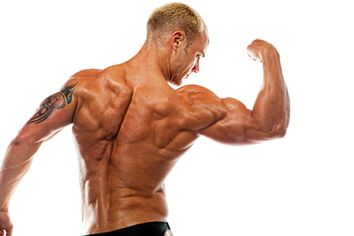
(Credit: Damir Spanic)

Where have all the muscle men gone? Just a few short decades ago, men like Arnold Schwarzenegger, Hulk Hogan and Sylvester Stallone, with their glistening bodybuilder physiques, were not only movie stars but the embodiment of the 1980s American zeitgeist — pumped up, ripped and always ready to take off their shirt and start flexing. Nowadays, hyper-muscular physiques are more readily associated with a hard-partying subset of gay men and the cast of “Jersey Shore” than with conventional notions of sexiness (the Village Voice went so far as to conflate the two by putting the “Jersey Shore” stars on the cover of its queer issue). It’s a change that telegraphs the ways in which our ideas about masculinity — and sex — have changed since the early ’70s.

Muscle culture and the politics of masculinity are two things that are awfully familiar to Paul Solotaroff, contributing editor at Men’s Journal and Rolling Stone. His new memoir, “The Body Shop,” recounts his own tortured relationship with steroids and weightlifting — an obsession that simultaneously built up his body and broke it down. Coming of age in the ’70s, he was saddled with a slight frame and father issues, but when he began injecting steroids as a freshman in college, he went from anxious beanpole to muscle-bound hulk in a few short months. This change led to a career as a stripper, coke-fueled orgies and a lifetime of health problems.

Salon spoke with Solotaroff over the phone from his home in Brooklyn about gay men’s muscle obsession, Schwarzenegger’s impact on popular culture, and why bodybuilders really are overcompensating.

How has the male ideal changed? What does it look like now?

Muscle is no longer the kind of freakish totem that it used to be. You don’t have to be an iron head to get noticed anymore — I think there are lots of muscular guys who don’t lift weights. Yoga muscle is the real elixir these days. If anybody’s a pimp these days, it’s the guys who are at the front of classes at Crunch who have that long, really dense, righteously earned muscle from doing four and five hours of postures every day. I think that’s really healthy, because that’s really useful. My muscle is useless. It’s much more grown-up muscle, more about inhabiting your body intelligently as a man rather than still doing what I do, which is carry around this adolescent fantasy of masculinity.

What do you think has prompted that change?

Well, muscle got so commodified in the ’90s — action-flick stars, massively built ballplayers and the gorgons of professional wrestling — that it stopped being a freak show and became a lifestyle, or the adjunct, at least, to one. Where once it was the banner of blue-collar macho men, suddenly wealthy men were flocking to gyms and putting on size like a pair of British wingtips. They got what Schwarzenegger was selling all those years — that muscle, properly packaged, radiates power. And when women of style stopped being repulsed by brawn and found that they actually liked it, the stampede was on at high-end health clubs and the mass-market chains. The owners of Crunch and Equinox should send Ah-nuld a monthly check — not that the bastard needs it.

Some of it is probably cyclical. You go from the kind of wispy Williamsburg paradigm to its polar opposite and then back again. In this country we go from electing a Bush to an Obama. These cycles used to have 20-year arcs. Now the oscillation is much faster. I also think they’re much more fractional. I think there’s one body style that rules the day in Brooklyn, and then another in Bayonne, and a third in Short Hills. I just feel that everything now is so segmented so we’re really living three generations at once.

Where do you see muscle in popular culture?

If you really want to talk about what’s happened in muscle culture, the place you really have to turn to is sports. We took muscle out of the comic books and we put it on the football field. All you’ve got to do is go to ESPN classic or MLB where they’re constantly showing games from the ’50s and ’60s. Look how skinny and skeletal those guys who threw a ball and swung a bat were and flash forward to utility infielders in the last generation. It’s like we’ve populated sports with a new species. We got rid of all those gifted but hopeless losers with their 175-pound frames and the natural cutting motion of their fork ball and replaced them with these 6-foot-6-inch mastodons who routinely throw 95 in the seventh inning. Sports became less about beauty, grace and the human consequences of athletic endeavor; it became this Roman spectacle in which the fantasy was right there in front of us.

Two groups that stand out for their muscle-conscious bodies are a subset of gay men and the “Jersey Shore” crew.

Yes, they’re real consumers of that archetype of maleness. What we’ve done is sell muscle to these two cultures that prize sexuality above everything else. What is “Jersey Shore” about, if not about hooking up all of the time? What is Chelsea [New York's gay neighborhood] about? It’s not about all of the very reasonable inhibitions that the age of AIDS threw up, but carrying on as if none of that applied. So where muscle is still king, it’s in these two very libidinal, very id-centric communities. I almost kind of worship them for it. Fuck all of the nuance. Fuck all of the hipster stuff about growing a beard and keeping a chicken in your backyard and eating like Gwyneth Paltrow. We’re gonna fuck like it’s 1976.

You started lifting around the time when people like Arnold Schwarzenegger were first getting notice for their muscular build. Do you see yourself as part of the same generation?

We all came out from the same paradigm, I think. We all came out of this lonely boyhood fantasy of what constituted manhood that had been bubbling up for 20 years. It all grows out of this subliminal idea that America was suddenly this muscular place. We’d won the war. America as a superpower is only an idea that’s 50, 60 years old. We don’t really become this kind of military empire until the age of Eisenhower, the tipping point being winning the Second World War and doing so by ramping up this enormous military-industrial complex on a shoestring — people bringing in their pots and pans to make fucking Howitzer rounds and build submarines. But we did it. And the America that comes out of the Second World War is an enormously prosperous, proud and expansive place where everything is possible.

How did that affect the younger generation, specifically young boys?

I was one of a generation of kids who really kind of fell hook, line and sinker for that kind of nuclear fantasy of what a guy’s guy looked like. There were the Steve Reeves movies, which I remember vividly watching when I was 9 years old, home sick from school. There were shows like “Batman,” “The Green Hornet,” “Flash Gordon.” It seemed to be everywhere. When I was 7, I bought my first copy of “Spiderman.” The explicit fantasy is this: By being lucky, you could get bitten by a radioactive spider, too. Or in the case of the Fantastic Four and the Hulk, being exposed to gamma rays. Gamma rays were big. If you really wanted to get laid in the ’60s, you really needed to make it your business to get exposed to gamma rays.

Some people would argue that men that work out so voraciously are like men who buy Hummers; they’re overcompensating.

There’s a lot of truth to it. I work out with guys every day who probably have some variation of my childhood, which was kind of lonely, marginalized, late-emergent. There’s that great phrase of Erikson: the most interesting people amongst us are twice born, that is to say that people give birth to themselves. I think a lot of the guys I go to the gym with are people who of necessity have had to reinvent themselves physically because the old version just wasn’t getting it done. It was certainly the case with me. I’m not going to lie; I had a real hard time getting laid for a real long time. Suddenly I got big and in a very short span of time, I had no trouble. I’m not going to pretend that the women I slept with in 1976 were the women I’d grown up fantasizing about. They tended to be the kind of women who said, “Hammer me, you big Jew fuck.” They were probably a lot like the girls on “Jersey Shore.”

What you seemed to have in common with a lot of the other men you lifted and did steroids with were father issues. Everyone seemed to be lost boys in a way.

I think originally the guys who went to the gym were sort of in search of their daddies. We were this generation of lost boys. We didn’t get a whole lot of fathering and we certainly didn’t get a lot of firsthand instruction in what it took to be a man and pick up a man’s responsibilities. The gym was this kind of wild guess on our part about how we went about becoming a man. It was a lot of guys who were really hoping to be adopted by bigger guys and in the process become men in their image. I know that for me at least part of becoming big was an attempt to get noticed by my father, and did I get noticed by him — in a very negative fashion. He was appalled and mystified by what I had done. Of all the cockamamie things that I had done to get his attention, this was about the last thing he would have imagined for me.

How did the use of steroids lead to the use of other drugs?

If you’re doing large amounts of steroids, I’m here to tell you that ain’t the only drugs you’re doing. It’s impossible to only do steroids and not do other stuff. Steroids are so speedy if you’re doing them in significant doses, at some point you’re going to have to figure out a way to cycle down at the end of the day. So immediately you’re vulnerable to depressant drugs. Then you’re into the cycle. Once you’re crashing, you need to get up again the next day. There’s speed. If you’re out at night, there’s cocaine. You’re constantly reacting to whatever you put in your mouth last, shot into your ass last.

In the past few years, clinicians have identified “muscle dysmorphia” (sometimes called bigorexia) as a concern among many men. It sounds as though your case would qualify for it. How did you work through it?

I wouldn’t say that I’ve ever worked through it. I would say that I still suffer from it. At my biggest I was too small. At my biggest I would look in the mirror and see flaw after flaw, see things that embarrassed me. I think we all have that problem. We’re all operating out of this fundamental sense of our own frailty, our own unimportance, our own sadness.

I think I do understand it differently now. I’ve written so much about brain chemistry in the last 10, 12 years that I’ve really come to understand this as a neurotransmitter issue as much as it is a developmental one. There are really just people who are susceptible to imagining the worst about themselves. It may be because they were hectored to thinking that way by the bullies in sixth grade or the cold distant mommy, but I think just as often it’s because they’ve got too little epinephrine or they’ve got an excess of serotonin.

How do you see yourself now?

It’s very much a mixed bag. I see myself in two disparate ways. I see myself as someone who can still get noticed walking down the street because I’ve got these arms. And I’m entirely capable the next minute thinking, I’m completely invisible. How sad is that? After all these years, all this effort, I’ve completely vanished.

It was the richest time of my life. I keep trying to answer the question, Why did I write this book? And it was the best year of my life. Everything else comes up a little short. Even when I’ve written a story I’m really proud of, even when I have an immensely tender moment with my boy, even when I’ve had a really connective moment with my girlfriend or see a film that moves me deeply or read a book that resonates deeply, it doesn’t go down as far. I imagine I’ll be writing about it again through someone else’s story.

Continue Reading Close

French Vogue’s delightfully subversive nude

Lea T., a transsexual model, bares it all in the magazine's upcoming issue

  • more
    • All Share Services

French Vogue's delightfully subversive nude

When Givenchy’s head designer cast his personal assistant, Lea T., in a print ad for the brand, it sparked a frenzy of interest. Calls for interviews and modeling gigs began pouring in. Now, French Vogue, the hipper sister of American Vogue, is running a profile of the Brazilian model alongside a nude portrait in its upcoming issue. But this isn’t your typical tale about the feverish discovery of a new face in high-fashion — because Lea just happens to be a transsexual.

Of course, that makes the nude all the more provocative. Her gaze is calm and direct, and the casual placement of her hand clearly reveals that she hasn’t had gender reassignment surgery. Unlike in the buzzed-about Givenchy ad, she doesn’t wear ostentatious makeup or strike any of the dramatic poses that usually mark high fashion editorials. She is simply, arrestingly bare. With her long hair draped over her shoulders, Lea looks straight out of the Garden of Eden — and that is perhaps what’s most subversive about the photo: its ability to make us re-conceive of what we think of as “natural.”

Continue Reading Close

Aaron Schock, gay hero? Hardly

Sure, the congressman has rock-hard abs, but he's also rigidly homophobic

  • more
    • All Share Services

Aaron Schock, gay hero? Hardly

Don’t let his abs fool you: Rep. Aaron Schock is no friend of the gays. Schock first gained Internet notoriety lounging poolside by flashing his six-pack in front of a buxom bathing beauty. After making the rounds at the straight-acting men’s magazines — like Details and GQ — Schock made his way into today’s New York Times Style section. In the article, writer Ashley Parker comments on another photo of Schock that elicited supposedly unwanted attention because of how, ahem, dapper he looked. Schock paired a neon turquoise belt with form-fitting white jeans, making him look more appropriate for a day trip to Fire Island than a politico’s picnic. Gay staffers, obviously tickled purple, sent the picture around to one another, and Parker felt this warranted Schock entrance into the Gay Hall of Fame.

Please. Schock’s politics are so trenchantly homophobic that no amount of muscle definition can blind us to this fact. The real story here is how the fixation on his body has been a boon for him. The poolside photo of Schock seemed to boost his career rather than hinder it, just as Scott Brown’s photo as the Cosmo centerfold gave him sex appeal during his Senate campaign. We’ve seen, too, how our commander in chief’s chiseled torso only reified our sense of him as a powerful leader. Men in power have always been considered sexy, and their displays of masculinity are welcomed so much so that they are sometimes even staged — remember Putin fishing? Women who enter male-dominated spheres, however, have to negotiate a delicate balance between displays of femininity and strength. Remember the hoopla over Hillary Clinton’s barely there cleavage? Nothing gets in the way of our faith in political strength like lady parts.

It makes sense then that the controversial photo is not the one of a shirtless Schock alongside a bikini-clad babe, but rather the one where he wears a gingham purple shirt and turquoise belt. The former makes him seem tough like a high school quarterback, whereas the latter makes him look like Johnny Weir goes to Washington. He says he now knows that what he wore wasn’t “sporty” enough — that sounds an awful lot like code for “heterosexual.”

Continue Reading Close

Page 1 of 2 in Alex Jung