ALFRED de MONTESQUIOU

Judge: Turkish aid group had terror ties

French anti-terrorism jurist says IHH charity was tied to al-Qaida in the late 1990's

The Turkish Islamic charity behind a flotilla of aid ships that was raided by Israeli forces on its way to Gaza had ties to terrorism networks, including a 1999 al-Qaida plot to bomb Los Angeles International Airport, France’s former top anti-terrorism judge said Wednesday.

The Istanbul-based Foundation for Human Rights and Freedoms and Humanitarian Relief, known by its Turkish acronym IHH, had “clear, long-standing ties to terrorism and Jihad,” former investigating judge Jean-Louis Bruguiere told The Associated Press in a telephone interview.

Bruguiere, who led the French judiciary’s counterterrorism unit for nearly two decades before retiring in 2007, didn’t indicate whether IHH now has terror ties, but said it did when he investigated it in the late 1990s.

“They were basically helping al-Qaida when (Osama) bin Laden started to want to target U.S. soil,” he said.

Some members of an international terrorism cell known as the Fateh Kamel network then worked at the IHH, he said. Kamel, an Algerian-Canadian dual national, had ties to the nascent al-Qaida, Bruguiere said.

Among Kamel’s followers was Ahmed Ressam, an Algerian who was arrested in the U.S. state of Washington in December 1999 on his way to bomb Los Angeles International Airport as part of an al-Qaida plot.

“IHH had a role in the organization that led to the plot,” Bruguiere said, reiterating sworn testimony he made in a U.S. Federal Court during Ressam’s trial. Ressam is serving a 22-year prison sentence.

Bruguiere issued an international warrant for Kamel, Ressam’s former mentor, who was extradited from Jordan to France in 1999 and sentenced to eight years in prison on terror-related charges.

IHH vehemently denies ties to radical groups. The group is not among some 45 groups listed as terrorists by the U.S. State Department’s Office of the Coordinator for Counterterrorism. Nine people on board the IHH flotilla were killed by Israeli forces on Monday.

“We are a legal organization,” IHH board member Omer Faruk Korkmaz said late Wednesday in response to Bruguiere’s statements. “We have nothing to do with any illegal organization,” he said.

“We don’t know Ahmed Ressam or Fateh Kamel,” Korkmaz said. “We don’t approve of the actions of any terrorist organization in the world.”

French investigators found in the 1990s that “several members of Fateh Kamel’s network worked at the IHH as a cover,” Bruguiere said. “It was too systematic and too widespread for the NGO (non-governmental organization) not to know” their real goal, he said.

The former judge, renowned for tracking down convicted terrorist Carlos the Jackal, said he didn’t believe the IHH could have been infiltrated by terrorists without its knowledge.

“It’s hard to prove, but all elements of the investigation showed that part of the NGO served to hide jihad-type activities,” Bruguiere said. “I’m convinced this was a clear strategy, known by IHH.”

The judge said he was personally involved in a raid with French and Turkish police at IHH headquarters in Istanbul in 1998, where they found weapons, false documents and other “incriminating” material.

“It was clearly proven that some of the NGO’s work was not charity, it was to provide a facade for moving funds, weapons and mujahedeen to and from Bosnia and Afghanistan” — areas focused on by Islamic militants then.

In Istanbul, Korkmaz, of IHH, confirmed the late ’90s police raid but denied that any weapons were found and said there was no evidence found of links to militancy.

Bruguiere would not specify how many members of Kamel’s terror cell worked at IHH or give their names, but he said one of the suspects, a man from Bosnia, appeared in another terror-related case as recently as 2005 — though there was no indication at the time that the man still had ties to IHH.

Elements within the charity supported jihadi operations in the 1990s, Bruguiere said, before adding: “I don’t know whether they continued to do so” more recently.

“But it seemed clear at the time that it was thanks to a measure of political backing within the Turkish government that it (IHH) could continue to operate,” despite the strong suspicions against it, Bruguiere said.

Bruguiere retired from the judiciary in 2007 when he took part in an election to become a lawmaker in the conservative party of French President Nicolas Sarkozy. He lost his bid.

Bruguiere, 67, is now the coordinator for the European Union in a terrorism finance tracking program jointly run with the United States.

Elton John performance in Morocco raises outcry

Country's largest Islamist party is concerned singer will "encourage" the homosexual "phenomenon"

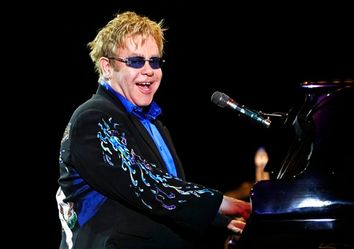
British singer and composer Elton John performs during the Rock in Rio music festival Saturday, May 22, 2010 in Lisbon, Portugal. (AP Photo/ Francisco Seco) **EDITORIAL USE ONLY, NO SALES**(Credit: AP)

A concert by Elton John is testing the limits of Morocco’s drive for modernity, probing this Muslim nation’s complex and ambiguous attitudes toward homosexuality like rarely before.

Islamists in the North African kingdom are outraged by the gay pop star’s visit, while the royal palace, government and his many fans back his appearance Wednesday night.

It’s part of a tussle between conservatives and modernizers in a nation that criminalizes homosexuality but has long been famous for a swinging party scene. Morocco has attracted gay celebrities such as designer Yves Saint Laurent and writer Paul Bowles, and recently saw the launch of its first gay magazine.

Across the Islamic world, strictly hidden but sometimes tacitly tolerated traditions of homosexuality are surfacing fitfully — and John’s concert is the latest litmus test.

The public dispute between organizers for the Mawazine Festival that invited John and the Justice and Development Party, or PJD, Morocco’s largest authorized Islamist group, illustrates the growing rift between Western-leaning Moroccan authorities and the more conservative Muslim movements that are on the rise in the kingdom.

“This singer is famous for his homosexual behavior and for advocating it,” said Mustapha Ramid, a leader and spokesman for the PJD, the biggest opposition party with 40 lawmakers in parliament.

“We’re a rather open party, but promoting homosexuality is completely unacceptable,” Ramid told The Associated Press in a telephone interview.

Ramid said homosexuality is against Muslim values, and he feared the British singer would “encourage the phenomenon” and be a bad influence for Moroccan youth.

Like nearly all Arab and Muslim countries, Morocco is officially hostile to homosexuality. Homosexual practices are a crime punishable by fines and prison sentences of six months to three years. In practice, however, such penalties are almost never applied, and Morocco has a long history of leniency toward homosexuality or other practices forbidden by Islam, like drinking alcohol.

Though most observers consider homosexuality common in the Arab world, most Arab countries frequently crack down on gays. Simply mentioning the topic is often taboo, and Morocco is viewed as an exception simply by allowing the public debate.

Moroccan officials dismissed the calls to ban John from performing.

“We deal with artists and intellectuals for what they do, without taking into account their private life,” said El Hassan Neffali, an organizer of the Mawazine Festival. “Somebody’s private life is one thing, and their art or creative activities are another.”

The festival is under the patronage of King Mohammed VI — a powerful gesture in a country that remains an absolute monarchy and where the king, a descendant of Islam’s Prophet Muhammad, is also “Amir al-Mumineen,” or commander of the believers.

Moroccan officials acknowledge that they back the festival, along with dozens of others through the spring and summer, as a means to promote cultural diversity and openness in society. The cultural drive, along with new schools, housing projects and a vast program to reform the official teaching of Islam, is viewed as part of the king’s broader plan to modernize society while offering an alternative to the Islamist groups that have become the country’s biggest political force.

Abdellah Taia, a Moroccan writer and its most prominent gay advocate, said that while Moroccan gays continue to suffer from abuse, the country is evolving faster than any other in the Arab world. He noted that even the official Le Matin newspaper, considered the mouthpiece for the royal palace, came out strongly in support of John’s visit.

“Have we (Moroccans) become so intolerant that we refuse and fight differences, which are to humanity what seasons are to life?” Le Matin said in backing the concert.

Taia — who lives in France — said, however, “I just wish they’d extend the support they give Elton John to ordinary Moroccan gays.”

A sign of Morocco’s evolution, Taia said, is the creation of a new local word to describe homosexuality in Arabic: “Mithly,” replacing the pejorative usual phrase of “an act against nature.”

The first gay magazine in the Arab world, called Mithly, appeared last month in Morocco, although it is sold under the counter because it didn’t get a distribution license. The gay rights group that publishes it — one of the first in any Arab country — is based in Spain.

Its first edition announced John’s Moroccan concert as a major symbol.

The 63-year-old entertainer was expected to draw tens of thousands of viewers Wednesday night during his free concert, to be held in an upscale neighborhood of Rabat, the capital. Other entertainers performing at the May 21-29 festival include Sting, Mika and Carlos Santana, along with Arab music stars.

In an apparent move to defuse possible tensions, John is the only festival artist who wasn’t scheduled to meet with the local media.

In Egypt, tentative plans to schedule John were canceled this month. Mounir el-Wasimi, the head of the Egyptian musicians’ union, warned against the singer’s possible visit in a statement that said he was “a symbol of homosexuals in the world.”

El-Wasimi cited a Parade magazine interview in February in which John said Jesus was “a compassionate, super-intelligent gay man who understood human problems” and said Middle Eastern countries mistreated lesbians.

El-Wasimi said the statements were unacceptable because Muslims consider Jesus a prophet.

In London, John’s publicist said the singer would make no comment.

Morocco’s PJD and other conservatives have regularly criticized the Mawazine Festival, saying it promotes promiscuity and artists who don’t abide by Muslim morals.

The free concerts usually draw huge crowds. Eleven people were killed and about 30 hurt last year in a stampede after a concert. Organizers say they have boosted security this year.

——

Montesquiou contributed from Paris. Associated Press writer Maamoun Youssef in Cairo also contributed.

Continue Reading Close

U.S. Marines launch offensive in Afghanistan

Bid to disrupt Taliban supply, communications lines is first since Obama's speech

U.S. Marines swooped down behind Taliban lines in helicopters and Osprey aircraft Friday in the first offensive since President Barack Obama announced an American troop surge.

About 1,000 Marines and 150 Afghan troops were taking part in “Operation Cobra’s Anger” in a bid to disrupt Taliban supply and communications lines in the Now Zad Valley of Helmand province in southern Afghanistan, the scene of heavy fighting last summer, according to Marine spokesman Maj. William Pelletier.

Hundreds of troops from the 3rd Battalion, 4th Marines and the Marine reconnaissance unit Task Force Raider dropped by helicopters and MV-22 Osprey aircraft in the northern end of the valley while a second, larger Marine force pushed northward from the main Marine base in the town of Now Zad, Pelletier said.

A U.S. military official in Washington said it was the first use of Ospreys, aircraft that combine features of helicopters and fixed wing aircraft, in an offensive involving units larger than platoons.

The official, who spoke on condition of anonymity because he was not authorized to detail the operation, said that Ospreys have previously been used for intelligence and patrol operations.

Combat engineers used armored steamrollers and explosives to force a corridor through Taliban minefields — known as “IED Alley” because of the huge number of roadside bombs, known as improvised explosive devices, and land mines, Pelletier said.

Roadside bombs and mines have become the biggest killer of American troops in Afghanistan.

There were no reports of U.S. or Afghan government casualties. The spokesman for the Afghan governor of Helmand province, Daood Ahmadi, said at least four Taliban fighters had been killed and their bodies recovered.

He said more than 300 mines and roadside bombs had been located in the first day of the operation.

Pelletier said insurgents were caught off guard by the early morning air assault.

“Right now, the enemy is confused and disorganized,” Pelletier said by telephone from Camp Leatherneck, the main Marine base in Helmand. “They’re fighting, but not too effectively.”

The offensive began three days after Obama announced that he was sending 30,000 reinforcements to Afghanistan to help turn the tide against the Taliban and train Afghan security forces to take responsibility for defending against the militants.

America’s European allies will send an estimated 7,000 more troops to Afghanistan next year “with more to come,” NATO chief Anders Fogh Rasmussen announced Friday.

Most of the new troops are expected to be sent to southern Afghanistan, including Helmand, where Taliban influence is strongest.

Friday’s fighting was taking place in one of the most challenging areas of the country for the U.S.-led NATO force, which has been trying for years to break the Taliban grip there.

Now Zad used to be one of the largest towns in Helmand, the center of Afghanistan’s lucrative opium poppy growing industry.

However, three years of fighting have chased away Now Zad’s 30,000 inhabitants, leaving the once-thriving market and commercial area a ghost town. Instead the area has become a major supply and transportation hub for Taliban forces that use the valley to move drugs, weapons and fighters south toward major populations and to provinces in western Afghanistan.

British troops who were once stationed there left graffiti dubbing the town “Apocalypse Now-Zad,” a play on the title of the 1979 Vietnam War movie “Apocalypse Now.” The British base was nearly overrun on several occasions, with insurgents coming within yards (meters) of the protection wall. The area was handed over in 2008 to the Marines, who have struggled to reclaim much of the valley.

In August, the Marines launched their first large-scale offensive in the barren, wind-swept valley, which is surrounded by steep cliffs with dozens of caves providing cover to Taliban units.

Although only about 100 hardline insurgents are believed to operate in the area, their positions are so strong that a fixed front line runs just a few hundred yards (meters) north of the Marines’ base, according to Associated Press reporters who were with the Marines there last summer.

Elsewhere in Helmand, the leader of Britain’s opposition Conservative Party warned that NATO had one “last chance” to succeed in Afghanistan and that patience was running out in countries that have provided troops to the NATO-led mission.

“We can’t be here for another eight years,” David Cameron told the British Broadcasting Corp. after touring a public market in Nad Ali, well south of Friday’s fighting. “I think following President Obama’s speech and the increase in American and British forces we have a chance, probably our last chance, to get it right, but we do have a chance.”

In London, the Sun newspaper said the son of the Helmand governor is seeking asylum in Britain because of fears for his safety.

The newspaper said Barai Mangal, 25, applied for sanctuary in Britain at an immigration office in Liverpool in July. Britain’s Home Office declined to discuss the asylum application.

His father, Gov. Gulab Mangal, would not confirm the report but told The Associated Press on Friday that his son was the target of an attempted kidnapping last summer.

“I have an armored car, I have security guards, but my family has no such possibility of security,” the governor said.

——–

Associated Press Writers Amir Shah in Kabul, David Stringer in London and Pauline Jelinek in Washington contributed to this report.

Continue Reading Close