On Thursday, after weeks of heated debate, the Senate passed a controversial energy bill. Roundly condemned by environmental groups, the bill made major concessions to nuclear and fossil fuel producers while abandoning nearly every attempt at conservation.
The Senate bill “takes us backwards,” says Carl Pope, the former Peace Corps volunteer who has served as executive director of the Sierra Club since 1992. And when the Senate goes into conference with House members (who will bring along their even less environment-friendly bill) to draft a final version, the result could be still more disastrous for many environmental issues. As if to sprinkle more salt in environmental crusaders’ wounds, on Friday the administration announced it was getting set to allow the coal mining industry to dump dirt from mountaintop mining into waterways and valleys.
These are dark days for the environmental movement. Since the Bush administration came to office, nearly every week brings a “what fresh hell is this?” feeling to eco circles. The oil, gas and nuke-friendly Bushies began their reign by pulling the U.S. from the Kyoto Protocol to curb global warming and quickly went on to call for expanded oil drilling in public lands across the country, including Alaska and the Rocky Mountains. Following Sept. 11, the administration seized on national security anxieties to push harder for its energy-inefficient policies, putting conservationists on the defensive as Saddam sympathizers.
In the face of the Bush administration’s pro-industry offensive, the leading environmental groups have seemed curiously quiet, with the exception of the Natural Resources Defense Council, which has become a thorn in the White House’s side over the secretive Bush-Cheney energy report. Some critics wonder if the major environmental organizations, the Sierra Club among them, have lost their fight.
Why, for example, was Sen. Trent Lott so successful in convincing many Americans, and fellow senators, that the proposal to raise Detroit’s fuel efficiency standards was really just a ploy to force soccer moms to give up their SUVs? And why has the Bush team been able to frame the debate over drilling in the Arctic National Wildlife Refuge as an effort to reduce dependence on foreign oil when, in fact, the estimated oil reserves in ANWR are roughly equivalent to only six months of U.S. supply, and wouldn’t be available for another seven to 10 years?
Part of the problem, says Mark Dowie, author of “Losing Ground: American Environmentalism at the Close of the Twentieth Century,” is that the Sierra Club and other groups have focused too much of their efforts on gaining access to government officials, even blatantly hostile ones like Vice President Cheney, who seem allergic to the concept of conservation. “Why,” asks Dowie, “do they want to sit down with a guy who pukes every time he hears the word ‘environment’?”
Access goes both ways, says Dowie. And, as a result of their naive emphasis on lobbying, environmental leaders have allowed themselves to be showcased by government officials who seek to appear sympathetic to environmental causes, while doing nothing to actually advance them.
To be fair, the last two weeks have seen a couple of important victories for the environmental movement. On April 18, the Senate voted to block oil drilling in the ANWR. The Alaska refuge is one of the United States’ largest remaining pristine nature preserves, home to hundreds of species, including grizzly and polar bears, musk oxen and the calving grounds for 130,000 migrating caribou. It’s also one of the few parts of Alaska’s Coastal Plain that haven’t already been opened up to oil exploration.
Then, on Friday, the Supreme Court ruled that the government need not pay landowners who have been issued temporary moratoriums on developing their land. The decision makes it easier for groups to carry out surveys of vulnerable areas — like Lake Tahoe, the subject of the Supreme Court case — while environmental impact studies are done.
And judging by Al Gore’s recent rebirth as a fighting nature lover, environmental issues are likely to play a major role in the 2004 elections.
Are the mainline environmental leaders also finally getting ready to roar? Carl Pope says he is learning from the movement’s recent missteps. Last month, for instance, Sens. John McCain of Arizona and John Kerry of Massachusetts withdrew a proposal to enforce Corporate Average Fuel Economy Standards (CAFE), which would have forced automakers to increase gas efficiency to 36 miles per gallon by 2015, calling the proposal a “Pyrrhic effort.” Enforcing CAFE standards would have saved about three times as much oil per year as could ever have been extracted in the same period from ANWR — and maintained that savings long after ANWR would have tapped out.
Failing to rally public opinion around the McCain/Kerry proposal was “a mistake,” Pope now concedes. The Sierra Club and other environmental organizations simply weren’t prepared, he says, for the onslaught of spin that came out of the anti-conservation camp during the CAFE debates.
Along with injecting more vigor into the Sierra Club’s political battles, Pope also has to contend with breakaway factions from within his own organization that have long criticized the club for not being aggressive enough, particularly on issues like commercial logging in public forests.
I reached Pope by phone in New Haven and again at the Sierra Club offices in San Francisco. We talked about how the club was squeezed out of the drafting of the energy bill, why he feels there’s little hope of reforming the oilmen in the Bush administration, and what it would take for the country’s most venerable membership-driven environmental organization to remove the gloves and start fighting harder.
What was your reaction to Thursday’s approval of the Senate energy bill?
You can’t make a silk purse out of two sows’ ears. We have a House energy bill that will take us backwards very quickly and a Senate energy bill that will take us backwards somewhat more slowly. Neither is what the American people wanted, asked for or need. What we needed was a proposal that would reduce our dependence on oil, that would increase our reliance on renewable energy resources and that would protect and take care of America instead of turning over huge swaths of our country to irresponsible oil, gas and nuclear industries. So, we think the American people need to say to both their senators and their representatives, “Thanks but no thanks. We’re not going to take this deal. And we’ll continue our conversation with you at the ballot box.”
Was the Sierra Club consulted in the drafting of the energy bill? Did you feel like you, or other environmental groups, had any influence in shaping it?
No, we were not consulted. They called us up — they said, “Send us some stuff.” [The administration staff members making the calls] had been told by [Bush officials], “If the stuff they send you doesn’t agree with what you have, throw it away” — and that’s what they did.
What about the other environmental groups?
They got the same phone call that we got, saying “Give us what you’ve got in 24 hours.” And we now know because of their own memos that the people in the administration who were — quote unquote — “consulting” with us didn’t listen to anything that wasn’t already decided
Did the Sierra Club complain? Mount a protest?
Not really. I mean we asked for meetings, but we didn’t get them. We only started complaining after they had released the report and Vice President Cheney began going on national television and announcing that he had incorporated the Sierra Club’s 12 planks in his plan.
And we sent him a letter that said, “Well, we don’t think you incorporated our 12 planks, but if you think you did, then we should meet.” And that was the one meeting we got after the plan came out. Quite a bizarre meeting.
Why was it bizarre?
Because we sat there and said, “We don’t think that your plan does anything that our plan does. You have the same subject areas. You have a section called ‘renewables,’ but there’s nothing in it.” And they said, “Well, this isn’t really our plan, this is a work in progress. We’re going to change it.” Which they never did of course.
Did the Sierra Club make any noise about having been misrepresented in that way?
We raised a ruckus. It was in the media all the time, on “Meet the Press” and “Face the Nation,” and Ari Fleischer said it. You know, reporters weren’t calling us up to ask us, so we’d hear about it the next day and we’d set the record straight. And finally we said that if they thought they had included 11 of our 12 energy planks, then they had Arthur Andersen doing their accounting. And that was embarrassing enough that they shut up and haven’t said it since then.
It was such an implausible claim that I think the media said, “Well, no one’s going to take that seriously, so let’s not even bother rebutting it.” And I’m not sure anyone did take it seriously. I’m not really sure any harm was done. I just thought it was extremely bizarre.
And then that same energy plan went unchanged to Congress?
It went to the House, where it was passed. The Senate then started with a different bill, presented by [Majority Leader] Tom Daschle, which was quite similar but not as bad as the administration plan. The Senate bill is not as bad as the House bill. And its biggest difference obviously is that it doesn’t drill the Arctic.
But while the House bill gives all of its subsidies to the fossil fuel and nuclear industry, the Senate bill gives only about half its subsidies to them. The House bill really weakens environmental standards governing all kinds of energy production; the Senate bill weakens only a few of them. The House bill has no renewables section; the Senate bill has about 5 percent renewables. So the Senate bill is definitely better than the House bill, but it doesn’t take us forward either. It takes us backwards.
What are the basic tenets of the alternative bill the Sierra Club proposed?
We had 12 planks which are on our Web site. The 12 planks were divided into three groups. In the first case, “Renewable Energy,” there was a portfolio which would require all public utilities to generate 20 percent of their electricity with renewable energy resources by 2020. In the second, “Efficiency,” we proposed fuel economy standards of 40 miles per gallon by 2015 for cars, trucks and SUVs. In the case of “Conventional Energy” production, the proposal was to build a natural gas pipeline from Alaska to the Lower 48 to bring down the trillions of cubic feet of natural gas which are being produced in Prudhoe Bay and are simply being pumped into the ground. The oil industry makes more money pumping the gas into the ground than they would by building us a pipeline to bring us natural gas, which is of course much cleaner than oil.
The Senate may have ignored the Sierra Club’s recommendations on energy policy, but it did vote to preserve the Arctic National Wildlife Refuge from drilling. Were you surprised by that vote?
No, although I was pleased by the margin. We thought we’d get 50 or 51 and were delighted to get 54 but I wasn’t surprised by the outcome.
I think it was clear once [senators in favor of drilling in the ANWR] did their desperate, cynical play [the week of April 18] with the proposed linkage to healthcare and pension plans for retired steelworkers, and once that didn’t fly, that they were desperate. All of the undecided votes ended up going with us, I think in significant part because people felt that if they had nothing to say except “Let’s threaten and intimidate a bunch of retired steelworkers by trying to take away their healthcare and pension,” then they didn’t really have a case.
Does the April 18 vote mean that we don’t have to worry about drilling in ANWR anymore?
All of our victories, or many of them at least, are temporary. This won’t be a permanent victory until we get legislation to establish the refuge as a wilderness, which we’re a ways away from because we didn’t have 60 votes either.
And [when the House and Senate go into conference to discuss the energy bill] there’s always, I suppose, the risk that the House conferees will try to force the Arctic in some form into the conference report.
ANWR or no ANWR, the Bush administration is exploring plans to drill on public lands across the country, as well as in other parts of Alaska. How will the Sierra Club respond?
Well there are two things. Some of the things Bush wants to do he needs legislative authority for. And our goal there is to defeat the energy bill. To ensure that it never actually gets on his desk, which will not be easy because there are a lot of people in Congress who think it’s their job to pass an energy bill even if it’s an energy bill that takes us backwards.
There are also a number of things that Bush wants to do where he actually doesn’t need legislative authority; or, he at least will argue that he has authority already under the law to do this. And in some cases he does. In other cases he will try to do things that are illegal and we will sue him and try to stop him.
How high a priority is the public relations aspect: getting Americans to demand that those areas be saved?
It’s an enormous priority.
We need to focus on the specific places [the drilling] is happening. People are not and should not be upset at the intrinsic idea of drilling for oil. It’s the kinds of places they are going to drill for oil.
So, you tell the story. You tell the story in press releases. You tell the story by releasing reports. You tell the story by taking reporters to the places.
How do you explain the fact that the Senate voted to save ANWR, but defeated a bill that would have placed higher fuel efficiency standards on automakers?
[The issue of fuel standards] is rather central to what happened on Sept. 11. It is central to our being held hostage to the oil nations in the Middle East, and yet most senators, all but 36 of them, treated that vote as a vote about the auto show [what cars people could buy] instead of a vote about what’s good for the nation. There was a real lack of statesmanship on that.
I think there are three reasons that the Bush administration supports drilling instead of conservation. The first one, and probably the most important, is that they’ve been handsomely paid to oppose those things. The second is that, ideologically, I think that the vice president and the president honestly believe that conservation may be a personal virtue, but it’s not what real men do. Real men don’t build windmills. Real men build oil wells. So there’s the Texas thing.
And the third thing is that anything that Clinton and Gore were for, they’re against. They have adolescent oppositional disorder.
Also, the bill’s supporters skewed the public’s perception of the debate by arguing that “Americans don’t want to be told what car to drive,” as if increased fuel standards would make it illegal for Americans to drive SUVs. How were they allowed to get away with that?
We are perplexed. They spent a lot of money very shrewdly. They were very cynical. We obviously made mistakes. When you get beaten that badly, you have to admit that you made mistakes.
I think the thing that Americans didn’t understand, and that we failed to communicate adequately, and the media failed to communicate adequately, was that the issue is not about whether you drive an SUV, it’s about whether you have the choice of buying a good SUV. If you take a Ford Explorer that now gets 19 miles per gallon and you put a better engine, a better transmission and better tires on it, you would get 34 miles per gallon. People don’t know that.
They think you don’t want them driving a Ford Explorer, period.
Right, and that is what the auto industry spent $15 million telling them. And we did not do an adequate job of explaining to them: Here’s how your Ford Explorer can get 34 miles per gallon.
How would you have gotten the word out?
Well, there are the usual techniques: You buy newspaper ads, and you use mail and you use e-mail, but I’ll tell you what we’re going to do.
We are putting together something we call the Freedom Package. The Freedom Package is a package of options which right now, General Motors or Ford or Chrysler or Toyota could offer as an option package on their vehicles. And the Freedom Package would take a Ford Explorer from 19 miles per gallon to 34 miles per gallon and would cost you $950 on an Explorer. That would be the price of the package. And you would save $4,000 over the life of the car. And we are going to have a campaign in which we campaign to people what the Freedom Package is. And why it’s patriotic.
But shouldn’t the onus be on the automakers to be producing energy-efficient cars?
Well, the only problem is that you can’t get the public to demand that the automakers be responsible, unless the public first understands that the automakers are being irresponsible.
Then what we want is for people to go into the showroom and say “I want an SUV with a Freedom Package,” and I want the salesman to look them in the eye and say, “Well, we don’t offer the Freedom Package.”
Does this mean you’ve given up on passing a measure that would force automakers to change — in other words, top-down change, instead of from the consumers on up?
No, no, we’ll pass the measure. The first step is to have it offered as an option. We want the Freedom Package to be standard equipment, and to get it to be standard equipment, everyone has to do it. There has to be a law. Just like the reason seat belts are standard equipment is because there was a law.
But seat belts didn’t happen because people went in and paid extra to have seat belts put on their cars; they happened because the change was made from the top down, on the grounds of safety.
Well, the change was actually made because people knew that seat belts existed. And then some companies started offering them.
I mean, I can say to you, yes, the American automobile industry should be patriotic, responsible and should actually be interested in making cars in the U.S. 25 or 30 years from now. I can want all those things. I can make a case for them. But they’re not true. The U.S. auto industry has actually no particular desire to make cars in the U.S. in 20 years. They’re getting ready to go to Mexico. So they don’t want to invest in any new technology in U.S. plants. Because they don’t want to be in the U.S.
We did a poll in Michigan. Eighty-eight percent of autoworkers in Michigan wanted mandatory 40 mile per gallon fuel economy standards. They knew that if that didn’t happen, Americans were going to stop buying badly designed, badly engineered SUVs and were going to start buying well-designed, well-engineered and fuel-efficient Japanese SUVs.
Yet we’re always hearing that American labor opposes fuel standards.
The president of the UAW opposes fuel standards, but 88 percent of its members are in favor of them, because they want to preserve their jobs. [UAW president Steve Yokich's] thing is that the auto industry has said to him, if you sit down and do this, we’ll make you have higher profits and we’ll be able to give you a better contract next year, and you know, you’re retiring this year …
The short term is a real enemy of doing intelligent things. And one of the things that being in a national crisis ought to do is make us think long term. It’s making average Americans think long term, but it’s not making their leaders think long term. They’re looking at next quarter’s reports; they’re looking at next year’s election. We keep our leaders on a very short leash, and one of the problems with that is that our leaders do tend to think short term.
What about another major defeat: the EPA decision to allow mining companies to dump waste into rivers and lakes?
This is an outrageous example of how essentially the entire state of West Virginia is being turned over to coal companies to be turned into a mining dump. Strip mining was bad enough; this is much worse than strip mining. In the case of strip mining, this was done only when the coal was at the surface. You just took it out of the top, so you’d dig a hole in the ground. This is when coal is very deep and could and should be taken out with the mining, but that costs more and the mining companies are greedy. So what they do is they take the top of the mountain off, they dump it in the river next to it and then they take out the coal, and then they have all this toxic mining waste and toxic drainage that pours into the rivers downstream, polluting peoples’ drinking water supplies, destroying fisheries, polluting the environment essentially for maybe a hundred years. This is a devastatingly destructive activity. They’re turning West Virginia, the whole state, into a mining dump.
Why would the EPA have OK’d that?
Well, I guess you consult George Bush’s campaign contribution list.
I suspect when we finally get all the documents that were submitted by people like Massey Energy and Peabody Coal to Vice President Cheney’s task force, we’ll find the reason.
Can you imagine a situation in which the Sierra Club would advocate the use of more radical action like civil disobedience, or anything like what EarthFirst! is doing?
We don’t under our charter engage in or advocate anything that’s illegal. We recognize nonviolent civil disobedience in the form that Julia Butterfly Hill [practiced it], who I think is a more effective example than Earth First! But you know we have tremendous amount of respect for what Julia Butterfly Hill did as an individual. Since we are a nonprofit corporation, and under our charter we are chartered only to do legal things, we can’t engage in or advocate any kind of illegal activity.
The late David Brower, a former executive director of the Sierra Club, criticized the organization for not being radical, not aggressive enough. What was your reaction to that?
Well, I think David was perpetually striving to get people to do even more. He was never going to be satisfied. I’m sure it’s true, we haven’t done enough. But he never said we weren’t radical enough. He said we weren’t doing enough, and that we were spending too much time on internal process and on being democratic and not enough time in the work, on the ground. And I’m sure there’s some truth in that, but you do the best you can.
We know that there are influential people, particularly in the Republican Party, who really believe that environmentalism is not a legitimate ideology, that we should not be worrying about protecting our planet. How do you deal with people like that, particularly under an administration that listens to them?
You try to make sure that people like that don’t have too much influence. For example, James Watt, who was Ronald Reagan’s secretary of the interior, believed that in the next 20 or 30 years, the world was going to come to an end. If somebody believes that, then they aren’t going to worry about something that isn’t going to be a problem for another 80 years. If you really believe the earth is going to get hit by a meteor or destroyed in the next 20 years, then worrying about something like the rate of depletion of natural resources isn’t high on your radar screen.
There aren’t very many people like that. I mean, overwhelmingly, Americans have rejected that concept. And so what we have to make sure of is that the institutions in our society respond to the will of the American people. And the American people care about America and they understand that in order to care about America, they have to care for America.
So you do all the things you can do. You sue; you educate the public; you lobby. You spend money on the campaigns to try and make sure they have fewer supporters in Congress, in both the House and the Senate, in both the Republican and Democratic parties. It’s not that there’s one thing you do. You have to do a million things and then a million more things.
Have the big conservation groups been too civilized in trying to negotiate with anti-environmentalists in government?
I think there are certainly major environmental groups that haven’t been very active. I think there are major environmental groups that have been ineffectively shrill. I think there have been environmental groups that have been wonderfully creative. I don’t think we all fit into a basket.
What do you think about Gore’s potential for 2004?
Well, we haven’t begun to survey the field. It’s too soon. I’m not sure whether Gore has begun to run and, frankly, we don’t start thinking about these things for another year and a half. Senator Lieberman might run. Senator Kerry might run. Senator Edwards might run. They all sided up with us on the Arctic so we might be choosing among a group of friends.
Has Sept. 11 made it more difficult for environmental groups to get the message across?
What Sept. 11 did do was bring Americans together, to raise their expectations that government was actually going to protect them. And it also created a tremendous resurgence of a desire to do stuff. I mean, when we call our members now, twice as many of them turn up. Applications for the Peace Corps are up 50 percent. Volunteer agencies are flooded. Thirty percent more people are going to the national parks than a year ago. Sept. 11 created a sense of “I don’t want to live just in my isolated world, I want to connect with my neighbors,” which I think is a good thing.
It also created a sense that government matters, which was a very good thing since the reality is that government really does matter. What we haven’t yet seen is whether those two things can come together. What we’re working for is to try to combine the new sense of community and the new sense of appreciation for democracy, the new patriotism if you will, into a new burst of civic engagement. And I don’t know yet if we’re going to succeed. We’re trying to.
Smell works the same in both dogs and people: Molecules of odor are inhaled, and then dissolved in mucus. Traveling upwards, they are picked up by olfactory receptor cells, which then send the message on to olfactory bulbs which communicate directly with the part of the brain that stores emotions and memories. Dogs have 20 to 40 times more receptor cells than we do.
This is not news, but it’s why, since Sept. 11, dogs have lolled in the spotlight more than any time in recent memory. It was a miniature poodle that took home this year’s Westminster Best in Show but the part of the ceremony that everyone remembers best is the tribute to the NYPD search and rescue dogs that sniffed through the rubble at ground zero. Then there’s Sirius, perhaps the most famous bomb dog of all, and the only one to die in the Sept. 11 attack.
Sept. 11 forced on us the realization that despite our cleverness with technology, there are certain things that are best left to dogs. What’s more, those dogs actually enjoy their work: There is no greater demonstration of vocational happiness than a bomb dog on the scent of something explosive. And it’s lucky for us that they love it like they do.
I wanted to visit some bomb dogs on the job, so I called Detection Support Services, a bomb-dog trainer and supplier in Sacramento, Calif. Unfortunately, the bomb-sniffing dog industry guards its secrets closely. Lackland Air Force Base in San Antonio, Texas, the government’s primary center for bomb-dog training, used to talk to reporters about its training program, for example, but since Sept. 11, officials there have been under orders from the Pentagon to keep all bomb-dog information classified. The closest they’ll come to actual data is saying that the number of dogs being trained there has “increased.” The Federal Aviation Administration, which gets many of its dogs from Lackland, plans to have 300 bomb-dog teams at 80 airports by 2003, but officials there won’t say what, exactly, those dogs will be doing, how many will be at each airport or how the dogs have been trained.
Tony Lavelle, the co-founder of Detection Support Services and a former captain in the Air Force Security Police, takes his cues from the Pentagon: He’s tight-lipped on the bomb-dog issue. Here are some of the questions he won’t answer: How many dogs work here? How are they trained? Have they ever actually found anything? Lavelle won’t answer these questions because of “Opsec,” or Operational Security, a term he translates roughly as “why help the terrorists?”
Showing off the dogs, however, is not helpful to terrorists, and so Lavelle was willing to let me come along on a routine training session at Lawrence Livermore Laboratory, in Livermore, Calif., where Luka, Amy, Vader and Buddy (the dogs) were working the delivery lot with help from Tony, Herb, Greg and Ryan (the handlers). Since Sept. 11, no delivery to the laboratory makes it inside without a once-over from a bomb dog, and so DSS comes down regularly to make inspections.
Luka, a black lab, had been charged with the task of scanning a big white tent, the kind people often rent for wedding receptions. Inside this tent were boxes of things like printer cartridges and paper towels, and on one of these boxes was a test. Since bomb dogs rarely find actual bombs, Lavelle likes to keep them focused with drills like this one. He planted a trace of a chemical similar to the explosive stuff his dogs are trained to sniff out, and set Luka on the hunt.
Luka found the scent after less than 10 minutes of tail wagging, leash straining and frenzied sniffing, and then looked up at his handler, Herb Schwieger. Luka knew what was next. “Good dog!” shouted Schwieger, who left a job in corporate security after Sept. 11 to work for DSS. (This meant taking a pay cut, but it’s made him a happier guy, overall, and as a result, he says, “my wife likes me more.”) Schwieger drew a red rubber ball from his pocket and threw it to Luka. “Good dog!”
Lavelle, like his handlers, clearly loves the dogs. “His ears perk and his head turns right in the direction,” he says, describing the look Luka gets when he’s found something. “And when he’s really on it, he’ll take a giant hit. Like, I don’t know how better to describe it, but it’s like watching someone smoke a marijuana cigarette. It’s very funny to watch him do that.”
In addition to his daily dog-handling duties, Lavelle is on a mission to regulate the bomb-dog industry. He’s formed an organization called the International Explosive Dog Association — he does not think this name is funny — to set some standards for all the private bomb-dog suppliers that have sprung up to meet post-Sept. 11 demand. Currently, Lavelle says, there is no professional organization to regulate how the dogs are trained and handled — which means that pretty much anyone with a dog and a leash can install himself as a bomb-sniffing team and start doing explosives searches.
Interestingly, humans could do the job themselves if bomb-searching an airport meant licking the entire place top to bottom. We have six times as many taste buds as dogs do. But noses work the best: A dog’s nose can detect just about everything in a 5-foot radius, and with a precision humans can’t begin to match. “If you went into a bread store,” says Schwieger, “you would smell bread. The dog goes into the bread store, he smells the yeast, the flour, everything.”
Alternative bomb-sniffing strategies do exist, and in some cases they’re even more precise: X-rays and chemical analysis allow explosives to be detected electronically and entirely dog-free. Both methods are expensive: The X-ray machine is less common and costs more — about $1 million apiece. The other device is slightly cheaper, and much more common; since 1997, 882 of them have been sent to 171 airports. Both machines can be slightly more accurate than a dog’s nose, but they can’t beat the K-9 for mobility or speed. Lavelle says that Vader, one of his best dogs, searched an entire airport in less than two hours. Using a chemical analysis machine would have meant wiping down nearly every surface in the airport with a sterile cotton pad, then sticking those pads, one by one, into a computer for analysis.
Dogs also have the advantage of being relatively uncomplicated. “The [chemical analysis machines] that are used as an alternative to dogs are just extremely, unbelievably advanced and complex,” says Rick Charles, an expert on aviation security at Georgia State University. “They involve things like ion mobility spectrometry — processes that literally do a molecular analysis of the contents of the container.” The average bomb-sniffing dog may pee on a suitcase, but at least he won’t lose his ability to sniff if someone bumps into him the wrong way.
With dogs, the main concern isn’t that they’ll miss something, but that they’ll alert too easily, respond to something — a welding rod, fax toner — that smells like an explosive but isn’t. The ultimate security system, says Charles, would rely on both dogs and machines. But if you have to pick one over the other, it’s dogs that do the job best.
The right temperament is just as important as nasal acuity in the selection of bomb dogs. Typically, Lavelle’s dogs come from rescue organizations or the SPCA. They are, Lavelle says, the kinds of dogs that people adopt as puppies, and then later guiltily return to the pound when they turn out to be just a little too much dog — too energetic, too excitable. Lavelle calls this kind of dog “motivated.” And it’s a quality he looks for when he goes out interviewing potential candidates.
“I’ll see how focused the dog is on the ball,” says Lavelle. “And then the retrieval of the ball gets progressively harder. And then it finally gets to the point where I’m throwing it in the bushes or the woods, and I want to see whether this dog will just tear the bush apart trying to get to the ball.” A good bomb-sniffing dog never stops wanting the rubber ball.
No matter how good the dog, there are, say Lavelle and Schwieger, some definite operational hazards involved. These are due to the fact that handlers must take care of “both ends” of the dog.
Lavelle calls Buddy, a yellow lab, an “extremely fast food processing machine.” Avoiding untimely deposits requires the ability to read dog body language. Amy, for instance, develops a “stiffness” in her hindquarters. “It’s not so much on her face,” says Schwieger, “it’s how she’s walking. Kind of a little kid, like ‘oooh.’” This is why handlers never leave the office without a handful of “poop pellets” in the pockets of their fishing vests. A poop pellet is the kind of plastic capsule that usually contains a spider ring or a removable tattoo, only in this case it has a blue plastic bag inside. It all seems a little elaborate, though I suppose that if you are going to have to scoop poop out of some CEO’s corner office, better not to do it with a Safeway bag.
Aside from this minor flaw, bomb dogs do the job with enviable expeditiousness and verve. Lavelle says that as far as he can tell, his dog Vader is never happier than on the job.
“He loves searching warehouses and offices; he could go for hours with that stuff. He loves sticking his nose into things. I just wish that humans could have as much fun doing this as dogs do.”
Continue Reading
Close
When Delta Air Lines passenger Richard Bizzaro was led off his Feb. 9 flight in handcuffs and accused of interfering with the flight crew — a charge that could earn him 20 years in jail or a $250,000 fine — most people took him for just another nut oblivious to post-Sept. 11 airline decorum. Indeed, defying federal air marshals seems to border on insanity. But in our haste to purge the skies of kooks and crackpots, we might well have overlooked a significant possibility: Richard Bizzaro displayed nothing less than patriotism, vigilance and heroism — the very qualities we’ve all cultivated in ourselves since air travel changed forever five months ago.
It started in the bathroom. Bizzaro, the CEO of an herbal supplements marketing company, was on his way to Salt Lake City and had gotten up to use the lavatory. In conjunction with the tight Olympics security, a new federal law forbids passengers from leaving their seat during the first and last 30 minutes of all Salt Lake City flights. Bizzaro entered the lavatory about 25 minutes before landing, and as he left it, he was confronted by a flight attendant. According to the attendant’s account, Bizzaro — who is 6-foot-2 and weighs about 220 pounds — silently stared her down. Then he returned to his seat, at which point things took a turn for, well, the bizarro.
This comes from an FBI statement recounting the incident:
“[Special agent] Illes observed Bizzaro give what he believed to be a hand communication or ‘thumb’s up’ to another passenger seated in 2A. At this time, air marshals on the flight took control of both the first class and coach cabins. In the first class cabin, Demarest and Illes identified themselves, displayed their badges, and instructed the passengers to remain seated facing forward with their hands visible and on top of their heads. The passengers complied, however Mr. Bizzaro kept lowering his hands, leaning into the aisle, and turning around to look aft toward the coach cabin. He continued this behavior despite Special Agent Demarest’s repeated instruction to keep his hands on the top of his head and face forward.”
Understandably, most media accounts of the incident give an impression of Bizzaro as obnoxious and belligerent — the kind of guy who bullies flight attendants and thinks himself above such trivialities as airline regulations. This may or may not be the case. Either way, it’s irrelevant to the fact that in a slightly different scenario, Bizzaro could have been America’s next Todd Beamer or Mark Bingham.
Bizzaro tried to explain his actions in a statement released last week through his lawyer.
“When the young men claiming to be sky marshals directed everyone in the plane to place their hands on their heads, I did not initially believe them. They were dressed in street clothes and one of them wore a ball cap backwards. They did not give the appearance that they were law enforcement officers and I did not pay them the proper respect. I believed I was witnessing a hijacking of our airplane.”
The details here matter, and they vary widely. Did Bizzaro sleep through the announcements asking passengers not to leave their seats for the first and last 30 minutes of the flight — as he alleges — or was he awake, as the marshals report? Did he try to intimidate the flight attendant? Or was she rude to him? Did he give a thumbs-up to one of his neighbors, as the marshal’s account alleges? Or did he do no such thing, as Bizzaro insists?
Regardless of how disruptive or obnoxious Bizzaro was or wasn’t, his account suggests he was doing exactly what all airplane passengers have been instructed to do since Sept. 11: be vigilant. In the wake of the attacks in New York and Washington, Americans face a strange new conundrum. We want stealthy in-flight security systems, but we’re also primed to be on the lookout for stealth. In his State of the Union speech, President Bush himself singled out the watchfulness of the American Airlines flight attendant who noticed Richard Reid — the alleged “shoebomber” — behaving strangely on a flight from Paris to Miami. In this new culture of civic valor and heightened alert, how do we distinguish potential heroes from belligerent troublemakers?
After his run-in with the flight attendant, Bizzaro returned to his seat. Unbeknownst to him, the attendant had consulted with the three air marshals on the plane, who had decided to take control of the flight. Watching three men order the plane’s passengers to place their hands on their heads, Bizzaro sensed danger, according to his statement: Even after the men identified themselves as marshals, he remained skeptical, and readied himself to defend the plane. Given current levels of jumpiness, and the aura of mystery that surrounds the Federal Air Marshal program, it’s not hard to see how Bizzaro could have mistaken the air marshals for hijackers.
The FAA’s air marshal program, introduced first in the ’70s, was expanded in the mid-’80s after the hijacking of TWA flight 847 in 1985. In those days, too, passengers were on the lookout for suspicious midflight behavior, but the atmosphere was different. Back then, says Jerry VanCook, a former police officer who now writes training manuals for undercover officers, “The passengers on a hijacked plane might have thought, We’ll go to Havana for a few hours, then be home.” In those days, says VanCook, the safest thing to do was be passive with the hijackers. “Before 9/11, that’s what I would have done. That was the wise thing to do. Everything has changed.”
But just as we’ve learned not to sit back and let the terrorists do their bidding, Americans are less likely than ever to trust an I.D. at first glance.
Last month, an armed, Arab-American secret service agent on his way to protect Bush in Crawford, Texas, was barred from flying, at the request of the pilot. Military, police and secret service officers are permitted to travel armed, as long as they carry documentation for the weapons, as this man had. That American Airlines authorities thought to double-check the man’s credentials isn’t surprising. But he remained barred from the flight even after displaying his Secret Service I.D. and offering the phone number to his supervisor at the White House. If you look suspicious, the story suggests, no amount of credentials will get you through the door. Americans have, by and large, learned to trust intuition over documents and badges.
Just as the secret service agent didn’t fit the pilot’s idea of what agents are supposed to look like, the air marshals didn’t match Bizzaro’s expectations. They were “young enough to be my grandchildren,” he claims, and “wearing baseball caps.”
According to the FBI report, it was only after inspecting the marshals’ credentials — not just their I.D. badges, but their identifying paperwork — that Bizzaro cooperated. The press has been unsympathetic, but how many Americans do know what a Federal Air Marshal I.D. looks like? Who can tell the difference between a real one and a fake one? A flight attendant, presumably. But how much damage could an overly cautious group of passengers do to an innocent air marshal before the flight attendant can clear things up?
“There has to be a way for air marshals to identify themselves real fast, a unique I.D. that would be extremely hard to counterfeit,” VanCook says. “Everybody ought to know it when you see it. You know what a $5 bill looks like. You don’t have to stop. The general public needs to be able to say immediately, ‘This is a real sky marshal.’”
VanCook speculates that had Bizzaro gained the confidence of his fellow passengers, the situation could have turned tragic.
“My immediate thought is that this, theoretically, could go back and forth several times. The air marshals could stand up and identify themselves, and the passenger could say, ‘I don’t believe you.’ And, if he’s a charismatic personality, he could get the rest of the plane to rise up against the air marshal. What if you identified yourself as an air marshal, and all the innocent passengers don’t believe you and attack you. Are you going to shoot them?”
Certainly, mix-ups like Bizzaro’s are one of the hazards of doing undercover work. But in a climate as skittish as this one, the FAA’s steadfast refusal to shed any light on the details of the air marshal program does not seem to be helping to prevent such incidents.
Most ordinary airline passengers are in the dark about how the Federal Air Marshal program works. “I don’t really know much about the air marshals,” said John Hoxsey, who recently flew from Boise, Idaho, to Oakland, Calif. “I assume they’re on most of the flights I take, at least the long ones. But are they armed? Do they carry I.D.? Do the pilots know who they are?”
The FAA won’t answer these questions, and generally maintains a high level of secrecy around the program. Unless the Transportation Security Administration decides to position marshals on each of the nation’s 30,000-plus daily flights, the agents will have to travel incognito to disguise their numbers.
Airline security insiders say that flight attendants and pilots are routinely informed when an air marshal is on their flight (just as they’re also informed of other police or military passengers who are armed) and where he or she is sitting.
“If I’m a passenger on an airplane,” says Charlie LeBlanc, managing director of Air Security, a private consulting firm, “and someone stands up and says they’re an air marshal, the first thing I’m going to do is look for a flight attendant to see how they are reacting. Because the cockpit is locked. You are not going to get any help from the cockpit crew. It’s you and the flight attendant. If I see a reaction from them, like ‘This guy’s not a marshal,’ I’m an aggressive enough individual that I would challenge that person.”
Of course, no matter how sophisticated the air marshal program becomes over time, it may be that no one will be able to save the plane from terrorist attack. Clifford Egan, an expert on American military history at the University of Houston, says it could just come down to who can overpower whom.
“In the case of the World Trade Center, there were [four or five] terrorists on board each plane. So is one air marshal going to have the ability to stop these five terrorists, who are not stupid — they may be spread out on the plane. And, when an attempted hijacking takes place, there’s the possibility that they’d attack the air marshal.”
There’s no foolproof way to run the air marshal program; in the end it’s just another stab at preventing the kind of attack that took everyone by surprise on Sept. 11. What Bizzaro’s case makes clear is that multiple security measures, layered one upon the other, do not necessarily have the cumulative effect of greater security. It’s not hard to imagine how Delta flight 1540 could have been a victim of one passenger’s own vigilance.
Continue Reading
Close
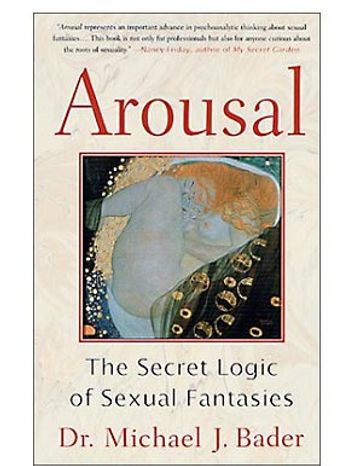
You may not think you have sexual fantasies, but Dr. Michael J. Bader says you do.
According to Bader, author of “Arousal: The Secret Logic of Sexual Fantasies,” everyone — from the ortho-fetishist to the secret harborer of elaborate rape fantasies to the writer of sneeze erotica, right on down to the woman who likes guys in cowboy hats or the guy who likes guys in cowboy hats — has a fantasy. And each of these fantasies, however mundane or bizarre, works in exactly the same way: to compensate for the guilt or fear or worry each of us carries over from childhood.
Bader is a general psychotherapist and psychoanalyst by trade, but over the years it’s his conversations with patients about sexual fantasy that have proved to be the most revealing. Ask someone to tell you what turns him or her on and, chances are, you’re cutting to the quick of that person’s basic fears and anxieties.
Into latex? According to Bader, you probably grew up feeling vulnerable, afraid of your parents or ashamed of your body. Wearing latex makes you feel invulnerable and safe. If it’s your partner you want to see in plastic, Bader’s bet is that you grew up with depressed parents whose unhappiness you felt responsible for. Put your partner in black latex and, suddenly, he or she seems unblemished, invincible. Finally, there’s no one for you to worry about. Voil`! It’s safe to get turned on.
If Bader’s theory explains why some people fantasize about dominating while others want to be submissive, it’s less useful in making sense of that great divide between fantasy and real life. If the fantasy’s a turn-on, shouldn’t bringing it to life make it even more powerful? And since so few people do actually act out their fantasies, how are we to treat the distinction between men who, say, only fantasize about having sex with 14-year-old girls and men who go out and do it?
Bader talks to reporters in exactly the same place he asks his patients to tell him about their sexual fantasies: a comfortable office in San Francisco. He has practiced psychotherapy and psychoanalysis for 23 years. Sitting back in his leather armchair, Bader looks psychiatric enough, even if he does occasionally talk like a dominatrix. Bader says that, in the realm of fantasy, anything goes. And given all that mental freedom, you just have to marvel at what we humans can come up with.
Is there any fantasy you’ve heard of that struck you as particularly outrageous?
The most bizarre fantasy that I ever heard of had to do with asphyxiation, which is pretty common. What was unusual was the plot: This woman’s fantasy was that a man puts her in a plastic bag, which envelops her completely. It’s airtight, except for a valve opening at the level of her genitals. The valve is closed. Soon she begins to run out of oxygen and gets panicky as a result. The guy opens the valve and for just a moment, she feels a reprieve where air can come in; she’s resuscitated. And at just that point, the guy puts his cock in the hole and starts to fuck her through the hole of this body bag. And his cock seals the hole, so that the air stops. And she begins to run out of air again, as she’s being fucked through the bag, until she finally loses consciousness at the moment of orgasm. That’s the fantasy. The approaching threat of death brings her to orgasm.
I thought, well, this is just such a fascinating thing where her unconscious or her conscious mind created this scenario that’s just precisely the one she needs.
But why does this woman — or anyone else — need a sexual fantasy?
Well, sexual arousal turns out to be more complicated than we think. There are all these threats to it: One is guilt, one is worry. You can’t get turned on if you’re feeling embarrassed or ashamed of yourself. You can’t get turned on if you’re feeling guilty or worried. But you still want to have sex, right? So you develop a fantasy that counteracts those dangers. The fantasy makes it safe for you to feel aroused. You no longer feel guilty or worried or ashamed.
For her, what was exciting was that she had no control. She gave control to the guy. And it was her helplessness, and the fact that he had life or death power over her, that was the turn-on. The way it worked was, it counteracted her own feelings — left over from childhood, probably — of responsibility and power and guilt.
So people like to be submissive in their fantasies because it helps relieve some of the guilt they have about wielding power in real life.
Right. I just recently talked to this guy who liked to go to prostitutes and have them spit and piss on him. Well, what’s up with that? “Why do you like to do it?” I say. And the guy says, “Oh God, I don’t know. I guess I must feel like I’m a shameful piece of shit or I was treated badly as a kid. Or maybe it’s just an addiction. Or maybe I’m just a pervert.” You could hear the shame in him.
But when I asked about his family, he told me that his mother was basically this lazy drunk, kind of promiscuous and sloppy, and he found himself embarrassed about her, looking down on her. So maybe he tended to see all women as degraded and inferior. And that’s really an inhibition. That really holds you back sexually. You know, who wants to imagine having sex with someone who they think of as degraded?
So, once he had a fantasy about a woman degrading him, pissing on him, then he didn’t have to feel guilty about pissing on or degrading women.
It’s like those big CEOs who go to a dominatrix and they like to put on a maid’s uniform and clean the bathroom. You think, “Well, what the fuck is that?” But it’s the same thing. These guys feel responsible all day and they’re basically giving everybody orders, they’re trying to control the universe and what they really want is to be told what to do. They want to give up responsibility, not because they’re weak, but so that they can just let go. Surrender to their own pleasure.
So does that same theory explain why some women fantasize about being raped or overpowered?
It’s pretty similar. Take Jan, who I talk about in my book. She’s a feminist academic. Jan has a fantasy of a custodian coming in and throwing her on the desk and ripping off her panties and fucking her without any regard to what she wants. This is so exciting to her that it brings her to orgasm in a minute.
So, she’s having sex with her real husband, who is very nurturing and maternal, but what she really wants in her fantasy life is to be taken and overwhelmed. Jan feels very ashamed of it, like, “Shit, obviously all this feminism stuff must be a ruse, I must be really at my heart of hearts a weak woman if what I really want is to subordinate myself to a man.”
It turns out that’s completely wrong. Jan is someone who grew up feeling like she was too much for a man. She was much stronger than her mother, and she drove her father nuts, and she grew up with this feeling that if she really let it out, she could just blow them all away. And a lot of women feel that way about men. Even though they may think of men superficially as really macho, or as bullies, underneath they often think of men as really brittle or fragile, brittle egos, you know, that a woman has to take care of.
So part of what Jan felt so liberated by is the fact that she could imagine herself in the arms of someone who was so strong and ruthless and selfish that she didn’t have to worry about him at all. She could just think about herself. Surrender herself to her own excitement.
You’ve also heard from a lot of guys who fantasize about having sex with prepubescent girls, and with them, too, there’s this huge divide between fantasy and reality. Just as Jan doesn’t actually want to be raped, so these men have a symbolic, fantasy-world attraction to young girls, not an actual one. But some people do feel compelled to make their fantasies real.
Most guys who fantasize about having sex with 16-year-old girls don’t actually go out and do it. Fantasies don’t usually lead to reality. They don’t even make the reality more likely, necessarily.
But still, that’s the $64,000 question. What’s the difference between the 40-year-old guy who actually goes and has sex with a 16-year-old girl and the one who just fantasizes about it? I’ve never been able to figure out why Joe acts on it and Sam doesn’t. And the only thing I can think of is that some people come from certain backgrounds where there’s a lot of sex, and boundaries are broken. Then maybe you’re more likely to be able to go over that line.
As I said, most people don’t feel like they have to act on their fantasies. The number of people who fantasize when they’re having sex with their partner about something, or someone, else is very high. There’s that Johnny Carson quote about when turkeys mate, they think of swans. It’s so common. People are entertaining all sorts of images. Maybe they’re borrowing from a movie or an erotic story they just read. That’s very different than acting on it.
So then it’s probably fair to say that a lot of people are having fantasies that they won’t be telling their partner about.
That’s true. And see, I think the answer has to do with the fact that intimacy and ongoing relationships, because of the increased familiarity, the more intimate you are, the more you care about your partner, the more you worry about them, and feel responsible for making them happy. And that’s the mark of a good relationship. There’s nothing pathological about it. But if you follow my model and you say worry and responsibility interfere with sexual excitement, then I think you have a kind of automatic tendency for intimacy to breed sexual boredom.
You must have people come in here and tell you that they don’t have sexual fantasies at all.
Yes, I do. I think sometimes it’s because they repress them and oftentimes it’s because they misunderstand what a sexual fantasy is. A lot of people think that a sex fantasy is simply like a story you tell yourself when you’re having sex or masturbating. And in fact, that’s what the culture thinks it is, too: the Marquis de Sade, or some other elaborate theatrical narrative. What I think is that everybody has preferences about the way they like to get turned on. There are certain body types people prefer, and not others. Certain temperamental traits that turn people on and others that don’t. If you look beneath the surface, you see that all of these are implied sexual fantasies. The reason that one woman likes a guy who looks like a punk is the same reason that another woman has an elaborate fantasy about having sex with a biker in a biker bar and blah, blah, blah. It’s just that the one takes a form of a little bit of theater. And the other is simply a response.
Say you’ve worked with someone to resolve their guilt or fears from childhood, do their sexual fantasies then change?
I have rarely treated anyone where the basic fundamentals of their fantasy have radically changed. I’ve had people who liked being a top, and by the end of treatment then were able to experiment with being a bottom. But it’s rare that someone who really likes being a top will switch his or her default basic preference to be a bottom.
It’s an interesting thing, because let’s say you had an inhibition at work that came out of that pathology and it made it so that you couldn’t ask for a raise or assert yourself. I’ll guarantee you that if the person was in therapy with me long enough, they’ll come out asking for raises, asserting themselves at work. But they wouldn’t come out with a different sexual fantasy. And my explanation is kind of mundane, but, at work, the symptom of not asking for a raise hurts you, and in your fantasy, it makes you have fun. So you have no real motive to change it.
After 9/11 there were a lot of theories going around about terror sex, why people were suddenly so promiscuous in the wake of that disaster. You disagreed with most of them.
The most common explanation was that terror sex was a way to fight against death. That was the most sophisticated analysis. Another theory was that fear morphs into sexual excitement, that the two things are close on the spectrum. In my view, neither of those explanations go very deep. What I argued was that there were a couple of things going on: One, it’s safer to get turned on after a catastrophe. The paradox is that external danger can increase internal safety. People think they’ve got nothing to lose. The rules don’t apply. You don’t have to worry about being rejected, and you don’t have to worry about rejecting.
So catastrophes like 9/11 are actually sort of a turn-on?
Yes, my feeling is that when the social rules break down, it frees people up from the internal reflection of those social rules. In a time of disaster, what does it matter? It’s not that we’re fighting against existential fears of death, it’s that since we could die tomorrow, we don’t have to worry about hurting each other. You can let it all hang out.
Do any of your patients ever divulge fantasies that are so out there, or so violent or whatever, that you feel like maybe you should try to get them to change them?
The only way that someone’s fantasy can be a problem is if somebody can only get turned on if their actual sex life corresponds to their fantasy in a way that makes having satisfying sex with their partner impossible. Like a guy who can’t get turned on unless he’s tied up and dominated, and a woman who can’t get turned on by tying up a guy. Then you have a real problem.
But no, even with the most bizarre fantasies, I’m genuinely fascinated. I don’t feel one iota of horror or disgust about it, at all. I’m aware that I’m hearing something that’s way out there. But for me it just triggers intense curiosity. And then we try to explore it. And then I’m just so damn curious. I find it delightful, in a way, that the mind can come up with such a thing.
Continue Reading
Close
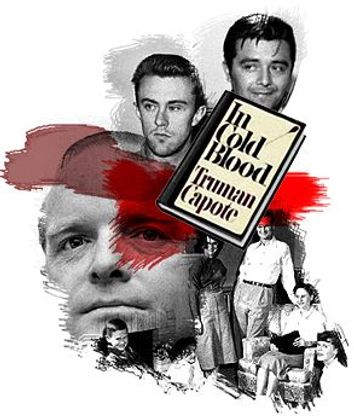
“In Cold Blood” began, as the story goes, when Truman Capote came across a 300-word article in the back of the New York Times describing the unexplained murder of a family of four in rural Kansas.
“Holcomb, Kan., Nov. 15 [1959] (UPI) — A wealthy wheat farmer, his wife and their two young children were found shot to death today in their home. They had been killed by shotgun blasts at close range after being bound and gagged … There were no signs of a struggle, and nothing had been stolen. The telephone lines had been cut.”
Capote seized on the grisly story and went down to Kansas to turn it into a book. He spent six years researching “In Cold Blood,” and claimed to have invented a genre, the nonfiction novel; later, Tom Wolfe and others would include “In Cold Blood” in their own movement, known as New Journalism.
Both inventions are old hat now, and, more than 35 years after its publication, “In Cold Blood’s” radicalism is a lot less apparent. But still the book stands out as a masterfully controlled recounting of murder and its aftermath and the people involved.
Gossip-slinging and accusations swirled about Capote in the sensational months after the book’s publication in late 1965, all of it a mere harbinger of the even nastier gossip and accusations that would cloud his later life. But there’s no hint of that in Capote’s best novel. His meticulous, even obsessive reporting allowed his characters to tell the story, and the result is the best true-crime novel you ever couldn’t put down.
Herbert Clutter was a successful farmer and community leader, a man known for his fairness, his loyalty to his invalid wife and his aversion to dealing in cash. (That was a fact that, had it been known to his future assailants, might have kept all four Clutters alive.) The family is almost too much of a 1950s fantasy to be believed. Nancy, a straight-A student and award-winning pie-maker, was dating a high school basketball star.
Kenyon, the bookish youngest Clutter, was building a cedar chest to give to his oldest sister, Beverly, on her wedding. They were regular churchgoers, active in the 4-H. As Holcomb residents would later tell detectives, there was no one who didn’t like the Clutters.
Their killers came from as different a world as you could find in rural America at the time. Perry Smith’s family was broken and violent. He’d lost two siblings to suicide, and a parent to alcoholism. Half-Cherokee, half-Irish, Smith had a “runty” build, thanks to a motorcycle accident that left him with disfigured legs and an addiction to aspirin and glorified daydreams. It was one of those daydreams that sent him out to the Clutter place: Perry’s favorite movie was “The Treasure of the Sierra Madre,” and he was certain that if he could only get to Mexico, he’d find treasure of his own there.
Dick Hickock’s ambitions were slightly less delusional; he just wanted to take the money and run off somewhere he wouldn’t be found. Hickock was also scarred; a car accident had put an unnerving asymmetry into his otherwise handsome face. Hickock’s family was poor but relatively stable. He had a penchant for passing bad checks, but the Clutter murders left his family confounded. Where did such an ordinary boy muster up so much evil?
Hickock had learned about the Clutter family from a jail mate, an ex-employee of Herb Clutter’s named Floyd Wells. In prison, Wells had casually mentioned how his former boss spent $10,000 a week to keep his farm going, and speculated that there must be a safe somewhere on Clutter’s considerable spread. Hickock took this wishful information and recruited Smith, a man he figured to be a natural-born killer. (This, too, was somewhat divorced from reality: Smith bragged about having once killed a man just because he felt like it, but it was a lie.)
After the two got out of prison, they drove 400 miles out to the Clutter ranch, hogtied the family members in separate rooms and demanded to know where the safe was. There was none. Hickock and Smith shot each of the four Clutters in the head and left the ranch with $40, a radio and a pair of binoculars. Two months later, Wells’ information led the police to Hickock and Smith as the two pulled into Las Vegas, broke and on the run. Five years after that, both men died on the same night on the gallows of the Kansas state prison. Finally, the story had an ending. Capote could finish his book.
After “In Cold Blood” was published, Capote’s friends and detractors (and he had plenty of both) would remark on the parallels between the author and Perry Smith, the more sensitive and guilt-ridden of the two killers. Possibly, Capote felt a physical kinship to Smith: His body, as one of his “swans” would later recount in George Plimpton’s “Truman Capote,” combined a boyish face and torso with “the legs of a truck driver.” More likely he simply understood that what separated him from Smith, more than anything, was luck.
Capote, like Smith, had been born to absent, unreliable parents. Both had suicide and alcoholism in the family. Both were desperate for acceptance, but they also had ironclad estimations of their own importance — Perry, in his words, was “special”; Capote, in his own, “a genius.” Were it not for his mother’s second marriage and his own considerable charms and angelic good looks (and his keen ability to ingratiate himself to his benefactors), Capote might have ended up as alone and desperate as Smith did. Like Smith, Capote knew exactly what he wanted to be, and he constructed himself accordingly. Capote’s ambitions were realized; Smith’s weren’t.
Another claim, this one circulated by one of the detectives Capote interviewed in Kansas, had Capote involved in a sexual affair with Smith, carried out during Capote’s visits to the penitentiary. That one’s pretty dubious, but Capote’s sympathies are clear, and his ear for Smith, and for all the disappointments of Smith’s life, are part of what make the book work so well. Through Capote, we hear of Smith’s studious attempts at self-improvement, his handwritten vocabulary lists full of words like “ostensibly” and “depredate.”
We hear how the elementary school dropout taught himself beautiful handwriting, and an appreciation of Thoreau. This is where Capote’s journalism — not his writing, but his reporting — comes alive: when we hear Perry Smith remembering what it was like to be reunited with his itinerant, absent father, “like when the ball hits the bat really solid. Di Maggio.”
Capote knew how gut-clenchingly suspenseful dialogue could be. “In Cold Blood” recounts the scene at the Clutter house twice: first in a quote that spans six pages, delivered by Nancy and Kenyon Clutter’s English teacher, Larry Hendricks, one of the first people to find the bodies.
Then, 200 pages later, from Smith’s taped confession, another quote spanning several pages, broken only by the interrogator’s questions. In both of these crucial chapters, Capote restrains himself to only the barest of observations, as in this part, just as Smith begins to describe the first of the murders: “Perry frowns, rubs his knees with his manacled hands. ‘Let me think a minute. Because along in here, things begin to get a little complicated. I remember. Yes, yes.’” You brace yourself for what comes next.
Of course, keeping that degree of aloofness meant that Capote had to leave a lot out of the story — for instance, the awe and resentment the residents of the small Kansas town of Holcomb felt at the appearance of a high-flying reporter. Capote was smart to bring his childhood friend Harper Lee with him to help gain the confidence of the locals. But that didn’t make them like him any more when “In Cold Blood” came out.
It wasn’t until Plimpton did his own Kansas reporting for his biography of Capote that we hear Harold Nye, a Kansas Bureau of Information agent, describe visiting Capote and Lee in their hotel room and finding Capote lounging around in a “pink negligee, silk with lace.” Quite possibly this is made up, but it goes to show how dramatic the culture shock was for everyone involved, and how it was all the more remarkable, then, that Capote came out of Kansas with so much story to tell.
Capote was a good listener. It’s what earned him the confidence of the society ladies in Greenwich, Conn., and Manhattan, and it’s what made him a good reporter. His accounts of Smith’s small, paradoxical kindnesses to the doomed Clutters, like when he places a pillow under Kenyon’s head before putting a gun to his temple, are a hundred times more effective in describing the tumult of emotions in a criminal’s mind than an expert’s analysis could ever have been.
Smith’s divided conscience, what allows him to stop Hickock from raping Nancy Clutter, then go on to kill her anyway, and then, later, his infamous recollection of that night, “I really admired Mr. Clutter, right up until the moment I slit his throat,” could be no starker from any mouth but Smith’s own.
Today, it’s hard to imagine what journalism was like before Capote and the others started looking closely at “ordinary” people, before they began making an earnest effort to, as Wolfe puts it, “deliver this felt sense of the quality of life at a particular time and place.” At the time, though, a lot of other people in the literary world were dubious. New Yorker critic Renata Adler snottily summed up New Journalism as “zippy prose about inconsequential people,” and it’s a charge that most New Journalists, and Capote certainly, wouldn’t have gone too far out of their way to deny. The lives of “inconsequential people,” especially those caught in consequential events, have been fascinating readers for years — both before Capote and the New Journalists and after.
Most recently, it’s what drove so many people each day to the Portraits of Grief section in the New York Times. And it’s part of the reason we continue to try to make sense of the psychology of crime — even crime on such a horrific scale as the Sept. 11 attacks. And as for “zippy prose,” as Wolfe pointed out in “The New Journalism,” one need only try to imagine its opposite.
Continue Reading
Close
When Isadora Duncan finally sat down to write her memoirs, she received a much needed advance from the eager publisher, along with a telegraph: “ENOUGH WITH YOUR HIGHFALUTIN IDEAS SEND LOVE CHAPTERS MAKE IT JUICY.” Luckily, biographer Peter Kurth was not forced to make that choice. “Isadora: A Sensational Life,” his new 652-page book about the world’s first great theatrical dancer, not only catalogs the tempestuous antics of Duncan and her numerous lovers, but it does a terrifically engrossing job of chronicling a life devoted to art and beauty.
“Isadora” is pieced together from a vast archive of love letters, magazine clippings, diaries, drawings and photos — to the extent that Kurth’s job occasionally appears as much editorial as biographical. It’s a good thing he took this approach: Many of the papers quoted in the book were lost in a 1999 fire that consumed the Manhattan apartment belonging to Duncan’s great-niece. “Isadora” took 10 years to write, a period full of tumult in Kurth’s own life, and it’s easy to see why he feared he might never finish it. But the real challenge, he says, was learning to sympathize with his subject.
Duncan was childish, vain and brilliant. She would greet visitors only while reclining on a divan and insulted her friends and audiences just as impulsively as she heaped praise upon them. She spent all her money as soon as she had it, then hit her friends up for more. Once, appearing late for a recital in front of a peeved American audience, Duncan remarked that Americans must learn the value of repose. Later in life, when her friend Mercedes de Acosta asked her what she had done with the money she had borrowed from her friends, Duncan replied petulantly, “I spent their money, which is just what they should have expected me to do. Please don’t scold me. I’m hungry.”
Her alcoholic bouts were so desperate that she’d mix a cocktail out of “eau-de-cologne and the dregs of empty wine bottles.” And she was a legendary flirt, the kind of woman who’d tell a man she’d just met, as Kurth reports, that “she never slept at night and to phone her after midnight.” More than anything, Duncan was devoted to her art. She was barely out of her teens when she reinvented dance; and when no one understood her work, she traveled across the globe until she found audiences that could. She believed that her dance was a gift to the world.
Duncan’s love affairs were nearly as stormy as they were numerous. She had three children by three different men, two of whom abandoned her, while she cheated on the third so openly that she virtually forced him to leave. Her rampage through the United States with the heroic (and unstable) poet of the Russian Revolution, Sergei Esenin, fell into alcoholic, violent ruin, dragging down Duncan’s reputation with it. And things continued to go downhill as her later performances met with little acclaim and lots of ridicule, especially when the top of her Greek-style tunic developed a habit of falling off.
Duncan is perhaps best know today for her own dramatic death in 1927. In Kurth’s telling we learn how the 49-year-old dancer had picked up a young French-Italian race-car mechanic at a local restaurant and coyly suggested he stop by her apartment to take her for a drive in an Amil Grand Sportscar along the French Riviera. As the car took off, she reportedly shouted to her friends, “Adieu, mes amis, je vais ` la gloire” — Goodbye my friends, I go to glory!” Moments later, her shawl caught in the rear wheel of the car, breaking her neck. But Duncan’s life hinged on another horrific tragedy that occurred almost a decade and a half before her death. In 1913, her two children — Deirdre, fathered by theater designer Gordon Craig, and Patrick, fathered by Paris Singer, the wealthy heir to the Singer sewing machine fortune — drowned in the Seine when the driver of their car stepped out to crank the engine and failed to secure the brake. The Renault pitched over the embankment, trapping the two children and their nanny inside. One year later, a third child, who Duncan believed would be the reincarnation of either Deirdre or Patrick, died a few hours after birth.
Duncan’s life was full of both glory and tragedy, much of it self-generated, and she was a seductively dramatic individual. Kurth, who spoke with Salon recently from his home in Vermont, said that telling her story meant keeping her at a distance.
You’ve said that you expect the reviews of “Isadora: A Sensational Life” to focus more on Duncan than on you, her biographer. Did you try to keep yourself out of her story?
Well, I tried very hard not to put myself into it. A lot of biographers are doing that now, not just Edmund Morris with Ronald Reagan, but Nancy Milford with Edna St. Vincent Millay. And I might have been able to do it like that, but I don’t actually believe in biography that way. So I tried to draw on my emotional experience when I wrote it, rather than making any direct parallels, and my editor helped me a lot with that. I would have things in there and she would say, “This doesn’t read the way you think it does. You’re making points that would make sense to people who know you, but won’t to anyone who doesn’t.”
At the same time that you were writing about tragedy in Duncan’s life, you were experiencing your own personal tragedies. It must have been hard not to compare yourself to her.
Well, I look at my life as sort of the same as hers; there’s a big dividing line in it, before and after. With me it’s HIV and with her it was the death of her children. And once I’d cleared that hurdle, somehow I felt I was tapped into her in just the right way. And I could go ahead and trust her story and not worry about mine so much.
But when the chapter about the deaths of Isadora’s children was originally written, it was way over the top. As it might well be, since it was simply horrible. But Mary Tondorf-Dick, who has always been my editor, is a genius at bringing me down, bringing the writing down.
What was the chapter like before your editor got to it?
I was sort of second-guessing the characters. Her behavior at the actual moment of the tragedy when her children died was, I think, maybe hard for some people to understand. It was sort of quiet. She seemed unemotional at first. She was plainly in shock. But she had an idea of turning it into something beautiful if she could. And her artistic credo as it developed was always to do less with her dancing, rather than more, so I began to get that in the narrative, tried to pull back somehow and to keep it restrained and to keep it strictly to the factual evidence as I had it.
I know that from my experience, after not just being HIV positive myself, but from 20 years of losing friends, after a while, it’s not that you cease to care, it’s that you’re speechless. The only response can be a symbolic response. People expect other people in great grief to go wailing and gnashing their teeth and throwing themselves on coffins and she wasn’t like that, and I have found over time that I haven’t been like that. There’s something in you, a kind of quiet place for sorrow that is essential to your own survival. And I suppose it would be different for different people. I tried to keep it stark and clear. I think it’s much stronger that way.
I know that my understanding of her and my sympathy for her is vastly increased by these parallel experiences in our lives. I have not lost my children, but my sister has lost her children and when that was going on, she was criticized from one end of the country to the other for being calm, stoic, not doing what people would expect a mother to do. And Isadora never did what people expected her to do.
There doesn’t seem to have been any event in Duncan’s life nearly as significant as the death of her children. Do you think she ever recovered?
There’s a Yugoslavian proverb that says there are sorrows of God and there are sorrows of the world. And the death of Isadora’s children was definitely a sorrow of God. It’s Greek. It’s irrevocable. Nothing could be done. Whereas I always could be rescued, and have been a couple times, with new medications. I can mourn the death of a lover and have a new lover. But she could not have her children back. And the idea of children in all of her life was central.
Duncan had a knack for choosing really bad men. And though generally you keep an emotional distance from your subject, there are some passages where it’s pretty clear how you feel about her lovers, particularly Gordon Craig.
You should have seen this before we edited it! You’d see how much I didn’t like him. But the thing is, I would have fallen for him too. I’ve had my experiences with men like that.
That was another aspect where my editor really had to pull me back. At first, I was really snide about him and it had to go. I think he treated her terribly. And granted, she was, as my mother said, not someone you’d want to have in your house. But I think he treated her badly. I think he treated all the women in his life badly. And that makes me very angry.
My editor and I agreed to look at this as a Greek tragedy. And in a Greek tragedy, the audience doesn’t stand up and start criticizing, though the chorus might come on and point to things. So in the end I had to point at it rather than declare it. I really worked hard not to let my opinions intrude, although my sympathies are clear. And that’s a very difficult line to draw in writing. I had pages and pages of analysis of what might have made Craig tick. And everything I said made him look worse. But I figured that’s not my job. He’ll make himself look bad.
What kind of man was Craig, and why do you think Isadora would have fallen for someone like that?
He was just completely self-absorbed, as I suppose I am — as I suppose any creative artist is. I don’t think Craig ever had a doubt in his head about himself and what he was doing. And Isadora probably didn’t either as far as her work was concerned, but she wanted something much more dimensional than Craig was able to give her. She wanted to rest a little from her mission.
She was a woman who not only wanted, but I think sought out, ecstasy in every level of her life. And there’s nothing more exciting than a horrible, mean lover. I know this is also against the current way of thinking about things. I think it was Mercedes de Acosta who said Duncan treated all her lovers as if they were her children. I tried not to psychoanalyze her too much, because I think she’s beyond psychology. I mean, I think you could have the same background and still not be Isadora Duncan.
But there was one man who broke the pattern. Paris Singer, “my millionaire,” as Isadora referred to him, was generous and loving in a way none of her other lovers were.
Singer was the one where she was really stupid. I mean I think he was the one she was best suited to. He would have done anything for her, and tried. He was certainly her sexual match. From that point of view they were perfectly suited. If she had only calmed down just a little in public even, it would have worked out.
Right, she’s constantly flaunting her affairs with other men in front of him. She never respected him the way she did Craig, or the Russian poet Esenin.
No, but don’t you think that happens a lot? Obviously, if it weren’t for this art of hers, this “mission” as she understood it, she might have been able to go through life as other people do and sort of work it out. But she always had that excuse of her work to take her away from something when it began to be difficult.
When I first started working on this, I was teaching a workshop and one woman there was astonished that I would be writing about a woman who had made so many immature choices. But, I said, “None of us in this room are going to have to make the same choices she did. I mean none of us are of the same caliber in our work, none of us are as obsessed with our work as she was. We don’t have that messianic feeling that she seems to have been born with.” And sometimes I’d flip it around and say, “If this was a man, how unusual would it seem that some great male artist just had to have sex all the time, with all these different people?”
Are the rules different for men? Is there any male artist she reminds you of in that way? Maybe Picasso?
Yes, very much like Picasso. Because I think there were qualities in her approach to love and sex that we might identify as masculine, especially as time went on. There is that beautiful line of hers when she says she learns that love could be a pastime as well as a tragedy. And I think a lot of men understand that, much to the frustration of a lot of women. But I would think of her sexuality as being a little more male than female. Predatory almost, especially as she gets older.
Did her notion of her art, what she wanted to achieve through dance, change much over the course of her life?
No, I think as she got older she began to understand that she probably would not live to see her vision fulfilled. And in fact it has not been fulfilled. She was a source woman: There are lots of Duncan dancers; most of them are just dreadful. A couple of them are very good, but they’re all re-creating her work; that’s not what she wanted. She wanted thousands and thousands of young children to know this beauty of movement and then she expected them to each pass it on to someone else.
What does a dreadful rendition of Duncan dance look like?
The bodies mainly are not in alignment. They’ll get some of the movements, but they can’t get the whole body to be doing everything in alignment. That certainly was her genius: Nobody had danced with their whole body before. The ballet she saw when she was growing up was nothing like the ballet we see now. There was no flow, no grace. It was all spectacle and acrobatics.
So she did have a strong impact on ballet, despite her lifelong disdain for it.
She did. She showed the ballet that there was such a thing as grace and continuity in dance, and that had not existed in ballet before. So when Balanchine revived classical ballet, he was able to add this flow to it, this beautiful movement flowing into movement which had not existed in ballet before.
But Balanchine is quoted in your book with one of the nastiest descriptions of Isadora that I’ve read anywhere. He called her “a drunken fat woman who for hours was rolling around like a pig.”
They’re still awful about her. She is probably the most ridiculed dancer ever. And part of that is inevitable, because she was such a character. But ballet is a male art. It was designed by men, is still designed by men. Most of them hated her. They don’t understand that what she did was throw open the doors. And one thing that is absolutely not true is that there is no such thing as Duncan technique. Having tried it a few times, I can guarantee that there is!
In Duncan’s later life she became closely associated with the Russian Revolution and Bolshevism. It turned her into something of a pariah, especially in the United States. But she’s constantly contradicting herself on this; one gets the sense that she doesn’t really understand the movement she’d supposedly identified herself with.
No, I don’t think she understood anything about it. I mean, that said, she was hardly alone in 1917 in assuming that the Red Dawn really was dawn, that it was going to lead to something glorious. A lot of people felt that way, especially Americans. It wasn’t until the late ’20s that it started to become clear exactly what sort of regime it was going to be. There’s a lot to be said about that. But she was entirely emotional about it. To her it was just all these hungry little children who needed her, and communism meant that there would be no rich people; everyone would be equal. It was utopian and fuzzy. But no, I don’t think she ever had a really political idea in her head.
It’s the same way that she wasn’t a feminist in any organized way. In fact, just the opposite: She didn’t care whether she had the vote or women had the vote. It just wasn’t her issue. She didn’t feel that she was repressed in any way. Her feminism was physical, the liberation of the individual.
There is no film of Duncan dancing and only a few still photos. It must have been hard to write about an artist for whom there is almost no visual record of her work.
That was a huge challenge. Almost all of the stuff that’s been written about Isadora has made the mistake of trying to describe the dancing, trying to delineate it, which for one thing is tedious. My goal was to make sure that the story never stopped moving. I hoped that by the time it was over, people might have an impression of how she moved. And that would have to come from the reader’s own imagination.
Duncan seems to have had an incredibly powerful sense of entitlement. She never seemed to doubt for a moment that she was a genius and that as a genius she was exempt from all of the rules that govern normal people. She felt the world owed her everything.
Yes. She made no bones about that. It really was everything to her in the end. Even with that last nuttiness with Esenin in Russia, which even she knew was a disaster from the beginning. She said, “Well he’s a poet, and poets aren’t the same. He needs me. Genius needs me.”
She did think of herself as, if not a goddess, a demi-goddess. She lived constantly in her mind, drawing on the philosophy of the Greeks. She did that as consciously and deliberately as someone else might to EST or something. She said it was her birthright.
She thought everything — a lover, children, huge acclaim, great art — should be possible and that they should be possible for her. And I’m telling you, I’ve not found one thing written by her, or heard her quoted by anybody, that contradicts that view that she carried throughout her life.
She never thinks she’s doing anything wrong. I mean even that crazy scene in the end when she grabs the pearls off that woman’s neck and throws them in the water. They couldn’t get her to apologize for that. She said, “Well, she shouldn’t have those pearls. I can’t have my school, she shouldn’t have those pearls.” I mean, I don’t know how you “psychologize” a person like that.
She was in many ways monstrous in that sense, monstrous in the way the French say it. Nothing got through beyond this idea she has [of her art]. Nothing brings that down. So that even in the end when anyone could say, and did say, “She must stop dancing; she just looks ridiculous,” she would say, “That’s not the point.” I am creating beauty and if people don’t see it as beauty, I still experience it as beauty.
She was obviously a huge egomaniac, if that’s even a strong enough word.
Was it difficult to write about someone who could be so unlikable?
That was what scared me most when I started, that and the fact that I had absolutely no background in dance (though she didn’t either, really). But what scared me most was, how can you make someone like this sympathetic and how can you make a story flow dramatically with a character that essentially doesn’t change?
Still, we need to remember that people then had a very different idea about artists than we do now. Art was regarded by many, not just by artists, as a sacred thing. Artists were expected to be difficult, temperamental and impossible. You’ll find that [to be true] even as late as the great female movie stars of the 1940s, like Bette Davis and Katharine Hepburn. They didn’t change either. They were sort of cut out of marble in the way that they lived. It wasn’t even a question of being callous and stepping over people to get ahead; they already were ahead. Or they thought about themselves as being ahead. No one was in their way. They never backed down. I don’t know who we have like that now.
But in the end I loved her. I suppose I fell in love with her in the way you do with someone you spend that much time with. Either that or you don’t do it. You can tell immediately when someone’s written a bio of someone they don’t like. You can always tell. And I really had to get into her heart somehow, before I could do it.
Continue Reading
Close