Andrew Vontz

Man bites dog

Animal-rights critics howl at Cuba Gooding Jr.'s "abusive" behavior in Disney's "Snow Dogs."

  • more
    • All Share Services

In the film “Snow Dogs,” Cuba Gooding Jr. plays a dentist from sunny Miami who pilots a dog sled in a fictitious Alaskan race called the Arctic Challenge. With a dollop of goofy schmaltz, the movie promises a wintry, feel-good story about how a man who doesn’t like dogs is won over by the beautiful, noble animals.

The film, which opens today, is based on “Winterdance: The Fine Madness of Running the Iditarod,” Gary Paulsen’s 1994 account of training for and competing in the famous 1,150-mile endurance challenge. The adaptation, however, is pure Disney.

Still, the movie is failing to warm the hearts of its most icy critics. Margery Glickman, a real-life Miami resident and founder of the Sled Dog Action Coalition, claims that sled-dog racing is cruel. She says “Snow Dogs” glorifies the Iditarod and racing, and consequently endorses the relationship between people and dogs in the sport.

Glickman isn’t the only one with complaints. People for the Ethical Treatment of Animals and the Humane Society of the United States say that Iditarod dogs are regularly subjected to severe beatings, starvation and overexertion. Critics often call the race the “I-Hurt-a-Dog.”

Additionally, the Sled Dog Action Coalition claims that sled-dog pups and dogs who do not perform well enough are routinely clubbed to death, drowned or shot.

Jason Nickle, who raises sled dogs, organizes tours and competes in sprint races on the International Sled Dog Racing Association Circuit, says such occurrences are anomalous and that Iditarod sled dogs are generally some of the most well taken care of animals in the world.

“The dogs run because they love it,” Nickle says.

The activists aren’t convinced. They say the lighthearted portrayal of sled-dog racing in “Snow Dogs” could misinform children about what they consider to be the cruel, brutal nature of the sport.

Glickman, who formed the Sled Dog Action Coalition three years ago after she witnessed the living and training conditions of sled dogs in Alaska, has issued a press release calling for film critics to note the cruel nature of the Iditarod and sled-dog racing in their reviews of “Snow Dogs.” PETA has issued a similar document.

The PETA campaign against “Snow Dogs” first began more than a year and a half ago, just after Disney announced a film based on “Winterdance.” The SDAC’s action began shortly thereafter.

Predictably, Disney is trying to steer clear of its critics. One strategy is to disassociate the Iditarod, the most well-known dog race in the world, from the fictitious race portrayed in the film. “The race, which isn’t the Iditarod, is one element of the film, not the focus. It’s a backdrop,” says Disney spokeswoman Andrea Marozas. “It’s not a documentary; it’s a family comedy.”

The activists aren’t buying it. “In all the ads for this movie it says, ‘Based on “Winterdance” by Gary Paulsen,’ and it says it in the movie,” says Glickman. “And ‘Winterdance’ is about the Iditarod.”

PETA cruelty caseworker Amy Rhodes has seen the trailer and the advertising materials for the movie, but not the film itself. She says that Disney is deflecting. “[The Iditarod] doesn’t have to be the main issue of the movie in order to falsely portray the notion that the Iditarod or any similar dog sled race is acceptable,” she says. “Including it in the movie, regardless of the extent which it is included, is telling children that using animals for our own means is acceptable, and that is a dangerous message to send children.”

“They’re brainwashing children into thinking that dog sled racing is acceptable,” Glickman says. “If a person loves and cares about their companion animal, the person won’t enter that animal in a race that’s known for dog deaths and injuries.”

According to Iditarod executive director Stan Hooley, 117 dogs have died in 29 races. And during each of the last four years one dog out of 1,000-plus has died — a mortality rate of less than .1 percent.

“In real life, animals die every day for a lot of different reasons, and so do people,” Hooley says. “We’re not out to change the way Disney portrays us. It’s not meant to be a documentary of the race, for God’s sake.”

But Glickman says that it’s misleading to just look at the number of dogs that have died in the race.

“The dog deaths that happen before the race, when they’re training, go unreported, and dogs die after the race and those also go unreported,” Glickman says. “Why is all of this happening? Because the mushers are looking for profit and recognition. They’re doing it because they’re greedy and they’re hoping to get some type of recognition if they place well in the race.”

(For 2002, the Iditarod has a $600,000 purse. The first-place team will pocket $68,571. Additionally, top competitors commonly receive endorsement deals and financial backing from corporate sponsors.)

The Iditarod’s Hooley says the dogs are actually well cared for. “Before the race, each dog has an EKG — something that 90 percent of the human population will never have in their life,” he says. “Each dog has a series of blood tests and vaccinations. There are 35 volunteer veterinarians from around the world who leave their practices to come to the Iditarod and be another set of eyes and ears for the four-legged participants in the race.”

Brian Sodergren, an issues specialist with the Humane Society, agrees that veterinary care is improving at the Iditarod. Still, “There have been a large number of abuses and cruel practices,” he says.

Some of those cruel practices even end up in the film, Glickman says. Specifically, Glickman objects to a series of scenes where Cuba Gooding Jr. has trouble dominating his alpha canine lead dog, Demon. A number of characters tell Gooding Jr.’s character to bite the dog’s ear in order to assert his dominance. That never happens on camera, but Glickman says that the movie implies that he follows their advice off-screen.

“Children will think that that’s how you show you’re alpha, by biting a dog in the ear,” Glickman says. “I think that encourages dog abuse.” Glickman also objects to another scene in the film where Gooding Jr.’s character gets a ride in a Volkswagen Beetle towed by a team of dogs. “When dogs pull heavy weight, they can have orthopedic injuries,” she says. “And that’s actually one of the ways mushers train their dogs, by having them pull cars.”

Disney had no further comment.

While the current campaign against “Snow Dogs” might not have a huge impact on the film’s box office take, the activists think that one dividend of their efforts is a better educated public. “If nothing else, it heightens awareness of these issues in the media,” Glickman says.

And in the past, activists say that awareness has translated into pressure on the race’s sponsors, many of which have withdrawn support from the event. According to Glickman, companies who have halted their financial involvement in the race in recent years include Sherwin-Williams, Hills Brothers, Rite Aid, Outback Steakhouse, Safeway, Maxwell House, True Value Hardware, BP Amoco, Tyson Foods, Hormel, Nutro Pet Products, Tropicana, Pizza Hut, Costco, Home Depot, Suiza Foods, Pfizer, Bausch and Lomb and Microsoft.

Ice capades

Vanilla Ice talks about player haters, his pet kangaroo and what he'd do to his mother for a million dollars.

  • more
    • All Share Services

Ice capades

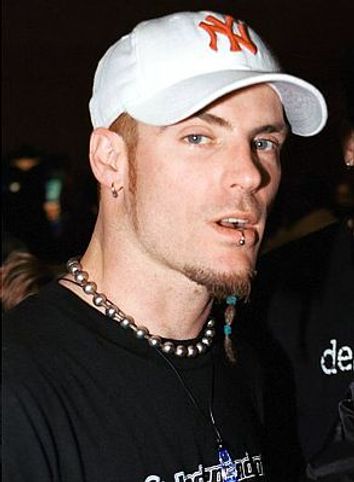
After Vanilla Ice sold 7 million copies of his debut album in 1990, the white rapper formerly known as Robert Van Winkle quickly found himself a cultural whipping boy. In an era of steeled hip-hop produced by serious, hardened outfits like Public Enemy and NWA, Vanilla Ice wore ridiculous glitter pants, opened for MC Hammer and even falsely claimed that he had been stabbed five times in gang fights. People were playa hatin’ Vanilla before the phrase even existed.

Only two things matter in the rap game: street cred and money. Vanilla Ice had none of the former. But even a run-in with Death Row records impresario Suge Knight that Ice says cost him $180 million couldn’t stop him from holding onto his money. He managed to stay flush even when he could no longer sell the public on his soft-serve rhymes, bleach-blond pompadour and Liberace get-ups.

In 1998, Ice stepped into the nu metal arena and released “Hard to Swallow.” He is currently touring in support of “Bi-Polar,” an album with eight nu metal tracks and 16 rap tracks that mark his return to rhymes.

Ice is now married with two children. He believes that Jesus Christ is his personal savior. Despite his multiple attempts to recreate himself as a real musician and crack his cold-as-ice rep, he’s still a punchline, especially in the hip-hop world.

A perplexed generation that can’t get “Ice Ice Baby” out of its head demands answers. I recently talked with Ice about his new gig as a nu metal frontman, the “Ice Ice Baby” era, his pet kangaroo Bucky and those wack haircuts he used to have.

You remember the haircuts, don’t you?

First things first. On your new album, “Bi-Polar,” you’re billed as V-Ice. What’s up with the name change?

No, get that straight. It’s still Vanilla Ice. I guess they just put it short on the record and people are asking me that question and it’s funny because there’s no name change. I’m proud of it and I’m not trying to run from anything or hide from anything. You think of Prince who changed his name, it’s like, who gives a fuck? He didn’t change his name. He made it a symbol. He didn’t even have a name.

How did you come to be called Vanilla Ice in the first place?

Back when I was 13 or 14 I used to spin on my head on cardboard and break dance, and I had a bunch of black friends and they just labeled me Vanilla Ice. Actually, I didn’t like it, so they just called me it more. It just stuck with me like a nickname.

So let’s talk about “Bi-Polar.” Why a nu metal album and a rap album on the same disc?

My main focus is on the rock stuff just because of everything I’ve been through. Music is about reflection. I get more energy from it. But I still love hip-hop and I did it to show people I’m still true to hip-hop. A lot of people today are influenced by both. They might listen to Nirvana and Pearl Jam but still listen to Wu Tang and Busta Rhymes. I did it to show people I know where my roots are and I haven’t left it behind, so for you guys, here’s some hip-hop. But my main focus is the band.

What made you decide that being a nu metal frontman was for you?

There wasn’t much thought behind it. It was the intensity of the lyrics I was writing. There was absolutely no way I was going to go scream over some break beat or some fucking computer to match the intensity that I’m wantin’ to deliver. There was no way it was going to get done without the band. I’m enjoyin’ myself now for the first time ever. It’s hard to understand that, you sell 17 million records it sounds like it’s great and gravy and shit, but I didn’t enjoy it too much, man. Anyone who hates on Vanilla Ice would have done the same fucking thing, so they can’t hate on me. They told me, we want you to wear these baggy pants because the young kids like it because the young kids like it and it’s all glittery and polished and everything, and I said, “Fuck no, I’m not wearin’ this gay-ass shit,” and they said, “Well here’s a million dollars, man, will you do it?” And I said, “Fuck yes.” And anybody would have done the same thing if they were given the same chance. I’d lick my mother’s asshole for a million dollars.

As you say in “Hip Hop Rules,” “I went 17 platinum/amazing.” How high are you going to take it this time around?

I don’t set any goals for myself. I always expect the unexpected, man. I’m still getting beyond that stigma and shit. I’ve faced my adversities and I’m catering to the ones who appreciate what I’m doing, and there are a shitload of them out there. I have a very loyal fan base, similar to Insane Clown Posse’s fan base, a lot of young kids 15 to 19, body-piercing tattooed kids who are very aware of “Ice Ice Baby” and the whole player hatin’ thing or whatever and they’re very into what I’m doing now. And I’m very appreciative of that. I’m not like a Korn or Limp Bizkit who comes out hardcore and goes mainstream. I’m like the guy who went backwards. I started off mainstream and now I’m into the hardcore shit. It’s not about the money or anything for me. I just enjoy making my music and to have people appreciate it is my award.

How much do you bench?

Bench-press?

Yeah.

Fuck dude, I haven’t bench-pressed since high school.

Fair enough. So you produced both the metal and rap cuts on “Bi-Polar” and played many instruments. What was that experience like?

It’s awesome. You think of all these fabricated bands and shit, for instance Madonna, where somebody else writes their music and makes the beats and writes the lyrics and packages the whole thing and they’re sitting up there in front of a crowd, and there’s no way possible you could tell me that it’s as gratifying as if you did all the shit yourself. It’s much more gratifying. I play the drums, I play the guitar, I play the bass, I play keyboards and all that shit and just to do it and produce it, it’s you. It’s more real. It’s not some fabricated bullshit. I’m not going to lie. It’ll never sell 17 million or nothin’ like that and I’m not tryin’ to. I’m just tryin’ to cater to those who appreciate what I’m doing.

The nu metal side of your new album is called “Skabz.” With a “Z.” Are you talking about dermal blood encrustations or people who cross the lines during union strikes? Or what exactly does that refer to?

You know, like if you got dragged down the street like fuckin’ some hate crime or somethin’ and you didn’t die? Like I said earlier, what doesn’t kill you makes you stronger. So basically I’m picking my scabs.

People might be surprised to know that you’ve got a set of golden pipes. Where did you develop that sweet-ass voice?

Fuck, dude, it just comes from my emotion, man. Ross Robinson, workin’ with him on my last record, he showed me a way to capture an emotional moment on tape, whatever comes out, just be rollin’. First take, that’s the realest one.

Now that you’re a family man how is touring different?

I still hang out and do my shit, I just don’t fuck around. You’ve done it so long and so many times, I guess the thrill’s gone. I love playin’ the music, and that’s the party to me. The whole time I’m on stage, I’m just havin’ the best time of my life, man. That’s what it’s all about for me.

On this album you work with Chuck D and LA tha Darkman from the Wu Tang Clan. How did you get guys who would have clowned you 10 years ago to rhyme on this album?

Just respect, man. If you listen to the lyrics, lyrically I’ve held my own. It’s not like Hammer or Tone Loc where they don’t have lyrical content. If you released “Ice Ice Baby” today, it would fit in today’s lyrical respect among peers, you know what I’m sayin’? I think that if they would have clowned it back in the day, it would’ve only been because it was a movement and they jumped on the bandwagon, not out of seriousness. Everybody knows I hold my own. My lyrics aren’t, “Pump it up, go! Go!” At least I’m sayin’ somethin’.

Your press release says that you’ve found a personal connection to God. Your song “Molton” concludes with you singing “I am a holy soldier!” over and over. What does that mean?

That I’m a soldier, man, that I believe in Jesus Christ as my personal savior. But I’m not really religious. I just believe that there’s a higher power and that we’re not evolved or whatever. We didn’t just come from the sand. Of course you can tell by the record with all the fucks and everything that I just believe that my character speaks for itself in the eyes of God and words and anger and all that shit is just part of life. I think there’s more people going to heaven than they think. Bible Belt people try to make everybody feel like they’re going to hell and I don’t believe that. I think God has pity on us. We’re only victims of today’s society. Our generation didn’t invent this whole society, we’re just conformed to it. So you can’t punish us for that. I think everybody’s going to heaven unless you’re really fucking up and doing something you’re conscious of and you don’t do anything to correct it.

Your contemporaries from the late ’80s rap game like MC Hammer are infamous for going bankrupt. How did you manage to hold on to the bling bling?

Investments, bro. Don’t play the stock market unless you know what you’re doing, and real estate, you can’t lose. Two quick words of wisdom to anybody out there who wants to hold onto their money.

Rappers like to floss. What’s the most lavish thing you’ve dropped money on?

I used to floss like crazy. I had a $650,000 Porsche, two million-dollar yachts and mansions everywhere and every other fucking material thing you could imagine. And the people it attracted was a bunch of fake, leach, rock star leach, stripper-chick wannabes, and it was just a fuckin’ … none of them is your friend. They’re around you because of who you are, not what you are. So I learned a valuable lesson. I learned every fuckin’ thing the hard way.

Everyone who has seen your “Behind the Music” knows that you had a run-in with Suge Knight back in the day. Do you guys still have beef?

There’s no animosity. If anything he’s probably happy about it. He got $180 million from me in the beginning and started Death Row Records. I look at it in a positive way because I tried to commit suicide in ’94 when I had $20 million in the bank, and this is before that even, so why am I going to care about what he took from me. Without the money he got from me, the money wouldn’t have been as great to fund the Chronic record, Tupac, Dr. Dre, Snoop Dogg … all that shit came from what Suge got from me to start Death Row.

You like to ride ninja motorcycles. Did you ever consider becoming one?

No, man, I just love motocross. My passion for motocross goes back 20 years.

Right. But if you did become a ninja, what kind of ninja do you think you’d be?

A teenage mutant ninja is what I’d be. “Go ninja …”

How was it working with Michael Gross, aka Mr. Keaton from “Family Ties,” in “Cool as Ice”?

Michael Gross? Oh you remember that, huh?

I rented it this weekend for, like, the fifth time. Fucking love it. I love that scene where you’re in the house, the big romance, fall-in-love scene. But what was Michael Gross like?

He was cool, man. When you’re actin’ and shit, it helps to have someone good on the other side deliver the lines to you. It makes you deliver your shit better. He’s great.

Did Tina Yothers ever come around the set?

Tina Yothers?

Yeah, from “Family Ties.”

Oh, that’s right. No, there was a bunch of people around, but not her.

You were a pretty serious jet ski and motocross racer. Have you ever thought about racing a monster truck?

[Laughs] No, but I sure would. I’d jump one in a minute.

If you did, what would you call your monster truck?

I’d call it the Mud Munster. Yeah. I have a song called “Mud Munster” on my new record.

Have you ever used the line “Drop that zero and get with the hero” in real life?

Just jokingly. It’s a great one-liner isn’t it? It’s funny as fuck. People remember that shit.

Ice Cube wrote the screenplay for the new “Friday” flick. Do you have any plans to get behind the camera and pursue film?

I just did a cameo appearance in a movie called “The New Guy.” They always seem to use my songs. There’s some movie out now and they’re using my song in the trailer …

“Ice Ice Baby?”

Yeah. I get a few roles thrown my way, but we turn down more than we do. It’s more about music for me. If the right role comes along, I’ll take it, but I’m not going to just jump on anything that comes my way.

You popularized a few catchphrases with “To the Extreme” that were really perplexing. Why did you start saying “yup yup” and “word to your mother”? What do they mean?

They’re just phrases I said along my whole entire high school period and friends you hang out with and shit. Your music is about your reflection, bro. Shit that you say and do is going to come out and people picked up on it. There wasn’t a whole bunch of thinkin’ behind it.

Do you still throw those phrases around today?

Jokingly. Yeah, every now and then. I kind of crack on my old self. I understand the whole thing. People know that I understand it, so it’s OK. Everything’s cool with me. I’m copacetic.

On the back of the “Bi-Polar” album cover, there’s a picture of you making a hand gesture where you look like you’re grabbing an invisible ball with both hands. Does that mean anything?

No.

Because you used to have a hand signal for VIP [Vanilla Ice Posse] right?

Yeah, you hold the two middle fingers up.

Do you have any dogs?

No. I’ve got a kangaroo.

What’s its name?

Bucky. It’s cool as fuck. They don’t kick like people say and shit. They’re really nice.

That’s cool. But as a general rule of thumb, how many attack dogs do you think a rapper should have?

[Laughs] I think you should have none. You don’t have to fill any fuckin’ stereotype image.

True. Your unique hairstyles used to be a hallmark of your style. Looking back, what do you think about those cuts now?

Too high-maintenance.

Was the Boz, Brian Bosworth, an inspiration at all in terms of hairstyles?

I didn’t even know who he was until he started making the movies.

Do you still cut your own hair?

It’s low-maintenance now. I like not having to deal with it. Just wake up and fuckin’ whatever.

A lot of celebrities have a cause these days. Sally Struthers has those starving kids. Bob Dole has erectile problems. What’s your cause?

My cause is my own kids. That’s my priority.

When you were kicking around titles for the album that became “Bi-Polar,” did “Ice capades” ever come up as a possible title?

No. That’s a little too friendly for me.

When you hear “Ice Ice Baby” on the radio these days, what do you do?

Fuckin’ turn it up. It feels great. That’s a great song. It’s timeless. It holds a space in history and you can’t take it away. You just own that piece of time. Everybody loves that song. I don’t know anybody who doesn’t.

Continue Reading Close

N

Disturbed preach a message of tolerance as their fans chant U-S-A, U-S-A.

  • more
    • All Share Services

N

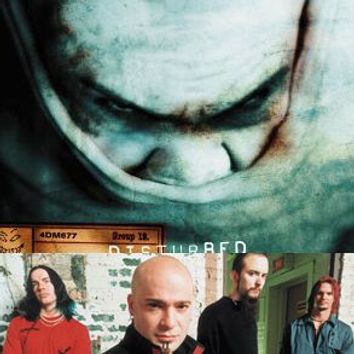
The cover of the Chicago nü-metal quartet Disturbed’s platinum debut album, “The Sickness,” depicts a clearly pissed off dude. His head is smeared with blood and tightly wrapped in fabric that covers his mouth and nose — a straightjacket for the head.

The cover, as well as the band’s name and the title of their album, paints a picture of an angst-ridden, introspective, alienated, disconnected experience similar to that espoused by the dozens, if not hundreds, of hyper-alienated, violent, alpha-male nü-metal bands that have sprung up after Korn and Limp Bizkit.

Lyrically and imagistically, nü-metal bands seem, for the most part, to be stuck on an apolitical thematic treadmill. The principal concerns are the oppression of the individual, fucking or a lack thereof and violent revenge fantasies. And child abuse. All of these bands seem to sing about child abuse a great deal.

Sonically, these bands blend hip-hop beats with super-low-register bass gymnastics evocative of Primus and walls of super-chunky distorted guitar pulled from the hardcore heavy metal scene.

These bands, who more often than not hail from Pleasantville-like suburbs, strive to imitate the thug-life images of their ghetto-borne gangsta-rap heroes. Lacking real-life experience in the thug realm, they resort to erecting their own houses of pain. Limp Bizkit’s performance at Woodstock ’99, during which a woman was raped in the mosh pit and which concluded with the band inciting a prelude to one of the stupidest and most mindless riots of the 20th century, is typical of the prevalent ethos of your average nü-metal band. Slipknot, one of the hottest nü-metal acts currently on the scene, has made a name for itself in large part because of its stage show, which sometimes features band members smearing vomit and fecal matter on one another.

On the L.A. stop of their “Down With the Sickness” tour at the Hollywood Palladium on Friday, Disturbed demonstrated to a sold-out crowd that while they round many of the same thematic and sonic bases as their contemporaries, they are an altered nü-metal beast, a heretofore unseen nü-breed. Their music is driven by a social conscience reflected by their atypical stage show and between-song banter.

Raging against the machine and so forth

Although attempted by a few others, Rage Against the Machine was the first metal band to successfully marry rock and hip-hop, and they did so with an overtly political agenda. While it was a bit difficult for savvy concertgoers to stomach Rage guitarist Tom Morello wearing his favorite “commie” baseball cap after shelling out 20 late-capitalist dollars to see the band perform, the band’s lyrics and overt calls to political action were undeniably positivist and progressive. They used their videos, concerts and public appearances to rail for causes ranging from freeing Leonard Peltier to supporting the Zapatista rebels in the Mexican state of Chiapas to the anti-WTO jazz that became all the rage with kids after Seattle.

Since Rage sprang on the metal and pop music scenes more than a decade ago, their sound has been co-opted, retooled and warped by an entire generation of popular rock acts. In the interim, punk rock has become a phrase you might find on a kitschy $70 T-shirt at Fred Segal, indie rock has become a haven for belly-button gazing fashionistas more concerned with the workings of their Line-6 guitar pedals and how tightly their Diesel jeans fit than saving the world. The political edge that Rage brought to metal has all but disappeared. In the gap, self-absorption, self-indulgence and personal suffering have become the predominant modes of discourse.

Disturbed’s debut album offers few clues that they might be any different from Staind, POD, Linkin Park or any of the other nü-metal bands currently topping the charts — and nothing to indicate that they might be part of the activist Rage tradition. With lyrics such as “Get psycho/I wanna get psycho/Wanna get psycho/Run you little bitch” (“Meaning of Life”), and “Bring the violence/It’s significant to the life/Can you feel it?” (“Violence Fetish”), Disturbed are clearly not breaking any new ground in subject matter. Sartorially, they have the standard second-gen nü-metal look of Zoolander-esque tight, black designer clothing instead of the rap-inflected urban street wear favored by earlier nü-metalers. And the singer, Draiman, sports the shaved pate that has become de rigueur for nü-metal frontmen during the ’01 season.

Celebrating difference

During the moments before they took the Palladium stage, a 20-minute prerecorded commercial for up-and-coming nü-metal acts Pressure Fortified, Headstrong and Logic 34, presented by Tower Records and voiced-over by Anthrax frontman John Bush, soothingly wafted over the sweat-soaked crowd.

As the infomercial ended, the lights dimmed and hundreds of shirtless 20-somethings and teens with shaved heads, goatees and tats galore — the current nü-metal fan uniform — swarmed toward the mosh area in a routine that has become something of a normalized sacramental experience for the average testosterone-fueled music fan during the past 10 years.

Then something happened.

Instead of the band taking the stage, a jumbotron-sized video monitor slowly, silently glided down from the ceiling. The audience fell quiet. After a few seconds of waiting, a classical score blared over the sound system and a series of utterly shocking and, well, disturbing images unfolded on the screen.

A hit parade of ultra-violence, evil and hatred throughout history flashed on the screen, including depictions of Christ on the cross, hangings during the Salem witch hunt, race riots during the Civil Rights movement, lynchings in the South, Kurdish victims gassed by Saddam Hussein in Iraq, victims of the Armenian genocide, and images of Holocaust-era atrocities including bodies piled high at concentration camps. While these images streamed, a number of different textual statements popped up on the screen including: “Arrested for being different,” “Imprisoned for being different,” “Punished for being different,” and, ultimately, “Murdered for being different.” The crowd responded to the horrific images by chanting “U-S-A, U-S-A, U-S-A” over and over again, finally swelling up to a hysterical pitch. Five young women dressed in identical black tank tops climbed atop their boyfriends’ shoulders at the center of the venue and raised their hands high in heavy metal salutes that were mirrored by hundreds of other concertgoers.

When the video was over, the screen zipped up silently and the black curtain concealing the stage rose to reveal two SS-looking guards leading singer Draiman toward a translucent, rectangular chamber. Once placed inside, the chamber filled with gas and Draiman mimicked struggle before collapsing to the ground. As he crumbled, the band launched into its hyper-aggro sonic assault and Draiman sprang forth from the eerily Spinal Tap-ish prop to join the band.

Carnivalesque actions of this sort are part of a long tradition of the theater of the grotesque in rock performance; Marilyn Manson is perhaps the greatest practitioner in the modern rock era. But most of these fake blood-soaked tantrums — including those of Manson — are meant to shock and provoke, more or less positing the same “No Future” message that disgruntled youths have been hearing from their angry rock heroes since Johnny Rotten expressed the sentiment a few decades back.

Disturbed’s introduction, while focused on the problems facing the alienated individual, was noteworthy because it recontextualized this alienation in relation to global politics and history. And while the video didn’t posit any answers, it did force everyone in the venue to confront difference and oppression in a broader context than they would find in their own bedroom.

After howling and growling through two songs filled with propulsive, dark beats, diggity-diggity bass lines and syncopated blasts of guitar distortion, Draiman — clad in tight, black pants, black boots and a tight, black tank top wrapped around his thick, muscular upper body — paused in front of a set that simulated the Berlin Wall, replete with concertino wire, roving searchlight-type Kliegs and two mummified effigies dangling above the stage from nooses.

“I see a sea full of people here at the Palladium tonight, and each and every one of you is different,” he said, his voice rising and falling in a Gantry loll as he scanned the crowd with a scowl.

After discussing the message of the video, pointing out that those who are different have been condemned or punished throughout the course of human history, Draiman reached a conclusion that was fitting both within the context of the concert and the context of a post-Sept. 11 world: “Our differences are what makes this country strong … We stand here together tonight in celebration of life.”

The crowd responded to this with another resounding chorus of “U-S-A, U-S-A, U-S-A.”

That Draiman offered social commentary of any sort automatically set Disturbed apart from Adema, Stereomud, Drowning Pool and Systematic — the other bands on the bill — and their rage-filled, me-too nü-metal mirrors currently on the airwaves. Several other times throughout the night Draiman offered more social commentary, at one point addressing Jerry Falwell, who after the World Trade Center attacks claimed that God was punishing Americans for homosexuality and other sins. While railing against Falwell, Draiman proclaimed, “Live your life the way you want, and I’m not going to buy my salvation from you motherfucker.”

A few songs later Draiman stopped the show to chastise moshers who were grabbing at the breasts of women being passed over the top of the pit. Not unlike Ian MacKaye, the lead singer of the band Fugazi and pretty much the standard-bearer for morally upright, responsible punk, Draiman promised to ass-beat and toss anyone he caught groping. This guy is no Fred Durst.

Oops I did it again

The remainder of Disturbed’s set was a slick, energy-filled anger rant, complete with a few uncharitable and decidedly intolerant comments from Draiman about his desire to lie down with Britney Spears (well, he didn’t put it quite so nicely) and Disturbed’s mission to eradicate boy bands, as if bands of that ilk were something entirely different from the homogenized, Calvin Klein-wearing nü-metal forward guard.

The endless churning of bodies on the floor of the venue raised the relative humidity to a rainforest-like level, making moving without sweating impossible. Toward the end of the show, a young man came stumbling out of the pit dazed, a smile on his face as a torrent of blood spilled from a head wound, his worried girlfriend in tow.

It was not a night, all told, completely different from any other nü-metal concert. And corporate rock being what it is, Disturbed’s socially conscious musical agenda could certainly be a focus group-generated marketing ploy more than a heartfelt cry for tolerance. But whether Disturbed’s compassion is manufactured or not, it’s commendable that they’re offering a counterpoint to the hateful, epithet-spewing troglodytic crap that has become the pan-genre norm for aggressive popular music.

While Disturbed’s music and performance might not represent a paradigm shift within their genre or popular music as a whole, it is a welcome salve to the endless, boring miasmas of self-absorption heard from their peers, and, alternately, the bubble gum and miniature pony quasi-orgasmic ululations wafting out of the sugary boy band and teen virgin/porn queen camps.

At the very least, Disturbed’s performance sends a message that in spite of all of the darkness, maybe there is just a little bit of hope for our world. And it begins with tolerance.

Continue Reading Close

Liquid Dreams come true

Flaunting their flaws at a live concert and on "Making the Band," boy group O-Town earn even more squealing fans.

  • more
    • All Share Services

Liquid Dreams come true

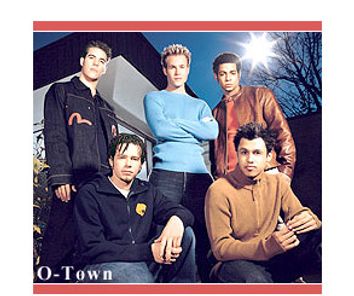
A giant, ghostly white “O” floated in the center of a stage moments before the made-on-ABC prefab boy band O-Town stormed the stage for the first show of their Liquid Dreams summer tour. The thousands of teen and preteen girls in the audience roared like a low-flying supersonic spacecraft and thrust their neon green O-Town glowsticks overhead like mini light sabers.

A glowing purple scrim behind the “O” vanished, revealing a backing band and five white sheets hanging vertically above a polished aluminum riser at the rear of the stage. The music reached a crescendo, the sheets dropped and the five members of O-Town — Trevor, Jacob, Erik, Dan and Ashley — burst forth. As they popped, locked and Frankenstein-danced their way onto the main stage they sang “All for Love.” Dressed in five flavors of Fred Segal urban chic, they looked like male cheerleaders spun out on crystal meth. The group mmm-bopped and twirled. The crowd jumped up and screamed; they would remain on their feet for the duration of the show.

Oddly, though, it appeared that a few things were out of whack with the pop dream machine. The slick music — contemporary pop with the thick sheen courtesy of some of the world’s highest-paid producers and competent studio musicians — was dead on. But the group’s vocal harmonies seemed off. And there were only four spotlights directed at the stage, which left one member perpetually flailing in the dark.

More often than not that was Jacob, a latter-day Donnie “No More Games Sucka” Wahlberg, one of the original members of New Kids on the Block. Like the cane-clutching Wahlberg, Jacob fills the strictly codified boy-band role of the lovable but dangerous young man best avoided by good girls. On this night, Jacob’s punkish array of dangerous accessories included a studded leather belt, a chain wallet, dreadlocks, Adidas Sambas, a black muscle-T emblazoned with a commie red star and a matching red headband.

Instead of grooving synchronistically with the other members, Jacob shuffled around in the dark, canted forward at the waist with near-geriatric posture. He shook his head enthusiastically to the beat, stomped a foot clumsily here or there and occasionally hopped in line with the other boyz. Mainly, though, he didn’t dance.

When he stepped to the mike a few songs later, acoustic guitar in hand, Jacob explained that he’d broken bones in his back a month and half earlier.

The crowd roared and, like the rest of the flaws in the performance, Jacob was immediately forgiven and the show was swept along in the unremitting currents of euphoria and affirmation.

It was a moment emblematic of the special bond O-Town’s fans feel with their heroes, an embrace that simultaneously encompasses the band’s flawed humanness and pop star celebrity personae.

More human than human

Most of O-Town’s followers first saw the current members of the group when they were normal guys battling for one of five slots in a boy band on ABC’s “Making the Band” last fall. As the show progressed, viewers watched the applicants actually transform into a real band.

Like all reality TV stars, the men of O-Town encountered numerous emotional, familial and interpersonal crises during the course of the show. They broke up with girls. They experimented with their newfound celebrity superpowers. They took a trip to a tattoo parlor. They struggled with breaking voices and clumsy feet that couldn’t follow animatronic cotton candy dance moves.

Being a member of a boy band, the television show made clear, was much more difficult than any aspiring Justin Timberlake might have thought. O-Town fans took notice, and it was these struggles that made them appreciate the finished product — a boy band with an album on a major label — perhaps to a greater degree than they would have minus the televised preamble.

“It’s been interesting to follow these normal guys from the very beginning and to see all the pressures and challenges they’ve faced to get where they are,” said a 47-year-old father and O-Town fan who was accompanying two sons and a daughter to the show.

This was a sentiment echoed by fan after fan at Friday’s show, no matter their age. “We’ve watched them since Day 1 and bonded with them,” said Yvonne Creason, 24, and founder of Kiss Me Trevor, aka KMT, an Internet fan club dedicated to O-Town member Trevor Penick that boasts 1,500 members. “Their whole life is out there for everyone to see on television.”

Being dysfunctional reality TV stars with all of their warts intensified, and being exposed before they were pop stars, has paradoxically made the five members of O-Town and their decidedly abnormal vocation seem somehow more human than human to their fans.

Devotees of run-of-the-mill manager-created, money-driven boy bands like ‘N Sync and the Backstreet Boys obsess over the details of their pinup heroes’ lives. They might catch an occasional, fleeting glimpse of the behind-the-scenes lives of these bands in the pages of Teen People or Tiger Beat, on MTV’s “Cribs” or “Diary” programs, or on any number of fan Web sites, but they’ll never have the kind of simulated access to the minutiae of the band members’ personal and professional lives that O-Town fans have had since the beginning. Granted, what O-Town fans saw on the television show was a glossy, edited version of the events leading to the band’s formation that was crafted to emphasize TV drama, but it’s still more access than most ‘N Sync fans can ever dream of having.

The development of this special bond has led to a new kind of pop fandom that is oddly skewed toward fetishizing the normally invisible (and patently slimy) business side of the music business. Indeed, the televised creation of bands like O-Town and their female mirrors on NBC — the band Eden’s Crush from “Pop Stars” — has spawned a new breed of superfan that’s obsessed not just with the band but with everyone who appears on camera in association with the band — including their families, band management and record execs.

It is fans of this sort, it became clear during the intermission before O’Town took the stage, that made up the core of the audience at Friday’s performance.

Me+C4C=Love!

C4C, short for Crushin’ 4 Cronin, is the name of an Internet club devoted to the adulation and worship of Mike Cronin, part of the O-Town management team and a character on the current season of “Making the Band.” (Cronin also happens to be the brother of one of the guys in LFO, aka the Light Funky Ones, another boy band.)

The existence of C4C along with www.O-Townkeys.com (a Web site devoted to the O-Town backing band) and B4B, aka Burnin’ 4 Berkowitz (dedicated to the vice president of artists relations for J Records, O-Town’s label, and another character on this season’s “Making the Band”), illuminate this odd new industry, where seemingly nothing takes place behind closed doors.

Cronin is a tall, frosted-tips mall looker with a gym bod, the kind of guy who has a closet-full of shiny slacks and ribbed Prada crew Ts. While he’s not in-front-of-mike talent, you can imagine his smiling visage meriting its own billboard on Sunset Boulevard, or, at the very least, a special-edition Trapper Keeper folder.

When he escorted the mother of one of the members of O-Town to the sound booth in the center of the Greek before O-Town took to the stage, the entire audience turned to watch him, and screams of “Mike! Mike! I love you Mike!” poured out from all over the stadium. Followed, of course, by a more general tinnitus-inducing shriek.

Even Lew Perlman, the controversial one-time manager of the Backstreet Boys and ‘N Sync, who played a prominent role in helping to develop O-Town and was a major character during the show’s first season, is an O-Town fan favorite. Perlman and the band have since parted ways, but because of his affiliation with “Making the Band,” O-Town fans revere him.

“What Epstein did for the Beatles in the 20th century, Perlman did for O-Town,” Charmaine Frost, 48, media relations director of the 10,000-member Destination O-Town Web community, said. Frost, along with 17 other women in the Dcrew (what members of the Destination O-Town community call themselves) from as far away as Florida and Pennsylvania, had converged in Los Angeles to caravan up the California coast to see three O-Town shows.

While the Dcrew and the rest of the fans at the Greek seemed to know all of the ins and outs of the band members’ personal lives and business arrangements, they’d come to see O-Town live, unmediated, in the flesh and rocking.

Stankontrevor

What they got was a mixed bag of O-Town hits and covers of classic rock songs by everyone from the Goo Goo Dolls to Prince. And whether it was the slightly out-of-key Dan soloing on an O-Town hit single or the slightly out-of-key Trevor segueing less than skillfully from a cover of the country tune “Friends in Low Places” to Outkast’s “Miss Jackson,” the crowd seemed to love every second of it.

The production values seemed closer to high-budget community theater than to the futuristic, pyrotechnics-heavy, “Matrix”-like aesthetic that is now routine for multimillion-dollar live boy band appearances. (The Backstreet Boys, for example, soar through the air on techno-surfboards.) But the O-Town performance was still more than satisfying because of the boisterous enthusiasm of the group, which had a sparkle, shininess and enthusiasm that superseded any choreography or melodic fuzziness. And maintaining a certain roughness, even if they don’t mean to do so, reinforces their realness to fans who still imagine them as the guys next door instead of rock stars.

Or perhaps part of the overwhelming crowd reaction also had to do with the new heights of sartorial greatness some of the members of O-Town soared to on this humid summer night. Erik, for example, who looks like he would have been an ideal musical guest on “Miami Vice” had he been born 10 years earlier, was sporting a baseball stirrup sock on his right forearm along with batting gloves during the first few songs. To the great relief of fans, although the batting gloves disappeared for his solo cover of “Purple Rain,” they were back later in the night for the encore.

Judging from the screams in the audience, the highlight of the concert for most fans was when O-Town brought a young girl onstage and placed her on a stool at the center of the stage for a two-song serenade. She blushed and clung to the stool as if a long sentence in a Kazakh prison awaited her if she let go. At the same time, she vicariously fulfilled the fantasies of thousands of other young girls in the audience who screamed things like, “I would give anything to be her.”

When the show ended at 10 p.m., the majority of fans filed directly back to the parking lot so their legal guardians could take them home. But a few hundred hung around to wait behind a set of flimsy metal barricades in hopes of glimpsing O-Town entering their tour bus.

The dozen or so security guards on the other side of the fence would have been no match for this Britney-esque legion of pumped-up O-Town fans in their sparkly crop tops, printed with “princess” and “hottie.” But instead of charging, they respectfully kept their distance and waited as their rides home became impatient and their bodies sagged from three hours of screaming and standing.

It was a night when many Liquid Dreams came true, but for these fans, meeting the band would not be one of them.

Continue Reading Close

The Disneyland disco

In pursuit of the mega Mickey Mouse rave, a handful of candy ravers aim to make the Happiest Place on Earth just a little bit happier.

  • more
    • All Share Services

The Disneyland disco

It’s 1 p.m. Saturday at the Carnation Plaza Gardens in the center of Disneyland. The Vineyard Junior High Eighth Grade Chorus of Alta Loma, Calif., has just finished belting out a rousing set of elementary school standards. Meanwhile, three young candy ravers — dance music fans dressed in tent-sized pants and draped with enough plastic bracelets, necklaces and other primary-colored juvenilia to decorate a romper room — slump on benches in front of Sleeping Beauty Castle.

1 p.m. is the second meet-up time for the unsponsored, unendorsed, unofficial raver day that’s supposed to happen at Disneyland. A raver day is a grass-roots, street-level happening where ravers agree to converge at a real-world event (as opposed to a rave or party) at a pre-arranged place and time. Together, they hook up with old friends, meet new ones and spread their well-worn message of peace, love, unity and respect — PLUR. The logistics are worked out in advance via the Web, e-mail and message boards on sites such as www.raverlinks.com and www.candykids.net. Today’s event was even promoted by its own Web site, thrown up by CWCC, a crew of SoCal rave promoters.

The specific aim of today’s raver day as explained on the CWCC site is to secure a permit from Disney to hold a rave in the Carnation Plaza Gardens in December and fill it with the bouncing sound of happy hardcore, an extremely fast, raw subgenre of electronic music popular among candy ravers.

“They have cheerleading competitions here,” says Pacey, 19, an optimistic lad clad in Kikwear pants so large that they enshroud his shoes and ooze out onto the blacktop like a denim waterfall. He adjusts his Adidas visor and slaps his headphones over what look like exceptionally painful piercings in his central ear cartilage. “If cheerleaders can get a permit to dance, then we can get one.”

CWCC’s efforts represent an interesting viral approach to promoting a positive raver presence at Disneyland. Ravers have converged for raver days here for more than two years in hopes of making the elusive Disney rave happen, usually prompting a turnout in the hundreds. But as Pacey — a name that he has assumed to accompany his raver identity — and the other two PLUR-ophiles are keenly aware, there’s one big problem: No one is showing up today, not even Mike, CWCC’s mysterious point man, whom I swapped e-mails with a few times earlier in the week.

Making the Happiest Place on Earth happier

While past Disneyland raver days have drawn throngs of glow stick-wielding warriors and featured tape trading, sticker giveaways, spontaneous acts of PLUR and boombox-aided dancing throughout the park, these three kids are the only ravers representing today, and the sun seems to have bleached away most of their enthusiasm.

“This sucks,” says Michelle Applebee, 17, a raver from northern San Diego County who is part of the CWCC crew, her eyes hidden beneath her baby blue visor. “It sucks a lot.”

“Where’s Mike?” asks Pacey, eliciting another round of shrugs and grunts.

Like everyone else on this relentlessly cheery, tar-melting Southern California summer day, he’s somewhere else — at the beach maybe, or perhaps chilling in an air-conditioned room in a suburban Orange County home rocking Proskater 2 on the Playstation and waiting for night to fall. Or maybe he’s just somewhere else in the park. No one knows.

All these three kids want to do is make the Happiest Place on Earth a little bit happier by adding a better soundtrack, but today it doesn’t look like things are going to work out.

Why they even want to do this in the first place is a question that’s a bit more difficult to understand.

Dancing and drugs go together like peanut butter sandwiches and chocolate milk. And therefore raves are notorious loci of party drugs, especially ecstasy, ketamine and GHB. Part of the reason legal or outlaw desert massives and parties in abandoned warehouses are staples in the rave scene is because they are places where kids can do drugs and more or less be free from police or parental intervention.

Which would make you think that Disneyland, with its massive security force, hyper-brand consciousness and emphasis on a hazard-free, family-safe environment would be the last place in the world these kids would want to party. But unlike the security teams at most raves, Disney doesn’t rifle through your wallet and backpack at the gate, nor does it frisk you at the door. While it would obviously be illegal to do so, it wouldn’t be difficult to smuggle whatever drugs you wanted through the gates of Mickey.

And dealing with the Disney security and the Foucaultian surveillance seems to be a non-issue to these kids. “I don’t care about the security,” Pacey says. “For me, it’s all about the music. I just want to dance.”

To try to jump-start the day, Pacey and his pals make a barrage of cellphone calls to other ravers who are supposed to be representing. Pages are left. Voice mails are exchanged. The three ravers pass more time sweating and sitting on the benches. Eventually, five more kids show up, including Cheech and Ewok, two 21-year-old homeless ravers, and Perry, also 21, a self-described anarchist.

None of the four distinct cliques of kids in the group really know each other; they’ve never partied together. Before today, they might have exchanged e-mails, but they’ve never spoken. Still, they drove in from all over San Diego and Orange counties to hang with other candy kids and revel in the feeling of community and the bond that the scene gives them.

Waiting some more with a slightly larger group

Sitting around in the middle of a hot, sunny day in a stunningly sober state, the kids seem shy. They goof around but they seem to have little to say to each other in their drug-free state. More calls are made in an attempt to score some E or acid. Or something, anything, to liven up the joint. They swap “candy” (slang for the gaudy kiddie necklaces and bracelets of shiny Day-Glo beads and alphabet letters) from wrist-to-wrist, neck-to-neck. Eventually, they decide to hit some rides while they wait for drugs or more people or both to show up.

As the little crew bounces from the Sleeping Beauty Castle to Tomorrowland to Toontown, the most striking thing about the pack of candy kids is how little they stand out in the crowd and how closely they mirror the carnivalesque Disney aesthetic. They came to the park with the mission of demonstrating that they are good citizens worthy of holding an event in the park, but a look around at the regalia of the other patrons reveals that culture might have already achieved their mission of acceptance.

Children with their parents scamper about in beaded necklaces and bracelets, wearing the same visors, skate shoes and ultra-baggy baggy pants as the raver kids. Like the rave scene and its music, which has become almost as hyper-commercialized, commodified and safe as, say, Phish and the jam band scene, the raver aesthetic has gone overground.

Maybe if the ravers were here en masse their presence would be more conspicuous, but rolling around in a small group of eight, they blend in almost seamlessly with the rest of the families in the park, most of whom sport surreal Disney gear, including three-fingered giant Mickey Mouse gloves (a staple, coincidentally enough, at raves), fuzzy pink Mouseketeer ears and glow-in-the-dark necklaces and laser-light spinners that could easily be mistaken as the photon lights ravers use to give one another light shows when they’re on E.

Indeed, Cheech, smiling ear-to-ear as he clutches a giant stuffed Tigger given to him as a gift by Ewok, looks exactly like thousands of other Mouse-struck tourists who make up the cartoonish sea of bodies circumambulating throughout the park.

In academic literature, if not among this little crowd, Disney is variously vilified and praised as being at the forefront of the kind of pastiche, cut-and-paste, banal aesthetic of relentless mediation, de-historicized cultural sampling and miniaturization that has come to be the dominant mode of American popular culture, including rave culture. For all their utopian ideals, somehow the ravers miss the irony.

Motion, then more waiting

By the time the ravers have taken a plunge down the Splash Mountain log flume ride, looped through Frontierland and made a pit stop in Toontown, it’s time for the 7 p.m. meet-up.

Four more candy kids are waiting in front of the castle. The drugs have not arrived and might not ever. The ravers decamp to a smoking area and wait some more. There is talk of heading to the Masterdome, a popular rave venue in San Bernardino, to see some happy hardcore DJs spin.

A few hours later, night falls and the kids have yet to move on to the Masterdome. So they wait some more in the center of the Happiest Place on Earth. For ecstasy. For acid. For more people. For a rave permit. For something that will take them all away.

Continue Reading Close