Anjali Joshi

Pakoras: Indian spiced vegetable fritters

When a girl in Delhi, the author would splash away madly during monsoon season. Only these could lure her indoors

  • more
    • All Share Services

Pakoras: Indian spiced vegetable fritters

The much-awaited monsoon rain showers are always a cause for celebration in India. When the rains finally arrived in Delhi, as a kid I remember rushing outdoors with my sisters, fully clothed, jumping for joy and singing out loud, trying to catch the first raindrops on our tongues. Kids here have songs to make the rain go away; we had chants to entice the clouds to shower more rain.

After the scorching heat of the dry summer and the almost daily onslaught of the dust-laden winds from the neighboring western desert, nothing was more welcome than the torrential downpour that signaled the start of the monsoon season. The dry, parched land soaked up the first raindrops eagerly, scenting the air with a heady, earthy aroma. Flowers bloomed again, adding to the fragrance. If you were lucky, you might be able to hear the call of the peacocks, and maybe even see a male unfurl the full splendor of its iridescent plumage, dancing in the rain for a mate.

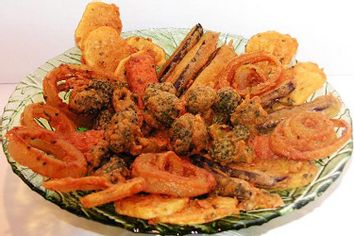
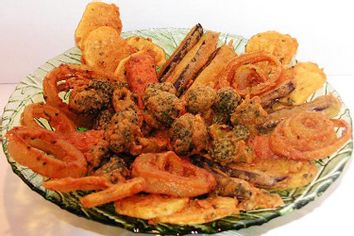
Needless to say, we’d get soaking wet in no time at all. Eventually, we’d be coaxed inside with promises of pakoras, savory fritters made with a chickpea flour batter, and some ginger-cardamom chai. It takes great willpower to just have one or two pakoras; what usually starts off as a snack turns into a meal, ending with improvised sandwiches of bread slathered with mint-cilantro chutney and filled with the remaining pakoras. These fritters are not only good for a rainy day, but make a great snack any day, any time.

For lunch today, my family and I indulged in pakoras as we watched the liquid Oregon sunshine through the windows. With a hot cup of ginger chai tea, it was the perfect Sunday indulgence.

Here is a simple recipe to try. To make it easier, I’ve made many spices optional. No need to fret if you don’t have them all on hand. The chickpea flour is available in many ethnic stores.

Pakoras: Indian-style fritters

Serves 6-8

Ingredients

For the batter

  • 1½ cups fine chickpea flour (also known as besan/garbanzo flour/gram flour; available at many Asian markets)
  • Salt, to taste
  • Cayenne pepper, to taste
  • 1 teaspoon cumin powder
  • 3-4 tablespoons finely chopped cilantro or parsley
  • ½ cup to 1 cup of warm water
  • A pinch of baking soda
  • Optional spices, one or more of the following if used: a pinch of asafetida powder, ½ teaspoon turmeric powder, 2 teaspoon caraway seeds (ajwain) or 2 teaspoons nigella seeds (kalonji), 1 teaspoon dried pomegranate seed powder or 1 teaspoon dried unripe mango powder (amchoor)

For the fritters

  • (Use any of the following, per your choice and availability)
  • 1 medium potato, washed, scrubbed and cut into thin, round slices
  • 1 or 2 Japanese eggplants, cut into wedges, or into round disks
  • 1 cup of broccoli and cauliflower florets, cut into 1-to-2-inch pieces
  • ½ block of store-bought paneer cheese, cut into small cubes or long pieces, about ½-inch thick
  • 1 medium onion, peeled and cut into disks
  • 1 small, thin zucchini squash, cut into ½-inch disks
  • A handful of fresh spinach leaves
  • 1 sweet pepper or a few hot peppers, cut into large chunks or round disks
  • Peanut or vegetable oil, as needed, for frying

Directions

For the batter

  1. Place all the dry ingredients in a deep mixing bowl and stir well.
  2. Add the chopped cilantro and the optional spices. Slowly add ¼ cup of the warm water, mixing well with a fork or a whisk.
  3. Beat the batter to get a smooth consistency. Remove all lumps.
  4. Add additional water as needed to get the consistency you want. (Note: I make my batter very thin and runny, because I like a very light coating of batter on my fritters. If you are new to this, I suggest using less water and keeping your batter thick. A thick batter is easier to handle.)
  5. Whisk well for a few minutes, then let rest for at least 30 minutes while you prep the vegetables and heat the oil.

For the fritters

  1. Pour oil into the wok, saucepan or fryer. You need a depth of at least 1-2 inches, and several inches of clearance above the oil to be safe from bubbling over. Heat on low while you finish prepping the vegetables.
  2. Put the sliced potatoes and eggplant in a bowl of cold, salted water for 10-15 minutes. Drain and pat dry before frying.
  3. Salt the onion rings, mixing in the salt with your fingertips and set aside for 10-15 minutes. Pat dry before frying.
  4. When ready to start frying, turn the heat up and heat the oil to 350°F. To test if the oil is hot enough, you can also take a little batter on your fingertip and let it drop carefully into the oil. If it rises immediately, the oil is hot enough. Turn the heat down to a medium.
  5. Put a few of the vegetables into the batter and stir. Working with one piece at a time (I use one hand to do this, and the other hand to fry), coat well with the batter and carefully lower into the hot oil. If using spinach leaves, hold each leaf by the stem tip as you coat with batter.
  6. Fry on medium heat, turning a few times, till very light golden. Remove carefully from the hot oil and drain on absorbent paper towels.
  7. Repeat the process till all the vegetables and paneer cheese pieces are used up.
  8. When ready to serve, heat the oil again and fry the pakoras in batches a second time in hot oil till they are a golden brown all over. The second frying really crisps up the pakoras. Serve hot, with a sauce of your choice. I used a bit of mint-cilantro sauce stirred into some plain yogurt today.

Notes:

  • Please use caution when frying and working with hot oil, taking care not to splash or drop the food from a height into the oil. Instead lower it in carefully, as close to the surface of the oil as possible.
  • You may need to play with the temperature of the oil by turning the heat up or down a few times during the frying process. You want the fritters to bubble on contact with the oil, but not fry dark brown too quickly.
  • To reheat, place in a single layer on a cookie sheet and bake in a preheated 350°F oven for 10 to 15 minutes. They will crisp up again very nicely.
  • Any leftover batter will keep in the refrigerator for a few days. 

Pakoras: Indian spiced vegetable fritters recipe

  • more
    • All Share Services

Pakoras: Indian spiced vegetable fritters recipe

Serves 6-8

Ingredients

For the batter

  • 1½ cups fine chickpea flour (also known as besan/garbanzo flour/gram flour; available at many Asian markets)
  • Salt, to taste
  • Cayenne pepper, to taste
  • 1 teaspoon cumin powder
  • 3-4 tablespoons finely chopped cilantro or parsley
  • ½ cup to 1 cup of warm water
  • A pinch of baking soda
  • Optional spices, one or more of the following if used: a pinch of asafetida powder, ½ teaspoon turmeric powder, 2 teaspoon caraway seeds (ajwain) or 2 teaspoons nigella seeds (kalonji), 1 teaspoon dried pomegranate seed powder or 1 teaspoon dried unripe mango powder (amchoor)

For the fritters

  • (Use any of the following, per your choice and availability)
  • 1 medium potato, washed, scrubbed and cut into thin, round slices
  • 1 or 2 Japanese eggplants, cut into wedges, or into round disks
  • 1 cup of broccoli and cauliflower florets, cut into 1-to-2-inch pieces
  • ½ block of store-bought paneer cheese, cut into small cubes or long pieces, about ½-inch thick
  • 1 medium onion, peeled and cut into disks
  • 1 small, thin zucchini squash, cut into ½-inch disks
  • A handful of fresh spinach leaves
  • 1 sweet pepper or a few hot peppers, cut into large chunks or round disks
  • Peanut or vegetable oil, as needed, for frying

Directions

For the batter

  1. Place all the dry ingredients in a deep mixing bowl and stir well.
  2. Add the chopped cilantro and the optional spices. Slowly add ¼ cup of the warm water, mixing well with a fork or a whisk.
  3. Beat the batter to get a smooth consistency. Remove all lumps.
  4. Add additional water as needed to get the consistency you want. (Note: I make my batter very thin and runny, because I like a very light coating of batter on my fritters. If you are new to this, I suggest using less water and keeping your batter thick. A thick batter is easier to handle.)
  5. Whisk well for a few minutes, then let rest for at least 30 minutes while you prep the vegetables and heat the oil.

For the fritters

  1. Pour oil into the wok, saucepan or fryer. You need a depth of at least 1-2 inches, and several inches of clearance above the oil to be safe from bubbling over. Heat on low while you finish prepping the vegetables.
  2. Put the sliced potatoes and eggplant in a bowl of cold, salted water for 10-15 minutes. Drain and pat dry before frying.
  3. Salt the onion rings, mixing in the salt with your fingertips and set aside for 10-15 minutes. Pat dry before frying.
  4. When ready to start frying, turn the heat up and heat the oil to 350°F. To test if the oil is hot enough, you can also take a little batter on your fingertip and let it drop carefully into the oil. If it rises immediately, the oil is hot enough. Turn the heat down to a medium.
  5. Put a few of the vegetables into the batter and stir. Working with one piece at a time (I use one hand to do this, and the other hand to fry), coat well with the batter and carefully lower into the hot oil. If using spinach leaves, hold each leaf by the stem tip as you coat with batter.
  6. Fry on medium heat, turning a few times, till very light golden. Remove carefully from the hot oil and drain on absorbent paper towels.
  7. Repeat the process till all the vegetables and paneer cheese pieces are used up.
  8. When ready to serve, heat the oil again and fry the pakoras in batches a second time in hot oil till they are a golden brown all over. The second frying really crisps up the pakoras. Serve hot, with a sauce of your choice. I used a bit of mint-cilantro sauce stirred into some plain yogurt today.

Notes:

  • Please use caution when frying and working with hot oil, taking care not to splash or drop the food from a height into the oil. Instead lower it in carefully, as close to the surface of the oil as possible.
  • You may need to play with the temperature of the oil by turning the heat up or down a few times during the frying process. You want the fritters to bubble on contact with the oil, but not fry dark brown too quickly.
  • To reheat, place in a single layer on a cookie sheet and bake in a preheated 350°F oven for 10 to 15 minutes. They will crisp up again very nicely.
  • Any leftover batter will keep in the refrigerator for a few days. 
Continue Reading Close

Indian soul food: Spicy, gingery mustard greens

Spice up your winter the Punjabi way: With a mess of sarson da saag

  • more
    • All Share Services

Indian soul food: Spicy, gingery mustard greens

Growing up in Delhi, India, winter was a season filled with fancy festival foods and holiday treats. A season also of simple yet glorious, everyday treats like warm roasted peanuts in their shell from the vendor at the street corner, and gajak, the crisp, flaky brittle-like sesame seed confection. A time to bask in the warm sunshine of the days, and enjoy piping-hot, hearty dinners with the family before surrendering to the cold, cold nights snuggled under piles of blankets and duvets.

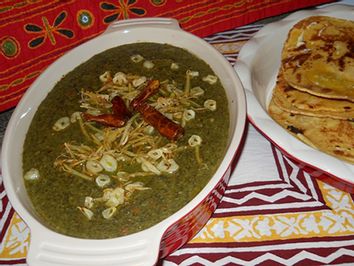
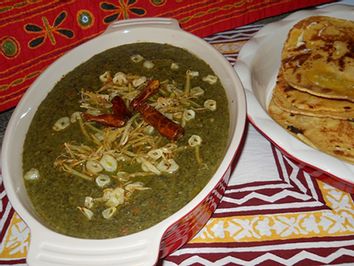
Winter greens were welcome in every kitchen. Nothing embodied the essence of these greens more than sarson da saag, a mess of mustard greens, a food traditional to the neighboring state of Punjab, served with corn flatbread called makki di roti and generous dollops of homemade white butter; soul food from the land of the five Himalayan rivers and fertile valleys, the bread basket of India, home to a hardworking, spirited, optimistic, courageous people with a unique joie de vivre (Punjab is also the birthplace of the Sikh religion, and of the popular Bhangra dance form). The dish originated as a seasonally prepared, rustic farmer’s meal, simmered slowly atop communal stoves in the village. Sarson da saag began its rise to popularity as a food served at dhabas, the roadside open-air restaurants frequented by truck drivers crisscrossing the highway in their colorful vehicles.

When I was about 8 or 9, new neighbors from the Punjab moved in next door — a widow with two sons, both in their early 20s. They were quick to claim us as family. My father became bhaiya, or brother, to the sons, and my young mother their cherished bhabhi, or sister-in-law. It is customary in India to refer to people that you meet with appellations denoting family relationships — auntie, uncle, sister, brother, grandma, grandpa, et al. There are those rare times when the name does indeed mean something more — when it makes you family. Their mother, “Auntie-ji,” as she became to us, was a fabulous cook, as was my mother. It was open kitchen all the time as they watched each other prepare regional delicacies. Many times Auntie-ji would labor all day then call out over the backyard wall for us, an invitation to come on over. Refusal was not advisable; she was a formidable lady who didn’t appreciate being crossed. All you could do was surrender to the food. Her sons (now my “uncles”) would frequently scale the backyard wall to show up in my mother’s kitchen, demanding to know what was for dinner. I quickly learned to climb the curry leaf tree at the opposite end of our backyard to get to the top of the wall. A careful walk across the top, till I reached their wall, to dangle over and jump into their garden.

Sarson da saag and makki di roti are what I make when I want to re-create the winter days of my childhood.

Sarson Da Saag recipe

Serves 4 to 6

Ingredients

  • 1½ pounds oriental mustard greens
  • 10 ounces baby spinach
  • 1/3 cup coarsely chopped peeled ginger
  • 1 cup coarsely chopped sweet red pepper
  • 2 jalapeños or other hot peppers, deseeded and chopped (optional)
  • 3 to 4 cups of water
  • 1/3 cup finely ground corn flour
  • 4 tablespoons canola oil or ghee, clarified butter
  • 1/3 cup julienned fresh ginger
  • ¼ cup garlic slices
  • 2 to 4 dried red hot peppers (optional/to taste, or use a sprinkle of chili flakes)

Directions

  1. Clean, trim and wash the mustard greens in plenty of running water. Wash and drain the spinach. Coarsely chop the mustard greens. If the mustard stems are quite thick, chop those finer.
  2. Bring 3 cups of water to a boil in a deep pan. Add the chopped mustard greens, baby spinach, chopped ginger, sweet red pepper and hot peppers. Stir and simmer over a low heat, covered, for about an hour or till tender. Stir occasionally while cooking, adding a little more water if required.
  3. When cooked, remove from heat. Drain the greens, reserving the liquid and placing it back into the pan used for cooking. Coarsely purée the greens in a food processor. Add salt to taste.
  4. Whisk the corn flour into the cooking liquid till mixed. Add back the puréed greens. Stir well and allow to cook covered, on a low heat, for about 30-45 minutes till cooked. You’ll need to stir the mixture every 15 minutes or so to prevent the purée from scorching on the bottom of the pan.
  5. When cooked, adjust the salt to taste. Remove to a serving dish and keep warm. Heat the oil or butter in a small saucepan. When hot, turn the heat to low, add the dried hot peppers, stir, then add the ginger juliennes. Stir gently and let cook for a minute or two. Then add the garlic slices and cook till the mixture is sizzling and just starting to brown. Be careful not to burn the garlic.
  6. Pour the spiced oil or butter mixture over the cooked greens and cut in gently to distribute the spices into the purée. Serve hot, with a flatbread of your choice.
  7. Handmade thick corn tortillas make a very acceptable substitute for the traditional makke di roti accompaniment. Provide additional butter or ghee at the table, to be used as needed.

Notes: 1) Every family has a favorite way to prepare this mess of mustard greens. This is just how I made it tonight, from sense memory, writing down the ingredients as I went. 2) The red pepper and spinach help to mellow out the pungency of the mustard. Traditionally, a green called “bathua” or lambs’ quarters is used with the mustard. 3) Bob’s Red Mill makes fine ground corn flour, which works well. It is otherwise known as makki atta, and is readily available in Indian grocery stores. Do not use corn starch. You may use fine-ground cornmeal.

Continue Reading Close

Spicy, Indian mustard greens (sarson da saag) recipe

  • more
    • All Share Services

Spicy, Indian mustard greens (sarson da saag) recipe

Serves 4 to 6

Ingredients

  • 1½ pounds oriental mustard greens
  • 10 ounces baby spinach
  • 1/3 cup coarsely chopped peeled ginger
  • 1 cup coarsely chopped sweet red pepper
  • 2 jalapeños or other hot peppers, deseeded and chopped (optional)
  • 3 to 4 cups of water
  • 1/3 cup finely ground corn flour
  • 4 tablespoons canola oil or ghee, clarified butter
  • 1/3 cup julienned fresh ginger
  • ¼ cup garlic slices
  • 2 to 4 dried red hot peppers (optional/to taste, or use a sprinkle of chili flakes)

Directions

  1. Clean, trim and wash the mustard greens in plenty of running water. Wash and drain the spinach. Coarsely chop the mustard greens. If the mustard stems are quite thick, chop those finer.
  2. Bring 3 cups of water to a boil in a deep pan. Add the chopped mustard greens, baby spinach, chopped ginger, sweet red pepper and hot peppers. Stir and simmer over a low heat, covered, for about an hour or till tender. Stir occasionally while cooking, adding a little more water if required.
  3. When cooked, remove from heat. Drain the greens, reserving the liquid and placing it back into the pan used for cooking. Coarsely purée the greens in a food processor. Add salt to taste.
  4. Whisk the corn flour into the cooking liquid till mixed. Add back the puréed greens. Stir well and allow to cook covered, on a low heat, for about 30-45 minutes till cooked. You’ll need to stir the mixture every 15 minutes or so to prevent the purée from scorching on the bottom of the pan.
  5. When cooked, adjust the salt to taste. Remove to a serving dish and keep warm. Heat the oil or butter in a small saucepan. When hot, turn the heat to low, add the dried hot peppers, stir, then add the ginger juliennes. Stir gently and let cook for a minute or two. Then add the garlic slices and cook till the mixture is sizzling and just starting to brown. Be careful not to burn the garlic.
  6. Pour the spiced oil or butter mixture over the cooked greens and cut in gently to distribute the spices into the purée. Serve hot, with a flatbread of your choice.
  7. Handmade thick corn tortillas make a very acceptable substitute for the traditional makke di roti accompaniment. Provide additional butter or ghee at the table, to be used as needed.

Notes: 1) Every family has a favorite way to prepare this mess of mustard greens. This is just how I made it tonight, from sense memory, writing down the ingredients as I went. 2) The red pepper and spinach help to mellow out the pungency of the mustard. Traditionally, a green called “bathua” or lambs’ quarters is used with the mustard. 3) Bob’s Red Mill makes fine ground corn flour, which works well. It is otherwise known as makki atta, and is readily available in Indian grocery stores. Do not use corn starch. You may use fine-ground cornmeal.

Continue Reading Close