WASHINGTON (AP) — Among Vladimir Putin’s first acts now that he’s back in Russia’s top job was to stand up to President Barack Obama.
Both nations insist Putin’s no-show at a high-profile economic gathering tailored for his attendance is not a snub. But the decision to skip next week’s meeting of the Group of Eight industrial nations in the United States and a much-anticipated Oval Office meeting with Obama, sets a sour tone for the next four years.
If Obama wins re-election, he will have Putin as a sometime partner and sometime adversary through the end of his presidency. If Republican Mitt Romney wins, the dynamic might be very different. Romney has called Russia an “enemy,” while Putin has signaled that he will hold off on any major new cooperation with the United States until he knows who will be president.
Either way, Russia watchers in and out of the U.S. government predict a more businesslike relationship than was the case under his predecessor, Dmitry Mdvedev, and perhaps a more limited one. Putin has a variety of troubles at home and isn’t likely to pick a fight with the United States despite sharply negative rhetoric about Washington during his election campaign. But he also isn’t likely to welcome friendly ties for their own sake, said Steven Pifer, a Russia and arms control expert at the Brookings Institution.
“I think you’ll see a more transactional relationship,” Pifer said.
Putin will be prepared to cooperate with the U.S. where he sees fit, “but it will be, ‘If I do this for you, what do I get?’” Pifer said.
Putin returned Monday to the presidency he had vacated four years earlier. The Russian constitution prohibits more than two consecutive terms. In the interim, Putin protege Medvedev was president and Putin occupied the previously less important post of prime minister. Medvedev made way for Putin’s return, and now Putin has installed Medvedev as prime minister.
Putin was considered the top decision-maker throughout, but Medvedev brought a cheerier and more Western-oriented face to Russian leadership that Obama sought to engage.
The White House quietly announced this week that Putin would not attend the G-8 meeting as planned and would send Medvedev instead. That followed another surprising announcement from the White House earlier this spring, when it abruptly said the G-8 meeting was being moved from its long-planned Chicago venue to Camp David, the presidential retreat in Maryland’s Catoctin Mountains.
A major reason for the switch was to appear welcoming to Putin, U.S. and other diplomats said. The economic meeting was planned to take place adjacent to a summit of NATO leaders in Chicago, and Putin’s fierce opposition to a planned NATO missile defense shield in Europe made his attendance at even half the planned gathering awkward.
The Obama administration knew Putin would be a tough customer but hoped for a better start than this.
The Kremlin on Thursday explained Putin’s decision to skip the high-profile visit to the United States by saying he needs to finish setting up his new government. That sounded hollow to many U.S. ears but makes some sense given Putin’s political troubles at home.
“It does not at all feel like a snub,” White House press secretary Jay Carney said Thursday. “It was something we understood.”
Putin’s job swap with Medvedev, the former president who is now prime minister, has created tensions of its own within Russia’s ruling elite. Who will serve in the new Cabinet under Medvedev and what role will be played by other top Putin allies who object to being subordinate to Medvedev? No appointments have yet been made.
All of that has little to do with the United States, but Moscow’s relationship with Washington remains its most-watched and arguably its most important overseas relationship.
Cooperation with the Obama administration on such areas as supply routes for the war in Afghanistan and international sanctions on Iran would not have happened without Putin’s back-seat consent. That kind of cooperation is likely to continue, at least for now, but with Putin’s warier and more skeptical view of the United States more on display.
Putin has gone out of his way since the election to defend the U.S.-led campaign in Afghanistan and his proposal to allow the Americans to use a strategic airfield for resupply. He also has defended Russia’s decision to join World Trade Organization, something the Obama administration has pushed hard to make happen.
In both cases, domestic Russian criticism has come mainly from the Communists, who have the second-largest faction in parliament.
Anti-Putin street protests in Moscow erupted on Sunday, and more than 400 people were arrested after the rally turned into clashes between the demonstrators and riot police.
Since Monday, activists have been staging flash mobs across Moscow: suddenly assembling in public places, camping and staying there for the night.
The United States is dampening expectation for any major new arms control gains with Russia at least until after the election, and diplomats have all but conceded they cannot get Russian consent for harsher United Nations Security Council action against Syria now.
Putin and Obama spoke by phone on Wednesday, and agreed to meet next month on the sidelines of another economic gathering in Mexico. That meeting will lack the symbolism of a White House invitation, however, which may suit Putin just fine.
___
Associated Press writer Lynn Berry in Moscow contributed to this report.
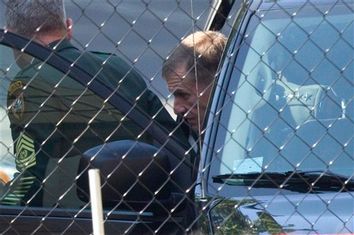
WASHINGTON (AP) — Frustrated by what they said are stalled efforts to free a U.S. soldier taken prisoner three years ago in Afghanistan, the man’s parents have gone public with previously secret U.S. attempts to trade him for Taliban prisoners in U.S. hands.
Bob Bergdahl and his wife, Jani Bergdahl, said in interviews that they are concerned the U.S. government hasn’t done enough to secure the release of their son, 26-year-old Sgt. Bowe Bergdahl.
“There is a dynamic here that has to change,” Bob Bergdahl said in an interview with the Idaho Mountain Express. “Everybody is frustrated with how slowly the process has evolved.”
Bergdahl, of Hailey, Idaho, was captured in June 2009 and is believed held by the Haqqani network, an insurgent group affiliated with the Taliban, probably somewhere in Pakistan. He is the subject of a proposed prisoner swap in which the Obama administration would allow the transfer of five Taliban prisoners long held at the U.S. military prison at Guantanamo Bay, Cuba.
The Obama administration had worked out a framework deal to send those prisoners to Qatar, where they would be under some form of loose house arrest or supervision, while Bergdahl would be returned to the U.S. military.
The proposed deal has been in limbo for months and faces serious opposition in Congress if it ever gets off the ground. The Taliban walked away from talks in March, saying the U.S. had reneged on several promises. The Obama administration is trying several gambits to restart talks, including proposing looser terms for the detention or monitoring of at least one of the Guantanamo prisoners upon their release, two U.S. officials told The Associated Press.
The officials spoke on condition of anonymity because the talks are sensitive and elements of the U.S. engagement with the Taliban are classified.
The Associated Press has periodically reported on Bergdahl’s case since his capture. But the news agency had agreed since last year not to report on the proposed prisoner swap and ongoing negotiations at the request of the Pentagon and White House, on the grounds that public discussion would endanger Bergdahl’s life.
With public discussion of the deal Wednesday by Bergdahl’s parents, the AP and other news organizations reported the proposed swap.
Bob Bergdahl told the Idaho newspaper that swapping Taliban prisoners at Guantanamo for his son represents a “win-win” for the United States. He said in addition to his son’s safe return, the United States could foster good will with the Afghan people.
The imprisonment of suspected militants at Guantanamo is an irritant in U.S. relations with Muslim nations including Afghanistan, which has long demanded the release of its citizens held since shortly after the U.S. invasion that toppled the Taliban government in Kabul in 2001.
A senior U.S. military official said the Pentagon believes Bergdahl to be alive, in relatively good health and in captivity somewhere along the Afghanistan-Pakistan border. The official spoke on condition of anonymity because efforts to free Bergdahl remain sensitive.
A senior Obama administration official, also speaking on condition of anonymity because of concerns for Bergdahl’s safety, told reporters that the case has been a topic at each of several direct meetings that U.S. officials have held with the Taliban. Direct contact, once taboo for the United States, began in secret last year in hopes that the channel could speed larger peace talks with the Afghan government of President Hamid Karzai and ultimately end the long Taliban insurgency.
The official said the U.S. hopes to revive the Bergdahl deal case with the Taliban.
Bob Bergdahl said he and his wife are hoping for a peaceful resolution, preferably one that doesn’t put other American soldiers in danger.
“We don’t want to see Americans killed,” he told the Idaho paper.
Even so, he said the time for a change in strategy has come, and that he hopes renewed public attention to their son’s plight would help secure his release.
“I’m pushing it hard,” Bob Bergdahl said.
The Bergdahls did not respond to a request for comment from The Associated Press.
Marine Col. David Lapan, spokesman for Gen. Martin Dempsey, chairman of the Joint Chiefs of Staff, told reporters that the military has a “collaborative” relationship with Bergdahl’s family, which is given quarterly updates from Washington. He said the family is not advised on whether to discuss the case with the news media.
“Our message to them is: We are working hard to obtain Sgt. Bergdahl’s release, to bring him back into U.S. hands,” Lapan said.
Asked about the family’s complaint that the U.S. government has not done enough, Lapan said: “It’s perfectly understandable that parents whose son has been kept in captivity for several years now are frustrated. We certainly understand that. That’s why we do everything thing we can to try to keep them updated, to the extent we can.”
He added: “If they are angry and/or frustrated, that is certainly understandable. I would say that our leaders are frustrated as well.”
Bowe Bergdahl disappeared June 30, 2009, while deployed with his U.S. Army unit. He’s spent three birthdays in captivity.
To solicit support for further action, Bob Bergdahl plans to speak at an annual demonstration to recognize prisoners of war over Memorial Day weekend in Washington. The event, organized by the nonprofit POW support group Rolling Thunder, typically attracts more than 100,000 motorcyclists to the nation’s capital.
“With all that’s going on, we really need a diplomatic path to get this resolved,” Bob Bergdahl said.
___
AP National Security Writer Robert Burns contributed to this report.
Continue Reading
Close
WASHINGTON (AP) — The White House says Russian President Vladimir Putin is skipping a planned visit to the United States this month for an economic summit and a much-anticipated meeting with President Barack Obama.
The White House says Obama and Putin spoke by phone Wednesday. The Russian leader told Obama that he needs to finish work setting up his new Cabinet. Putin took power this month, returning after six years to a post he had previously held.
Putin protege Dmitry Medvedev (dih-MEE’-tree med-VYEH’-dyev) will attend the G-8 meeting instead.
The Obama administration had moved the G-8 gathering to the Camp David retreat instead of the planned venue in Chicago, partly to accommodate Putin.
The White House says Obama and Putin have agreed to meet next month on the sidelines of another economic gathering.
WASHINGTON (AP) — Support for the war in Afghanistan has reached a new low, with only 27 percent of Americans saying they back the effort and about half of those who oppose the war saying the continued presence of American troops in Afghanistan is doing more harm than good, according to an AP-GfK poll.
In results released Wednesday, 66 percent opposed the war, with 40 percent saying they were “strongly” opposed. A year ago, 37 percent favored the war, and in the spring of 2010, support was at 46 percent. Eight percent strongly supported the war in the new poll.
The poll found that far fewer people than last year think the killing of Osama bin Laden by U.S. troops increased the threat of terrorism against Americans. Overall, 27 percent say the al-Qaida leader’s death resulted in an increased terror threat, 31 percent believe his death decreased the threat of terrorism and 38 percent say it has had no effect. The poll was conducted before the revelation this week of a recent al-Qaida plot to blow up a U.S.-bound airliner with an underwear bomb.
Chris Solomon, an independent from Fuquay-Varina, N.C., is among the respondents who strongly oppose the war. He said the military mission has reached the limits of its ability to help Afghans or make Americans any safer, and he would close down the war immediately if he could. While the rationale for the war is to fight al-Qaida, most of the day-to-day combat is against an entrenched Taliban insurgency that will outlast the foreign fighters, he said.
“What are we really doing there? Who are we helping?” he said in an interview.
Yet nearly half, 48 percent, said the continued presence of U.S. troops in Afghanistan is doing more to help Afghanistan become a stable democracy, while 36 percent said the opposite and 14 percent said they didn’t know. Among those opposed to the war, 49 percent say U.S. troops are hurting more than helping. Three-quarters of those who favor the war think they are doing more to help.
Republicans are most apt to see U.S. forces as helping, with 56 percent saying so, followed by 47 percent of Democrats. Among independents, more say troops are hurting Afghanistan’s efforts to become a stable democracy (43 percent) than helping (32 percent).
President Barack Obama has promised to keep fighting forces in Afghanistan until the end of 2014, despite the declining popular support. The effort to hand off primary responsibility for fighting the war to Afghan soldiers will be the main focus of a gathering of NATO leaders that Obama will host later this month in Chicago.
That shift away from front-line combat is expected to come next year, largely in response to growing opposition to the war in the United States and among NATO allies fighting alongside about 88,000 U.S. forces. The shift makes some military commanders uneasy, as does any suggestion that the U.S. fighting force be cut rapidly next year. Obama has promised a steady drawdown.
Obama acknowledged the rising frustration during a surprise visit to Afghanistan last week. He signed a 10-year security pact with Afghan President Hamid Karzai and congratulated U.S. troops on the anniversary of bin Laden’s death. He told troops that he is ending the war but that more of their friends will die before it is over.
“I recognize that many Americans are tired of war,” he said then. “I will not keep Americans in harm’s way a single day longer than is absolutely required for our national security. But we must finish the job we started in Afghanistan and end this war responsibly.”
As of Tuesday, at least 1,834 members of the U.S. military had died in Afghanistan as a result of the U.S.-led invasion in late 2001, according to an Associated Press count.
Obama has argued that his persistence in hunting down bin Laden is one reason to re-elect him, and his on-time handling of the wars in Iraq and Afghanistan is another.
Obama closed down the Iraq war on the timetable set when he took office and expanded the Afghan fight that had been neglected in favor of Iraq. He is now scaling back in Afghanistan, bringing troops home by the tens of thousands. A small U.S. counterterrorism and training force may remain in the country after 2014.
But in a trend that complicates discussion of the war in this year’s presidential campaign, support for the war is plummeting even among Republicans. People who identified themselves as Republicans backed the war at 37 percent, down from 58 percent a year ago.
Among Democrats, support dropped from 30 percent last year to 19 percent now. About a quarter, 27 percent, of independents favor the effort, similar to the level last year.
The war, which will be in its 12th year on Election Day in November, has an inconclusive balance sheet at best.
It has brought greater security to many parts of the impoverished country strategically situated between Iran and Pakistan, and largely flushed the al-Qaida terror network from its former training ground.
But the war has failed to break the Taliban-led insurgency or pressure the insurgents to begin serious peace negotiations with the U.S.-backed Afghan government. The civilian government has not capitalized on the elbow room that more than 100,000 foreign fighting forces provided to build up its own ability to govern the entire country and push the Taliban to the political fringe.
Obama was hosting NATO’s top officer at the White House on Wednesday to finalize the agenda for NATO leaders. They are trying to show that NATO nations are committed to keep fighting now but will stick to the plan agreed at the last leaders’ summit in 2010 to end the war by 2015. But the summit will be a national security debut for France’s new Socialist leader, Francois Hollande, who has vowed to pull French troops out by the end of this year. That’s two years earlier than the rest of the alliance has pledged.
Slightly more than half of Americans, 53 percent, said they approve of Obama’s handling of the war, while 42 percent disapprove. Obama hit a high mark in AP-GfK polling on that question a year ago, just after the killing of bin Laden. Then, 65 percent said they approved of his handling of the situation in Afghanistan.
The poll showed 64 percent approve of Obama’s handling of terrorism issues, and 31 percent disapprove.
Elizabeth Kabalka of Chattanooga, Tenn., said she somewhat approves of the war and is generally pleased by Obama’s handling of it. An independent voter, she said Obama is doing about as well managing the war as anyone could.
“He’s got a really crappy job,” she said. “I’ve been pleased with him. He’s really tried to stick to a position.”
The Associated Press-GfK Poll was conducted May 3-7 by GfK Roper Public Affairs & Corporate Communications. It involved landline and cellphone interviews with 1,004 adults nationwide and has a margin of sampling error of plus or minus 3.9 percentage points.
___
AP Deputy Director of Polling Jennifer Agiesta and News Survey Specialist Dennis Junius contributed to this report.
___
Online: http://www.ap-gfkpoll.com
Continue Reading
Close
WASHINGTON (AP) — President Barack Obama is hosting NATO’s top officer at the White House this week, ahead of a major summit of NATO leaders.
Anders Fogh Rasmussen (AHN’-derz fohg RAHS’-moo-sihn) will see Obama in the Oval Office on Wednesday for what the White House says are talks to finalize the agenda for the NATO summit May 20 and 21.
The possible early exit of France from the NATO fighting alliance in Afghanistan is sure to be a topic.
The summit in Chicago will be dominated by planning for a shift away from front-line combat for NATO forces in Afghanistan.
France’s new president-elect, Socialist Francois Holland, (fran-SWA’ o-LAHND’) has vowed to pull French troops out by the end of this year. That’s two years earlier than the rest of the alliance has pledged.
WASHINGTON (AP) — It may be time for the world to acknowledge that a cease-fire is not holding in Syria, and that it is time to try another approach to stop the violence, the White House said Thursday.
“If the regime’s intransigence continues, the international community is going to have to admit defeat,” White House press secretary Jay Carney said.
It was the clearest statement yet that the Obama administration sees little chance for the cease-fire and peace plan brokered by United Nations envoy Kofi Annan last month but largely ignored by Syrian forces loyal to President Bashar Assad.
“It is clear and we will not deny that the plan has not been succeeding thus far,” Carney said.
The Annan plan has done little to stem the bloodshed, but so far other nations that back it have been unwilling to say it is dead.
U.S. officials have said the plain is failing because of Syrian government violations.
The Assad government and the Syrian opposition are blaming one another for torpedoing the truce, with Assad’s forces trying to repress demonstrators calling for him to step down. The regime also is facing an armed rebellion that has sprung up as peaceful protests have proved ineffective against his forces.
The United States was skeptical of the Annan program from the start, fearing that it lacked teeth and might lead to an easing of international pressure on Syria. The U.S. has publicly backed the plan, however, and Carney did so again Thursday.
The spokesman said that if the Syrian regime keeps flouting the cease-fire, the United States and other nations should try other measures to pressure Assad. Carney said that would include a return to the U.N. Security Council, which approved an observer mission in Syria last month, and other attempts to marshal international pressure. He did not say what that entails.
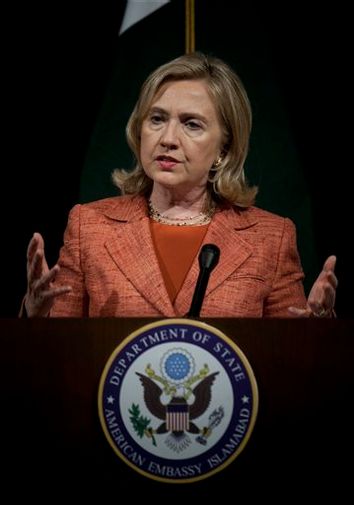
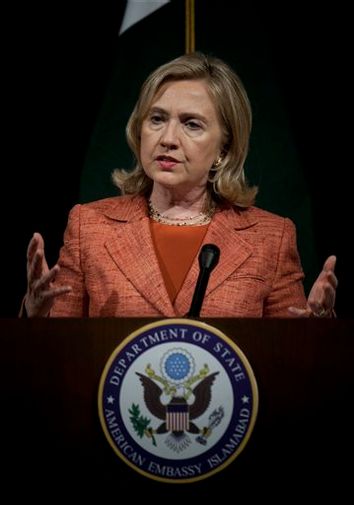
Secretary of State Hillary Rodham Clinton is on record supporting a U.N. arms embargo and a ban on overseas travel by senior members of the Syrian regime. Those or other harsh measures are almost certain to face a veto from Russia, Syria’s principal ally at the Security Council, at least until the three-month observer mission ends.
The U.S. is not considering a military intervention in Syria now.
Annan, the joint U.N.-Arab League envoy, is scheduled to brief the Security Council on Tuesday with the latest assessment on implementation of his six-point peace plan.
Syrian forces stormed student dormitories during an anti-government protest at Aleppo University on Thursday, firing tear gas and bullets in an hours-long siege that killed at least four students and forced the closure of the state-run school, activists said.
U.N. truce observers toured other restive parts of the country, and residents told them of being too terrified to walk on the streets after dark as the 14-month uprising rages on. The U.N. estimates 9,000 people have been killed since the revolt began.
The head of the U.N. observers, Norwegian Maj. Gen. Robert Mood, visited the central cities of Homs and Hama, where anti-regime sentiment runs high. He said there is still “a good chance and an opportunity” to break the cycle of violence.
“I call on all the parties to stop the violence,” Mood told reporters. “If you use military force, it creates more force, it creates more violence … so it should always be the last resort.”
___
Associated Press writer Edith M. Lederer at the United Nations contributed to this report.
Continue Reading
Close