Arnon Grunberg

Fear and loafing in the Green Zone

Welcome to Baghdad's post-decadent stronghold: Menacing Peruvian mercenaries, Chinese prostitutes, concealed beer and doughnuts -- and Iraqis eyeing a foreboding future.

  • more
    • All Share Services

Fear and loafing in the Green Zone

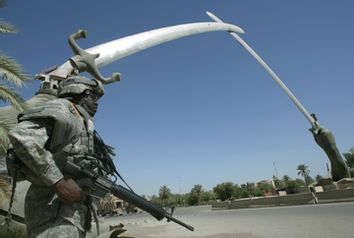
I’d had a mental picture of Baghdad’s Green Zone before I went to Iraq. I thought I was going to encounter a tightly guarded, luxurious enclave where Westerners and a select few Iraqis lived a life of decadence. More or less the way I’d found it described in “Imperial Life in the Emerald City,” Rajiv Chandrasekaran’s excellent book about the Zone after the fall of Saddam.

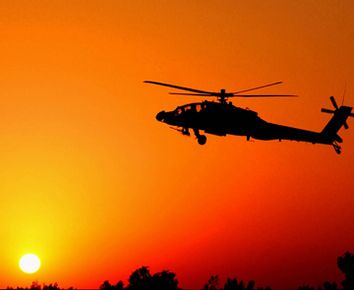
It’s a Tuesday morning in late May when we touch down at LZ (Landing Zone) Washington, the Zone’s helicopter port. (One day later than planned, after a sandstorm had kept all chopper traffic on the ground.) This is only my second time in a Black Hawk, but I’m already getting used to the troop-carrier as flying taxi.

Inside the little building that comprises the terminal at LZ Washington, I take off my flak jacket and helmet. So this is Baghdad. Let the decadence begin. Berlin-born essayist and philosopher Walter Benjamin may have denied the very existence of periods of cultural decline (“Es gibt kein Verfallszeiten”), but we’ll see.

I need a Baghdad press center pass in order to move freely in the Green Zone, so the first thing I have to do is get to the Combined Press Information Center. But when I try to leave the terminal to look around outside, a guard turns me around and points me back to the waiting room.

LZ Washington is guarded by employees of the Triple Canopy security solutions company. In Baghdad, Triple Canopy employs mostly Peruvians. Rumor has it that these guards once worked for special forces units within the Peruvian army. Having routed the Sendero Luminoso at home, they’ve now been dispatched to combat al-Quaida in Mesopotamia and keep an eye on things in Baghdad, where they earn $75 a day.

American soldiers speak of the mercenaries with an admixture of fear and contempt. “These guys are real bastards,” one U.S. soldier tells me. I may be in Baghdad, but for the time being it looks more like Little Lima.

I try it again with the Triple Canopy employee. “Amigo,” I venture. “Prensa.” An added complication with these particular hirelings is that they speak little or no English. The guard flexes his right forearm, his fist clenched. I know by now what that means: Stay where you are. The language of coercion is understood around the world. He who has the bullet no longer needs poetry. The bullet is poetry. I call the press center and say: “I’m afraid you’ll have to come and get me.”

Twenty minutes later a G.I. shows up to escort me to the press center. There I undergo an iris scan, have my picture taken and leave behind prints of all ten of my fingers. A female soldier takes my fingers one by one and rolls them around on the screen of a little machine. Perhaps it’s a by-product of my days embedded with the 25th Infantry Division, but having my fingers rolled around on that little machine feels like the erotic zenith of my existence.

Half an hour later they hand me my press pass for the Green Zone. After that no one pays attention to me anymore. A couple of Iraqis, probably journalists, are drinking Cokes and checking their e-mail on the press center’s computers. I am a free man.


In the Green Zone there is precisely one hotel, the Ar-Rashid (sometimes referred to mistakenly as the Al-Rashid). After the First Gulf War, the floor of the lobby there was decorated with a mosaic depicting former president George H. W. Bush. The tiled caption in English read: “Bush is criminal.”

I’m hoping to enter the Red Zone as well later on, but I’ll need backup if I want to do that. The city is quieter than it was in 2006, but a Westerner is still worth good money. And carefully filed away in my memories are the words of a colleague from the Independent, who I met in Afghanistan in 2007: “Dying isn’t so bad. But being kidnapped; now that I dread very much.”

There are slews of companies selling protection in Baghdad. Finally I go with Edinburgh International. They seem to know the ropes. And what’s more, Edinburgh International also rents out rooms. Even with my press pass, they warn me, it would be foolhardy to cross town to the boardinghouse on my own. Alex from Edinburgh International will come and pick me up.

Alex, as it turns out, is a professional Fijian soldier who’s been in Baghdad for about four years. He drives around in an old Mercedes.

My first glimpse of the Green Zone is a disappointment — dusty, rundown and inhospitable. It turns out that it is not a single zone but a number of them, separated by checkpoints manned by the Peruvians of Triple Canopy. The neighborhood within the Zone known as Little Venice, for example, where several prominent Iraqi politicians live, is off-limits to those without the right connections. To get in there, one needs an invitation.

Within the Zone you have different passes of different colors. The more badges you have, the faster you get through the checkpoints. My press pass places me on a par with an Iraqi just barely allowed into the Zone at all. Alex, too, is a hireling without privilege.

After waiting for half an hour it’s our turn, along with about 20 other drivers. The doors of each car must be opened wide, as well as the hood and the trunk. The passengers have to stand behind a wall so they can’t see what’s happening to their car while it’s being searched.

Cell phones and weapons are placed on a plastic tray. There are signs posted that read: “Deadly force authorized.”

Someone, I believe one of the Peruvians, has made a painting on the wall: A mountain, and written beneath it in Spanish, “Lord, forgive us our iniquities.”

I am the only Westerner in a group of about 40 Iraqis. Some of the Iraqis stare at me in puzzlement. A Peruvian tosses a bottle of water to an elderly Iraqi. I have never seen people wait so passively. This is a dedicated kind of waiting. I have the feeling that I’m in a monastery, but then one where deadly force is authorized.

Twenty minutes later our group is given the sign to move on. A checkpoint by definition, whether in Iraq or down at the local airport, is there for our safety. Yet anyone who has waited at a few checkpoints in Baghdad soon gets the feeling that the checkpoint is not a means but an end in itself. We live in order that we might pass through it. And what comes after the checkpoint is another checkpoint.

Edinburgh International’s boardinghouse is located along a sandy backstreet and doubles, as it turns out, as the Iraqi headquarters of Edinburgh International. I am welcomed by Adam, whose job description is “Operations Officer.” Particularly talkative Adam is not. “Take your stuff upstairs,” he says. “Then you can grab some lunch.”

The other guests at the boardinghouse seem to be hirelings as well. Later, an American diplomat will explain to me that most security firms work with mercenaries from a specific country. Blackwater with Americans, Triple Canopy primarily with Peruvians, Edinburgh International largely with South Africans. The Edinburgh International people once belonged to the special forces of the South African army. Now they’re protecting me in Baghdad.


There is a guidebook for tourists to the Green Zone, written by the American diplomat Richard H. Houghton III. The first edition of the guidebook had as a subtitle: “Written by tourists for the tourist.” That subtitle has since been removed.

Houghton is prepared to meet me, as long as I promise not to talk about American politics. The Green Zone has almost no restaurants for us to meet in. In “Imperial Life in the Emerald City,” Chandrasekaran speaks of countless Chinese restaurants — all gone now. But next door to Freedom Café and Supermarket, which Houghton says is pretty much the only restaurant in the Zone, Freedom Chinese Food opened its doors only a few days ago. (Later, in another section of the Zone, I discover the restaurant Arabian Nights, with its souvenirs on sale including little wooden camels, small lamps and a selection of carpets.)

To get to Freedom Chinese Food you have to cross a little bridge. The bridge’s sole purpose is a decorative one, and it’s so slippery that you have to hold onto the railing for dear life as you go. The Chinese girls there, newly imported from China, look like transvestites but also seem to be prostitutes.

Richard Houghton is a tall American in short trousers. He sports a large tattoo. He speaks English, German, French, Chinese, Japanese and Arabic.

“So what about the Baghdad Country Club?” I ask. The “Baghdad Country Club” was once the Green Zone’s premiere nightspot. The place where it all went down.

Houghton laughs. “It’s been boarded up,” he says. “One of the guys who started the Baghdad Country Club went on to open a liquor store, and then a restaurant. But then he had to close the place; the people who worked for him didn’t have the right badges.”

Without the right badges in the Green Zone, one is dead meat. “You know,” Houghton adds, “the days when everything around here was wide open are pretty much finished. The party is over.”

Freedom Chinese Food is, indeed, post-decadent. If you want to order a beer you have to ask for “pee-you,” which is Chinese for beer. You get your beer in a coffee cup. In Iraq — unlike in Kuwait, for example — alcohol can be served legally, but even in the Green Zone it remains a touchy business.

“So what’s left to do around the Zone?” I ask.

“Not far from here, a German fellow has started a doughnut shop,” Houghton tells me. “They tried out about 30 different recipes, but I think they’ve got it pretty much figured out now.”

“And the Chinese ladies who work here, are they prostitutes?”

“I have my suspicions,” he says. “Judging by their Chinese, they’re not from Peking.”

“So how did they end up in Baghdad?”

“Well, boy,” Houghton says. And, after a slight pause: “How did you end up here? How did I end up here?”

Across from Freedom Chinese Food is Café Dojo, the doughnut restaurant — nothing more than a little shack along a sandy street. If you didn’t know better, you’d never believe they made doughnuts there.

Three men are sitting on the veranda. A guard tries to stop me. “What do you want?” he asks.

“I want to eat a doughnut,” I say.

A young Asian man brings me a doughnut on a plastic plate. The doughnut is accompanied by a horde of flies, and as soon as the wind comes up everything is covered in a layer of grit. The white men sitting next to me have huge bellies. In the Green Zone, no one need be ashamed. Every age calls for an anus of its own. Baghdad is the anus of our times.


I have an appointment at the Ar-Rashid with a senior official from the Iraqi Ministry of Foreign Affairs. He’s willing to talk to me on the condition that I don’t mention his name. He’s of Kurdish origin, but he’s skeptical about the Kurdish cause. He is, I estimate, more or less my age. During the Iran-Iraq war in the 1980s, his father was killed by Kurdish Peshmerga guerrillas fighting for the Iranians.

“At the street markets, the fundamentalists won’t allow merchants to display cucumbers next to the tomatoes,” he says as we help ourselves to cucumber salad from the buffet. “That’s one sign that the fundamentalists are on the decline.” It’s noon on a Friday, and we’re the only guests in the restaurant.

“We pay a high price for freedom and democracy,” he says. “We pay for them with blood.” We both take a glass of fruit juice. “But,” he says, “next year everything will get better — then the five years will be over.”

“The five years?”

“The five-year period in which people have been allowed to hold a top position in the Iraqi government while maintaining dual nationality. When the five years are over, that won’t be possible anymore. Then you’ll have to choose. Then you can no longer say: ‘What do I care, I’ve always got Syria to fall back on.’”

“Will that really make such a difference?” I ask. He nods with conviction. “Things seem to be calming down already, anyway,” I say.

“Yes, but that’s because of the money. First al-Qaida came around and said: ‘Here’s $200 if you plant a bomb.’ Then the Americans came and said: ‘Here’s $300; all you have to do for it is not plant that bomb.’ That’s effective.

“A suicide bomber’s family used to receive up to $100,000. Do you know where that money came from? Saudi Arabia. In reality, what was going on here was a war between Iran and Saudi Arabia. And I’m not convinced that that wasn’t the plan from the start.”

I press him about what he means by that.

“An American once said to me: ‘The final choice is the best choice.’ If everything had gone according to plan, there would be no reason for them to still be here with 150,000 soldiers.”

“And what about Iran?” I ask. “Is there going to be a war against Iran?”

“I hope so,” he says. “Iran is the source of all the trouble. The Persians have always hated the Arabs. But that war isn’t going to come just yet. Maybe 15, 20 years from now.”

For dessert, we have fruit. “The imams,” he says, “told people: God wants you to fight against the Americans. But God doesn’t want you to fight against the Americans. Because if you fight against the Americans you’re going to lose, and God doesn’t want you to lose. The Americans have military bases in Germany, the Balkans, in Kuwait, in Qatar — so why not here? With their help, Iraq can become the hub of the Middle East. We’re wealthier and more highly developed than Egypt.”

When it’s time for me to leave he walks outside with me, and waits there in the burning sun till Alex shows up to take me back to the boardinghouse that is actually a kind of prison.

“What Iraq needs now,” he says before I climb into the car, “is an interim pope. A benevolent dictator, like the one they have in Dubai. The man’s a dictator, but his people love him. Elections aren’t the start of the democratization process, they’re the end of it. I didn’t vote. I knew the politicians were no good.”


On the final day of my stay I visit the Red Zone at last. With three cars. But unobtrusively. An old van decorated with Arabic lettering drives in front of us, its curtains drawn. No one would suspect that it contained heavily armed men, and the dilapidated jeep behind is bristling with weapons as well. On the seat beside my driver, beneath a keffiyeh, the Arab scarf, is a machine gun.

A one-day trip to the Red Zone with bodyguards costs $7,000. I’ve been told that reporters from the Washington Post and the New York Times in the Iraqi capital operate under elaborate security as well. My press pass may not be worth much, but if you’ve paid $7,000 for backup you cruise right through all the checkpoints.

The Red Zone — or at least this section of it, the road to the airport — seems to be a succession of checkpoints, with Iraqi army units posted every 20 meters. My destination is the Al Hamra Hotel, where I’m going to meet with two Iraqi acquaintances of a correspondent friend who visits Baghdad regularly. The Al Hamra, where lots of journalists stay, is a fort. A series of checkpoints, concrete walls. But once you’re inside there’s a swimming pool.

Luay is a friendly, rather plump Iraqi who works for a journalist from USA Today. When the journalist isn’t in town, he has time off. We sit down in the deserted restaurant of the Al Hamra. The waiting staff consists of one man, standing at something that looks like a lectern.

Luay tells me: “My confidence in my religion diminishes with each passing day.” He doesn’t want anything to drink, but he smokes like a chimney.

“You have to go where the power is,” he continues. “You have to be pragmatic.” He lights another cigarette. “I’ve been told,” he says, leaning over to me conspiratorially, “that when Iraqis go to the Green Zone to secure a contract, they take girls with them to win the favor of the men who do the signing.”

One hour later, Ammar joins us. Ammar used to have a hotel, but people stopped coming to it. Both Luay and Ammar are Shiites. “Al-Sadr’s days are numbered,” Ammar says, referring to the leader of the Madhi militia. “People in Iraq are sick of religious fundamentalism.”

“And what’s the situation here with prostitution?” I ask, following Luay’s earlier remark.

Ammar shrugs. “What’s the problem? How do you think the Iraqis who have fled to Syria make ends meet? One or two daughters support the whole family.”

Luay says: “We Iraqis want only one thing: to live.”

Translated from the Dutch by Sam Garrett.

Looking for payoff in Iraq

Winning "hearts and minds" is in some sense like a seduction. But what happens if American largesse here runs out?

  • more
    • All Share Services

Looking for payoff in Iraq

At Camp Taji, about 12 miles north of Baghdad, Capt. Geronimo of the 25th Infantry’s 1st Brigade Combat Team tells me: “Tomorrow morning you’ll be going to a meeting of Taji’s qada. A qada is a kind of county. That means you’ll be able to see how we cooperate with the locals. That’s what you wanted to see, wasn’t it?”

That, above all, I believe, is what the U.S. military wants me to see — cooperation, progress with reconstruction. But it doesn’t matter: Reality comes trickling through everywhere in Iraq. (And it is something I really do want to see.)

In fall 2007 I’d visited Dutch troops stationed in Afghanistan’s Oruzgan Province, to see how the process of reconstruction was going there. Despite the threat of a suicide attack, we passed out fliers in the town of Tarin Kowt, calling on the local population to pass along information to the NATO troops concerning the location of IEDs (improvised explosive devices). Back at the base, the major who had accompanied me there the whole time asked: “So, what did you people see?” One soldier answered: “The children took the fliers and tore them up, and some of the grown-ups did too.” To which the major replied: “The good news, though, is that they took the fliers.”

In my view, that pretty much summarized the tragedy of the reconstruction and counterinsurgency there. From all sides came the assurance that the war in Afghanistan could not be won primarily by military means. Effective counterinsurgency involved the “winning of hearts and minds” — a tricky business. If I understood correctly, the winning of hearts and minds was rather like a seduction. I was curious to see whether the Americans in Iraq, where the winning of hearts and minds also is a top priority, might do things differently.

One morning we leave Camp Taji in an MRAP (mine resistant ambush protected) vehicle; according to the Army, it is the premier armored personnel carrier. Capt. Geronimo comes out to say goodbye. As I crawl into the vehicle he calls out: “In an MRAP, if you hit an IED you’ve got a good chance of surviving.”

A heartening farewell.

The qada meeting is being held in an unobtrusive but relatively well-kept-up building in Taji. The Americans are the first to arrive. The troops outside stand guard over the building.

In the meeting hall itself is a long table still wrapped in plastic, in an attempt, I believe, to win the battle against dust and sand. The Americans don’t sit down at the table, but in chairs ringing the table farther out in the room, making it look as though they’re the audience that will soon be watching a play put on by the Iraqis.

“That,” explains Capt. Bryant, “is because we don’t want to intrude.”

I’m introduced to a female Iraqi interpreter known as Michelle (not her real name). She’s excited; her visa application seems to be coming along well. Soon she will be invited to the American embassy in Jordan for an interview. An American officer she’s worked with in Iraq is sponsoring her request for a visa. From what she tells me, I understand that all she needs now is a Western man to marry. In her case, at least, the seduction seems to be going perfectly. The prospect of a U.S. green card or passport works wonders: Of all the 10 or so interpreters I spoke to in Iraq, only one said he wanted to stay in the country, because he felt Iraq was headed for a glorious future. All the others had their sights set hopefully on settling down in America.

Finally, everyone has arrived. About 18 Iraqi men are gathered around the conference table. Extremely sweet tea is served, to the Americans as well.

I’m sitting beside Lt. Col. Wilson, who is from Brooklyn, N.Y. He’s carrying photos of most of the Iraqis present. But occasionally he turns to Capt. Bryant and asks doubtfully: “Who was that guy again?” I’m reminded of restaurants in Tokyo where the Westerner, in lieu of a menu, is handed a book of photos and orders by pointing at a picture.

Michelle makes a brave attempt to translate everything that is said but, even taking into account that a great deal gets lost in translation, the meeting seems completely chaotic. After a discussion about irrigation, the subject suddenly jumps to a bridge that must be built, and then another engineer launches into an account of the illegal tapping-off of electricity. The longer the meeting lasts, the more frequently one hears the expression “inshallah,” or, roughly, “God willing.” Suddenly, one Iraqi calls out: “But we don’t have enough medicine for the animals.” No one bats an eye.

Could I be the only one who doesn’t know which animals or what medicines he’s talking about? Something about this reminds me of Ionesco’s “The Bald Soprano,” which incorporated dialogue taken from an English textbook for beginners. One interpreter explains to the Americans that he can’t listen and interpret at the same time, because then he misses important things that are being said. Lt. Col. Wilson asks for no further explanation, but he doesn’t look pleased.

Soon the meeting is called to an end. The sweet tea was very good. I feel like I’ve been watching rehearsals by an amateur theater group, with the Americans doing their best to direct, gently and discreetly.

The next day I go with the 1st Platoon from the JSS (Joint Security Station) Saba al-Bor to the nearby village of Ali Hamed. Boredom and fatigue bubble up among the soldiers. Lt. Mike Kaness, a thickset young man from upstate New York, is being teased by his men. “You could hold a pencil under your tits,” one of them shouts. “You got cleavage.”

“Don’t be stupid,” the lieutenant shouts back. “Cleavage isn’t under your tits, it’s on top of them.”

Along with the platoon, we pay a visit to the house of Sheik Hussein Ali Hamid al-Lehebi. First we pass out toys and chocolate to the children. The concept of toys is subject to broader interpretation here; from the box, the soldiers also produce paper-hole punches.

Once all the toys have been passed out, Lt. Kaness asks the sheik what his village needs. “Would you like us to pave the road, for a kilometer or so?” the lieutenant suggests.

The sheik nods.

“Which side of the road, right or left?”

The sheik thinks about it for a moment. “The right side.”

Then the platoon visits all the shops in the village. First a little greengrocer’s. “What do you need?” the lieutenant asks. “What kind of things don’t you have?”

No reply. “What about new freezers?”

“Yes,” the owner says.

If the lieutenant had instead offered him 200 carrier pigeons, I believe the shopkeeper would have found that an excellent idea as well.

Compared with the way the Dutch go about it in Afghanistan, this is a very different kettle of fish. The Dutch are prone to haggle over giving a flashlight to a police station. Meanwhile, I can’t help wondering if there are shopkeepers in America who wouldn’t mind being presented with a new freezer as well.

After we’ve been to all the shops in Ali Hamed, the sheik presents us with a lunch of lamb kebab, chicken, tomato salad and Iraqi pickles. The fare in the U.S. chow hall pales by comparison. From the looks of things, America, at least in this part of the notorious “Sunni Triangle,” is pretty good at acquiring love from the Iraqis.

“Do you trust these sheiks — sheiks in general?” I ask Lt. Kaness.

“Most sheiks are two-faced,” he replies.

“Aren’t you afraid then that sooner or later your money will end up with the insurgents?”

“So far things are going well,” he says.

After lunch we get ready to go back to JSS Saba al-Bor. The Americans thank the sheik, but not very convincingly. It’s as though we had a right to a delicious meal after all we’d done for his village.

A few days later Lt. Col. Thomas Mackey and I attend a meeting of all the local sheiks at the “Sheik Support Center.”

“What was the turning point here?” I ask Mackey.

“The Sons of Iraq Movement,” he says. “Formerly known as Concerned Local Citizens. The boys and men who used to be paid by the insurgents and who fought for them are now Sons of Iraq. They help the Iraqi police, the Iraqi army, or they guard checkpoints. They get paid for it. We’ve given them an alternative. And they were also tired of fighting.”

Just before the meeting starts, an Iraqi comes up to Lt. Col. Mackey. “I want to give you something,” the Iraqi says. “Because we’re brothers.” The man holds up a ring.

“I’m afraid I can’t accept that,” the American says.

“Don’t accept it,” whispers an interpreter known as Adam. (Because of the dangers of aiding the U.S., all the local interpreters in Iraq use fake Western names — sometimes even ones like “Snoop Dogg” or “DJ Quickie.”) “This man wants to influence you. Don’t take it.”

Later, Adam heaves a sigh. He tells me that he thinks Lt. Col. Mackey took the ring anyway — perhaps because to turn it down would have been an insult to the Iraqi man.

In Iraq, the Americans are not the only ones who pay to win hearts and minds. And until now, the exchange of money and goods for tranquility and peace seems to be working, at least in some areas. But the question remains: What will happen when the payment stops?

A few days later, an Iraqi diplomat working for the Iraqi Foreign Ministry in Baghdad tells me: “First al-Qaida came in and said, ‘We will give you $200 to place an IED.’ Then the Americans came in and said, ‘We will give you $200 not to place an IED.’ You get some amount of money and you don’t have to do anything for it.

“Of course that works,” the diplomat continues. “Behind the insurgency there isn’t so much ideology. What’s behind it is a whole lot of economy.”

Translated from the Dutch by Sam Garrett.

Continue Reading Close

On armies, war and an aging Israel

As the country turns 60, a novelist reconsiders Zionism amid revealing encounters with the Israeli military.

  • more
    • All Share Services

On armies, war and an aging Israel

Not long ago, in preparation for an upcoming trip to embed with the U.S. military in Iraq, I met a war correspondent at a bar in Brooklyn, N.Y. Before I could even get in a word, he asked: “You’re Jewish, aren’t you? In Iraq, your head’s worth even more than mine is.”

Long before that encounter, however, I had begun asking myself whether Jewish-Dutch author Abel Herzberg’s famous maxim still applied: “A Jew without Israel is like a loan without collateral.” An idea perhaps worth reconsidering with Israel’s reaching the age of 60 — and assuming Herzberg’s maxim ever applied at all.

Wasn’t Israel actually more of an albatross around one’s neck, especially since the second intifada in 2000, and perhaps even since the first Lebanon war in 1982? Something for which, once unmasked as a Jew, you had to offer an explanation? Something for which you should perhaps even be ashamed? (I have no trouble with being ashamed, but then preferably on my own personal behalf.) When it came to Herzberg’s maxim, I decided to stick to neutral ground. Whether I was a loan with or without collateral I was not sure, but the gray zone I actually found quite pleasant. Without a conclusion either way came an essential element of freedom.

In the summer of 2006 I traveled to Afghanistan with the Dutch army. I had become interested in armies and war — in the army because, at least in theaters of war, conscientious and absolute solitude is ruled out. And in war because the chasm between reality on the ground and accounts from news reports and editorials is so enormous. Like most people, I was raised with the idea that war, above all, is something abject. But once one has accepted that certainty, all that remains is a discussion of war in terms of morality. And that is like trying to talk about sex purely in terms of producing children, which, with all due respect, misses the quintessence of the act itself.

Outside the usual discourse on war and masculinity there exists a world in which the willingness to kill and to die is a crucial aspect of those things. Highly distasteful and even extremely immoral, but no less realistic for all that. And as I began to realize — first in Afghanistan and later during time I spent with Israel’s military — war held something else that remained unmentioned in the official discourse: a sense of heroism with unmistakable sexual connotations.

As military historian Martin van Creveld wrote in “Men, Women and War”: “If war is a man’s glory, then assuredly the best antidote ought to be a woman’s ridicule.” Obviously this antidote does not work (and often is altogether unavailable). Equally obvious is that economic reasons are not the only ones leading men to volunteer for military service — and to volunteer not for administrative or support duties but, rather, for that which has been the purpose of armies throughout history: fighting. I am talking about men here, because women in armies only rarely if ever take part in combat.

I would come to discover more about armies and war when, shortly after returning from Afghanistan, I decided to pay a visit to the Israeli army. If Abel Herzberg was still right and I was a loan without collateral, then to my mind it was not Israel’s land or language or politics that might secure my debts, but rather its army. It seemed only logical to me, then, to observe the Israel Defense Forces from up close.

As it turned out, however, the IDF had little desire to have people like me snooping around. The status of “embedded journalist” was out of the question. Later, I was told that military operations in the West Bank and Gaza Strip were almost always accompanied by operatives from Shin Beth, the Israeli intelligence service. And Shin Beth does not cotton to journalists. But after lengthy negotiations and mediation on the part of various go-betweens, an alternative program proved possible.

I would be allowed to attend training sessions and conduct interviews with a number of service members — a good number of them female. The role of female soldiers makes the Israeli army unique. Israel is one of the only countries in the world with compulsory military service for women. There are other ways in which that appears to be unique; although I noticed little evidence of it during my visit, the army is considered by many Israelis to be a paradise for promiscuity. After my visit to Afghanistan, that did not come as a surprise. I even dare to say that this is one of the auxiliary functions of any army: to serve as a haven for dabblers in promiscuity.

Even after all the negotiating, my time with the Israeli military was postponed twice. And some training sessions that had been accessible to me at first would turn out at the last minute to be top secret after all. Improvisation was the forte, if not the very essence, of the Israeli army, it seemed. But by early March 2008 I was finally able to leave from my home in New York for Israel.

My first meeting was with Amira Hass, an award-winning journalist. Because I wanted to know more about the army’s political context, and because I suspected that not all military personnel would be in a position to speak freely, I also wanted to talk to people on the outside who were nonetheless knowledgeable about Israel’s army. (On this trip, I intentionally did not speak with Palestinians or Israeli Arabs; next year I hope to pay a visit to the Palestinian territories.)

Hass writes for the liberal Israeli daily Ha’aretz and has written a book titled “Drinking From the Gaza Sea,” about the years she spent in Gaza. These days she works from Ramallah. On a Sunday evening, when we meet in an almost deserted cafeteria in Jerusalem, Hass is sitting at a table with a plate of salad in front of her. “I bet you’re hungry,” she says. “Here, take my salad. I’ve had enough.” A large shawl is draped over her right shoulder. “You can’t talk about 60 years of Israel without talking about the naqba, the Palestinian disaster,” she says. “Neither Israel nor the Palestinian elite, with their vested interests in maintaining the status quo, are interested in peace,” she continues. “One of the Palestinian negotiators has a son whose company supplies materials for building the border wall. The wall is making him rich. Both [Mahmoud] Abbas and [Ismail] Haniyeh, the political leader of Hamas, are playing Israel’s game. The only purpose of the negotiations is to lead to more negotiations. What it’s all about is a people refusing to give up its privileges.”

The cafeteria is closing. We go outside and sit beneath a parasol as a gentle rain begins to fall. “Gaza is undergoing a process of ‘Talibanization,’” Hass says. “Liquor stores being attacked, et cetera. That’s new — we’ve never had that before. Ramallah, on the other hand, is fine. Ramallah is a five-star prison.” A moral change would have to take place in Israel, she says, for the situation really to change. “I don’t believe that’s going to happen. I’m quite pessimistic. Sometimes I’m afraid that Israel will prove to be just a passing phase.”

“But how could a nuclear power simply disappear?” I ask.

It’s the only time during our conversation that Amira Hass becomes slightly irritated. “I don’t know,” she says. “I’m not a fortuneteller who can look into a crystal ball.”

The next morning I have an appointment, close to the Ministry of Defense in Tel Aviv, with Capt. Benjy, an Army spokesperson. (Most soldiers will give only their first names.) Benjy was born in Sydney, Australia, and emigrated to Israel a few years ago. He took a job with the army’s information service because he felt that his new country did not market itself well abroad. Sounding slightly concerned, he asks me why the new Israel correspondent for NRC Handelsblad, a Dutch newspaper for which I write regularly, has not yet come to see him.

During the next few days an army recruit will travel with me everywhere I go. Officially, to translate for me when necessary, but in actual practice, to monitor the flow of information. “Tomorrow Mirika will be going with you,” Benjy says. “If you want to send her personal messages, would you please not do that on her army cellphone?”

“I don’t even know Mirika,” I say, surprised. “Why would I want to send her personal messages?”

Seeing as the army is unable to provide transport, I arrange a taxi for myself. The Israeli driver has a Filipino girlfriend he calls his “third wife” and says he is in touch with only one of his children, a son who runs a hair studio north of Tel Aviv. The driver is armed. He tells me that he is able to shoot both right- and left-handed. Along with him and an army escort, I will travel back and forth across Israel for the next few days. Never before have I had such an overwhelming sense of having been dropped into a fictional world.

Mirika, I discover, is a 19-year-old recruit. Her mother is a novelist, her father a prize-winning mathematician. With her she has a plastic bag of fruit, which she is willing to share. The day’s destination is Bat Egat, an elite officers training school in the Negev Desert, just south of Beersheba. Capt. Avi, the training-school commander, welcomes us. He is 34, is married and has one child. His looks match the cliché of the war hero. Israel may spend a lot of money on weaponry, but when it comes to accommodations and furniture the army gets a raw deal. Avi’s little office makes it look as though the state of Israel were established about three weeks ago.

“I fought in the second Lebanon war in 2006, and I took this job in order to apply the lessons learned during that war,” Avi says. “We were poorly trained. Israel has become a land of shopping centers, of life’s little luxuries.”

Avi points to what looks like a series of mimeographed sheets, stuck to the wall with thumbtacks. “Those are the values of the Israeli army,” he says. “First you are an individual, then a commander, and only after that are you a warrior. But the army’s most important value is completing one’s mission.”

“Even if that means your own soldiers will die?”

“Yes,” Avi replies. “Completing the mission has top priority.”

I’m reminded of the son of Israeli writer David Grossman, who was killed during the last war with Lebanon.

“How can you prepare your soldiers for death?”

Avi sighs. “You can’t. All you can do is train them. So they know what they have to do, even when they’re petrified with fear. And I lead the way. I don’t look back; I know they’re going to follow me.”

“Do you think another war will come, with Hezbollah or with Syria?”

Mirika interjects: “You can’t ask that question.”

Avi ignores her. “Every army prepares itself for the next war. We are preparing ourselves for a war on the northern front.”

“Do you remember the first time you were shot at?”

Avi laughs. “You might as well ask whether I remember the first time I kissed a girl.”

I go out to watch artillery exercises, with small and large weaponry. An officer in training with a yarmulke and a beard comes over and asks worriedly who I am. Mirika explains to him that I am not a spy, but I can tell from the look on his face that he’s not completely convinced.

On the way back to Tel Aviv, Mirika takes an apple out of her plastic bag.


That evening, in a tiny Jerusalem cafe, I am scheduled to meet with Itamar Shapira, a representative from Combatants for Peace. Combatants for Peace was officially set up in 2006 for the purpose of bringing together Palestinian militants and Israeli soldiers who have had enough of fighting and are interested in peace. The meetings are held in both the Palestinian territories and Israel. The official languages are English, Hebrew and Arabic. Often enough, English is the only language shared. Still, it is extremely difficult for Palestinians from the occupied territories to get into Israel, and Israelis are not officially allowed to enter the Palestinian territories at will.

At the bar of the cafe, frowning in concentration, a youth is playing billiards on a computer. At first I think this might be Itamar. But Itamar himself shows up 15 minutes late, a friendly young man in his 20s who looks older than his years. He has a quiet voice.

“Actually, I’d like to stop with Combatants for Peace,” he says. “What we’ve achieved has been a success, but now I feel like concentrating on my music.”

“Are all your participants either soldiers or guerrilla fighters?”

“No, only about 30 percent of them,” Itamar replies. “There’s a lot of money available for organizations like ours; dozens of NGOs want to support organizations like Combatants for Peace. But the problem is that some people are more interested in power and money than in the goals of the organization.”

I ask if he’d like a cup of coffee. He declines, noting that he actually works in this cafe. “I was raised on the same kinds of slogans as a lot of people here. ‘A land without people for a people without a land.’ That kind of thing. But when I started taking a closer look at it, it turned out to be all wrong. That was the first disillusionment. My father was a pilot in the Israeli air force — a real patriot. Later, he became an arms dealer. But now he supports my organization too.”

“Do you work full time in this cafe?”

“No,” Itamar says. “I give guided tours in Spanish and English at Yad Vashem, the Holocaust Museum. That’s why I work here in the evening. To escape all that misery. To meet a few everyday people for a change.”

We say goodbye. Outside, in the street, he says I can always call him for more information, but that from now on he really wants to concentrate on his music.

The next day, on the bitterly cold Golan Heights near the Syrian border, I attend tank maneuvers. I’m not allowed in the tanks themselves. From the observation tower, the movements of the tanks looks like a game of chess.

My army escort today is Ariel, a young man originally from France. He never leaves my side. He follows me around like a dog. While we wait for the next set of maneuvers, a young soldier by the name of Dmitri — Dima, to his friends — tells me that he comes from a place in Siberia where it’s always cold, and that he’s not Jewish. “So what are you doing here?” I ask. “Life is better here,” he says, grinning.

The commander, Tal, tells me that during the last Lebanon war the Israeli army tried using llamas to carry the heavy loads needed for combat. But the experiment failed. “They ran right off to the Hezbollah fighters with our stuff,” Tal says. “We had to shoot them to keep our things from falling into the hands of Hezbollah.”


In Eilat, in southern Israel, I visit a unit called Caracal, where women are trained to be warriors.

Moshe, the commander, says: “The borders around here are quiet. Our main task is to stop smugglers. They smuggle drugs and prostitutes into the country in order to undermine our morale.”

There are additional challenges: “And the Sudanese refugees who come to us across the Sinai — sometimes they’re shot at and they lie there bleeding, one meter on the other side of the border,” Moshe continues. “But we can’t do anything. If we take one step across the border the Egyptians will start shooting at us. The Jordanians are smart, but the Egyptians are brainless.”

Ariel, my escort, interrupts him. “Of course Moshe doesn’t mean that all Egyptians are brainless.”

After that I’m allowed to talk to three young female soldiers. Ariel gives them instructions beforehand. What I’m really curious about is why they’ve decided to become soldiers, and therefore to spend an extra year in the army, instead of two years like the other female recruits. All that comes out are clichés, statements like: “We want to defend our homeland” and “We want to give something back.”

Only when one of them suggests that we have our picture taken together do they loosen up a little. “We’re just as good as the men,” says 21-year-old Shira. I nod amiably. There is no doubt in my mind that she could easily get the better of me.


At a kibbutz close to Netanyah I meet with Ruth from the organization New Profile, whose mission is to fight the militarization of Israeli society. Ruth is an American woman who says she came to Israel as a kind of hippie. She has children, and a grandchild as well now, who crawls around the floor of her house as we talk. “My husband doesn’t want to leave,” she says. “He’s happy here.” (Her husband was also born in and emigrated from the U.S.) She makes a pot of coffee.

“New Profile is about more than the occupation,” she explains. “If the occupation would end tomorrow, our work would go on. What we’re concerned about is Israeli society, the way it’s become militarized. The sexism that is linked so closely to militarization. We’re in favor of a discussion about the desirability of compulsory military service, about whether you can refuse to serve. My sons have refused military service. But we can’t go too far, because then it’s considered sedition and that is a punishable offense.”

She sits down beside me on the couch. “The army is experimenting now with mercenaries at checkpoints in the occupied territories. We keep an eye on things like that, too. I think the army will be making more and more use of mercenaries. But, like I said, we’re interested not just in the territories and the occupation, but in Israeli society as a whole. We need help.”


My journey ends on a Saturday morning in Mevaseret, outside Jerusalem, in the garden of military historian Martin van Creveld.

“We were a small but brave nation, to cite Moshe Dayan,” he says. “Now we are economically big, but cowardly.”

I admire van Creveld’s books and the regular columns he writes for newspapers ranging from Die Zeit to the International Herald Tribune. “An army must be prepared not only to shed the blood of the enemy, it must also be willing to shed its own,” van Creveld says.

“That’s cynical,” I suggest.

“It’s the truth. An army that loses that willingness is better off disbanding. Because of the intifada, the Israeli army has become an army of third-rate policemen. The threat posed by Iran is exaggerated — the biggest threat facing Israel is an internal threat.”

Van Creveld comfortably fires off provocative ideas, some of which he follows by saying that I shouldn’t quote him on them.

He eats a strawberry.

“The success of a war can be measured by the way it ends, and by what comes afterward. Despite the general consensus that the second Lebanon war was a disaster, I say, no, we won that war. Because, despite the failure of our ground troops, for two years now it’s been quiet on the northern front.”

One might look at Israel these days, though, and wonder if it hasn’t been fighting one really long war, for 60 years now.

“It’s not simply a joke when I say that it would be good for the peace process if Syria were to get nuclear weapons. Nuclear weapons have done more for peace and saved more lives than anything or anyone else.”

Van Creveld devours another strawberry.

“The Palestinians on the West Bank have missiles, just like the Palestinians in Gaza. But they don’t use them because they know what the consequences would be: transport to Jordan.” He asks, rhetorically, if even ethnic cleansing could be a preferred scenario. “No,” he says, “my name is not A. Hitler.”

Another strawberry disappears into van Creveld’s mouth. Once again I am reminded of Herzberg’s maxim. I decide to stick with my original position, somewhere between collateral and insolvency. When it comes to self-preservation, it is perhaps wise to bet on more than any one army.

“If the Palestinians had brains and discipline they would make use of the discord in Israeli society. The colonists, particularly the religious ones,” he says, referring to the Jewish settlers in the occupied territories, “are hated by a large part of the Israeli population and by the army as well. Why not give them hell, instead of the inhabitants of Sderot?”

A final strawberry, and a final thought on the military paradigm.

“The biggest problem within the Israeli army is anti-intellectualism. I once held a lecture for the general staff. They acted like children with a behavioral disorder. I’m afraid that’s a leftover from the Zionist dream. The Jews didn’t want to read books anymore. They wanted to finally do something substantial: Fight.”

Translated from the Dutch by Sam Garrett.

Continue Reading Close