Ashley Craddock

McCain rattles his light saber

Citing Ronald Reagan and "Star Wars," the Arizona senator goes Hollywood to try to convert California's GOP faithful.

  • more
    • All Share Services

On the heels of his New Hampshire victory and just before the Gipper’s 89th birthday, John McCain had a dilemma: Should he emulate Luke Skywalker or Ronald Reagan? Or could he be both?

At the California Republican Convention, where McCain gave the keynote address Saturday, the Arizona senator tried to have it both ways: He’s the leader of a spunky popular insurgency that’s gunning for the gold, and he’s the rightful heir to Reagan’s mantle.

At first, the two images seem irreconcilable: The golden-haired, scrappy underdog who took on the Death Star and the comfortable, sweater-clad, morning-in-America Gip, the man who took office at 69 amid pomp and circumstance. But the analogy works: Reagan — the pre-presidential Reagan — had been a scrappy upstart, too. The kid digging through the manure looking for the pony. And sweater and pomp aside, Reagan as president was a warrior, the guy who waged a war against not the Soviet Union, but the “Evil Empire.” Luke Skywalker and Ronald Reagan both claimed to battle for the souls of their nations. And Reagan even started his own “Star Wars.”

Anyway, the audience ate it up. Inside the convention’s banquet hall, McCain invoked Reagan by quoting a 1976 Gipper line about breaking up the Washington “buddy system that runs for its own benefit.” Of course, the McCain-Reagan equation as voiced by McCain extended further: Reagan attracted a wide swath of voters across party lines. So, says McCain, does he. New Hampshire proves it.

Outside, to a crush of reporters and supporters (a few of whom responded with a heartfelt “May the force be with you”), McCain said, “Remember that the establishment is against us. This is an insurgency campaign and I’m Luke Skywalker.” And in McCain’s “Star Wars” metaphor, he leaves little doubt who he sees as the tyrannical Death Star: the Republican Party establishment so far devoted to George W. Bush.

In California, McCain faces especially tough odds. The California primary allows voters to choose candidates across party lines. But the only votes that count toward delegates are those cast by members of a candidate’s own party. And the California Republican Party doesn’t let candidates split delegates; it’s a winner-take-all contest. Which means that there’s a chance that McCain could win the popular election and still watch Bush walk away with all 162 delegates.

When asked if he felt the primary process in California was rigged against him, McCain was mild. “I respect the state’s procedure. I’m sure we’ll do very well here among registered Republicans.”

Supporters were less sanguine. “It’s a fraud on the public,” said Tim Prudhel. Prudhel and his wife, Karen, from Pollock Pines, were among a throng of flag-wielding McCain supporters. “And most people don’t know that their votes basically don’t count unless they vote for someone in their own party,” Prudhel said.

While McCain largely ignored the delegate question, his campaign team pumped up the issue, announcing from the stage that McCain supporters who want their primary votes to garner delegates for their candidate have until Monday to re-register as Republicans. McCains team stood by the stage throughout the rally, handing out re-registration cards to anyone who strayed near — presumably Democrats or independents or third-party voters who came to the GOP event because of McCain.

Riding the crest of last week’s victory in the New Hampshire primary, the insurgent candidate took a 15-hour whirlwind tour of the Bay Area to address adoring crowds hungry for some first-tier political action.

Front-runner Bush, apparently confident that he has California in his hip pocket no matter how infrequently he shows up, sent his brother, Florida Gov. Jeb Bush, in his stead. Jeb was in and out with a 16-minute speech Friday night, stressing his brother’s decency, fear of God and “true-blue conservatism.”

“My brother puts his God first, and wife and family second,” Jeb Bush told an appreciative crowd.

Making his way offstage and toward a plane back home, Jeb dripped sweat as he explained to reporters that his brother cared about California Republicans, but that he had just spent “three and a half weeks on the road” and needed some time in Austin to rest.

Bush has come under considerable criticism of late for failing to take campaigning as seriously as he should. His New Hampshire schedule was “curiously undemanding,” the New York Times wrote. “He took midday breaks. He played in the snow for television cameras. And he gave the impression of being tired and homesick.”

McCain, by contrast, was racing from the California convention to a Phoenix interview with “This Week With Sam and Cokie” to Michigan and back to South Carolina by Monday, playing it enthusiastic and seeming anything but complacent.

Nationally, the Arizona senator faces plenty of hurdles — not least the fact that he has a significantly smaller wad of cash to throw at television ads than his well-heeled opponent. But McCain’s fortunes have skyrocketed since the New Hampshire victory, where he garnered a 19-point victory over Bush; as of Saturday, he had racked up $1.8 million in donations on his Web site.

Later, pressed on whether he would drop out of the race if he failed to win California on March 7, McCain hedged. “We’ll have to see where we’ve done elsewhere. Things will be clearer after South Carolina.” The South Carolina primary is Feb. 19.

Jasper's stand

Shawn Berry was the hardest suspect to convict of the dragging murder of James Byrd Jr. Did his role in the killing come second to the town's need to clear its name?

  • more
    • All Share Services

After almost two days of deliberation, a pinch-faced jury on Thursday
returned a verdict of capital murder — and later a life sentence — against defendant Shawn Allen Berry for the June 7, 1998, dragging death of James Byrd Jr. Some question whether Berry’s trial has been a test of a community’s stand against racism rather than an examination of an individual’s guilt or innocence.

The verdict marked the end of a grueling series of three trials that has put the East Texas town of Jasper on the national map as a locus of racism and hate crimes. All three defendants — Berry, Bill King and Russell Brewer — have been found guilty of capital murder. King and Russell have been sentenced to die by lethal injection. The jury sentenced Berry to life in prison, which carries a minimum of 40 calendar years served before parole.

Byrd, a 49-year-old black man, was drunk and staggering down the side of the road when the three white men picked him up in the back of Berry’s pickup truck. The four men then headed out into the thick piney woods that ring Jasper on all sides. On a logging road in the middle of nowhere, some combination of the white men beat Byrd, chained him to the back of the pickup with a 24-foot galvanized chain and dragged him until his head tore off on a culvert. They dumped his body more than three miles from their starting point, in front of a small wooden church attended by the members of the black community.

Berry, who fingered his codefendants in a confession made a little more than 24 hours after the killing, maintained that he was a scared-rabbit sidekick roped into a nightmare ride orchestrated by Brewer and King. Much of the prosecution’s case focused on convincing the jury that Berry actually drove the truck on what District Attorney Guy James Gray positioned as a fatal joyride.

The murder gained immediate notoriety. In its wake, the Ku Klux Klan, New Black Panthers, Jesse Jackson and the national media all descended on Jasper. A quiet community that has always prided itself on a genteel, don’t-rock-the-boat attitude toward race, Jasper suddenly had something to prove: that it was not a bastion of old-school racism. The necessary evidence? A trio of death sentences. “Jasper was traumatized by this event,” says Royce Robb, a retired Methodist minister concerned about the trial’s fairness who watched the verdict being delivered Thursday. “It shocked Jasper. Ever since it happened I’ve heard the same mantra: ‘We’re going to put all three to death.’”

King and Brewer, both avowed racists, proved relatively easy to hang. Berry has been a harder case. No one ever said he was a racist. In fact, some 16 character witnesses explicitly testified that he was not. Until the Byrd killing, no evidence existed that Berry harbored secret race hatreds. At worst he was a drunk-driving loaf-about who sometimes slapped his girlfriend and once went to boot camp for breaking into a deserted warehouse.

With the finding of capital murder, the town has, at least in theory, cleared its name. “We were apprehensive at first,” said Clara Taylor, Byrd’s sister, “but we’re pleased with the verdict. And I’m not sure we had any doubt about a fair trial.”

Whether the trial was fair — whether Berry could have gotten a fair trial in a town so desperate to clear its name — remains open to some debate. Especially given the fact that the jury that made the finding was entirely white. “This is doubtlessly a race crime and it has become a bigger racial question,” said Robb, who signed a petition to change the venue of the trial. “Can an all-white jury in Jasper convict a white man of a race crime? The answer is yes, and that’s what the trial was about. But that’s not what it was supposed to be about. It was supposed to be about whether or not this one man was guilty of murder.”

Sitting in the courtroom as the jury retired to deliberate the sentence, Robb confronted George Coleman, an alternate juror who was dismissed after closing arguments, and then told the press that he believed Berry was “100 percent guilty.”

“You think he’s guilty, don’t you?” Robb said. “I have to tell you I don’t agree at all. I think he was guilty of obstructing justice, and probably of lying, but not of murder.”

“That’s your opinion, then,” Coleman said.

In Coleman’s mind, the prosecution made a clear case against Berry as an individual, not a symbol. And in Coleman’s eyes, the worst evidence against Berry was Berry himself. “When he was on the stand, it was lie after lie after lie. To me, you could see straight through him, like a ghost,” he said. “Everything he said turned to a lie.”

Coleman admitted to having difficulty understanding what Berry’s motive might have been. Still, he couldn’t shake his conviction that the young man was guilty. “I stayed up for the last two days, talking and talking to myself, trying to put the pieces together. When I did, it all came back to one thing: Berry must have been the driver. If I was back there with the jury, I’d be going for the same sentence as those other two guys. I believe Berry was worse than the other two. He was the driver for sure; he was in full control of the situation.”

After finding Berry guilty, the jury listened to more than two hours of often emotional sentencing testimony from Berry’s friends and family, many of whom begged the jury — several members of which broke into tears — to spare Berry’s life. But while the prosecution treated weeping friends and family gently, it tore into defense attorney Lum Hawthorn’s expert witness, a psychiatrist named Ed Grapone.

Grapone had testified against both Brewer and King, saying both men posed a threat to society. But he testified on behalf of Berry, saying he posed no such threat.
However, under cross-examination, he admitted the likelihood that if Berry were given a life sentence, having been convicted of the most brutal racially motivated hate crime in recent American memory, he would probably join a supremacist group in prison.

Nonetheless, the jury failed to sentence Berry to death.

The sentence and the finding of capital murder is Jasper’s attempt to show the world its ability to dispense justice. “I think it sends out a pretty good message that any of that sort of monkey business isn’t going to be put up with in this town,” said one observer, standing across the street from the courthouse.

Shaking his head inside the courthouse, Robb had a different take on the verdict. “The greatest tragedy that ever happened to Jasper County was this dragging death. The second greatest tragedy is the conviction of Shawn Berry for capital murder.”

Continue Reading Close

In cold blood?

The last trial in the dragging death of James Byrd Jr. is delivered to the jury.

  • more
    • All Share Services

In cold blood?

Scarcely a week after it opened, the trial of the last defendant in the racially motivated dragging death of James Byrd Jr. was delivered to the jury for a verdict Wednesday.

The all-white jury retired to deliberate the fate of defendant Shawn Berry, who could face the death penalty if convicted.

In closing arguments, the prosecution, which has struggled to find a credible motive for the crime, positioned Berry as something worse than a racist. “There were three people involved … that
night,” said Assistant District Attorney Pat Hardy. “Of the three people involved, [Berry] was the worst of the bunch.”

Convicted co-defendants Bill King and Russell Brewer may have had twisted, abhorrent beliefs, he continued, “but at least they believed in something. Shawn Berry
did it for nothing but the fun of it.”

In his closing arguments, defense attorney Lum Hawthorn sought to assure the
jury that it was not responsible for removing the stain of the
infamous hate crime from Jasper’s collective conscience.

“There
is no need to convict Shawn Berry to serve justice,” he told the
attentive jury. “Justice has been served in this case. James
Byrd’s murder has been avenged. Two people have been convicted
and given the death sentence. For justice to be served [again],
you must return a verdict of not guilty.”

By East Texas standards, Berry is a standard-issue guy next door: A drunk-driving, mud-hogging, girlfriend-slapping rowdy willing to think the best of others — his racist friend King in particular — because of his massive, much-maligned heart of gold. Or so reads the final defense script after the testimony of 22 witnesses — including Berry and 16 people who vouched for his kind, if cowardly, nature.

Before a jury of seven men and five women, Berry took the stand
in his own defense Tuesday. Berry’s defense hinged on the claim that he’s a guileless, scared-rabbit sidekick who became trapped on a ride that started out as a small-town
chick-cruise and rapidly degenerated into a brutal hate crime. Berry claims that
only after the ride to the woods was well under way did he begin to suspect
that maybe the trip was something more sinister than the average Saturday night
mud-hog session spent driving the dirt logging roads running deep through the
piney woods ringing Jasper. Even when King began spouting off about “scaring the
shit out of this nigger” and “whooping his ass” Berry, who had known the ex-con
for years and lived with him for a month or so, says he never thought anything
bad would happen.

“I didn’t think anything of it,” a pallid Berry said after
defense attorneys called him to the stand. “Anytime Bill King has ever said
anything [like that], he hasn’t gotten near the person. Never.”

When the evening of carousing degenerated into a full-blown nightmare — replete with race-hating,
life-threatening rednecks giggling over the specter of a headless black body careening wildly down the highway after their truck — Sean wilted in horror, the defense argued. He stood by and helplessly watched as his two friends tore a terrified Byrd from the front seat of his truck and began to beat and stomp him into unconsciousness.

When asked why he didn’t do anything more to stop the beating, Berry had no
answer. “I couldn’t,” he said. “I couldn’t move. I’ve never been in a position
before where I couldn’t move, but I couldn’t move.”

As Berry sat on the stand Tuesday, the defense walked sentence by sentence
through some seven signed confessions he had given to the police within days of
his arrest for Byrd’s murder. After each sentence, Berry explained whether the statement was true; and if it wasn’t, why he had lied. The main lies
involved the points at which he allowed King to drive, and whether
he ran away while the attack went on.

“I had the impression that just being there made me guilty,” he said.

On cross examination, District Attorney Guy James Gray never seemed to get beyond the
argument that Berry was guilty of remarkably poor judgment and possibly an
immoral degree of cowardice. “You clearly knew that Bill King is no sweetheart,”
Gray admonished the defendant. “You knew that if you ran with Bill you’d get
into trouble. Still you chose to hang out with him.”

“I thought it was the same ol’ Bill,” Berry told the jury. “You can ask anyone that
ever knew Bill if he’d back up what he said, and they’d all say no — I just let
it go.”

Earlier this year, Gray won death sentences for both King and Brewer the murder. But unlike Berry, both
were easy convictions in a brutal attack that had all the hallmarks of a
racially motivated hate crime. Both sported racist tattoos and had overt ties to
white supremacist groups, in and out of prison. Gray had the evidence — and the
motive — to walk in and nail both men as easily as if he were swatting flies.

In some ways, Berry would seem to be equally easy to convict. The vehicle that
dragged Byrd to death, a gray pickup, belonged to Berry. Tools bearing his name
and initials littered the route the killers drove. His DNA appeared on
cigarettes at the scene of the beating and on Byrd’s blood-stained jeans and
shoes. Moreover, unlike either King or Brewer, he confessed to being at the
scene of the crime. A 24-year-old with a reputation
for law-scraping fuck-ups and a documented history of domestic abuse against
his beauty-queen girlfriend, Berry has cleaned up beautifully for the courtroom.

But in trying the case, the prosecution has made a big mistake by entirely
ignoring the need to tell the jury a coherent story about how and why the crime
was committed and what motivated the defendant to suddenly move from being a
sometime girlfriend-slapper — a charge documented with two affidavits signed
by his girlfriend, Christy Marcontell — to a raving lunatic capable of tying a live
man to the back of a truck and dragging him to his death.

Instead of worrying about creating a coherent narrative, the prosecution, led by
Gray and assisted by Hardy, a jujitsu-jousting, bolo tie-wearing caricature
of a Texas lawman, simply dumped a mound of evidence in the jury’s lap,
seemingly without art or attention to doing anything that might fairly be called
“building a case.”

Having dumped its load — a succession of photos depicting footprints and “expert”
testimony proffered by sometime deer-hunting investigators with minimal training
in fingerprinting techniques and sexual assault — the prosecution rested its case on Friday.
The telling of the story of the crime was left entirely to the defense team.

Where the prosecution relied on a mountain of poorly contextualized evidentiary
information before resting its case Friday, Hawthorn’s stroke of genius has been to humanize Berry. Day after day, Berry has sat sandwiched between Hawthorn and Marcontell, a would-be Nicole
Kidman look-alike who has stood by her man to the point of ardently testifying
that when a man like Shawn slaps his woman, he’s not beating her, even if she
ends up on the floor.

Witness after witness, Berry has turned his broad
Campbell’s Soup-kid face attentively to the jury. Monday, some 16 witnesses —
black and white, young and old, male and female — testified that Berry would avoid
fights unless provoked, and was often driven to tears at the prospect of them.
Others attested to the fact that Berry had plenty of black friends and that he
often picked up pedestrians he didn’t know, both black and white. Still others
testified that Berry, like any good East Texas citizen, spent countless hours
swilling beer and off-roading. All swore that he was neither racist nor hateful.

In the end, Gray has succeeded only in getting Berry to admit to tampering with
evidence, which he has testified to doing when he took the truck and chain used
in the killing to the car wash. But it seems clear that capital murder is beyond
the prosecution’s grasp. Monday afternoon on the courthouse lawn, the district
attorney seemed to lack all sense of conviction or direction about the case. In
an off-the-cuff remark to the press, Gray directly echoed the 16 defense
witnesses who, to a person, asserted that Berry is not and has never
been a racist.

“That boy is not a racist,” Gray mused. “Or at least he wasn’t
before this crime. What you have here is a motiveless crime.”

Continue Reading Close

The Jasper myth

As the trial of the last defendant in the dragging death of James Byrd gets under way, these Texas residents are kidding themselves if they think they've conquered racism.

  • more
    • All Share Services

As Shawn Berry goes to trial Monday for his alleged role in the brutal 1998 murder of James Byrd Jr., Jasper residents, both black and white, remain united behind a single myth.

The myth of Jasper is this: Byrd’s murder notwithstanding, the town is racially harmonious. Blacks and whites coexist not just peacefully, but untainted by the prejudice the national media has charged Jasper’s residents with. In fact, the races do more than coexist peacefully. Whites, instead of being the oppressors, are presided over by a black power elite, including a black mayor, R.C. Horn. Or as one old white man, a former high school teacher, put it, “I don’t know what people are talking about when they say we’re racist. We turned this town over to the niggers to run years ago.”

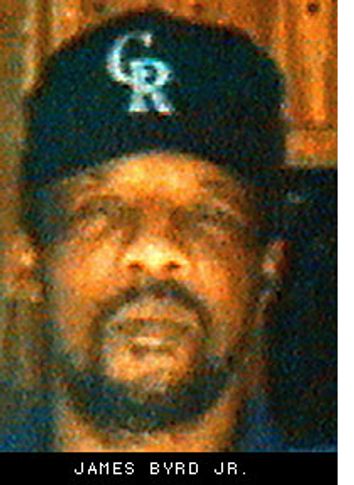
Byrd was killed June 7, 1998, when three men, Lawrence Brewer, Bill King and Shawn Berry, chained him to the back of a pickup truck and dragged him three miles down the road. Byrd was black; his three killers — whose guilt was never really in doubt — were white.

Berry is the last of three defendants to be tried for the Byrd’s murder. Jury selection starts Sept. 25. The two other men arrested for Byrd’s murder, King and Berry, have been convicted and sentenced to death. But even if Berry, a Jasper native, is found guilty, whether or not he gets the death sentence remains up for grabs — not least because his sins, although extreme, are those of the community where he was raised.

“It’ll be interesting,” says one investigator who was on the scene shortly after Byrd’s body was discovered. “I think there’s probably enough evidence for him to get the death penalty. He probably ought to get it. But I’m not sure he will.”

Here’s the thumbnail version of what happened on that June night when the shit hit the fan, putting Berry and his cohorts in jail and drawing swarms of journalists to an unwelcoming Jasper: Byrd, a local black Jasper resident, got so drunk at a party that his friends and relatives refused to drive him home. So he walked. When three white men, Berry, Brewer and King, offered him a ride in Berry’s primer-gray pickup, he apparently jumped right in. What happened next is hazy, but the four men didn’t go home. Instead, they started swilling beer together and smoking cigarettes.

Eventually, some combination of Berry, Brewer and King tired of the camaraderie and decided to chain their newfound companion to the back of their pickup and drag him down a county road. Finally, Byrd’s head hit a culvert and split, along with one arm, from the rest of his body. Brewer, Berry and King unchained the body and left it outside the gates of a local graveyard, then went their separate ways.

Byrd’s buttocks and heels were ground down almost to the bone. He was alive and probably conscious until his head hit the culvert. His last moments couldn’t have been anything short of excruciating. Berry says he was a horrified bystander, not an active participant. He says the other men threatened him, saying “the same thing can happen to a nigger lover.” He says he pissed his pants. Anyone would have. Berry says he’s sorry. The pants will be entered into evidence.

In Jasper, people look at what happened to James Byrd and, because it’s so horribly beyond comprehension, easily separate themselves from it. The thinking goes like this: How could anyone — much less three people — drink with a man, then chain him to the back of a truck and drag him down the road until his head is torn off? The only answer that has so far sufficed is that the perpetrators calculated the crime to impress a white supremacist group — to prove their loyalty and worthiness, as it were. It was a hate crime, pure and simple. An act of evil.

Brewer and King were both easy to throw onto the trash heap of haters. Both had racist tattoos and open ties with a white supremacist group. While they were in jail in Jasper County, Brewer sent King a note proudly boasting that after Byrd’s death, “we are bigger stars, or should I say hero of the day, than we ever expected.” In other words, it was easy for Jasper residents, black and white, to look at King and Brewer and say, “No. That’s not us.” Shawn Berry is different.

There’s no question that Berry was along for every step of Byrd’s final ride, or even that he drove the truck for part of it. But where King and Brewer are viewed as simply evil, Berry is treated more gently. His defense hews to a line that many Jasper residents — including several blacks interviewed by Dan Rather on a Sept. 29 “60 Minutes II” segment — have trouble discounting out of hand: He wasn’t hateful, merely complacent. Like almost everyone else in town.

King and Berry, both 24, grew up in Jasper. They were friends from their early teenage years on, and after they were caught breaking into a warehouse, both did time in boot camp. But as Rather noted, “Berry did well on probation,” while King, apparently beginning to show his true stripes, ended up in prison. And where King openly embraced white supremacy, regularly and loudly denouncing blacks, Jews and Asians, Berry was more circumspect. He hung out with King — and later Brewer — and tolerated the remarks, but, according to his interview with Dan Rather, that was all.

It’s a crucial distinction that, even in the face of Byrd’s headless, wasted body, many people believe may save Berry’s life. According to one observer who sat in on the suspects’ initial arraignment in June 1998, Berry was the only one who showed any awareness that maybe he’d done something wrong. Where King and Brewer sat stone-faced, Berry seemed embarrassed by the fact that he was connected with the incident. More evidence that may help save Berry? Where Brewer, 32, sports tattoos of a burning cross, SS lightning bolts and Ku Klux Klan symbols, Berry has a happy face and a playboy bunny.

- – - – - – - – - – - – - – - – - – - – -

Alive, Byrd was a bad drunk and a reputed crackhead. Dead he is clearly different. He has acquired a gravitas and power that would forever have eluded him had he lived. On the national stage, he has become a weapon in the arsenal Al Gore has aimed at self-proclaimed compassionate conservative and GOP front-runner Gov. George W. Bush, who failed to get behind the 1998 Texas James Byrd Jr. Hate Crimes Act. On a state level, Byrd not only inspired the hate crimes bill, but made Texas Monthly’s September 1999 list of the “Texas Twenty” most significant figures of the year, as “law’s latest symbol.” In Jasper, he has become a sort of magician, uniting the town — at least superficially and temporarily — against racism of any stripe.

The post-Byrd union, however, is something of a sham. Partly heartfelt, it is also offered up to placate the journalists who parachute in, intent on casting Jasper as the last, worst bastion of brutal Southern Bubba-ism. In reality, racism in Jasper remains as complex and powerful as ever.

On the one hand, Jesse Jackson, the New Black Panthers and the Ku Klux Klan have all failed to turn Byrd’s death into a Jasper-wide political rallying point. On the other, the powers that be — most of whom are, in spite of the town’s black mayor, white — remain remarkably tone-deaf about race politics in the wake of the gruesome murder, which supposedly galvanized a deep bout of public soul-searching. Any hint of a clue that using blacks as the butt of cheap jokes might be a bad idea seems foreign; sensitivity to the importance of symbols significant to the African-American community (which makes up 45 percent of the town’s 8,400 residents) is lacking; and self-consciousness about using the word “nigger” in polite conversation is strikingly scarce.

Consider a scene that took place two days before jury selection began for the second of the three murder trials: A criminal defense attorney, a man who regularly represents clients of all races, walks into a local law enforcement officer’s office. Both men are white. Several other people, also white, are milling about the office. To ease into his visit — grease the wheels of good ol’ boyism — the attorney pulls out a photo of his white wife, soft-lit and Sears-lovely, and shows it around the room. The lawman reciprocates, pulling out a carefully clipped photo of his “wife” out of his wallet and passing it around. The photo shows a skinny-necked burn victim. The lawman is divorced and in a town this size everyone knows it. Guffaws all around.

The attorney, a young man early in his first marriage to a woman who had no previous kids, admonishes the officer gently: “No, seriously, lemme show you my step-kids.” Again he pulls a carefully clipped photo out of his billfold. It shows two little girls, both black. An even bigger round of laughs. The attorney goes in for the kill. “And here’s my first wife,” he says, reaching into his wallet one last time. Again a clipped head shot: This one has come from a high-school yearbook and shows the face of a very dark-skinned, very overweight black teenage girl with a big, ragged afro. The lawman laughs louder than ever. The ice is broken. The two men get down to business.

Around the same time, when local officials conducting public business might reasonably be expected to be especially sensitive to the appearance of racial sensitivity, the school board faced a conundrum. Construction on the local high school, supposed to have been completed by a certain date, had gone slowly. Students returned to classes days later than they had expected. Since state funding would be slashed unless the days were made up over the course of the year, the school board began deciding which state holidays were less than totally sacred. One of the days they chose? Martin Luther King Jr.’s birthday.

While not ubiquitous, this strain of unconsidered disrespect permeates the town’s population. Many genuinely well-meaning people will stare you straight in the eye, proclaim themselves innocent of racism and, having just asserted their racial sensitivity and understanding, immediately pop out with a statement that, in some corner of the country more sensitized to questions of racism, would clearly be discomfiting. “Lemme tell you about the races here in East Texas,” says one state-level law enforcement officer who grew up outside Jasper. “You’ve got a handful of hardcore race haters, the KKK and the others. Then you’ve got everyone else. Everyone else was raised to respect niggers. Eat with ‘em, go to school with ‘em, share with ‘em … do just about anything but marry ‘em.”

The do-everything-but-marry-’em attitude sits at the mildest end of the racism spectrum by far. But it points the way toward more pernicious sentiments. It speaks to an unthinking, “we’re different from and better than them” lack of respect, which — at the farthest end of that spectrum — makes violence against blacks that much easier than it should be. In Berry’s case, it may have made the violence easier to tolerate than to stop.

Continue Reading Close