Ashley Fantz

Happy birthday, Leni Riefenstahl

Hitler's favorite filmmaker turns 100 -- and still says she didn't do anything wrong.

  • more
    • All Share Services

Happy birthday, Leni Riefenstahl

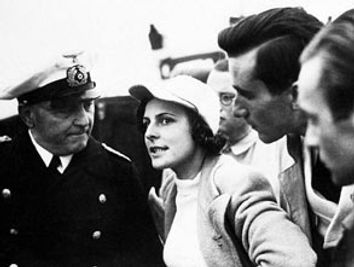
Leni Riefenstahl celebrated her 100th birthday on Aug. 22. The milestone earned a few headlines as Hitler’s favorite filmmaker and the last living member of the Führer’s inner circle welcomed journalists from the world press to her Munich home and Riefenstahl Produktion film studio. Riefenstahl was spirited and sharp, her white hair curling crazily, her eyebrows delicately penciled, her lips painted as red as the flag of the Third Reich.

If reporters, however, were expecting a candid interview with the woman most famous for making propaganda films such as “Triumph of the Will,” they were disappointed. Although Riefenstahl marveled playfully about becoming a centenarian, she kept the discussion focused on her latest film, “Impressionen Unter Wasser” (“Impressions Under Water”), released in April in Germany. The silent film is a series of shorts of tranquil oceanic scenes. Riefenstahl became fascinated with sea life in her 70s, when she said she was 20 years younger in order to get certified as a scuba diver.

The film met with lukewarm reviews. Some critics called it meaningless, images without impact. Some found it just plain weird, no doubt a reaction inspired by the camera’s quick pans to Riefenstahl wearing scuba gear and smiling wide at the camera. Others, recognizing Riefenstahl’s allegiance to beauty — exemplified best in “Olympia,” her film of the 1936 Berlin Olympics — thought that “Impressionen” might reflect her ultimate pursuit of purity.

On her birthday, the filmmaker hosted an elaborate party at which some of Germany’s most famous celebrities attended, including the flashy magicians Siegfried and Roy. Attendees were reminded that Jodie Foster was working on a project about Riefenstahl’s life.

The day after her party, Riefenstahl suddenly fell ill, according to her assistant and confidante of 38 years, Horst Kettner. “Ms. Riefenstahl is in great pain,” he told Salon. “She has become very weak and is taking painkillers.”

Also that day, Aug. 23, Frankfurt prosecutors announced that they were investigating Riefenstahl for “racial incitement” and “disparaging the diseased.” According to a German law, denying the Holocaust is a crime punishable by a fine or jail time.

The probe was launched after Rom, a 76-year-old Cologne-based Gypsy group, alleged that Riefenstahl lied when she told a German magazine that she did not know the doomed fate of 120 Gypsies who appeared as extras in her 1942 film “Tiefland” (“Lowlands”). Riefenstahl was quoted as saying that she had no knowledge that the extras were concentration camp prisoners from camps in Salzberg and Berlin, or that they were subsequently shipped to Auschwitz and other camps after shooting wrapped.

The denial deeply offended members of Rom, who matched the names of extras in the film with Berlin and Salzberg camp victims.

“We have documented these people who went to the ovens after she was done with them,” Rom director Kurt Holl says. “For her to say that no one was harmed during her film is true. They were sent to their deaths afterward. These statements are just Leni Riefenstahl being Leni Riefenstahl, rewriting her own history.”

Twice acquitted by Allied courts of any legal wrongdoing during World War II, Riefenstahl issued a statement through Kettner that her remarks were a “misunderstanding” and that she “regretted” the persecution of Gypsies.

Kettner, who has worked closely with Riefenstahl on her lesser-known documentaries after 1945, is outraged about Rom’s claims. “This is like someone disturbing your defenseless grandmother,” he says. “Hasn’t she suffered enough?”

After denying repeated requests to talk with Salon, Riefenstahl finally agreed. But the interview was more revealing for what the filmmaker would not say. She refused to talk about Hitler or other high-ranking Nazis she worked with, including Josef Goebbels, the murderous propaganda minister who, photographs show, was a frequent guest at her home and with whom she met — a week after the infamous May 1933 Opernplatz book burning — to discuss “film projects,” as she called them in her 1987 memoirs.

“I met the Führer in 1932 and I cannot blame or be angry at people for wanting to know more,” she said. “It is not unfair to be interested. That is all.”

Riefenstahl, who has for decades maintained that she was a passive artist simply doing what was commissioned of her, also refuses to talk about the most expensive, aesthetically breathtaking documentaries of their time. “Triumph,” especially, is a difficult topic, a film solely used by people, she says, to attack her character. “I will always be asked to defend ‘Triumph of the Will’ forever,” she says. “The circumstances of its production will linger forever.”

“Leni Riefenstahl: The Seduction of Genius,” a book by Rainer Rother, the German Historical Museum’s cinema program director, was released in English in September. It traces Riefenstahl’s career from her successful beginnings as a ballet dancer (a pursuit her father forbade and her instructors were not optimistic about) to a dramatic moment when, standing on a train platform on the way to see a doctor about a career-threatening knee injury, she saw a film poster for Germany’s hottest director, Arnold Fanck.

Riefenstahl wrote an adoring letter to Fanck, and nine months later she starred in his next film, which required the still-injured young woman to climb snowcapped mountains, endure sexist remarks from her male costars, be pelted with snow, and look beautiful through it all.

Audiences loved her. But she was unsatisfied with acting and worked her new contacts to find funding for “The Blue Light,” her first feature film — a commercially successful work still lauded as one of the best movies of all time.

That was May 1932, the same year she wrote a letter to Hitler professing her devotion to the candidate running for the German presidency with campaign slogan of Freedom and Bread. By January 1933, he was appointed Reich chancellor. Four months later, Riefenstahl went on a picnic with Hitler and Goebbels. They were trying to woo her into making a film about a new kind of Germany.

“It was a critical point because for all the ambition and creative ability she had, as a female director, there were obstacles in a male-dominated industry,” says Rother. “She had been told her whole life that she could not do anything, but here were two men who believed in her talent and were offering an endless supply of funding and manpower. I think, in a great way, Leni saw this as a way to advance her career.”

The controversy over “Tiefland,” an apolitical love story, is not new. Since early 1948, using the archive of the Reich Chamber of Commerce, reputable German press outlets have been publishing Riefenstahl’s old pro-Nazi letters, which she always denies writing.

For 20 years, the trade publication Revue fought Riefenstahl in court. In 1949 she sued it for printing accounts from witnesses who claimed to have personally seen her select interned Gypsies at camps in Salzberg and Berlin to be “Tiefland” extras.

Riefenstahl won her legal battle but lost the public one. Journalists wrote that she had a “sharp and cold birdlike” presence during court proceedings, much of which recounted instances of slaughter. Though it was not exactly her fault, she became a symbol of a country that, at the time, was failing to decently acknowledge complicity.

In the early 1950s, when Riefenstahl wasn’t producing any films and her artistic life was almost entirely eclipsed by her political past, Revue accused her of the worst: witnessing the killing of 20 Polish civilians by German soldiers in 1939.

Indeed, in her memoirs, Riefenstahl says she “heard gunfire,” but did not witness any murders. She says she complained to the German government about “the mishandling of Polish citizens.” Did she do less than a war correspondent would have done? What kind of influence did she truly have?

Enough, answers Rom’s Holl. “She had a say when no one did and if it did not work during Hitler’s time, all right … But today is different. She has a chance to at least recognize what she was involved in and to show a conscience,” he says. “Today, it is hard in Germany to convince people that Gypsies suffered during World War II. They are stereotyped as criminals. She did not credit those extras, some with speaking parts in her film, so perhaps considering their fate, she might honor their memory rather than think of herself first.”

Yesterday’s terrorist, today’s peacemaker

In a vote hailed as a landmark stride for democracy, Macedonian voters elect an ethnic Albanian guerrilla leader many authorities still denounce as a terrorist.

  • more
    • All Share Services

Joyous machine-gun fire filled the air of Skopje and young people swarmed into the streets after voters in Macedonia threw out the ruling party and elected a multiethnic coalition government in parliamentary elections held Sunday. Viewing the government as corrupt and economically incompetent, and mistrusting its ability to shepherd the nation to reconciliation after a violent guerrilla campaign by ethnic Albanians last year, Macedonians voted into power two coalition parties — one of them headed by Ali Ahmeti, the military leader who led last year’s uprising and is still denounced by many Macedonians as a terrorist.

Observers and Macedonians alike hailed the elections for the 120-seat parliament, the fourth held since Macedonia broke away from Yugoslavia in 1991, as largely free and fair, saying they showed that the young Balkan state was taking great strides toward democracy. But tensions in this impoverished, mountainous state remained high: Sporadic violence marred the election, and even though the government and the Albanian rebels, under pressure from the European Union, reached agreement last year on a peace deal that gave the Albanians more civil rights and access to government jobs, extremists on both sides pose a threat to peace.

Macedonia, about the size of Vermont, is a country rife with ethnic tensions that go back to the Ottoman empire. The people are divided by geography, culture, and religion. Ethnic Albanians, who are mostly Muslim, speak a different language than the mostly Christian Macedonians. The educational system is a mess, unemployment is incredibly high (in ethnic Albanian populated areas, it’s as high at 85 percent) and organized crime, sustained by Western Europes demand for the countrys massive underground heroin racket, has created a world that in many parts looks and feels medieval.

Despite all these problems, however, many of the Macedonians partying in the streets clearly saw Sunday’s vote as a hopeful sign: a vote for peace and a democratic breakthrough. They seemed simply happy to have made it through the day without any major violence: The full-scale street fighting and shootouts many predicted never materialized.

By Western standards, to be sure, the election was far from spotless. Just ask the villagers in Lesok, in a mountainous region about 25 miles from the capital of Skopje and less than a mile from the scene of pre-election day violence in which Macedonian police shot and killed two ethnic Albanians. The dirt road to Lesok looks like backwoods Mississippi in the 19th century — crumbling concrete houses, roaming wild dogs, old men with rifles sitting in wagons passing the day drinking from rusty tin cups, boys guiding donkeys whose backs carry rows of dried tobacco.

The rare tourists who come to Macedonia these days are kindly warned not to venture up this way. The quiet that pervades these villages, tucked along a mountain that overlooks Skopje, are deceptive: The area was the site of gun battles between ethnic Albanians and Macedonians that captured headlines last year.

On election day, Lesok was again the scene of a violent incident. Sitting on the steps of a ramshackle home, six old ladies, their heads covered with scarves, screamed and pointed to a group of male Lesok dwellers who were going in and out of a car, apparently looting it. The vehicle had been abandoned, the men said, by a member of the Lions, a paramilitary unit ostensibly set up to combat terrorism, but which ethnic Albanians claim has been used to intimidate them. Six days ago several Lions were arrested for blocking a main road to an ethnic Albanian neighborhood.

Villagers claimed that the Lion driving the car had smashed the glass door of Lesoks polling station, placed a gun to the head of one of the village women and ordered her to vote for the ruling party, known as VMRO. When she refused, the man fired two shots near her ear, and smashed her on the head with the butt of his gun. He then grabbed Lesoks ballot box and took off on foot. (It was impossible to determine why he abandoned his car.) About 25 feet from his abandoned car, on a playground where young boys continued to kick a soccer ball as if nothing had happened, lay a dead bonfire of voter registration cards.

Lesok was one of two violent incidents on election day: An ethnic Albanian was shot and wounded at a polling place just north of Skopje Sunday night. But for the Organization for Security and Cooperation in Europe, the continents largest conflict-prevention group, the stolen ballot box, the shooting, and other problems, including widespread ballot stuffing, were minor setbacks. The OSCE had worked for months to train both Macedonian election workers and more than 800 monitors from 55 nations, including the United States, on how to prevent “voter irregularities.”

An OSCE monitor insisted the election was a success. “This isnt what I would define as democratic, but in Macedonia, ‘democracy’ has to be a subjective term right now,” he said.

Monday morning, with the ballot box still missing, Prime Minister Ljubco Georgievski, head of the VMRO party, conceded defeat, calling the vote “the most democratic election in the history of Macedonia.”

“True, the missing box is bad but that is the biggest problem with the election,” said Zoran Tanevski, spokesman for the Macedonian State Electoral Commission late Monday. Tanevski, who worked as a journalist at Radio Skopje for 17 years, insists that that one ballot box would not have changed the outcome of the election. “We are very happy. It was democratic by our terms. No one was killed. That is really a step forward.”

Perhaps an election without murders is indeed a cause for parties in Macedonia. During the last election in 1998, the bodyguard of a Macedonian politician killed an ethnic Albanian Muslim teenager, and the 1999 and 2000 local elections were tainted with serious allegations of voter fraud.

Europe and the United States had a lot riding on this election. Europe wanted to stabilize the region, prevent another Balkan war, and move Macedonia one step closer to E.U. membership. The U.S. has cut its peacekeeping troops in the area from 4,400 last year to 1,800 this year. Preoccupied with preparing for a war in Iraq and pursuing al-Qaida terrorists, the last thing it needs is a lawless country that would make a convenient hiding place for terrorists.

But an election without a body count doesn’t necessarily mean an unqualified victory for American interests. Ahmeti was added to the Bush administration’s list of outlawed Albanian terrorists last year: His legitimate victory mocks the Bush administration’s us-vs.-them declaration that all “terrorists” are equally evil and must be hunted down.

Anti-American sentiment still lingers here — from both sides of the bloody Slav-Albanian conflict. When President Bush visited a U.S. base in Kosovo in July 2001, it set off a series of riots in Skopje, led mostly by Macedonian Albanians angered because he neglected to invite their politicians to the event. Protesters burned symbols of Western culture, including the American flag.

Compounding tensions, the respected Macedonian Albanian-language paper Fakti ran a series of editorials last fal denouncing Bush for associating Albanian Muslims in the country with al-Qaida. Ahmeti said, “They [America] know very well that we are mountains apart from bin Laden. There were never ideological elements in the UCK [the Kosovo Liberation Army], including the mujahedin element.”

Anti-American feelings have subsided since then but have not disappeared. Little more than a week ago, outgoing prime minister Georgievski said in a speech that Macedonia must fight not only against “Albanian terrorists,” but also against “U.S. and NATO generals.”

The election was a landslide victory for two coalition parties: the leftist Together for Macedonia coalition led by Branko Crvenkovski, which defeated the VMRO, and Ali Ahmeti’s Union for Democratic Integration, which defeated the Democratic Party of Albanians, the junior party in the ruling coalition. Ahmeti’s triumph, in particular, is a remarkable story. Ali Ahmeti has undergone one of the most amazing transformations in political history. Last September he traded his guerrilla camouflage outfit for a blue suit, calling for a union between his people, ethnic Albanians, and the Macedonians he had waged war against since February 2001. That a significant number of Macedonian voters joined ethnic Albanians in voting for Ahmeti can be attributed not so much to their enthusiasm for him as to their disgust with the VMRO. Ahmeti was seen as the lesser of two evils: He at least was regarded as doing something for some of the people, however violent his means, and his platform of bringing Macedonians and ethnic Albanians together appealed to voters weary of ethnic violence.

As the former leader of the National Liberation Army, an ethnic Albanian rebel group, Ahmeti instigated eight months of fighting between Macedonian authorities and ethnic Albanians in the treacherous mountains outside Skopje between February and September of 2001, shattering the relative peace the country had enjoyed since it seceded from Titoist Yugoslavia in 1991.

The reason for the uprising, Ahmeti wrote in letters he sent to the media from his headquarters deep in the mountains of Tetovo, was to obtain long-overdue equal rights for ethnic Albanians, mainly Muslims, who had been historically oppressed by the mainly Christian Macedonian majority. (Albanians make up about a third of the nation’s 2 million inhabitants.) He also addressed a highly publicized missive to international figures, including U.N. Secretary-General Kofi Annan and NATO Secretary-General George Robertson, in which he wrote that the NLA wanted “only for our families to live and prosper in peace without being considered modern slaves of an ethnic state.”

Armed with sophisticated weapons from the Kosovo Liberation Army, in which many of Ahmeti’s men earned their fighting stripes, the NLA consistently trounced the more lightly armed Macedonians. Throughout the fighting, which was mostly contained in the Tetevo and in remote areas outside Skopje, it was next to impossible to know which side was doing what. News media, divided themselves and unapologetically biased (one Macedonian television reporter actually filmed himself firing a grenade into an ethnic Albanian village) could not be trusted. The Macedonian news blamed Ahmeti and NLA for bombing Macedonian police stations and killing police officers during random daylight drive-by shootings. Albanian papers claimed the Macedonian government was behind the slaughter.

As the summer months wore on, violence escalated. The NLA admitted to abducting five people on a highway in western Macedonia; Human Rights Watch accused the Macedonian police of brutal, sometimes fatal attacks on innocent Albanian civilians. Finally, the E.U., with the help of the United States, intervened and negotiated a peaceful hostage release.

When the smoke cleared, it became clear that the NLA’s violent methods had achieved their ends. The E.U. and the U.S. pressured the Macedonian government to write into the country’s laws provisions that would ensure that the Albanians received more equal representation on government bodies, including the police force, and equal civil rights. The Ohrid Agreement, named after Macedonia’s largest lake, also guaranteed that the Albanian language be legally recognized.

Ahmeti became a hero to ethnic Albanians. This past May, he began campaigning as a moderate, calling for ethnic Albanians to join with Macedonians to promote peace. Little was made of a sign hanging on the front of his Tetovo campaign headquarters showing an Albanian eagle attacking a Macedonian lion. Campaign posters showing Ahmeti gazing pleasantly upward, a soft grin between his chubby cheeks, wallpapered Macedonia. He accepted his victory on Monday flanked by American, E.U., and Albanian flags. Noticeably absent was a Macedonian flag.

Macedonian attorney general Stabre Djikov is outraged by Ahmeti’s win. Calling the politician a “war criminal,” Djikov has publicly threatened over the past three months to arrest Ahmeti if he went to Skopje. Representatives of the E.U. and NATO warned Ahmeti, who had planned to hold a rally in the middle of the city, to stay out of town to prevent likely clashes.

“We have elected someone who is guilty of heinous atrocities,” Djikov said on Monday. In the months leading up the election, Djikov accused Ahmeti of killing hundreds of civilians and forcing thousands from their homes. But Djikov’s mission to prove his case — which he has yet to show the public solid evidence of - seems doomed. He has next to no public support from the Albanians, and even some Macedonians view the war-crime allegations as a ploy to tarnish Ahmeti’s election chances. Moreover, Djikov doesn’t have any jurisdiction. As part of the Ohrid agreement, NLA fighters were given amnesty for, or were pardoned of, all incursion acts. Only the United Nations War Crimes Tribunal in The Hague can charge someone with war crimes. And the court has given no indication that it plans to indict Ahmeti, at least before he assumes his new office.

Continue Reading Close

Herr Schroeder can’t catch a break

Gerhard Schroeder was seen as Germany's Bill Clinton -- media wise, progressive and practical. Today, mired in an enigmatic reelection campaign, only his wife defends him.

  • more
    • All Share Services

Herr Schroeder can't catch a break

Facing the highest rates of unemployment in three years, German chancellor Gerhard Schroeder recruited longtime friend Peter Hartz, Volkswagen’s personnel manager, to chair a committee that would look for solutions. That was in February. Ten days ago, the two men appeared before an invitation-only crowd of 700 at the Bundestag, Germany’s parliament, bearing the result of that labor.

It was a bound report, 5 inches thick, and Hartz waved it proudly before the audience. “This means 2 million jobs over the next three years — starting now!” he announced.

Schroeder’s eyes brightened underneath his unruly eyebrows and a half-smile crept over his face.

Of course, the chancellor had every reason to be happy about Hartz’s promise. Nearly 4 million Germans — 10 percent of the workforce — are jobless. Most of them live in the east, an influential voting bloc Schroeder has been struggling to woo with the Sept. 22 national elections a month away. It was Schroeder who said in 1998 — when unemployment was only slightly worse — that he didn’t deserve to be reelected if he didn’t bring more jobs to Germany. There’s no doubt that the sore subject is the reason Bavarian prime minister Edmund Stoiber, whose constituents are enjoying a high-tech boom and one of the lowest unemployment rates in the country, has consistently walloped the chancellor by 7 points in the polls.

Unfortunately for Schroeder, the Hartz report is as inviting to read as “The Iliad.” Weighed down by layers and layers of numbers, and further obscured by impenetrable bureaucratic language, most voters probably wouldn’t even try to read it — and if they did, and in the unlikely event they could understand it, they probably wouldn’t favor it. It increases rather than reduces the size of government by creating statewide headhunter-like agencies. It would force young and single people to move anywhere jobs are offered or face a reduction in welfare benefits. And it pledges billions of euros in low-interest loans without explaining where the money would come from and who would qualify for it.

The morass of the Hartz report is only the latest disappointment in the 58-year-old chancellor’s reelection campaign — an enigmatic effort that has often been darkly humorous, though unintentionally so. For more than a year, Schroeder’s critics have charged that Social Democrat is not the media-friendly, charismatic Tony Blair-ite he sold himself as when he trounced Deutschland’s four-term conservative, Helmut Kohl.

Indeed, the chancellor has struggled to catch a break all year. In January, he weathered family embarrassment when his 48-year-old sister, Ilse Bruke, a social worker and mother of two sons, organized a petition and sued her brother’s administration for slashing tax benefits for single parents. This incident dredged up news from the previous year about Schroeder’s unemployed half-brother, Lothar, who had surfaced complaining that there was no work — just days after Schroeder had called those without a steady income “lazy.” (Lothar is now a tour guide on the Spanish island of Majorca.)

In May, Schroeder gave Germans a reason to giggle when he proved his own lack of humor by successfully suing a German news agency for reporting that he dyed his hair. Public relations gaffes followed. Schroeder fired Rudolf Scharping after the defense minister admitted to taking $144,000 from a lobbyist with ties to the arms industry. Before leaving, Scharping questioned his boss’s mental health. Schroeder, meanwhile, defended himself against allegations that his administration had pressured Deutsche Telekom’s chief to resign, an event that triggered a slide in the price of its stock, upsetting small investors.

But no scandal has left Schroeder more bruised than the one now raging. In July, the country’s largest tabloid, Bild, revealed that parliament members aligned with Schroeder’s Social Democratic Party illegally used taxpayer-funded air miles for personal trips; the scandal caused several MPs to resign.

Initial Bild reports conspicuously omitted politicians from Stoiber’s conservative alliance of Christian Democrats (CDU) and the Christian Social Union, prompting criticism against the paper from Doris Schroeder-Kopf, the chancellor’s fourth wife.

Twenty years her husband’s junior, Kopf married Schroeder in 1998, giving up her 16-year career as a political journalist — she at one time worked at Bild — to cultivate a homemaker’s image. But like Hillary Rodham Clinton, who famously insisted in 1992 that she has better things to do than stay home and bake cookies, Schroeder-Kopf told major papers that Bild had launched a “witch hunt” against her husband and were underplaying “negative” news about Stoiber. Bild denied that, but after Schroeder-Kopf got into print, the paper wrote about a few parliamentary right-wingers who’d abused their Lufthansa privileges.

Not yet satisfied, Schroeder-Kopf has begun logging campaign diaries on Schroeder’s official Web site. Stoiber is “poisoning Germany’s children” by supporting federally funded agriculture programs,” she wrote in the first week of August. “As a mother and consumer, I never thought I’d hear  that German farms should be allowed to use more poison to spray their apples.”

If anyone can and should defend Schroeder now, it’s his wife. During the 1998 election, the Germans welcomed her even though the two began their affair before his third marriage had ended. During the 1998 election, the two even joked openly that he changed wives every 12 years, to which she quipped that he’d better find a strong fifth wife to push his wheelchair. But attitudes have changed, mainly because Stoiber, a stone-serious married man with three children, is running on a family-values platform.

Stoiber’s camp hasn’t hesitated to point to a new book by political journalist Jurgen Hogrefe, which reveals that most of Schroeder’s $161,000 salary goes to pay alimony, forcing the chancellor to live cheaply. He sometimes drives himself to appointments in his VW and keeps two small flats in Berlin and Hanover, which together rent for less than $700 a month. For a long time, his thrifty living didn’t bother Germans; they appreciated it. But when he confessed to Stern magazine last month that he dreamed of moving to New York City, where he could finally make some money writing his memoirs, voters grumbled.

If Schroeder has much fight left in him, it won’t be wasted attacking Stoiber’s neo-populist rhetoric, or portraying the Bavarian as a red-faced, beer-swilling provincial, a stereotype pundits say has made politicians from the region unappealing to northern voters.

Instead, it seems, he may rely on the heavens to avoid becoming the only chancellor in post-World War II history to not serve a second term. According to new public opinion polls, rampaging floods in Germany — and Schroeder’s quick response to them — have helped him make a dramatic comeback to pull even with Stoiber. His visits to Dresden — while Stoiber remained on vacation — reminded voters of his working-class roots and his ability to be a man of action when the common folk are down. If he’s able to get adequate financial relief from the European Union and other sources and distribute it efficiently, he might be able to benefit from the same kind of image makeover that the Sept. 11 terrorist attacks brought to New York mayor Rudy Giuliani.

But the floods aren’t the World Trade Center, and Schroeder will have to own up to the problems that have plagued his reign. Sept. 22 might answer a front-page Aug. 21 Bild headline, run alongside a photo of the chancellor: “Why is it always the little people who have to pay?”

Continue Reading Close

The jail from hell

If you ever go to Memphis, you better walk right. A chilling report on one of the worst places in America.

  • more
    • All Share Services

The jail from hell

The day after Thanksgiving, a Memphis, Tenn., resident named Joseph Liberto got into a fight with his wife. According to her, he chased her through the house with a knife. She called the police, who arrived at the couple’s upper-middle-class home and arrested Liberto. (Memphis Police Department policy is to arrest suspects at the scene of a domestic violence call when weapons are involved.) Liberto had calmed down by that time, and the police did not handcuff him. They let him fetch a jacket and his antidepressant medication, which he takes four times a day. It was merely a precaution, Liberto assumed: His attorney, a prominent city litigator, would have him out of the Shelby County Jail in a matter of hours.

Liberto, who is the father of three teenage girls and had never before been arrested, was dropped off at the jail’s intake area. It was a cramped, filthy space crowded with hundreds of inmates waiting to be classified, its floor covered in feces, urine and food. Liberto found himself sandwiched between two men, one who said he’d been arrested for beating and raping a 14-year-old girl, the other for shooting someone. Twice, according to Liberto, he asked guards for his medication: They cursed at him and told him to sit down and shut up. After hours, guards showed him what he thought were his bonding papers. Instead they were documents that would officially admit him into a cell within the jail. “I hadn’t been able to call my lawyer,” he says. “I knew I was in a bad place. I was really scared at that point.”

Liberto was placed in a cell by himself. Sitting on the steel bed without a mattress, he watched a rat scurrying in and out from beneath his bed, where a pile of feces lay. Suddenly, his cell door was unlocked. (Every hour, all the cells in the jail are opened for five minutes so that inmates can enter a day room for a break.) At this time, a group of four men entered Liberto’s cell.

A devout Catholic, Liberto had earlier prayed with two inmates in the intake room. “When they came in, I said, ‘Do you want to pray?’” Liberto recalls. “They said, ‘I don’t think we want to pray.’”

Interviewed at his home, decorated with bright Christmas knickknacks, Liberto chokes back sobs as he remembers the scene.

Two men stood by the cell door. They ordered Liberto to shut up or they would slit his throat. Pull your pants down, they said. One of the men pushed a spoon into Liberto’s mouth. “They told me to suck on this spoon, lick it real good,” he says, barely able to talk through his sobs. “They bent me over and rammed that spoon in my rectum so hard, ramming it and turning it and shoving it and they said, ‘We’re getting you ready.’ And then they took their penises out and put them in my face and rubbed them on my mouth. I could feel one of them back there. They put a handkerchief or something in my mouth.”

The guards announced it was time to lock down the pod again. As the men who had orally raped and sodomized him left his cell, Liberto says that a guard yelled at his assailants, “Did you show that white boy a good time?”

From admission to when he finally posted bond and left, Liberto’s ordeal in the Shelby County Jail had lasted more than 26 hours.

Liberto is still suffering psychologically and physically. He’s attending therapy sessions with a rape crisis counselor. Medical records show that his rectum was torn. He used a sock to absorb blood immediately after the assault, but says he’s still bleeding almost two months later. His thumb and shoulder may need surgery from being bent back by his attackers.

“This is very hurtful,” he says. “But I’m not alone; I’m not the only one this has happened to. And if I talk about it, maybe someone else won’t go through it.”

Liberto is doing more than talking about it. He is planning to file a lawsuit (the amount has not been disclosed) against Shelby County and the Shelby County Sheriff’s Department, which operates the facility. The brass is investigating Liberto’s charges, says sex crimes investigator Sgt. Gloria White, who confirmed that officers have witnesses they plan to interview. Liberto’s attorney Kathleen Caldwell will not file suit until the investigation is complete.

What Liberto didn’t know, when he was admitted to Shelby County Jail, was that he was entering a hellhole — a penal facility so plagued by severe gang violence, unsanitary conditions, lax medical service, overcrowding and inadequate supervision that two federal judges have declared it unconstitutional. The jail, the largest in Tennessee, is the focus of more than a dozen ongoing local lawsuits and an active U.S. Department of Justice investigation. Four men have died while being held in the Shelby County Jail; the families of three of those men have filed a $15 million wrongful death suit against the man who runs the jail, Sheriff A.C. Gilless, and other authorities. Just last week, on Jan. 17, Gilless and other penal authorities were also slapped with a $22 million lawsuit by 16 Shelby County Jail guards, who claim they were severely traumatized after Gilless and others authorized a phony takeover of the jail’s control room last June.

Liberto is just one of hundreds of inmates who have been assaulted at the Shelby County Jail. Former inmate Darius Little was 19 years old when he was gang-raped; he sued and won a civil rights suit against the sheriff’s department in 1996. His case led to a federal court order to improve the facility’s conditions and reduce inmate violence. But three months of federal court testimony late last year revealed that far from improving, the jail is more violent and out of control than ever. On Dec. 22, U.S. District Judge Jon McCalla found the county in contempt of the 1996 order, threatening to jail Gilless if he didn’t improve the facility.

“I can’t fix the jail,” McCalla warned the sheriff. “But I can make you want to fix it.”

As with Liberto, the nightmare for many of those who are admitted to Shelby County Jail begins as soon as they walk in the door. A jail is supposed to be a temporary holding place for people when they are arrested. Unlike prison inmates, people in jail have not only not yet been found guilty, they haven’t been charged. Some of them could quite possibly later be found innocent. Once inmates are processed and taken to court to be officially charged, the justice system allows them to either post bail and be released, or stay at the jail until their trial date. New prisoners are supposed to be classified as soon as possible and allowed to make a phone call within a reasonable period of time; violent and nonviolent inmates should be segregated.

At Shelby, most of the prisoners are impoverished, many with drug problems; only a few of those admitted make bail. The rest are forced into a broken system that is supposed to hold only 1,200 inmates, but actually holds 3,800. Shelby has only one computer equipped with classifying software, so many suspects have to wait more than a day to make a phone call. Some, like Liberto, spend hours without a clue as to what’s going to happen to them. Violent and nonviolent inmates are not segregated, so fights often break out in intake. Liberto’s solo cell assignment was unusual. Most inmates are housed two, sometimes three to a cell the size of a walk-in closet, despite a court order requiring that the jail place inmates in individual cells to keep predatory inmates away from weaker ones.

And far from protecting inmates from jailhouse violence, the poorly trained, badly paid and demoralized guards — who are themselves at great risk of physical harm — practice it themselves, according to lawsuits. Last month, two inmates arrested for DUI filed separate suits. One alleges guards broke his jaw for not answering a question correctly. The other accuses the guards of providing poor medical care after other inmates, wanting his diamond ring, broke his ankle and his fingers. (After being caught stealing from inmates, guards are now no longer allowed to confiscate their charges’ valuables.)

Perhaps most frightening of all, Shelby County Jail is so plagued by violent, out-of-control gangs that it has been likened by corrections experts to New York’s infamous Riker’s Island, a prison that in the mid-1990s reported 1,100 gang-related stabbings and assaults in one month. According to Judge McCalla’s recent ruling finding the county in contempt, the jail holds more than 250 members of Memphis’ most lethal gangs, the Gangster Disciples and the Vice Lords, who outnumber the guards and run the jail with more authority than they do.

The gangs maintain systematic control over non-affiliated inmates through what’s become known as “Thunderdoming.” The style of combat is modeled after the pro-wrestling shows the inmates watch on television: Typically, a non-affiliated inmate is jumped from behind by a group of other inmates, hog-tied with a bed sheet and beaten with heavy rubber shower shoes and filled water bottles.

Larry Graham paid a price for refusing to Thunderdome. In November, the 5-foot-11, 220-pound inmate told Judge McCalla that he was savagely beaten, hog-tied and strangled with a rope. Showing the court a thick white scar encircling his neck, Graham said that while he floated in and out of consciousness, his attackers stripped him and took him to the showers. He woke up naked hours later, hog-tied on his cell bunk. He was transported to Memphis’ Regional Medical Center where doctors fixed his broken bones as he struggled to open his swollen, bruised eyes.

Though he doesn’t know why he was targeted other than refusing to participate in Thunderdome, Graham and other inmates say there’s no escaping the gang’s torments.

“You just don’t buck them. There ain’t nothing you can do, and ain’t nobody going to help you,” he said.

According to the National Gang Assessment project, 51 American prisons and 32 jails are home to nationally connected gangs. The Black Disciples, predecessors of the Gangster Disciples, were at top of the most feared list, dwarfing the violence of other organizations like the Aryan Brotherhood and the Crips.

Modern correctional facilities use segregation, punishment, and gang-tracking technology to try to control their most violent charges. Riker’s Island has reported a 64 percent decrease in gang-related altercations after beefing up its gang intelligence unit, a team of officers trained to recognize gang insignia, clothing, behavior, and language. But at Shelby County, the Direct Response Team, a group of guards who specialize in subduing violent inmates, was cut from 75 to 18 jailers over the past two years — a reduction based on lack of funds.

(Shelby County Jail Chief Marron Hopkins accepted his $90,000 a year position with the Shelby County Jail after working at Riker’s Island prison. During a recent tour of the jail — which appeared to have been cleaned up for Hopkins’ presence although it was supposed to have been a “surprise” — this reporter asked whether Hopkins thought that Riker’s Island’s methods might improve the jail. He replied, “I don’t know; I don’t remember.”)

It isn’t that the penal authorities haven’t been warned several times that the jail has a major gang problem. Four years ago, when the federal court order was drafted, Sheriff Gilless was given a full report of the gang operations in the jail, including examples of “kites” and other gang paraphernalia. Another report, this one written by head court-appointed jail monitor Douglas Morgan, noted in November 1998 that the gang situation at the lockup was “volatile.”

The extent of gang communication and authority at Shelby County Jail borders on the absurd. Members write and post rules governing when other inmates can use the facilities’ televisions and phones. They dictate who can buy what and when during commissary visits. On a November walk through the jail, this reporter saw several inmate-written rules hanging near phones and TVs.

To keep track of other inmates, gang members write notes to each other called “kites,” which they typically fold into the type of triangle wedges grade-school students exchange. The sheriff’s department’s only gang intelligence officer, Sgt. James Stroud, says that kites are composed of intricate, coded gang language and often carry messages about non-affiliated inmates who have violated gang rules.

For example, one kite urges a man called “Mac Pig” to “break off” an inmate who has mocked gang authority. The institutional coordinator, the title given to the gang member who acts as a sort of jail Godfather, is told that the offending inmate is “false flagging,” meaning that he lied about being a gang member. Inmates find information when they conduct “background checks” by calling members outside of jail to inquire where in the inmate is from, in which neighborhood he grew up, who his friends are and so forth. Inmates file the kites in their cells, which some refer to as their offices.

Gang members can also climb the incarceration career ladder by getting specially assigned jobs — a ranking system that inmates testified began as far back as 1988. Pod and cell monitors are assigned to the east and west side of the jail’s four floor cellblocks. Below them are the chiefs of security, the first rung on the jail gang career ladder, assigned to protecting their superiors while they are sleeping or showering.

Mimicking the court system, the institutional coordinator conducts a trial before meting out punishment. In Mac Pig’s case, the offending inmate was sentenced to a timed three-minute beating by other inmates. If an inmate objects to his punishment, he can write a letter of “appeal to the Brothers,” asking for another trial. Other penalties for insulting gangs: getting one’s hair washed in the toilet, licking the inside of a toilet, or the floor.

If the gangs are the jail’s single worst problem, the guards may be the second. It is, by all accounts, a dreadful job — made worse by the all-powerful gangs and the lack of support from the sheriff’s department. Not only do jailers receive lower pay than sheriff’s deputies with street beats, overtime is common. A shift supervisor will often assign a guard two straight eight-hour shifts without telling them far enough in advance to hire a babysitter, tell a spouse or make arrangements for another job, which many guards hold in order to earn enough money. Constant exposure to filth and poor air circulation has spelled high blood pressure and respiratory illness for many jailers.

The number of guards is inadequate. As of now, there are a total of about 1,000 guards on duty over the course of three eight-hour shifts — about one guard on duty at any given time for every eight or nine inmates. According to penal authorities and jail monitors, that figure should be one guard for every four or five inmates.

And getting killed on the job is a constant fear. Four years ago, a guard named Deadrick Taylor placed a Gangster Disciple on lockdown, a type of short-term solitary confinement. Within hours, the angered inmate was released and immediately phoned a hit on Taylor. When his shift was over and he had returned to his suburban home, Taylor was shot dead execution-style in his driveway.

Small wonder that there’s a joke among deputy jailers: “Go to hell,” someone will say. “I’m already here,” they respond.

Retired jailer and veteran sheriff department lieutenant Curtis Shumpert is part of a three-member federally appointed jail inspection team assigned to monitor whether the sheriff’s department is complying with the court order to improve the jail. Shumpert says that many guards won’t interfere with gang activity. They are paid thousands less than street deputies. Most jailers earn about $28,000, while a first-year deputy makes $36,390 and $42,432 by the third year. Low salaries do not make the possibility of gang retaliation worth it.

Moreover, the gangs are so smoothly run that they often escape detection. “The gangs run the place in a very discreet way,” says Shumpert. “They [members] will check a new guy’s receipts after he’s been to commissary to see how much money he has. They’ll do this politely and this person will give the receipts up. The members will ask the guy for the stuff he bought and then tell him to go take a shower while they watch to make sure that’s all the guy’s got on him. They will do this with a smile. A jailer will watch this and not have a clue; he’ll think there’s a conversation going on.”

Douglas Morgan, the former director of the Tennessee Corrections Institute who broad national experience inspecting jails, has spent three years interviewing guards and inmates as part of the jail inspection team. Morgan says guards at Shelby, 68 percent of whom are black women, have few incentives to do their job correctly and deeply distrust the sheriff’s department, especially Sheriff Gilless. They feel that the department puts them at unnecessary risk and say that Gilless hardly ever comes to the jail.

Not surprisingly, it isn’t always easy to get guards to stay on the job. Morgan and jail inspector Shumpert found that on several occasions, guards falsified their time sheets, sometimes leaving their post unmanned for 30 or more minutes. In November of 1999, there were 32 inmate altercations — more than one a day. At the time, jailers were required to take incident reports and ask inmates if they wished to press charges. But some jailers have failed literacy tests, raising suspicions that they are illiterate — and making it hard for them to take the reports.

“Jailers are frustrated and for good reason,” Morgan says. “I don’t think a lot of them trust who they are working for. It’s important that the department start paying them better and teach them how to deal with inmates on a more human level. I wonder sometimes if corrections isn’t the last American institution to embrace advancement and sensitivity. If you treat inmates like animals, that’s what they become.”

Morgan says the guard job is “regarded as a lower position, which is unfair and counterproductive.”

Perhaps the most bizarre episode concerning the guards, however, was instigated by Sheriff Gilless. Last June, Gilless and other jail administrators authorized two recruits from a guard training class to dress as computer repairmen and pretend to take guards hostage — without telling the guards it was a drill. The “gunmen” were told to “strike terror” in the unsuspecting guards, using a starter pistol and an object that looked like an Uzi. The mock terrorists put the unloaded guns to the heads of the jailers, who began to cry and beg for their lives, obviously unaware of the drill.

According to the $22 million lawsuit the guards filed last week against Gilless and other authorities, guards Francine Humes, Catherine Lacy and Geraldine Harvey were told to stand against a wall and were repeatedly threatened, while other guards (whom the lawsuit does not name) were kicked to the ground, had their shoes removed and were dragged across the floor. The gunmen then got on the jail intercom and announced that they had taken over the floor and would release inmates. After the incident, Sheriff Gilless told reporters that he thought the drill was a good idea.

All of this plays out against a background of what investigators claim is the jail’s non-cooperation with, even active resistance to, the court order and the monitors whose job it is to assess compliance. Douglas Morgan cites court testimony that Gilless’ subordinate, Jail Chief Marron Hopkins, admitted to Sheriff’s Department counsel Don Strother that he instructed his subordinates not to talk to court monitors — an action that qualifies as obstruction of justice because it interferes with the court order. According to court transcripts, guards say Hopkins told them that the monitors were “the enemy.” In late November, a guard filed a $2 million lawsuit against the county claiming he was fired for talking to monitors.

“It’s frustrating when county officials will not cooperate with us,” says Morgan. “The whole idea is to fix the jail. We shouldn’t have to go before the magistrate to keep Hopkins from intimidating guards.”

Demonstrating a now-familiar disgust with the county’s lackluster efforts to improve the jail, Judge McCalla ordered jail employees to sign a contract promising that they would respond completely and truthfully when interviewed by the jail monitors.

McCalla’s disgust isn’t limited to the jailhouse gang. Shelby County Mayor Jim Rout drew the judge’s ire when he didn’t show up in court on a day he was slated to testify in federal court about low jailer pay and his knowledge of jail gang activity (Rout opted instead to show fellow Republican Elizabeth Dole around Memphis.) McCalla wondered aloud if he should issue a warrant for Rout’s arrest.

As for Gilless, a 66-year-old who plans to retire in two years, his legal problems are well known in Memphis. Last year the twice-elected official settled a $127,862 sexual harassment suit filed by a female dispatcher. Without admitting to guilt, Gilless used $50,000 in public funds to fight the suit, the maximum amount the county mayor could approve without the county commission’s vote; he paid the rest himself. Less than four months later, another woman sued Gilless for sexual harassment, alleging that he had forced sex upon her. The sheriff settled out of court.

But those controversies were minor compared to scandals the department faced in 1999 and 2000, including a badges-for-cash scheme that led to federal indictments against one of his top-ranked deputies. Another deputy pled guilty to masterminding a traffic ticket-fixing scam in January, while another was formally charged for raping a female inmate at another county-run facility. In June, the alternative news weekly the Memphis Flyer revealed that 10 out of 19 newly hired sheriff’s deputies had arrest histories or felony records.

Despite repeated efforts to contact them, Sheriff Gilless, Jail Chief Hopkins, Deputy Chief Don Wright and Sgt. Stroud of the jail gang intelligence unit refused to comment.

As with penal facilities around the country, many — though certainly not all — of Shelby County Jail’s problems are caused by overcrowding. As a result, county officials have proposed solutions aimed at either keeping people out of the jail to begin with or moving them more quickly into prisons.

Advocates for inmates say one solution is to make bail bonds lower. “One of the main reasons the jail is crowded is because bonds are too high,” says Shelby County Public Defender Rob Gowan. “If you’re poor — and most inmates are poor — they can’t afford even a $3,000 bond. We aren’t given a lot of plea bargaining leverage, even for the smallest offenses.”

Many defenders feel that they and their clients are the victims of Shelby County District Attorney Bill Gibbons’ zero-tolerance policy. Patterned after successful programs in New York, the hardball approach to crime stipulates that law enforcement saturate areas that are high in crime with special street units. The policy prohibits any plea bargaining for people arrested for murder, armed robbery or aggravated assault.

In theory, a no-deals program sounds good, but it is often applied in cities where the poverty index is more spread out. That is not the case in Memphis, where many crime-ridden, highly policed areas are disproportionately poor. Police make between 180 to 200 arrests a day; charges range from driving with a suspended license to first-degree murder.

In fact, Memphis’ crime rate for murder, rape, robbery, aggravated assault and burglary is higher than the national average: According to the most recent Department of Justice national crime statistics, the city’s crime rate ranked ninth among U.S. cities with populations of more than 500,000. (Nearby Nashville ranked third.)

Gibbons believes there are three main catalysts for crime in Memphis: Gangs, with an estimated 15,000 members in the city; drug addiction, which afflicts about 70 percent of the jail’s population; and the city’s insufficient treatment of the mentally ill, which leads to lower-level misdemeanors and felonies such as vandalism and public intoxication.

Defending his high bonds, Gibbons says, “Lowering bonds simply because an offender can’t afford to pay should not be the desire of people who want to empty the jail. The way to alleviate the jail’s crowding is to expedite the trial process.”

Toward that end, Gibbons offered a written plan last week — a three-year strategic plan to curb crime by hiring more prosecutors, modeled after Boston’s successful approach. That city experienced an unheard-of decade-long decline, slimming its annual homicides to 31 in 1999, the lowest number of killings in almost 40 years. (Crime statistics for 2000, however, revealed that serious crimes rose back up 6 percent.)

Attorney A.C. Wharton, who heads the public defender’s office, says he’d like to see officers citing, rather than arresting people for minor offenses. Wharton recently told Judge McCalla that he and other criminal justice officers are trying to clear the clogged system (in 1999, Shelby County’s 64 public defenders were strapped with 28,671 cases, causing severe court backlogging) by moving toward faster releases or citation in lieu of arrests. With McCalla and other jail experts, Wharton wonders aloud if long-term solutions from the Tennessee Legislature, in the form of funding or new laws, might be the only way to fix the county jail’s huge problems. In particular, Wharton hopes for passage of a “speedy trial law” that would set a time limit for indicting an inmate.

But while that solution would reduce jail congestion, and address some of the civil rights issues involved in holding inmates before they are tried, it would not solve the jail’s problems with violence. Wharton is currently defending an inmate who alleges the guards beat him, dragged him down a hallway and made him find his way back to his cell in the dark.

After millions of dollars in lawsuits, beaten and raped inmates and an assassinated guard, the jail’s burdens don’t seem likely to lighten anytime soon. Judge McCalla has ordered that the sheriff’s department and county move quickly to hire more guards and begin segregating hostile inmates, or face what attorneys for the inmates call for — a $50,000 a day fine leveled against the county and the sheriff individually.

Just before the New Year, the Shelby County Commission approved the hiring of an additional 174 jailers, appropriating $6.2 million for one fiscal year. The jail has not hired additional gang intelligence officers, and the plan it submitted in response to Judge McCalla’s order does not mention beefing up the jail’s Direct Response Team.

But plaintiff’s attorney Robert Hutton, who represented Darius Little, the first inmate to draw attention to the jail’s problems, says that if the authorities don’t move carefully, they could ignite a powder keg.

“The guards are afraid of the gangs. It makes no sense that the sheriff tighten up control of the inmates, to punish them, unless there is adequate staff to protect the guards and other inmates from gang retaliation,” says Hutton. “We’ve struggled with this for four years; we should think before acting. These are volatile, violent people not used to being crossed or disciplined. Moving too quickly could cause another inmate to be hurt. And the possibility of a riot is real.”

Editor’s Note: Portions of this story appear in the current issue of the Memphis Flyer, as well as in previous issues.

Continue Reading Close

Fatal mistake

In a outrageous example of police incompetence, cops burst into the wrong home during a drug raid and kill an elderly African-American man.

  • more
    • All Share Services

Fatal mistake

John Adams had just settled in to watch a little TV one night earlier this month.

It was a new routine for the 64-year-old man. He’d spent more than 30 years coming home exhausted from working shifts at the local rubber plant. He told a friend that his arthritis was hurting him that day, but he wasn’t really the complaining type. Life was beginning to slow down for a change.

With his retirement savings, he and his 61-year-old wife, Loraine, had just fulfilled a lifelong dream of buying a new Cadillac and a double-wide trailer. That night, with his cane leaning against the side of his tan recliner, Adams was content to just flip through the channels and maybe fall asleep.

But outside their home on a sleepy, dead-end street stood seven armed police officers. Some wore riot gear and they were armed with clear shields and helmets. Leading the pack at the front door were officers Kyle Shedran, 25, and Greg Day, 24.

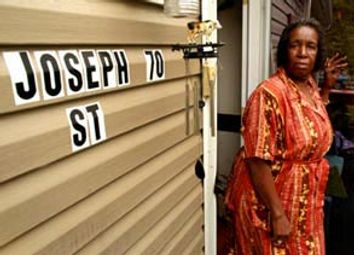
For weeks, they and other members of the narcotics unit of the Lebanon Police Department had eyed this house — one of only two on Joseph Street, a short pathway one might overlook driving through nearby streets. They thought they had seen a drug dealer frequent the place. They had a warrant to search the house and authorization to react if they encountered resistance.

Unfortunately, they did meet resistance — because Day and Shedran were knocking on the wrong door.

According to Lebanon police chief Bill Weeks, officers started yelling, “Cops, police, open up!” all at once. Loraine Adams heard the commotion first, but didn’t understand what was happening. She and her husband refused to open the door. The cops burst through the door. Loraine says that officers manhandled her, pushing her against a wall and handcuffing her.

Seconds later, cops rounded a corner and found Adams, whom they claim fired at them with a sawed-off shotgun. Officers say they returned fire, and shot him several times.

Adams was taken by helicopter to Vanderbilt University Medical Center in Nashville, 14 miles away. The elderly African-American man died in surgery at about 1:30 a.m.

Before Weeks answers any questions about his officers’ mistaken house raid, he says exasperatedly, “It’s totally ridiculous to call this a racial incident. The media is making it into that, and it’s not that. What happened was awful and a terrible screw-up on our part, that’s it.”

The officers who opened fire on Adams are white.

The image is grim: Young white officers fatally shooting an innocent black man in a botched attempt at a drug bust. The picture evokes all the emotions — outrage and heartbreak — conjured by the tragic shooting of Amadou Diallo, the unarmed African immigrant shot 41 times in the doorway of his building by white New York police officers.

But a closer look at the circumstances of this case suggests that what happened to Adams is probably the result not of racism, but of sad, simple incompetence.

Day and Shedran are on paid administrative leave as the Tennessee Bureau of Investigations complete a probe into the killing. Their personnel files show that, on more than one occasion, they have been lauded as “exemplary.”

“This is absolutely the stupidest move I’ve ever seen in law enforcement,” says Weeks. “We have nationally accredited policies that govern everything we do. What we think happened is that we have a particular supervisor who made a very unwise decision. This is not the fault of those two, younger officers. They did what they were told.”

The department has offered to pay for counseling for officers Day and Shedran should they request it.

Weeks would not give the name of the supervisor who gave the final authorization for the raid, but said that that person is also on paid administrative leave and will likely be severely reprimanded — possibly fired — once TBI finishes its investigation, probably by the end of this month.

The police contend that Adams shot at officers first. Investigators cut out a large chunk from one of the walls of the home as proof that bullets were fired from a sawed-off shotgun.

“We are not trying to make excuses for what happened,” Weeks said. “But I can tell you that we did I.D. ourselves and maybe they got confused. And I know that we were reacting to him shooting at us. But obviously, this wouldn’t have happened if we had not been in the man’s home.”

The supervisor is largely to blame, says Weeks, for violating a primary rule of keeping surveillance: Never lose sight of your suspect. In this case, the Lebanon police had lost sight of their informant both in person and on camera. The two houses on Joseph Street look very similar, so stringing together snippets of surveillance footage could not guarantee that what the cops had captured on film was in fact their target drug house.

“We should have blown that warrant off and come back later to start the surveillance over,” says Weeks. “We lost sight of our informant and that should never ever occur. I don’t believe this; we have procedures, precautions we take so that this kind of thing does not happen.”

But hindsight offers little comfort to many people who knew Adams. And it means very little to his wife, who has been meeting with lawyers over the past week. Family members have been by her side nonstop while she fields questions from the press and those involved with the incident. Her niece says that Loraine plans to eventually speak to the media, but is too distraught now. The widow has recently gone back to working as a part-time nurse, her niece added, to keep “her mind distracted from all the pain.”

Former county commissioner and retired insurance agent Natchell Palmer says he doesn’t care what the Lebanon police say about his best friend’s death.

“We were closer than close and they murdered my best friend,” Palmer said. “And whoever killed him needs to be tried for that.”

The day that Adams was killed, both men had spent the morning and evening together talking about the joys of retirement.

“We were just taking it easy, joking about getting old,” Palmer recalled. “He was a Christian man, sweet as he could be. Not violent at all. I don’t think he even owned a gun, but if he did, then he was protecting his house.”

Lebanon District Attorney General Tommy Thompson is waiting for TBI to decide whether to files criminal charges against the police department and individual officers. If the report concludes that Adams fired first at the officers, the officers involved in the raid will not be held criminally liable, says assistant district attorney Bobby Hibbett. However, they could be prosecuted for civil offenses such as breaking and entering.

“We’re in frequent communication with the family,” Hibbett said. “Obviously, it’s a great concern to us that Mr. Adams’ wife understand what’s happening legally. We’re just feeling our way through it. I’ve worked in the D.A.’s office for 12 years, I know this city pretty well. Nothing like this has ever happened before.”

Continue Reading Close

Doubt on death row

Despite a partisan tie vote, Tennessee convict Philip Workman faces execution, while the country faces new facts about the death penalty.

  • more
    • All Share Services

Doubt on death row

Philip Workman seemed to know.

Last week the Tennessee death row inmate picked up a pay phone at Nashville’s Riverbend Maximum Security Prison and dialed his defense attorneys of nearly a decade. Christopher Minton and Jefferson Dorsey had received word only moments before that the U.S. 6th Circuit Court of Appeals had rendered its decision not to grant Workman a new trial.

The decision came unexpectedly. It had been five months since the defense team was granted the rare en banc — meaning “entire bench” — to evaluate new ballistics evidence and an affidavit stating that a key eyewitness had lied on the stand more than 20 years ago when he testified that he saw Workman shoot and kill a Memphis police officer during a fast-food restaurant robbery.

In silence, Workman listened to Dorsey tell him that the 14-member panel of judges had split their votes — directly down party lines. Seven nominated by Democratic presidents had voted to rehear his case; seven Republican nominated judges voted to lift his stay. An en banc tie is extremely rare.

But according to the law, the tie vote means the 6th Circuit must allow a subordinate court’s denial of appeal to stand. The tie is both a shock and disappointment to the defense. Although seven federal judges believe Workman’s conviction is full of holes, especially since they viewed an X-ray discovered by the defense in February that casts doubt on whether Workman’s gun was the murder weapon, Workman’s stay has been lifted. After 17 years on death row, he is likely to be the second prisoner lethally injected in Tennessee since 1960.

The execution could heat up the presidential race. A former Tennessee senator whose campaign is based in Nashville, Al Gore has been loath to talk much about his position on the death penalty. His official Web site states that he is for the penalty, and his record supports that. Last year, he refused to lend his name to a Senate effort that would allow inmates to submit DNA that might prove their innocence.

David Mason, chairman of the political science department at the University of Memphis, says Workman’s case might make it more difficult for Gore to point a sanctimonious finger at opponent George W. Bush for the Texas governor’s record of executions.

“But being the acting governor of a state and thus wielding direct power to grant clemency is different than being a senator or being vice president,” says Mason. “It’s fair to be more critical of Bush. I don’t know of any case where a vice president has stepped in to influence a governor, especially when you consider Gore is a Democrat and Tennessee’s governor is a Republican.”

Five media spokespeople in the Gore campaign had no knowledge of the case at all, including Gore’s main spokesperson in Nashville, Jano Cabrern, who would only say, “Gore supports the death penalty for heinous crimes and thinks that the American people agree with him.”

Workman’s execution will be scheduled this week, just as fresh doubts are emerging about the death penalty’s fairness. On Tuesday, the Justice Department issued a survey finding wide disparities in the way death sentences are implemented. As a white man, Workman does not fit the profile of those capital convicts disproportionately sentenced to death — about 80 percent are minorities. But as a poor, drug-addicted man convicted in one of the federal districts in which the death penalty is most often recommended by prosecutors, Workman is a prime example of the way class and geography figure into justice.

That is little consolation to Workman’s defense team, which now has two options. It can appeal to the Supreme Court. But the chances of the highest court accepting the case are slim because it usually decides issues of legality, not guilt or innocence. Clemency from Tennessee Gov. Don Sundquist is unlikely. Sundquist will not comment about the case, but he, too, says he “believes in the death penalty for heinous crimes,” and that he will “weigh every case on its own merits.”

Dorsey has explained those choices to Workman.

“Philip is a very strong person, very businesslike and never hopeless,” says Dorsey. “He wants to know what our next move is.”

Dorsey had been quoted in the press as saying Workman was “stunned and upset.”

“I’m the one who’s stunned and upset,” Dorsey explains. “I know what our options are and they aren’t very good. Frankly, I’m feeling a sense of doom.”

Within hours of the 6th Circuit’s ruling, Tennessee Attorney General Paul Summers filed a request with the state supreme court to set an execution date. The defense has 10 days, ending Friday, to reply. A vocal opponent of commuting Workman’s sentence, Summers once told reporters that it didn’t matter if the bullet from Workman’s .45 killed Lt. Ronald Oliver while the two struggled outside a Memphis Wendy’s restaurant during a robbery Workman admits he committed. Workman is “morally responsible,” Summers said.

“It’s tragic that we are not just trying to prove through legal means that there is reasonable doubt that Philip didn’t kill Oliver,” says Dorsey. “There are a lot of people who want vengeance for the death of a cop.”

Partisan politics appear to have played a role in the rare tie vote on this case. Until a month ago, there were 12 judges, not 14, sitting on the 6th Circuit’s en banc panel. At the time, it looked as if the majority would vote in favor of granting Workman a new trial. But at the last minute, two senior, or retired, judges — both appointed by Republicans — decided that they wanted to be part of the panel. Senior judges have the right to join deliberations when they choose.

Those same judges also happened to be on the three-judge panel that had already denied Workman’s request for a new trial. The senior Republican judges swung the en banc vote to a tie. The circuit court’s 11-page dissenting opinion, written by one of those judges, dismisses the importance of the X-ray, which was in the county coroner’s possession for 17 years until February, when the defense noticed mention of it in a buried court document.

The X-ray shows that the bullet that killed Oliver did not fragment inside his body. This is significant because it most likely was not a .45 bullet — the kind of ammunition Workman’s gun used. The non-fragmentation suggests that the bullet might have come from a .38 special, the kind of bullet two other police officers at the scene of the robbery carried in their firearms. The judge, however, wrote that the X-ray proves “nothing that the original autopsy and photographs” did not show. He contends that the X-ray is less telling than the wounds on Oliver’s body, which could have been caused by a .45.

Nor were the judges swayed by the emotional testimony of eyewitness Harold Davis, who now says he perjured himself during Workman’s original trial. The defense spent years trying to track down the vagabond alcoholic, who took the stand in 1982 and dramatically told of how he saw Workman cold-bloodedly point his .45 at Oliver and fire. Davis changed his story after the trial, saying that he was in his truck across the street from the Wendy’s restaurant and only saw an altercation between Oliver and Workman from his rearview mirror. In 1999 the defense finally tracked Davis down in a Phoenix motel room. He tearfully confessed on videotape that he saw nothing, but was bullied by members of the Memphis Police Department to testify otherwise. Yet because Davis’ recantation was not taken under oath, the dissenting judges will not consider it.

The seven judges who believe Workman’s case deserves a new trial are not alone. Seven of the original eight jurors who condemned Workman now say they doubt he shot Oliver. Five of them have signed sworn statements that they would decided the case differently had they known then what has come to light today. But it is Paula Dodillet, Oliver’s daughter, who has attracted national attention for joining those jurors in their pleas for granting Workman clemency.

The defense has long held to a theory that friendly fire killed Oliver, that in the tussle and confusion that night, a fellow officer’s gun went off, firing the fatal shot. The dissenting judges note in their opinion that the defense has no proof of that.

But Tennessee’s public support for the death penalty tips the scales toward another kind of certainty. In Tennessee, it seems that supporting a reexamination of the death penalty is politically dangerous. Gore has avoided such discussion, despite widespread criticism of Bush’s role in executing killers under similar circumstances of judicial doubt.

Locally, Nashville U.S. District Judge John Nixon is considered a controversial character, often criticized for his constant reluctance to impose the death penalty. Only once has Nixon ruled in favor of the death penalty — for child killer Robert Glen Coe, whose case prompted legislators to reinstitute the penalty a decade ago. In April, Coe was Tennessee’s first prisoner to be lethally injected since 1960.

The grisly details of Coe’s case contributed to a resurgence of public support for the death penalty. A statewide Knoxville News-Sentinel poll taken two months after Coe’s execution showed that 61 percent of Tennesseans favor the death penalty. Such public sentiment has pushed politicians from tacit philosophical agreement to more concrete support.

Dorsey says his client’s situation is “like being stuck in the middle of a nightmare.” If Workman is executed, it will be the lawyer’s first experience watching a client die. But Dorsey adamantly says that there will never be a point of utter hopelessness. As with Coe — who ate his final meal four times as various state judges issued stays for weeks to reexamine his case — Workman could be similarly yo-yoed in and out of Riverbend Prison’s death watch.

“Until Philip is strapped to that bed, there’s always something that can be done,” says Dorsey. “Fear is the issue here: the what if. But I am not totally despondent about the system. I think it’s often unfair, but I believe in it enough to be a part of it.”

Continue Reading Close

Page 1 of 2 in Ashley Fantz