Asla Aydintasbas

The Kurdish dilemma

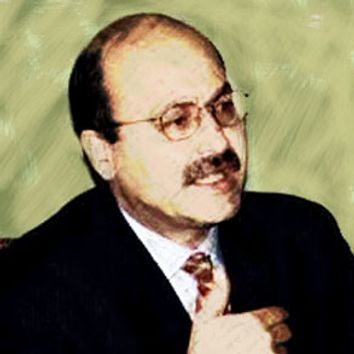
Barham Salih, prime minister of Northern Iraq's Kurdistan regional government, talks about the recent attempt on his life, why he wants a regime change in Baghdad and what should happen in the days after Saddam is deposed.

  • more
    • All Share Services

The Kurdish dilemma

In March 2002, Barham Salih, prime minister of the Kurdistan regional government in Northern Iraq, narrowly escaped an assassination attempt by al-Qaida-backed militants. These days, the straight-talking Kurdish politician is in Washington to talk to the Bush administration about war, taking out Saddam Hussein, and yes, how to deal with his own al-Qaida problem.

Whether they like it or not, Salih and his fellow Kurds are at the center — literally — of the current Iraq war plans. If Washington ultimately decides to unseat the regime of Saddam with military action, local opposition forces — including some 80,000 armed Kurdish peshmerga (meaning “those who face death”) fighters — might end up playing a role similar to that of the Northern Alliance in Afghanistan. The Kurds are experienced in guerrilla warfare, have a safe base in Northern Iraq from which to launch operations, and are eager to see Saddam Hussein gone.

Long before “regime change” was a popular phrase in Washington, the Iraqi Kurds were fighting Baghdad for greater autonomy. Tens of thousands of Kurds perished when Saddam Hussein — then a U.S. favorite in his war against Iran — embarked on his famous Anfal campaign to quash the Kurdish opposition in 1988. Pompeii-like pictures of an Iraqi chemical attack on the Kurdish town of Halabja, which killed 5,000 in seconds, were among the first revelations the West had of the uncontrollable ferocity of the Iraqi dictator. When Kurds listened to Bush pere at the end of the Gulf War and rose up against Baghdad, and were quickly abandoned by the allied forces, 1.5 million fled to the Turkish border and thousands died. In 1996, Washington pulled the plug on an effort to topple Saddam at the eleventh hour, forcing more than 5,000 involved with the opposition into exile.

But since the Gulf War, the Kurdish safe haven — z region the size of Austria, home to 4 million people and controlled by two main Kurdish factions — has been going through a period of relative stability and prosperity, a “Kurdish spring.” With international aid flowing and the American military protecting the skies, Kurds now have new schools, Internet cafes, newspapers and, according to Salih, “something tangible about civil society from the ashes of genocide.”

As the prime minister of the fragile self-governing region acknowledged, Kurds have a lot to gain and a lot to fear from military action to topple Saddam. At best, they hope for an autonomous Kurdish federation and greater say in Iraqi affairs; at worst, they fear they might once again be the targets of Saddam’s wrath.

As is always the case, Iraqi Kurdistan’s two main ruling parties are divided on what to do. Salih’s Patriotic Union of Kurdistan (PUK) has already decided to join the U.S. effort to oust Hussein. Last week PUK leader Jelal Talabani invited American troops to the region. (During talks in Washington, Talabani also asked for gas masks and military guarantees to protect Kurdistan’s citizens from chemical attacks.) A rival group, the Kurdistan Democratic Party, led by Mesud Barzani, is taking a more cautious approach and has not yet signed on to a U.S. strike.

And then there is the whole al-Qaida business. Soon after the war in Afghanistan started, rumors started going around of al-Qaida operatives taking their war to the Kurdish safe haven in northern Iraq. Under the guise of a local Islamic fundamentalist group, Ansar al-Islam, the jihadis staged a few attacks on local Kurdish officials, including last April’s attempt on Salih’s life, and caught the attention of the Bush administration. The PUK’s claims initially drew skepticism, but have since been corroborated by numerous reporters in the region and by Washington’s own intelligence. Rumors of Iraqi connections and speculation that the group might actually provide the White House with an excuse to go after Saddam have not gone anywhere. So far, at least.

Meanwhile, as he is making rounds in Washington, the 41-year-old Kurdish politician, who holds a Ph.D. in statistics and computer modeling from the University of Liverpool, is busy making a far more compelling case than all the saber-rattling from Vice President Dick Cheney and talk of preemptive strikes. “We are not embarking on anything new now — we Kurds embarked on this decades ago,” Salih says, “This is not a war against Iraq but a war for Iraq … This should be about the freedom of Iraqi people — about empowering Iraqis to reclaim their country as a nation at peace with its own people.”

Let’s start with the recent attempt on your life. You literally dodged a bullet when al-Qaida-related Islamic militants tried to assassinate you in northern Iraq last March.

Three people attacked my home when I was about to come out, killing five of my bodyguards. Two of the assassins were killed; the other one fled and was later captured by security services. After debriefing, he established to us that he was set up to assassinate me upon the orders of al-Qaida — for they are unhappy about the secular approach that we have in our region and they consider our region a zone of American influence.

Coming at a time when there was relative peace in the north of Iraq, it must have shaken you.

My bodyguards were like a family to me. They had worked for me for a long time. The worst part is to think that people paid with their lives to protect me. That’s a big issue for my conscience; it gives me a great sense of responsibility. I had never doubted that my job carried serious risks with it. We live in a tough neighborhood. We Kurds are trying to rebuild our shattered lives and build something new. I had expected that we would be subject to threats and assassinations and so on. But nothing is like seeing and feeling it, especially when you lose people close to you.

How do you know they were related to al-Qaida? After all, there have always been small fundamentalist groups in that region.

The way we understand al-Qaida is that it’s a loose federation of various entities subscribing to the same ideology and trying to promote the same values and policies. [This group], Ansar Al-Islam, is led by a hard core of Afghan Arabs [Arab fighters who fought against the Russians in Afghanistan] numbering about 120. Few were in this remote area [Halabja] before 9/11. Many more arrived afterwards, fleeing the war in Afghanistan. They are working under the cover of the Ansar al-Islam movement but in essence they are part and parcel of al-Qaida, directed and under instructions from them.

Ansar al-Islam has suddenly cropped up in Western media as well, even being cited as justification for a possible U.S. military action. What are they up to and why all of a sudden?

I try to step back and look at it in a context. This is a region that has seen so much destruction. Thanks to the relative peaceful environment we have seen for some time now — and no doubt thanks to the protection accorded to us by the U.S. and British military facilitated by Turkish coordination — we have been able to embark on a process of self-government. Something tangible in terms of a civil society and the rule of law is emerging from the ashes of genocide. I am not going to tell you that everything is rosy. We do have our problems. Democratic institutions will take a long time to grow. But in this terrible geopolitics and with the history we have, it’s remarkable what we have achieved.

Here is a statistic I am proud of. In 1991, we had 804 schools. Today we have more than 2,700. We started with one university in Arbil in 1991; today we have three. In 10 years of self-government, we built twice as many as was built for us in seven decades. Then we had 548 doctors. Today we have 1,870 doctors. In my hometown Sulaymaniyah, there are 138 media outlets — including literary magazines, radio channels and so one — most of which are independent. This is a bright spot of freedom in the heart of the Islamic Middle East. It has profound repercussions for the rest of Iraq and Islamic Middle East. Therefore it’s no wonder that people who have a different agenda would try to destabilize you and export terrorism in order to drain your energy and resources and undermine our hard-won gains.

It’s true the Kurdish region has really blossomed and is experiencing relative stability. On the other hand, your group, the Patriotic Union of Kurdistan, is willing to embark on a campaign to topple Saddam. Are you not jeopardizing what you have?

We are not embarking on anything new now — we embarked on this decades ago. We are not joining the campaign against the Iraqi regime. We’ve been fighting for it for decades. There is one new factor in the Kurdish society. I am a Kurd and I am proud of my Kurdish heritage and identity. My people have suffered genocide and we deserve international guarantees that we’ll be safe in the future. But we live in that region. After 10 years of self-government, we have learned the limitations of nationalism. We cannot live in this Kurdish bubble in isolation from our neighbors. We are part of Iraq. Our history obliges us to be part of Iraq. To guarantee the safety of our people, we need to work with Iraqi democrats to bring about a representative federal government in Baghdad which will not unleash chemical attacks against my people again. We are doing this because what we have today is so precarious and unstable. We cannot be safe while tyranny rules in Baghdad. It’s in our interest to be party to a larger Iraqi democratic movement and really reshape Iraqi politics.

Still, Iraqi Kurds have endured the worst excesses of Saddam’s regime. People must have fears about taking him on again — given his record of chemical attacks on Kurdish population centers.

It’s fair to say people have mixed feeling of anticipation and apprehension. People are hoping to see a democratic government in Iraq and welcome change. They also realize that we’ve never had it as good. But that’s a statement more about how terrible things were in the past. We know that we live in a very precarious environment and so long as the situation exists in Baghdad — the Iraqi tanks are massed a mile away from my hometown — people realize that they cannot be safe, they cannot plan ahead. They need change, but at the same time they are concerned that we would be left high and dry as in so many other episodes in our history. My hope is that the U.S. and the civilized community of nations will not leave us once again defenseless in the face of possible chemical and biological attacks, and that the U.S. and Western powers will understand the importance that this democratic process in the north of Iraq be protected — because it is truly a catalyst for the rest of Iraq.

There has been much talk of an Afghan model in a possible war with Iraq, with local Kurdish forces moving south in coordination with a U.S. air campaign. What exactly will your role be in a possible war?

That’s not the proper context to ask. People are talking about a war against Iraq. We are Iraqis. We naturally would not condone “war against Iraq.” But we welcome the support of the Iraqis to retake their country. This should not be war against Iraq but a war for Iraq. This should be a war to help the Iraqi people, rid Iraq of the weapons of mass destruction, and the tyranny that has governed this country. We have been at the forefront of the democratic movement in Iraq. We have a vital stake in regime change in Baghdad. And we’ll no doubt work closely with any power that will support us [in achieving] that aim and help us end the suffering of the Iraqi people.

What leads you to assume that democracy will be the outcome this time?

Everybody we have spoken to from the vice president [Dick Cheney] to the secretary of defense [Donald Rumsfeld] confirmed that they are not just for regime change but that they want to replace this regime with a democratic form of representative government. That is definitely welcomed by us and we believe that this is the only way to go forward. The vice president specifically said, “American lives should not be risked for replacing a dictator with another.” In Iraq we have a unique opportunity to bring about democracy. If we could do it in Iraqi Kurdistan, which is the least developed part of Iraq, I think the prognosis for democracy for the rest of Iraq is good. I think the Islamic Middle East definitely needs that boost. We need to change that pattern of politics. We look to help from Western powers and neighbors to overcome our predicaments.

I was in London working as a spokesman for my movement during the Gulf War and trying to make the point that the problem is not in Kuwait but in Baghdad and that unless you have a democratic representative government in Iraq, the miserable pattern of Iraqi politics of internal repression and external repression will continue. I hope this time the world will heed the lessons of the past and help bring about an Iraq at peace with itself.

Let’s go back to war plans. What is your sense of the timing?

We are yet to be told any of the specifics in terms of timing and such. But I think it’s imperative that the message should be war for Iraq and freedom for Iraqi people. I make that point to people in Washington. This should be about the freedom of Iraqi people — about empowering Iraqis to reclaim their country as a nation at peace with its own people.

Is a full-scale U.S. invasion in the cards?

We have not been told any specifics for an invasion as such but I don’t think it will take an invasion. The people of Iraq are ready for change and the Arab streets of Iraq would welcome international assistance to liberate the country and this misery.

But no doubt your troops, the peshmerga, will play a role?

The peshmergas have been at the forefront of the struggle to bring democracy to Iraq. We were fighting this government of Iraq even when the U.S. was supporting it. So we have been the consistent one in fighting for a democratic movement in the country.

Given the current Iraqi regime’s history of horrendous crimes and abuses, the “day after” in Baghdad could easily turn into a retribution frenzy. How will people know where to stop? Beyond Saddam’s inner circle, are there plans to push for war-crimes indictments against top-ranking Baath Party officials and the Iraqi military?

Those who have participated in the war crimes that have taken place in Iraq, the top leadership, need to be brought to justice and answer for their crimes. But I hope that the South Africa model of “truth and reconciliation” will apply. We’ve had so much violence in our country that it would be wise for us to practice this tolerance and not embark on a campaign of revenge that could be unending and unrelenting. I hope the top leadership will be held responsible for these terrible atrocities affecting the Kurdish people, “the Arab marshes,” and other segments of the Iraqi society should be brought to an international court of justice.

[In citing the "the Arab marshes," Salih is referring to the Arabs in the southern marsh lands of Iraq, who are predominantly Shiite and have been leading an insurgency against the Iraqi government for more than a decade. Unlike the Kurds and other opposition groups, they have very little contact with the outside world and, for the most part, are not on Washington's radar. -- Ed.]

These are subjects hotly debated within Iraqi opposition circles these days but I think it’s premature for me to speculate on the specific modalities. In 1991 when the uprising took place we issued a general amnesty for the rank and file of the Baathist establishment and the military forces in our region. We’ll have to do that, most probably. We should seek ways of restitution and not engage in a terrible cycle of violence that will take many years. We need to get busy rebuilding Iraq, and revenge should not be a priority. Justice requires that the Iraqi people be given a peaceful environment and no doubt that those who were responsible for directing and ordering these terrible atrocities will need to be brought to justice. But we should not make that a tool to exact retribution on anyone that might have been associated with this regime here and there. We’ll need to lift ourselves beyond the past and the problems we are faced with.

The most ardent supporters of the Kurdish cause, which are the liberal and left-wing circles in the U.S. and Europe, are at the forefront of the opposition to the current administration’s policy of regime change in Iraq. Ironically, you now find yourself in alliance with the so-called hawks and in conflict with your traditional backers. Is this a lonely place?

I don’t think so. I talk to many liberals and Democrats on the Hill and try to explain this is about freedom. This is not about invading another country. I, as a Kurd, am calling for international assistance to help us overcome our terrible situation — to face evil and tyranny. I think any liberal-minded, intellectually honest person will support that contention. It’s not for me to get involved in the American debate. But as an Iraqi, my perspective is consistent. We have always called for American and Western support for our struggle for democracy. I think my liberal friends must focus on what is to come — what should be the intended objective. Are we replacing a dictator with another or are we going to do something fundamental? Is U.S. military power going to be used for superficial change in Iraq or are we going to embark on a real process of change at the heart of the Middle East — that should be the debate. I hope many of my human-rights activists and liberal friends who were on our side will engage in this debate and articulate their vision as forcefully as some of the other friends.

What about in Europe, where the opposition to U.S.-led military action is even stronger?

I think we need to work harder with the public opinion in Europe. We have a perspective on these things. No doubt U.S. has its own priorities as well. But there is a convergence of interests on this [regime change] between the people of Iraq and the United States. This should be about freedom and removing one of the worst dictators history has ever known.

One oft-cited fear is that, with anti-American sentiment running as high as it is, a move on Baghdad could trigger popular instability in the Middle East.

I have a view on the Arab street from my office. Everyday I am besieged by people who come to me with problems about electricity, water supply, education. In the evening when I go home and watch Arab satellite televisions, I see nothing but the Arab-Israeli conflict. People are people whether they are in Amman or Cairo or Riyadh or Kuwait. They have day-to-day problems that are important to them. Arab media, no doubt motivated by the governments, have been very skilled in diverting attention from the problems of the people. Arab governments have no problem controlling their streets when it comes to corruption, lack of democracy, denial of human rights. But somehow they become so sensitive when it comes to international support for the people of Iraq overcoming their misery and predicament. This is truly an irony.

Observers of the Middle East should look deeper into this and not just believe what they see on the screens of Arab satellite television. The Arab street of Iraq is angry because they feel let down and defenseless in the face of tyranny, and they feel the international community, and particularly the Arab countries, have turned their back on the people of Iraq in their hour of need. The same applies to our neighbors. They have been dealing with this instability imposed by the dictatorial regime in Baghdad. For decades it’s been a source of instability with wars and other regional problems in conflict after conflict. The main beneficiary [of regime change] after the people of Iraq will be the neighbors of Iraq. They have sensitivities and concerns some of which are understandable. But ultimately we all live there and they cannot look at stability in isolation from the rights of the Iraqi people. Until we solve the problem of Iraq, the region and our neighbors will continue to endure this instability. It’s in their fundamental interest to provide the environment for the right kind of change in Iraq.

Speaking of neighbors: Iran is privately signaling that it would not object to a U.S.-led effort to overthrow Saddam Hussein. Could a U.S-Iranian rapprochement be among the unintended consequences of a war?

Both [countries] will have a common interest in a stable democratic Iraq and in resolving the problem. Iran has been a victim of aggression of the present government of Iraq and knows better than most the dangers it poses. I feel Iranians have a fundamental interest in bringing about a democratic representative government in Iraq.

Are you concerned about the rise of anti-Americanism around the world?

In my opinion [fears of anti-Americanism] are highly exaggerated; much depends on what will happen. If the American intervention is to replace a dictator with another dictator, people will probably see it in a different light. But if it is to support the people of Iraq in regaining their lives and country and starting a democratic process, then I think the international public opinion will commend the U.S. for taking a leadership role in this matter.

There are very few cases in history when the moral and the political arguments would coincide. It’s morally right to help the people of Iraq, to stop genocide or end these terrible abuses. It’s politically right for stability in the Middle East to bring about a representative government that will be at peace with the region.

Saving Arafat, again

Time after time, Israel and the U.S. have made sure that the Palestinian leader survives the corruption of his regime, the doubts of his henchmen, and the anger of his people.

  • more
    • All Share Services

Saving Arafat, again

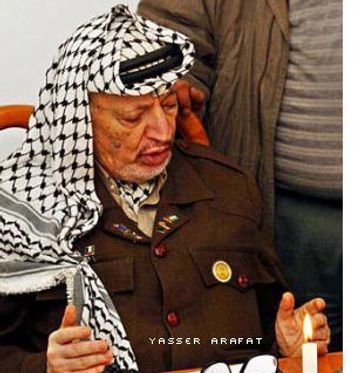
Even as he remains holed up in his crumbling Ramallah compound, hungry, dirty, besieged, Yasser Arafat has enjoyed a good week. His meeting with Secretary of State Colin Powell on Sunday yielded little, but Powell is expected to return to see the Palestinian leader on Tuesday. And Israel’s supposed concession on Sunday — calling for an international peace conference, but without Arafat — was roundly rejected by Arabs and Palestinians, who said there could be no peace talks without the Palestinian Authority chairman.

“People have no choice but to rally behind Arafat now,” said one West Bank man, speaking on condition of anonymity. Before Israel isolated him at his Ramallah compound, Arafat’s approval rating was hovering around 20 percent in polls cited by the BBC and others. But now, pictures of the Palestinian leader trapped in his headquarters, working by candlelight, are circling the globe, bringing Arafat his greatest glory since Oslo. In fact, Israel’s military campaign has so far had the exact opposite of its desired political outcome, which was to isolate and discredit Arafat. Instead of clearing the way for independent leadership to emerge, as Israeli Prime Minister Ariel Sharon and President Bush both publicly said would be desirable, Israel’s military sweep has reinstituted Arafat as the ultimate symbol of Palestinian nationalism, and America’s lone Palestinian partner in peace.

This is, of course, not the first time Israel has helped elevate the status of the Palestinian leader. Since the beginning of the Oslo peace process, Washington and Israel’s desire to deal with a Palestinian strongman — who could control his population, keep a tight lid on popular dissatisfaction in the West Bank and Gaza and deliver on promises to the West — has consistently salvaged Arafat’s standing with his people, despite his increasingly repressive ways. The start of the early 1990s peace process, for instance, was marked by Israel and the U.S. abandoning talks with leading West Bank independents and moderates, to embark on secret talks with the exiled PLO chairman instead. Former Israeli Prime Minister Itzhak Rabin used to defend shaking the hand of a man most Israelis considered a terrorist by arguing that only Arafat could handle Hamas and other troublemakers without worrying about “the Supreme Court and [the human rights organization] B’Tselem.”

Even today, pick up any glossy newsmagazine and you are likely to come across a discussion on the possible successors to head the Palestinian Authority after Arafat. The fact that Americans and Israelis have traditionally discussed Palestinian politics as a “succession question,” rather than a democratic process, is telling. The quest for a Palestinian moderate has always focused on the strongmen around Arafat — his deputies, cronies and security chiefs. Most notable among these were West Bank security czar Jabril Rajoub, Gaza security chief Mohammed Dahlan, the secretary general of the PLO Mohammed Abbas (alias Abu Mazen) and Ahmed Qureia (aka Abu Ala), the speaker of the Palestinian Parliament. Some have identified Fatah commander Marwan Barghouthi, arrested by Israel Monday, as another possible Arafat successor, but he was probably too radical to ever have gained the U.S. support a Palestinian leader requires. But all of Arafat’s possible successors have been his protigis, men who preside over various Palestinian apparatchiks and owe their position to their direct association with Arafat and his organization, Fatah. Never mind that large sectors of the Palestinian public had become disenchanted with the corruption and the despotism of Arafat’s government, that human rights abuses had increased under his security structure, that journalists and opponents complained of daily infringements on free speech, that corruption by P.A. officials is legendary. Arafat’s henchmen have always been hot, hot, hot in Washington.

But the quest to anoint one of them Arafat’s successor has so far failed. American favorite Jabril Rajoub, the 48-year-old Palestinian security chief, found himself caught up in the latest military sweep, his security compound stormed by Israelis, his men arrested. Rajoub’s story is illuminating. Like an ambitious young Roman notable in the court of Julius Caesar, Rajoub rose among peers and allies in the West Bank over the last few years of Palestinian self-rule to emerge as a leading contender to replace Arafat. Among the myriad security and intelligence units of the burgeoning Palestinian administration, Rajoub’s Preventive Security Service was arguably the best-equipped and the least tainted by involvement with attacks on Israelis. With great ties to Israel’s security brass and the Central Intelligence Agency, and the leader of 10,000 armed loyalists, for a time Rajoub seemed Israel and Washington’s best hope in their search for a Palestinian Karzai.

Americans helped build and finance Rajoub’s police network — a key element of CIA director George Tenet’s cease-fire plan — as the Palestinian Authority’s primary channel to exert control over the population and implement counterterrorism efforts. In Monday’s disparaging New York Times column, William Safire called him “Tenet’s Palestinian,” and suggested the CIA director had been fooled by Rajoub’s supposed moderation. But even many Israelis whispered discreetly in Washington corridors that Rajoub was a “moderate” they could do business with. He spoke good English and Hebrew, thanks to doing some time in Israeli prisons back in the pre-Oslo days, and had good friends in important places in Jerusalem and Washington. While Israel has been targeting Arafat’s police force and his top security brass over the last year, Rajoub’s forces were spared. He was rumored to have been taken on a regional tour of the Gulf countries and Jordan by the CIA, being touted as a future Palestinian leader.

It mattered little to his American sponsors that Rajoub, like Arafat, was hardly a man of democratic instincts. Driving a Mercedes and living well like most top officials, he also got his share of the Palestinian public’s contempt for corruption within the P.A. Rajoub was also disliked by the intellectuals who saw Arafat’s Fatah crowd as a group of thugs who returned from exile in Tunisia in the ’90s to run the country. (Palestinians like to joke, “We were once under Israeli occupation; now we live under the Tunisians’ occupation.”) But unlike the Palestinian leader, he lacked charisma, and also unlike Arafat, he was willing to cooperate with the Israeli security brass and publicly condemn suicide attacks. Gradually he became unpopular among Palestinians due to the perception that he was too closely affiliated with Israel.

All that of course came to an end April 2, when Israel’s military sweep of Palestinian towns and camps targeted Rajoub’s CIA-financed Ramallah headquarters to arrest those inside. Tanks closed in amid Israeli allegations that the building was sheltering fugitives, including a dozen Hamas prisoners. The ostentatious marble and wood paneling inside was destroyed by shelling, along with Rajoub’s office (where the police chief reportedly kept a framed picture of George Tenet).

But the Israelis were not just after those militants. Rajoub had clearly fallen from grace in some deeper way. An Israeli spokesman accused the burly Palestinian chief of sending two suicide bombers to Jerusalem in March. Officials claimed that Rajoub — yielding to pressure from Arafat and hoping to get ahead in the succession struggle waged by Arafat’s deputies — had recently changed his position regarding the use of violence. Israel, one spokesman told the media, planned to “isolate” Rajoub in the same way it did Arafat.

But the security chief was not inside his besieged compound, so he could not be isolated there. In the subsequent showdown, the Israeli Defense Forces launched a serious attack on the complex using heavy machine guns and other weapons. “Surrender is not in our culture,” a defiant Rajoub told reporters in Ramallah over the phone. But that same afternoon, the standoff came to an end when the CIA and Rajoub himself negotiated the surrender of more than 200 of his men. He is said to be in Ramallah.

Hamas, which already distrusted Rajoub, immediately issued leaflets calling the security chief a traitor. Arafat’s close advisors told the media they had no idea that surrender was in the works, hinting that Rajoub had cooperated with the Israelis on his own. Arafat, long uneasy about his lieutenant’s rising prominence in the West, remained silent. (In February, the increasingly volatile Arafat reportedly pulled a gun on Rajoub, accusing him of conspiring with the United States and Israel to take over the Palestinian Authority.) Meanwhile, Israelis say they have captured evidence at Rajoub’s compound that he sold them out and collaborated with suicide bombers. Now, although he has eluded both Israeli arrest and Palestinian reprisal, Rajoub is hardly a contender to replace Arafat.

But no one has emerged in his place. “I don’t think, I don’t want to think, that Rajoub was ever thought of as a top man but the strong man behind the [next] leader,” a prominent Palestinian businessman said in a phone interview. “To have him propped up as a leader would have been an insult to us Palestinians. He’s now pretty discredited in any case.” In some scenarios, Rajoub would have been a No. 2 to parliament speaker Ahmed Qureia (aka Abu Ala), but Ala too has gravitated closer to Arafat in the current crisis, as has Mahmoud Abbas, a key figure in the Oslo process.

Rajoub’s Gaza counterpart, the dashing Preventive Security Chief Mohammed Dahlan, has likewise lost immensely in the eyes of Palestinians and Israelis alike, with Palestinians resenting him for working with Israelis, and Israelis feeling he betrayed their trust by siding with Arafat at the last minute and backing attacks against Israel. Sharon’s inner circle has turned against all of them, and they have clustered loyally around Arafat.

It may seem too pie in the sky, at this time of military crisis, to talk about Palestinian democracy. But there are many Palestinians and Israelis alike who believe the current crisis can be traced to the failure of Israel and the U.S. to back a democratic government in the territories.

“Israelis did not care about democracy and nor did we,” said a former U.S. official, looking back. “There was almost a level of racism [in the decision to court Arafat's men] that Palestinians, as all Arabs, aren’t entitled to democracy. What they really need is someone really strong.” Democracy was unnecessary, the reasoning went; Rajoub had all the guns needed to succeed Arafat.

And while the West poured millions of dollars into democracy and civil society initiatives in the West Bank and Gaza, the P.A.’s moves to bypass the Palestinian Legislative Council, arrest dissident journalists and opponents, and stall elections met little outcry from Western governments. Eager to write the final chapter on the Middle East as a success story, Europeans were happy to overlook the mismanagement of millions of dollars and Arafat’s repression here and there. Elections were held two years after Arafat moved back from exile in 1994. In 1999, only 28 percent of Palestinians believed that their political system was headed toward a democratic form of governance that protected human rights, according to a poll by the independent research house Center for Palestinian Research and Studies.

A month ago, when asked why the U.S. was not pushing for elections in the Palestinian areas, a State Department official explained to me how inconvenient elections would be right now, although Arafat’s electoral mandate expired in 1999. He pointed out that there were no clear successors and Hamas was gaining popularity. “Although conceivably, some time in the future, it could happen,” the American official said unconvincingly.

“I am so ashamed as an Israeli,” said Yigal Carmon, who heads the Washington-based Middle East Media Research Institute. “People said there wasn’t any alternative, but just because we didn’t know people didn’t mean they did not exist. We’re not here to advance democracy, people were saying. Arafat reluctantly held elections, quickly set up nine security organizations, and was given the authority to run people’s lives.”

Over the last few months, an article by Palestinian intellectual Edward Said, “A New Current in Palestine,” announcing the birth of a “new secular nationalist current” led by well-known intellectuals, has been making the rounds in cyberspace. But such a movement is likely to back down in the face of Arafat’s increasing prominence since the Israeli military sweep.

Unhappy with Arafat’s rule and weary of the fighting, a large chunk of the Palestinian society remains moderate, eager for a settlement and hungry for democracy. And yet the Palestinian “silent majority” does not seem to feature in Washington’s radar at the moment.

“Sure, what is needed is somebody with both stature and charisma,” said the Palestinian businessman. “But the question should no longer be who comes after Arafat, but what type of a system Palestinians could establish to move forward. Otherwise, there is no point in appointing someone.”

Continue Reading Close

Scott Ritter

The controversial former chief U.N. weapons inspector in Iraq says Saddam's weapons of mass destruction are largely disarmed, the "Iraqi threat" is built on a framework of lies and President Bush has betrayed the American people.

  • more
    • All Share Services

Scott Ritter

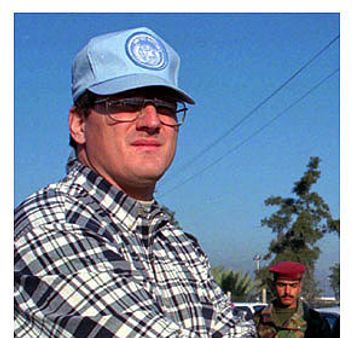
During the Gulf War, Scott Ritter, then a junior military intelligence analyst, picked a fight with his boss. He filed one report after another challenging Gen. Norman Schwarzkopf’s claims about the number of destroyed Iraqi Scud missiles. We cannot confirm these kills, Ritter reported, much to Schwarzkopf’s bewilderment. Despite pressure from the top, Ritter, a Marine captain from a military family, held his ground, challenging his superiors and the establishment.

That was just a warm-up for the man the New York Times called “the most famous renegade Marine officer since Oliver North.”

In the years since, Ritter, who was chief inspector of the United Nations Special Commission to disarm Iraq (UNSCOM) until he abruptly resigned in 1998, has waged two battles — the first with Saddam Hussein, the second with the government of the United States.

As a weapons inspector, Ritter was Baghdad’s bête-noire, working with single-minded — some said overreaching — zeal to ferret out Iraq’s concealed weapons of mass destruction. In 1997, the Iraqi government accused him of being a spy and refused to let him into sensitive facilities.

In 1998, inspections by Ritter and his teams resulted in the most serious confrontation between Iraq and the United Nations since the Gulf War. The U.S. publicly stood by Ritter, but privately tried to tone down the confrontational nature of the inspections. Saddam expelled UNSCOM; Ritter, who was being investigated by the FBI on charges that he was a spy for Israel, quit in protest over what he described as Washington’s refusal to confront Saddam. (Many believe he was forced out of his post because the UNSCOM thought the U.S. had too much influence over it.) The United States ended up staging Operation Desert Fox, the largest military offensive against Iraq since the Gulf War.

Out of the intelligence game, Ritter became a vocal critic of the Clinton administration’s policy on Iraq. There was too much pretense, too much infiltration of UNSCOM by the CIA, no real effort to enforce the inspections regime, he charged. He became a nuisance for Washington and a blessing for Republican hawks. During 1998 testimony before Congress, Ritter was hailed as a “true American hero.”

But in 1999, Ritter confounded get-Saddam hawks who thought he was in their camp when he published “Endgame: Solving the Iraq Problem — Once and for All.” In it, Ritter repeated his charge that UNSCOM’s mission had ultimately been compromised by Washington’s use of the inspections to spy on Saddam. But the bombshells were his assertion that Iraq was no longer a military threat and his call for the U.S. to quickly give Iraq a clean bill of health and lift its harsh sanctions, which he asserted were killing thousands of innocent Iraqi children. His solution: a Marshall plan to rebuild the country.

Ritter seems to have completely reversed himself regarding Iraq’s ability to acquire weapons of mass destruction. In 1998 he warned a joint hearing of the Senate Armed Services and Foreign Relations committees that “Iraq will be able to reconstitute the entirety of its former nuclear, chemical and ballistic missile delivery system capabilities within a period of six months.” And in a December 1998 article for the New Republic, Ritter stated, “Even today, Iraq is not nearly disarmed.” Yet he now says Iraq’s weapons of mass destruction are largely dismantled and pose little or no threat.

His turnaround has caused consternation, to say the least, among many of his former colleagues and current critics. “I have no idea what has overtaken him,” his former boss Richard Butler said. On another occasion, Butler said, “I’ll say this about Scott, either he’s misleading the public now, or he misled me then.” Ritter, however, insists he has been saying the same thing all along — people just paid attention to what fit their political agendas.

In a documentary, “In Shifting Sands,” which he describes as chronicling the weapons inspection process and attempting to “de-demonize” Iraq, Ritter makes the explosive charge that in 1998, Butler told him to deliberately provoke a confrontation with Baghdad as a pretext for a U.S. bombing campaign. Butler has vehemently denied the charge. The conservative Weekly Standard attacked Ritter and the film, pointing out that Ritter was allowed back into Iraq with approval of the Iraqi government to make the film. “U.S. intelligence officials and arms control advocates say Ritter has been played — perhaps unwittingly — by Saddam Hussein,” the Standard reporter argued. “‘If you’re Scott Ritter,’ says one arms expert, ‘the former “cowboy” weapons inspector, kicked out by Saddam Hussein, you’re not going to get back into Iraq unless Saddam Hussein invites you and wants you there.’”

Ritter, meanwhile, has denied that there’s any evidence connecting Saddam to al-Qaida — as writers such as the New Yorker’s Jeffrey Goldberg and the New York Times’ William Safire charge. And with Washington beating war drums against Iraq, it’s not surprising that few inside the Bush administration are in a mood to listen to a former arms inspector whose views on Saddam’s capacity to inflict mayhem appear to have experienced a 180-degree turn. But Ritter, a Republican who appears regularly on TV, is carrying on with his crusade to warn America against what he describes as a dangerous hard-line obsession with removing what he sees as a defanged old dictator. Salon spoke with him late last week.

When you resigned from your position as the chief arms inspector for Iraq, you were hailed as “the American hero.” What made you write your book, which in the end cost you the support of many?

If I kept silent about this, that would be a lie. I am a Marine Corps officer. We never operate outside our code of honor and integrity. The truth is paramount. This is not a nation that should be building on a body of lies. As the inconsistencies of consecutive American administrations’ policies on Iraq start to emerge, my position is starting to become recognized as a sound position. People start to recognize that much of what the U.S. has done has been outside the international law, outside the framework of United Nations Security Council resolutions, that Washington purports to support.

On the other hand, according to polls, over 60 percent of Americans are willing to go to war with Iraq.

I don’t care about polls — they are easily manipulated. I don’t care that 75 to 80 percent of Americans want to go to war with Iraq, that’s not justification for going to war with Iraq. That’s why we have laws in this land that prevent mob rule by people storming to the town hall and demanding that somebody be hanged. We should allow the due process [to work] in dealing with Iraq and all the facts to be placed on the table. But the facts are inconvenient for politicians who are pushing for war.

The argument from those who push for action against Saddam Hussein, including some high-level government officials, is that Iraq, with all its weapons, poses a serious threat. Are you saying they are lying?

Dr. [Paul] Pillar, the national intelligence officer [for Near East and South Asia] for the CIA, gave a speech at Johns Hopkins two weeks ago and said Iraq does not pose a threat to the United States, especially on a one-on-one basis, that warrants the use of military power in such naked fashion. If we act in the way the Bush administration wants us to act, that would put us outside of the international law, outside the U.N. charter and on a shortlist of countries that include North Korea when it invaded South Korea and, sadly, Saddam Hussein when he invaded Kuwait in 1990. That’s not a list I want my country on.

Unilateralism is a term [Deputy Secretary of Defense] Paul Wolfowitz and Donald Rumsfeld endorse. They are the unilateralists — they believe the United States has a unique position in world history. We are the beacon which the world will follow. We have a moral obligation to lead, they say, and if we fail to lead, the world will devolve into chaos and anarchy. This allows them to say things about Iraq. When people bring up that there is no international support, they say, “They will support us once we begin or once they see we are serious.” Well, maybe, and maybe not. But what I do know is that the coalition we put together to fight the war in Afghanistan is a legitimate coalition. When asked about what justification we have to go after Saddam, Richard Perle [chairman of the Defense Policy Board, an advisory panel to the Pentagon] cites “self-defense.” That is, Saddam’s continued existence is a threat to the U.S. because of weapons of mass destruction and because Saddam might take these weapons and give them to terrorists. Although nothing in the history of past Iraqi actions suggest this. It is pure fabrication, but that is the basis around which Perle, Rumsfeld and Wolfowitz are working.

It’s hard to imagine Iraq as a harmless little country. In the ’80s it attacked Iran, turned on the Kurds, then turned around and invaded Kuwait — not to mention being a regional bully all along.

Saddam Hussein is a man who believes in his own version of regional hegemony. But we have to deal with facts. What is the Iraq of 2002? It has a pathetic army, a pathetic air force and an economy in tatters, destroyed by misuse, sanctions and the military. Its social infrastructure has been destroyed. It cannot project the kind of irresponsible behavior that happened in 1990. Iraq cannot project power. Economic sanctions have been responsible for the deaths of 1.5 million Iraqis. The devastation wrought on Iraq means that once Iraq can reconstitute its economy, there is a real chance of creating a new Iraq, a new social identity and a national identity built upon the concepts of economic stability — even if Saddam Hussein stays in power. The new reality in Iraq will focus on rebuilding the Iraqi economy.

This sounds like a fantasy. You know that no American president could suggest a rekindling of relations with Saddam, let alone lifting the sanctions, or the kind of Marshall Plan you are advocating.

That could eventually change. George Bush and his inner circle have betrayed the American people since 9/11. They are justified in their war on terror — we are obligated to do this — but they failed by taking political advantage of the upsurge of patriotic fervor to push for an extreme right-wing domestic, military and foreign policy agenda that has nothing to do with Sept. 11. John Ashcroft proceeded with some of the assaults on civil liberties. This is wrong and the American public will not fall for it for too much longer. I believe that Democrats are going to pick up on Iraq on this issue and start debating this issue. Once they take on the Bush administration on this extreme position, I think there is no choice but to endorse the kind of diplomatic engagement I am advocating.

You seriously believe Iraq will be the decisive political battle for Americans?

American people won’t buy this charade that is going on right now. Bush will be voted out in the next term. On Iraq, where is the threat? I challenge Perle, Butler, Wolfowitz or anyone to a debate about Iraq’s weapons programs. When you deal with facts, this kind of rhetoric no longer flies. This entire “Iraqi threat” is built on a framework of lies — a house of cards. The policymakers in the Bush administration continue to formulate policy in this never-never land.

Conventional wisdom says we are close to taking military action against Iraq. You don’t think Saddam’s regime is a threat that needs to be dealt with? What if a U.S. action ends up being short and sweet and a triumph for democracy in the Middle East?

If we go against Iraq, it will require extensive military power — more than the 75,000 [troops] that some claim. We are talking about 150,000 to 200,000 troops. Kurds and Shiites are saying don’t go after Saddam. There is no Northern Alliance in Iraq and the Iraqi army is not the Taliban. If we go into Iraq, we will have to go into densely populated areas, villages, farms. People will fight back. The army will fight. They won’t fight Saddam; they will fight against us, the invader, with thousands of deaths. We are talking about an unpopular war with no popular support in Iraq and going into Baghdad. Sure we’ll win — we always do. But it’ll never last. Central authority in Iraq will collapse. How long will the mothers of America allow their sons to patrol the streets of Baghdad with no end in sight? When we eventually run, Iraq will collapse. Turks, Iranians, Saudis will be making a move, and the U.S. will be fundamentally isolated in the region.

You sound pretty jaded.

The second a democracy views its citizens standing up and asking its government questions, the second that becomes an act of treason, we have a problem. Americans have forgotten what it means to be a serious functioning democracy. Democracy means being involved in the process, and not just nodding your head dumbly. We have a mass of Americans now that seem to view news as entertainment. That’s why they accept the statements at face value of Paul Wolfowitz, Richard Perle and others when they say, “We know Iraq has chemical weapons.” And it gets very difficult when Scott Ritter says, “Time out. This is a very complicated issue.”

But isn’t that a change of heart? Those were the same people who supported you. How did you arrive at your present point of view after being Saddam Hussein’s nemesis as the chief U.N. arms inspector?

I’ve been consistent throughout. When I resigned [from UNSCOM], I resigned in defense of the weapons inspections process. I spoke out against what I saw as a systematic failure of the international community to back up Security Council resolutions. I spoke out against Iraq, which continued to obstruct the job of weapons inspectors. I spoke out against the United States, which manipulated the inspection process for purposes other than mandated by the Security Council, namely, the collection of intelligence information against Saddam Hussein. I spoke out against Secretary General [Kofi Annan], for getting involved in a Security Council process. I spoke out against the Security Council for failing to effectively enforce the implementation of the law it set down.

All I am doing [now] is holding the mirror up to those who passed the law. I merely said you’ve put the law on the books, and the law isn’t being implemented. Therefore, you have an obligation to enforce the law. If you don’t want the law, then change it.

Still, many were surprised when a few years ago you wrote in your book it was time to get rid of sanctions and engage with Iraq, especially since as an arms inspector, you were criticizing Washington for shying away from confrontation with Saddam.

I haven’t changed, circumstances have. In 1998 I said the best way forward is to revive the legitimacy of the inspections, to get the inspectors back in, not to spy on Iraq, not to undermine the authority of Saddam Hussein. In other words, not to do anything other than what we were mandated to do: to disarm Iraq. In December 1998, the United States did exactly this. Acting under instructions of the United States government, Richard Butler [UNSCOM chairman] unilaterally dismissed the modalities for sensitive site inspections. Iraq was willing to accept inspections otherwise. But with no modalities, Butler opened the door for Iraq to say, you cannot come into this site. The United States bombed Iraq, citing this obstruction as justification. But of the over 120 sites struck by the United States in Operation Desert Fox, less than 12 had anything to do with UNSCOM’s mandate. The remainder were Saddam’s security, intelligence, military, and the vast majority were revealed as a part of the inspections process. So the U.S. corrupted and delegitimized the inspections process. You can no longer hold Iraq to a standard of 100 percent disarmament, to a [United Nations] resolution the U.S. no longer finds convenient to adhere to itself.

You definitely do not sound like a poster child for the hawks who want to topple Saddam.

I was not America’s poster boy when I resigned. Since 1991, I confronted the United States on an almost daily basis about the manipulation of the inspection process by American intelligence services. And I demanded that we retain the integrity of the inspection process. It was a very confrontational relationship. I was backed by Rolf Ekeus [former UNSCOM chairman] during the first six years of my work. However, when Richard Butler came in, he started to accede to the demands of Americans to interfere with legitimate inspection activity. I find it incredible that conservative elements in America say here is the poster boy. They picked me as a poster boy when they hadn’t a clue what they were endorsing. Once they figured out the complexity of the issue, suddenly it wasn’t as convenient as they thought it would be. I wrote papers between 1992 and 1997 that found that Iraq was largely in compliance, that we had achieved a 90 to 95 percent level of disarmament.

If you thought all along that Baghdad got rid of its weapons, what was all the fuss about? We kept hearing that inspectors were not allowed in certain facilities. We bombed Iraq over this. Even your book is a chronicle of what you call the Iraqi mechanism of deception — of Iraqis trying to obstruct the work of UNSCOM. Does Iraq have something to hide or not?

On the scientific and technical level, UNSCOM achieved a 90 to 95 percent level of disarmament. Qualitatively, Iraq is no longer capable of producing these prohibited goods — their factories, production equipment and the weapons themselves were largely eliminated. At the same time we found out that Iraq was carrying out systematic concealment activities designed to mislead the weapons inspectors. Most of this took place between the years 1991 and 1993 — in fact, we have very little evidence that anything took place after 1993. Ninety-eight missiles, and six operational launchers, entire biological [facilities], major aspects of the chemical weapons program including VX nerve agent production were concealed. In the end, rather than turning over programs that they had denied, Iraqis destroyed them, and all documents on this were hidden from the special commission.

We were investigating Iraq’s past concealment programs. By fall 1997, we were able to confront Iraq with a hard body of evidence that could not be refuted. They finally admitted, yes, there was systematic concealment from 1991 to 1995 by the special Republican Guard, and they identified the persons involved. But they said now there is no concealment program. We could not accept this at face value. We kept pushing and pushing and uncovered acts of concealment. But it turns out they were not concealing documents pertaining to weapons of mass destruction, but documents about the [personal] security of Saddam Hussein. It became this vicious circle — the more we distrusted the Iraqis, the closer to Saddam we got. The closer to Saddam we got, the more they evacuated material about the security of Saddam. We detected this evacuation and distrusted even more, leading to the cycle of confrontation that dominated our inspections from 1997 to 1998.

So you ended up investigating Iraq’s security system — not the stockpile?

What did directorate M23 [the Iraqi department of political dissent and the place that carries out assassinations] have to do with weapons of mass destruction? The answer is nothing. When you have a former Marine intelligence officer and intelligence officers from other countries, do you think Iraqis are willy-nilly going to let you run through these documents? No.

That makes it even harder to understand why you want inspections to resume. What can they possibly achieve under the circumstances? First, you don’t know what you are looking for, second the mistrust between Iraq and the international community makes it impossible to get anywhere.

I agree the inspections were a never-ending proposition and are doomed to fail if we try to reconstitute UNSCOM. It will never work because the Iraqis will never allow these inspections to have the kind of intrusive element that is required for absolute certainty that nothing’s hidden anywhere. And the United States will never fail to exploit that which gives [the U.S.] unique access to Saddam’s palaces and intelligence and security apparatus. So what I am suggesting is let’s have a mark of compliance [for disarmament]. Let’s say 95 percent is good enough — we don’t need 100 percent. Let’s just say Iraq is disarmed. Under U.N. resolutions, compliance means the end of sanctions, which is what Iraq wants, but it also triggers ongoing monitoring and verification. These new inspections would focus on monitoring of Iraq to make sure that it does not reconstitute its weapons capability. If we have inspections that focus on this, it could succeed. Because these inspections would not go into presidential palaces and the security zones. But as long as the U.S. demands that inspectors go into palaces, it’s all over.

But weapons are not the only problem Washington has with Iraq.

Look, if inspectors go into Iraq today, due to forensic capability, if Iraq’s done anything between 1998 and today, we would find it. But people refuse to do this. I am a proponent of qualitative disarmament, not quantitative. Stop counting the bombs, and start looking at the facts. Can Iraq produce the weapons and is there evidence of this? If the answer is no and we put an effective monitoring regime in place to make sure they don’t produce it, haven’t we disarmed Iraq? I say yes. But politically that is unacceptable. But it’s not about weapons, it’s about Saddam. And because it is about Saddam, all of my logic, my construct means nothing.

Unlike many Americans, you’ve met Iraqis and spent a long time there. For many, there is no face to this conflict except that of Saddam Hussein. Has knowing and meeting Iraqis shaped your position?

I’ve been with the highest level of Iraqi government [personnel] during my seven years. When people talk about the Baath Party, I know what this means. These are human beings. There are different power bases — the moderates, the conservatives, the liberals. When people talk about Iraqi intelligence, I have met everyone from the director on down — these are human beings. When people talk about the Amn El-Ammn, the gestapo of Iraq, I’ve met everyone from the their deputy director on down. I’ve been in their prisons, I’ve seen the horrors of them, but I’ve also seen that these are human beings. I’ve been in every special Republican Guard battalion. I’ve been in every Republican Guard headquarters; I’ve been in almost every heavy army division; I’ve been in the basic training camps; in factories. I’ve been up and down and all around Iraq. Iraq is a nation-state. I know its imperfections and realities. I had three assassination attempts on my life so I know what [Saddam's] capable of. And I have inspected the documents of [the directorate] for political assassinations. I’ve been to the children’s prison at Amn El-Ammn headquarters in downtown Baghdad. It was horrific; these are kids in jail under horrible conditions, sweltering because of the political crimes of their parents. Dad speaks out against Saddam, Mom goes to the women’s prison; the kids go to the children’s prison. And do you know what they do to those kids? I don’t even want to get to that.

It sounds pretty horrible — good reasons to push for a regime change.

I know the good, the bad and the ugly of Iraq. The idea of diplomatic engagement is not naive. I’ve been lied to by these guys; I know how bad they are, but I also know that you could do business with them. This isn’t a black-and-white comic book; this is reality. I can enter into an agreement with Iraqi officials, a life and death agreement that they will all adhere to. I know you can trust Iraqis under certain circumstances. They want a future. They want to live. And not just the average citizen; these are senior government officials. They have lives too. They have families, hopes and dreams for their children. We paint these guys as comic book characters. They are not — they are complex characters. With all the good, the frailties and imperfections that come with this. We do a gross disservice to them, to the world, to the American people by portraying Iraq in vague, inaccurate ways.

How about the moral argument in support of toppling oppressive regimes?

I just cannot accept the argument that we have to intervene to remove Saddam Hussein on moral grounds. To eliminate Iraq’s weapons of mass destruction programs, and linking this elimination with economic sanctions — around 1.5 million Iraqis have died. We have killed almost six times as many Iraqis trying to eliminate weapons of mass destruction programs, than the weapons of mass destruction have killed in the entire 20th century. That’s a moral issue to me. We have to understand that if we wanted to act on moral grounds, we should have acted decisively in 1991. But by dragging this on for more than 10 years and making the Iraqi people pay the price, we lost the moral high ground. We have done so much wrong in the past decade that we missed our opportunity. It’s time to move on. If Saddam was rounding up and butchering 200,000 people, maybe. If Saddam was Milosevic carrying out active genocide, maybe. But that’s not the case.

Yet there are human rights activists and some policy officials who believe that Saddam’s past deeds are enough to indict him for genocide.

Saddam Hussein had a problem with the Kurds along the Iranian border — active involvement of Iranians threatening the dam providing hydroelectric power to Baghdad, threatening the oil field in the north. Saddam created a depopulated zone. He did it with extreme brutality. I’m not defending it; there is a big difference between that and genocide. The Kurds are an active part, 23 percent of the Iraqi population. There has not been a genocide against the Kurdish population in Iraq. There has been extreme brutality on the part of the regime in controlling the Kurdish problem. Even prior to 1991, Kurds had greater autonomy in Iraq than they have enjoyed anywhere else. This is never talked about.

There is too much mythology that has gone into the idea of Saddam. He’s a horrible man and has done horrible things. But he’s also done a lot of good things for Iraq. Iraq was brought from the Third World status in the 1960s to one of the most modern advanced states in the Middle East in 1990. Saddam brought education, medicine and suffrage to women in Iraq; [Iraqi women] can vote, go to work, get an education. This isn’t bad stuff. Saddam Hussein is a much more complicated issue than people like to admit. It’s not black and white and he’s not a cartoon character.

You’ve seen the ugliness from inside. You’ve become jaded by your experiences in Washington. Where do you go from here? Have you thought of running for office?

People have made very attractive offers. But I am not a politician. I am not saying, never. But politics is not attractive to me. I’ve seen Washington, D.C., and I don’t like it. I am afraid of what that process would do to me as a person and what it would do to my family. There are other ways you can serve. I’ve served in the military and I am doing a heck of a job for my country right now by adhering to my standards and my code of honor, to the concept of integrity, and by not being afraid to speak out on issues I have substantial knowledge of. I think I am serving my country the best I can at this point in time. I also joined the volunteer fire department in my community.

Continue Reading Close

Gen. Rashid Dostum

The Uzbek warlord, and Afghanistan's new interim deputy defense minister, sounds enlightened, but can he walk it like he talks it?

  • more
    • All Share Services

Gen. Rashid Dostum

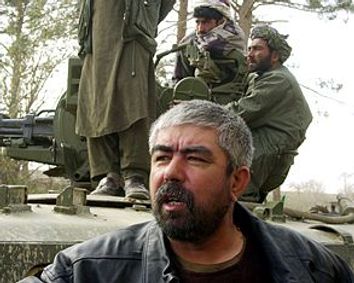
General Rashid Dostum rules a region in Afghanistan the size of Massachusetts and has waged wars for much of his life. In the past few months, aided by heavy American bombardment, Dostum’s troops swept through Taliban-controlled areas, bringing an end to the Taliban rule in Mazar-e Sharif, parts of Kabul and Kunduz and eventually helping with the capture of Kandahar. It was under his watch that the bloody uprising of prisoners in Mazar-e Sharif was quelled when Dostum’s men literally flushed out the Taliban prisoners — and the American Taliban, John Walker — by flooding the basement of the 19th century fortress.

Among the warlords of Afghanistan, Dostum is an enigma. The New York Times recently called the commander of U.S.-backed Northern Alliance troops “a potentially destabilizing force in the new Afghanistan.” In 1997, he was the first and last Afghan leader to invite a United Nations human rights commission to investigate massacres of the Hazara minority at the hands of the Taliban. Yet critics say he is authoritarian and eventually wants to establish his own rule. It is no secret that the 47-year-old Uzbek views his current position of deputy defense minister under the new interim government as a disappointment. Supporters, especially among the country’s Uzbek and Tajik minority, claim Dostum faces a racial prejudice — a tendency to vilify Uzbeks as a warrior race due to their Turkish roots. They claim the Soviet-trained officer has the makings of a democratic ruler.

Dostum is known to rule with an iron fist and his troops have a reputation for pillaging, although during the period he reigned in Mazar-e Sharif in the early ’90s, the city was peaceful and reasonably well-run — a place where women attended school and university and worked in public offices. His backers insist he’s been unfairly characterized as a thug, while detractors say that Dostum is simply trying to reconstruct his reputation. Speaking over the phone from Ankara, Turkey, Dostum’s younger brother, Abdulqadir, complains that unlike the Pashtun chiefs who are called “tribal leader,” his brother is always referred to as a “warlord” in Pakistani and Western media.

Warlord or not, Dostum is not a tribal leader. Unlike Afghanistan’s newly appointed ruler, Hamid Karzai, and the majority of the nation’s top political figures, Dostum can claim neither tribal lineage nor religious status. The son of poor Uzbek peasants from Shibarghan, Dostum spent the first years of his adult life as a worker in a state oil and gas company, then fought with the invading Soviet army, against them, against others, and, since 1995, against the Taliban. He is a self-proclaimed secularist, is the father of nine children from two marriages, and is known to enjoy an occasional drink. We spoke with Dostum by phone recently. Can he be the antidote to fundamentalist tribalism in a country still struggling with the political and ideological remnants of the Taliban?

Why do Afghans fight all the time — is it the geography, the climate, one of the byproducts of living in a tribal society?

There are enough people who love power and control. Fighting is in their interest. Also, we’ve always had foreign interference from neighboring countries. They are afraid of Afghanistan becoming powerful and peaceful because this would create pressures in their own countries to be better, more democratic.

You’ve been fighting since 1978. Is this what you wanted to do with your life?

You’re right, this fighting has been going on for too long now. But it’s a type of mandatory fighting — everyone in Afghanistan was forced to take sides and fight. This wasn’t at all what I had desired for my life. If Afghanistan had been a peaceful country, I’d have liked to remain as a worker in the gas and oil company in Northern Afghanistan where I started. I wanted to continue helping the development of my country. Maybe one day when there is peace, I can do that.

Is there any hope of that for Afghanistan?

People are tired of fighting here. We should have a federal system in which all groups will be equally respected and given the same rights. In the past, we had different zones, each with autonomy. If the world wants to respect the rights and wishes of the Afghans, there should be a type of federalism. This is what I’d like to see in the end.

How on earth did you get into the business of fighting in the first place — since you are neither a tribal leader nor a religious one? You must have made a series of choices.

Long story. But to make it short, we as the Uzbeks used to take a lot of abuse as a minority. I remember being abused even as a child. Same thing was happening to the Hazara people. At some point when I was in the military, I went back to my village and talked to the people there. I explained the military situation in the country and made a case for defending ourselves and our rights. That’s how it all started.

Do you ever get a chance to spend time with your family?

My wife is arguing with me over the telephone about the same thing. “Why don’t you come and see us?” my family says. What can I do? I tell them there is fighting and that I have responsibilities to take care of. I haven’t seen my wife and kids for a year now. I hope to see them soon.

Do you have a big family like everyone else in Afghanistan?

I have nine children. My first wife died — from her I have four — and I have five kids from my second wife. The oldest is an 18-year-old girl and the youngest is only 3. They live outside the country [in Turkey].

You are notorious for your toughness. I read that one day you punished one of your men by tying him to tank tracks and crushing him.

Someone from CNN asked me about the same story. It must be in a book. This is absolutely untrue. I respect human dignity and don’t remember punishing anyone that way. I love my soldiers and they love me. We’re willing to die for each other every day. But reporters here multiply everything, even jokes. I have heard on Al-Jazeera many times that I had died or was badly wounded. One day I just called them up to complain. Even with different ethnic groups here, I have a good reputation. No one blames me for cruelty.

A while ago, we watched the bloody uprising of Taliban prisoners, including John Walker, at the 19th century fortress, which is also your headquarters. Is that where you live now?

No, the fort is pretty much destroyed from the bombing. I live in a town called Qadibali.

During the uprising, your troops, after they finally gained control, were accused of massacring the remaining Taliban.

We have about 4,000 Taliban prisoners altogether right now. If we wanted to kill them, there would not have been any prisoners. I must tell you that the fighting started because they misused our trust, our confidence in them and our good manners. We wanted to treat them as decent human beings and welcomed their decision to give up arms. But unfortunately they misused our hospitality. They had hidden some weapons under the car and on their bodies. When finally at Qala-jengi, they exploded a bomb [they had smuggled in] and killed or wounded many of our important commanders. After the explosion, they got hold of the weapons in a certain section and started attacking, initially killing 10 to 15 guards. The fighting started this way. They killed about 45 and wounded over 200 people of ours.

At the moment, we don’t have enough hospital facilities for people to treat them. Meanwhile, some Taliban were able to escape and go to surrounding villages. There were arrests. We arrested five Arabs from a home in the area. Yes, some were killed. On the final day of the uprising, 80 were hiding, not willing to come out. I sent in a mediator and they killed him, too. Finally, we took control of the place. They were mostly Arab fighters, Chinese, Uigur, Chechens, Pakistanis, a representative of Osama bin Laden and even an American citizen.

Fighting was started by them. If some were killed, it’s not our fault. We didn’t want to mistreat or kill them. We wanted to treat them well. But they are terrorists and they wanted to die and they didn’t just want to die by themselves and took our people as well.

Right now more than 40 [Taliban] are badly injured and I have sent them to the hospital. If we wanted to kill them, we wouldn’t be so willing to send them for treatment at the hospital. There are also very important ones among them, like Mullah Nuri. I’m treating them well. If I wanted to kill them, I would’ve done that earlier. Only a group of some 40 Taliban who were arrested in Kunduz were not able to survive the road and died on the way because of lack of doctors and medicine. We have 4,000 Taliban prisoners right now; if we wanted to kill them, there would not have been any prisoners.

Where was John Walker exactly?

He was in the basement.

The anti-Taliban victory was in no small part due to the Taliban or Pashtun tribes switching sides in the takeover of main cities. You yourself have done it in the past when you first fought with the Soviets and then against them. Why do Afghans keep switching allegiances?

This goes back to the origins of a political group or party. Once a party or a movement is formed, the leader has to take care of the people surrounding him, his supporters and their families. You have to do whatever is best for their well-being in any given moment. As for me, I have done it to get better rights for my people. In 1992, the fall of Mazar-e Sharif was the fall of the communist regime. I don’t call that changing sides. I had to take into account whatever was better for the people who were with me, fighting, even dying with me. I also had to take into account what was best for their families. If you call that changing sides, fine. But I don’t. I opposed the recent United Nations effort [Bonn negotiations] because the key ministries were divided unequally. The struggle of our people [Uzbeks] was ignored. Different parts of the country should be valued equally — that’s why I opposed that. I wanted justice in the negotiations.

You visited the U.S. in 1996. What did you think of New York, where this whole thing started on Sept. 11?

I had heard many stories about New York, the high-rise buildings, the cleanliness of the streets, and also how green some places were. When I came over to the States, I was amazed at how advanced everything was, especially the roads, constructions and the buildings impressed me. I told everyone about the roads when I returned to Afghanistan. When I visited the World Trade Center, they told me details about the building and also about the 1993 attack and about how people had been killed. I thought at the time how stupid it was to do something like that to such an amazing building — trying to destroy something people had constructed. When I heard about the Sept. 11 attacks, and that the building was destroyed and people killed, I was very, very sad.

During that visit we also went to Washington and Texas. I was amazed at how developed everything was over there as well. We visited oil companies in Texas and talked to a number of people about the possibility of developing the oil in Afghanistan. This would help the country a lot.

Afghan women were among the groups to suffer the most under the Taliban. Even with the Taliban gone, women are not celebrating on the streets or rushing to take part in political structures …

Women are half the soul of a society. My belief is to treat them as equals to men. That’s why I allowed ladies to work and go to university. Education is not only for men. That’s what we had in Mazar-e Sharif in the past and that’s what we’ll have in the future. I have already announced that women who used to work in offices can now go back to work. Registration at the university has just started. During the negotiations in Bonn, they asked us to name an Uzbek delegation to join the interim government. Out of the six people, there is one lady [I named]. A group of women came to see me the other day wanting to get back to work. During our meeting, I asked them to immediately establish a council that could advise us on these issues and elect a representative who can become my deputy. I’ll listen to their advice.

The burqa became a symbol of Taliban oppression to women. Even with the Taliban defeated, not all Afghan women are throwing off their burqas. Why?

They can choose to do what they want. I didn’t force it, and I won’t force them to take it off. It’s their decision.

What about your wife — does she wear the burqa?

My answer is the same whether it’s my wife or any woman in Northern Afghanistan. This is my wife’s own decision.

This war is against one of the most fundamentalist of regimes in recent history. Are you a secular man yourself?

This has been my position in the past. I have long been opposed to fundamentalism. I warned about the Taliban to all visiting delegations, including Americans. I used to tell them that one day, these people would be a big problem for all of us. Though alone and weak, I was consistently against fundamentalism and extremism. People cannot remain without democracy and freedoms and should have rights.

Continue Reading Close

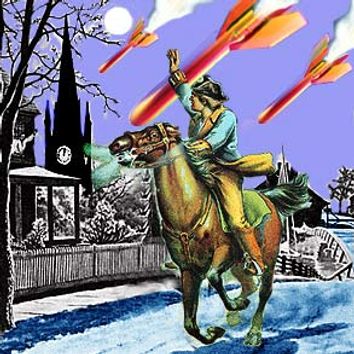
The midnight ride of James Woolsey

The former CIA director presents himself as the Paul Revere of the terrorism age, trying to waken America to its greatest threat -- Saddam Hussein. Should we be listening?

  • more
    • All Share Services

The midnight ride of James Woolsey

If the United States finally decides to extend its war on terrorism all the way to Baghdad, it will be thanks in no small part to former CIA Director James Woolsey. While the Bush administration must speak circumspectly about a possible war with Saddam Hussein, Woolsey has become its unofficial point man in the growing war of words with the Iraqi dictator. In the past few weeks, Woolsey has been dispatched to London by the Pentagon to investigate possible links between Saddam and the Sept. 11 blood bath and has popped up on nearly every TV news program to argue the hawks’ position on Iraq. While Secretary of State Colin Powell, leader of the administration’s dovish faction, has tried to keep Woolsey at arm’s length, his views are increasingly influential in the Bush White House.

Woolsey has not held government office since leaving the CIA in 1995, but this consummate Beltway insider has worked effectively over the years in Washington’s shadow government. A conservative Democrat (or a liberal conservative, depending on where you stand), Woolsey has served on every commission and board that matters in the world of defense and national security, such as the Defense Policy Board and the Rumsfeld Commission on missile defense. He is widely respected in a town riven by spiteful feuds.

The former intelligence chief has not always been associated with the more hawkish wing of Washington’s foreign policy elite. After numerous stints in top-level national security posts, Woolsey was appointed by President Clinton in 1993 to head the CIA. But Woolsey failed to penetrate Clinton’s inner circle, which was overwhelmingly focused in the early years on domestic issues. After a disturbed man crashed a plane on the White House grounds in 1994, a joke made the rounds in Washington that it was Woolsey trying to get in to see the president. Disillusioned by Clinton’s disregard for intelligence matters, Woolsey left the agency after a brief tenure and returned to civilian life as a partner at the powerful Washington law firm Shea and Gardner. (Under the terms of the United States’ Foreign Agents Registration Act, the firm is registered as a foreign agent for the Iraqi National Congress.) He spent the rest of the Clinton presidency as something of a maverick, criticizing the administration on foreign policy and defense and even taking on the CIA itself by defending six Iraqi opposition members facing deportation to Iraq on national security grounds.

A longtime advocate of regime change in Iraq, since Sept. 11 Woolsey has been focusing on one thing and one thing only: making the case against Saddam Hussein.

Isn’t the recent bin Laden tape a setback for those who want to shift the focus of the war against terrorism toward the removal of Saddam Hussein — on the tape, the al-Qaida leader clearly boasts about his leadership in Sept. 11?

That’s a particularly stupid conclusion. There is no sole-source contracting requirement for terrorism. Just because bin Laden was involved doesn’t mean some state intelligence service was not involved.

So you still think that the U.S. should be concerned about Iraqi involvement in Sept. 11?

Certainly. First of all involvement in Sept. 11, or in the anthrax scare, should not at all be necessary for anyone to regard Iraq as a terrorist state that is a danger to its neighbors and the United States. Iraq was clearly responsible for the attempt to assassinate former President Bush in 1993. That’s the reason President Clinton shot cruise missiles in the middle of the night into the empty buildings in Baghdad. Second, any objective observer is going to admit that Iraq has been working hard in weapons of mass destruction, particularly biological and nuclear, for the last number of years. That’s the reason they cheated in the inspections before 1998 and that’s the reason they have worked so hard to be freed from the inspections since then. Innumerable defectors and U.N. inspectors say that. I know of no objective observer who doesn’t believe that.

We know the administration is split into two factions on Iraq. The more dovish wing, including many senior officials at the State Department, is critical of your position and the idea of waging a war on Iraq. Any clues on who is winning the internal debate?

I have no idea. I intentionally asked friends in the administration that they give me no feedback on any internal debate, so as not to be influenced. I have no idea and no idea what the president thinks.

But why should we go after every bad guy in the neighborhood?

I never said we should go after every bad guy. That is a straw man thrown up by those who don’t want to confront the reality of what Iraq has been doing. With respect to a number of other countries, such as Iran, that are working on weapons of mass destruction, there are reasons to believe that there may be other ways to see a change in the government or regime. There have been mass demonstrations by young people recently against the Iranian regime, chanting “Death to Taliban in Kabul and in Tehran.” There are many ways to skin a cat.

We may see a change in position by some former terrorist sponsoring states. For example [Libyan leader Moammar] Gadhafi sounds very much like Tony Blair since Sept. 11. It’s only the people who’ve made the decision from the beginning that they are not willing to deal with Iraq; they make the argument that if we deal with Iraq, we have to deal with everybody who may be working with weapons of mass destruction the same way.

Saddam seems like a tyrant who is more interested in survival than in suicidal confrontations. What makes you think he would ever use his weapons of mass destruction against the U.S. or Israel, knowing the response would be fatal?

Why accept the final judgment of your question — namely that it’s all right to let him achieve his goals and get stronger in the area of weapons of mass destruction and ballistic missiles when in the past he showed that he’ll use these capabilities to attack his neighbors? There is a difference between rationality and reasonable objectives. Hitler was very shrewd and rational, especially in foreign policy between 1933 and 1939. But he had a hideous objective to destroy everyone who was not Aryan. In this case, you have to distinguish between rationality and objectives. I don’t accept anyone’s judgment that Saddam Hussein will benignly hold onto these weapons, with no threat to use them, because he sort of likes to have them. It’s a dangerous view.

Let’s turn to Sept. 11. You’ve spent some time investigating possible Iraqi connections to the hijackers. What is there?

There are yet no smoking guns, but there are indicators that Iraq may well have been involved. First are the meeting or meetings between Mohammed Atta and [Mohammed] al-Ani of Iraqi intelligence in Prague as stated by Czech government. Second, press reports in the U.K. say that two of the other principal hijackers of Sept. 11 met with the Iraqi intelligence in the United Arab Emirates. Third, [there have been] many meetings between Iraqi intelligence and al-Qaida during the late ’90s in Iraq and in Afghanistan, including the visit by Iraqi intelligence chief [Faruq] Hijazi. Four, [there are] five eyewitnesses — three of them defectors and two of them American United Nations inspectors — to different aspects of the training that has been taking place for years at Salman Pak on the southern edge of Baghdad. The training is separate for Iraqis and non-Iraqis to hijack an aircraft using knives. One can see an old Boeing 707 that Iraqi intelligence services used for this training on commercially available satellite reconnaissance. Again, none of these is a smoking gun, but it’s the sort of evidence that adds up for those who think the link to Sept. 11 must be demonstrated. Personally, I don’t think that’s necessary.

A recent New York Times piece throws some doubt on the alleged meeting between Atta and an Iraqi agent in Prague. Does that undermine the argument that there might be a connection between Sept. 11 and Baghdad?

That story has been refuted by the Czech government.

Is the evidence you mention enough to indict the Iraqi regime in international law or even the court of public opinion?

There is no requirement that one does not use evidence that is hearsay. All intelligence, with very rare exceptions, is hearsay. But hearsay evidence is not admissible generally in a criminal trial. So applying criminal evidentiary standards and legal evidentiary standards to intelligence is particularly stupid. It’s very important that people assess what evidence or material or information is available. For those who are interested in an Iraqi tie to Sept. 11 or to anthrax, there is some evidence. But I don’t think this is necessary for the United States to decide that Iraq is a dangerous terrorist government that is working on weapons of mass destruction and that we must replace the Baathist regime there.

This is summed up as a hawkish position.

It’s a wise position. It’s up to the people who want to characterize it one way or the other.

Still, why do you advocate an all-out effort to topple Saddam? In the past, the U.S. dealt with him by sending occasional missiles of disapproval.

If I were to paraphrase Mr. Carville’s slogan from the 1992 presidential campaign here, I’d say, “It’s the regime, stupid.” It makes no sense at all to simply bomb Iraq and try to take out its weapons of mass destruction and leave the regime in place. Saddam has quite cruelly hidden his weapons of mass destruction facilities underneath schools, hospitals and universities. He has also made them mobile so they can be moved around. For example, biological equipment is put within areas close to civilians. It would be extraordinarily difficult — I think indeed impossible — to do an effective job of taking out his facilities for weapons of mass destruction by bombing. One has to replace the regime.

There is a school of thought in Washington that argues that the best outcome for the U.S. would be a palace coup — someone from within the regime or his own military to take over, rather than having Americans galvanize behind a military campaign.

A coup has never been a good idea in Iraq. The reason it makes no sense merely to replace him is that Iraq has never been vulnerable to a coup under his regime. He controls the people around him and when anyone seems to become at all threatening, he kills them. A palace coup is nearly impossible in Iraq.

So what are your plans for toppling the regime?

What one needs to do is to support the democratic opposition armed uprising in the North and the South; to destroy his land forces with air power, as has been demonstrated in Afghanistan to be extremely effective; and to look for defections from his regular army into the ranks of the rebels. That’s a reasonable approach.

We are talking about one of the strongest armies in the region.

His army is half strength or less since 1991 and the only troops he can count on are the Republican Guard, and I’m not sure he can completely count on them. We’ve gone from having 10 percent smart weapons in 1991 to having 90 percent smart weapons in Afghanistan. The devastating impact of that has been clear to everyone. It now takes an average of two weapons to destroy a target, compared to 10 weapons 10 years ago.

You assign a key role to the Iraqi opposition, and particularly the Iraqi National Congress led by Ahmad Chalabi, in overthrowing the regime there. But some — again, including high-ranking State Department officials — express doubts about the opposition’s capacity to deliver this, especially given that they don’t have a military presence on the ground.

These opponents of the INC are too cowardly to use their own names [in interviews and statements]. I am not. That should raise a question mark about the credibility of what they say about anybody.

It’s hard to even imagine that the U.S. can topple Saddam without putting troops on the ground.

U.S. engagement has to be absolutely serious, but it doesn’t need to be anywhere near the 500,000 troops that we used in the Gulf War. I think we could have American assistance and there has to be some ground forces over and above the special forces of the sort that have been used in Afghanistan … Once we have destroyed his defenses, that means we have destroyed a great deal of his army and the Republican Guard from the air.

We are, of course, talking about a guy who has chemical, biological and at this point possibly nuclear capabilities. Who is to say he’ll fight a future war your way? Isn’t there a possibility that, given his capabilities, if attacked, Saddam Hussein could unleash a serious biological attack on neighboring countries?

For those who are afraid to confront Saddam today because he may have weapons of mass destruction, I’d ask them what makes them think it’s going to get easier. It’s getting worse every day in terms of his work on weapons of mass destruction and ballistic missiles of ever-longer ranges. That’s why it’s important to move against him sooner rather than later.

We’ve done a very bad thing in the 1990s by the Clinton administration being so feckless and flaccid in dealing with Iraq for eight years. We are in a much more dangerous situation today than we were eight, nine years ago. It’ll be even more dangerous tomorrow.

During 1993-1995, you were part of that administration as the CIA chief. Wasn’t what you called a “feckless and flaccid” policy in place at the time?

It started when President Clinton decided to respond to the attempt to assassinate former President Bush in the spring of 1993 merely by shooting two dozen cruise missiles into an empty building in the middle of the night. I think killing some night watchman and Iraqi cleaning women had the opposite effect on Saddam that one would want.

Were you not part of the group of advisors that decided on that action?

Those decisions were not made on the advice of the people who are involved with intelligence. Indeed, the intelligence agencies during the Clinton administration were told they were not to give policy advice.

But surely you cannot put the blame on the Clinton administration and try to keep out the CIA?

I can tell you that they were not instrumental in making any decision between 1993 and early 1995. After that you’ll have to ask my successors. No advice of the intelligence agencies was asked at that decision.

Of course the first World Trade Center attack and the following investigation took place under your watch.

As far as the WTC bombing of 1993 was concerned, all the information that was collected by law enforcement was kept under grand jury secrecy. The intelligence agencies were not permitted by law to see it until the trials of conspirators like Ramzi Yousef were completed. That was the way that the Clinton administration chose to approach acts of terrorism. As law enforcement matters and not as acts of security.

You put a lot of blame on the Clinton administration. But doesn’t the principal blame for Saddam’s survival fall on the first Bush administration, which, instead of toppling him, left Saddam in place out of deference to regimes in the region, like the Saudis, that fear democracy in Iraq?

The first Bush administration made a serious error in judgment in not supporting Iraqi opposition after the war. The Clinton administration made eight years of that.

There is a theory that there are Iraqi fingerprints in the 1993 attack. You have recently suggested that evidence linking the 1993 WTC attack to Iraq was overlooked during the investigation process.

What I’ve said was that the original investigator for the FBI in 1993 to early 1994, Jim Fox, had those suspicions. After Fox was retired, the U.S. government prosecution veered off to another theory, namely that this was a network of terrorists inspired by the blind sheik [Omar Rahman], more or less abandoning the approach of looking for ties to Iraq. None of this was available to anyone outside the small circle of prosecutors and the FBI till after the trials were finished. That was a rule of law, not a policy decision.

Going back to the Iraq business: Opponents of attacking Iraq argue that containment might be a better tool than pursuing a military strategy.

What Saddam wants to do is to dominate that portion of the world, its oil supplies and his neighbors, and he is working hard on weapons of mass destruction and ballistic missiles in order to do it. He certainly would threaten American forces in the Middle East. As we said in the [congressional] Rumsfeld Commission, it would be a few years — after North Korea and Iran — before he is able to build several stage ballistic missiles that would reach the U.S. (Keep in mind that as poor a country as North Korea, which has nowhere near the wealth and scientific knowledge of Iraq, has been able to construct a three-stage missile.) People who believe that this problem is decades away are simply wrong and don’t understand how ballistic missiles work.

Meanwhile we know very little about the inner workings of the Iraqi regime. How is our intelligence on Iraq these days?

Until early ’95 it was reasonably good, but could have been better. A lot of useful information was turned up by U.N. inspectors. Since early 1995, you have to ask [former CIA Director John] Deutch and [current CIA Director George] Tenet.

No country in the Middle East today — at least no Arab country — supports attacking Iraq. What would such a step mean for U.S. interests in the region and to the U.S.-led coalition on terrorism?

I think one nutty way to make foreign policy is to collect a large number of nations and decide to do what the lowest common denominator wants. If you approach foreign policy and security policy that way, you’ll never accomplish anything. What we have to do is to decide what is in our interests and what needs to be done and then go to the countries whose help we want — and only Turkey’s help is essential in this matter — tell them what we want, and ask for their assistance. I’ve been in four different jobs in the executive branch over the years dealing with allies, and it’s been my universal experience that allies respond far more helpfully when the United States takes a strong position of leadership than they do when the U.S. goes to them hat in hand and says, “We don’t know what we want to do. What do you think?” It’s an especially bad idea to start with the need for a numerically large coalition to do what the most fainthearted of those is willing to support.

Speaking of coalitions, much criticism has surfaced lately of the strongest U.S. ally in the region, Saudi Arabia. Do you think U.S. policy toward this regime needs to be reconsidered?

The Saudis are the last country I would go to hat in hand and go along with their initial inclination. The Saudis are a huge part of the problem that all good countries face as a result of what happened in this part of the world. The Saudis have exported a lot of money to support an extreme form of Islamist philosophy, if you can call it that. The madrasas they supported in Pakistan are a major source for the Taliban, and much of the money for al-Qaida has come from Saudi Arabia. We would ultimately be better off with a democratic Saudi Arabia than we would with a ruling family that has done what this one has and bought off the Islamic extremists and terrorists by pointing them towards us. Saudis deserve a very large part of the blame for Sept. 11, and I do not think we should do anything more with them right now than be cordial.

But a regime change in Iraq would ultimately destabilize the Saudi government.

The world would be much better off with democratic regimes in Iraq, Iran, Syria, Saudi Arabia and the rest of the Mideast. Those who believe we have to go along with dictatorships and authoritarian regimes because such and such a country or culture can’t understand democracy are flatly wrong.

But we have yet to see an Islamic regime that is also a democracy. There isn’t yet a democratic version of Islam.

Certainly there is. Look at Bangladesh. Look at the reforms on Bahrain. There are certain features of Islam that are different on this issue from other religions — perhaps [there is] less of a tradition of the separation of church and state. But I don’t see why Islamic countries can’t be democracies. We owe the people the respect to let them figure out how to choose their rulers.

Continue Reading Close