
Austin Bunn

The leader of my pack was gay

Which was a good thing, because I was too. And in our small town, my scoutmaster was the only happy, normal model of gay manhood I had.

  • more
    • All Share Services

The leader of my pack was gay

Over a series of summers when I was a young teenager, my twin brother and I went to Camp Alamuche in northern New Jersey for two weeks of Boy Scout camp. Alamuche gave us the chance to stockpile merit badges, and attendance was mandatory if you had any ambition to achieve Eagle Scout, the top rank in scouting and the pinnacle of boyhood achievement.

My brother and I were in different troops. In my ragtag Troop 29, we all knew that Mr. Wheeler, our bearded, goofy scoutmaster, was gay. Looking back now, I’m not exactly sure how we knew. Perhaps it was because he was in his 50s, was unmarried and still lived with his mother in a big Victorian house in our hometown. It was rumored that he had entered a Scout’s tent at night and looked at him while he slept. But we treated his sexuality, or what we knew of it, as an open secret. And nobody ever called him “gay,” “queer” or “faggot.”

In fact, if anything we had a tender appreciation for him. He was incredibly eager to teach, but he stood slightly outside the culture of aggressive masculinity that dominated the camp. (All of us gawky, welterweight kids in Troop 29 stood with him.) The archery, whittling and orienteering were left to other scoutmasters. When we would trek off from our camp in the morning, Mr. Wheeler stayed behind and welcomed us back at dusk. We would sit in a circle, and he would instruct us to pile sticks into the shape of a tepee to build a fire, light it with hairspray and a cigarette lighter and seal corn and potatoes in tinfoil and cook them in the center of the flames.

I think of Mr. Wheeler now that the Supreme Court has decided to uphold the right of the Boy Scouts of America to ban gay Scouts, who, they claim, pose a threat to their “expressive message.” Of course, the Boy Scouts’ message is crammed with all kinds of ideology about God, country and the nature of real manhood. As a bookish atheist raised by a single mom, I felt particularly foreign in the Scouts. There were no merit badges for poetry or short-story writing, no role that my mother could play in our weekend excursions. Every troop meeting began with the recitation of the Scout Oath. I would begin with the others, “On my honor, I will do my best,” fall silent at “to do my duty to God” and then continue to the end.

But Mr. Wheeler understood that even misfits need to fit in someplace. At camp, when one kid holed up in his pup tent glued to sports on his Watchman, Mr. Wheeler let him. He knew what it meant to be starved for something: television, say, or company.

This newest victory for the Boy Scouts will undoubtedly set off an inquisition against men like Mr. Wheeler. Gay scoutmasters, like gay teachers, were once tolerated as long as their sexuality was kept as remote from the daily workings of Boy Scouts as girls are. But scoutmasters are first and foremost Scouts themselves, and an organization that bans gay boys from membership will certainly not tolerate gay men as leaders. No doubt many older, closeted gay scoutmasters — even those who are suspected of being gay — will be scared into total silence or driven out. And when that happens, they will be pushed further into the shadows of their communities, told that they should have no interaction with kids.

The irony of the ruling is that most Boy Scouts, at least as far as I remember, don’t yet know their own sexual preference — and as soon as they do, they’re gone from scouting. Troop 29 was defined by its members’ arrested development. We talked about “gooey farts” and the possible outcomes of a battle between Jason Voorhees and Freddie Krueger. When we did hit puberty, we realized that being a Boy Scout was about as cool as being in a marching band. What teenage boy wants to sacrifice his weekend nights to eat s’mores with a crew of other earnest young boys? The Boy Scouts offers boys sanctuary in the form of an imaginary childhood in an imaginary wilderness, where maturity gets meted out by merit badges and every compass has one true north.

I remember visiting Mr. Wheeler one afternoon at his house. He needed to certify the newest merit badges that I had earned at camp, and I sat next to him on his couch while he examined my paperwork. (For an organization about the outdoors, the Scouts could be surprisingly bureaucratic.) I can remember thinking at the time that that was the first time I had been in the company of an older man who sincerely cared about my progress in life. In very real ways, I spent more quality time with Mr. Wheeler camping and night hiking through birch forests than I did with my own dad.

When I was a teenager confused about my sexuality, Mr. Wheeler was the only model I had for what it meant to be gay. Scouting’s core membership is in small towns and suburbia, places where young boys are unlikely to be exposed to gay male culture. The Supreme Court ruling means that there will be one fewer place to encounter normal, adult homosexuals woven into the world that they share.

Mr. Wheeler passed away a few years ago from a heart attack. When I mentioned this to another former Scout from my town, the first thing he brought up was Mr. Wheeler’s homosexuality. “He drove me home once,” my friend said, as if an act of generosity by a gay man were enough to suspect him of prurience. Straight, married scoutmasters entered our tents unbidden all the time: to make sure we were in bed by curfew, to examine our beds for the proper fold of the sheets or to confiscate our Watchmans. But when Mr. Wheeler crossed the threshold of that half-remembered, half-invented tent, he became dangerous and illicit. His suspected motives crossed the threshold with him.

My twin brother made it to Eagle. He even moved rocks for a weekend in absolute silence to join the secretive Order of the Arrow, a Mason-like cabal within the Boy Scouts. Fortunately for the Scouts, he is straight, and is planning to get married this fall. I, meanwhile, sleep with men. I dropped out of the Scouts right around the time Mr. Wheeler was replaced by the gruff, chain-smoking dad of one of the other boys in Troop 29. I can’t remember my exact rank when I left. But I think it was Second Class.

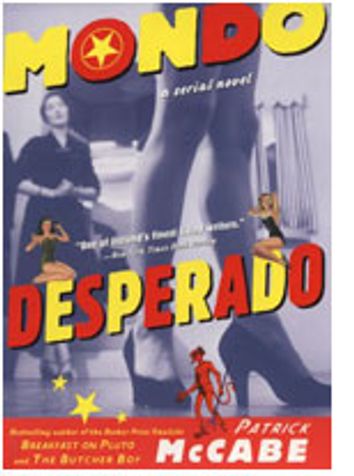
“Mondo Desperado” by Patrick McCabe

By the author of "The Butcher Boy," a collection of stories pitch-black down to their funny Irish toes.

  • more
    • All Share Services

Barntrosna is not a bed-and-breakfast kind of place. Pass McConkey’s field and you’ll spy sweet-eyed, angelic Declan Coyningham with an air hose inserted “snugly between his sad but acceptant buttocks,” inflated from a schoolboy into a “hideous, bladderesque monstrosity.” Drop by Shamey Henley’s for a pint and you’ll run into the socially maladjusted Tom Gully, though the boil on his face will introduce itself to you first, leaning toward you like “some eerie red eye” and winking. A trip to the Barntrosna Arms Hotel is not recommended, but if you have to go, if a dark curiosity compels you, ignore the mad doctor in the corner raving about the creatures, half-human and half-horse, with a smidgen of bird — bargain-bin Pegasuses born of a science experiment gone horribly wrong — living in the hills nearby.

You’ll need a healthy amount of dark curiosity to get through Patrick McCabe’s new collection, “Mondo Desperado,” which is almost as punishing as his novel “The Butcher Boy,” but without the carving knife. The stories all circle about Barntrosna, a whacked Irish backwater rife with bitter shut-ins, nefarious schoolboys, cheeky prostitutes, closeted-lesbian nurses and more than one boil. But the town is only a backdrop to the Gothic punishments of McCabe’s ruthless imagination and pitch-black humor.


Of course, McCabe didn’t actually write the book: The man responsible is one Phildy Hackball, a down-market, halfway-blitzed Sherwood Anderson, and his stories are the result of a strict diet of nudie films and American B-movies. This conceit is really just an excuse for McCabe to loosen his style, swear more riotously and toy extra-brutally with the fragile egos of the town’s populace. But if the book were straight torture, it’d be torturous to read. McCabe invests profoundly in his characters — “Mondo Desperado” may be cruel, but it’s never cold.

The common psychic state of these characters is delusion. Larry Bunyan, the psychotic husband in “Hot Nights at the Go-Go Lounge,” suspects his wife of leading a double life, dancing at the town’s new club and sleeping around. He’s wrong, but the joke lies in watching him disbelieve her at every turn. (Fortunately, McCabe’s greatest gift is brevity: The story is amusing at 13 pages; any longer would make it a chore.) “The Bursted Priest” follows the inflation of poor Declan Coyningham, whose fantasies of priestliness annoy the other boys so much they want him dead. Hey, this is Barntrosna.

The collection succeeds best toward its conclusion. “The Valley of the Flying Jennets,” the aforementioned tale with the monsters in the hills, is as good as Edgar Allan Poe ever got, complete with the rambling introduction about whether the reader is prepared to take the horrors the teller is about to relate. The real standout — the one destined for the movies, as most of McCabe’s books now seem to be — is the final story, “The Forbidden Love of Noreen Tiernan.” Perhaps what’s so good is that here we finally get the hell out of Barntrosna. Young Noreen, an affianced student nurse, hightails it to London to work at Bartholomew’s Hospital, where she ends up shagging Stefanie Diggs, her butch roommate. When she stops writing home, her mom, her gruff fianci, a game priest and the Protestant botanist Eustace De Vere-Bingham take off for London to reclaim her from the arms of luscious debauchery. It’s a story equally comic and tragic, so broad-minded — and so Catholic — that it’s irresistible.

Continue Reading Close

“Nobrow” by John Seabrook and “No Logo” by Naomi Klein

A self-revealing reflection on the sick fixations of the media elite stalls out. Is a guerrilla war enough to wake them up?

  • more
    • All Share Services

Consider this passage from John Seabrook’s new book, “Nobrow”:

By the 1990s, the end of the High-Low hierarchy of distinctions was at hand … It could be felt in the change of manners: in the old days if you said to your dinner partner, “How are you?” he or she would say, “Fine thank you. How are you?” But in the present, when you said, “How are you?” you heard “Fabulous. I’ve just published my memoir about my incestuous affair with my alcoholic father, and the film rights have been optioned by Oliver Stone, and he’s talking to Kate Winslet for the role of the heroine, and Entertainment Weekly has an item about me this week.”

My response to this, and it was quite visceral, was to put the book down and promptly take a shower. I wanted these ideas off me. We’re supposed to be laughing along with Seabrook here, shaking our heads at the rise of the ridiculously self-involved. But the delusion that sticks with me is Seabrook’s: a smugness masquerading as thoughtful indignation, a lazy conviction that the study of a dinner greeting constitutes cultural analysis and that annoyingly inclusive “you” that assumes your friends sound like Seabrook’s friends, which is to say, like press agents. Just who is John Seabrook speaking to? In the airless world of “Nobrow,” he’s talking to those both old enough to sincerely believe that Tina Brown ruined the New Yorker and young enough to think that the Chemical Brothers lost something when they landed on MTV. In other words, no one.


Nobrow

Buy this book at B&N.com


No Logo

Buy this book at B&N.com


“Nobrow” is billed as a meditation on an ascendant muddle in American culture: a creeping everglade of hype, populism and fame between “highbrow” (intellectual culture) and “lowbrow” (commercial culture). The terms “highbrow” and “lowbrow” originate with that ornery journalist H.L. Mencken, who fashioned them in 1915 to, as Seabrook says, “render culture into class” with a phrenological punch. In America, Seabrook argues, “people needed highbrow-lowbrow distinctions to do the work that social hierarchy did in other countries.” But by the ’90s, the cultural hierarchy that they defined (and preserved) had collapsed, leaving “Nobrow” — “not culture without hierarchy, of course,” but an area where “commercial culture is a source of status, rather than the thing the elite define themselves against.”

Forget the fact that Seabrook’s thesis isn’t news — postmodernism has been remarking on that hi/lo hybrid for some time now — and isn’t even particularly convincing. (Isn’t he really just saying that lowbrow won?) His argument is merely a setup for a portrait of Tina Brown, the much-maligned hi/lo maven and erstwhile editor of the New Yorker. According to Seabrook, Brown’s arrival marked the coming of nobrow to the bourgeois sanctum of classy Manhattan magazine culture, and the beginning of her tenure neatly coincided with Seabrook’s own as a staff writer. And if you’re the kind of person who cares about the tempests that have tossed that magazine — if the names Renata Adler and Robert Gottlieb give you goose pimples — then you’re in for a dishy feast. Otherwise, prepare for some seriously overcooked meat.

What Seabrook has done in “Nobrow” is repurpose his New Yorker essays on MTV, George Lucas and David Geffen with the curtain drawn back on how the pieces were “relationship brokered” by Brown. For example, Brown was a friend of Judy McGrath’s, the president of MTV, and called on Seabrook to spend June there doing a profile on the place. What one comes away with from “Nobrow” is the sense that a) Brown was almost entirely responsible for Seabrook’s subject matter and b) when you leave Seabrook alone to come up with his own subject matter, he will talk about his father’s suits, Dean & DeLuca tomatoes and the irresistible urge to buy $200 Helmut Lang T-shirts in SoHo.

While there are moments of interesting anthropology in “Nobrow,” Seabrook doesn’t seem to be able to locate his own story. “Big-Grid Ben,” his profile of 15-year-old Kurt Cobain wannabe Ben Kweller and the vectors of the music industry that start to swirl around him, contains some nicely raw moments, like this one: “I was thirty-eight, and I was pretty depressed about it. Christ, thirty-eight years old, and here I was, with a couple of kids young enough to be my children, writing down their bons mots, which mostly consisted of different variations on the word ‘dude.’” (We should also note that Brown sent Seabrook on this assignment after she was tipped off about Kweller by Danny Goldberg, the president of Mercury Records, who had signed him.) Strangely, after all this buildup, the chapter ends just as Kweller’s first album gets released. Seabrook describes its failure in a paragraph. In a book about “the culture of marketing,” doesn’t the story of Kweller begin when the record hits the shelves?

You get the sense that Seabrook’s intended audience is strictly magazine editors, the cultural commissars who feel most guiltily bound to respect highbrow culture even as they throw themselves at lowbrow. At heart, what haunts Seabrook is really a fear of being late culturally, which is strictly a pathology of the media elite, and weren’t they always nobrow anyway?

Fortunately, we have Naomi Klein’s athletic and expansive “No Logo: Taking Aim at the Brand Bullies” as an antidote to the soft writing and sloppy thinking in “Nobrow.” Klein, who has written for the Village Voice (where I also write) and the Baffler, knows her enemies well: the “brand-bombing” Wal-Mart; Starbucks and the Gap, with their “clustering” tactics; the beer and cigarette companies that think the world is their billboard. She also knows her allies, like the culture jammers (Adbusters), the third world unionists and the new urban guerrillas (Reclaim the Streets) who are throwing wrenches into the machines. Here we get profiles of the hi/lo/nobrow mix, but this time with political teeth. Klein tracks radical chic ad agency Weiden and Kennedy trying to tap Ralph Nader to sell Nike shoes: “The idea was simple. Nader would get $25,000 for holding up an Air 120 sneaker and saying, ‘Another shameless attempt by Nike to sell shoes.’ Nader responded, ‘Look at the gall of these guys.’”

“No Logo” seems to be pitched as a textbook (it’s giant and heavy), but its best elements are personal and journalistic. Klein has an easy way with her own complicated brand memories: her pre-adolescent hunger for Happy Meals, her mall-rat humanism, her survival at the Esprit store as a high school student. The best sections travel to the Philippines, where Klein plants herself outside one of the 52 Export Processing Zones at which workers receive $6 a day to make Nike shoes, Gap pajamas, IBM monitor screens and Old Navy jeans. These free-trade zones, the dystopias of late capitalism, are squeezing the hope from the local communities as they sedate them with the best salaries around. The EPZs are the point of origin of Seabrook’s $200 T-shirt, and they are terrifying.

Klein’s book came out late last year, and the writing was obviously concluded long before then. But it’s impossible not to notice the prescience of her argument that there is a rising opposition to the brand bullies, optimistic as it might seem at first blush. The rambunctious World Trade Organization protests in Seattle were in part organized (or hatched) by Reclaim the Streets. The success of Linux and open-source code like it is evidence of the rise of democratic, publicly owned brands. Klein may be traveling somewhat familiar terrain with “No Logo,” but her aim is expert. And at least, unlike Seabrook, she’s carrying a weapon and not just an ambivalent valentine.

Continue Reading Close

Prisoner of love

Why is Mary Kay Letourneau, the 35-year-old teacher who slept with her 13-year-old student, trying to keep her own book out of American stores?

  • more
    • All Share Services

Prisoner of love

The mystery of what a couple is, exactly, is almost the only true mystery still left to us, and when we have come to the end of it there will be no more need for literature — or for love, for that matter.

–Mavis Gallant, “The Affair of Gabrielle Russier.”

You’re housed in maximum-security isolation — what they call the “segregation unit” — fettered in chains, because you tried to make inappropriate contact with your victim. You’re in until 2005, when you’ll be released to a world where you’ll have to tell your neighbors about your time in the big house as a sex offender. No need for introductions; they’ll recognize you. You won’t be able to find work; at least not doing what you loved. Your family will have vanished long ago, and the one good thing you’ve still got, your boyfriend, will be barred from seeing you since, well, he’s what got you into prison in the first place.

Needless to say, life in 2005 doesn’t look much like life at all. But if you’re Mary Kay Letourneau, the 35-year-old teacher who got pregnant twice by her 13-year-old student, Vili Fualaau, you were never very good at thinking in the future tense anyway. Fortunately for Letourneau, January 2000 looks almost like redemption.

It’s been two years since Letourneau was sentenced to seven and a half years in prison for “child rape,” and though she might be trapped in solitary, the first mythologies of her romance are finally making the rounds. Of the 10 books once reportedly due out about the case, the one that made it to the shelves, a true-crime paperback called “If Loving You Was Wrong,” goes a long way to rehabilitating her reputation. Last week’s USA Network movie, “All-American Girl” — which pulled in the cable network’s second-biggest audience ever — casts her as a martyr for true love, caught inside the gravitational pull of a cocksure teenager. So why is Letourneau determined to make sure that the one best document to make sense of her affair — the book she and Fualaau co-wrote themselves — is one American audiences will never read?

It would seem there is little left to reveal. Her biography is now part of the public record. Letourneau grew up in California and Washington, D.C., the daughter of the ultraconservative John Schmitz, a congressman who ran for president as the far-right American Independent Party’s candidate in 1972. The household was incredibly strict — Mary and her three brothers switched Catholic schools to escape taking sex-education classes. In 1982, her father was exposed as having fathered two kids by a mistress, and the fagade of family values split down the middle.

By 1995, Mary was married to Steve Letourneau, a baggage handler for Alaska Airlines, and had four kids. She worked as a teacher at the Shorewood Elementary School in Burien, Wash. That fall, she started teaching Vili Fualaau, an artistically gifted kid from a welfare family whom she had earlier taught in second grade. (The child of Samoan parents, Fualaau had been raised in Hawaii and Seattle by his mom.) Her father, “the man of her life,” then announced that he was dying of prostate cancer. A few months later, Letourneau had a miscarriage.

During this time, Fualaau moved from being her student to friend to confidant. In the summer of 1996, he and Letourneau had sex for the first time, and soon enough she was pregnant with Fualaau’s child. By the following spring, her husband discovered love letters to Fualaau in the house, a cousin tipped off the school and Letourneau was arrested.

After six months in jail, she was granted parole as long as she didn’t see Fualaau. But the next night, Feb. 3, 1998, police found Fualaau and Letourneau in her parked car with $6,200 in cash, a load of baby clothes and her passport. Letourneau was sent back to prison to serve out the balance of her full sentence.

Media scandals on the scale of Letourneau are industries of facts, and Gregg Olsen, author of “If Loving You Is Wrong,” finds them everywhere. He just doesn’t know when to stop finding them. His strongest sections — and the ones most sympathetic to Letourneau — focus on her childhood and relationship to her father (whose own pattern of adultery, Olsen suggests, may have given Letourneau ideas).

The final section, titled “Commodity,” expertly catalogs the corrosive role the media played in the affair. But at a certain point, right about when Olsen describes Letourneau’s father’s mistress “tying a hair around her son’s penis” — a penis narratively several times removed from the main story — you begin to realize that all these apergus won’t amount to an argument.

Because Olsen got no access to “Buddha” (as Fualaau was nicknamed) or his mother, Soona, and had only limited time with Letourneau, the book has been composed from the testimony of friends, friends of friends, the erstwhile baby sitter and those “who knew the situation well.” You’ve got to admit Olsen is dogged; it’s as if he vacuumed up the stories of everyone who intersected with Letourneau and then emptied the bag onto the page. (This might come, in part, from desperation. In his author’s note, Olsen discusses how difficult it was to get interviews in an era of “checkbook journalism,” where secondary characters demanded $70,000 or more for their stories.)

But as exhaustively reported as Olsen’s 372 pages are, a strange prudery hangs over his book. He has witnesses talking about Letourneau and Fualaau showing up disheveled at school and at home, but he avoids the sexual details. And prudery, in Letourneau’s case, is a political choice. When Letourneau announces that she’s pregnant with Fualaau’s first baby, it seems like an immaculate conception. It’s not like this information wasn’t available.

The pre-sentencing investigation records, first revealed in a Spin article by Matthew Stadler, get to the point: Fualaau “stayed overnight at her house once more when the two of them fell asleep in their chairs after a long talk … He asked her to come and sit next to him and she complied. He held her and she could feel that he was aroused … She then made the decision to ‘relieve him of this forcefulness’ … She described that incident as the ‘beginning of the end.’”

The beginning of the end happens, albeit modestly, in the middle of the USA flick “All-American Girl,” and it’s most assuredly not a rape. The sex scene comes as the crescendo of their affair and not the start of it. He’s been coming on hard for months, asking her at recess, “How do you know if you’re good?” That summer night in 1996, after a fight with her husband, she and Fualaau find themselves at her home alone. Fualaau tells her, “I can’t wait any longer,” and she straddles his forcefulness, wearing her bra until the fade-out. It’s tactfully if safely done (something of a shift for the network known for screening grade-Z horror flicks of the “Sorority Girls and the Creature From Hell” variety).

The film is also surprisingly tasteful in its avoidance of tabloid polarities about their affair (like Mary Kay = Sorority Girl, Vili = Creature From Samoa). Instead, it opens by subtly contextualizing her crime: a group of female sex offenders in treatment go around confessing their crimes — burning their kids with cigarettes, forcibly “penetrating” them. Letourneau, sitting among them, looks on horrified.

There’s so much evidence mounted in Letourneau’s favor — her cold, abusive husband, his affair and Fualaau’s principal-may-care eye-lock — that the affair comes off as soap-opera inevitable (with the soundtrack from “Badlands” laid on top for that fugitive cred). “Vili pursued me as a man pursues a woman,” Letourneau testified. “He has the dominant sexual urges.”

It’s not hard to believe. Most reports about Fualaau describe him as acting much older than 13, and certainly not a virgin. Even his mom calls him “an old soul.” If the film could be faulted for anything, it’s that it smooths out other differences between them, not simply the age divide. Fualaau’s life has obviously been polished and de-ethnicized for prime time. As Stadler, the author of the Spin article, notes, “I guess ‘nonwhite poor boy’ doesn’t work on TV unless he lives in a brownstone.”

But these problems are native to television. In terms of the factual accuracy of the story, “All-American Girl” is impressively straight. Sonny Grosso, the producer of the flick (and the ex-cop behind “The French Connection” and, weirdly, “Pee-wee’s Playhouse”), claims that the quality comes from the fact that the screenwriter interviewed Letourneau for two weeks and used direct quotes in the screenplay. Letourneau, however, has been burned by that process. In fact, it’s her efforts to control her own voice that explain why she now stands between her publisher and her own book.

At the height of the Letourneau controversy, the French publishing house Laffont contacted her lawyer, Bob Huff, asking whether Letourneau wanted to write a book about the affair. “Most American publishers were looking at this as an icky story,” says Huff, “but the French saw it as a love story.”

The French also had a precedent. In 1973, 30-year-old Gabrielle Russier, a schoolteacher and mother of twins, fell in love with a 16-year-old student. The pair traveled secretly across Italy together, until the boy’s parents found out, forcibly separated them and brought charges against her. Since France has no age of consent law, Russier was tried on the charge of ditournement de mineur, or causing a minor to leave home. She was acquitted, but as soon as the verdict was handed down, the prosecutors took up an appeal. Battered by the trial and the toxic radiance of being a cause cilhbre, Russier committed suicide before the second trial could begin.

To the French publishers, Letourneau suggested a blond version of the martyred Russier, trapped in Puritan America. Huff brokered a $200,000 advance for “Un Seul Crime, l’Amour” (“Only One Crime, Love”), which went to Fualaau and a trust for the couple’s two children. The book was scheduled to come out both in French and English. Bob Graham, an Irish journalist, was flown over to interview Letourneau and Fualaau, but frustrated by the prison’s restrictions on seeing her, he eventually left and did the rest of his interviewing by phone.

When Letourneau got a copy of the hastily assembled manuscript last year, she claimed that the book was crowded with misquotations and inaccuracies. It’s a somewhat unusual allegation, considering that the whole premise of the book is a direct transcription of her testimony, a jailhouse memoir. It’s hard to believe that Graham, who didn’t even bother to cook up segues from one incident to the next, would take the time to rewrite her quotes.

Letourneau’s other objections suggest that the real problem lies elsewhere. According to Huff, Letourneau is upset about the inclusion of Fualaau’s mother’s testimony as the book’s prologue. “It was supposed to be just her and Vili’s book,” says Huff. In her section, Soona Fualaau defends Letourneau from the rape charge, but attacks her for the adultery. “I know myself, that it wasn’t rape, and God knows it too,” Soona writes. “Yes, it was adultery, that I don’t dispute.” (Huff also admits that Letourneau was upset that he took Fualaau to France for the book tour. “She was supposed to take him to France,” he says. “All her fairy-tale shit.”)

Despite Letourneau’s complaints about the book, Huff, as he puts it, “did an end-run,” completed some interviews with Fualaau himself, and sent an approved manuscript to Paris. “Had I not done that, we would have been in total breach of contract and the book would have never come out,” says Huff. The book has now been published in France, where it was a book-of-the-month selection. Rights for Italian and Japanese editions have been purchased.

But because the contract with Laffont gives Letourneau final say over the English edition, her solution to her unhappiness was to edit the book to death. She has made revisions to 28 of the 33 chapters and demanded “approval” over Fualaau’s sections as well. (There’s no financial impetus here — as a convict, she can’t make any profit from the book.) Laffont got so fed up with her orneriness that it put the English publication date on hold. Since then, her editor has left Laffont. Huff no longer represents her. The book has fallen into limbo.

But there’s another reason that the book is missing in action, one that must scare Letourneau. “Un Seul Crime, l’Amour” is entirely too accurate about the yawning psychological divide between her and Fualaau. Every love affair is, of course, two stories masquerading as one history. Up through the trials, Letourneau and Fualaau maintained that they were in love and that there were no victims.

But a reading of the French book reveals the fissures in that neat fiction: Mary Kay keeps to the lovelorn longing and Vili sticks to the lust. “Her idea of the book was this romantic valentine to the love of her life and he’s just talking about boinking the teacher,” says Olsen, who read an English translation while working on “If Loving You Is Wrong.”

Fualaau reveals that he bet a friend $20 that he could seduce Letourneau (a fact that also surfaces in “All-American Girl”), claims they had sex “200 or 300 times” and boasts of his sexual conquests with other girls. Recurring accounts of sex in the car — their only available trysting spot — run through his narrative like a leitmotif.

Meanwhile, Letourneau’s sections are sweet, often pleading. “We took, I know, a road different from others, the road less traveled,” she writes. “But we’re no longer in the Middle Ages, when they burned women, the unfaithful, the witches, who dared to love outside their marriage.” She also swoons over their two kids, who are currently cared for by Soona. (Her original kids now reside with their father in Alaska.)

For Fualaau, the idea of being a father was “overwhelming.” The disjunction of their voices makes the possibility of a continuing relationship seem all the more doubtful. Gabrielle Russier’s romance may have ended in a tragedy, but also a fermata of devotion. Judging from “Un Seul Crime, l’Amour,” the Letourneau-Fualaau affair may be headed for divorce before marriage.

Admittedly, being interviewed for the book might have prompted the macho Fualaau to exaggerate, to front a swaggering persona. Then again, the book may be a map of his “growth.” Since Letourneau went to prison, Fualaau, now 16, has been arrested for second-degree robbery and been suspended from school several times.

Flash back to his sixth-grade yearbook — a project that served as the cover for much of their burgeoning affair — and Fualaau describes himself as a “truthful, grateful, and a strong warrior … Who fears nothing but endings, and sad stories …” There’s a precocious tenderness there that Fualaau may be leaving behind as he makes his way toward adulthood. Letourneau fell in love with him while he was in transit. And how long can you love someone who is changing?

Continue Reading Close

Unarmed and under fire: An oral history of female Vietnam vets

"All we had was prayer. And I did a lot of that."

  • more
    • All Share Services

Unarmed and under fire: An oral history of female Vietnam vets

The U.S. Department of Veterans Affairs knows exactly how many men served in Vietnam (2,594,200) and how many were killed in action (58,188). It can furnish all kinds of stats about those soldiers, like the percentage of men who worked in supply (between 60 and 70 percent) as opposed to combat (30 to 40 percent). But ask about the women who served in Vietnam — women other than nurses — and the numbers disappear. The records are muddled, they say; the files don’t work that way. Yes, the armed forces sent women to Vietnam, but an official record of their presence there doesn’t really exist.

At least 1,200 female soldiers were stationed in Vietnam in various branches of the military as photojournalists, clerks, typists, intelligence officers, translators, flight controllers, even band leaders. They served prominently in Saigon, in the Mekong Delta and at Long Binh, which was, for a time, the largest Army headquarters in the world.

They could not fight, nor were they allowed to carry weapons to defend themselves. Most were part of the pioneering Women’s Army Corps (WAC), created in 1942 to integrate the armed forces. All of them enlisted for service in Vietnam, mostly in the early part of the war.

Like a lot of Vietnam veterans, these women have been dogged by their experiences in country; unlike many veterans, they do not feel officially recognized and have been reluctant to seek help. Some have been plagued by symptoms of post-traumatic stress syndrome and exposure to chemicals. Others have harbored the fact of their service like a shameful secret.

“For eight years, my husband didn’t know I was a vet,” says Agnes Feak, who participated in an air evacuation of Amerasian children called Operation Baby Lift. “I kept my mouth shut when I came home. He found a photo of me in fatigues and said, ‘Who’s that?’ And I said, ‘That’s me.’”

Linda Watson, who was a private first class, says, “I didn’t think I qualified for benefits, because I didn’t consider myself a Vietnam vet. It’s just recently I came to the realization I am. I didn’t see all the atrocities. But I saw enough for me.”

This week, the WAC women who served in Vietnam are having their first reunion, a three-day “homecoming” in Olympia, Wash. For some of them, it will be the first time they have talked about the war. Some won’t go, because they still can’t.

“I’m looking forward to [the reunion] with trepidation,” says Karen Offutt, who served as an administrator in Vietnam. “I don’t know what memories will come out. On the other hand, I’m hoping that it will put closure to it.

“People keep saying, Why don’t you forget Vietnam? I don’t think I’ll forget Vietnam, because it changed my trust in people — it isolated me. I seem like a very sociable person. But I’m very much a recluse. It just changed me. The babies that I took care of — babies with their legs blown off and shrapnel wounds, I felt so helpless and the guilt of having seen what I had.

“I’d like to forget about it, but I think about it every day.”

- – - – - – - – - – - -

[Editor's note: Reporter Austin Bunn conducted dozens of interviews with WAC veterans of Vietnam for Salon Mothers Who Think. Their memories and reflections follow.]

+ ARRIVAL IN VIETNAM

Name: Marion C. Crawford

In country: Tan Son Nuht, Long Binh, October 1966 to June 1968

Rank: First sergeant, in charge of all enlisted personnel (works with commander)

Age in Vietnam: 36

Current age: 69

Current home: Eustis, Fla.

When I first got there, it was like nothing I had ever experienced. The minute the plane went nosing into the airport in Tan Son Nhut — they have to come in at such a steep angle because of ground fire — we were hanging on by our toenails. It was a real quick landing with a jerk stop.

When you got out of the plane, it was all guys with heavy weapons walking around. And, of course, I was a novelty being a female soldier with a diamond [for sergeant] on my arm. All the guys looked at me and said, “She’s got a diamond, that means there are women coming!” And they all kept yelling at me, “When are the women coming? When are the women coming?” I laughed.

That’s one of the reasons why there was a fence around the WAC detachment, because there were 50,000 guys and I was getting in 109 women.

Name: Karen Offutt

In country: Long Binh, Saigon, July 1969 to June 1970

Rank: E5

Age in Vietnam: 19

Job: Stenographer, office of the chief of staff

Current age: 50

Current home: Wesley Chapel, Fla.

I didn’t have a clue about where Southeast Asia was. When I got off the plane, these guys were cheering and I thought they were cheering for us. But then I looked at them and I realized they were cheering because they were getting to leave. They looked just so old. It was depressing.

They put me on this bus and I thought I was going to Saigon, but I went to Long Binh [Army headquarters]. On the bus, there was chicken wire on the window and I asked the guy next to me and he mumbled something. And I said, “What’s that?” And he said it was to deflect the grenades. And I just thought, Oh, my God. I looked back at the plane to see if I could get back on it.

My first night they started hitting us with mortar rounds. The whole building shook. It was a horrible night. I just laid there. I was paralyzed. And I figured I wasn’t going to make it out. There were four or five of us in the room. And they were saying don’t worry about it — the Vietnamese are bad shots. I thought, Yeah, right.

+ LIFE IN LONG BINH

Name: Precilla Wilkewitz

In country: Long Binh, January 1968 to September 1969

Rank: E5

Job: Administrative assistant for U.S. Army Vietnam (USARV) inspector general’s office

Age in Vietnam: 19

Current Age: 51

Current Home: Zachary, La.

They didn’t issue us weapons in Vietnam. At basic training in Fort Benning, Ga., we trained with M-16s, M-14s. We had to do marksmanship and be in foxholes and we had to do mounted and dismounted attacks. But they didn’t issue women weapons [in country].

One night we had a human mass attack on all four corners at Long Binh. We had mortar attacks that could have landed on our compound and killed all of us. Did we have anything to protect us? No, all we had was prayer. And I did a lot of that.

Name: Claire Starnes (the organizer of the reunion)

In country: Long Binh, February to July 1969; Saigon, July 1969 to February 1971

Rank: Staff sergeant (E6)

Age in Vietnam: 25

Job: Translator, Army Engineer Construction Agency Vietnam (USAECAV); photojournalist, Military Assistance Command Vietnam (MACV) Observer newspaper

Current age: 55

Current home: Conowingo, Md.

The biggest fear was to be taken prisoner. Can you imagine what kind of nightmare in terms of public relations it would have been? What a coup for the NV? Apparently in 1968 military intelligence had gotten a document off a North Vietnamese that they were offering a $25,000 reward for a white American female. Our own government gave us life insurance which was worth only $10,000. We laughed about it, because, boy, we were worth more to the NV.

Precilla Wilkewitz: All women had to eat at the 24th Evac Hospital. So when we went there we had to eat with the patients. Some of them had missing arms, legs, eyes, and had IVs sticking out and all these little gadgets hanging from that walking thing.

There were only two redheads there in the first place. And I would sit down with the patients and they would start crying. And many, many of them asked me if they could touch my hair, because they saw very few round-eyes and everybody who was there had an aunt or a friend or schoolmate who was redheaded.

It was so traumatic that I quit going. I don’t think I ate 20 times in the mess hall because they would cry. How can you sit there and eat while these soldiers are crying?

+ WORK

Name: Priscilla Mosby

In country: Long Binh, Mekong Delta, March to June 1970, August 1971 to April 1972

Rank: E4

Job: Stenographer, bandleader

Age in Vietnam: 20

Current age: 48

Current home: Cleveland, Ohio

In Vietnam, first they had the USO tour shows coming through, but they weren’t cutting it because they only would send them so far into the bush. So they tried a command military touring show which consisted of all military personnel that could go out and entertain the troops and build the morale.

So I went to Saigon and auditioned. I sing and play the keyboards. I used to go down to Louisville and volunteer to sing at the churches — gospel singing was my hobby. [In Saigon], I sang “Summertime” [at the audition] and I had to do it a cappella. When I opened my eyes, I asked the gentleman who was overseeing the program, “Did I pass?” and he said, “Lord, yes.” He told me, “I’m going to put you together a really good band.”

I had a nine-piece band, one helluva band. There was this singer named Johnny Taylor who made “Who’s Making Love.” His lead guitarist was my guitar player. My organist, he played for James Cleveland in the Angelic Choir. My sax player was a guy named Danny Hall, he played with a group named Cold Blood. He was very versatile.

We wrote most all of the songs — love songs, country, jazz, ballads. We did Frank Sinatra and Barbra Streisand, because I never knew where I was going to go — and there was no guarantee that it was going to be a predominately minority crowd. My first band was called “Phase 3,” because there are four phases before you die. If you’re out in the field, you’re in phase 3. You’re hanging on — you may make it and you may not.

I went from the Mekong Delta and DMZ [the demilitarized zone between North and South Vietnam]. I played fire bases. I had to sign a disclaimer because I was a female and I wasn’t supposed to be out of Long Binh. I stayed out in the field for eight months.

Half the time we couldn’t hook up the electrical instruments that we had, because there was no electricity. So we had to just rough it, and that was even more fun. I was the show leader and I said, “The show must go on.” If you played bass, you would stand up there and go “Da-Dom-Dom-Dom” and make the sound with your mouth. It was beautiful.

We performed for three hours. I was the only female out there in the field. We had some wild times. The main thing I kept in mind was to be decent and dedicated and determined and to let them know that it was going to be all right. They could let off steam, singing and dancing and pouring beer on me, whatever — [my bottom line was] just don’t rape me. And nobody tried.

The American Consulate was using us for all kinds of experimental things, trying to develop a diplomatic friendliness between the countries. We did some music for Vietnamese soap operas over there and our role was … the music. It was strange — I didn’t understand a word they were saying.

[Then], we were in Bihn Thuy which is in Mekong Delta. I was in the little city Bien Simoa, where I was doing some shopping. I heard that we were getting hit. When there is incoming you know — bombs are flying and people are running and scrambling. I knew it was going to be a little dangerous to walk right into the firefight. I took refuge in a restaurant. I went through the procedure of coming out of military clothes — stripping down to my pants. I took my top shirt off and tied it around my waist. I had my T-shirt on. They had black people over there [who were] Cambodian. And I could speak Vietnamese pretty well, so sometimes I could pass. That helped me.

I stayed there until my instincts told me to move. When I came out, I saw a couple of guys that I knew who were Navy SEALs and I went with them. It was like an unspoken procedure, and you just act like it’s no big deal.

So, I got back to the base and someone tells me that the bunker has been hit. My guys — the barracks they were in — were totally demolished. My entire band had been killed.

I remembered something that one of the guys told me and we laughed about it. He said, “If I ever croak, make sure they don’t cremate me because I don’t want to burn twice because I know I’m going to hell.” I thought about it and started laughing. I laughed. Someone said to me it’s not a laughing matter. But that’s the only way that I knew how to handle it.

Name: Doris I. “Lucki” Allen

In country: Long Binh, Saigon 1967 to 1970

Job: Intelligence, Army Operations Center

Rank: E7

Age in Vietnam: 40

Current age: “7thank you2″

Current home: Oakland, Calif.

I worked in the operations center. There were 300 men to every one women on the Long Binh post. Run that around in your mind.

I started [doing] intelligence analysis in USRV, the Army Operations Center. Every intelligence report, every information report that had to be written down from all over Vietnam, came across my desk. Usually they would throw them out. [The report] would say Charlie crossed the street last night. Another report, way down, would say Charlie walked down the street and he went into the third house … I was the one who sat there and said, “Hmm hmmm,” and put it together.

The reports would come in saying Allies had five killed and 20 wounded and three enemy killed and 81 wounded. Most of the time we did better than they did, because all you can say is I think I killed them. It got so bad that down in My Toh one of the commanders told his troops, “When you come back here you bring an ear and I will know that he’s dead.” And that’s when they started calling them “apricots” in order to prove that somebody had died.

I got there in October of 1967. Tet Offensive was January 30th of 1968. Thirty days prior to that happening, I turned in a report called “50,000 Chinese.” I knew a major offensive was coming from all that I had read. There couldn’t have been that many Viet Cong in the world. The report was a page and half. I took it to my supervising officer and he said, “Take it to Saigon.” It was that important — he believed in me. I took it to Saigon. I took it to MACV (Military Assistance Command in Vietnam). I talked to the bigwigs. I was thinking, You better disseminate this. They said, “No. I don’t think we can do this.”

I asked myself why they weren’t listening. I just came up recently with the reason they didn’t believe me: They weren’t prepared for me. They didn’t know how to look beyond the WAC, black woman in military intelligence. I can’t blame them. I don’t feel bitter. That’s just people, baby. When you aren’t prepared for something, you just aren’t prepared.

I came back to the states with no guilt. I had sadness, I saw those names on the wall, but I kept doing my job.

+ WOMEN IN COMMAND

Name: Peggy E. Ready

In country: Tan Son Nhut, Long Binh, 1966 to 1969

Rank: First lieutenant

Job: first WAC commander of the first WAC detachment

Age in Vietnam: 29

Current age: 61

Current home: St. Augustine, Fla.

If a man had problems with me, I mostly ignored it. I tried not to take an abrasive approach to anything. But I do recall one funny incident when we were still down at Tan Son Nhut.

We were in a briefing with my commander’s staff one morning and they had come up with a plan for what everyone was supposed to do if we were under attack. Everybody had all these opportunities to go hide here or go do that, and what they wanted the women to do was rally around the flagpole in front of the headquarters.

So, I’m thinking, This is the most absurd thing I have ever heard in my life. The flagpole was right outside of headquarters. I let the S3 — the operations guy — go through his speech. When he finished, I raised my hand and said, “I really don’t know much about tactics and strategy of war, but if it would seem that if the enemy were trying to get our headquarters, they would aim right at the flagpole, no?”

People just started falling out of their chairs, laughing. And he turned beet red. He had not thought of that. And the next day, they started building the first sandbag bunker for us women.

Karen Offutt: I remember feeling like I should be out there fighting. I really wished that they would have let us, even though I guess there are some problems about women and men fighting. I felt guilty about that.

Towards the end, I felt something snapped in my head. We worked 12-to-15-hour days. We didn’t get a lot of time off. I remember they called us in for special times at night after we worked all day. One day they were giving the dictation about where they were going to hit that night. It hit me right then that I was helping to kill people. And I started thinking about how many villagers, how many kids would be killed that night. And I started having a lot of conflicts.

I worked for several generals — they just treated me like a daughter. One was especially concerned — he would never let me ride with him. He would never get any hint of impropriety. The rest were pretty nice. I was a hard worker.

There were some people putting their arms around me. I was always such a weak little thing. I remember near the end this one colonel put his arms around me and kept putting his arms around me and I spun around and said, “I’ll knock you flat if you do that again.” I was 123 pounds! I didn’t put up with anything after I was there for a while.

+ RELATIONSHIPS IN VIETNAM

Name: Marilyn Roth

In country: Long Binh, April 1968 to April 1969

Rank: E4

Job: Clerk typist

Age in Vietnam: 25

Current age: 56

Current home: Melbourne, Fla.

“I weighed over 200 pounds and I had dates every night. Thank God I have the memories because I haven’t had a date in five years. I had a lot of action, because these guys didn’t care what you looked like as long as you had round eyes. They stood in line at my door.

I made everybody laugh. I was fat and bubbly. I had a wonderful time in Vietnam. I did. We partied every night. It was a year of just bliss for me. I had a great time. Best year of my life in Vietnam.

Karen Offutt: I was 19 when I went. I went over in July and came back [to the United States] in October because my grandfather passed away. When I came back [to Vietnam], I was an emotional wreck from the funeral. I was determined to live my life — all my poetry showed that I was thinking that I was going to die.

When I turned 20, I thought I had respected my parents’ wishes and that I had lived a moral life. I was introduced to somebody [in Saigon] and it turned out that that was the first person I was intimate with.

We had a dayroom across the hall from my room. It had a couch and a TV, I would go in there and do my tapes home for my parents. That’s where the dastardly deed was done. There wasn’t a lock on the door. It lasted two minutes. I waited 20 years for two minutes.

Then, a couple of weeks later, they told me that they had all lied to me, that he was married. So not only did I sleep with somebody, but it was a married somebody. And I was raised really Christian. It affected me really deeply. I felt that not only was I going to die in Vietnam, I was going to go to hell.

I found him four years ago and called him. He was a soldier and he’s now a deputy sheriff in Arizona. I just said, “Do you remember me? Do you remember that you took my virginity?” And he said, “Yeah.” And that was the end of the conversation basically. It was all a long time ago. I got some kind of closure.

Priscilla Mosby: One guy, Jessie Montague, he got killed on Valentine’s Day. That was in 1972. He and I were stationed together at Fort Knox before I went. When I volunteered to go, he decided that he was going to sign up to take care of me. He was a military police and he got a job as an escort with my band.

We were on our way back to Saigon, from the last show that I had done. I was going home in April and I wasn’t going to perform anymore. We were sitting around the camp and we wanted to bed down for the night because it was monsoon and it was raining so hard you couldn’t see anything.

We got under sniper fire — that’s when they just start shooting at you. Jessie put me in the bushes, in a rice paddy behind some bamboo shoots. He said, “Stay here.” And he gave me the .45 and said, “If you think you’re going to get captured, take this, and blow your brains out.” And I said, “Got it.”

I stayed there all night. I still have leech marks on my legs where they got me. I wasn’t going to say nothing. I know what happens when you open your mouth. A couple of times I heard splashes behind me. That was Viet Cong that somebody in our camp had spotted. And all I did I was pray, “Lord. Please. Help me.”

Eleven hours later, when all the smoke cleared, Jessie was the only one who got hit. He got killed from the sniper fire.

Name: Donna Loring

Rank: E2, E3, then E2

Location: Long Binh

In country: November 1967 to November 1968

Job: Communications center specialist

Age in Vietnam: 19

Current age: 51

Current home: Richmond, Maine

I had one real good friend, an Australian guy. The Australians had troops there, too. We would go out on our off-time — we would go to the NCO (non-commissioned officers club) and meet up. His name was Spook. He was reported killed in action. Somebody told me that.

And then one night, a little after 10, somebody came in and said, “Spook’s outside and he really wants to see you.” And I went outside and the duty officer said, “You can’t go out there. I’m giving you a direct order you can’t go out there.” And I said, “I’m sorry. I have to go.” And so I went out. And he was there and I talked to him. And when I came back I got busted for that. I got demoted to E2.

+ COPING

Name: Camilla Wagner

In country: January 1968 to January 1969

Age in Vietnam: 25

Rank: Lieutenant, Women’s Air Force (WAF)

Job: Supply

Current age: 56

Current home: Lawrence, Kan.

“We were in a hotel over there in Saigon and almost all of them have a wall around them. A bus came around at 6:30 a.m. and picked everybody up. And as we were walking out of the gate toward the bus, somebody threw a grenade.

There were Chinese guards for our hotel and one of them was killed. I had three or four pieces of shrapnel in my leg, and some in my back. Not much, but if you’re wounded at all from enemy fire, you can get a Purple Heart. A lot of people ask about it, like, “Were you braving gunfire?” but it isn’t really that way.

Peggy Ready: I was in Saigon November through June, during Tet. It was scary. I learned real quick that you tried not to get in a crowd, and if you did, that you watched out for things like anybody who had anything in their hands. You don’t get near that person. If you’ve driving down the street, you never did anything so foolish as run over a crumpled bag, because too often it had a bomb in it.

And to this day I find myself, if I’m driving down the street, and there is trash on the road like a crumpled bag or a box, no matter how small, I will do with practically everything to get away from it, before I realize that it probably doesn’t have a bomb in it these days.

Name: Jeanne Bell

In country: Saigon, March 1968 to October 1969

Age in Vietnam: 19

Rank: E5

Job in Vietnam: Administrative services

Current age: 51

Current home: Thonotosassa, Fla.

I got there right after Tet. I had several incidents when I was afraid for my life. In Saigon, it was more of a psychological warfare — you never knew when you were going to get mortared.

One time, I was coming downstairs into the hotel lobby to get my ride to work. We took machine gun fire and everybody hit the floor. We just got into the elevator and went up to the eighth floor, because we didn’t have any weapons.

Another time, I left my office to go to lunch and we had two gray station wagons. I took one and left. I was about three blocks away when I heard an explosion. That’s not uncommon and you just look around and you kind of hit the gas and keep going. But shortly after I had left, the other station wagon had blown up. Somebody had planted plastics on it. The people in my office thought I was dead. When I came back, everybody was white-faced and they grabbed me and hugged me and they told me what happened.

+ OPERATION BABY LIFT

Name: Agnes Feak

In country: Tan Son Nhut Airport, 4 flights of Operation Baby Lift, April 1975

Age in Vietnam: 17

Rank: E4

Job: Nurse

Current age: 46

Current home: Jupiter, Fla.

Operation Baby Lift was a humanitarian project to get the Amerasian children out. This was the children of the American men. They had blue eyes and blond hair, plus you had African-American kids. If they stayed around in Vietnam, they would be murdered by the North Viet Cong.

They were in different orphanages in South Vietnam, run by Catholic South Vietnamese nurses. Usually the mothers put them there, or left them at the front door.

We flew into Saigon. You just did your job, which was to pull kids into the plane. They were just loading them as fast as we could so we could get the hell out of there. We were just grabbing kids. You felt shock. Civilians were grabbing the planes just to get out. We were called “lap holders.” The children were extremely young. We had to hold them during the flight.

We brought out 10,000 to 15,000 children. We estimate as many as 40,000 kids were left behind.

One flight went down. That one had Capt. Mary Klinker on it — she was the last nurse to die in Vietnam. The back door blew open and it crashed into the rice paddy. She was in the back and she blew out. Some people say it was sabotage. Some people say it was an accident. That was in April 1975. It was right when I started.

One baby, I don’t know if she survived, I’ll never forget her. She was so sick — so sick, we couldn’t get her fever down. And she just smiled. She had the most beautiful blue eyes. And she just smiled. She never cried. Sometimes she was so sick that I rocked her just to see if she was OK. She was 6 months old but she looked more like 3 months. She was undernourished.

Her little hands would cling to my uniform. When I had to hand her over to the doctors [in the United States], I left crying because I had gotten so attached to her. These kids were heroes. They went through hell. People have to understand, war is not John Wayne. It is about death, destruction and it means civilian death. These children were casualties.

+ COMING HOME

Claire Starnes: It was the trip from hell. There were some parts that I don’t remember because of the stress. I was in the northern part of Vietnam. I walked into the hotel and I was in the fatigues from the day before. Mama-san came up to me and said, “The chaplain’s downstairs.” And I knew just what it was. I went downstairs and I said to the chaplain, “My mother died, right?” And he said, “You need to leave right away, we’ve started the paperwork.”

I went up to headquarters and my roommate was packing my stuff. They told me that I had to get down to the International Airport in Saigon, which was in Tan Son Nhut. They said, “You’ll have time to change in Fort Travis when you get back to the States.” I’m two days now without showering.

So I get on the plane and now we’ve got a 22-hour flight. I get to Travis and they say your flight is leaving out of San Francisco. I say, “I’ve got to change,” and they say, “No, your bus is leaving.” I get to Frisco and they are holding the plane up. I haven’t slept, I was really tired. I looked like hell and probably smelled like hell too.

And now I’m in Frisco and now I’m running to the plane. And all of the sudden I hear, “Hey Sarge, how’s the war going, kill any babies lately?” And I looked back at these guys and I said, “Screw ‘em.” I kept on going, but they kept following me. I saw the gate and they kept on and at that point, my blood was boiling. I said, “That’s it, I’ve had enough.” I turned around. I said, “You want a piece of me? Come on, let’s go.” The attendant at the gate, he’s yelling at me, he’s closing the doors and he’s yelling at me. So I headed straight for the door. I sat down and thought, “Jesus I don’t want to be here.”

And I sat down next to this girl, and I thought, “Oh, no.” We had the idea of what a peacenik looks like, and this girl had long, matty-type hair and she had large, horn-rimmed glasses and I thought, “She’s one of those hippies from Frisco.” But it turned out she was very interested in what was happening in Vietnam. But I thought, “I want to be back in Vietnam. There, you were on pins and needles all the time but at least you knew you had to be.” Here, we thought, “I’m home, I’m supposed to be safe.”

+ AFTERMATH

Marilyn Roth: I was Claire Starnes’ and Precilla’s roommate … [but] I have a lot of Vietnam that is blocked out. Precilla would tell me stories about things we used to do and places we used to go and I don’t remember anything.

I really didn’t think about Vietnam until much later in years. I just put it in the back of my mind. The only time I would mention Vietnam is when I was in uniform. And people would say, “How come you’re wearing a Vietnam patch?” And I would say, “Look at my records, I was in Vietnam.” And that would bring back some memories, but then I would forget until next time.

Precilla Wilkowitz: When I got back, I had lost 40 pounds by nerves and improper diet. My sister used to say, “You just ignore things.” Petty things didn’t mean anything to me. People would say to me, “Don’t you think [that woman's] dress is short?” and I thought that was ignorant. I had been to Vietnam. Those were not things that you thought about. If you did not have hot water that night, that was not important.

What I couldn’t get over was color. In ‘Nam, everything was brown and dirty and there wasn’t any color. I came home for Christmas. And that first night when I came home, my mother found me asleep underneath the Christmas tree. Because of the lights. I couldn’t get enough.

Karen Offutt: I got married and the husband I married, he wouldn’t let me talk about Vietnam. He hated it because he had graduated from USC and he had orders for Vietnam, [but] he had a friend change them. I made him feel chicken and cowardly.

Nobody talked to me for all those years about Vietnam. It was until I divorced [my husband] in 1986. I had nightmares and I would wake up, sweating and fighting. I was always wounded or captured in my dreams, I guess it was to make up for the fact that I wasn’t a real soldier. Then I started having anxiety attacks.

Before Vietnam, I was a sociable person, and when I came back, I just didn’t want to socialize really. I didn’t talk about anything. I was different. I would go to the store and I would be dressed up and someone would drop a can and I would hit the floor. If I was in a dressing room and someone slammed the door, I screamed. I was totally humiliated.

I had twins 15 months after I married my husband. One was born with cancer of the kidney and one was born with ADHD (attention deficient hyperactivity disorder). As soon as he could walk, he was diagnosed. He had some bone defects too. Then I had a daughter who had epilepsy.

In the late ’70s, I went to a meeting they had in town for the Veterans of Foreign Wars. They were talking about all their kids’ birth defects. And this one guy was talking about Agent Orange sprayings. And I said, “My kids are all messed up but it’s not from Agent Orange because I was in Saigon.”

He pulled out this aerial spraying map and he said, “Where were you?” I showed him. And he said, “Which year?” And I told him. He said, “That was the heaviest spraying year in the war in the area you were in.” Many of us have memories of them spraying overhead and by trucks in the road, but it’s just a hazy thing.

I don’t know hardly anybody who doesn’t have cancer. One of my friends was a nurse in Pleiku — she had stomach cancer, thyroid cancer, breast cancer and breasts removed. She has it in her liver now.

My twins are 27 now. My son was just here from Oregon and we talked about it. I have these lumps on my body that just appear sometimes — and he was showing me on his chest and under his arm where he has those too. My daughter and other son have them as well. I’ve had 11 pre-malignant polyps removed out of my colon. I’ve had two breast lumps that they’ve removed. I’ve got four more they are following right now.

My grandmother is 92 and is still really healthy and my parents are like Jack LaLanne. They are still working a three-and-a-half-acre place in California. They all live until their 90s.

Doris Allen: Good God. I still dream about [Vietnam]. I have PTSD — post-traumatic stress disorder. I have trouble in crowded situations. I used to go to the jazz festivals. I can’t go now. I don’t go where there are a lot of people like that. I can’t do that. The noises trigger it. I get nervous. Something in me just turns over in a big fear sort of thing. I still hit the floor sometimes when I hear loud bangs. And I have nightmares. I’m getting a little bit over that. I’m jumpy.

Jeanne Bell: I was married to a Vietnam vet. But we never talked about Vietnam. We were stationed in the same place, married for 14 years, but we never talked about Vietnam.

When we first came back from Vietnam, all we wanted to do was blend in, because people didn’t understand. People called me “baby killer” and people hated the soldiers. It was not a good thing to talk about. There was a lot of rioting. You just didn’t talk about it. When you did talk about it, I used to think about it sometimes at night and I would get very depressed and I would actually cry. I had some mementos that I would look at. So you tried not to think about it more than you absolutely had to.

I used to talk to my dad about it. I knew and understood from him, that when you serve your country, especially in a war zone, there are a lot of unpleasant things that happen and you deal with it the best you can. I didn’t know that they had a name for it.

Today I have counseling and I take medication. Today I have control. But for a lot of years, I lost jobs. I had uncontrollable anger. I would have flashbacks.

When I got so sick. I was already divorced from my husband. But I went to see him and told him what was going on and asked him if he had it too and he said, “Yes.” We sat and talked about it. That was like 18 years after we came back. There were a lot of forces in our marriage that were beyond our control. It was the first time that we had talked about having flashbacks.

+ ADOPTING

Name: Kathy Oatman

In country: Long Binh, February 1969 to May 1972

Rank: E6

Age in Vietnam: 35

Job in Vietnam: Senior administrative sergeant in data processing unit

Current age: 63

Current home: St. Petersburg, Fla.

Most of the groups over there sponsored an orphanage one way or another. And we went into the Tam Mai orphanage. It was a little town. It was right off of Ben Wai Air Force Base.

I got attached to one little boy there and I started paying a lot of attention to him. One day we had a staff picnic at the barracks, and we’d go out and get the kids and keep them there in the barracks with us for the day. When it became time for them to go home, my commanding officer asked me, “What are you going to do about Kevin? If you don’t get started you won’t be able to get that baby out of country.”

So I went to work on getting the paperwork going. I got him out of the orphanage and he stayed with me at the barracks for about a month. The orderly room would babysit while I went to work — the rest of the time he was in my room. I always laugh about it because when I had him at Long Binh and I would take him out at night, the other [women] in the barracks would say, “Get him out of the night air.” And if I didn’t take him out, they would say to me, “Take him out. Quit keeping that baby locked up.” He had so many mothers it wasn’t funny.

Then I decided I didn’t want to raise him by himself, so I thought, “I’ll have to go find me another one.” I come from a big family myself and I just couldn’t imagine a kid being raised on its own. I went to World Vision and I found my daughter there, Kimmy. They had a little hospital there. The Vietnamese government would bring their babies with medical problems to World Visions to get help. [But] the orphanages would try to take them back when it came time, [because] the Vietnamese government paid the orphanages by [the number of children they had in their charge].

Well, when I decided on Kim, I asked one of the ladies who worked there, “What are we going to do? When they come to take her back to the orphanage, I’m not going to get her back?” … So I found a Vietnamese lawyer who could speak English, and I got the paperwork and I let him take over. He got the birth certificate and everything. The military changed the rules real quick after that, changed the policy on single parents adopting kids while you’re in the military. Now, you can’t do it.

I extended my time by another six months because it took a while to get this done. So my next step was to go to the American Consulate and get them on the visa list. If I had been married, they could have immediately left country as soon as their paperwork was finished. But because I was single, they had to wait for a visa … I was frustrated.

When I went in with Kevin, to get him on the list, [the vice consul] just fussed over him and she thought it was wonderful that I was doing this. I went back in and said, “I’m taking another one.” And she couldn’t believe it. But what I found out later is that she put Kimmy on the list at the same time she put Kevin. It was so they could leave the country at the same time.

Kevin is now 30 and Kim is 29. I used to wonder about [whether] either of my kids had any desire to go back [to Vietnam]. In the town we used to live in, there was a little Vietnamese lady who used to run the alterations shop. And Kim went in there the one day, and the lady asked her if she ever wanted to see her real mother. And she pointed out to the car to me, and said, “That’s my real mother. That’s the only mother I know.” So I realized I didn’t have anything to worry about.

Continue Reading Close

“The Wonders of the Invisible World”

These brooding, crushingly accurate stories are as forgiving as they come.

  • more
    • All Share Services

You might want to think twice before inviting David Gates into your life — he’s going to rifle through your medicine cabinet, pop the tape into your VCR, even paw through the top drawer where you cache your weed, and tell everything he knows. He’s the kind of writer who gets between his characters and their favorite cereal (Count Chocula). Minutiae are his prima materia.

But the sadness and vacancy they describe is anything but small-scale. In his affecting short-story collection “The Wonders of the Invisible World,” Gates, the author of the dark, alcohol-soaked suburban tragedies “Jernigan” and “Preston Falls,” slyly captures the brooding disconnect of an overeducated, underoccupied American middle class. He builds his characters via crushingly accurate details: their bedside massage oil from the Gap, Tropicana HomeStyle O.J., “What Would Jesus Do” bracelets. For the most part, they are couples with two homes but barely one happiness between them. Plot isn’t exactly the point. It’s his characters’ condition — playful and despairing at precisely the same time — that makes them so transfixing.

What Gates is best at (and there’s much to admire) is that mix of levity and rawness. In “The Intruder,” a bitchy young man named James moves in with Finn, an older, gay documentary filmmaker, only to find himself startled at the brutality of Finn’s most famous work, a movie about children’s games: “‘This is amazing,’ James said. ‘How did you get this to be so scary?’ Finn dropped into his Zen pedagogical manner. ‘Just by looking at it.’”

It’s a thin cover for Gates’ own method. But it’s James’ rejoinder that truly distills what makes Gates such a captivating storyteller. “James looked back at the frozen image. ‘I wonder how you look at me,’ he said. ‘I’d like to be looked at with kindness.’” Which is to say: Don’t worry about the Count Chocula. As closely as Gates shadows his characters, he’s as forgiving as they come.

Often, as in “The Bad Thing” or “The Crazy Thought,” the central occupation of the characters is evasion — how not to talk about their marriage, their affection for the liquor cabinet, the “stupid affairs” they can’t seem to shake. This aspect of his stories can give them a sense of indirection, so be prepared for some goofy pre-dinner pot smoking (“Saturn”) and ramblings about the background music in restaurants (“Wonders of the Invisible World”). As in the novels of Jay McInerney and Bret Easton Ellis, pop culture is usually the characters’ only consolation. When the young day-care worker in “Beating” can’t keep her husband sober enough for conversation, she rents Disney’s “Beauty and the Beast” for the umpteenth time so that she can “really lose it when all the stuff in the castle goes back to being real.”

In Gates’ stories, those emotional crescendos, the real transformations, seem always to take place after the last page, if at all. The one real exception is “Star Baby,” the collection’s strongest and most touching piece. Billy, a 32-year-old gay man (Gates, for the record, is straight), returns to his hometown in Albany to care for his sister’s young son Deke while she goes through detox. The story watches him fake his way into fatherhood, from trips to CVS for the kid’s Halloween costume to Sunday sermons at the Methodist Church. “They’ve had pasta the last three nights. Deke would eat it definitely, and Billy doesn’t care,” Gates writes. “If they want variety, they can always get a different Paul Newman sauce.”

Like most of Gates’ creations, Billy has only a tenuous relationship to maturity. At the end, the pair drive toward Boston to clean his sister’s apartment of drugs in preparation for her return. Deke impulsively opens the passenger-side door and threatens to leap onto the highway — he doesn’t want his mom back, he wants to be with Billy. Parenthood has ambushed his uncle, and all Gates’ tiny details add up to one gripping recognition:

Billy’s heart begins to slow down. He looks over at Deke. The pale skin, through which a blue vein shows at his temple. The soft hair that should’ve been trimmed weeks ago. The ragged, scuffed sneakers Billy’s been meaning to replace. So much need, and nobody else to help. He takes a deep breath, lets it out. “Well?” he says. “I’m here, right? I’m not going anywhere.”

Continue Reading Close

Page 1 of 2 in Austin Bunn