Ayala Laufer-Cahana

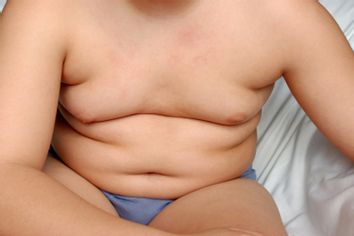
Explaining the quirks of childhood BMI

The body mass index is a flawed measure of your kids' health, but its odd math is proof of our obesity crisis

  • more
    • All Share Services

Explaining the quirks of childhood BMI

A friend of mine said she has a dumb obesity-related question for me: How can 15 percent of kids be above the 95th percentile?

Let me explain.

My friend’s girls — like most kids nowadays — are monitored for obesity as part of their health screening at school. My friend looked at the screening results — in which BMI is expressed as percentile for age and gender (more on that below) — gave some thought to the definitions of overweight and obesity, and realized that the math just doesn’t make sense. We’re hearing time and time again that obesity has reached epidemic proportions, and that a third of our kids are overweight, half of these obese. Yet, if overweight in kids is defined as having a BMI above the 85th percentile how can a third of U.S. kids be classified as overweight? If obesity in kids is defined as having a BMI above the 95th percentile how can 15 percent of the kids be obese? There can only be 5 percent above the 95th percentile, right?

It’s not a dumb question at all, so I’d like to devote this post to some really basic concepts in the diagnosis of childhood obesity, and solve this question for those of you wondering if — as in the imaginary Lake Wobegon of Prairie Home Companion fame — all kids can be above average.

BMI for kids: What is it and why bother with BMI percentiles

Body Mass Index (BMI) is a number calculated from a child’s weight and height (weight in kilograms divided by height in meters squared). BMI is a useful and easy screening tool for body fatness for most kids — it doesn’t measure body fat directly but studies have shown that BMI correlates quite well with body fat in most people.

In adults BMI on its own can assess obesity — we consider an adult (man or woman) with a BMI above 25 to be overweight, and above 30 to be obese — yet in kids a BMI on its own tells us very little. For example: A BMI of 21 — a healthy weight for an adult — is indicative of obesity in a 6-year-old boy, would categorize a 10-year-old boy as overweight, but would put a 16-year-old well within the range of a healthy weight.

Why isn’t kids’ BMI on its own informative? Kids’ body shape and composition change with age. The amount of body fat, muscle and bone transform dramatically with age, and the amount of body fat differs quite greatly between boys and girls. That’s why pediatricians use BMI-for-age charts, in which they plot your kids’ BMI comparing it to kids of the same age and gender.

The BMI percentile allows medical professionals to categorize kids’ weight: A BMI below the 5th percentile indicates underweight. BMI percentiles between the 5th and 85th percentile are considered healthy weight. BMI percentiles between the 85th and 95th percentile are overweight and BMI above the 95th percentile indicates obesity.

Who decides what’s a normal weight?

To establish a percentile chart you’d need a reference population. As we all know, weight (unlike other body characteristics such as eye color, blood type or even height) changes remarkably as a population changes its diet and activity level. Indeed, our kids’ weights as a collective have shifted dramatically in the past 30 years.

Therefore, in establishing the BMI-for-age charts the reference population is the kids of the past — mostly of the ’60s and ’70s, before the obesity epidemic started. There are several charts used around the world, each developed referencing a different population, but they all carry a historic picture of past generations, when childhood obesity was much less prevalent. When you get your kids’ BMI-for-age he’s not compared to the kids of today, but rather to what experts feel is a “normal” population.

And that explains how 15 percent of kids can plot above the 95th percentile — they’re plotted compared to BMIs of kids before the obesity epidemic began in full force.

Is a statistical norm a good indicator of health?

Why do we insist on seeing the weight of the past as the norm, and not accept our new dimensions as the new “normal”?

Obesity isn’t merely a statistical description of the extreme upper end of a bell curve. Obesity is a health issue, and we have plenty of evidence showing that kids with excessive body weight have higher blood pressure, higher cholesterol, are at risk of early onset of many diseases — heart disease, type 2 diabetes, some types of cancer, obstructive sleep apnea, to name a few — and overall have a shorter life span.

Unfortunately, when it comes to weight and BMI, too many kids are above average. Looking at population surveys over time, we see that kids’ weights, as a whole, have shifted up, and that kids are generally more than 10 pounds heavier than kids 30 years ago .

We all want a healthy future for our kids — that’s why we need to get childhood obesity under control.

News flash: Organic food can still make you fat

A new study suggests people think organics have fewer calories. Here's what organics can and can't do for you

  • more
    • All Share Services

News flash: Organic food can still make you fat

A version of this story originally appeared on Dr. Ayala’s Open Salon blog.

We like to eat. We especially like indulgent foods: desserts, snacks and tasty treats. We’d love to believe it’s OK to heap our plates with foods we perceive as “healthy.” Studies have shown time and again that foods perceived as healthy or foods with a health aura drive us — if only subconsciously — to eat more. Foods with “low fat” or “low calorie” claims lead to overconsumption of snacks. A study using hidden cameras at Italian restaurants showed that people dipping their bread in olive oil will eat more fat and calories than if they instead spread some butter.

But organic food labels can lead to overeating, too. In presenting findings from their new study, Jenny Wan-Chen Lee and Brian Wansink of the Cornell Food and Brand Lab showed that the organic seal appears to make people believe their organic snacks have a lot fewer calories than they do. For example, people who ate cookies labeled as “organic” believed that their snack contained 40 percent fewer calories than the same cookies that had no label.

Now, I’m a huge proponent and an early adopter of organic produce, but the organic seal, of course, has absolutely nothing to do with calories.

The benefits of organic food

The organic seal promises that the food and its ingredients have been farmed according to the organic standards, which are about sustainability, how we grow food, and how we treat our environment. These practices also tie to our personal health, given that the multitude of chemical fertilizers, pesticides and herbicides used to produce conventional food actually remain in the food. While it’s hard to prove that any single one of them, in small amounts, causes disease, it’s impossible to prove that they don’t; personally I’d rather minimize exposure to what’s clearly not meant for human consumption (read more about why organic matters in my post here).

The jury’s still out on whether organic produce has more measurable nutrients than conventionally grown produce.

What organic food isn’t

Organic produce isn’t necessarily clean. All too often I see people skipping the washing of organic produce, forgetting that it comes from a field, and has been handled by many hands. Organic produce does need to be washed — thoroughly. While organic food isn’t sprayed with chemicals, microbial life is teeming on and between the leaves. Wildlife visits the fields and can contaminate produce in any number of ways we don’t like to consider when we think of food. There’s also the bacterial mixture from a multitude of human hands that have touched your produce before it gets to your table.

Organic food isn’t automatically healthy, or something we should necessarily consume in large quantities. Organic candy, organic soda or organic French fries — while a tiny bit better for us because they’re free of pesticides — are still junk food, and should be eaten infrequently.

Bottom line

The temptation to believe what we want to be true — especially when it comes to diet and lifestyle choices — sometimes overcomes the prudency of healthy skepticism. It would indeed be nice if there were a way to give an overarching seal of approval to foods — especially to those foods we’d like to eat lots of. But the truth is that most foods are neither “good” nor “bad,” and to make better decisions relating to nutrition and health we have to accept that nutrition and health issues are rather complex, but well worth digging a little deeper into.

If you want to have a clearer idea of what you’re eating, read the ingredient list and nutrition facts, regardless of the atmosphere created — or the claims to health — on the front of the package.

Read the labels on organic foods as carefully as you’d read any other food label. If the food is full of sugars, fats, salt or calories, it should be viewed as a dessert, and should be eaten in moderation. 

Continue Reading Close

How to help your kids love fruits and vegetables

Seven tips for getting children to eat -- and enjoy -- healthy food

  • more
    • All Share Services

How to help your kids love fruits and vegetablesYoung funny girl eating a boiled corn

Although many Americans know they should be eating more fruits and vegetables, only 11 percent actually meet the recommended minimum of five servings a day.

Many parents are worried their kids don’t eat enough fruits and veggies, and this concern is actually encouraging. There’s no better time to address the issue of good nutrition than in childhood. This is the time when eating habits are formed, and what we do as parents can be a lifelong gift of healthy eating and better overall health for our kids.

I think there are plenty of reasons why many American kids don’t jump with joy at the sight of fruits and veggies. For one thing, our country’s culinary culture doesn’t encourage us to eat produce the way a Mediterranean diet, for example, might. Children are also the target of constant TV advertising: Food and beverage companies spend $2 billion a year marketing mostly unhealthful products to kids. Finally, many families — especially those that live in low-income areas — may not have access to tasty, affordable, high-quality produce.

So, what can we do?

A few tips for getting your kids to eat more fruits and vegetables:

1.  Serve them early and often. How early? Flavors from the mother’s diet are transmitted through amniotic fluid and mother’s milk. Studies show that when mothers eat fruit and vegetables during pregnancy and breastfeeding, their babies accept those fruit and vegetables more readily.

Later on, between the age of six and 24 months, the infant is usually most receptive to new tastes and textures, so this is the time to introduce many fruits and vegetables. Even if the initial introduction did not go very well, repeated exposure will often get the baby to like the new food.

2. Be a good role model. Young children copy us, and for a short while (too short!) will tend to believe whatever we say. Sitting at the family dinner table and enjoying a balanced diet rich in plant-based foods will get the message of healthy eating across very well. The fact that in some cultures most young children are excited about spicy and even bitter foods shows that food preference is not a physiological absolute, but more of a cultural, habitual behavior. While the preference for sweetness is universal, other preferences can be learned.

3. Let the fruits and vegetables taste like themselves. Celebrate fruit and veggie tastes for what they are: Good quality vegetables are quite often delicious. Cook them simply, or serve them raw. This way your child will learn to like the food for its flavor and texture.

4. Serve the best quality vegetables and fruit you can find. One of the reasons children and adults dislike some dishes, and generalize that distaste to a whole family of ingredients, is because of an experience they’ve had with a poor-quality fruit or poor preparation of a vegetable. There is a huge difference between an organically grown local tomato, ripened on the vine and picked just today, and a winter tomato from the supermarket. Overcooked broccoli and Brussels sprouts are bitter and emit unpleasant-smelling sulphur compounds. Think about it: If the only two movies you ever saw were bad ones, you might think you don’t like movies.

5. Serve one family meal with no substitutions. Making a “kids menu” is unnecessary and impractical. Beyond infancy, children can be gradually introduced to the family diet and eat whatever we eat in smaller portions. There is no reason why a toddler should eat bland, yellow foods that have cartoons on the package.

A no-substitution policy is important for one simple reason: If a toddler is hungry, he will want to eat. If he has no option but the dish on the table, he is much more likely to give it a try. If he can opt for the mac and cheese instead, why would he stretch himself?

6. Involve children in making fruit and vegetable dishes. Introduce kids to the world of botany and gardening using the vegetable in their dish as a starting point. Take them to the farmers market to meet the people who grow their food. Teach them how to make a good vegetable salad or how to prepare a nice bowl of boiled edamame for a snack. Encourage them to spend time with you in the kitchen, preparing plant-based foods.

7. Don’t pressure, coax, bribe or reward your child to eat fruits and vegetables. Pressuring children to eat a particular food actually reduces their interest and intake of that food and causes undue tension around the dinner table. Offering a reward, even if it’s just dessert, devalues the means (eating fruits and veggies) relative to the reward in the kids’ mind, while what we want them to think is just the opposite.

Encouraging everyone to eat more fruits and vegetables is one point on which all nutrition experts agree. The protective effects of fruits and vegetables and a significant number of other health benefits have been confirmed by many studies. But even disregarding the health their health attributes, these plant foods really are tasty, pretty and colorful, and their biology is so fascinating that there’s really no reason why we shouldn’t all enjoy them, with the proper introduction.

Good luck with what may sometimes seem to be a long journey toward better kids’ nutrition!

Continue Reading Close

Eight early childhood factors that may drive life-long obesity

Why new-mom obsession with baby weight percentile and eating for two while pregnant are misguided

  • more
    • All Share Services

Eight early childhood factors that may drive life-long obesity

A version of this post first appeared on Dr. Ayala’s Open Salon blog.

It wasn’t that long ago when I had newborns — they’re now a tween and teens — and the unspoken competition between new moms was how well our babies gain weight, how high they plot on the percentile charts and how quickly they outgrow their clothes. Chubby was cute, and — it’s embarrassing to say — many breastfeeding moms were encouraged by medical personnel to add on some formula if the baby wasn’t gaining weight at a remarkable pace.

I was already a pediatrician when I had my first son. I knew better, yet I was still in tears — like many new moms I found tears weren’t hard to come by — when a well-meaning nurse suggested I might not have enough breast milk, as my baby was on the 25th percentile, and hadn’t gained much weight in the previous week. I didn’t heed her advice to add formula; I knew that a happy, content baby, who is growing at his own pace, probably needs nothing.

Someone needs to be on the 25th percentile; someone needs to be on the 10th. Kids and babies come in many sizes, and variation in size is as normal as variation in hair color. We can’t all be above average. But then again, maybe the obesity epidemic is proving me wrong.

Studies have shown that the path to obesity starts very early on, perhaps even before birth. Gaining too much weight in pregnancy doesn’t only affect mom’s long-term weight — it may also increase a kid’s obesity risk later in life. And we know all too well that extra weight in childhood persists all too often into adulthood. Of course, carrying significant extra weight has serious health implications, and is a risk factor in many chronic diseases — including heart disease and type-2-diabetes — and shortens lifespan.

While it’s now a fact that a third of American kids are overweight or obese, it’s especially notable that a recent study in Clinical Pediatrics suggests that the tipping point in obesity occurs before the second birthday, and excessive weight gain may start in babies as young as three-months-old.

If that’s the case, interventions aimed at preventing childhood obesity should start well before kids start preschool. But where should we focus our efforts? Which early life factors affect weight gain the most?

Eight early-life risk factors may determine later obesity:

Obesity Reviews recently detailed a study that systematically reviewed the medical literature, looking for early-life factors that affect obesity. From more than 12,000 publications, the authors found 22 review studies that that met their standards, and they found several recurring themes:

Maternal factors

• Maternal diabetes

• Maternal smoking

Infant factors

• Rapid infant growth

• No or short breastfeeding

• Obesity in infancy

• Short sleep duration

• Less than 30 minutes of daily physical activity

• Consumption of sugar-sweetened beverages

Other factors identified as potentially associated with later development of obesity include parental obesity, very high or very low birth weight, TV viewing, food insecurity and low socioeconomic status.

These studies of course do not prove that these factors cause obesity. The associations are hard to disentangle, and many of these risk factors seem to cluster with lower socio-economic status, where smoking, parental obesity, diabetes, unhealthy foods and beverages and a sedentary lifestyle are more prevalent and exclusive breastfeeding less practiced.

Much more work will need to be done before we can say for sure which habits clearly lead to obesity. While it seems that each one on their own increases the risk only by a bit, I think it’s safe to say that some of our age-old notions — that pregnant women should eat for two, that a fat baby is a healthy baby, and that the more (baby-food) the better — were quite clearly misguided.

Nevertheless, none of the obesity-associated risk factors are controversial, or assumptions we’re likely to later regret. Breastfeeding is the first component of healthy nutrition and has a long list of advantages — to both mommies and babies — and should be encouraged and assisted as much as possible for a multitude of reasons.

As for sleep, all parents I suppose cherish their kids’ sleep. There is indeed good reason why we adore sleeping babies. Sleep is as important as food, drink and safety for kids’ wellbeing.

Sleep’s central importance wasn’t something I heard much of in my medical training. I guess telling people who are going to be on call (i.e., awake) every third or fourth night for many years that lack of sleep undermines good physical and mental health would worsen the physician shortage. Sleep’s many secrets are yet to be revealed — we still know too little about how to solve insomnia — but helping babies and kids develop good sleeping habits not only takes care of their health and well being; it also gives parents some alone-time and an opportunity to regroup. And to sleep. And that is priceless!


Continue Reading Close

Lactose intolerance do’s and don’ts

A new report on the digestive issue holds a few surprises for sufferers: Yes, you really can drink milk!

  • more
    • All Share Services

Lactose intolerance do's and don'ts

A version of this post first appeared on Dr. Ayala’s Open Salon blog.

Are most Americans lactose intolerant? Do all dairy products contain lactose? How critical is it to stick to a lactose-free diet?

Although most of us know someone who is lactose intolerant, and “lactose intolerance” frequently comes up in health-related conversations, there are many myths and misconceptions regarding this common digestive issue. I’d like to take a look at this malady and at the findings of a recent National Institutes of Health (NIH) consensus conference on lactose intolerance, where experts in many medical fields pored over the relevant medical literature, discussed findings and developed a state-of-the-science statement that includes a few surprises.

(This post is about the common form of lactose intolerance — primary lactose intolerance — and is not about lactose intolerance that arises from illness or intestinal injury, or the rare cases of babies born unable to digest lactose.)

Lactose and lactose intolerance

Chemistry moment (this won’t take long): Lactose is a two-molecule sugar (or disaccharide) made up of one molecule of glucose and one molecule of galactose. In order to absorb lactose our body needs to break the bond between the two simple sugars using the enzyme lactase.

Lactase is abundant in the human intestine in infancy, but its level declines with age in many people. Lactase production is a fascinating example of our body’s ability to turn genes on and off; while the genetic code for producing lactase is in the cell, the cell can turn off production partially or completely.

Those of us with lower levels of lactase don’t break up some or all of the dietary lactose, which will reach the large intestine undigested; there, bacteria will happily feast on the sugar and produce gasses: carbon dioxide, hydrogen and methane. Undigested sugars can also draw water from the intestinal walls, causing bloating and diarrhea.

But low lactase by itself doesn’t define lactose intolerance; most people who have low lactase don’t experience signs and symptoms (the common ones being diarrhea, abdominal pain, gas, bloating or nausea). Only people with both low-lactase levels (measured by a health professional) and associated signs and symptoms have, by definition, lactose intolerance.

How common is it?

Surprisingly, the NIH panel concluded that we don’t really know.

Many people with low levels of lactase have no symptoms. Many people with gastrointestinal symptoms attribute symptoms to lactose intolerance even if they haven’t demonstrated deficiency of lactase; their symptoms may very well be due to other reasons.

What we do know is that low lactase varies across ethnic groups, occurs less frequently in European Americans and more frequently in African-Americans, Asian Americans and Native Americans.

Do people with lactose intolerance need to avoid lactose?

Let’s start with an explanation of the big difference between lactose intolerance and serious food allergies or gastrointestinal immune diseases such as celiac.

Food allergies can cause life-threatening systemic reactions after exposure to minute amounts of the offending food. Likewise, the intestine of a celiac patient suffers changes to its surface — changes that can lead to malabsorption, anemia and even cancer — even if exposed to very small amounts of gluten.

But not absorbing some of the sugars in our food is part of everyday life for all of us.

Beans, for example, contain sugar chains — called raffinose oligosaccharides — which no human can break down. The sugar polymers are digested by bacteria in the gut resulting in the well-know bean-related flatulence — the butt of many jokes — and can also cause symptoms resembling those of lactose intolerance.

Some people experience no discomfort after eating beans while others limit their intake of beans because large amounts cause them symptoms. There are even individuals who experience such great discomfort that they choose not to eat beans at all. Our individual anatomy and physiology, our intestinal microbial flora, as well as the way we perceive pain and social awkwardness differs a lot. And by no means are beans unhealthy — they are in fact very good to eat!

Milk contains a considerable amount of lactose, much more than the undigested sugars in beans, but the bean analogy can perhaps explain some of the symptom variability we see with lactose intolerance.

Lactose sources

Milk products vary greatly in their lactose content.

Milk itself has a lot of lactose, but aged cheeses have very little (most of the lactose is drawn away in the whey, and what’s left in the curd is fermented by bacteria and mold). Yogurt with live cultures contains bacteria that break down lactose, and therefore causes fewer symptoms. Butter and full-fat cream cheese contain almost no lactose.

So how much milk can people with lactose intolerance tolerate?

The NIH panel looked at the best studies, and concluded that most lactose-intolerant individuals can take in 12 grams of lactose (the equivalent of one cup of milk) in a single sitting with minimal or no symptoms and can tolerate larger amounts if the lactose if ingested with meals or spread over the day. A quart of milk (50 grams of lactose) ingested without food in one sitting will induce symptoms in most lactose-intolerant people. There’s also some evidence showing that the body gets used to lactose, and can tolerate more lactose if routinely exposed to it.

The most important long-term health consequence of lactose intolerance may be calcium deficiency

There are many ways to eat healthy, and dairy is by no means necessary for a balanced diet. Balanced Asian-type and vegan diets are perfectly healthy with little or no dairy. Calcium sources — both naturally occurring or in supplements — are plentiful. (Foods rich in calcium include collard greens, turnip greens, kale, bok choy, soybeans, okra, broccoli, some fish, cultured soy yogurt, tofu, almonds, and calcium-fortified orange juices, soy milks and cereals.)

But dairy products are by far the most prevalent — and least expensive — source of calcium in the Western diet. Since many people with real or perceived lactose intolerance avoid dairy products, they may consume inadequate amounts of calcium and vitamin D (which is added to milk), leading to weaker bones and osteoporosis.

Therefore the diagnosis of lactose intolerance should be made judiciously, and the treatment plan should include assuring that dairy avoidance, if necessary, won’t lead to nutritional deficiencies.

Practical tips:

If you think you have lactose intolerance:

  • Talk it over with your doctor; getting an accurate diagnosis for your symptoms can be important. Some of the causes of recurrent abdominal pain are treatable and it’s not a good idea to commit to an elimination diet for the wrong reason.

If you do have lactose intolerance:

  • Find a reduced-dairy eating plan that controls your symptoms, while enabling both good nutrition and enjoyment of food.
  • Eat dairy products with less lactose (cheese, yogurt) and spread your dairy consumption throughout the day. Consume dairy as part of a meal.
  • Make sure you get enough of the nutrients usually found in dairy, especially calcium.
  • Consider using lactase products; these are dietary supplements that help digest lactose.
  • Above all, listen your body — treatment and diet plans can’t ever be one size fits all. Find what works for you and stay healthy!
Continue Reading Close

America’s school lunch disaster

Michelle Obama's new anti-obesity campaign finally targets school food -- but it's long overdue

  • more
    • All Share Services

America's school lunch disasterin Sharon, Vt., Wednesday, Feb. 3, 2010. (AP Photo/Toby Talbot)(Credit: Toby Talbot)

A version of this post first appeared on Dr. Ayala’s Open Salon blog

School food received some major media attention in the past week.

Michelle Obama launched the Let’s Move anti-obesity campaign last Tuesday, with improving school food as a major program cornerstone. Congress will reauthorize the Childhood Nutrition Act this year—with some planned overhauls and budget proposals underway. And the Obama administration wants Congress to remove sugary snacks and drinks from school vending machines.

Say what? The federal government is trying to limit big food’s footprint in our schools?

If Agriculture Secretary Tom Vilsack gets his way, he intends to do just that: “Food served in vending machines and the a la carte line shouldn’t undermine our efforts to enhance the health of the school environment,” he said.

A short introduction to school food

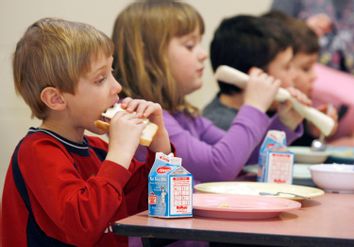
On any school day more than 30 million kids eat a school lunch and 10 million kids eat a school breakfast. Fifty-nine percent of the kids eating a school lunch are from low-income homes, as are 80 percent of school breakfast eaters. The school lunch program operates in all public schools and in many private schools.

The National School Lunch Program was created with a dual purpose — to feed kids and prevent dietary deficiency and to provide an outlet for surplus agricultural commodities. One can already see that the dual purpose of the program throws in some problematic conflicts of interest, but let’s go on.

The government provides $2.68 per day for kids qualifying for a free lunch, $2.28 per day for a reduced-price lunch, and $0.25 per day for all other kids. That sum includes the overhead and facility costs associated with the meal, which leaves just $1 — or less — for the food itself. This is clearly not enough money to fund from-scratch cooking or quality, fresh produce. President Obama proposes bumping up the school lunch budget a tad — which will be better than nothing — but the additional funding probably won’t afford a huge amount of change.

What kind of meal can you get for $1?

An adventurous school teacher vowed to eat the school lunch every day this year, and she’s posting musings and photos of her cafeteria meal in a daily blog. Take a look at the pictures (take note of the amount of packaging) and you’ll get the idea.

I’ve devoted several posts to this subject and analyzed the typical school lunch menu, concluding that the best description for this food is “fast-food” (Full disclosure: I’m both a pediatrician and vice president of product development for a company that makes herb-infused water). Overall, it’s salty, sweet and fatty; the meat is breaded and crunchy; and it’s been highly processed — even the fruit and vegetables aren’t fresh for the most part. Most of the schools have no kitchens and just heat and un-wrap low-grade foods. Nevertheless, the subsidized school lunch complies with some nutritional guidelines and provides plenty of protein and vitamins, and while I think guidelines based on the nutrient profile of foods alone are an ill-advised way to evaluate food quality, at least some rules exist.

But if the federally sponsored and regulated school lunch program leaves much to be desired wait till you get the full picture, because challenging the school lunch, are what are called competitive foods.

These competitive foods — comprised of foods and beverages sold in the cafeteria or in a school store, from a vending machine or in fundraising events — are expressly marketed to our kids and make up a big part of what kids actually eat while they’re in school.

Kids love the vending machines and the school stores, but that’s not the only reason these outlets exist. Schools depend on the revenues that vendors bring in to fund much-needed programs. This creates an unusual and worrying conflict, in which schools share an interest with the manufacturers of snacks and junk foods.

School candy-land

Here are some facts about the scope of the competitive food problem. (The source is an article in the Journal of the American Dietetic Association that looked at data collected in 287 nationally representative schools and included 2,314 kids.)

Availability:

  • One or more sources of competitive foods are available in 73 percent of elementary schools, 97 percent of middle schools, and 100 percent of high schools.
  • À la carte foods sold in the cafeteria are common in all school levels.
  •  Vending machines are available in more than one quarter of elementary schools, 87 percent of middle schools and virtually all high schools.

Consumption of competitive foods :

  • 40 percent of school kids consume these foods on any given day.
  • Consumption is much higher among high schoolers — 55 percent.

Energy contribution of competitive foods:

  • Kids consume about 280 calories per day from competitive foods, and almost two- thirds of these calories were from “low-nutrient” and “energy-dense” foods. (The study defines “low-nutrient, energy-dense food” to include cakes/cookies, desserts, donuts, toaster pastries, snack chips, French fries and caloric beverages, excluding milk and 100 percent juice.)
  • A typical high school kid gets about 340 calories per day from competitive foods, 65 percent (or 220 calories) of which are from junk food.

The most commonly consumed competitive foods:

  • Desserts, snacks (cakes, cookies, candy and ice cream) and sweetened beverages.

So, we have low-quality foods sold in the schools competing with a low-quality school lunch — a competition that’s a lose-lose for our kids. Wherever our kids turn they have snacking opportunities that contribute mostly empty calories.

The only existing federal restriction on foods sold in school is that foods of “minimal nutritional values,” such as candy and soda, won’t be sold in the cafeteria during meal times. That of course doesn’t mean they can’t be sold right outside the cafeteria doors. And although some school districts have taken initiatives to impose restrictions banning some junk food sales in schools, progress is very slow.

It is high time school food begins to resemble a lesson in how to eat healthfully. Right now, the school lunch — and especially the school foods for sale — resemble all that’s wrong in our popular food culture, and explain quite well why one in three American kids is overweight or obese.

Kids spend half their waking hours in school and consume half of their daily calories while on campus. Changing school food is critical in the effort to combat obesity.

I applaud the White House and especially our First Lady for taking on this important issue. “Let’s Move” is the politically savvy way to name what will have to really become a “Let’s Eat Less Junk” effort—but whatever it takes let’s indeed move it!

Continue Reading Close

Page 1 of 2 in Ayala Laufer-Cahana