Bernhard Zand

Moammar Gadhafi hates Switzerland now, apparently

In a somewhat deranged interview, the Libyan dictator reveals a bitter hatred for the small, neutral Alpine nation

  • more
    • All Share Services

Mr. Gadhafi, for years you repeatedly got into shouting matches with the Western world before making your peace with arch-enemy America four years ago. Now you have declared a holy war on tiny Switzerland, of all countries. Why?

Switzerland is one country among many; sometimes you have trouble with one country, sometimes with another. We never had difficulties with Switzerland before. We used to appreciate it as a holiday destination. We used to appreciate its companies and its watches. But then Switzerland began to treat us badly. For example, the minaret issue and the publishing of nasty portrayals of the Prophet. It was necessary to draw a line with the Swiss. That is what I did in my speech in Benghazi to mark the Prophet’s birthday.

And now Swiss national Max Göldi, who has absolutely nothing to do with this, has to pay for your anger against Switzerland? A man whose visa allegedly expired, who has not been able to leave Libya for nearly two years and has been in prison for months. Why are you doing nothing for him?

Only the courts can decide on this.

Do you mean to tell us that you don’t have the power to pardon him?

This is a matter for the legal system. But I’m talking now about Switzerland. Switzerland is a state that stands outside the international community. It is not bound by any EU regulations. It is good that it joined the United Nations in 2002, but the whole time before that it was not a member. Why? It wanted to stand above international law. And that has made Switzerland into a mafia.

Whatever you may now say about Switzerland, previously it didn’t bother you in the least. You did business with the country — your company Tamoil Suisse has dozens of filling stations in Switzerland.

Money is laundered on a grand scale in Switzerland. Anyone who robs a bank later invests the money in Switzerland. Anyone who evades taxes goes to Switzerland. Anyone who wants to deposit money in secret accounts goes to Switzerland. And a large number of owners of such secret accounts have died under mysterious circumstances.

Excuse me?

Yes, Switzerland is behind it all.

Don’t Libyans also have secret accounts in Switzerland?

Yes, there are also Libyans who have such accounts, and many of them have also died in unexplained ways. All around the world, the families of these people are going to sue Switzerland. And one more thing: Switzerland is the only country that allows euthanasia. Why does only Switzerland do that?

Medical euthanasia is also legal in the Netherlands. And, it cannot go unmentioned that Libya has previously had citizens killed abroad who were said to be disloyal.

But we are talking now about Switzerland. It is possible that among the Libyans who you are asking about — and who died abroad — there were also some who died because they had secret accounts in Switzerland.

And you are seriously maintaining that Switzerland as a state ordered the killing of these people?

The investigations will show this. And this brings me back once again to the phenomenon of assisted suicide. A large number of people have been deliberately eliminated under this pretext. Switzerland maintains that these individuals expressed the desire to take their lives. But in reality it was done to get at their money. More than 7,000 people have died like this. I am thus calling for Switzerland to be dissolved as a state. The French part should go to France, the Italian part to Italy and the German part to Germany. Even Ayman al-Zawahiri …

… Osama bin Laden’s deputy …

… took al-Qaida’s money to Switzerland, where it is still located. Switzerland finances terrorism.

Once again: Even if all of this were as you say — why did this never bother you before?

We had already noticed that money is laundered in Switzerland and people die in unexplained ways. But recently Switzerland has given itself away.

Doesn’t your anger with Switzerland in reality stem from the fact that your son Hannibal was arrested by police in Geneva in July 2008 and accused of beating up two people in his employment?

The thing with Hannibal has been nothing but a source of enjoyment for Switzerland. This is a gang that doesn’t care about law and order. The way they treated Hannibal proves that Switzerland respects no laws. A man employed by my son brought accusations against him so that he could remain in Switzerland. They can lock him up — but please do so within the law. The police acted like a gang. They were dressed in plain clothes and they broke down the door, put my son in chains and brought his wife to a hospital. They left his daughter, who is one or two years old, alone back at the hotel. Then they put him handcuffed in a cold storage room, and at times in a bathroom — exactly the way al-Qaida treats its victims. An act of terrorism.

According to the Swiss authorities, something entirely different happened in Geneva. They say that your son beat up two people there.

No, no. Nothing like that happened. Switzerland has not said that to me nor to anyone else. I’m hearing this now for the first time.

But similar things have also happened elsewhere. Your sons have also run into trouble with the police in London, Paris and Germany. What do you say to them when something like this happens?

These are cases of youthful exuberance. In France, for example, my son allegedly drove through a red light. That is normal and nothing out of the ordinary.

Allow us to ask once again: Are you really hearing today for the first time that your son allegedly severely beat two people?

Yes, I’m hearing this now for the first time. All I heard was that the employee complained that Hannibal and his family had mistreated him. I oppose such behavior, whether it is in Switzerland, in Libya or elsewhere. What I am protesting against is the way action is being taken against him.

While we are talking about your sons — which of the seven is closest to you?

I love all of my sons equally. The question of which of them I prefer doesn’t even arise.

In Europe it was presumed for a long time that your second-born, Saif al-Islam, would be your successor.

I am not a king; I don’t need a successor to the throne. (Laughs.) In Libya the people rule.

Your son told us that, as a matter of principle, the office of revolutionary leader cannot be inherited.

That is correct.

Saif al-Islam has negotiated in a number of hostage-taking situations and is respected abroad. Even if he doesn’t become your successor, what plans do you have for him?

He has studied and is well-read; he is a man of the world and has reached an age where he requires no more help from me.

He has criticized you on occasion, for example, in the case of the Bulgarian nurses and a Palestinian doctor who spent eight years in prison because they allegedly deliberately infected Libyan children with HIV. Saif al-Islam admitted that the women had been tortured.

The investigations have produced other results. I still believe that there was a conspiracy to kill the Libyan children.

You have recently been to Europe on a number of occasions. Who do you see as your closest friend among the European heads of state and government?

My closest friend in Europe is Italian Prime Minister Silvio Berlusconi, but a few others are also close to me.

In recent years, thousands of people have drowned as they tried to flee from Africa across the Mediterranean to Europe. What can you do to help end this tragedy?

The European Union should annually pay Libya $6.6 billion via a special fund to combat illegal immigration. We have a precisely calculated plan to solve this problem.

What kind of plan is this?

We will organize housing and employment projects in the refugees’ African countries of origin so they remain there. We will do the same for those who are already in Libya, give them a place to live and create jobs for them. Furthermore, we are bolstering our border security on land and water with modern radar equipment and vehicles.

Thanks to its oil revenues, Libya is currently more financially sound than some EU countries. How much does your country actually earn every year from oil?

I don’t know exactly. (Turns to an aide.) But it could be around $50 billion.

Why don’t you raise this amount yourself?

We are not going to pay for Europe! After all, these are things that benefit Europe.

How are your relations with the U.S.?

Outstanding.

What exactly prompted you to make your surprising turnaround with the Americans?

The big problem between us was Lockerbie …

The bomb attack on an American Boeing 747, which a former agent of the Libyan intelligence service was found guilty of carrying out.

… but we have solved this.

 That was back under former US President George W. Bush.

And then came President Obama.

What do you think of Obama? Many Arabs say that he has already failed with his Middle East policies.

When we speak here of “failure,” it is not Obama’s failure, but rather due to internal American crises. Obama has made no mistakes. In fact, he has achieved a great victory with his health reform, he is sticking to the withdrawal from Iraq and Afghanistan, and he opposes weapons of mass destruction.

If you were to advise Obama: How should he proceed with Iran?

He is taking a very reasonable approach. He is using diplomacy, is not threatening to use violence, military nor terror, as the others did — Reagan, for instance.

And how do you view Iran’s President Mahmoud Ahmadinejad?

He is cooperative, a revolutionary, but not aggressive. And he believes that he is right. Why are the Israelis not kept in check by the West? Why do these campaigns always only focus on Syria, Iraq and Iran? Why is Israel omitted when everyone of course knows that Israel has nuclear weapons? If Obama wants to be successful, he has to start by controlling the Israelis and eliminating Israeli weapons of mass destruction, and then he will also be successful in Iran and throughout the entire region.

Ahmadinejad says that Israel should be wiped off the map. You on the other hand have spoken for years in favor of a state in which Israelis and Palestinians would live together.

I don’t think that Ahmadinejad means the violent destruction of Israel when he says this. I think he is thinking of a new democratic state structure to replace the current state of Israel — on the territory of what is geographically Palestine. No one is talking about throwing Jews into the sea.

You always supported German unity, even at the height of the Cold War, and in the end you proved to be correct. But you have been proved wrong in some of your other predictions, for example, that there will never be “an Islamic nuclear bomb.” What gives you such a sense of confidence in your frequent predictions?

 I look at the facts and calculate the consequences — and when it came to Germany, it was the same as everywhere in the world: Two and two make four. There is no other answer.

Where do you get your facts? Do you watch television? Do you read books?

I get most of them from the Internet. I constantly sit at my computer. I read in Arabic, but now it is of course also possible to immediately get translations from English.

And, based on these facts, what do you predict for the Middle East?

Either the Dimona nuclear facility in Israel will be removed, and a democratic state for everyone will emerge with no differences between Palestinians and Israelis, or war and strife will continue. Then Israel will be the loser and will disappear like a grain of sand in the sea.

Mr. Gadhafi, thank you for this interview.

Battle of the skyscrapers

A building frenzy is raging in Asia, Russia and the Persian Gulf. And cities like New York don't have the money to compete. Will the West soon look outdated?

  • more
    • All Share Services

For an entire century, New York was the city of skyscrapers, the epitome of the vertical city. It just kept growing into the sky, faster and faster. It was an exhilarating adventure in stone, steel and glass — and seemingly unsurpassable.

In “Delirious New York,” his legendary 1978 book about the giant city of skyscrapers and its magic, the young Dutch architect Rem Koolhaas raved about what he called the “colonization of the sky.”

Even the 2001 attacks on the World Trade Center have not diminished the enthusiasm the now world-famous architect has for the skyscraper as a model of success. Despite the disaster, says Koolhaas, the skyscraper is still “about the only type of building that has survived the leap into the 21st century.”

Koolhaas is apparently right. The tower has survived as both a form of architecture and a status symbol. The impressiveness of a city’s skyline is seen as a reflection of its prosperity. Skyscrapers serve as a physical expression of an economic upswing, and bear witness to an economy’s level of adrenaline.

From a Western perspective, at least, this is precisely the problem. Economically booming megacities — such as Beijing, Shanghai and Dubai — where extravagant skyscrapers are shooting up all over, mean that cities like New York are beginning to look old and outdated, despite attempts to modernize. In Europe, the eastern part is beginning to look more modern than the western part. Cities like Istanbul and Moscow are more dynamic than London, Paris or Milan.

There have never been this many skyscrapers on the drawing boards, and most of them are planned for the world’s new boomtowns. The West is eyeing this development with jealousy, all the more intense for its inability to compete. The massive downturn in the American credit market has caused the cancellation or postponement of many major architectural and urban-planning projects.

The battle for the best skyline, which has been under way for more than 100 years, is entering a new round. And it already seems clear who the winners will be: the Middle East and the Far East. Kazakhstan and Qatar could soon be aesthetically more dominant than Europe or the United States. It is an architectural clash of civilizations. One of the most ironic aspects of this development is that, in many cases, it is the West’s leading architects who are driving the transition. Working for newly enriched governments and real-estate tycoons, they are being given free rein to do what would now be inconceivable in their home countries.

An angular building in the shape of a colossal triumphal arch? One designed by Koolhaas was recently completed in Beijing to serve as the headquarters of China Central Television.

A landscape of tall, asymmetrical buildings reminiscent of icebergs? One designed by American architect Steven Holl now stands in the Chinese city of Chengdu.

A pyramid for Moscow that climbs 450 meters (1,476 feet)? It is the work of prominent London architect Lord Norman Foster, who is also designing Crystal Island, the Moscow development that will include it. According to Foster, it is the “world’s most ambitious construction project.”

The megalomania of this boomtown euphoria requires more than just tall buildings. Nowadays, spectacular shapes and glittering surfaces are in demand, eccentricities that are noticeable even from great distances. The “wow effect” is everything; it translates into structures mimicking lilies, harps, trophies, tents and other unconventional shapes.

Hamburg, Germany, architect Volkwin Marg, who runs a thriving business in China with his partner Meinhard von Gerkan, isn’t fond of this tendency toward representational building. For Marg, these “iconic buildings” lack social significance.

Peter Schweger, another architect from Hamburg, describes the current trend as “absurd, atrocious blossoms of sculptural architecture.” He has also noticed an impact on Western architectural aesthetics, where “buildings are starting to be designed like commercial products that can be aggressively marketed.” Schweger describes his own skyscraper designs, such as the reflective Twin Towers he designed for Moscow, as rational.

The investor and the other architect collaborating in the Twin Towers project are Russian, while most of the construction workers are Chinese. At 500 meters (1,640 feet), the larger of the two towers — with its so-called panorama needle — will go down in history as one of the tallest buildings in Europe.

But not for long.

Schweger has just signed a contract to design a new business park in Moscow. The development will consist of 400,000 square meters (4.3 million square feet) of office space. Compared with its surroundings, though, this almost seems modest. As Schweger puts it, the amount of new construction under way in the Russian capital “is almost difficult to fathom.”

Schweger is critical of Russian building standards. “Many buildings are 10 years behind the Western standard technologically,” he says. “The developers have no interest in questions of energy efficiency.”

There are other good reasons to criticize today’s hectic global building trend — aesthetic, environmental and ethical reasons. But few investors or architects are interested. Instead, they prefer to immortalize themselves and watch their towers grow.

Calling it “too brutal,” Schweger says he’s not interested in China. Instead, he is focusing his design efforts on a collection of skyscrapers in Dubai, part of a development somewhat cheesily named “Dubai Pearl.”

The emirate of Dubai is the promised land for real-estate speculators. It is said that half of all construction cranes in the world are in Dubai. But is architectural history really being written there?

Dubai consists of two peninsulas on its western side and an older section on the eastern side, with a kilometer-long line of skyscrapers in between. The skyscrapers look somehow familiar — and not accidentally so. Many of the building’s architectural elements, including the bell tower from St. Mark’s Square in Venice, Italy, and the silver arches of New York’s Chrysler Building, are borrowed.

Giant billboards line the highways cutting through the desert. They advertise the names of urban visions to come, names like Arabian Ranches, Emirates Hills, Springs, Meadows, the Old Town — all in English. Even the names seem borrowed from America.

“Almost everything here is paid for with oil money,” says a man employed by the ruler of Dubai, “but not our own.” The emirate has little more than a few puddles of oil left, and only 4 percent of its current economic output stems from the oil business. Instead, it has created a real-estate bonanza that is attracting billions in investment money that in the past would have gone to New York. The area’s slew of real-estate fairs — with names like “Cityscape Dubai,” “Cityscape Abu Dhabi” and “The Property Shoppe” — attest to how eager investors are to invest here.

The situation in the West is radically different. In the United States, the current guiding principle appears to be: the more glamorous the utopian vision, the more potential investors are determined to back away from the project.

Until recently, borrowing money — and even huge sums of money — was relatively easy. “If I or someone else needed money,” says Donald Trump, America’s most prominent real-estate czar, “all it took was a quick call to the bank, and they’d send the cash over in a car. There was a huge amount of money floating around.”

This is how it was — until the financial crisis hit. The crisis itself was triggered in 2007 in the United States by an overheated market for mortgage loans that private citizens had taken out to buy houses and condominiums. Since then, the banks have been far more tight-fisted. Ironically, it is more or less the real-estate industry’s own fault that it has now become so difficult to borrow money. The boom is over.

A high-profile casualty of the credit crisis is a complex in Las Vegas called the Cosmopolitan Resort Casino. The shells of the two 180-meter (590-foot) skyscrapers are already up. For the lobby, developer Ian Bruce Eichner had ordered 9-meter (30-foot) robots that would play the song “Disco Inferno” on oversize guitars.

The project is now headed for foreclosure, the Wall Street Journal recently reported. One of the investors, Deutsche Bank, is at risk of losing about $1 billion.

Another example is in Los Angeles, where construction on the Grand Avenue Project has been delayed several times. The collection of hotel, apartment and retail towers was intended to revitalize downtown Los Angeles at a cost of $3 billion. The complex was designed by Frank O. Gehry, another top name in the U.S. architecture scene known for buildings clad in stylishly shimmering materials.

The work, initially scheduled to begin last December, has now been postponed until next February. The developers, Related Cos., blamed the delays on the real-estate crisis. Soon one of the investors — Calpers, California’s largest pension fund — withdrew from the project. Now the developers hope their new primary shareholder, the royal family of Dubai, will take a more patient approach.

Yet another of Gehry’s urban improvement ventures has run into difficulties. Gehry was commissioned to transform an industrial wasteland in Brooklyn, N.Y., into a mixed-use architectural pearl. The price tag of the Atlantic Yards project — which New York Mayor Michael Bloomberg praised as a “colossal achievement of one of the world’s leading architects” — was $4 billion. But demand has been unsatisfactory, and Gehry was forced to reduce the size of the largest tower in the complex. According to the developers, construction of several of the planned buildings will be placed on hold.

It’s a tough blow for New York. For real estate aficionados, it remains the “ultimate 24-hour American city,” a place that attracts the global elite. But it takes some effort and a constant series of face-lifts to keep it that way. Where else but in New York is there so must distaste for any form of inertia?

The mayor had a plan to revitalize Manhattan, the heart of the city, with a special focus on the West Side. His vision included building a modern train station, which would have required tearing down the well-known arena Madison Square Garden. But now Bloomberg no longer knows how he is going to raise the $14 billion the project is estimated to cost.

The original plan also called for an ambitious expansion of the Jacob K. Javits Convention Center, a project that has now been considerably scaled back. And the search for an investor for the new Hudson Yards business district — a project that even jaded New Yorkers describe as “megalomaniacal” — recently became nothing short of embarrassing.

Tishman Speyer, a real-estate development company, had initially planned to cooperate on the project with German-American skyscraper architect Helmut Jahn. But then it surprisingly withdrew. Now Related Cos. has stepped in to take advantage of what may well be a historic opportunity. It could take months before the contracts are worked out and before a series of cliffhangers finally comes to an end. This in a city where the sky has traditionally been the limit.

And what about Europe? Will the Old World have to start getting used to the idea of becoming a museum — picturesque, but without any real chance of keeping pace with the iconography-rich growth of other continents?

According to a study by the Urban Land Institute in Washington, a large number of major European deals that were until recently in the planning stages are now “clinically dead.”

Perhaps Vittorio Lampugnani, an Italian architect who works in Milan and teaches architectural theory in Zurich, Switzerland, is merely trying to comfort himself when he says that he doubts whether cities like Shanghai will remain attractive in the long term. As he sees it, with their “layers of history,” European cities “offer the sort of quality of life that will be in demand in the future.” This is what Lampugnani calls “enduring cityscapes.”

At the same time, a sharp division is naturally emerging. Lampugnani admits that the newly minted architects who opt to go to Asia are essentially building skyscrapers right off the bat, while graduates who stay in Europe can count themselves lucky if their first commission is to design a weekend home for their parents.

Still, “if Europe manages its heritage intelligently,” Lampugnani says, “it can be a huge opportunity, not just for culture and the quality of life but also for the economy.”

But more than anything else, the economy is standing in the way. In Spain, for example, the association representing Spanish construction companies estimates that the number of new projects in 2008 will decline by more than 70 percent over the previous year.

Many European cities are not at all interested in becoming open-air museums. For example, London — as Europe’s most important financial center — would like to liven up its Victorian grandeur with a few more futuristic landmarks.

When Norman Foster placed a bombastic, egg-shaped tower in the center of the old city early in the new millennium, it kicked off a wave of modernization. For the most part, Londoners approached the update of their skyline with humor, and Foster’s skyscraper immediately earned the nickname of the “erotic gherkin.”

With plans to construct at least 20 other towers in the coming years, London is enthusiastically launching itself into the 21st century. Although few of these projects have left the drawing board, some have already acquired nicknames. One skyscraper project has been dubbed the “cheese grater”; another is the “splinter.” Others are called “head over heels,” “boomerang” and “walkie-talkie.”

But even in London, where prices had been headed steeply up for a long time, the real-estate industry is grappling with a softening market. Investment volume there is expected to decline by 30 to 40 percent in 2008, and Londoners are not accustomed to this sort of slowdown.

Almost all major projects in London are now considered highly speculative. And what about the fate of the controversial “walkie-talkie” venture? The investor won’t say.

Of course, shopping malls rarely prove to be aesthetic highlights, and architecture fans probably won’t bemoan the prediction that 40 percent fewer shopping centers than planned will be built in Great Britain over the next five years.

But the decline in new construction also affects more ambitious projects. A London architectural foundation that had commissioned British architect Zaha Hadid to build its new headquarters pulled out of the venture, citing “economic nervousness.” When stock prices fall, so does charitable giving, and the foundation relies heavily on private donors.

Although she made it clear that she was disappointed, Hadid has already moved on to other projects, for example, in Dubai and Warsaw, Poland. The modern architect has become a nomad. Like the itinerant tradesmen of the Middle Ages, architects go where the work is. A route that once may have taken them from court to court now leads from continent to continent.

Germany boasts 121,000 architects, the largest number in Europe. Although the country is considered one of the more stable markets, major urban projects — such as Hamburg’s HafenCity — are the exception. Architects are upset that there are so few competitions open to everyone and that the opportunities for young, avant-garde architects to prove themselves are few and far between.

Project cancellations, no matter how discreetly they are handled, are noticed. BMW, for example, decided to cancel plans to build a new “Designhaus,” although it now intends to “prioritize” other projects.

It has been only a year since the Federal Foundation for Building Culture was founded in Potsdam, outside Berlin, yet the new organization has already been sharply critical of the mediocrity of German architecture. Unfortunately, as the foundation’s president, Michael Braum, puts it, it’s been standard in Germany for quite a while “for owners to want everything, but for half the price.”

Distant lands, where developers plan in larger dimensions, seem seductive. Léon, Wohlhage, Wernik, a Berlin-based architecture firm, made a splash in 2007 when it won a competition with well-known competitors to design the new government district in Tripoli, the capital of Libya. The architects named their design “Tripoli Greens,” combining arabesque minarets with parklike settings. However, construction has been postponed and architect Hilde Léon speaks of “a holding pattern.”

As a rule, says Léon, she believes it is important to work in places where high-quality architecture is in demand. “Some countries simply have some catching up to do,” Léon says. At the same time, though, cooperating with controversial regions like Libya doesn’t seem to bother her.

Léon already has her sights set on the next market. It is only a matter of time, she says, before all of Africa will be “the next big thing.” In this context, the word “big” is no exaggeration. What a paradisiacal concept for architects: all that undeveloped land for what Friedrich Nietzsche called representative architecture’s “eloquence of power.”

Translated from the German by Christopher Sultan.

Continue Reading Close

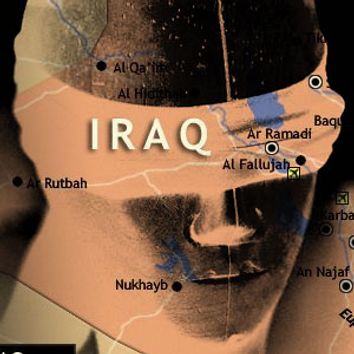
Fear and loathing in Iraq

Nightly shootings, daily suicide attacks, deadly kidnappings and a hundred-headed insurgency have made life increasingly unbearable.

  • more
    • All Share Services

Fear and loathing in Iraq

The road to Baghdad’s airport, long considered the city’s most notorious deathtrap, is flanked by the two neighborhoods Jihad and Amiriya. They have never been considered as exclusive as the area along the banks of the Tigris River, where the cronies of deposed dictator Saddam Hussein once lived. But the districts were nevertheless refuges for members of the Iraqi middle class, who lived there in small villas from the 1970s. At a comfortable distance from the perilous center of power, there were plenty of green spaces, shops, ice cream parlors, schools, parks and mosques. Life was pleasant in Jihad and Amiriya.

But anyone returning to the two neighborhoods these days will have difficulty recognizing the western sections of the Iraqi capital. Within half an hour after sundown, the streets are pitch-black in an area where there is no electricity, and where the only houses with lights are those with rattling, fume-belching generators in their front yards. In the old days, Baghdad’s streets came alive at night, but nowadays the day comes to an end by early evening. No one dares set foot outside, since taking a walk means gambling with one’s life. Shots can be heard every night, and every morning more people are dead.

Handwritten black mourning banners have been fluttering for days on Amal al-Shabi Street in Amiriya. The banners are there to commemorate Bakr Mohammed, who was shot in his grocery shop; Abu Ahmed, who was murdered while on his way to his auto repair shop; and goldsmith Sharif Abd al-Khalid, whose shop was blown up.

“In the name of God the All-Merciful,” begins the obituary for “Dr. Amal al-Mansuri, Martyr,” a pharmacist. According to the obituary, “she was murdered by the cowardly hands of filthy criminals. Condolence visits from November 25-28. We all come from God and we all return to God.”

Only six months after the U.S.-led invasion, the last shop in Amiriya that still sold beer was forced to close its doors. Selling alcohol is a mortal sin for the gangs of young Iraqis who now control the neighborhood. In the changed reality of life in Baghdad today, even male hairdressers who cut women’s hair risk losing their lives unless they abandon their profession.

The killers who forced their way into Sadia Abd al-Hussein’s hair salon weren’t looking for Western customers. Instead, they had their sights set on Hussein himself and his regular Iraqi customers. Three people were dead by the time the terrorists left his shop.

Many hairdressers have switched to the mobile phone business, but that too has become a dangerous profession. Mobile phones play music, and music is “haram” — forbidden under the religious rules the fundamentalist militias seek to impose.

One in four houses in Amiriya is now for sale, as western Baghdad’s once-mixed neighborhoods gradually become more segregated. Shiites are fleeing in droves from primarily Sunni neighborhoods like Jihad and Amiriya, while Sunnis are getting out of majority Shiite areas of the city as fast as they can. But none of Iraq’s religious groups can feel safe as the violence in the once-peaceful neighborhoods spins out of control. “Sunni gangsters shoot faster,” says English teacher Hussam Ali, a Shiite. “That’s the only difference.”

Three weeks ago, another section of the city saw angry protests against the Shiite-dominated government after U.S. troops discovered a secret interrogation bunker run by the Iraqi interior ministry. The soldiers freed about 170 emaciated Sunni torture victims, terrorism suspects the Iraqis had arrested weeks and months ago.

Despite the fact that the prisoners were fellow Muslims, no one in Amiriya expressed outrage over the discovery. “I didn’t hear a single complaint,” says retiree Muhannith Kassim, a former employee in Saddam’s oil ministry. Indeed, Kassim believes that the government does far too little against terrorists in his own neighborhood. “It’s not enough to torture these people in some bunker,” he says. “They should be strung up on the open street, the way Saddam used to do it. They should put the fear of death into these people.”

According to an American study just released, Iraq sees more than a hundred attacks a day — twice as many as last year. Forty-six major bomb attacks, each claiming several lives, were committed in September, making it the deadliest month since the beginning of the Iraq war. About 400 people died in November 2005, more than four times as many as in November 2004.

Criminal statistics in Iraq no longer distinguish between politically motivated killings and conventional murder — and no one even bothers to count the numbers of thefts, blackmailings, muggings and kidnappings. The abyss of violence seems bottomless, and the victims are almost always Iraqi citizens. “There are currently 48 Iraqi victims for each American death,” says Kamran Karadaghi, the chief of staff of Iraqi President Jalal Talabani.

Despite the buzz of commerce in some parts of the country, like the northern Kurdish region, Iraq today is anything but the model democratic state the Americans promised and the Iraqis had hoped for after the fall of Saddam.

Instead, today’s Iraq is the scene of daily horrors. Anyone who spends time standing in front of a police station or near a public institution, a hospital, for example, runs the constant risk of being killed by a suicide bomber. Most attacks are committed by Sunnis, and most acts of revenge by Shiites. The motive of revenge is a tremendous recruitment tool for all terrorist groups in the country — revenge for the destruction of a house, revenge for having to lie in the dust for hours in front of the occupiers, revenge for the death of a friend or relative.

The situation is so bad that some officials in Washington have found it necessary to pay for positive coverage by the Iraqi press. A Pentagon propaganda unit has reportedly made million-dollar contracts with American P.R. firms hired to place pro-American articles in Baghdad newspapers. The questionable approach toward press freedom even has many in the U.S. Department of Defense concerned.

According to Ayad Allawi, a former Iraqi prime minister and considered a leading candidate for the office again in the upcoming Dec. 15 election, there has not even been any progress when it comes to human rights. “They are doing the same things we saw in the Saddam days and even worse,” he complained about the new government authorities in a recent interview with Britain’s weekly Observer.

The kidnapping business is an especially dark facet of violence happening daily. Although abduction for ransom money began in Iraq in the first few days following the invasion, it was hardly noticed because the group most heavily affected was small and shrinking every day — wealthy Iraqis who had not managed to get out of the country in time.

One of them, textile merchant Yassin al-Rubai, 49, comes from the Jihad neighborhood. After much soul-searching, Rubai finally decided to sell his business and move with his family to Egypt. He had expected the drive to the Rafidain Bank in the Mansur neighborhood to be one of his last drives in Baghdad before selling his old BMW. But he was wrong.

A few hundred meters from his house, a red Toyota pulled in front of Rubai, blocking his way. Three men got out, calmly pulled him from his car and threw him into his trunk. “Empty your pockets,” said one of the men, holding a pistol to his head as he lay in the trunk. “You won’t be leaving here before you pay us a lot of money.” Rubai gave the men the $11,000 he had just withdrawn from the bank, and then they shut the trunk and began driving away in the BMW.

Rubai knew that his car’s trunk lock was broken and he was able to open the trunk and jump out. Despite breaking one of his legs and his shoulder, he barely noticed the pain and hobbled from the scene as quickly as he was able, likely saving his life in the process.

He now knows that the men had been spying on him for weeks. Ever since the attempted kidnapping, he has been living with relatives in Sadr City, a Shiite slum on the other side of Baghdad. His leg cast has been removed, but he has already had four surgeries to repair his shoulder. Rubai and his wife have taken their children out of school, fearful that they could be harmed en route. Rubai’s wife spends most of her day sitting apathetically at the kitchen table, sometimes weeping. But the family can no longer afford to flee to Egypt.

As the wealthiest Iraqis have left the country, ransom payments have come down but the number of kidnappings has not. “Ten to 15 kidnapping cases are reported to us each day in Baghdad alone,” says police colonel and Interior Ministry official Adnan al-Hajali. On some days that number is twice as high and Hajali doesn’t even venture to speculate over how many cases go unreported, adding that countrywide statistics are being compiled.

The Interior Ministry has established a department dedicated to tackling the kidnapping epidemic, but few believe it can solve the problem, especially now that its agents’ propensity for torture has been exposed. Even Iraqi police officers have little regard for the new department. “That would be the last place I would go if someone in my family had been kidnapped,” says one police officer. His comment reflects the widespread suspicion that Interior Ministry officials have their own fingers in the pot when it comes to the flourishing trade in human lives.

About half of the abduction cases Hajali lists took place in the relatively affluent western section of the city, especially in the Jihad and Amiriya neighborhoods. The typical victims are Iraqi employees of Western firms — interpreters and employees of the U.S. military, politicians, police officers and security officers. Even children have become targets, reflecting a general decline in moral thresholds.

Saad Jamil is 10 years old and was a pupil at the Ibn al-Heitham elementary school in Adhamiya. In early November, a group of masked men abducted him while he was waiting for a school bus and took him to a warehouse in the Sheikh Omar neighborhood, where they were also holding other children. When the kidnappers called his father, an engineer, and demanded a $100,000 ransom, he barely managed to stammer a sentence, one for which he is ashamed today: “Then kill the boy. I don’t have that much money.” His son was released in mid-November — for a tenth of the original ransom demand.

Over the millennia, violence has always played a major role in what is now Iraq. But kidnapping is a new and increasingly popular weapon, next to more pedestrian crimes, in the growing conflict between Sunnis and Shiites. Nowadays, whenever a prominent Sunni or Shiite disappears, retaliation increasingly comes in the form of another kidnapping. The hostages in these retaliatory abductions are not always exchanged, nor do they always survive.

Iraq’s booming abduction business only entered the global consciousness in April 2004, when a foreign hostage fell into the hands of terrorists for the first time. Whereas Iraqis are kidnapped almost exclusively for monetary gain, the kidnappings of foreigners are often tied to political demands, at least initially. But despite the hundreds of abductions of non-Iraqis to date, it remains difficult to discern any consistent patterns of behavior. Kidnappers are becoming as inscrutable as the terrorist milieu itself.

But almost all cases have one thing in common. Whether the kidnappers are gangs of thugs driven by money or supposedly politically motivated groups affiliated with Iraqi al-Qaida leader Abu Musab al-Zarqawi, none of them hesitate to kill, especially when their hostages are American or British.

As if to convey the message that they must be severely dealt with as punishment for their countries’ invasion of Iraq, American or British hostages are not only humiliated, but their deaths seem to be a foregone conclusion from the moment they are abducted. Especially when they fall into the hands of terrorists like Zarqawi. This only heightens the sense of horror Americans feel when they see images of terrified U.S. citizens captured by terrorists, citizens like 21-year-old U.S. soldier Matthew Keith Maupin. He was abducted on April 9, 2004, in an attack on his convoy and then paraded before the world as a helpless hostage on a video taken by his captors. Since then the fate of Pvt. Maupin is unknown, at least officially, although a poor-quality video released weeks after his abduction appears to show his execution.

The more professional video images of British hostage Kenneth Bigley, 62, are quite the opposite. They reveal a perfidious effort by the terrorists to dramatize the kidnapping and its aftermath. A group affiliated with Zarqawi kidnapped Bigley, an engineer, together with U.S. citizens Jack Hensley and Eugene Armstrong, in September 2004. In an apparent allusion to the al-Qaida detainees in the U.S. camp at Guantánamo Bay, the men, all involved in the Iraqi development effort, were forced to wear orange prisoners’ jumpsuits. The murder of Bigley, whose throat was slit on live video after he had been held for three weeks, remains one of the most gruesome acts recorded during the Iraqi conflict to date.

The relatives of German hostage Susanne Osthoff hope that her close personal ties with Iraq could save her life, but they may not have reason to be too optimistic. Polish hostage Teresa Borcz Khalifa, abducted in October 2004 by a group calling itself the Abu Bakr al-Siddiq Fundamentalist Brigades, probably owes her life to the fact that she had been living in Iraq for 30 years and was married to an Iraqi. After all, the Polish government refused to comply with the terrorists’ demands that it withdraw all Polish troops from Iraq. But the 59-year-old British citizen Margaret Hassan’s relatively strong ties to Iraq did not help her. Her kidnappers were not even impressed by the fact that Hassan, head of Baghdad operations of the British aid organization CARE International, was widely respected in the country for her work on behalf of Iraqis.

“Please help me. Please help me,” stammered Hassan in a video released by her captors. Hassan, who like Susanne Osthoff, was widely seen as a person who would prove resilient under pressure, wept and appealed to the government in London to withdraw British troops, but her efforts were in vain. She was shot on live video. British Prime Minister Tony Blair called the murder of the first female hostage in Iraq “abhorrent,” but he rejected the idea of giving in to the kidnappers’ demands, just as almost every other government affected by kidnappings has.

So far only one head of state, Philippine President Gloria Arroyo, has capitulated to kidnappers. When a group called the Khalid Ibn al-Walid brigade kidnapped Filipino truck driver Angelo de la Cruz, Arroyo came under intense domestic political pressures to meet the terrorists’ demands. She announced publicly in Manila that she would withdraw 51 Filipino soldiers and police officers from Iraq “a few days earlier” than planned. Her efforts paid off for de la Cruz, who was released.

But a government’s unwillingness to yield to kidnapper demands isn’t necessarily a death sentence for a hostage. For example, both France and Italy refused to give in to the terrorists and nevertheless managed to save the lives of hostages. After being held for 157 days, French reporter Florence Aubenas, 44, and her Iraqi driver Hussein Hanun were released unharmed, as was her Italian colleague Giuliana Sgrena, 57. In both cases, the respective governments used their intelligence connections and also did not hesitate to deal with shady middlemen.

The shocking death of Italian agent Nicola Calipari revealed the extent to which Italian intelligence pulled strings to gain the release of reporter Sgrena. The Italians had picked up the journalist from her kidnappers near Baghdad, but Calipari was accidentally shot by U.S. soldiers at a roadblock on the way to the airport. The events surrounding the incident remain a source of tension between Rome and Washington.

Although Sgrena still believes that her kidnappers were “very political,” they didn’t seem to mind that Rome refused to meet their demands, which included the withdrawal of Italy’s troops from Iraq. Sgrena’s release was allegedly brought about primarily by the delivery of up to 8 million euros in ransom money to middlemen in Abu Dhabi. But if Susanne Osthoff has fallen into the clutches of an al-Qaida group, even Sgrena believes that the chances of her release are slim. The former hostage believes that “one murder more or less makes no difference” to people like Zarqawi.

Terrorism expert Mustafa Alani from the Gulf Research Center in Dubai believes the Sunni fundamentalist Zarqawi usually doesn’t kidnap for money. “For al-Qaida, as well as for the larger groups of Iraqi insurgents, it’s the propaganda value of a hostage that’s so important — both to the Western public and to their own supporters,” says Alani, who is originally from the Iraqi city Fallujah.

Alani explains that Osthoff is a hostage of “little political value” for religiously and politically motivated groups, because a German isn’t a particularly attractive trophy for al-Qaida or the Iraqi nationalists. “Germans have no impact on the market in this segment of the kidnapping business,” he says.

Although the overwhelming majority of kidnappings and murders in Iraq are committed for criminal reasons, those crimes by both local insurgents and the religious fundamentalist terrorists will ultimately determine whether Iraq ends up slipping into the chaos of civil war. This is why it is so unsettling to see how little Iraqi officials, as well as American and British intelligence agencies, truly know about an insurgency that has been raging for two years and is increasing in intensity.

Part of this lack of knowledge arises from the fact the guerrilla movement in Iraq is not a homogeneous, national revolt. Comparisons between the Iraqi insurgency and other guerrilla wars in history are of little use. It has no Ho Chi Minh, Castro or Mao, at its helm and the specific political objectives for the daily attacks remain a mystery. The Washington-based SITE Institute, which monitors the activities of Iraqi insurgents on the basis of their publications on the Internet, counts more than 100 resistance and terrorist groups. This increasingly bewildering array of organizations has “no focal point, no leadership and no hierarchy,” says Bruce Hoffman, a terrorism expert with RAND in Washington. “It’s more of a constellation than an organization, and these groups have assumed a structure that guarantees them long-term survival.”

The supporters of former dictator Saddam Hussein have grouped themselves under names like “Flag of Iraq” and “Islamic Army in Iraq.” They liken their struggle to the anticolonial rebellion against the British in 1920. Their goal is to secure the influence of the Sunni minority, and they fear dominance by the Shiites and the Iranian mullahs with whom some Iraqi Shiite leaders have aligned themselves.

The Jordanian terrorist Zarqawi has both latched on to this insurgency and propelled it forward, and he is today considered al-Qaida’s point man in Iraq. His role model Osama bin Laden has dubbed the Iraq conflict the “decisive battle” in a third world war. Zarqawi is able to commit his bombings and murders with the help of a small army of foreign volunteers, religious fanatics who have found their way to Baghdad — and not just from the Arab world but increasingly from Islamic circles in the West. Indeed, there were likely more al-Qaida supporters in Brooklyn than in Baghdad before the war. It is a bitter irony indeed that the once very secular Iraq has become such a hotbed for the spread of jihadist fundamentalist ideology.

The remnants of that secular tradition are reflected in those Sunni groups who are just as attracted to Iraqi nationalism as to fighting non-Muslims. According to a study by the U.S. Army War College, the many-faceted Iraqi resistance movement is “more explosive than in Vietnam, a many-headed snake, incapable of unifying but difficult to kill.”

Statistics on the size of the terrorist organizations in Iraq are just as confusing. According to U.S. military estimates, their numbers range anywhere from 5,000 to 50,000 fighters, and they run the gamut from hotheads willing to fire a Kalashnikov or a grenade launcher for as little as $20 to highly specialized explosives experts with the skills to trigger Russian-made land mines with a mobile phone. Nowadays even children are apparently willing to die as suicide bombers. And in a recent suicide bombing near Baghdad, a Belgian woman who had converted to Islam before marrying a Moroccan became the first European woman to blow herself up for the insurgency.

To save their own skins, some Iraqis have even taken to selling the addresses of members of the new Iraqi security forces to terrorist death squads for a few dinars. The security situation has become so precarious that some Iraqi civil servants wear ski masks on their way to work.

The U.S. ambassador to Iraq, Zalmay Khalilzad, is using generous political concessions to the Sunnis, thick bundles of cash for the Sunni clans, and offers of amnesty for Saddam’s officers in an effort to thin the ranks of the insurgents. His tactics are a reflection of Washington’s aim to divide the rebels. “My philosophy is that we must isolate Zarqawi and those who want to see Saddam back in power from the rest of the country,” Khalilzad says. Officials are already considering issuing a wide-reaching amnesty for any insurgents that do not fall within either of those two categories.

But so far these efforts have not led to a return to normality. The one goal that unites the various insurgent groups is still too tempting: handing a devastating defeat to the American occupiers. Indeed, some Sunni nationalists claim that this is the only reason they have been willing to align themselves with Zarqawi. “Once the Americans are gone, we will fight the jihadists,” promises Abu Kaka al-Tamimi, a former officer in Saddam’s elite Republican Guard who now trains suicide bombers. The holy war against the infidels and the promise of a place of honor in paradise holds little allure for him and others who apparently would be perfectly happy with a decent life in this world.

The American strategy of isolating Zarqawi’s core group of Islamists could still work, says terrorism expert Alani. The group of Iraqi nationalist fighters is increasingly distancing itself from Zarqawi’s cohorts, because they disagree with the goals of the ally of bin Laden. According to Alani, “Zarqawi wants to start an Islamist global revolution on Iraqi soil. The fate of Iraq means nothing to him.”

But the United States’ divide-and-conquer strategy also has its risks. “The leaders of the nationalist groups are concerned that more and more angry young Iraqis are joining Zarqawi’s group,” says Alani. “They see the leaders of the nationalist resistance as too weak and too willing to compromise.” According to Alani, these young recruits are attracted to Zarqawi out of a conviction that “no one can punish our enemies more effectively” than he does.

Jordan’s King Abdullah II has also commented on this fundamental shift in the Iraqi insurgency. Although Zarqawi ordered the series of attacks on three luxury hotels in the Jordanian capital Amman on Nov. 9, they were carried out by four Iraqis — as was confirmed by a woman from Ramadi, the only surviving attacker.

King Abdullah said that he believes that the al-Qaida terrorist network in Iraq, which previously consisted almost exclusively of non-Iraqi Arabs, is increasingly attracting locals. More and more Iraqis are being discovered among the ranks of killed or arrested jihadists, says Abdullah, and at some point this will also apply to the al-Qaida leadership in Iraq. “If Zarqawi is eliminated one of these days, he won’t be replaced by a foreigner,” the king believes. “It will be an Iraqi.”

Washington’s attempts to reduce the number of attacks, control crime and ultimately make the country a safer place have another significant defect: They have met with resistance within the Shiite-dominated government. Muafaq al-Rubai, national security advisor to the government of Prime Minister Ibrahim al-Jaafari, believes that U.S. concessions will only encourage the insurgents to keep up their attacks, threatening to plunge Iraq into a decades-long conflict. Influential Shiite cleric Abd al-Aziz al-Hakim, leader of the Supreme Council for the Islamic Revolution in Iraq, has even asked the U.S. to give Iraqi troops free rein to stage tough counterattacks on the insurgency.

If the Shiites are in fact given carte blanche to fight the insurgents, it would likely remove one of the last remaining obstacles to civil war in Iraq. The country would then descend into years of the kind of carnage that once consumed Lebanon, bloodshed on a much greater scale than the attacks, kidnappings and general increase in lawlessness seen today.

Translated from German by Christopher Sultan

- – - – - – - – - – - -

This article has been provided by Der Spiegel through a special arrangement with Salon. For more from Europe’s most-read newsmagazine, please visit Spiegel Online at http://www.spiegel.de/international or subscribe to the daily newsletter.

Continue Reading Close

Judgment day for Saddam

The trial of the former dictator could be cathartic -- but it could also plunge Iraq deeper into chaos.

  • more
    • All Share Services

When asked his age, Hadji Baki Kokoi first has to think for a minute — back to his 37th birthday on March 16, 1988, the most important day in his life. He and his unit of Kurdish Peshmerga fighters were hiding in the mountains along the Iraq-Iran border. Around noon, the sound of combat aircraft could be heard on the Iraqi side, followed by explosions.

The first refugees began climbing up into the mountains that evening. Their eyes were swollen, and blood flowed from their noses, mouths and ears. They were coughing and vomiting, and many died along the roadside.

The provincial capital of Halabja in northern Iraq had been bombarded with poison gas, presumably a deadly mixture of mustard gas and the nerve agent sarin. Kokoi’s unit waited two days before venturing down into the city to bury the dead. Kokoi, now 55, remembers every gruesome detail of the ensuing two months and seven days he spent in Halabja — the cellars full of corpses, the fathers and mothers who had suffocated and were lying in the streets, holding their dead children in their arms, the farm animals lying dead in the fields. Haunted by these images ever since, Kokoi has finally committed these memories to paper.

Four weeks ago, Raid Juhi, investigating judge on the special tribunal in Baghdad and renowned throughout Iraq for his tough interrogation of Saddam Hussein, came to Halabja. Juhi spent several days interviewing eyewitnesses to the 1988 massacre, and before he boarded a U.S. military helicopter for the flight back to Baghdad, he issued the following instructions: Anyone — even ordinary gravediggers like Kokoi — should write down what they saw happen in 1988. Juhi is preparing the Halabja file, which is expected to develop into the most spectacular of the 12 segments in the massive trial against the deposed dictator and his regime.

Saddam Hussein’s trial begins on Wednesday. Despite high expectations in some quarters, many doubt that it will amount to more than a show trial and are skeptical that fleshing out the past in the courts will contribute to reconciliation among Iraq’s quarreling ethnic groups. Indeed, there are growing concerns that the case against the former despot could pose a serious threat to stability in postwar Iraq.

The harshest penalty

After all, the effort to pay tribute to the concept of law and order is being conducted in a country where lawlessness has become the order of the day. Nevertheless, the Saddam trial, a trial of the century that will give Iraqis the chance to settle the score with a brutal dictator and his henchmen, could indeed bring justice to the victims and serve as a warning to despots the world over. “That’s the most important thing,” says Ibrahim Hauramani, director of the Halabja Memorial Museum, dedicated two years ago by then United States Secretary of State Colin Powell. “We want to be able to look these criminals in the eye, to send a message to anyone who has committed similar crimes.”

Saddam “deserves a harsh penalty, the harshest penalty,” said President Bush, commenting on the trial, which could have political implications for the U.S. administration and its allies two and a half years after the U.S.-led invasion of Iraq. The trial will demonstrate that the controversial Iraq campaign freed the country of a murderous regime, perhaps even overshadowing the justification the United States and its allies originally claimed for invading Iraq, the mistakes of postwar planning, and the abyss into which the country has since descended. For Bush, whose Iraq policies a majority of Americans now oppose, the trial brings the hope of new support.

The U.S. government spent $75 million in preparations for the case. When the first U.S. occupation forces moved into Baghdad, they were accompanied by officials from the U.S. Department of Justice — 50 investigators working for the Regime Crimes Liaison Office, headed by Greg Kehoe, a powerfully built attorney from Florida who had previously investigated war criminals in the Balkans. Kehoe’s team of American prosecutors deposed 7,000 witnesses, while FBI agents secured 2 million documents and archaeologists and forensic experts unearthed hundreds of mass graves. Kehoe is still horrified by what he calls Iraq’s “killing fields,” row upon row of the corpses of women and children, all killed by a single bullet above their left ear, even murdered pregnant women. For Kehoe, one of the most haunting images was the sight of a young boy who was still holding his red and white plastic ball when he was killed. “I’ve been doing gravesites for a long time,” says Kehoe, “but I’ve never seen anything like this, women and children executed for no apparent reason.”

To kill or not to kill

The International Criminal Court in The Hague couldn’t take on the case because, by statute, it can only try crimes committed after July 2002. The tug-of-war over a special tribunal operating under a United Nations mandate was played out like an extension of the controversy over the Iraq war. And former interim Iraqi Prime Minister Ayad Allawi’s insistence that the court be allowed to impose the death penalty quickly obliterated international support for the court, support the United States wanted. U.N. Secretary General Kofi Annan forbade judges from The Hague from assisting in training the Iraqi judges, and the organization Human Rights Watch refused to turn over the evidence it had gathered against the Saddam regime.

In the end, the U.S. invented its own body, the “Iraqi Special Tribunal,” a court whose rules of procedure are a controversial blend of international norms and Iraqi criminal law, including the death penalty at the gallows, which must be carried out within 30 days of the sentencing.

The rules were fine-tuned once again shortly before the trial was set to begin. Saddam Hussein, who suddenly seemed to recall having once obtained a law degree, was barred from arguing in his own defense, a move aimed at preventing the kind of grandstanding that former Yugoslav dictator Slobodan Milosevic used so extensively in his trial.

Victims’ rights organizations, including the group representing the victims of the Halabja massacre, have thrown another wrench into the works for the court’s Iraqi judges. They are insisting that the tribunal address the issue of the Western governments that once supported Saddam, providing his regime with weapons and intelligence. Saddam’s attorneys are also anxious to call as a witness U.S. Secretary of Defense Donald Rumsfeld, who met with the dictator in 1983.

An American show trial?

The fact that this is unlikely to happen has prompted complaint — even from Iraqi minister of justice Abdel Hussein Shandal — that the Americans are exerting too much influence over the trial. “It seems there are lots of secrets they want to hide,” Shandal said.

America’s fingerprints on the court files in the Saddam case have produced yet another unwanted side effect, triggering resistance from the Sunnis who already see the trial as little more than an act of revenge for the victors. As if to bring home that point, the insurgents intensified their campaign of terror leading up to last Saturday’s popular referendum over Iraq’s new constitution. In a letter released by the Americans last week, Ayman al-Zawahiri, Osama bin Laden’s deputy, warned the head of al-Qaida in Iraq, Abu Mussab Al-Zarqawi, to tone down his organization’s brutal attacks so as not to risk losing the battle for the “hearts and minds” of Muslims.

The Iraqi legal team that will try Saddam beginning Wednesday has been housed in the Rashid Hotel in Baghdad’s Green Zone, behind three-foot-high concrete barriers and not far from the presumed site of the trial, a building in the former palace complex. The names of the 49 judges and prosecutors, who are currently in Europe being prepared for the trial, have been kept secret. The murder in March of Barawiz Mahmoud al-Merwani, a member of the team of judges, after terrorists identified him underscored the need for increased security.

Last week, Der Spiegel learned that the chairman of the five-member penalty commission would be a man in his 50s with many years of experience in criminal law. Sources said he is a native of northern Iraq and was apparently recommended for the position by Kurdish leader Jalal Talabani before he was elected president in April.

“You can be sure that this judge will conduct the proceedings with great professionalism, and that he knows how to handle his information — and possible provocations on the part of the defendant,” says a former colleague. “He is known as a gentleman.”

Last Thursday, presiding judge Raid Juhi announced that the tribunal will hear a total of 12 cases. The first case is fairly straightforward: Saddam and his half-brother Barzan Ibrahim al-Tikriti, former Vice President Taha Yassin Ramadan, and five other Baath Party officials will be in the dock. The case deals with the execution of 143 men and boys and the abduction of about 1,500 other inhabitants of the central Iraqi town of Dujail, where Saddam narrowly escaped an assassination attempt in July 1982 and launched a criminal trial against the town’s inhabitants on the same day.

“I shit on the international community”

British television station Channel 4 dug up a film shot by Saddam’s cameraman that shows the dictator standing by the side of a road selecting men for interrogation following the assassination attempt. “I am a member of our people’s army,” stammers one man. Another says that he was just on his way to break the fast, since it was Ramadan. Saddam’s voice can be heard on the tape ordering his men to “take them aside and interrogate them.” The Dujail case is unusual because it includes full documentation of Saddam’s personal involvement and of the chain of command running from the top of the regime through the revolutionary tribunal to the executioners in Abu Ghraib prison.

The opposite holds true for the other major cases set to be tried after the Dujail case: the regime’s expulsion of 200,000 Shiite Kurds to Iran until the early 1980s; the presumed massacre of 8,000 men and boys from the Kurdish Barzani tribe in 1983; the “Anfal” campaign against the Kurdish civilian population during the last years of the Iran-Iraq war; the repression of the Shiite uprising in 1991; and, most prominently, the poison gas attack on Halabja in 1988.

The Halabja file includes an unusual piece of evidence that directly implicates one of the most sinister figures in Saddam’s regime: his cousin Ali Hassan al-Majid, known as “Chemical Ali.” Ali’s chilling words on a tape that was recorded in 1991 after Iraqi troops withdrew from the Kurdish city of Suleimaniya are reminiscent of Heinrich Himmler’s notorious “Extermination” speech in Poznan in 1943: “I will kill them all with chemical weapons,” he said. “Who will protest? The international community? I shit on the international community and on those who pay attention to it. I will not just attack them with the chemicals on one day; instead I will continue with it for 15 days.”

Since his arrest in August 2003, Kurdish politicians and legal experts have argued that Majid should be tried in a Kurdish part of Iraq, not Baghdad. “At least he should be brought here one more time before he meets his fate,” says Ibrahim Hauramani of the Halabja Memorial Museum. In fact, the chances that this will happen are not bad. In a few weeks, the U.S. military will open a new high-security prison not far from the city, on the site of a former military base where Majid’s troops were once stationed. “This jail is not intended for ordinary criminals,” says a high-ranking Kurdish official.

Intense interest in Iraq

Other Iraqis, and even the governments of neighboring countries, would also like to get their hands on Majid and his cousin Saddam. The Shiites in southern Iraq have had a score to settle with Saddam ever since he brutally suppressed their rebellion after Iraq’s defeat in the 1991 Gulf War. The regimes in Kuwait City and Tehran would also like to see the former dictator stand trial in their respective countries.

Last Wednesday, the Iranian justice department filed its own charges against the Saddam regime, in which it accuses the former dictator of “crimes against humanity, genocide, violation of international law and the use of prohibited weapons.” Saddam’s atrocities were so extensive, said Iran’s prosecutor-general, Ghorbanali Dorri-Najafabadi, “that I doubt that the special tribunal will be capable of fully dealing with them.”

Dorri-Najafabadi’s prediction is unlikely to come true, especially in light of the intense interest the case has generated among attorneys seeking to represent Saddam. Ever since the Americans pulled Saddam out of a hole in the ground near his home town of Tikrit 22 months ago, about 1,500 attorneys have registered for the job in Baghdad. In addition to Iraqi lawyers, the list includes prominent international jurists like Ramsey Clark, a former attorney general under President Lyndon Johnson, former French foreign minister Roland Duman, and Jacques Vergès, the “devil’s advocate” who represented major terrorist Carlos and Klaus Barbie, the notorious Butcher of Lyon.

But the colorful collection of legal personalities was disbanded in early August when Saddam’s daughter Raghad, who has been managing her father’s defense from Amman, Jordan, fired his entire defense team, with the exception of Khalil al-Duleimi, an Iraqi attorney from Ramadi.

A recent remark by government spokesman Leith Kubba was particularly unsettling to Saddam’s legal advisor, but also to the many victims of his brutal regime. According to Kubba, if the tribunal imposes the death sentence in the Dujail case, as is widely anticipated, it would have to be carried out “without further delay.” This outcome would deprive many, especially the Kurds and the Shiites, of their opportunity to deal with the wounds of the past by prosecuting the dictator in court.

- – - – - – - – - – - -

This article has been provided by Der Spiegel through a special arrangement with Salon. For more from Europe’s most-read newsmagazine, visit Spiegel Online at http://www.spiegel.de/international or subscribe to the daily newsletter.

Continue Reading Close