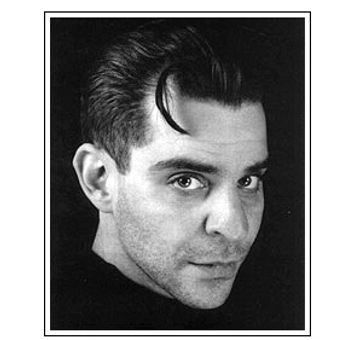
Brett Leveridge

David Rakoff

The author of "Fraud" talks about being Gene Kelly, tiny, tiny writing and the boom in humorous essays.

  • more
    • All Share Services

David Rakoff

When I met David Rakoff, whose new collection of essays, “Fraud,” was published last month, I expected to encounter a chain-smoking, hard-drinking, acid-tongued terror who would quickly put me in my place with a few well-chosen words. I expected the bastard son of Addison DeWitt and Fran Lebowitz.

Instead, he was a gracious, generous and gentle soul. No vitriol, directed at me or elsewhere, was in evidence. I was both relieved and disappointed, like the gullible Weather Channel viewer who girds himself for the Storm of the Century by stocking up on salt, bottled water and other supplies, only to wake up to a mere dusting of snow.

Rakoff warns us in the very title of his book that he is something of a fraud, a cowardly lion whose tough talk hides his fears and insecurities. But then we are all frauds in Rakoff’s world, all deserving of both flagellation and forgiveness.

- – - – - – - – - – - -

How has your association with “This American Life” impacted your career?

It didn’t just impact my career — it made my career. It’s like being awarded a driver’s license without having to learn how to do left turns or parallel parking, just because they want you on the road. That doesn’t happen. So I’m incredibly lucky in that way.

You’ve also dipped your toe in the acting waters from time to time over the years, most recently off-Broadway in David and Amy Sedaris’ play “The Book of Liz.” How do the two disciplines differ?

They’re different sets of muscles. I was going to say that writing is about disclosure and acting is about obfuscation, but that’s such a little lie. Both of them are about obfuscation and masking oneself.

Is the act of writing about masking oneself, or about revealing oneself in the light you prefer?

That’s the thing: It’s about revealing oneself on one’s own terms and about bullying people. [Laughs] It’s interesting — what’s nice about acting is that it’s work that involves other people daily. As you know, writing is not. So it’s been nice to do this play, which has taken up the last quarter of the year — we were up for three months. It’s great to be with people.

Does reading your work in public satisfy that same performing jones?

Yes, it does, definitely. It might even be a little more substantive because the words are your own.

Nearly every piece in “Fraud” finds you in one way or another an outsider. Do you seek out such situations?

Oh, sure. But I think pretty much everybody feels like an outsider most of the time.

You’ve a number of traits that might lead some to consider you an outsider: You’re gay, you’re Jewish and you’re an expatriate Canadian. Have you ever felt pressure from any of those communities to be more of an activist, to more avidly embrace your sexuality, your ancestry or your nationality in your work?

Within the world that I run in, which is a very privileged, insular, small New York world, they’re so normative, and I’m so much a type, that it’s not really an issue. But, simply put, I think it’s far more politically significant that Outside magazine allowed me to, unself-consciously and completely without comment, be visibly, notably gay in a feature article I wrote for it ["Back to the Garden," a revised version of which appears in "Fraud"]. It didn’t have a problem with that at all, and I don’t think anybody noticed. But that seemed significant to me.

It’s an interesting piece. While reading it, I felt a certain interventionist concern for you. You are such an urban being. I became worried that you seemed to be buying into the whole back-to-nature/survivalist training you were undergoing.

The thing that really appealed to me was the stuff you got to make and do. It’s like arts and crafts, but the stakes are life and death. I enjoyed making the things in the wilderness. I found that kind of mastery, that sort of dexterity, is something that really appeals to me; I like to make stuff. I’m handy that way.

There’s a certain challenge such groups like to present, along the lines of “If left on your own out in the wilderness, would you survive?” My answer is no, I wouldn’t, and I couldn’t care less. If society suddenly breaks down, and it’s survival of the fittest, I’m prepared to throw in the towel.

That’s the thing. There are so many other things that would lead up to such a societal breakdown — the looting, the pillaging, whatever. You’d be dead anyway. It’s very rare to be suddenly and hermetically placed in a full survival situation. It’s pure child’s play, a boy’s fantasy.

You grew up in Toronto, a cosmopolitan, cultured city in its own right. So what is it that brought you to New York? And what keeps you here?

There’s no underestimating the history, the sheer historical power, of this city. It’s manifest throughout music, movies, literature, whatever. But what keeps me here is that I’ve been here for 18 years. It’s where I became a grown-up; it’s where most of my formative experiences happened. I groove on — groove on? — that certain direct quality, the emotional immediacy. While Toronto is certainly polite and apparently kind — and it is kind — there’s a social infrastructure that there just isn’t here; there’s a kind of chilly reserve that I no longer enjoy.

I enjoy the fact that, here, everyone in the bank has an opinion about what I’m doing.

Are you living the life you imagined as a youth?

I’m the luckiest person I know. I’m just waiting for the other shoe to drop, checking for lumps. I’m incredibly fortunate right now. The life I lead is different from the one I imagined when I was younger, but equally wonderful. Because it’s real, so it’s very different. You know, all things that are real are different from the febrile fantasy version of them. So it’s more difficult, but it’s richer. It’s more nuanced and … sadder.

But no one’s fantasies ever encompass sadness — even my own. Which is weird, because sadness is a part of everything I think, say, sleep, eat or do. But I’m unbelievably fortunate right now — so much so that it freaks me out a little bit to talk about it. You know what I mean?

I absolutely do. You’re where I was a year ago, when my book had first come out, and I simply couldn’t believe my good fortune. I felt that I was somehow mistakenly living someone else’s life. I used to half-joke that I was on the lookout for runaway buses.

It’s funny you say that. The last time my life was going so well was when I was 22 and living in Tokyo, and then I was briefly felled by that little illness [Hodgkin's disease]. That seemed to be the equation of my life.

May 15 was the book’s pub date, and though I should probably be embarrassed to admit it, I was definitely, on some level, convinced that I wouldn’t actually live to see May 15. I had to fly back from Canada on May 15, and I thought, Well, this is it. Then I realized that, of course, that wasn’t the case, because God’s not as big a drama queen as I am!

What impact did that bout with cancer have on your life? Having survived a serious illness, do you now live life with more gusto?

No, I don’t live with any more gusto; I am still as tremulous and trepidatious as ever. But you must also understand that I felt somewhat dilettantish compared to the other people at the cancer hospital. And that was followed by my moving back to New York at the height of the [AIDS] pandemic. But it had a huge impact on me. It taught me things that are both very ethereal and very direct and pragmatic. Altruism is innate, but it’s not instinctual. Everybody’s wired for it, but a switch has to be flipped. I don’t think that people are naturally sympathetic to other people in that way. So I think having been on the other side of that membrane gave me an appreciation for frailty that I might not have had otherwise.

If you were to be diagnosed again with something, do you think your reaction would be, “Oh no, this time it’s got me,” or something more like, “Well, I beat it once, I’ll beat it again.”

It’s sad to say, but I would probably shut down emotionally in precisely the way I did last time and become just as adamantine and impenetrable. But at the same time, there would also be a sense of “Well … finally! What have you been waiting for?”

If you could swap careers with anyone, who would it be?

Without his politics? Jerome Robbins. I’d be a dancer. Or Gene Kelly.

Are you able to read other writers …

Without feeling bad about myself?

Exactly!

No. [Laughs]

Do you ever say to yourself, “Gosh, I wish I’d written that”?

Sure. Well, more like “Who the hell do you think you are?” directed at myself. Most writing I find chastening. I’m consistently given a reality check by the amount of sheer smarts and talent there is out there.

There are certain writers — Nick Hornby, for one — whose work inspires more than intimidates me. Then there are others, like Michael Chabon, who leave me convinced I’m on the wrong path entirely — that I should turn in my keypad and dig ditches.

That’s the thing — it’s the difference between seeing Gene Kelly dance, who makes you think you could do it, and seeing Rudolf Nureyev, who makes you realize you couldn’t. It’s very, very different.

I’m conscious of it when I read the newspaper. There’s a journalist at the New York Times named Charlie LeDuff. He’s astonishing. He’s like an old-time newspaperman, the kind of people we now read and think, I hope people knew what they had in their presence. I think history will be kind to him.

Before we met, I pictured you as an appealingly acerbic, hard-shelled enigma. I eventually found this to be untrue, of course, and I think that many readers will be pleased at just how much of your gooey center is exposed in the book. Are you ever surprised at how much of yourself you’ve revealed in your work?

I guess I am; it’s that unwitting thing where you really think you’re fooling people. But people aren’t dumb, certainly not as dumb as one is about oneself. I haven’t yet received a lot of reactions, because the book hasn’t been out there very long. I haven’t yet really heard from folks.

Do you relish hearing from people you don’t know?

Sure, if it’s in a kind of unmenacing, uncreepy way. If it doesn’t involve, you know, hanks of hair and tiny, tiny writing.

Most of the pieces in “Fraud” originated elsewhere but have been revised for the book. Was it a positive experience to revisit work that has had a life of its own for some months or even years?

In the final analysis, sure, it was a positive experience. But when I was doing it? Here’s how I like to describe writing: It’s like pulling teeth … out of your dick. The pieces had to become a book, and not just a disparate collection — they had to somehow mesh. There has to be some sort of arc, and I hope that I successfully managed to create one.

I wonder if the relative boom in humorous essays we’re currently experiencing — in your work and the work of David Sedaris, Sarah Vowell, Sandra Tsing Loh and others — relates in any way to the recent rise in popularity of the memoir. You each write primarily in the first person; you base your work primarily on events in your lives. Do we, as a society, feel somehow isolated and therefore see these forms as a way of reconnecting with one another?

I view it more negatively than that; I think it’s probably the culture of narcissism.

I understand why the narcissist is moved to record the minutiae of his existence, but why do so many opt to read these accounts?

I don’t know. I ask myself that every day — and live in fear of the answer.

So you see the rise of the personal essay and the memoir as a negative development?

I think anything I’m involved in, frankly, should be viewed as a negative development.

The day Annie shot me

When a first-time author has his portrait taken by Annie Leibovitz, it changes his life -- at least while she's clicking the shutter.

  • more
    • All Share Services

The day Annie shot me

As an author whose first book, a collection of stories and essays titled “Men My Mother Dated and Other Mostly True Tales,” is just weeks away from appearing in bookstores, I’ve found the path to publication fraught with tiny battles that yield both frustrating defeats (“What? No appearance on ‘Oprah’?“) and unexpected victories (a very funny foreword composed by NBC sportscaster Bob Costas, to whom I used to serve an occasional burger back in my food service days).

But my most serendipitous coup came the day that Annie Leibovitz agreed to take my author photo for
the book jacket. Leibovitz’s witty artistry and my pedestrian puss — there hasn’t been a pairing this unlikely since Michelle Pfeiffer dated Fisher Stevens. I feel like the schmo who stops in for a pack of gum and is awarded a shopping spree when it’s announced that he is A&P’s millionth customer.

I met Leibovitz a year ago when I was part of a small group of people invited to her studio to get a sneak peek at her then-in-progress book, “Women.” It appeared she was in the process of making final shot selections and deciding how they might best be ordered. “Don’t worry about stepping on them,” she assured us more than once as we wended our way through the prints that lined the floor, “they’re only photocopies.” But it was hard to allow oneself to tread on those wonderful images, many of which were so unlike the whimsical celebrity photos so often associated with her. Instead we tiptoed along the 6-inch spaces between the rows where the concrete floor peeked through.

After a bit, I wandered over to chat with Leibovitz. I pointed out those images that I especially liked and asked a few questions about the process of working with such a large and disparate group of subjects. The conversation was a brief one, as was our stay at the studio, but on our way out, I told Leibovitz that I hoped to interview her when the book came out and she seemed agreeable. I had my doubts, though, as to whether she would remember, several months down the road, that she’d made such a promise.

But she did.

Now it’s October, “Women” will soon appear in bookstores, and after I contact Leibovitz’s publicist at Random House, a date is set for the interview. I’m told that she’s agreed to do only a handful of interviews in support of the book, so I’m surprised to have made the cut.

“I’ve been looking forward to this,” she says as she welcomes me to her new West Chelsea studio on the appointed day. “You were the only one to speak to me that day at the old studio. All the others seemed intimidated or something, but you had such kind things to say and asked such interesting questions.”

I’m stunned. Not for a moment would I have believed that she would have the slightest inkling that she and I have ever met before.

As we sit down to do the interview, I tell her that we’re fellow Random House authors, that my first book is to be published by Villard, one of Random’s imprints, in the spring. She asks a couple of questions about my book and we settle down to begin the interview.

It flows easily, more conversation than Q&A. We talk about the early days of her career, about our shared fascination with Mississippi, about how one can sometimes feel trapped by success.

As I pack up my gear at interview’s end, I say, jokingly (OK, half-jokingly), “So, Annie, I have to ask: Do you offer a discount to Random House authors? Because, you know, I need an author photo for my book.”

Am I fantasizing that she might somehow agree to shoot me? Yes, of course, but what I really expect is that she’ll laugh off my silly little suggestion, thank me for my time, point me toward the door and get on with her day. Instead she says, “Oh, you need an author photo? Great, let’s do it!”

I am nearly speechless.

It takes several weeks to finally pin down a date for the shoot. Two or three dates are agreed upon, but each time Leibovitz’s assistant calls a day or two in advance to reschedule — which I find worrisome, as I harbor a sneaking suspicion that the universe couldn’t really be so out of whack that I will actually be allowed to sit for Annie Leibovitz. I’m fearful that there must surely be an out-of-control bus somewhere with my name on it intended to set things right before I make it safely to Leibovitz’s studio.

Finally, an arranged day and time arrives without postponement. I gather a few shirts, two or three pairs of pants, a couple of sweaters and two sport coats and make my way to Leibovitz’s studio.

Here’s what I expect will happen: Some underling will take a quick look at my clothes and, with a grimace, say “That shirt and those pants,” and plant me on a stool in front of an arty gray screen. Leibovitz will appear, a few pleasantries will be exchanged, she’ll shoot 10 or 15 quick shots and I’ll be politely shown the door.

I’ll be there 30 minutes, tops.

But that’s not what happens. Instead I enter the studio’s front office, where several assistants, most of whom I met the day we did the interview, greet me warmly. Leibovitz is not cooling her heels in some back room; she’s right here and seems happy to see me.

“You must be a nervous wreck,” she exclaims. “It’s so nerve-racking to get all ready for something like this, and then have us pull the rug out from under you over and over.” In fact, I didn’t find the postponements all that unsettling. But I find it utterly charming that Leibovitz is concerned that I might have. She comes over, embraces me in a big, warm bear hug, and gives me a good shake, saying, “That’ll loosen you up.” And it does.

We enter the studio. There are several assistants puttering about, gathering equipment and making preparations. Leibovitz and Kim, a stylist for the shoot, watch as I display the clothes I’ve brought; a few ensembles are agreed upon, and Leibovitz announces that we’re going to begin with street shooting, and then return to the studio.

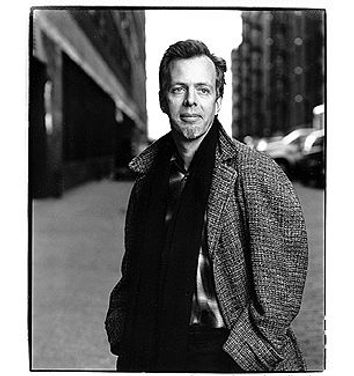
The shooting process is great fun. Kim pops over every three or four shots to adjust the sleeve of my coat or the collar of my shirt. She musses and unmusses my hair. She makes sure my scarf catches the breeze just so.

We’re set up on a side street a couple of blocks from the studio — Leibovitz, Kim, a phalanx of assistants manning huge lights, reflectors and other assorted equipment and me — so it is only natural that pedestrians who pass us on the sidewalk and people who watch from their cars as they motor by might assume that I, positioned at the eye of this creative storm, am … someone. In fact, at one point, I happen to glance in the direction of two young women who have, for quite some time, been watching the proceedings from a few yards away; they smile at me flirtatiously and offer fluttering waves.

This does not happen to me. Young women do not smile at me on the street; they do not wave. These gals clearly think I am … someone.

In truth, I am not someone, not in the sense that these people suppose me to be. Ricky Martin is someone. Calista Flockhart is someone. Leibovitz herself is someone. But because her camera is turned on me, in the eyes of those passing by, I become … someone.

Of course all celebrity is fleeting, and faux fame is the most transitory of all. Mine ends as soon as we return to Leibovitz’s studio for some interior shots. Most of these find me seated, leaning raffishly against what looks to be the same picnic table where Leibovitz and I conducted the interview several months prior.

After an hour of shooting in the studio, it appears we’re about ready to wrap it up. After all, I’ve been there a good two hours already, far longer than I’d ever dreamed I would be, and we’ve surely managed any number of shots that will suit my purposes. But Leibovitz, looking over the Polaroids (she uses a camera that shoots out an instant photo as it exposes a negative), isn’t satisfied.

“I like your beard in person,” she says of my tiny goatee, “but I’m not sure it’s working in all these shots. Why don’t you shave it and we’ll shoot some more?”

Fine by me, of course. I’m not going to decline the opportunity to have Leibovitz shoot another round of pictures of my mug. She sends someone out for a razor and shaving cream and, upon their return, I head for the bathroom and off comes the goatee. We do another 30 or 45 minutes of shooting before I make my way back out into the chill Manhattan afternoon, walking approximately 6 inches off the ground.

Still, it is when the first prints from that session arrive by messenger for my consideration that my worldview is most decisively altered. Here are lush, elegant, beautifully lit photos of the type that one might see in any given issue of Vanity Fair, of Vogue, of Harper’s Bazaar. But it is not Gwyneth Paltrow depicted in these photos, not Brad Pitt, not Rupert Everett.

It is me.

I have long had a complicated, even conflicted self-image. When I stand before a mirror, I sort of like what I see. I don’t kid myself that I’m any kind of Adonis, but that man in the mirror has a pleasant, open and friendly countenance that strikes me as not so hard to take.

The problem has always been finding others — particularly single, female others — who agree with me.

But in these alchemistic photos, Leibovitz has performed some kind of wonderful voodoo. She’s found the elusive me that I see in the mirror and captured it for all to see.

These pictures are how I will look in heaven.

Imagine you were someone who enjoyed playing golf, but who showed no aptitude whatsoever for the game. A mere duffer, you felt lucky when you managed to finish 18 holes with a score in the high double digits.

But one day, miraculously, you shoot an even par game. You don’t set the course record, you don’t shoot a hole-in-one. But you complete a round with a score much lower than you’d ever hoped you might achieve.

I suspect your whole outlook toward the game of golf would change. Sure, you’d return to your hooking-and-slicing ways soon enough, but never again would you despair that a finer game was out of your reach. You’d live your life with the knowledge that one day, if conditions were just right, if the stars were aligned just so, you could again be a scratch golfer, if only for one day.

That describes how I felt after seeing myself in Leibovitz’s lovely photographs.

The trick is to again capture that lightning in a bottle.

If my financial constraints allowed it, I could hire someone to oversee my lighting on a daily basis, to redo my apartment and mark all the spots that show me to my best advantage, to serve as an advance scout when I’m planning an evening on the town so that I am positioned only in the most flattering seats at the best-lit tables at approved bistros and boites.

Instead, like the proud golfer who produces the scorecard that recorded his day of glory every time he plays with a new foursome, I suppose I should just keep one of these photos on my person at all times. That way, if I meet an attractive woman, at a party or on the subway, who seems not to grasp my greater possibilities, I can present the photo and say, “See? Here, given the right conditions, given just the right lighting and a touch of magic, is what I can look like. It’s happened before, and it could happen again. You don’t want to miss the chance to experience this transformation firsthand, do you?”

As pitches go, it’s a long shot, but what the hell — I’ve been on a roll lately.

Continue Reading Close