Brian Montopoli

“It’s not National Some-of-the-Public Radio”

Tavis Smiley tells Salon why he decided to ditch NPR.

  • more
    • All Share Services

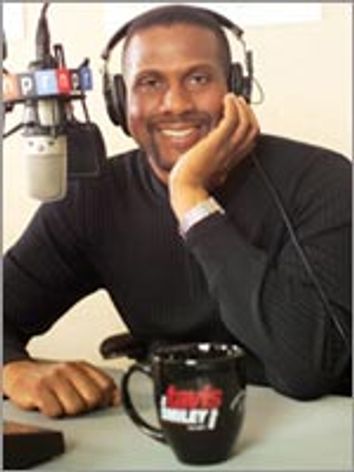
Thursday marks the last day that Tavis Smiley will appear on his eponymous show on National Public Radio. Smiley says he is leaving the network after three years on the air because the show, the first and only in the history of NPR with an African-American sensibility, didn’t receive enough support.

“NPR has simply failed to meaningfully reach out to a broad spectrum of Americans,” he wrote in a Nov. 29 release. “In the most multicultural, multiethnic and multiracial America ever — I believe that NPR can and must do better in the future.”

In the weeks since Smiley’s announcement, NPR has refused to fire back. A version of the show (though, of course, with a different name) will continue — insiders say BET’s Ed Gordon has the inside track as host — but no new minority-themed shows have gotten past “the rough-sketch stage,” according to NPR public relations manager Chad Campbell. Says NPR spokesman David Umansky: “We’re very lucky and fortunate to have had Tavis as our founding host, and we agree that more needs to be done.”

That, however, will not be as easy as it sounds. Public radio has been enormously successful in recent years, thanks in part to David Giovannoni, a public-radio analyst the New York Times calls “quite possibly the most influential figure in shaping the sound of National Public Radio today.” Giovannoni’s research shows that NPR’s core audience — affluent white baby boomers — doesn’t want programming geared toward minorities, or young people, even in moderation. Every time they turn on the radio, he argues, that audience wants to hear the dulcet tones of the Linda Wertheimer sound-alikes who’ve come to define public radio. Many stations believe that following the advice of Giovannoni and his disciples means they will attract more listeners, which means more donations. As a result, their programming has become aggressively unsurprising, rarely straying far from the predictable approach of “Morning Edition” and “All Things Considered.”

Smiley has resisted pressures to adapt his sound, and by many accounts he’s still done well at NPR. Eighty-seven stations now carry “The Tavis Smiley Show,” more than twice what NPR expected at this point in the show’s development, and he has the youngest and most diverse listeners of any show in the network’s history. While some critics felt he was too deferential to his high-powered interview subjects — “He got great guests but he isn’t a great interviewer — kind of like Larry King,” says Brent Cunningham, managing editor of the Columbia Journalism Review — he brought buzz and an impressive Rolodex to NPR.

Smiley will still have plenty to do: He hosts and produces a late-night PBS show, maintains a book imprint, and appears regularly on “The Tom Joyner Morning Show,” a radio show geared toward African-Americans that attracts 8 million listeners a week. On the eve of his departure, he reflected on his time at NPR, his future, and where he expects public radio to go from here.

I was listening to you interview Princeton professor and author Cornel West, talking about recently fired Notre Dame head football coach Tyrone Willingham. West talked about two kinds of liberalism, the “brave version” and the “weak version.” The “brave version” believes in “equal status for black people and is not threatened by black excellence,” while the “weak version” is “frightened by the Tyrone Willinghams, who exemplify such high levels of excellence” — it embodies “a kind of cowardice that really doesn’t want to follow through on the very principles that they enunciate and articulate.” Do you think NPR and its listeners fall into either category?

I think that the notion that is so often promulgated by our friends on the right, that NPR is the liberal media elite establishment, is wrong. It’s wrong for a few reasons. Number one, I believe that NPR makes an effort in its programming to truly be fair and balanced. Number two, it’s wrong because it took them 33 years to find me. That is to say, in 33 years this network had never had a program hosted by a person of color that was specifically designed to help expand the audience and the reach of the network. But it’s wrong, thirdly, because if the network were as committed to the notion of inclusion as I would like for them to be, then I would have re-upped with NPR. I decided not to re-sign because I just could not secure the kind of commitment that I felt we needed to continue to grow the program.

David Giovannoni, the public-radio researcher, has numbers that show that NPR listeners want a unified sound. They don’t want to hear a show geared toward younger or minority listeners. If that’s true, it seems like NPR has a problem, because if it wants to be more diverse it’s potentially looking at a smaller audience.

I think, with regard to the researcher, that would be an exclusionary way of looking at the reality that is America. That said, “NPR” stands for National Public Radio. It’s not National Some-of-the-Public Radio, it’s National All-of-the-Public Radio. And NPR has got to do a better job of making that moniker — National Public Radio — a reality. The fact of the matter is, with regard to the researcher, my research says the exact opposite, that if you have a person of color who gives the audience a program that is smart, that is thoughtful, that is diverse, that has high energy, where the host is not trying to sound like NPR sounds — this is National Public Radio — a host who is more willing than most others to be expressive and to expose himself — and to laugh, for God’s sakes — when you have a host that attempts to do those things, my research shows that the show can defy the minimal expectations that the network has for it.

NPR — and I’ve not discussed this publicly — but NPR’s internal projections were that my show would be on 35 stations by the end of year 3. I started with 16, 16 very small stations. I was missing all the top 10 major markets. And so, they thought, if we were lucky, we might be on 35 stations after three years. We broke through that in the first year. And conquered the top 10. And then conquered the top 25. We’re on almost 90 stations, over a million listeners, in less than three years. And, moreover — and there’s no debate, and they will confirm this — we have the most multiracial audience in the history of NPR, since they’ve been tracking this data. We have the youngest demographic in the history of NPR. And clearly we have not alienated the traditional NPR listener.

Finally, you know, one cannot succeed on National Public Radio if one plays exclusively to an audience of color. Because there ain’t enough colored folk who listen to NPR to register on the ratings radar. The success we’ve had, we have had clearly because the traditional NPR listener embraced this program. So to that end, my problem is not with the stations who courageously carried the program and gave it a chance. My problem is not with the listeners, who have been empowered by the program, and all of the e-mail that I am receiving from all over the place … says very clearly that the traditional listener appreciates the program. My problem is with the slow rate of progress that the network is comfortable with.

I’m just not comfortable with that. I think we can do better, and I think we can do better now. I think we need to take this moment where we’re hot, where there’s buzz around this program, where there’s growth that this program is experiencing. We need to build upon that. My granddad said to me all the time, God rest his soul, that insanity is doing the same thing the same way and expecting a different result. So that if we are going to remain stuck on stupid, we never are going to grow this audience to the level that I think it can attain. But we got to have an unorthodox, unusual, creative way of reaching out to a broader audience beyond the traditional listener and they just were not willing to take that journey.

Well, specifically, what should they have done?

The short answer is marketing, promotion, outreach. You’d be amazed at the number of people of color who do not know what NPR is. There are a lot of folk in white America who know what NPR is and just choose not to listen to it. There clearly is another segment that lives and breathes everything NPR. Having said that, NPR is the best at what it does. I love NPR, and this is the most difficult, painful decision I’ve ever made to leave. I hate the thought of leaving. I dread the thought of leaving. I don’t want to leave. But that decision is born of the fact that there is a third category. People who have never heard of NPR. Don’t know what it is. Don’t know what the letters stand for. Have never tuned in. Don’t know that Tavis Smiley, who is — with humility — a brand certainly within black America, don’t know that my brand is represented on NPR. But if they did, they’d tune in. So there’s so much work that needs to be done, that can be done, and after three years of doing most of the heavy lifting, I just wanted a little help.

You’ve talked about how listeners, at the beginning of the show, would complain that you were too boisterous, or didn’t like your laughter, that kind of stuff. Was there a discussion about how much race would be a part of your show — how black the show could be?

They left those decisions to me. I will say, to NPR’s credit, that I was essentially, though I did not bear the title, the executive producer of the show. You almost have to be when the show bears your name. When you’re hosting a signature talk show, it takes on so much of your personality. And if the show had failed, I would have said, hey, maybe it was too much of me. But it has succeeded, and so I hope that means that I knew a little something about what I was trying to do here.

So, how have you changed NPR?

I don’t know how or, in fact, if I have changed NPR. I hope, and what I hear from the listeners, is that I have changed them. And that’s more important to me, quite frankly. That I have made some small contribution in trying to make America a better place by introducing Americans to each other. By challenging people to reexamine the assumptions that they hold. So I hope that I’ve made the listening audience better. The network says it is going to continue the program and I hope in the coming months and years that they will use all of the resources they have available. I mean, [McDonald's heir] Joan Kroc just gave them $250 million. I hope they’ll use all the resources they have at their fingertips to really make some effort to make this network more inclusive.

And I’m not just talking talent. Top to bottom. Top down, this organization needs to be more inclusive. From the people who run it to the on-air talent. To the producers. To the subject matter they cover. To the treatment they give topics. There’s a range of things that this network ought to do to make National Public Radio more reflective of the country in which it is established.

There’s an old adage that says, “He who breaks through the brush first, gets the thorns.” So, I’m leaving with a few thorns that I’ve picked up here and there, but I can tell you this: I don’t know that I made NPR any better, but NPR has sure made me better. I leave NPR not bitter, but better. Better as a person, better as a man, better as a talent, this experience for me — it’s made me feel better about America. I cannot begin to tell you how this program has made me smarter. I’ve learned so much just hosting the show. I’m going to miss that intellectual vigor, that challenge every day … I so much appreciate the opportunity and experience that I’ve had. I just hope that the decision that I’ve made will, for future generations, be a plus in terms of making this network sound more like America looks.

Prime-time politics

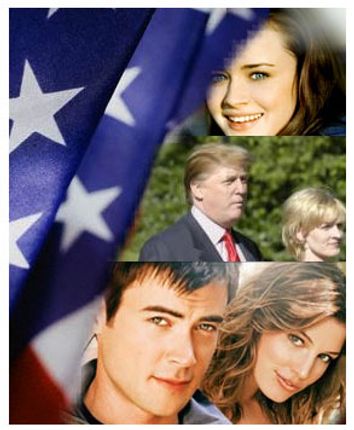
Ever wonder about the hidden political propaganda behind "Gilmore Girls," "The Apprentice" and "COPS"? Worry no more!

  • more
    • All Share Services

Prime-time politics

While partisans debate the bias of Fox News anchors and New York Times reporters in insular communities around the Internet, the rest of America gets much of its politics via the pop culture filter that is prime-time television. And it isn’t usually hard to pin down the political sympathies of, say, “The West Wing” or “ER,” most of whose staff suffer from chronic bleeding hearts; resident everyman, Dr. John Carter (Noah Wyle), came out as a Democrat a few weeks back, and Dr. Carrie Weaver (Laura Innes) retained custody of her infant son only after the parents of her late partner saw the error in their homophobic ways.

But those are the obvious ones. We decided to pick one prime-time show from each night of the week and illuminate its underlying, more subtle politics. It’s not an exhaustive survey, of course — apparently, those tightwads over at the Annenberg Foundation won’t fork over the money for a research staff without some kind of fancy-shmancy “proposal” — but it might give you a clue what’s percolating just beneath the pop culture surface:

SUNDAY: “Jack and Bobby” (9 p.m. ET, The WB)

Ever wonder what would have happened if your mom had been an overbearing liberal-feminist-atheist history professor addicted to the reefer? If “Jack and Bobby” is to be believed, you would have grown up to be president of the United States — as well as a reverend and a Republican. The show (which isn’t about the Kennedys, wink-wink-nudge-nudge title notwithstanding) is the story of two boys, sweet 13-year-old future POTUS Bobby and his affable, jockish older brother, Jack, who each week channel “Everwood” while chafing against their idealistic, condescending single mother, Grace.

Grace isn’t a monster, exactly — she actually borders on sympathetic at times, and, as played expertly by Christine Lahti, is closer to an actual human being than maybe 95 percent of the characters on prime-time TV. But week in and week out, she’s put in situations that expose her as the embodiment of liberalism run amuck. In one episode, she publicly ridicules a Muslim student who refuses to forsake her religion, then refuses to let her increasingly curious son Bobby go to church; for a woman so self-righteous about liberal ideals such as tolerance, the positions reek of hypocrisy. In another episode, she invites an unbalanced homeless man to stay at her house. He promptly scares the kids and steals the television.

It would be unfair to call “Jack and Bobby” a conservative show, and it’s unlikely the show’s creators intended it to be one. But while the show may not approach “Touched by an Angel” territory, the fact that Grace’s liberal instincts are consistently proven wrong gives “Jack and Bobby” an unmistakable center-right undercurrent. One running subplot involves Grace’s new teaching assistant, whose application for the job was pushed through because, unbeknownst to Grace, his family had given millions of dollars to the university. Grace had fired her last T.A., whom she’d gotten through affirmative action, for plagiarism, and when she discovered that strings had been pulled for the new T.A., she wanted to dispatch him as well. But the new T.A. was clearly a hard worker, not to mention charming, so she decided to keep him on — and apparently stop worrying so much about that level playing field thing.

“Jack and Bobby” does allow for shades between black and white. Grace is given some moments in which she seems admirable, and Bobby emerges from his interaction with the homeless man with a newfound sense of compassion. (We’re even told that he’ll eventually switch from Republican to Independent during his run for president, thanks to attacks from within his party.) But the fact that Grace regularly channels her political beliefs into misguided actions makes “Jack and Bobby,” above all else, a cautionary tale in the excesses of liberalism. If I were a conservative who shook his head every time I saw one of those hippie protesters on the evening news, I’d eat it up.

MONDAY: “Monday Night Football” (9 p.m. ET, ABC)

ABC stalwart “Monday Night Football” once featured right-winger Dennis Miller as a commentator. Miller may not be around to inject politics into “MNF” anymore, but Al Michaels, who currently holds down the fort with John Madden, has been there to pick up the slack. Witness this exchange from an early September game between the Indianapolis Colts and New England Patriots in Foxboro, Mass. (The Patriots had just recovered a Colts fumble, swinging the momentum their way):

Madden: “That’s what you call a flip-flop.”

Michaels: “Well, we’re in the right state for that, John.”

It’s not hard to see why football has such appeal for right-wingers. On the field, the game is incredibly complicated, with intricate blocking and defensive schemes and play calls that depend on the kind of quick thinking and deceptive tactics seen in high-level chess games. But it is also a fundamentally simple and satisfying game to watch, with 60 minutes of bone-crunching action resulting in a clear winner and loser. There may be complexity in the details, but the rhetoric, with its invocation of warriors, heroes and goats, is sweeping and grand. Think of the tone of NFL Films videos, where a reverent voiceover speaks in moral absolutes of soldiers who battle on a frozen tundra, the fight for dominance seen through the prism of tradition.

The Bush team, of course, understands that such rhetoric has an innate appeal. One’s place on the political spectrum could perhaps be measured by to what degree we’re won over by sweeping phrases like “freedom is on the march,” five words that strike me as both genuinely patriotic and alarmingly simplistic. There’s not an overwhelming red/blue divide when it comes to football, except perhaps when you account for the intensity of fandom in the South, where college football plays a much larger cultural role than it does in places like New England. But perhaps the division exists in what we take from it. The NFL has relentlessly used the military in its promotions, something liberals tend to find crass and conservatives don’t seem to mind. Football can be used to reinforce the thinking behind Bush’s vaguest rhetoric, with its ties to patriotism and its presentation of a nuance-free world of black and white with winners, losers and very little in between. For those on the right, it makes one hell of a metaphor. The rest of us just want to watch a game.

TUESDAY: “Gilmore Girls” (8 p.m. ET, The WB)

It took me a long time to actually sit down and watch “Gilmore Girls,” and for good reason: There seem to be more than enough reasons to avoid it, such as the beatific New England locale populated by seemingly stock “eccentrics” we’ve all seen on countless other shows and an intro that suggests a level of teenage chickiness most would find impossible to take. But “Gilmore Girls” is a pretty damn good show, with a built-in class critique more powerful, if less obvious, than its spiritual cousin on Fox, “The O.C.” The back story is that Lorelai Gilmore ran away from home at age 16, abandoning her wealthy parents to raise her newborn daughter, Rory. Now Rory has become a teenager who lives with Lorelai in Stars Hollow, a town near Hartford, where Lorelai’s parents make their home.

If “Gilmore Girls” had a conservative slant, Lorelai would likely have spiraled downward after her teenage pregnancy, returning to the fold to find her way. But she went her own way, and after a bumpy road, she’s actually doing pretty well — and her daughter, who recently enrolled at Yale, is almost preternaturally well adjusted. Her parents, meanwhile, are a mess, emotionally distant ciphers insulated by their wealth and seemingly unable to maintain a real connection with anyone, including each other. The show, which is awash in clever, rapid-fire repartee, inverts the lessons built into the vast majority of conservative, family-centric shows, from “Leave It to Beaver” to “7th Heaven.” The message of “Gilmore Girls” is that unconventional choices can add up to a better life than traditional ones. “The O.C.” may have a more obvious wrong-side-of-the-tracks dynamic cribbed from “The Outsiders” and countless predecessors, but “Gilmore Girls”‘ message is ultimately much more subversive. (And just in case you’re still not convinced, consider this: In the alternative America of Gilmore Girls, Al Gore occupies the White House.)

WEDNESDAY: “Law & Order” (10 p.m. ET, NBC)

The lovable right-wingers over at Free Republic have particular disdain for “Law & Order,” possibly dating to the time when the show savaged Ken Starr in an elaborate two-hour send-up. “‘Law & Order’ serves in socialists’ culture war against whites,” wrote one. Another imagined “‘Law & Order’ writers sitting around an Upper West Side coffee house” dreaming up liberal-leaning plot lines, while a third wondered, “Couldn’t the producers just leave out all those political comments?” The answer to that question, of course, is no, since when you have to provide compelling crime drama on a weekly basis, it’s inevitable that you’ll touch on the controversial. Of course, “L&O” writers haven’t exactly shied away from controversy: This season started with two polarizing “ripped from the headlines” story lines, one about a bitter 9/11 widow and the other featuring the vengeful sister of an Iraqi prisoner tortured at Abu Ghraib prison.

But the Freepers are wrong to portray “L&O,” which features some of the most sophisticated political back and forth in prime time, as one-sided propaganda. Look at the Abu Ghraib episode: We heard from (a) a military commander who said it was worth psychologically torturing prisoners if it saved innocent lives, (b) a former Iraqi citizen who complained America protected Iraq’s oil fields but not its people, (c) a detective who says the prison-abuse scandal was blown out of proportion, (d) a district attorney critical of the war who wonders why we didn’t invade Rwanda, and (e) another D.A. who defended the war. The latter is played by Fred Thompson, a former U.S. senator who, most episodes, articulates a pointedly conservative point of view.

It’s also worth pointing out that in shows like “L&O,” as well as imitators like CBS’s “CSI” and “Cold Case,” the protagonists are governmental figures, and you’re generally expected to sympathize with them. You want the cops to figure out who committed a crime, and you want the lawyers to make that person pay. The shows reinforce cultural messages about the sanctity of the social order. That isn’t to say that “L&O” panders to traditional conservatism — for the most part, the show is both more balanced and more intelligent that the political programs featuring partisan carnival barkers that pop up on cable news networks. But “L&O” and its imitators are celebrations of governmental authority figures. It’s tough to argue that prime time has a liberal bias when so much programming features heroic cops and prosecutors instead of sympathetic social workers and heroic public defenders.

THURSDAY: “The Apprentice” (9 p.m. ET, NBC)

I used to be puzzled by the fact that all those Upper West Side coffeehouse dwellers I know eat up “The Apprentice,” despite the fact that Donald Trump may well be the closest thing America has to an embodiment of shallow materialism. But somewhere along the line I figured out that the show works better as a wicked satire of traditional capitalism than as a celebration of it. Sure, there are those that see “The Apprentice” as a window into a business world in which talent and the elevation of work above all else are justly rewarded, who marvel at the opulence of destinations Trump invariably describes as “the most luxurious in the world.” But for the rest of us, the show’s portrayal of back-stabbing, ambitious overachievers drooling over an ultimately meaningless brass ring is one of the most persuasive arguments against life in the boardroom that there is.

That’s why “The Apprentice” really is a liberal show, no matter how much Trump tries to spin it the other way. It exposes the artifice behind what we otherwise might have thought an ideal life, much like a particularly disappointing trip to the Playboy mansion might. Conveniently, the genre is about to reach its apotheosis with the debut this Sunday of Fox’s “My Big Fat Obnoxious Boss,” a show that takes Trump’s ridiculous conceit a step further; even those who take “The Apprentice” at face value — people whom a friend describes, perhaps too unkindly, as “rural rubes” — will be in on the joke on that one. And then we’ll all be laughing as the high achievers we’re theoretically meant to emulate are made even more obvious targets of ridicule.

FRIDAY: “Reba” (9 p.m. ET, The WB)

There’s a reason that you haven’t heard much about “Reba,” even though the WB likes to describe it as “edgy.” And it’s not that “Reba” sucks, although, to be honest, it’s nothing to write home about. “Reba” belongs to a category of shows — along with CBS’s “Two and a Half Men” and “The King of Queens,” ABC’s “8 Simple Rules,” and countless others — that are constitutionally committed to never breaking new ground. Even though there is more obvious conflict in these shows than there was on, say, “Father Knows Best,” there’s the same underlying message: As dysfunctional as families can be, they’re still the best way to organize American life. Reba (played by country icon Reba McEntire) is divorced, but she still leans on her ex-husband and kids, and is willing to sacrifice to maintain her household above all else. Family matters, as “Family Matters” so eloquently put it. Even ostensibly more risk-taking shows play by these rules: The “Friends” married off and paired up, the men of “Two and a Half Men” formed a family unit to raise a kid, and the “Sex in the City” women wanted nothing more than a satisfying relationship. Even “Roseanne” and “The Simpsons” are, at heart, about the value of family above all else.

It’s easy to see why shows about the sanctity of the status quo are so popular. After a long day’s work, most Americans don’t want to come home to shows that question the very values around which they’ve organized their lives. Most TV is about entertainment and escapism; being confronted by a revolutionary idea is the last thing many of us want on a Tuesday night. And the corporations producing these shows have little reason to rock the boat by using pop culture as a vehicle to question our assumptions.

There have been shows that break the mold, however, even if “Reba” isn’t one of them. “One of the most revolutionary mainstream shows was ‘Married With Children,’” says Robert Thompson, director of the Center for the Study of Popular Television at Syracuse University. “The message was that everyone in that family would have been better off if they weren’t in that family. That’s really subversive on some level.” Until Reba walks out on her kids or becomes consumed by the debilitating pessimism exhibited by Al Bundy, however, the WB’s claims of edginess ring a bit thin.

SATURDAY: “COPS” (8 and 8:30 p.m. ET, Fox)

John Edwards likes to talk about “two Americas” — one privileged and the other overburdened. We see the first of those Americas on television all the time, on shows about lawyers, doctors and shallow Ivy Leaguers vying for the favor of capricious millionaires, but we don’t see the latter too often — unless we’re watching an interview with the parents of a soldier stationed in Iraq, the press conference of an overwhelmed Louisiana lottery winner or the parade of depravity offered up weekly on “COPS.” The other shows on Saturday night are mostly standard comfort food — among the options are ABC’s “The Wonderful World of Disney,” CBS’s “The Amazing Race” and NBC’s movie of the week — but “COPS,” which Fox pairs with “America’s Most Wanted,” gives us reality in all its disturbing squalor, with the drug-addled, violent and desperate poor having their pathetic lives put before the cameras to make that reaming out our boss gave us last week sting a little less.

Honestly, though, America: Can’t we do better than this? “COPS” teaches us that the poor deserve to be that way, and as an antidote to runaway political correctness, it might have a cultural function. Even a staunch Democrat watching the show would be hard-pressed to argue that the shirtless drunk driver with the tooth-impaired, possibly underage girlfriend deserves a welfare check funded by our tax dollars. But what is this celebration of the value of unfettered capitalism really a response to? We almost never see the large swath of underprivileged America that Edwards likes to invoke, and so many Americans can’t even begin to contemplate the possibility of a hardworking, socially responsible underclass. Instead, they’re given a show that functions to free them from any lingering guilt about their relative affluence. “COPS” is perhaps the most Republican show on television, a horror show that offers up anecdotal evidence in support of harsh prison terms, tax cuts for the rich and a curtailing of welfare programs. If it were the only thing we had to watch, Bush would win in a landslide.

This story has been corrected since it was originally published.

Continue Reading Close

Target: Boobs, guns and Coke

A new advocacy group called Common Sense Media is starting to rate the "kid friendliness" of movies, TV shows, CDs and video games. Will their services be a godsend for parents -- or just another V-chip?

  • more
    • All Share Services

Remember the V-chip?

Back in 1996, the so-called violence chip, which can be programmed to block television shows with objectionable content, was touted as a technological godsend for parents looking to control their children’s viewing habits. Two and a half years after it became a requirement in all TVs 13 inches and larger, however, only 17 percent of parents report using it — thanks in large part to lax efforts by the television industry to publicize the chip’s existence. It should come as no surprise, then, that according to Nielsen Media Research, the most popular prime time show among 6- to 11-year-olds during a typical week in March was “Fear Factor,” a show that celebrates those willing to eat large servings of pig rectum.

Enter Common Sense Media. The San Francisco-based advocacy group — which has the support of leading academics and businessmen, as well as half a million dollars in start-up capital from prominent financiers — is a nonpartisan organization that aims to make media producers accountable to families while urging them to invest in high-quality programming for children. The group — whose motto is “Giving your family and choice and a voice” — recently unveiled a Web site that evaluates the kid-friendliness of everything from movies to books to music, and it hopes to make its “lifesaver” icon — a round disk that breaks down entertainment by both age- and content-appropriate categories — so ubiquitous that it eventually replaces the current ratings systems. With the help of restaurant guide guru Tim Zagat and the publishing industry, the group also plans to offer slim, easy-to-read weekly guides available at newsstands and through the mail; parents will be able to flip through them to judge whether the latest episode of “Boston Public” or “Friends” is appropriate for their kids.

“The current media environment isn’t as kid or family friendly as parents wish it were,” says Common Sense Media founder and CEO Jim Steyer, a Stanford University professor and the author of “The Other Parent,” which discusses the media’s effect on children. “It’s an unregulated, free-market free-for-all. The industry does not have the best interests of kids at heart. They view them as little consumers. We want people to understand what’s out there.”

Steyer hopes to build a “critical mass” of concerned parents that will eventually be big enough and powerful enough to influence media conglomerates. But how likely is it that harried parents will even have the time to check out the group’s Web site? Steyer insists that the site is “only a fraction of what we’re going to do” — and argues that word of mouth, as well as the increasing visibility of its ratings, will eventually put the group in a position to force limits on harmful marketing and give parents more control over the messages their children are exposed to. Perhaps more daunting than capturing the attention of parents, however, is the group’s lofty goal of influencing the ratings boards. When it tries to get its ratings placed on products, Common Sense will have to take on the Motion Picture Association of America, which oversees both movie and television ratings, as well as the Recording Industry Association of America, which regulates compact disc warning labels, and the Entertainment Software Rating Board, which comes up with the ratings for video games. These groups have been around for years and have a lot of political clout.

“Poll after poll shows that our ratings system is meeting the needs of the audience we seek to serve,” says Rich Taylor, spokesman for the MPAA. “There’s a reason that the ratings system has sustained for 35 years.”

Steyer, however, says that the current system is woefully inadequate.

“Who is the MPAA ratings board? Some anonymous people who live in L.A.,” he says. “They’re not child-health experts. The current ratings system is just a way for the industry to regulate itself, and there’s obviously a conflict of interest there.” (Taylor counters that the identities of the board members are kept hidden to protect the system from corruption, and he says that everyone on the board is a parent.)

A recent poll of 1,000 parents, conducted by research firms Penn, Schoen & Berland and American Viewpoint, suggests that Common Sense Media may be on to something. Ninety percent of the parents polled said the amount of marketing in media makes children too materialistic, and 66 percent said they could do a better job of supervising their children’s media diet; another 85 percent said that they would benefit from an independent media guide like the one Common Sense Media is building. But naysayers point out that despite a swell of popular and political support, the last great experiment in regulating media, the V-chip, quickly fell off of the cultural radar.

“A lot of families have a hard enough time monitoring when kids are watching TV in the first place,” says Robert Thompson, director of the Center for the Study of Popular Television at Syracuse University. “I can imagine a scenario where the parent is downstairs on the Web site while the kid is watching something he shouldn’t be upstairs in his bedroom.” Thompson is also troubled by the prospect of any one ratings system becoming dominant. “In using the ratings, a parent is making an assumption that they have the same value system as Common Sense Media,” he says. “Different people are going to have different opinions on the appropriateness of something.”

The lifesaver icon was conceived to deal with some of those concerns. It includes an age recommendation in the center and four surrounding quadrants that gauge a product’s language, sexual content, level of violence, and general content — the last of which covers such vague categories as “scariness” and “social behavior.” Steyer insists that reviews coming from Common Sense Media, unlike those from groups like the conservative Parents Television Council, will never have a particular religious or partisan viewpoint, and the group will not take donations from media entities that might seek favor in its reviews. As with the Zagat guides, controls are written into the system to weed out the influence of those with a vested interest. “This isn’t a conservative or liberal issue,” he says. “It’s a basic societal one.”

But do parents really need an advocacy group to tell them that the 50 Cent album “Get Rich or Die Tryin’” — the one with the cover image featuring what appears to be a piece of glass punctured by a bullet hole — isn’t appropriate for small children, or that the Brazilian gangster movie “City of God,” which features murderous gangs of roving teenagers, is quite violent? A lot of the ratings just reinforce good old, well, common sense. And the content on the site can occasionally seem corny and out of touch. For example, on its list of the “Top 10 Graduation Party Songs for Teens,” Common Sense lists the Eagles’ “Take It to the Limit.” That might have been hip in 1975, but when was the last time you heard it playing on a teenager’s iPod?

What is novel about Common Sense is that its members are just as concerned with the rampant commercialism found on networks like MTV as they are with sex and violence. The group’s review of Fox’s “American Idol” laments the “product placement and sponsorship” on the show, and instructs parents to “make sure the kids see this is just a commercial.” Steyer says that the Fox Kids lineup, as exemplified by the Power Rangers series, is designed purely to sell licensed merchandise to children, with little concern for the message they might be receiving. He also lambastes the new Disney Visa Card ad, in which children encourage their parents to spend as much money as possible in order to win a trip to Disney World.

“There is just this barrage of selling, selling, selling that kids are exposed to without parents even realizing it,” says Steyer. “The average kid in America spends 47 hours per week with media, but the media industry has gotten a free ride from political leadership because they depend on media company contributions and coverage. They are beholden to media companies and thus are reluctant to criticize them or hold them accountable.”

But if parents give Common Sense Media the same reception they have given the V-chip, the group might become just the latest example of culture warriors’ good intentions going largely ignored.

“The parents who care enough to check out Common Sense Media,” says Thompson, “aren’t necessarily the ones who need to be using it.”

Continue Reading Close

Not your parents’ neo-Nazis

William Pierce may be dead, but his heirs carry on -- this time hoping to reach out to their "Arab brothers."

  • more
    • All Share Services

William Pierce, the spiritual and intellectual leader of the white supremacist movement, died Monday at the age of 68. For many, it was a reason to celebrate.

Those who monitor hate groups are welcoming Pierce’s death as a serious blow to the white power movement, which has quietly been gaining steam since Sept. 11. And while they would probably never admit it, many within the white power movement are themselves quietly lauding Pierce’s passing, which they see as an opportunity to transform Pierce’s National Alliance from a relatively small, ideologically driven fringe organization into something more resembling a European-style fascist movement.

Pierce had become a thorn in the side of the less ideologically pure in his own organization, those most concerned with broadening the white power base. A white power traditionalist who resisted public demonstrations and often refused to campaign for new members indiscriminately, Pierce had long opposed those more interested in membership numbers than his message. With Pierce gone, his followers can move forward with their intention to pursue a cause Pierce would never have approved of: the plight of white power’s new, post-Sept. 11 Arab brothers — the Palestinians.

Pierce, more than most white supremacists, was an elitist. The author of the influential hate manifesto, “The Turner Diaries,” which Timothy McVeigh, among others, has credited with his own descent into violent hatred, Pierce clung to the notion that only the talented few were worthy of being drawn to his cause. He sought to recruit people that had good jobs and positions of authority, not, as he once put it at a National Alliance leadership conference, “the freaks and the weaklings,” the uneducated skinheads who represent white power groups in the popular imagination. In his idealized National Alliance, all of the screw-ups would matriculate to other groups, like the Ku Klux Klan — an organization Pierce derisively lauded for attracting white supremacists of a lower class.

But Pierce lived long enough to see — as his influence waned — the first signs of a gentler, more inclusive National Alliance. Sensing an unprecedented opportunity after the terrorist attacks, Pierce’s deputies began talking of finding common cause with other groups by embracing the Palestinian cause as a vessel for their anti-Semitism. Anyone likely to be duped by the group’s ludicrous new pro-Palestinian campaign is probably not smart enough to have met with Pierce’s approval.

But these are desperate times for hate groups, and Billy Roper, the public face of the National Alliance and Pierce’s possible successor is apparently a populist at heart.

“He’s looking for anybody with a pulse,” says Joe Roy, of the watchdog Southern Poverty Law Center.

The new National Alliance will be on display on August 24, when Roper’s extensive — and somewhat tortured — public relations campaign will culminate in a protest outside the U.S. Capitol. It will be, according to Roper, the “largest gathering of white nationalists since World War II.” Roper is prone to exaggeration, but it’s worth taking him seriously in this case: The protest will be just the latest in a series of D.C. rallies, each bigger than the one before, and it could attract as many as 1,000 skinheads, neo-Nazis and rank-and-file white separatists.

It’s also the latest development in what has been the National Alliance’s post-9/11 strategy. After the terrorist attacks, Roper posted this message on his Web site: “The enemy of our enemy is, for now at least, our friends.” The organization had decided to feed off the resentment and mixed emotions that came out of the attacks, and it was willing to do something that would appear, on its surface, to be bizarrely counterintuitive: embrace people of color, especially like-minded Middle Eastern separatists. “We may not want them marrying our daughters, just as they would not want us marrying theirs,” Roper continued. “We may not want them in our societies, just as they would not want us in theirs. But anyone who is willing to drive a plane into a building to kill Jews is all right by me. I wish our members had half as much testicular fortitude.”

In May, Roper led a rally of about 250 white power advocates outside the Israeli embassy in Washington. A boyish 30-year-old former high school history teacher clad in a suit, Roper was polite and eminently approachable as he worked the assembled press, trying hard to put a friendlier face on the National Alliance. His group’s tactic has been quite simple: Ape the rhetoric of Israel’s Arab critics and, along the way, make a play for some of the sympathies the world has developed for Palestinians.

At that rally, Roper put the blame for the Sept. 11 attacks squarely on Israel, saying that the U.S. government’s “one-sided support of rabidly racist Israel” had led to the “ethnic cleansing” of the Palestinians. It was inevitable, Roper said, that the Arabs would ultimately do something to retaliate. (At one point, he even complained that the U.S. was funneling far more money to Israel than Africa, even though “in Africa, children are starving.”) While Roper talked, the skinheads in the crowd behind him held Palestinian flags and chanted anti-Israeli, pro-Palestinian slogans. Most everyone was on message. If it weren’t for the explicit tattoos, the vehemence of the slogans (“Freedom for Palestine/A Rope for Every Finkelstein”), and the occasional chorus of “Sieg Heils,” they could have blended in with the 150 or so counter-protesters across the street from them, mostly Palestinian activists troubled by their new fast friends.

“I was just furious because they were just laughing at us, as if this was all fun and games,” says Rami Elamine, co-founder of a Palestinian advocacy group called the Sustain Campaign, who more than once had to be restrained by his peers. “They were like, ‘We’ll come out here to the Israeli embassy and play like we care about this issue,’ and it’s all to whip up hate and anti-Semitism and racism in general. And just knowing very well that they would commit the same atrocities against us as they did against Jews and still do against Jews.”

According to Mark Potok and Roy of the Southern Poverty Law Center, the rally is only one front on which white power groups have been linking up with their ostensible enemy. The National Alliance has been blanketing the country with pro-white fliers, many of which applaud the actions of their “Arab brothers” — and chastise white power activists for not doing more. The Aryan Nations Web site now links to a Muslim Liaison, and Middle Eastern newspapers have begun reprinting white power rhetoric taken off the Internet. These new connections have flummoxed Palestinian sympathizers, who worry that they will lose political currency if they are linked in the public’s mind with a openly racist hate group.

How successful has this ploy been for the National Alliance? Roper claims that “there’s been an explosion” in membership since Sept. 11 and says that the total size of the organization is “still below 10,000, but growing.” Potok puts the figure around 1,500, but he also points out that while the National Alliance is the most significant player in the white power movement, it is far from the only one.

Potok also says the terrorist attacks have managed to usher in an unprecedented era of cooperation between neo-Nazis, skinheads, and other white power organizations around what has become the National Alliance’s rallying cry. At the embassy rally, there were representatives from groups as diverse as the Eastern Hammerskins, World Church of the Creator, and David Duke’s organization, all uniting as one voice. “What we’re seeing is evidence of almost unheard-of cooperation between white power groups,” Potok says. “A lot of energy has been injected into the movement, and Roper is making everyone feel welcome.”

But how, exactly, could any self-respecting white racist choose to work with Arab activists, even in the spirit of political expediency?

There’s some history there. In June 1993, Tom Metzger, founder of the White Aryan Resistance, spoke to about 200 members of the New Black Panther Party, with whom he shared an agenda for racial separatism. More often than not, however, such attempts to bridge the gap of mutual hatred run into the expected problems.

Roper and even Pierce, however, recognized that Sept. 11 offered a new opportunity. After the attacks, many rank-and-file white power advocates made the dubious leap in logic that Palestinians = Arabs = terrorists, so it was not difficult for them to take up the fight for the Palestinian people, who were linked with hijackers (see the aforementioned “testicular fortitude”). And disenfranchised whites, fueled by class resentment, saw the Sept. 11 attacks, as Pierce put it, “a direct consequence of the American people permitting the Jews to control the government and to use American strength to advance Jews’ interests.” Taking an ostensibly pro-Palestinian stance that appeals to resurgent anti-Semitism, as well as a grudging pro-Arab sympathy among hardcore white power advocates, was something that National Alliance members could get behind. And the change in strategy helped draw new, energized members who showed up at rallies in increasing numbers.

But it sparked an ideological battle between Pierce and Roper. Right now, the National Alliance is in a transition period: membership has increased in recent years as other white power groups have faded from prominence, and the terror attacks and the Arab/Israeli conflict have created a kind of “now or never” attitude among certain players in the upper echelons of the organization. Pierce did grudgingly acquire Resistance Records, a “hate core” record label that has been a consistent moneymaker and rhetorical tool for the organization, but he seemed to view it as vessel to bring a large pool of people to his attention, only a few of whom would be worthy of becoming National Alliance leaders.

Roper, however, wants desperately to take in all comers.

“September 11th allows them to hook up and link into an event,” says Abe Foxman, national director of the Anti-Defamation League, a Jewish advocacy group. “They believe that gives them a certain sense of credibility. There’s the danger that the extreme groups will spill over into the mainstream.”

But the greatest danger the National Alliance’s diversity campaign seems to pose is to the credibility of Palestinian activist groups. After all, if the National Alliance is chanting your slogans, it becomes none too easy to claim moral authority. There was a rumor floating around among the Palestinian counter-protesters at the rally in May that an Arab speaker was planning to address the white supremacists, much as Metzger had done with the Black Panthers. The speaker didn’t show, but the counter-protesters, fearful of any further link between themselves and the neo-Nazis, were infuriated — especially in light of the CNN cameras rolling across the street. “We wanted to find that person and give them a good talking-to,” says Elamine, who was far more restrained than some of his peers.

Despite their bluster, however, Palestinian groups have not been able to come up with any coherent defense against the appropriation of their message. Observers blame this on the fact that few saw the National Alliance’s shift in strategy coming. “I don’t think Palestinian groups were ready for this at all,” says Jerry Barlow, an activist with Anti-Racist Action. “I think they were completely blindsided.” As a result, white power groups, by joining a former enemy’s cause, are chipping away at the credibility of the Palestinian activists — and slowly reducing a heartfelt ideological position into just another manifestation of anti-Semitism in the public imagination.

“This has the potential to hurt Palestinian groups in the long run,” says Devin Burghart of the Center for New Community, which monitors white power organizations nationwide. “The pro-Palestinian stance among white power groups confuses the issue — it’s not as clear-cut as something like the Klan coming to town. It’s incumbent upon pro-Palestinian activists to clearly denounce the activities of the National Alliance, despite the fact that [members of the National Alliance] are waving their flags.”

But so far, that hasn’t really been happening. At the May rally, there were roughly 100 more white power protesters than counter-protesters. It was the first time, says Elamine, that “the anti-Nazis have been outnumbered by the Nazis.” Thus far, there has been no high-profile event to galvanize opposition; by dispensing with the Klan imagery and softening their rhetoric, the National Alliance has made any kind of mobilization against it more difficult. Palestinian leaders, a loose coalition, are simply not doing much to defend themselves against a coherent national campaign: they speak of doing “educationals” and have set up a few angry Web sites, but all involved realize that this is a war that must be waged in the public eye.

“If the Palestinian groups show up at these rallies with 1,500 people, it’s not going to matter that the neo-Nazis are waving a few Palestinian flags,” Burghart says. “But the National Alliance has all the sound bites down — they are now more versed in the catchphrases than the [Palestinian] activists are. The Palestinians have to show people that just because the National Alliance is waving their flags, it doesn’t mean they share the same message.”

If they can’t, the Palestinian groups may soon find that their new, unwanted friends have done more damage than any enemy ever could. And it would mean that a Pierce-less National Alliance is managing to have some small relevance after all, even if it isn’t the type they were hoping for.

Continue Reading Close