Brooke Allen

The secrets of domestic life

A new book explores what the evolution of the home can teach us about human history

This article appears courtesy of The Barnes & Noble Review.

I have never understood the snobbish condescension so many people affect toward reality shows. There are some excellent ones out there, and for years I have been an avid fan of the type that features historical reconstruction. My enthusiasm began a decade ago with the riveting “1900 House,” in which a late-Victorian London row house was fitted out with period furnishings and fixtures, and a modern family had to try living in it — and cooking, cleaning, and washing in it. This was followed by the even more wonderful “Colonial House,” in which contemporary Americans took up residence in an exact re-creation of the Massachusetts Bay Colony, and “Frontier House,” where intrepid volunteers lived and worked Laura Ingalls Wilder-style in log cabins. One lesson I learned from every one of these shows was that the feminist revolution could never have occurred without the industrial revolution — and specifically not without the invention of the clothes-washing machine, the gas cooker, the refrigerator, and the vacuum cleaner.

Barnes & Noble ReviewImagine my glee when I picked up Lucy Worsley’s “If Walls Could Talk: A Intimate History of the Home.” The book serves as a companion volume to a four-part BBC television documentary (one I haven’t seen yet) but is an excellent read in its own right. Worsley, the pretty young presenter of the television show as well as the chief curator at Historic Royal Palaces in the UK, is an expert historian who writes in a marvelously chatty, colloquial style. She’s fascinated by quirky domestic details but always mindful of the big picture and the way seemingly minor technical developments can reflect — or herald — significant social changes. “A person’s home,” she very persuasively argues, “makes an excellent starting point for assessing their time, place and life.”

Observing domestic life over the long term, it becomes clear that changes in the way we design and use our homes mirror larger changes in attitudes and ways of life. Take standards of personal hygiene, for instance, which were in flux for centuries. Medieval Britons, contrary to popular opinion, were rather clean and enjoyed bathing in communal bathhouses. (“It all sounds delightful,” Worsley comments: “medieval illustrations even show bathers, seated in their tubs, eating meals served on boards across the bath.”) But by Tudor times these once-pleasant places had degenerated into little more than brothels; they were closed down by Henry VIII, and England was launched into its two so-called “dirty centuries.” From about 1550 to 1750 washing was considered unnecessary, even dangerous; hot water could open your pores and supposedly allow bad air, a dreaded “miasma,” to enter the body. Medical advances eventually disabused people of that notion, and in the Georgian era some began taking nervous plunges into cold water. But it was not until the nineteenth century that bathing became current again, due to the Methodist preacher John Wesley, who promoted the “cleanliness is next to godliness” creed. A “nexus of religion, cleanliness and a Protestant work ethic lay behind the great nineteenth-century movement in favor of sewers, public toilets and drains.”

The history of the flush toilet is a curious one, illustrating the principle that technological innovation is sometimes not adopted until social changes demand it. Defecation was not always the private business it is today. Medieval and Baroque kings, whose whole life was a display, moved their bowels in the company of their high-ranking retainers: “[T]he Groom of the Stool was the king’s most important servant and attended him on the ‘Stool,’ which is the close stool or toilet.” Commoners were not more fastidious. The duc de la Rochefoucauld, visiting England in 1784, expressed some distaste at the personal habits he observed there: “The sideboard is furnished with a number of chamber pots and it is a common practice to relieve oneself while the rest are drinking; one has no kind of concealment and the practice strikes me as most indecent.” For the lower classes, gigantic communal jakes that could seat as many as eighty at a time emptied into large cesspits. “I have had the privilege of handling the human excrement from one such pit,” Worlsey recalls, “excavated in Winchester and kept in the freezer in the town’s museum. Occasionally it is defrosted and lucky visitors are allowed to handle it, and even to pick out the cherry pips which have been proven by archaeologists to have passed right through a Saxon stomach.”

The flush toilet was invented not by Thomas Crapper, as popular legend has it, but some three centuries before his time, in the Elizabethan era. The occasional flushing toilet could be found throughout the seventeenth and eighteenth centuries, usually in a palace or great house: “Yet these were oddities, frequently commented upon with wonder by those who saw them, and they remained remarkable.” They didn’t catch on because they required a proper sewer system, and there was none. It was not until the Victorian age, when poor sewage disposal began to be associated with cholera outbreaks and Londoners underwent a most unpleasant experience known as “the Great Stink of 1858,” that the political will was summoned to create a great network of sewers in London; it was then that Mr. Crapper’s well-marketed product became a common household appliance. Worsley makes even the history of toilet paper interesting: she informs us that the slang word “bumf,” meaning “junk mail,” derives from “bum fodder” — the use to which such correspondence was often put. I myself am old enough to remember seeing newspapers cut up for this purpose in British bathrooms, not to mention the stiff, shiny (and scratchy) toilet paper that was in use there right into the 1970s.

Ideas of privacy have changed very much over the centuries, and these changing standards are reflected in domestic architecture. “Today your bedroom is the backstage area where you prepare for your performance in the theatre of the world,” Worsley writes. “For us it’s a private place.” But this has only recently become the case: “The idea that you might sleep by yourself, in your own bed, in your own separate room, is really rather modern.” The bedroom remained a social space, a place to receive favored visitors, play musical instruments, and even do business, right through the Georgian period. When householders of earlier eras wanted a little alone time they repaired to their “closet,” a tiny room (with a lock on the door!) where they might pray, read devotional books, or look at pornography. As bedrooms themselves became more private places, these little rooms became superfluous. The introduction of the corridor in the seventeenth century meant that for the first time one could enter one’s bedroom without passing through someone else’s.

“In medieval times,” Worsley points out, “the cooking fire was the essential, central point of a household. For the next few centuries, though, the kitchen was banished, shunted off to an outbuilding or down to a basement, relegated to servants and shunned by the family. Only recently has it come back to take its place at the heart of the home.” The centuries between the medieval period and our own saw the increasing specialization of rooms, culminating in the Victorian era with its smoking rooms, billiard rooms, morning rooms, and on and on. The banishment of the kitchen from the center of the home saw the rise of the “living room,” which Worsley has come to see as “a sort of stage set where homeowners acted out an idealized version of their lives for the benefit of guests.” The nineteenth century saw its apogee, after which it began a slow but steady decline with the World War I era and what Worsley deems “the biggest-ever change in the history of home life”: the disappearance of the servants. (This era of dramatic social upheaval, by the way, is brilliantly depicted in the television series “Downton Abbey”.) In 1900 domestic service was the single largest source of female employment in Britain; half a century later, only 1 percent of British households had a full-time, live-in servant.

“When the mistress of a household finally entered her own kitchen and was forced to cook,” Worsley observes drily, “kitchen conditions inevitably improved.” Not only the lady of the house but her family were spending more and more time in the kitchen, until by the 1970s that room had, in most middle-class homes, taken on a distinctly cozy aura — an idea that would have seemed very alien to our Victorian ancestors. The invention of the extractor fan allowed the quick removal of cooking odors, helping usher in the most significant of the recent changes to kitchens: the development of our modern open-plan kitchen/family room.

Home design has evolved continually for a thousand years according to people’s needs and values, and it will surely continue to do so. For a book so focused on technical details, “If Walls Could Talk” inspires a surprising amount of philosophical reflection on human nature and culture, the ways in which we change (sometimes radically, as with our habits regarding hygiene and privacy) and the ways in which we are forever the same. Worsley’s final, exceedingly thought-provoking chapter suggests some of the changes that might come about in the future. “In a world where oil supplies are running out, the future of the home will be guided by lessons from the low-technology, pre-industrial past…. The age of specialized rooms…is long since over, and adaptability is returning to prominence.” Our future, she posits, is likely to be as communal as our medieval past.

The strange, spiritual life of Leo Tolstoy

An unconventional new biography focuses on the great writer's work as a philosopher and activist

This article appears courtesy of The Barnes & Noble Review.

There are two principal models for biography in our culture, and perhaps the first decision the biographer has to face is which of the two will best suit the subject in question. First, there is the Boswellian model: the massive tome (or tomes) containing as much material as can be garnered, following the philosophy that the more we know about the great man — or woman — the more fully we are able to view him or her in the round. The second model was developed by Lytton Strachey in reaction to what he called the Victorian “Standard Biographies” in “two fat volumes,” full of irrelevant detail; Stracheyan biography is slim and sleek, communicated through carefully chosen points and characteristic anecdotes.

Barnes & Noble ReviewWith a life as long, important and public as Tolstoy’s — a life rightly described by Rosamund Bartlett, in “Tolstoy: A Russian Life,” as “gargantuan” — the Boswellian approach would appear the natural one. And prior biographers have indeed followed this path. Tolstoy’s former secretary Nikolay Gusev embarked on the definitive Russian-language life in the 1950s but died after a mere four volumes. The work was taken up by Lidiya Gromova Opulskaya, who produced a further two before dying in her turn, so that to date the last 18 years of Tolstoy’s life remain uncovered. Ernest J. Simmons’ “Leo Tolstoy” (1946), now out of print, is probably still the most inclusive and definitive English-language life. Henri Troyat’s 1967 “Tolstoy” totals 900 pages; A. N. Wilson’s 1988 biography of the same title is shorter but still sizable at 625.

So what about all those readers who are interested in Tolstoy’s life but might not want to commit the time demanded by such comprehensive accounts? Great figures require the Boswellian treatment, there’s no doubt about it, but biographies that deliver lives in more digestible portions are clearly necessary, as the recent success of Claire Tomalin’s “Charles Dickens: A Life” indicates. Bartlett has skillfully compressed the 82 years of Leo Tolstoy’s intensely active life into a smoothly written and very readable 450-page narrative.

Much, inevitably, has had to be left out in order to achieve this streamlined effect. Tolstoy — in Anton Chekhov’s words, a “giant, a Jupiter” — was possessed of superhuman energies that drew him into myriad interests and passions. According to his wife, Sofya,

He developed enthusiasms for the most diverse things throughout his life: games, music, [ancient] Greek, schools, Japanese pigs, pedagogy, horses, hunting — too many in fact to count. And that’s not including his intellectual and literary interests: they were most extreme. He was madly passionate about everything at the height of his enthusiasm, and if he could not convince whomever he was talking to of the importance of the activity he was caught up in, he was capable of being even hostile to that person.

Wisely, Bartlett has not expanded on her subject’s passion for Japanese pigs, and few readers will regret the omission. A more noteworthy gap is the lack of any detailed discussion of Tolstoy’s great works of fiction. Tolstoy’s ancestors and acquaintances are examined as real-life prototypes for the famous characters in “War and Peace” and “Anna Karenina,” but the fiction itself and even Tolstoy’s significance in literary history are merely glossed over. Not that this is necessarily a fault in the book, for it was not Bartlett’s intention to write a critical biography. She makes it clear from the very beginning that she is at least as interested (and probably more so) in Tolstoy the philosopher and social activist as in Tolstoy the artist. As she has pointed out in an interview with the Guardian, “Tolstoy not only bequeathed to the world some of the greatest novels ever written, but also a huge and much less well-known spiritual and philosophical legacy to which he attached far greater importance than all his fictional work.”

Bartlett, a lifelong scholar of Russian cultural history, has another agenda, and that is to put Tolstoy into his specifically Russian context and to show him as the exemplar of several key Russian archetypes. In this she is quite successful. Western readers of Tolstoy’s two major novels have always remarked on how European, how specifically Francophile, his Russian aristocrats are; Bartlett, in contrast, shows us their roots in the land, a rural civilization infinitely more foreign to us than anything in Western Europe. After all, at the time of Tolstoy’s birth in 1828, his father, as the proprietor of the grand estate of Yasnaya Polyana, was the owner of 1,600 serfs — quite literally the owner. Young men like Tolstoy and his brothers were not infrequently presented with the gift of a peasant girl for their “health.” During Tolstoy’s youth he was aware of an illegitimate, poverty-stricken half brother, who hung round the estate and looked far more like their father than Tolstoy or his brother did. The writer, in turn, was to father a son of his own on a peasant girl and later to employ the child of this union, Timofey, as a coachman. It is at least as strange, heart-rending, and ironic a tale as anything in his fiction. Only in the contemporaneous, slaveholding American South can one find comparable stories.

And what stories they are! Tolstoy’s grandmother was the possessor of one Lev Stepanych, a blind storyteller. Lev Stepanyich

would sit in his long blue frock-coat with puffy sleeves on a low windowsill there, and some supper would be brought to him while he waited for Palageya Nikolaevna to retire. Since he was blind, she undressed in front of him without qualms, and then she and whichever grandchild was with her would climb into bed to get comfortable for that night’s story. Tolstoy vividly recalled the moment when the candle was extinguished in his grandmother’s bedroom, leaving the flickering light of the small lamp burning beneath the icons in the corner.

Many of these gorgeous details will be familiar to readers of Tolstoy’s own “Childhood, Boyhood, Youth,” but as Bartlett points out these are the least documented years in what was, she says half-complainingly, an over-documented life, and the images she brings to light are incomparably exotic and romantic. One of the classic Russian archetypes to which Tolstoy conformed was that of the landed aristocrat; it was an identity he acted out in youth (during which time horses, cards and peasant women, with whom he exercised the traditional droit du seigneur, featured largely) and adhered to even late in life, when he donned peasant garb, divided his property among his heirs, and tried to assume the role of a “holy fool” — another quintessentially Russian archetype. It was Tolstoy the arrogant aristocrat who achieved his great works on the backs of underlings and minions, and expected others (particularly his badly put-upon wife and children) to make whatever sacrifices he deemed necessary and salutary. He did nothing by halves: by turns he played the aristocrat and the peasant, the literary genius and the holy fool. As Bartlett writes,

This oscillation between the setting of unrealistic, puritanical goals for a future life of purity and self-denial and the self-mortification which followed his actual pursuit and enjoyment in the present of a hedonistic social life, is the leitmotif of Tolstoy’s first diary entry…. In fact, one could say that the battle between these two opposing sides of Tolstoy’s personality was the main theme of his entire life as an adult, and certainly fundamental to his creative processes. Simultaneous possession of these two warring impulses was not unique to Tolstoy, but may be seen as the mark of a quintessentially Russian nature.

It was as early as 1855, when Tolstoy was still in his 20s, that he discovered his vocation as a religious proselytizer. At that time he recorded in his diary “a great and stupendous idea”: the “foundation of a new religion corresponding to the development of mankind — the religion of Christ, but purged of dogma and mystery, a practical religion, not promising future bliss but providing bliss on earth.” His experiences as an officer in the Crimean War, where he stood for the first time beside common soldiers, had inspired these thoughts, though they were not to reach full fruition until a couple of decades later. Still, he began to put his new beliefs into practice. He opened a school for peasant children at Vasnaya Polyana. (Less than 6 percent of the Russian population was literate during the 1850s.) He liberated his serfs somewhat ahead of the official 1861 Emancipation of Serfdom Manifesto. He performed invaluable work in famine relief and in publicizing famines in little-known parts of the empire.

His genius as a writer was also pressed into service. Tolstoy spent years on a four-volume, 700-page ABC and reading primer, a work he regarded more highly than “War and Peace.” (Upon its publication in 1872 it received neither good reviews nor official approval, but with its republication 13 years later it became a bestseller, thenceforth having a powerful influence on Russian primary education until the 1917 Revolution.) Eventually, in the 1880s, he fully assumed the mantle of prophet with a tetralogy he thought his most important life work: “Investigation of Dogmatic Theology, Union and Translation of the Four Gospels,” “Confession” and “What I Believe.” He was the leading guru of vegetarianism, nonviolence and anti-materialism. His moral authority seemed boundless: Some called him Russia’s true tsar. Some went further: Speaking of Tolstoy’s relationship with God, Maxim Gorky likened them to “two bears in one den.” When Tolstoy was excommunicated by the Orthodox Church in 1901, it was the Church’s prestige that declined, not his own.

Saint or crank? His fellow artists resented time taken away from what they considered his true vocation. From his deathbed, Ivan Turgenev harangued the errant novelist: “My friend, return to literary activity! This gift has come to you from where everything else comes from. Oh, how happy I would be if I could think that my request makes an impact on you!! I am a finished man…. I can’t walk, I can’t eat, I can’t sleep, but so what! It’s even boring to repeat all this! My friend, great writer of the Russian land — heed my request!” Chekhov sometimes felt considerable distaste for Tolstoy in his chosen role of priest. “To hell with the philosophy of the great men of this world! All great wise men are as despotic as generals and as rude and insensitive as generals, because they are confident of their impunity.” In the role of artist, though, he believed the older author to be unsurpassed: “What he does serves to justify all the hopes and aspirations invested in literature…. [S]o long as he lives, bad taste in literature, all vulgarity, insolence and sniveling, all crude, embittered vainglory, will stay banished in outer darkness.”

It is easy enough to lament, with Turgenev and Chekhov, the great writer’s inattention to literary matters in the latter part of his life. It is also easy to laugh at the myriad ways in which he failed to practice what he preached, and at his gross vanity and monstrous ego. But countless people found inspiration in Tolstoy’s proselytism. The 25-year-old Mohandas Gandhi, a lawyer in South Africa, read his tract “The Kingdom of God Is Within You” and found there the courage of his own convictions. Ludwig Wittgenstein found in Tolstoy’s “Gospel in Brief” a lifeline that kept him sane through the First World War. And as Bartlett demonstrates, Tolstoy played a key role in the changes Russian society underwent leading up to 1917.

Her final chapter, dealing with the way the Soviet regime handled Tolstoy and his legacy, is perhaps the most fascinating in the book. To a large degree the Bolsheviks continued the tsarist policy of glorifying Tolstoy the novelist while persecuting his followers. The tsarist regime had known better than to arrest or harass the great man himself; they had no wish to create a martyr. In 1917, Tolstoy had been dead seven years. In the early years of the Soviet Union lip service was paid to the Tolstoyan legacy, but this did not last long, and over the course of several decades many innocent Tolstoyans were imprisoned, exiled and shot. Among those persecuted were the two chief torchbearers, Tolstoy’s daughter Alexandra and his closest disciple, Vladimir Chertkov. It was not until the coming of glasnost in the 1980s that Tolstoyanism began to be put back into perspective in its founder’s native land.

Turgenev nicely described Tolstoy as “a mixture of poet, Calvinist, fanatic, nobleman — something reminiscent of Rousseau, but more honest than Rousseau — highly moral and at the same time unattractive.” Bartlett’s treatment gives us the man in full but not, perhaps, the artist in full, and for this reason her biography will probably not supersede those of Troyat, Wilson and Simmons. But since these authors have already provided rich critiques of Tolstoy’s fiction, Bartlett’s unconventional focus should be considered all the more valuable. A post-Soviet look at Tolstoy the Russian might be more necessary, now, than yet another critical biography.

Continue Reading Close

An intimate look at World War I

A new book traces the events of 1914-1918 through the lives of 20 individuals involved in the conflict

This article appears courtesy of The Barnes & Noble Review.

The great 19th century historian Thomas Carlyle wrote that history, ideally written, should be “the essence of innumerable Biographies.” “What good is it to me,” he grumbled, “though innumerable Smolletts and Belshams keep dinning in my ears that a man named George the Third was born and bred up, and a man named George the Second died?” What was needed, he insisted, were true accounts of the “Life of Man,” accounts that should convey the very fabric and essence of life in the past.

Barnes & Noble ReviewPrizewinning Swedish historian and war correspondent Peter Englund has triumphantly followed the course prescribed by Carlyle with “The Beauty and the Sorrow: An Intimate History of the First World War.” Englund presents the tragic and exceedingly complex events of 1914-18 not through the traditional “battles and generals” formula but by showing us key scenes in the war through the eyes of 20 individuals who took part: military and civilian, male and female, young and middle-aged. Rather than focusing primarily on the Western Front, as so many of our war historians have done, Englund writes of nearly every area to which the conflict extended: Russia, the Balkans, the Alps, Turkey, Mesopotamia, Jerusalem, even East Africa. “This is, in a sense,” Englund writes in the introduction, “a work of anti-history, an attempt to deconstruct this utterly epoch-making event into its smallest, most basic component — the individual, and his or her experiences.”

One might be tempted to call these 20 correspondents from the past “ordinary” men and women. In one essential quality, though, none was ordinary: Each of them, even the 14-year-old German schoolgirl Elfriede Kühr, possessed an uncommon gift for expressive writing. Whether their letters and journals are quoted verbatim or reshaped by Englund for his own narrative purposes, their words are so powerful and immediate that the reader feels instantly transported to the scenes they portray. Rafael de Nogales, for example, a Venezuelan volunteer in the Ottoman army who witnesses the Turkish massacre of Armenians, delivers an unforgettable image of the atrocity.

[The hillside] was crowned with thousands of half-naked and still bleeding bodies, lying in heaps, tangled, as if in a last embrace in death. Fathers, brothers, sons and grandsons lay as they fell from the bullets or the murderers’ yatagans. Heartbeats were still pumping the life-blood out of some slashed throats. Flocks of vultures sat on top of the heap, picking the eyes out of the dead and dying, whose rigid gaze still seemed to mirror terror and inexpressible pain, while carrion dogs sank their sharp teeth into entrails still pulsing with life.

Richard Strumpf, a young seaman in the German High Seas Fleet, starts the war as a Christian ultra-nationalist but is radicalized by his experiences in the military, where he is given a close and unedifying look at the rigidly ossified German class system.  On his battleship the officers’ mess, he wrote,

resembled a lunatic asylum. But what was even more scandalous was to see the seamen begging beer, cigarettes and schnapps off these drunkards. I could have screamed out loud at the way they humiliated themselves.  Some of them lost all self-control and assured the officers that they were good sailors and good Prussians, and as a reward they got an extra glass of beer. It finally reached the stage where they were cheering individual officers and their generosity.

Paolo Monelli, a member of the elite Alpini mountain infantry, depicts a scene that might have come right out of a Bosch painting: he and his comrades try to rest in their bunker while surrounded by enemy corpses. One, who in life had been an Austrian medical officer, seems to look at him accusingly. Monelli addresses the defunct man in his journal:

It wasn’t me who killed you — and you were a doctor, so why did you go and take part in that nocturnal attack? You had a loving fiancée who wrote you letters, perhaps untruthful, but so comforting, and you kept them in your wallet. Rech took the wallet from you on the night they killed you.  We’ve also seen her picture (a pretty girl — and someone made indecent comments) and photos of your castle and all the cherished possessions you had there. We piled everything in a little heap and sat around, ensconced in our bunker with a bottle of wine as reward for our toils and happy to have beaten off the attack. It wasn’t long ago that you died.  You are already nothing, nothing more than a grey lump crumpled against the cliff, destined to stink.

Not all of the images are dreadful, nor all the experiences traumatic. Alfred Pollard, a restless London insurance clerk, joins up joyfully in 1914 and survives four years on the Western Front, winning the Victoria Cross for heroic action at Gavrelle: Englund uses Pollard’s diaries to provide a dramatic soldier’s-eye view of the action, even making us understand what war must feel like for the fortunate few who, like Pollard, find complete fulfillment in battle.

Olive King, an energetic young Australian, is another who thrives.  A girl from a family of means, she purchases her own ambulance and joins a women’s hospital unit. Stranded in Salonica after the retreat of the Allies, she takes her ambulance and joins the Serbian army, making long and dangerous trips on narrow mountain roads.  At night she and her friends “crawl through the wire and go to a small café just behind the camp. It is often empty and there they drink lemon juice and soda and dance for hours to the rasping tones of a wind-up gramophone. There are only two records of dance music — ‘Dollar Princess’ and ‘La Paloma’ — and they play them time after time.” Her resilient spirit stands in stark contrast with the melancholy soul of Sarah Macnaughton, an older woman — nearly 50 at the outbreak of war — who signed on as a nurse in one of the many private medical units that sprang up in late 1914. A firm patriot and very much a product of the Victorian age, Macnaughton finds the received ideas according to which she has so far regulated her life shaken badly after she witnesses the fall of Antwerp, in which far too many people (even including British troops!) have demonstrated cowardice and brutality. “I have found that just to behave like a well-bred woman is what keeps me up best,” she confides sadly to her journal. “I had thought that the Flag or Religion would have been stronger incentives to me.”

Some of the most fascinating material in the book comes from Englund’s civilian observers. The reflections of Michel Corday, a senior civil servant in a Paris ministry, are among the most moving writings that Englund includes.

Every thought and event caused by the outbreak of war came as a bitter and mortal blow struck against the great conviction that was in my heart: the concept of permanent progress, of movement towards ever greater happiness.  I had never believed that something like this could happen.  It meant that my faith simply crumbled.  The outbreak of war marked my awakening from a dream I had nourished ever since I started thinking.

A humane pacifist, Corday is appalled by the hysterical war fever — “One dare not say anything bad about the war.  The war has become a God” — and the increasing grossness and venality on the home front, with Paris now dominated by war profiteers and black market nouveaux riches. A 1916 visit to the legendary Maxim’s is particularly shocking to him: Prostitutes ply their trade openly and loud drunks hurl insults at one another across the restaurant’s elegant interiors. Attending a performance at the blacked-out Comédie Française, Corday notices the famous statue of Voltaire tucked into a hallway and surrounded by sandbags. A more fitting metaphor for the current extinguishment of reason could hardly be imagined.

The book’s most interesting scenes are those that take place in late 1917 and 1918. “[T]he people are demanding to know why their rulers are forcing them to fight,” observes Corday. “It has taken four years for this legitimate desire to come to the surface.” The Russian Revolution and the subsequent disintegration of the tsarist army are recounted with particular drama, and a scene in which one of our 20 correspondents, a young Russian officer, fends off a potential mutiny is one of the most powerful in the book. The captain of Richard Stumpf’s battleship, SMS Helgoland, delivers an angry and impassioned speech that clearly indicates the political direction Germany will take after the collapse of the Hohenzollern dynasty. Revolutions break out throughout the old Austro-Hungarian Empire as the Habsburg regime collapses. As ever, individual participants in these events must struggle to make sense of them; the press is both censored and irresponsible, and communications are poor.

Paolo Monelli spoke, I think, for millions who endured this war on and off the battlefield. “It is not the risk of dying,” he wrote, “not the red firework display of a bursting shell that blinds us as it comes whizzing down … but the feeling of being a puppet in the hands of an unknown puppeteer — and that feeling sometimes chills the heart as if death itself had taken hold of it.” Yes, these people must surely have felt like puppets, powerless cogs in a giant machine. And yet their writings reveal each of them to have been thinking, reflecting individuals, free moral agents in whom the human spark was never extinguished. If war is a dehumanizing institution, Englund’s work has proven a profoundly rehumanizing project, giving voice to 20 of its forgotten, but exceedingly eloquent, participants.

Continue Reading Close

Columbus’ forgotten voyages

A compelling new book details the explorer's trips to the New World, including the three you haven't heard about

This article appears courtesy of the Barnes & Noble Review.

When Laurence Bergreen decided to write a book on Christopher Columbus’ four voyages, the comment he most often heard from his friends was, “You mean he made four voyages? What happened on the others? Where did he go? Do the other voyages matter?” Bergreen would reply, he remembers, “that I thought the other voyages mattered greatly, that they were at least as important as the first, which, in context, set the stage for the later ones, each more adventurous and tragic than those preceding it.”

Barnes & Noble ReviewThe result of his labors is “Columbus: The Four Voyages,” an account simultaneously of the navigational feats of each voyage, what Columbus and his men encountered in the New World, and the long-term effects these European conquerors would have on it. For Columbus’ voyages were both exploratory and imperial. The lands he “discovered” (for, of course, that term has come under attack as an example of European solipsism) he also claimed for himself and the Spanish Crown, though he had little idea where they actually were: to the end of his life he persisted in believing that Cuba, Hispaniola (now comprising Haiti and the Dominican Republic), and the other islands he had come upon in the “Indies” were somewhere off the coast of China, potential stops on a trade route to the realm of the Great Khan whom Marco Polo had written about more than two centuries earlier.

The most famous voyage, and the one least tainted by the navigator’s rapacity, was the first: after touching land (the celebrated “first contact”), probably on the Bahamian island now called San Salvador, he and his three ships continued along the coasts of Cuba and Hispaniola before their return to Spain. This was the valiant “Niña, Pinta, and Santa Maria” expedition celebrated in elementary school classrooms all over our nation. In these early days the driven explorer, for all his gold lust and his growing religious messianism, could still appreciate the region’s otherworldly beauty. The fish there, he noted in his diary, were “so unlike ours that it is marvelous; they have some like dories, of the brightest colors in the world, blue, yellow, red, and of all colors, and others painted in a thousand ways; and the colors are so bright, that there is no man would not marvel and would not take great delight in seeing them; also there are whales.” The flora appeared to him just as remarkable. “During this time I walked among some trees which were the most beautiful thing that I had ever seen, viewing as much verdure in so great development as in the month of May in Andalusia, and all the trees were as different from ours as day from night.” This was pre-contact America, an ecosystem that had developed independently from that of Eurasia since the breakup of Pangaea some 125 million years earlier. The so-called Columbian Exchange, initiated in 1492, would change that forever, “bursting the evolutionary bubbles of previously independent continents” and transforming the global environment forever.

The people of the islands — the peaceable Tainos and the more aggressive Caribs — he had already dubbed “Indians,” and from the beginning the explorer saw them more as sources of labor and potential Christian converts than as members of a culture worthy of consideration in its own right. “Conditioned by medieval assumptions,” Bergreen writes, “his intellect and imagination labored to interpret these astonishing sights according to categories that he understood.” Though a gifted navigator and an avid reader of chronicles and histories, Columbus was not a brilliant thinker, and as he aged and the hardships of his voyages took their mental and physical toll on him he became ever more convinced that he was acting as God’s instrument in a mystical Reconquista, a Western extension of Ferdinand and Isabella’s triumphant expulsion of Muslims and Jews from the Iberian Peninsula.

The degeneration of his mission from a religiously inspired crusade to save souls and win Catholic converts to a naked grab for slaves and gold can be traced through the course of the four voyages. On the second, 1493-96, the newly named “Viceroy and Admiral of the Ocean Sea and the Indies” and the sailors who manned his 17-ship fleet explored in greater depth the islands of Cuba, Hispaniola, Puerto Rico, Jamaica, and the smaller islands to the east. Queen Isabella had given express instructions for the Indians to “be carefully taught the principles of our Holy Faith,” but she stressed that the conquerors should “treat the Indians very well and lovingly and abstain from doing them any injury.” Columbus’ feelings about the indigenous people he encountered, however, were complex and ambivalent: “[W]ithin the span of a few days he was capable of regarding the Indians as political allies, trading partners, converts, slaves, or deadly enemies. In the pages of his journal they appeared as wise or primitive, indolent or resourceful, according to his judgments and whims.” On the island of Hispaniola, he imposed a crippling tribute system that quickly depleted the island’s gold supplies, destroyed its economy and enslaved its population. The result was the horrific mass suicide of some 50,000 Indians. “They plunged off cliffs, the poisoned themselves with roots, and they starved themselves to death.” And this was only the beginning. Between 1494 and 1496 it is estimated that at least a third of the island’s population died; half a century later only 500 Indians remained, pathetic relics of the hundreds of thousands that had lived on the island when Columbus first arrived.

Still, the admiral was authorized by his sovereigns to make a third voyage. This time he touched the South American mainland for the first time, landing in what is now Venezuela, at the mouth of the Orinoco River. But he was unwilling to accept the evidence that he had arrived at a previously unknown continent; he was more perplexed than ever. As Bergreen observes, “He was equipped to confirm cherished myths, not explode them.” Neither was he equipped to administer colonies, as Bartolomé de las Casas’ writings reveal only too clearly: in Hispaniola, the chronicler was to complain, Columbus’ unscrupulous band of Spaniards “traveled from village to village and from place to place, eating at their discretion, taking the Indian men that they wanted for their service and the Indian women who looked good to them.” Columbus, Las Casas wrote, “would have done great things and produced inestimable benefit in this land if he had realized that these people did not owe anything to him or to any other person in the world just because they had been discovered.”

Tales of Columbus’ brutal misrule got back to Spain, and the monarchs sent over a “special investigator,” Francisco Bobadilla, who immediately usurped both the admiral’s gold and his authority and sent him back to Europe in chains, disgraced. By sobbing, groveling and extravagant penitence the explorer managed to get back into the monarchs’ good graces and even exacted from them the promise of a fourth voyage, generally called the High Voyage (1502-4), on which his 13-year-old-son, Ferdinand, accompanied him; Ferdinand’s “Historie Concerning the Life and Deeds of the Admiral Don Christopher Columbus,” written as an effort to vindicate his father for posterity, was an important source for Bergreen, who points out that it “can also be read as an indictment of the Spanish colonial enterprise in all its cruelty and absurdity.” The expedition explored the coast of Central America, where for the first time Columbus and his men encountered a highly civilized native people, the Maya. Subjected to a mutiny of the crew, shipwrecked on Jamaica for a year, Columbus finally returned to Spain a prematurely aged man at 53, delusional, paranoiac, and crippled by rheumatoid arthritis. He died two years later. “His morality remained absolutely fixed,” says Bergreen. “It could be said that over the course of his four voyages, he had discovered everything, but learned nothing.”

Bergreen’s detailed descriptions of the four voyages are well executed and compelling, but the story of human contact between Spaniards and Indians is depressingly familiar. With its origins in genocide, greed and messianism, is it any wonder American history has been so troubled? And cannot some of our problems still be traced to this history? Reading Bergreen’s narrative, it is impossible not to compare our modern single-minded pursuit of oil, regardless of consequences, with the Spaniards’ equally single-minded and destructive pursuit of gold. Even when they eventually found the quantities they sought, in the mines of Peru, it did them no good in the long run, for dependence on the boatloads of gold from the New World led to inflation and eventually crippled the Spanish economy. Columbus’ vanity and delusions — he believed himself to be “an instrument of divine revelation” — even find an echo in our own brutal imposition of “democracy” at gunpoint, and our arrogant conviction that we are, in Ronald Reagan’s words, “the last best hope of man on earth.” Bergreen concludes his book with a short chapter on Columbus’ historical legacy; I wish it had been longer, and more speculative. For that legacy is still playing itself out.

Continue Reading Close

“Dorian Gray” as Wilde actually wrote it

A new edition finally brings us the original text of the novella along with a wealth of editorial insight

More than a century after its publication, Oscar Wilde’s novella “The Picture of Dorian Gray” is recognized as one of the classics of English literature, a masterpiece of fin-de-siècle aestheticism and in many respects a harbinger of the modernist movement. Its current iconic status could not have been foreseen in 1890 when the story first appeared — simultaneously in Britain and the United States — in the pages of Lippincott’s Magazine. This review from London’s Daily Chronicle voiced the outrage of many:

Dulness and dirt are the chief features of Lippincott’s this month: The element that is unclean, though undeniably amusing, is furnished by Mr. Oscar Wilde’s story of “The Picture of Dorian Gray.” It is a tale spawned from the leprous literature of the French decadents — a poisonous book, the atmosphere of which is heavy with the mephitic odours of moral and spiritual putrefaction — a gloating study of the mental and physical corruption of a fresh, fair and golden youth, which might be fascinating but for its effeminate frivolity, its studied insincerity, its theatrical cynicism, its tawdry mysticism, its flippant philosophizings…. Mr. Wilde says the book has “a moral.” The “moral,” so far as we can collect it, is that man’s chief end is to develop his nature to the fullest by “always searching for new sensations,” that when the soul gets sick the way to cure it is to deny the senses nothing.

Barnes & Noble Review“Unclean,” “corruption,” “leprous,” “putrefaction,” and “French decadents” were of course all coded terms for “homosexuality” — a word that would not enter the English language until two years later, and a concept that could not be openly discussed in a respectable newspaper of the time, nor mentioned in polite company; when “Dorian Gray” was revised for publication in book form a good portion of the material deemed unclean and leprous had to be removed. In fact, there had already been substantial cuts made in the Lippincott’s version by its editor, J.M. Stoddart, a process over which the author, in accordance with magazine protocol of the era, was given no control whatsoever. And Wilde and his subsequent editor would make further changes for the publication of “Dorian Gray” in book form a year later, in 1891.

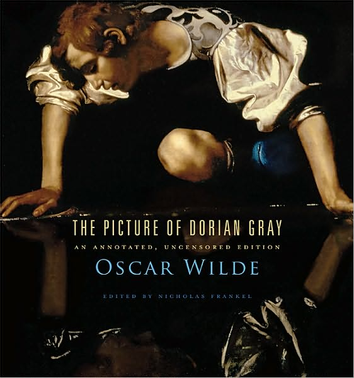
Strangely, considering the cult status that “The Picture of Dorian Gray” would eventually attain, Wilde’s original version has never been published until now, more than 120 years after the Lippincott edition. It has been made available by Harvard’s Belknap Press in a richly annotated and illustrated volume edited by Nicholas Frankel. It is not often that a piece of serious scholarship is accorded such deluxe treatment, and in this case it is a cause for real celebration, for Frankel has provided a wealth of supplemental material and visual matter, as well as a “Textual Introduction” and a series of notes that explain references and cultural context, help the reader understand the editing processes, and point out the passages that were singled out for deletion, such as this speech that the portrait painter Basil Hallward addresses to Dorian:

“It is quite true I have worshipped you with far more romance of feeling than a man should ever give to a friend. Somehow I have never loved a woman…. From the moment I met you, your personality had the most extraordinary influence over me…. I adored you madly, extravagantly, absurdly. I was jealous of everyone to whom you spoke. I wanted to have you all to myself. I was only happy when I was with you.”

(This was a little strong even for an era when “romantic friendships” between men were acceptable, and in fact even the hero’s name, “Dorian” — “Greek” — was more than a bit suggestive.) Altogether, the revised 1891 manuscript that eventually appeared in book form encompassed a whole series of changes and omissions designed to alter and conventionalize the “moral,” such as it is, by heightening the beautiful Dorian’s monstrosity and thus rendering him a far less sympathetic character than he had appeared to be in the original typescript. Looking at the typescript, then, we find more comprehensible Wilde’s oft-quoted statement on the book’s autobiographical elements: “Basil Hallward is what I think I am: Lord Henry what the world thinks me: Dorian what I would like to be — in other ages, perhaps.”

Frankel has done much to place Wilde and his novel within the context of their time — “a heated atmosphere of hysteria and paranoia” about sexual “deviation.” The 1885 Criminal Law Amendment Act was extended by Henry Labouchère, a radical member of Parliament, to include the criminalization of acts of “gross indecency” between men. (The Labouchère amendment was not repealed until 1956.) The vagueness of the amendment’s language — just what acts did “gross indecency” encompass, anyway? — caused fear amounting to paranoia among the homosexual community; as Frankel writes, “The conditions had been created for a series of homosexual scandals that would rock London and increase the level of homophobia in British society.”

The so-called Cleveland Street Affair, which broke only months before “Dorian Gray’s” first appearance, was the most spectacular of these, involving the infiltration and arrest of a ring of “rent boys” who worked by day as telegraph messengers and by night as prostitutes out of a brothel in Cleveland Street. A number of aristocrats and prominent military men were implicated; Lord Arthur Somerset, the Prince of Wales’ equerry, fled the country; a shadow was even cast on the name of the prince’s elder son, though that suspicion was subsequently proved groundless. “In the wake of the Cleveland Street Scandal,” Frankel explains, “Wilde’s emphasis on Dorian Gray’s youthfulness, or susceptibility to the ‘corruption’ of an older aristocratic man (Lord Henry), is one of the features of the novel that most outraged reviewers.”

Nowadays, the knowledge of Wilde’s poignant subsequent history casts a shadow over “Dorian Gray.” Married since 1884 to a beauty, Constance Lloyd, Wilde had been secretly leading a homosexual life at least since 1886 and probably much longer. (“The one charm of marriage,” Lord Henry quips in “Dorian Gray,” “is that it makes a life of deception necessary for both parties.”) In 1889 Wilde began courting a beautiful young poet named John Gray, the probable model for Dorian. (At least Gray himself believed this to be so, and the name would seem to be a clincher.) After the novel was published, Wilde began his disastrous affair with Lord Alfred Douglas. His feud with his lover’s violent father, the marquess of Queensberry, resulted in one of the most famous lawsuits in history, Wilde’s eventual arrest on charges of sodomy, and his sentencing to two years’ hard labor. The most celebrated playwright and wit in England had become its most despised pariah. He never saw his two sons again; Constance changed their name, and hers, to “Holland,” and taught the boys “to forget that we had ever borne the name of Wilde and never to mention it to anyone.” After his release from prison, Wilde went into exile in France, where he assumed the name “Sebastian Melmoth” and died, in penury, in 1900. “I will never outlive the century,” he had predicted. “The English people would not stand for it.”

Whether the original text is actually “better” than the book version published in 1891 is a moot point. Some of Wilde’s original material may have been lost in the latter (even the word “mistress” was deemed unsuitable for publication at that time, and the novel’s heterosexual material was censored as ruthlessly as its homosexual innuendos). But much was gained, too, in the expanded version that Wilde prepared in 1891, with the brilliant Lord Henry being given some wonderful new material. This annotated version, though a treasure for scholars and for anyone with a serious interest in Wilde, the 1890s, and aestheticism, should serve as a supplement to the standard text rather than a replacement.

Continue Reading Close

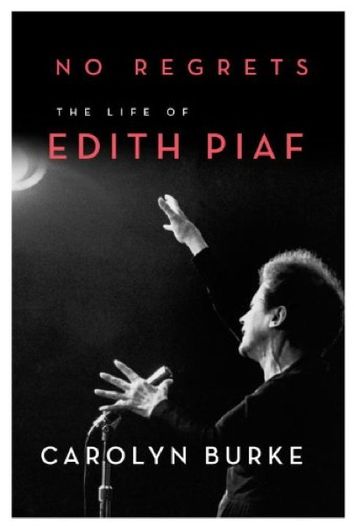
“No Regrets”: Discovering Edith Piaf’s epically messy love life

A new biography of the French singer reveals the melodrama that her film biopic missed

Edith Piaf, dead now for nearly 50 years, has become one of France’s great national monuments, as lucratively exportable a product as Maurice Chevalier, Claude Monet and Crépes Suzettes. Everyone here in America knows Piaf, or at least they know the recordings of her two greatest hits — “La Vie en rose” and “Je ne regrette rien” — delivered in her yearning, metallic tones. Some even know the earlier numbers, chanson réaliste portraits, in the words of one pop culture critic, “of working-class life, gray with the soot of factory chimneys and abuzz with tunes picked up from bistrot radios.” But not many Americans were familiar with the singer’s tempestuous and dramatic life until the recent Olivier Dahan film, “La Mome” (“La Vie en Rose” in the United States), grabbed our attention, winning an Oscar for the lovely Marion Cotillard and awakening a new mode for all things Piaf.

Barnes & Noble ReviewThe publication, now, of “No Regrets: The Life of Edith Piaf” by veteran biographer Carolyn Burke reveals that far from having been a bit too melodramatic (as I had thought “La Vie en Rose” to be when it came out a couple of years ago), the film omitted plenty. It almost had to: If even half of the singer’s myriad lovers had made it onto the screen, audiences would have reeled in disbelief. Self-destructive stars, of course, are not unfamiliar to Americans, and we have become almost inured to their excesses: As I write, Charlie Sheen and Lindsay Lohan are playing out very public meltdowns. But the epic mess of Piaf’s love life, as well as the scale of her talent, make this story something special, while her brutal Dickensian childhood virtually ensured that she would spend her adult life in a doomed quest for perfect love and security.

Burke has made a valiant effort to sift through the exaggerations of Piaf’s two memoirs, “Au Bal de la Chance” (1958) and “Ma Vie” (1964), and the self-serving lies dished up by Simone Berteaut, Piaf’s soul-sister and party-companion, in her own tell-all about the singer. The unadorned truth is already bizarre enough, with no need of embellishment.

The singer was born Edith Giovanna Gassion, in 1915 — and not on the city pavement, as she claimed, but in the Tenon Hospital in Belleville, a working-class area in eastern Paris. (Burke imparts the remarkable fact that at that time, less than a century ago, the now-noisome quartier was still perfumed by the scent of blooming lilac.) Her father, Louis Gassion, was an acrobat (just 5 feet tall, he passed on his diminutive form to his daughter); her mother, Annetta, was a would-be singer whose own mother presided over a flea circus. As if this background wasn’t disreputable enough, the feckless Annetta, an alcoholic and drug addict, abandoned the child when she was still a baby and went on to pursue an independent singing career under the name of Line Marsa. As in the vast majority of such cases, Edith never got over this primal rejection.

Louis Gassion was slightly more dependable. His own life was not stable enough to include a baby, so he took Edith to live with his parents in the town of Bernay in Normandy. Her grandmother, known as Maman Tine, was the manageress of what was euphemistically known as a maison de tolérance, essentially a whorehouse with legal standing. Petted by the unmarried “filles” of the establishment, Edith had a strange childhood, but one that was not without love, Occasionally her grandparents would take her to the Café de la Gare where they would stand the child on a table and let her sing to the assorted company. The power of her voice was already notable.

When Edith reached the age of 7 her father thought her old enough to become a professional asset, and he reclaimed her from his parents to take her on the road: The child would sing as a part of his circus act, the two of them traveling with a series of lady friends who attached themselves to Louis. “From her father,” writes Burke, “she learned an entertainer’s sense of timing, techniques for tugging on the audience’s heartstrings, and the sort of patter likely to produce a good take.” Some time during Edith’s adolescence she returned with her father to Paris, where she began singing in cafes as well as in the streets — and eventually in clubs as well, performing the chanson réaliste material that was being popularized at the time. Burke writes, “It was said of the best interpreters of this tradition — Fréhel, Damia, and soon Piaf herself — that they sang the way they lived, their songs came from the heart. (The extent to which they consciously sustained this perception went unnoticed.)”

The teenage Edith kept louche company in Pigalle, where she now settled — if, indeed, “settled” can be said to be the right word. There she took up with Simone Berteaut, “Momone”: a wayward 14-year-old girl whom Edith dubbed “ma mauvause génie,” “my evil spirit.” Over the decades Momone would be banished by countless men who tried to reform Piaf, only to be called back by the singer whenever she once again found herself alone. And almost inevitably the teenage Edith got mixed up with le milieu, the mafia that ran much of Paris’ club and cabaret scene. During these years she usually had one or another “protector,” some thug who made sure she was always incriminated in his felonies and helped himself to her meager wages. As Burke points out, “her life with her father had predisposed her to having a boss who took her earnings and dictated her behavior.” At the age of 17 she had given birth to a baby girl, Marcelle, known as Cécelle. For a while the baby lived in digs with Edith and Momone, but soon the father came and took her away, saying that if she wanted the child she must come home. In a haunting reenactment of her own childhood tragedy she refused to do so, though she paid for the baby’s care. Not long afterward, the 2-year-old was dead of meningitis; Edith, so the story goes, slept with a man to earn the money for the burial. The loss continued to haunt Piaf; she was never to have another child.

At the age of 19 Edith was “discovered” by Louis Leplée, proprietor of the club Le Gerny — a swank establishment by Edith’s standards. It was Leplée who picked out the simple black dress that would become her uniform for the remainder of her career, dubbed her “Piaf” — sparrow — and selected a réaliste repertoire of songs about the “dangerous” classes from which she sprang, works that would come to define her.  Other early mentors were the author Jacques Bourgeat, who urged her to educate herself, and the lyricist Raymond Asso, who became her lover, some say her Svengali. Piaf herself credited Asso with saving her life. “It took him three years to cure me. Three years of patient affection to teach me that there was another world beyond that of prostitutes and pimps. Three years to cure me of Pigalle, of my chaotic childhood … to become a woman and a star instead of a phenomenon with a voice that people listened to as if being shown a rare animal at a fair.” Asso also introduced her to the composer Marguerite Monnot, the woman who would become a close friend and her most important collaborator: Monnot’s talent, she said, was “what helped me to be Edith Piaf.”

Piaf’s ascent was rapid at this point. Her next lover, Paul Meurisse, brought her to live with him in the beaux quartiers near the Arc de Triomphe and she never looked back: from then on, and as her fees reached stratospheric heights, she spent freely on high living in swell neighborhoods. Her entourage continued to expand: there were a few true friends among the crowd, but increasingly it was, in the words of one observer, “abject beings, people who amused her, pilferers, spongers, those who took her money — a concept that simply didn’t matter to her.”

As for her many amours, there is probably no way they could be counted up, and Burke doesn’t even make the attempt. Among the more significant were the composer Norbert Glanzburg, the very young Yves Montand, whose career Piaf actively promoted, movie star John Garfield, performer Eddie Constantine, bicycle champion André Pousse, singer Jacques Pills (a genial fellow to whom she was briefly married), lyricist Jo Moustaki (author, with Monnot, of Piaf’s great song “Milord”), and the gorgeous Théophanos Lamboukas, gay and 20 years Piaf’s junior, whom she married at a moment when “her romanticism won out over her sense of the ridiculous.” The great love of her life, in her own opinion, was the boxing champion Marcel Cerdan, who died tragically in a plane crash in 1949 at the height of their romance. But considering Piaf’s track record, Momone’s cynical comment on the subject might not have been too far off: “If it had gone on another year,” opined Piaf’s mauvaise génie, “she might have dismissed him, like all the others.” For Piaf made impossible demands on her lovers, many of whom (including Cerdan) were already married, and eventually either they burned out or she did. Her desire for love was insatiable, impossible; she simply asked too much of it.

Of course it was this yearning that permeated her voice and immortalized it. As one collaborator, the lyricist Henri Contet, put it, “Words and music are her beloved slaves. Miraculously they submit because of her passion. She loves them as much as the earth loves rain … She sleeps with her songs, she warms them, she clasps them to her … They possess her.” During the triumphant years of her apotheosis she tore the heart out of her listeners: There are still people who remember the bliss of hearing her at the Versailles Club in New York just after World War II, when she seemed to embody a resurgent France. In later years, after Cerdan’s death, she battled countless health issues and drug dependencies, but managed, right up to the end, to gear herself up to go onstage. Her great concert at the Olympia in Paris in 1960, at which “Je ne regrette rien” was introduced along with other songs by her new favorite songwriter, Charles Dumont, was a triumph of the will; only months before she had seemed on the brink of death.

Piaf’s untimely death, in 1963 when she was only 48, occurred at a seminal moment in the history of popular music. Only a few months earlier the Beatles had leapt to international attention. In France, rock music was quickly elbowing aside the chanson tradition, though that tradition showed significant staying power: The new girl on the block was Juliette Gréco, with her existentialist chic, and Georges Brassens and Jacques Brel were drawing crowds in Paris clubs. Piaf may not now seem to have been a progenitor of rock, but French rockers have claimed her as their own, and Johnny Hallyday, now the eminence grise of French rock, has eagerly acknowledged her influence on his generation, “the young French singers who absorbed her powerful emotional style even when it seemed at odds with rhythms inspired by American rock, jazz, and blues.” It is that powerful emotional style that grabbed listeners all over the world — for in the end, as Burke concludes, Piaf’s greatest love affair was with her audience.

Continue Reading Close

Page 1 of 2 in Brooke Allen

www.salon.com/writer/brooke_allen/index.html