Bruce Shapiro

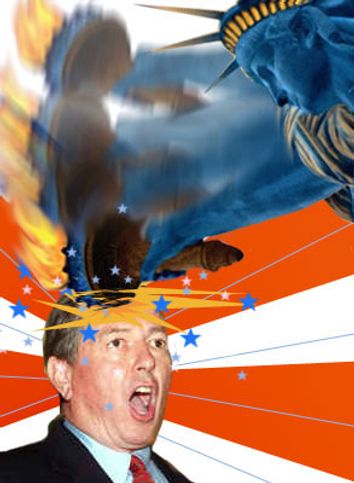
Miss Liberty strikes back

The courts and even some of his allies have turned against John Ashcroft and his attack on civil rights -- and he has only his own bungling and overreaching to blame.

  • more
    • All Share Services

Miss Liberty strikes back

On a day of harrowing grief for many, and fearful, angry memory for many more, it would be reassuring to turn with confidence to the nation’s top law-enforcement official. Coming from anyone else, Attorney General John Ashcroft’s announcement Tuesday of “specific intelligence” on al-Qaida threats overseas and a high alert for terrorist attacks would have seemed simple prudence.

Instead, a year after the Sept. 11 attacks, can anyone say with confidence whether Ashcroft was speaking of a serious new threat, or exploiting the anniversary to restore his credibility? There is every reason to think that al-Qaida’s adherents would take this anniversary as seriously as the group’s victims in New York, Washington and elsewhere. But when Ashcroft is the messenger, we just can’t tell any more. Any honest accounting on this day — when the memory of shock mingles with fear for the future — includes facing the failure of Ashcroft’s security policies, which are unraveling so fast that you need a scorecard to keep up.

In the weeks immediately after Sept. 11, Ashcroft’s steely glint and Walter Winchell delivery suggested that he would be what Al Pacino in “The Godfather” calls a “wartime consigliere.” Under his command, the Justice Department unleashed the most aggressive rollback of civil liberties since the early Cold War. “We’re likely to experience more restrictions on our personal freedom than has ever been the case in our country,” went one particularly grim assessment. The source was not the American Civil Liberties Union, but U.S. Supreme Court Justice Sandra Day O’Connor, speaking with law students after an emotional visit to the World Trade Center. The government, she warned, might well “rely more on international rules of war than on our cherished constitutional standards for criminal prosecutions in responding to threats to our national security.”

To be sure, nothing in the past 12 months equaled the breadth of the McCarthy-era purge, which extended from teachers to screenwriters to government bureaucrats. Instead, Ashcroft’s domestic war has been narrowcast, deliberately aimed at issues and constituencies presumed to be of little interest to the general public. Over 1,200 immigrants have been secretly jailed. The Freedom of Information Act has been upended. Secret wiretaps and break-ins for loosely-defined national security cases have been unleashed. The sheer number of individuals secretly jailed or interrogated or deported dwarfs anything in the McCarthy era — an ironic outcome for year spent in defense of democracy.

Yet a year on the Bush administration’s domestic anti-terrorism agenda has in significant ways stalled — and Ashcroft himself is the reason. Tuesday’s anxiety-provoking warnings were delivered by the same attorney general who in June called an unplanned televised press conference from Moscow to announce the disruption of “an unfolding terrorist plot” with the arrest of former Chicago gangbanger Jose Padilla — a characterization of a small-fry al-Qaida wannabe swiftly torpedoed by an embarrassed White House and FBI. It’s the same attorney general who infuriated top Bush officials by covering up the FBI’s bungling of pre-Sept. 11 intelligence. It’s the same attorney general who became an overnight joke for enlisting the cable guy in his Operation TIPS program.

The point is not whether those al-Qaida threats announced Tuesday are substantial — but that with Ashcroft, it’s impossible to know. And that’s an immense problem for a public trying to sort fact from paranoia, genuine security from presidential power grab.

Over the past 12 months, Ashcroft has made a science of high-profile threat reports, disguising the fact that his Justice Department has made little progress in identifying or stopping al-Qaida activity. Even most of the intelligence leading to Tuesday’s press conference came from European police departments or from al-Qaida members apprehended abroad, and a draft United Nations report recently found little evidence that U.S. efforts to halt al-Qaida financing have had much impact.

And with the courts, the Ashcroft Justice Department’s credibility is even lower than with the public. Consider the top-secret Foreign Intelligence Surveillance Court — not exactly a hotbed of liberal sentimentality. Meeting in a guarded, locked room on the highest floor of the Justice Department, this is a court which in 25 years has never met a wiretap it didn’t like. Its judges routinely consider the most sensitive national security questions and have signed off on over 10,000 warrants.

So when this secret court publicly kicked John Ashcroft in the teeth in a decision released last month, it was clear something was going on. The court was set up in the aftermath of Watergate and the revelations of FBI abuses in the 1960s and ’70s, to make sure that the kind of raw intelligence needed for foreign intelligence would not be abused in criminal investigations or politics. In fact, the court has not once rejected a national security wiretap application and has, case by case, allowed foreign-surveillance information to be shared with prosecutors.

But when the Bush administration asserted that the USA PATRIOT Act allows a wholesale blurring of the line, with criminal investigators directing “national security” investigations, the judges went ballistic — revealing 75 recent cases in which FBI agents “misled” the court, “a troubling number of inaccurate FBI affidavits” and repeated “violation of the Court’s orders.” The judges’ point: Ashcroft and the FBI are not to be trusted with new power when they have abused the power they already had. Finally, the court concluded, the post-USA PATRIOT policies proposed by Bush “are not reasonably designed” to protect the privacy of law-abiding citizens.

Ashcroft spokeswoman Barbara Comstock made much of the fact that these documented abuses happened on Bill Clinton’s watch, but that is precisely the judges’ point: The abuse of power transcends particular administrations. So ready is the FBI to lie in order to stretch the limits of legal surveillance that the court now refuses to accept testimony from the FBI agent in charge of monitoring Hamas.

Blunt as that rebuke by the surveillance court was, it was a love letter compared to the reception the administration’s secret deportation hearings received just a few days later, when another unanimous panel of federal judges — this an appeals court in Cincinnati — slammed the Justice Department’s secret deportation hearings. “Democracies die behind closed doors,” wrote Judge Damon Keith for the U.S. Court of Appeals for the 6th Circuit.

Last year, the INS began deportation hearings against Rabih Haddad, head of a Muslim charity whose assets were frozen after Sept. 11. Ashcroft had asserted the unilateral right to close Haddad’s deportation hearings to press and public — an assertion challenged by Detroit newspapers and U.S. Rep. John Conyers, D-Mich.

The ruling by the 6th Circuit panel could not have been more unambiguous, with the judges’ own sense of urgency and outrage clear from the speed with which the ruling was issued — just three weeks after argument. “The executive branch seeks to uproot people’s lives, outside the public eye and behind a closed door,” wrote Judge Keith, who was appointed to the appellate court by Democratic President Jimmy Carter. But “when government begins closing doors, it selectively controls information that rightly belongs to the people. Selective information is misinformation.”

An even broader case on secret immigration proceedings is on the docket later this month in Philadelphia, where a district judge ordered all immigration proceedings nationwide opened to the public in the absence of a good reason for secrecy.

What’s going on is that Ashcroft’s entire post-attack legal strategy, a strategy built on broad domestic surveillance and broader secrecy, is collapsing of its own extremity. It is no exaggeration to say that the nation’s federal judges — many of them appointed by presidents Reagan and Bush I — are now in open rebellion at the measures embraced by the current Bush administration, measures which these judges perceive as a naked power-grab by the executive branch.

Both the surveillance and immigration rulings make it clear that the Bush administration’s post-Sept. 11 policies are not just assaults on starry-eyed civil libertarianism — they are undermining public safety. It is harder to fight terrorism when judges cannot believe the Justice Department and FBI, when police agencies can not develop trusting relations in immigrant communities because of fear of deportation or secret charges.

It’s hard to avoid the conclusion that, far from being a “wartime consigliere,” Ashcroft has turned out a colossal failure even on the administration’s own terms, leading the White House down a succession of blind alleys. Secret military tribunals, secret deportations and secret wiretap expansion have all turned into highly publicized failures. Congress, which last fall rolled over for the USA PATRIOT Act, is finally beginning to ask questions. The proposed Homeland Security department is frozen in the U.S. Senate, and in the House, Wisconsin Congressman James Sensenbrenner, the conservative, law-and-order chair of the House Judiciary Committee, says he is ready to “start blowing a fuse” over the administration’s addiction to secrecy and obsession with restoring the imperial executive.

There is ample evidence that Ashcroft has lost his White House support; recent news reports promoting the anti-terrorism labors of Solicitor General Ted Olsen suggest the stage is already being set for a successor. Religious conservatives, once Ashcroft’s effective claque, now bridle at his plans to let the FBI spy on religious communities and follow their financial trails. Politically, Ashcroft is a man without a country — a liability to the Bush administration, an irritation to Congress and an embarrassment to the conservative constituencies which sponsored him.

It’s clear that in the weeks and months after Sept. 11, Ashcroft and the Bush administration repeatedly misread the tolerance of today’s courts and public. In the same New York talk in which she prophesied new restrictions, Justice O’Connor — the conservative Reagan appointee — issued a pointed warning, unheeded at the time, of the need to “maintain a fair and just society with a strong rule of law at a time when many are more concerned with safety and a measure of vengeance.” A year after al-Qaida’s attacks, the honeymoon with Ashcroft’s vision of security is over.

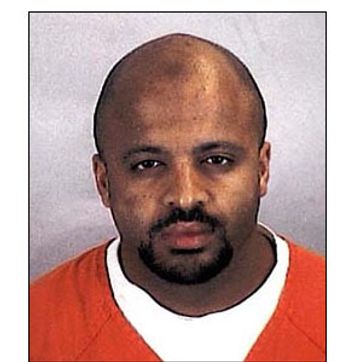
Why Moussaoui matters

Yes, he's a self-proclaimed al-Qaida follower who hates America. But he also seems to be a delusional loose cannon who may not have been part of the Sept. 11 group -- and the country deserves a trial that gets at the truth.

  • more
    • All Share Services

Why Moussaoui matters

It is hard to feel much sympathy for Zacarias Moussaoui, and harder still to come to his defense. He is by his own courtroom declaration an adherent of al-Qaida and a follower of Osama bin Laden. According to the Justice Department, he attended an American flight school with nothing but ill intent.

Yet Thursday’s pretrial hearing in the Moussaoui case — in which Moussaoui tried to plead guilty to certain parts of the case, then abruptly withdrew his plea — ought to alarm anyone who cares about credible justice in the Sept. 11 attacks. Moussaoui’s weeks of erratic self-defense, his alternation between a reasonable interpretation of the government’s determination to execute him and elaborately paranoid accusations against the judge and his own former defense attorneys, all call into serious question his competence to represent himself as Judge Leonie Brinkema has so far permitted. They also raise serious doubt about the attempt of the government to portray him as the “20th hijacker” and a death-row stand-in for the Sept. 11 conspirators.

Moussaoui would be a challenge for any judge. On the one hand, he seems to have a certain grasp of the facts of his case. Judge Brinkema noted yesterday that after she admonished him a week ago for drowning her office in motions and letters, he stopped — evidence, she said, of his bottom-line competence. He was examined by a court-appointed psychiatrist and found competent to represent himself, after he fired his attorneys. Part of his presentation Thursday made a certain kind of sense. He hinted that he might have provided a “safe house” and “training” to some of the Sept. 11 crew, but had no knowledge of their actual plans. He made it clear that he wants to spare himself a death sentence by appealing to the rational side of a jury, even though he regards all Americans as an “enemy.”

But alongside such moments of clarity have been many more examples of a mind both more disturbed than may appear on the surface, and certainly inadequate to the high challenge of representing himself with a death sentence on the line. He has persistently accused the court of being in league with the FBI to kill him. He won’t answer letters from his former lawyers in the public defenders’ office, who remain on “standby” status and continue to argue that he should not be allowed to represent himself. His motions find elaborate conspiratorial patterns in the initials of government agencies, the name of the judge and other “data” — the kind of delusions portrayed in “A Beautiful Mind.” Even yesterday, it was clear that on a base level he did not understand the meaning of a plea, let alone how to plea-bargain on his own behalf.

Why should any of this matter? For one thing, most Americans would agree that any individual operating outside the boundaries of sane judgment shouldn’t be allowed to represent himself in a death penalty case — even one involving Sept. 11. What’s more, Moussaoui shows all the signs of the kind of narrow but deep mental illness that if indulged — as Judge Brinkema so far has — can turn court proceedings upside down.

More than anything, Moussaoui’s courtroom behavior is reminiscent of the courtroom antics of Colin Ferguson, the notorious Long Island Railroad shooter. Ferguson, you’ll recall, convinced a New York judge that he should be permitted to fire his lawyers and represent himself. His “defense” consisted of promulgating paranoid race theories, badgering witnesses and survivors, ducking and weaving before the witness stand and generally turning his trial into a circus. And Ferguson, it must be said, was F. Lee Bailey compared with Moussaoui, who judging from his statements hasn’t the slightest understanding of how a courtroom works.

Ferguson and Moussaoui seem to have in common the kind of disturbed mental state that disguises deep paranoid delusions behind a seeming ability to grasp day-to-day facts. Moussaoui, like Ferguson, understands 2 plus 2 — but his writings suggest a mind in which 2 plus 2 equals 5, not a formula for any kind of credible outcome in so fraught a case. It’s possible that he’s just playing crazy — crazy like a fox — but his behavior is so erratic, with flashes of lucidity, that the possibility seems increasingly unlikely.

Certainly the victims of Sept. 11 deserve better than a trial being driven by a defendant’s delusions. And frankly, so does Moussaoui. It’s still possible that Moussaoui is not the “20th hijacker” the government says he is. Already the prosecution has withdrawn the claim that he was interested in crop-dusting airplanes. While the Justice Department’s death-penalty indictment accuses him of participation in the deaths at the World Trade Center and Pentagon, there is no evidence so far that directly links him to the Sept. 11 conspiracy.

While members of that conspiracy were carefully and discreetly learning to fly commercial jets, Moussaoui was taking lessons on a Cessna, drawing attention with his bizarre and indiscreet statements. It’s hard to imagine the tight, deliberate Hamburg terrorist cell risking its “martyrdom operation” on such an incoherent and weak character. It’s possible he attached himself to them anyway. It may well turn out that he was simply a hanger-on, a troubled personality who attached himself to al-Qaida and provided a U.S. contact to the conspirators with no further involvement. It may turn out that he was part of a different scheme altogether. Whatever the story, there is plenty of reason to think that John Ashcroft’s Justice Department “overcharged” Moussaoui to get a death-penalty-friendly jury — jurors who say they’ll award the death penalty tend to be more conservative and pro-prosecution, on all issues, than those who won’t — and secure a quick conviction.

But there’s a risk to imposing a death sentence under such circumstances. Part of the risk is of turning a marginal and mentally ill bumbler into a martyr, the inspiration for future suicide bombers. If Moussaoui is al-Qaida, better he should be consigned to the anonymity of the federal prison system than be allowed to turn his own trial into a martyrdom operation. And if he is not, we need to know that.

It’s also important to demonstrate that American courts will not run roughshod over a clearly disturbed defendant, even in a terrorism case. This matters to our allies in Europe, to France in particular. Already, Europe is refusing to extradite al-Qaida suspects if they might face capital charges. France is alarmed at the prospect of its citizen facing a death sentence. The express-train conviction of an incompetent Moussaoui will anger many Europeans, while a sensible resolution of Moussaoui’s case — either returning him to the protection of his attorneys, or a genuine plea-bargain that secures his testimony and saves his life — will demonstrate the capacity of American courts to deliver justice even under the most emotional circumstances.

Brinkema can at least partly short-circuit this coming courtroom catastrophe by withdrawing her permission for Moussaoui to represent himself. Yesterday, she reaffirmed her decision, but she may still change her mind. It is also hard to imagine that experienced federal prosecutors are looking forward to trying Moussaoui, given the careening course of his pretrial hearings. But it is Ashcroft and the White House, not those career prosecutors, who are driving the car on the Moussaoui case. Several times in recent months, an overzealous and overheated attorney general has embarrassed and infuriated the White House and even damaged the administration’s conservative base in Congress. The spectacle of Moussaoui’s delusions and ignorance driving the only Sept. 11 prosecution ought to cause the administration to seek a reasonable and reasoned plea bargain that ensures Moussaoui legal representation, removes the death penalty from the table, gains his participation in the ongoing al-Qaida investigation, and convicts him of whatever he really did — rather than seeking a Sept. 11 scapegoat at any cost.

Continue Reading Close

Restoring the imperial presidency

The Bush administration rivals the Nixon White House when it comes to secrecy and unchecked power, with John Ashcroft as our modern-day John Mitchell.

  • more
    • All Share Services

Restoring the imperial presidency

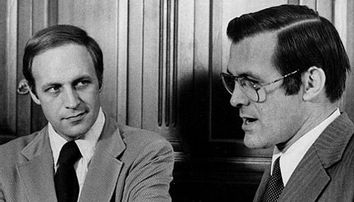
They are not exactly young, these two men in the photograph, but they are trying for rakish in a ’70s way — modified Elvis sideburns, hair falling below the ear — pushing outward the boundaries of hipness in a Republican White House.

Recently I found myself contemplating this photo, taken shortly after the Watergate scandal forced President Nixon from office. The two would-be hipsters — Donald Rumsfeld and Dick Cheney — were aides to the new president, Gerald Ford. At that time Rumsfeld and Cheney were persuading Ford to veto one of the most important Watergate-inspired reforms, an enhanced Freedom of Information Act, designed to guarantee public and media scrutiny of the FBI and other agencies. FOIA, the two aides warned, would take too much power from the executive branch. Ford indeed vetoed the bill, but Congress overrode the veto and the FOIA became the law of the land — at least until last October, when Attorney General John Ashcroft fulfilled Cheney and Rumsfeld’s three-decade-old wish by pledging to fight any FOIA request that comes over the transom.

With the political aftershocks of Sept. 11 only now beginning to be felt in Washington, it’s especially important to recall the real lessons of Watergate. Thirty years on, it is easy to forget that “Watergate” was really misleading shorthand: It was shorthand not only for the 1972 break-in at Democratic National Committee headquarters and Nixon’s subsequent coverup of campaign shenanigans, but also for a vast array of domestic spying and other executive-branch abuses, which the Nixon crew perfected but did not invent.

It is fashionable now to blame Watergate on Nixon’s paranoia and rogue personality. But the crimes of Watergate grew directly from the kind of unchecked presidential powers now sought by the Bush administration both at home and abroad. FBI spying on political rallies and religious communities? The White House plumbers practiced their tradecraft breaking into the psychiatric records of dissident Defense Department analyst Daniel Ellsberg. The “enemies list” grew from FBI director J. Edgar Hoover’s decades of spying on religious, civil rights and peace groups.

Expanded paramilitary covert operations abroad? The Watergate break-in team was conscripted from the CIA squad for covert Cuban operations. Restrictions on the flow of information to Congress and the public? The direct complicity of Nixon and other high officials in Watergate was proved only because senators who had subpoenaed White House records refused to knuckle under to claims of executive privilege — a drama being replayed this month with Sen. Joseph Lieberman’s subpoenas regarding the involvement of Cheney and other White House officials in Enron.

One particular lesson of Watergate deserves close attention these days, and that’s the lesson we learned about the power of the attorney general. Actually, we learned two contrasting lessons.

Start with Nixon attorney general John Mitchell. From the moment of Nixon’s inauguration Mitchell was obsessed with partisan secrecy, with a crabbed and narrow vision of law enforcement, and with the intimidation of critics. His Justice Department fought the New York Times’ publication of the Pentagon Papers, the internal secret history of the war in Vietnam; concocted fraudulent charges to jail antiwar dissidents like Jesuits Daniel and Phillip Berrigan, absurdly accused of plotting to kidnap Henry Kissinger; wiretapped aides suspected of disloyalty; launched a doomed war on drugs; and tried to pack the Supreme Court with conservative ideologues. Up to his eyeballs in Watergate sewage, Mitchell claimed it was all in the interests of law and order, and to the bitter end of his tenure used his office to intimidate opponents and keep information from Congress.

The lesson: Without the active collaboration of an attorney general, Watergate would never have happened. Mitchell gave law-and-order cover to a lawless administration.

Lesson No. 2 comes from another Republican, President Ford’s attorney general, Edward Levi. No left-winger, Levi saw his job as restoring public confidence to a Justice Department tainted by Watergate and related scandals. To Levi fell the delicate job of reforming the FBI. What he produced were guidelines that did not prohibit the bureau from collecting information — but did require suspicion of wrongdoing beforehand, and a paper trail to prove it.

Ashcroft, too, runs a Justice Department and an FBI in desperate need of restoring public confidence. Today’s “What did Bush know?” scandal comes on top of Wen Ho Lee, Robert Hanssen, and other embarrassing cases. Ashcroft could have learned a lot from Levi’s transparent and nonpartisan approach to reform.

Instead, Ashcroft has played to fear. Earlier this month, when he tossed Levi’s domestic-spying guidelines into the compost, Ashcroft misleadingly told the public that FBI agents had been prevented from surfing the Internet, monitoring public rallies and attending religious services. Nonsense.

Under the Levi guidelines, any of those investigation and surveillance activities were possible and, indeed, common — so long as agents had at least a slim pretext for engaging in them. Just last week I was on a panel with Laurie Levenson, a former assistant U.S. attorney in Los Angeles, who recalled accompanying FBI agents to photograph political rallies in the not-so-distant past, fully authorized by the Levi guidelines. Besides, the question has never been just whether the FBI can attend public events, but what agents can do with the information they collect. My own filing cabinets are filled to overflowing with papers released under the FOIA that document the bureau’s old pre-Levi practices, like monitoring the speeches of dissenters, disrupting protest groups, and otherwise intruding on the most basic rights in ways that had nothing to do with public safety. Ashcroft’s new guidelines could easily return the FBI to those lawless days — a prospect, by the way, that many of today’s generation of agents do not look forward to.

Ashcroft’s religious piety may disguise his resemblance to the famously profane Mitchell. But beneath the surface this attorney general is all Mitchell: fighting congressional requests for information on whopping FBI scandals like the conviction of Boston FBI agents for conspiring with mobsters; accusing critics like Sen. Patrick Leahy, D-Vt., of endangering the United States; promoting a White House obsession with secrecy unmatched since, well, Richard Nixon.

Finally, it is crucial to remember how deeply Watergate was rooted in the Nixon administration’s determination to interfere unilaterally and often secretly in the affairs of countries around the world. The administration’s profound addiction to domestic spying really took flight with the secret bombing of neutral Cambodia and the protests that erupted when that horrific campaign became public knowledge. Awful as the crimes of Watergate were, they were a pale domestic reflection of how an unrestrained presidency exercised power in Southeast Asia, Chile and elsewhere — parts of the world that are still recovering. Then as now, there was a continuity, all too easily overlooked, from an administration’s claims of executive privilege at home to unilateral action abroad.

It is really only in the light of Watergate that the Bush administration’s actions since Sept. 11 make sense. Just as the Reagan administration saw its job as undoing New Deal-descended corporate regulation, so has Bush & Co. systematically exploited the terror attacks to undo Watergate-era reforms reining in the executive branch. Each day’s tit-for-tat, blame-the-other-guy leaks from the FBI and CIA make it more and more clear that prior to Sept. 11 neither agency suffered from an inability to spy, wiretap or otherwise collect information. Instead, the administration has shrewdly manipulated public opinion to accomplish something sought by Watergate-era Republicans like Cheney and Rumsfeld ever since: a restoration of the imperial presidency.

Continue Reading Close

By all means look away

The Daniel Pearl video combines sick political logic with the imagery of a snuff film, and tells us nothing we didn't already know about his twisted assassins.

  • more
    • All Share Services

By all means look away

Yes, I have looked at it.

The Daniel Pearl murder video is more grotesque, sickening and disturbing than can possibly be appreciated without a viewing. It’s not only the brutality, more than adequately described elsewhere; and not only the spectacle of Pearl’s degrading and futile participation in his captors’ anti-Semitic script. There’s also the video production itself. I expected a crude equivalent of one of those old ransom notes made from pasted-up newspaper headlines. Instead it is relatively slick and professional, a paranoid montage of tangentially related images putting the dead reporter at the center of global Jewish conspiracy and Islamic revenge fantasy. The logic is that of a cult like Lyndon LaRouche, the images those of a snuff film.

Over the last few days, debate has raged over whether the Boston Phoenix and its publisher, Steven Mindich, were justified in posting a prominent link to the Pearl murder video — the first direct access provided by a U.S. news organization, in direct defiance of the wishes of Pearl’s family.

In a way, I am precisely the individual Mindich had in mind. I never would have spent even three minutes burrowing through Google to find that video; the search would have seemed like a voyeuristic quest. The Phoenix’s one-click link changed that. I justified viewing by telling myself that I am a reporter who writes about terrorism and violence and crime. I am a reporter and have a responsibility to witness atrocity, I said, even if it is through the video lens of its perpetrators.

But let’s be honest. Of all the pundits who have weighed in for and against the Phoenix’s posting, I have found not one who admitted searching the Internet for the Pearl video prior to Mindich’s decision — which I or any of us would have done if gaining some insight into Pearl’s killing was our most important motivation. No, it’s just that the Phoenix made it so easy to indulge tabloid, voyeuristic, ambulance-chasing bravado, my own included.

What is really at stake here? A few weeks ago, the FBI very nearly made the Pearl video a censorship issue by trying to convince Web site Prohosters.com to removing it from a customer’s site. Prohosters properly refused. By the time the Phoenix posted its link to Prohosters, defending free speech was simply off the table. Nor could the Phoenix claim to be publishing some previously unavailable material. All publisher Mindich was doing was promoting the video, encouraging more widespread viewing of a sick and troubling document.

So was he justified? Reporters, photographers, editors and producers are continually making decisions about the outer limits of acceptable brutality. From the most anonymous crime scene to world-scale wars and disasters, the choice of what to show and not show is made in newsrooms every day. And it is a hard job, balancing the sensibilities of survivors, real news value and demands of editors clamoring for sensational front pages. I remember a photographer on one of my first newspaper jobs threatening to quit if the editor ran a particularly gruesome photo of a car wreck. David Handschuh of the New York Daily News says he will simply never print many of the pictures he shot of victims at the World Trade Center on Sept. 11. These are questions not just of “taste” but profound judgment calls about whether explicit images really aid public understanding — or simply cause private anguish for victims while brutalizing public sensibility.

Mindich himself gives one argument for promoting the tape of Pearl’s killing: It is the only way to appreciate the magnitude of what we are up against. “If there is anything that should galvanize every non-Jew-hater in the world — of whatever faith or of no faith — against the perpetrator and supporters of those who committed this unspeakable murder — it should be viewing this video,” he writes. Others, including Salon’s Samuel G. Freedman (who I have known and admired for years), amplify Mindich’s argument, comparing the tape to the famous Vietnam photo of a naked and burned girl fleeing American napalm, or the first explicit photos of Nazi death camps.

All of which might make sense as an argument to rile up a complacent nation, if Americans remained unconcerned about the threat posed by Pearl’s violent, fundamentalist, anti-Semitic killers. In the cost-benefit analysis of media, shocking an apathetic public into action can justify a lot of tough decisions.

But is that kind of genuine shock value justified here? Since Sept. 11, the American public has been drenched with images of flaming skyscrapers, the sight and sound of bodies falling to the sidewalk, the bloody aftermath of suicide bombings in Israel. It hardly took Pearl’s video to convince most Americans, and much of the rest of the world, that al-Qaida and allied violent sects represent a real threat. Somehow the nation stood behind President Bush’s decision to oust the Taliban without viewing Pearl’s decapitation.

That famous Vietnam picture had meaning because of a raging debate over the morality of American bombing and the justification for the war’s escalation. The Pearl tape touches no such divide — certainly not in the United States, the only audience likely to seek out a Boston alternative weekly. Photos of Auschwitz documented unprecedented atrocity on a mass scale that literally could not be believed. The Pearl murder video accomplishes no such documentation; its details have been published, and excerpts of Pearl’s coerced statements broadcast, for months. The Phoenix upped the ante on brutality, but added nothing to public knowledge or debate.

I’m even more troubled by another argument made by some of Mindich’s defenders: that the sensibilities of victims — like Daniel Pearl’s family — are not the problem of reporters. Something called news value trumps the desire of Pearl’s family to keep circulation of his murder video to a minimum, just as it does when reporters knock on the doors of “ordinary” survivors of high-profile crimes.

I’ll have to confess that this is not an abstract issue for me. Eight years ago I was stabbed by a psychopath in a New Haven cafe, along with six other people, and a local television news crew captured the image of my bleeding body on a gurney. The repeated replaying of that footage on television, the pursuit of some victims by aggressive camera crews, still stand out for the distress they engendered in my family and myself, for months afterward. On the other hand, some reporters handled the story with the greatest respect, which went a long way toward convincing me that my profession was not hopelessly cynical.

The idea that tossing the desires of Pearl’s family into the ashcan is “just what journalists do” is only a cover for indiscriminate National Enquirer logic. In fact, some reporters and editors years ago began challenging the old “if it bleeds, it leads” sensibility with careful judgments about the impact of news decisions on victims. Few newspapers now print the names of rape victims — once commonplace. In televised murder trials, gruesome crime-scene photos are usually kept off-camera and off the front pages. To claim that dismissing the concerns of the Pearls is “just our job” disrespects these complex ethical decisions made in newsrooms every day.

We journalists too often use the First Amendment as cover for shrugging off the consequences of our news choices on the individuals we cover. Yet the extraordinary power of stories and images to injure their subjects, to rob those depicted of dignity and to stimulate the worst human impulses, is one of the reasons freedom of the press is such a high-stakes commitment for a democracy.

From the Oklahoma City bombing and now al-Qaida’s attacks, the American press has learned a lot about dignified and respectful reporting on victims of atrocity — think of the New York Times’ “Portraits of Grief” series. Hard decisions about which images to broadcast and print will emerge with greater frequency as the anniversary of Sept. 11 approaches. But far from clarifying the issue, the Boston Phoenix’s promotion of the Daniel Pearl murder video — publicizing a paranoid propaganda tape and encouraging voyeurism at the expense of a dead reporter’s family — only muddies the difficult choices to come .

Continue Reading Close

The witch hunt against Archbishop Weakland

Yes, the eminent cleric had a love affair with a younger man -- but who was the real victim?

  • more
    • All Share Services

Anyone tuning in to ABC’s “Good Morning America” Friday began the day with a sickening tale: What host Charles Gibson called “serious new allegations of sexual misconduct in the Catholic church.” Unlike the Boston Globe’s months of investigative reporting involving Cardinal Bernard Law, the misconduct reported by the network’s correspondent Brian Ross did not involve pedophilia. Instead, Ross reported that one of the country’s most respected and reform-minded Catholic leaders, Archbishop Rembert Weakland of Milwaukee, stood accused of attacking a male graduate student nearly a quarter-century ago, and paying $450,000 in hush money in 1998.

ABC reported that Paul Marcoux, now 54 years old, charged that around 1980, “he was sexually assaulted by the archbishop when he went to him seeking advice on entering the priesthood.” Marcoux himself was even more explicit: “He was sitting next to me and then started to try to kiss me and continued to force himself on me and pulled down my trousers, attempted to fondle me. Think of it in terms of date rape.” The story was incendiary. Within hours, Archbishop Weakland — the leading voice within the American Catholic hierarchy for democratization, acceptance of gays and other social-justice reforms — had accelerated his planned retirement. It seemed the logical next chapter in a season of church scandal.

But who was really the victim this time? A close look at the Weakland case suggests a story far different from ABC’s simple “date rape” report — and an accuser with far less credibility than suggested on “Good Morning America” and in subsequent national media reports. Indeed, the real story behind Weakland’s resignation suggests that the hard work of documenting the church’s coverup of clerical pedophilia risks being derailed by personal vendettas and gay-bashing.

The story really begins with what ABC’s viewers — and later readers of the New York Times, which put Paul Marcoux’s charges on the front page — were never told. They did not hear, for instance, that questions have arisen about accuser Marcoux’s credibility. One small but telling example: Marcoux recently told Milwaukee reporters that he did “undergraduate work” at Boston College, the prestigious Jesuit institution. But a call to the B.C. registrar’s office reveals that Marcoux’s “undergraduate work” consisted of a single summer class taken in 1975.

Reporters for the Milwaukee Journal Sentinel found similar problems with Marcoux’s credibility. “Marcoux sometimes exaggerates,” the paper reported in Friday’s editions. It quoted an e-mail message from him describing his “friendship” with a California academic who has written about victims of abuse. But the professor said Marcoux “was never anything more than a vague acquaintance.” So unreliable was Marcoux — reneging on agreements to document his charges — that the Journal Sentinel, which had been working on the story for weeks, had killed the story until Marcoux appeared on ABC.

ABC’s viewers did not learn, either, that whatever happened between Weakland and Marcoux, the two enjoyed a lengthy and intimate relationship. A long and agonized 1980 letter by Weakland to Marcoux describes a planned vacation on Nantucket, a trip to Boston, and conflict over Marcoux’s involvement with another man named Don. In the letter — excerpted by the New York Times but most revealing and moving if read in full on the Journal Sentinel or Times Web sites — Weakland describes his decision to turn away from Marcoux and back to celibacy as “the greatest renunciations” in his life as a priest. In the letter, the archbishop cautions Marcoux against pursuing a plan to combine psychodrama therapy and religious counseling. The distress evident in Weakland’s efforts to be fair and tolerant toward Marcoux’s ideas — even giving the younger man his entire personal savings of $14,000 — reflects his apprehension about finding himself bankrolling a pop-therapy scheme dressed in clerical robes.

ABC viewers also never learned that Marcoux spent decades in perpetual financial crisis: He was an inveterate houseguest of the sort that makes Kato Kaelin look like a standard-bearer for the Protestant work ethic. Archbishop Weakland’s anguished letter in 1980 worries explicitly and deeply about Marcoux’s repeated demands for money and his inability to manage his own finances: “Your anger was evident that I couldn’t play the great patron … In all truth I do not see how you could possibly earn the kind of money you foresee, enough to live in the style you are accustomed to … I am baffled by your handling of money.”

This is no one-time lovers’ quarrel. The Journal Sentinel reported that 22 years later the same problems were evident: Marcoux had stayed with a succession of friends for years, and his own sister told the paper that in four years’ time he had burned through the entire out-of-court settlement from Weakland. What emerges is not the tale of a victim but the story of a sponge.

Weakland, who had already submitted to a planned mandatory retirement, decided to step aside and apologize — not for his relationship with Marcoux, but for eventually settling his personal affairs at the expense of the archdiocese. Weakland says he will not breach the settlement’s confidentiality agreement. So whatever happened in private between Weakland and Marcoux, the public outcome is clear. The country and the Catholic Church have lost a consistently dignified and passionate activist for women’s equality within the church and for economic equality in the nation. What Marcoux may have gained is a matter of speculation. But the public reality is that Archbishop Weakland was blackmailed, and ultimately punished, for being gay.

What’s clear is that the meticulous reporting of sexual abuse by the Boston Globe — swinging a wrecking ball through a wall of silence behind which the cries of the innocent were smothered lest they interfere with business as usual — is in danger of giving way to sweeping persecution of gay priests. The Marcoux affair, and the slipshod reporting of his accusations by ABC, suggest it’s open season.

Continue Reading Close

Ashcroft knew

The official responsible for the most dramatic failures of Sept. 11 turns out to be the attorney general. His sweeping anti-terror measures in recent months were a fig leaf to cover naked incompetence.

  • more
    • All Share Services

Why won’t the questions go away? Why does the Watergate question, slyly invoked over the weekend by Sen. Joseph Lieberman, D-Conn. — “What did the president know and when did he know it” — resonate with such persistence?

On one level, you’ve got to feel for those Bush administration officials suddenly squeezed between victims’ families, Congress and the press. After all, the Sept. 11 hijackings represented as shrewdly organized a criminal conspiracy as any on record. Mohammed Atta and his low-tech co-conspirators quite literally flew beneath the radar of a national security bureaucracy obsessed with high-tech gizmos and satellite missile defenses. The specifics of the martyrdom operation were closely held by an intimate circle tight and tiny enough to defy penetration by the most determined intelligence service.

And yet the questions escalate. Partly, perhaps, it’s just emotional: Something in us recoils at the thought that a handful of individuals could so radically upend our safe and prosperous society, turn history on its ear. Just as it is oddly reassuring to believe that weaselly Lee Harvey Oswald could not have killed President Kennedy alone, so we yearn for proof that Bush, the FBI, the CIA — some national parent-surrogate — must have known, had to have known about the Sept. 11 attacks, even if they failed to do anything about it.

In addition, the Bush administration — long before Sept. 11 obsessed with secrecy and evasion of public scrutiny — is not helping its own case. In the last few days the White House strategy has been to intimidate critics with 100-percent-certain predictions of future terrorism. This only after the previous strategy — persistently, misleadingly changing the subject — led to the most embarrassing statement from any national security advisor since Al Haig declared himself president: Condoleezza Rice’s “explanation” that in August the president was briefed only about “hijacking in the traditional sense.” Could there be a more evasive non-denial denial — or a statement more offensive to common sense? Were the president and his national security advisor really claiming that “hijacking in the traditional sense” didn’t merit an even minimal brush-up of the nation’s notoriously appalling air-travel security, for instance warning airlines to secure their cockpit doors?

I will admit to a more-than-general interest in the unfolding story of who knew what and what might have been done. Civil libertarians like myself took a lot of lumps after Sept. 11 for our longstanding suspicion of government abuses unleashed in the name of fighting terror. In June 2000 in Salon, I had written critically of an anti-terrorism commission that proposed massive surveillance of foreign students in the U.S. and ending restrictions on the CIA. Based partly on congressional testimony by then-FBI Director Louis Freeh that downplayed the terrorist threat, I called the commission’s proposals “a con job,” a phrase that right-wing pundits and Webaholics have relished rubbing in my face since Sept. 11. I am assured by Salon’s editors that the e-mails still arrive daily.

Yes, I’ll certainly plead guilty to ignorance about the risk from Osama bin Laden’s sectarian mafia. I welcome Bush, Cheney and Rice to the pre-9/11 fools’ paradise. We’ve all had a lot to learn.

But looking closely at the past week’s revelations, it strikes me that we may have learned some dangerously wrong lessons from the attacks. Yes, there was a failure — but what, exactly, was it?

After Sept. 11, you’ll recall, Attorney General Ashcroft rushed to Capitol Hill with a hodgepodge of legislation to grant the FBI, INS and federal prosecutors powers to spy, jail and interrogate far greater than in any past war or national emergency. The attacks happened, we were repeatedly told, because the FBI and CIA were hamstrung by liberal reformers back in the ’70s. You’ll remember the secret detention of more than 1,000 immigrants — 98 of them still in jail — and the wholesale interrogations of Muslim immigrant communities. Only such sweeping measures, Ashcroft and a parade of administration officials insisted, could prevent another Sept. 11.

But the revelations of the past week suggest that the FBI & Co. needed fewer new powers than we were told. With existing authority, FBI agents in Minnesota arrested Zacharias Moussaoui — but the bureaucracy declined to provide a search warrant, also available under existing authority, for his computer hard drive. With existing authority, Phoenix FBI agent Ken Williams did a quick, low-tech round of interviews with Arab flight school students and wrote his famous memo on the potential for air terror attacks inside the U.S. — but the Justice Department bureaucracy sat on it. With existing authority, the FAA was notified about Moussaoui’s arrest and decided not to pass word on to airlines, as the Wall Street Journal reported. Last week National Security Advisor Rice detailed a steady and accurate flow of intelligence on al-Qaida from our own agencies and European allies all through the summer before the attacks, including the possibility of a suicide bombing at the G-8 summit. On and on.

The problem wasn’t that the feds lacked “intelligence.” They — like a lot of us — lacked perspective, a very different matter.

And given what we now know, which of the “solutions” rushed to passage by Ashcroft in the days after Sept. 11 — and sought for years by the antiterrorism lobby — would actually have made a difference? Eavesdropping without a warrant, secret anti-terrorism courts, black-bag jobs? Eviscerating the Freedom of Information Act? Putting the CIA back in the assassination business (intensely promoted in the days after Sept. 11 by former CIA director James Woolsey and other administration surrogates)?

In fact, this week’s revelations suggest that an administration obsessed with high-tech and cloak-and-dagger “defense” failed to understand that effective public safety is about the mundane. Any one of a number of routine law enforcement procedures might — might — have made a difference before Sept. 11: a memo passed up the chain of command, a phone call to the airlines. So might a more careful scrutiny of our border control policies, like the quick and easy visas routinely granted to Saudis, the one nation in the world most responsible for funding al-Qaida and nurturing Islamic fundamentalism.

In retrospect, the single official responsible for the most dramatic failures of Sept. 11 turns out to be none other than Attorney General Ashcroft himself. Ashcroft has kept an uncharacteristically a low profile in recent days, and no wonder. No bureaucracies have ever looked more fatally entangled in red tape than the FBI and INS, both of whose bucks stop at the attorney general’s desk. And if news accounts are accurate, shortly after Sept. 11 Ashcroft learned of Phoenix FBI agent Williams’ prescient investigation but kept that crucial, embarrassing information from both president and public. Instead, he rushed forward the massively repressive USA-Patriot Act and immigrant sweeps, knowing that such measures were a fig leaf to cover naked incompetence.

So the who-knew scandal is more than anything bad news for the attorney general. All the more so because — though most of the press has not noticed — Ashcroft’s post-Sept. 11 security policy has been taking it on the chin from another direction: the courts.

Just a few weeks ago, a federal judge in New Jersey bluntly ordered Ashcroft’s Justice Department to release the names of secretly held detainees. In Michigan, a federal judge slammed Ashcroft’s lawyers for trying to keep secret deportation proceedings against a Lebanese man they claim ran a terrorist-affiliated charity. In Brooklyn, yet another judge charged Justice with abusing grand jury laws by “unlawfully detaining” a Jordanian man as a material witness. “If the government has probable cause to believe that a person has committed a crime, it may arrest that person,” wrote Judge Shira Sheindlin. “But since 1789, no Congress has granted the government the authority to imprison an innocent person in order to guarantee that he will testify before a grand jury.”

Seen in this light, the truly scandalous nature of the who-knew coverup becomes clear. Who knew? Ashcroft knew. Each time the attorney general went to Congress, insisting that only broader domestic spying and detention laws could make the country safer, he knew the truth: that in the weeks before Sept. 11, the White House and FBI, already well-equipped with intelligence and investigative tools, dropped the ball. But for months after the attacks Ashcroft helped cover up the government’s embarrassing lapses while aggressively pursuing a dubious domestic security agenda which courts are only now beginning to question. If the performance of Ashcroft’s agencies before Sept. 11 has shaken public confidence in our national security apparatus, the attorney general’s actions since then have done more to damage the rule of law than to protect us from further terrorism.

Continue Reading Close

Page 1 of 16 in Bruce Shapiro