Burt Wolf

A touch of Springfield

Abraham Lincoln's hometown is a great place for a family vacation.

  • more
    • All Share Services

Springfield, the capital of Illinois, was Abraham Lincoln’s hometown. I went there to see what his personal life was really like, to find out why he suddenly grew a beard just before he became president, to see the house he lived in and the monument where he eventually came to rest.

But Springfield turned out to be more than just about Lincoln. It’s a place where you can tour one of the great works of Frank Lloyd Wright. It’s a town where the signature dish is a horseshoe sandwich and where the corn-battered, deep-fried frankfurter was invented. In short, Springfield is the spot for a quintessential American holiday.

My first stop was the Lincoln Herndon law offices, where Lincoln rose to prominence as an attorney. It was a perfect office for a young attorney because the federal courtroom was directly underneath. When Lincoln was alone in his room, he would lie down on the floor, open the corner of a trapdoor in the ceiling of the courtroom and listen to more experienced attorneys arguing their cases.

Just down the street is the home that he lived in with Mary Todd Lincoln, until he was elected president and moved to Washington. He lived there for 17 years; it was the only house he ever owned and the place where Mary gave birth to three of their four sons. I walked through it with Kim Bauer, historical research specialist for the Henry Horner Lincoln Collection at the Illinois State Historical Library.

Said Kim Bauer: “For most of Abraham Lincoln’s life he was beardless. He had nothing on his chin until the time that he became president of the United States. Most people don’t realize that, because they see all the photographs of Lincoln during the presidency [when] he has a beard. He grew it because of an 11-year-old girl, Grace Bidell, from Westfield, N.Y., who wrote Abraham Lincoln in October 1860. She told him that she thought he was the greatest man alive and that her father was going to vote for him, but she had four brothers and, out of those four, two were probably going to vote for him and two didn’t know what they were going to do.”

He continued: “She suggested that he grow a beard, and then her other two brothers would vote for him because he would look more serious. He starts to grow it and, by the time he heads to Washington in 1861, he has a full-grown beard.

“His hat is an interesting story too. When Lincoln was traveling around the circuit as a lawyer, he would put letters, legal documents, handkerchiefs, anything that he couldn’t stuff into his pockets, into a stovepipe hat. William Herndon, his last law partner, called Lincoln’s hat his office. And Herndon went so far as to say that Lincoln’s ears stuck out because he wore his hat full of letters and manuscripts.”

I also paid a visit to the reconstructed pioneer village of New Salem. Lincoln went there when he was 22 years old and stayed for six years. He clerked in a store and served as a postmaster. It was the place where he started his political career. Twenty-three timber houses and stores have been reconstructed and furnished as they were in the 1830s. Interpreters in period dress go about the daily work of the time and talk with visitors.

During the same decade that Lincoln was packing up to leave the neighborhood for Washington, a group of Amish in Pennsylvania were packing up to move to the neighborhood. They established their community in Arthur, Ill., in 1865. They were master quilt makers and their work represents some of the finest folk art produced in Illinois. More than 150 of their quilts have been brought together in a collection housed in Springfield’s Illinois State Museum.

A quilt is made of three layers of fabric: a top layer; a batting, which is usually cotton or wool; and a back layer. To make the layers stay together, the Amish use a small running stitch called quilting.

After the Amish finished making their clothing, they would use the remnants to make their quilts — they don’t throw anything away. Most people are surprised at how bright the colors are, because they think of the Amish as wearing black. But actually much of their clothing — the women’s dresses, the children’s dresses, the men’s shirts — are brightly colored. And sewing the little clothing pieces together into a quilt was something that was both beautiful and practical.

The Dana House is typical of Frank Lloyd Wright’s prairie style: The exterior is characterized by low horizontal roofs, wide overhanging eaves and ribbon art glass windows. It looks almost the same as it did when it was commissioned in 1902 for Springfield socialite and women’s activist Susan Lawrence Dana. More than 100 pieces of original Wright-designed white oak furniture are still in place, along with 250 art glass doors, windows and light panels and 200 original light fixtures. There’s a raised main living level, open floor plan and centralized fireplaces.

Wright was 35 years old when he got the Dana House commission, a major piece of work. He was in the process of revolutionizing Midwestern domestic architecture; this house gave him an opportunity to experiment with some new forms.

The dining room’s butterfly light fixtures are the most elaborate and geometric of Wright’s career. The dining room table can be expanded to accommodate 40 people, all seated on Wright-designed oak chairs.

Springfield is packed with nationally famous historic landmarks, but perhaps its most famous international landmark is its strip of Route 66 — the highway that runs from Chicago to Los Angeles for more than 2,000 miles. Each year thousands of tourists show up in Chicago and buy a used car or a used motorcycle and head out to L.A. For about 85 percent of the trip, they’re on the original Route 66. Built in 1926 as the first road designed specifically for automobiles, it captured the imagination of auto buffs.

Springfield even has an informal monument to this great American highway. For more than 50 years, Bill Shea pumped gas on Route 66. Today, he is the proud owner of one of the great private heaps of gas station and Route 66 memorabilia. Obsolete tools, old gas cans, pumps, signs — he even purchased an entire filling station, which he is reconditioning. A national repository of junkabilia? Or eBay heaven?

The earliest restaurants in Springfield were built downtown and catered to people associated with the government. They were family-owned places — and that’s pretty much what they still are.

Maldaner’s, sporting big portions and friendly service, has been in town since 1884. Cafe Brio, open and colorful, is a good spot for food with a Tex-Mex flavor. Try Augie’s for decent, straightforward cooking.

The town’s signature dish is called the horseshoe: toast on the bottom, hamburger in the middle, cheese sauce on top and french fries on everything. The place to taste a traditional horseshoe is Norb Andy’s.

Springfield is also the ancestral home of the corn-battered, deep-fried frankfurter, properly known as a cozy dog. You can expose yourself to this gustatory delight in its original habitat, the Cozy Dog Drive In.

Springfield is also home to one of the world’s great carillons. A carillon is a stationary set of chromatically tuned bells set in a tower. The earliest carillons that we know about were in China and date back more than 2,000 years. During the Middle Ages, musicians in Belgium and the Netherlands developed them into a popular musical form and built bell towers throughout northern Europe. Each tower also had one bell used for striking the hour and warning citizens of fire, flood and invasion — or when their local cable company was going to turn off a network. The Rees Memorial Carillon in Springfield is one of the largest and finest in the world. Its open tower has 67 bronze bells, which were cast in the Netherlands and have a total weight of 90,000 pounds. They’re played manually by means of a keyboard.

The death of Abraham Lincoln on April 15, 1865, came only six days after the surrender of the Confederate Army. The celebrations that were taking place to mark the conclusion of the Civil War came to an abrupt end.

As the nation mourned its president, the National Lincoln Monument Association started planning a memorial in Springfield. The monument holds the remains of the 16th president, his wife and three of their sons. The 117-foot-tall tomb is constructed of granite quarried in Quincy, Mass. Near the entrance is a bronze bust of Lincoln; its shiny nose is the result of visitors’ rubbing it for good luck.

On Tuesday evenings during the summer months, the 144th Illinois Volunteer Reactivated Infantry demonstrates Civil War military drills and conducts flag retreat ceremonies. At each ceremony, a visitor receives the U.S. flag that flew over the tomb the previous week.

A trip through freedom’s hometown

In Philadelphia, the Liberty Bell is a symbol of both America's ideals and its failings.

  • more
    • All Share Services

The most visited tourist spot in Philadelphia is the Liberty Bell; No. 2 is the Franklin Mills Outlet Mall, which confirms my belief that our nation was founded on the freedom to shop.

In fact, Philadelphia got its start because of an invoice that was overdue. England’s King Charles II owed 16,000 pounds to William Penn, but the king was a little short of cash, so he paid off the debt by giving Penn a huge tract of land in North America — an area bigger than England.

Penn was an aristocrat, which the king liked, but he was also a Quaker, which the king didn’t like. The Quakers were much too liberal for the king; they believed in freedom of religion, and thought that a government should represent the needs of all the people. Outrageous ideas!

Charles threw 10,000 Quakers into prison, Penn among them. So the opportunity to pay off a debt, and send Penn and the Quakers to a colony 3,000 miles away, seemed like a great idea. Penn could conduct his holy experiment so far away that the king would not be bothered.

Only one problem — the ideas that came to Pennsylvania with the Quakers were the very ideas that formed the basis of the Declaration of Independence and the Revolutionary War. Some days, you just can’t win.

Philadelphia was the capital of Penn’s colony; what the brothers loved most was freedom, particularly freedom from England. In 1750, as part of the 50th anniversary of Pennsylvania’s Charter of Privileges, a bell was ordered from England. The inscription around the crown reads, “Proclaim liberty through all the land to all the inhabitants thereof.”

They hung the Liberty Bell in the Statehouse, which is now known as Independence Hall. The first time they rang it, it cracked, so they recast it. They tried to ring it again, and it cracked again. The point seemed to be that anybody who trusted England to give the colonies a fair shake had to be cracked.

Eventually a group of people who felt that way ended up in Independence Hall. They were delegates to the Continental Congress and had come from each of the 13 original colonies. On July 4, 1776, they adopted the Declaration of Independence, which led to our fight for freedom and made Philadelphia the capital of the United States.

But there was life in Philadelphia before the Revolution. Chris Klemek is a graduate student at the University of Pennsylvania working on his doctorate in history. Under the rubrick “Poor Richard’s Walking Tours” he guides visitors through the history of the city. Slightly irreverent and thought-provoking, his tour is an interesting way to see Philadelphia.

Klemek pointed out that Penn was a radical guy, an aristocrat who converted to Quakerism and was constantly advancing revolutionary ideas. And as you walk through Philadelphia you can see the radical way that Penn laid out his town — creating the first planned city in the modern world. In stark contrast to the London in which he was born and that he watched burn to the ground in 1666 because it was so dense and unplanned, Penn designed Philadelphia as a perfect open grid. He also decided that everyone who lived in his grid would be free to follow whatever religion attracted him in any way he saw fit — a reaction against the persecution that Penn was subjected to as a Quaker in England. Philadelphia became the first truly diverse society in America.

By the eve of the Revolution Philadelphia was the largest city in the English-speaking world after London. And it was rich. There is no better illustration of the wealth that came to Philadelphia in this time than the Christ Church, built in the 1730s and ’40s in grand high Georgian style. At the time of construction, it was the greatest building in North America. It is in extraordinary contrast to the austere, frugal Quaker meetinghouse, which embodied the ideals that Penn was trying to bring to his wholesome colony.

It was the very success of the colony that ultimately undermined many of Penn’s ideals. The best example of this problem was slavery, which was at the heart of much of the wealth coming into Pennsylvania. As early as 1688, the Quakers were at the forefront of the anti-slavery movement and favored abolition.

By the middle of the 1700s, large segments of the population were dissatisfied with the colony’s relationship to England and wanted out. The resulting movement was centered in Philadelphia; the plotting began in Carpenter’s Hall, where radical ideas were discussed — codified in Thomas Paine’s “Common Sense,” which said citizens could overthrow a government and challenge a millennial tradition of monarchy. They were plotting treason, planning to take on the most powerful army and navy in the world.

Just how radical was this revolution? It could easily be said that this was a conservative revolution that did not fundamentally restructure American society. These days the media is filled with stories dealing with the connection between money and politics as if it were something new, but few people realize that at the time of the revolution George Washington was the wealthiest man in America. Was he merely the 18th century equivalent of a Bill Gates leading a movement to have Seattle secede from the nation in response to a governmental antitrust case?

The illustrious documents produced in Philadelphia proclaim enlightenment and ideals of liberty and equality for all men. But tensions from Penn’s time on just these issues continued for centuries. How did slavery exist in this ostensibly enlightened nation? Why didn’t women vote? Why weren’t Native Americans citizens? In the end these tensions make the Liberty Bell an ironic metaphor — a flawed, cracked emblem of an unfinished revolution.

But there’s life in Philadelphia after the Revolution. And this is where we need to talk about good old Ben Franklin, because all through the 1700s, Franklin was founding pathbreaking institutions for cultivating practical knowledge and skills. He set up America’s first lending library, its first modern university, its first philosophical society, all unique institutions in America and all means to bringing Philadelphia to the vanguard of a second revolution: the Industrial Revolution.

Philadelphia became the center of the railroad industry and home to the Pennsylvania Railroad, the world’s first billion-dollar corporation. It’s also where John Wanamaker invented the modern department store. And from a tourist’s point of view, the best part about Philadelphia is that no matter what you are looking at, the religious toleration of the 17th century, the political revolutions of the 18th century or the industrial revolutions of the 19th century, all the monuments are still standing. Philadelphia is the best place to come if you want to understand America.

Being the first city in North America to have a hospital and a medical school gave Philadelphia a serious interest in medical history, and one place to see that interest on display is the M|tter Museum. Perhaps its most unusual exhibition is a collection of 139 skulls, representing the people of Eastern and Central Europe. The museum acquired them in 1874 from an anatomist who used them to study the relationship between biology and destiny. He finally concluded that skull shape has nothing to do with destiny.

The M|tter is also home to the Jackson collection of foreign bodies, or objects swallowed or inhaled. Dr. Jackson was a pioneer in the field of broncho-esophagology who perfected instruments that could reach into people’s air passages and remove things that they were choking on. He saved them in order to record the case history of each object and show other doctors, faced with a similar situation, what had worked. It’s a teaching collection for fellow broncho-esophagologists.

Philadelphia has the largest collection of outdoor murals. They were put up as part of the Mural Arts Program, started in 1984 as a way to combat graffiti. The organizers thought that if they could take people who had been caught tagging walls and channel their energy into something more positive, it would be a way to change things around. Over 2,000 murals were put up; there have been very few instances of graffiti on those walls. The program offers an interesting tour of the works.

Not on most lists of sights to see in Philadelphia, but downtown and worth a visit, is the Masonic Temple, home of the Freemasons. The Freemasons are the world’s oldest and largest fraternity, and many of the Founding Fathers belonged to the organization, including George Washington. There are free daily tours of their building.

Philadelphia has become the leading city for African-American tourism in the United States. Part of the reason is historic, but just as important is the role that African-American artists play in the city’s present cultural life. A perfect example is Philadanco, a modern, contemporary dance company, founded by Joan Myers Brown.

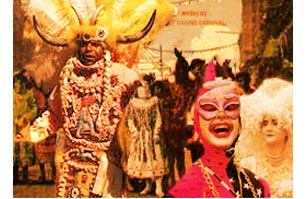
The city also has an unusual blend of music and dance, which is only on display New Year’s Day, when Philadelphia’s New Year Shooters and Mummers Association holds its annual parade. Shooters got their name from Scandinavian settlers who came to this area in the 1600s and would fire their guns as part of their New Year’s celebrations. The name for Mummers comes from Momus, the ancient Greek god of mockery. The French word mumeur is a disguised participant at a festival who makes fun of society. James Bland, an African-American composer of the 1800s, wrote “Oh, ‘Dem Golden Slippers,” the official song of the parade. And the official dance step is a cakewalk, a high strut with a backward tilt.

The Reading Terminal Market has supplied the cooks of Philadelphia with excellent products for over 100 years, but it is also a good market for tourists. Try the soft pretzels, which are served with mustard; hoagies, which were developed to celebrate the first presentation in Philadelphia of a Gilbert and Sullivan operetta; and cheese steaks, which have become a signature food in the history of Philadelphia gastronomy.

Continue Reading Close

The good life and the wildlife

Visit Naples, Fla., for its cypress groves, gorgeous orchids and teddy bear museums. Stay for the seven-mile crescent beach of pine and palm.

  • more
    • All Share Services

At the turn of the last century, the wealthy families of North America began building winter homes in Florida. The Northeast’s rich and flashy built their homes on Florida’s east coast. The Midwest’s rich and never-to-be-flashy built their homes on Florida’s west coast. They came here to Naples and constructed a community of quiet luxury.

Today, Naples is one of the richest and fastest-growing cities in America. But because it sits on a strip of land that runs between the Gulf of Mexico and the fragile ecosystem of the Everglades, the residents are deeply involved in protecting their natural environment, despite the rapid growth. In other words, this Florida city loves the good life but it is just as concerned with its wildlife.

Naples got its start in 1885, when Walter Haldeman, the owner of the Louisville (Ky.) Courier newspaper, sailed down the west coast of Florida. He was looking for a healthy spot to build a winter home for his family. At the time, the lower west coast of Florida was almost totally deserted. There was no one in Naples — no houses, no tents, no Native Americans. There wasn’t even a Naples! But there was a beautiful seven-mile crescent beach lined with pine trees and palm trees. Haldeman and a group of his friends bought the land and drew up the plans for Naples.

When Haldeman began executing his plan to build a community in the impenetrable wilderness of southern Florida, one of the most famous things he built was the Naples Beach Hotel and Pier. The pier was essential because in those days the only way you could get to Naples was by boat. The hotel was essential because Mrs. Haldeman was getting lonely and the only way that Mr. Haldeman was going to keep her in Naples was to build a hotel so her friends could come down and visit.

Today, the descendant of the original property is called the Naples Beach Hotel & Golf Club. It’s right on the beach, and since 1946 it has been owned and run by the Watkins family. Mike Watkins is the president, and his objective is to keep the hotel’s local flavor and maintain one of its star attractions — a greenhouse filled with 5,000 orchids. Built right in the middle of the hotel’s 18-hole golf course, the indoor orchid garden supplies flowers for the hotel and also serves as classroom for orchid-growing lessons that the hotel offers. Marty Zewalk is the resident teacher and expert on orchids, “We have over 150,000 hybrid varieties, each with unique shapes and colors. And unique names, too, like Dancing Lady, Donkey Ears, Butterfly Orchid — there’s even one called the Chocolate Orchid, named for the fact that it smells amazingly like chocolate.”

Another place to see things growing in Naples is at the Corkscrew Swamp Sanctuary, just outside of town. Corkscrew is 11,000 acres of protected wilderness, a giant ecosystem on the edge of the Florida Everglades. It’s owned and operated by the National Audubon Society and considered one of their most important projects.

Ed Carlson discovered Corkscrew when he was a teenager. He was awestruck by the wild beauty of the place. Since then he has devoted his life to protecting the region. Today, he is the manager of the sanctuary, but he describes himself as the “Chief Swamp Rat.” Explaining why people come to Corkscrew, Carlson says proudly, “It’s got it all … Corkscrew is a world-class natural resource with old-growth forest, abundant wildlife and wetlands. Because it’s located where the tropics and the temperate zones meet, we’ve got a wide range of beautiful plants, plus the largest stand of old-grove, virgin, unlogged cypress trees anywhere in the world.” Cypress is an extremely valuable wood because it offers beautiful material for building and for trim-work, and it’s very rot-resistant. For that reason, cypress was clear-cut by the industry throughout the United States. The Audubon Society worked to save Corkscrew’s cypress grove because it provides an important nesting area for certain birds. Some say the birds saved the trees but the trees have also saved the birds.

Visitors to Corkscrew can also learn a few important survival tips, like how to spot a broadleaf green plant nicknamed Alligator Flag. A relative of the banana, these leafy plants grow in the deepest, wettest areas of the swamp — the same areas that alligators call home. If you’re looking for an alligator — or to avoid one — that plant that would be a good warning.

For another look at the wilder side of Naples, there’s nearby Caribbean Gardens. This lush 52-acre sanctuary for unusual plants and animals was created in 1919 as a private garden with 3,000 species of tropical vegetation. In the ’60s, Larry and Nancy Jane Tetzlaff, well known leaders of wildlife expeditions, brought their collection of rare animals to the gardens. These days, their sons Dave and Tim run the park.

What’s most unusual about Caribbean Gardens is their use of video monitors. Visitors first see a film of an animal active in its natural habitat, then they see the real thing. The video system is a great tool, says Dave Tetzlaff, “because we live in a media age where people want instant images. For a long time when we did educational shows here, we simply described things to people. But when they actually look at it they walk away saying, ‘Wow, we’ve never seen anything like this before’ … you can talk all day about how a leopard jumps out of a tree, but when people view it up on the screen the result is like dynamite. Combine that with live animals and you’re giving people a very unique experience.”

Another special feature at the Caribbean Gardens is the primate expedition cruise. Started in 1992 when the Tetzlaff brothers renovated a group of islands to create a habitat for primates, the cruise takes guests on a boat trip through those islands, bringing them within a few watery feet of the animals in their natural habitat. It’s one of the biggest attractions at the gardens.

Somewhere between the wildlife and the good life in Naples lies the Teddy Bear Museum. It was set up to house the 1,500-teddy bear collection of Mrs. Francis Pew Hayes. Her collection began in 1984 when her grandson gave her a bear as a Christmas present. It turned grandma into an “arctophile,” somebody who loves teddy bears. Since then the collection has grown to over 3,500 bears and each year about 50,000 people stop in for a bear hug. Today, the museum is run by Mrs. Hayes’ son, George “Brownie” Black, an expert on teddy bear lore. The teddy bear got its name because in 1902 President Theodore Roosevelt took a hunting trip for bears in Mississippi. He didn’t find one to shoot, but the guides found one and invited him out. And he refused to shoot it. Because of that incident a cartoon of a bear was drawn by Clifford Berriman of the Washington Star, and thereafter whenever the paper did a cartoon, the bear was featured. It became known as “Teddy’s bear.”

The toy industry first introduced the bear as a boy’s companion, similar to a girl’s doll. Very quickly girls learned that it was a bit more durable than their porcelain dolls, so they started playing with bears also. And so began arctophilia.

Most Naples visitors come because it is considered a vacation paradise. Then they go home and face a different reality. But that didn’t work for Walter Wiesmueller. He came to Naples to vacation and decided that he preferred paradise as a permanent address. So he moved his glass-making factory from Bavaria to the beach in Florida, and he named it Glasparadies.

Glasparadies has a collection of glass that dates back over 4,000 years, and includes “Farmer’s Silver.” German peasants could not afford real silver; glass blowers developed a technique for blowing a little silver dust into the glass. They ended up with objects that looked like they were made of silver, but were much less expensive. Walter brought examples of hundreds of different types of glass from Germany to Naples.

To see the other things this city is famous for, find your way to Third Street, where people enjoy getting around on bicycles. It’s part of the the city’s historic shopping district, and it’s made up of flower-lined streets, one-of-a-kind shops, restaurants and galleries. A few blocks down is Fifth Avenue, Naples’ official Main Street, which offers elegant shopping, good eating and Wynn’s Food Market. Wynn’s has been a family-run fixture in Naples for over 50 years. And for just as long, it’s been famous for its coconut cake (deemed by locals to be the best in town).

But if it’s a taste of the good life you want, climb aboard the 90-foot Naples Royal Princess, a yacht that will take you to look at the waterfront homes of the wealthy. The homes in view range in price from $15 million to $33 million — at last survey. More important, though, is that the Princess cruise puts you smack in the middle of the story of Naples. One side of the river is palatial and pricey, the other side is protected and priceless. It shows the good life and the wildlife, and how Naples’ most important challenge is the balance between both.

Continue Reading Close

Beyond the beach

In Miami, you can have fun in the sun -- and then experience the finest of the fine arts.

  • more
    • All Share Services

The men and women who started developing Miami and Miami Beach at the beginning of the 20th century decided that the best way to attract attention to their community and profit from its growth was to project a single coordinated image: that of a playground in the sun where visitors could live it up. And they spent the entire century telling that story to the world.

For over 80 years Miami promoted fun in the sun and for most of those years it was a complete and accurate portrayal. That, however, is no longer the case. In January 1995, over 200,000 people stretched out on Miami Beach, but this time they didn’t come for the sun and the surf. They came to hear Luciano Pavarotti. Pavarotti and other superstars of the classical music world like Placido Domingo, Itzhak Perlman, Vladimir Ashkenazy and Mikhail Baryshnikov have all added Miami to their concert tours.

This cultural evolution might never have happened if not for a visionary named Judith Drucker, a dynamic devotee of the arts who is credited with being the first person to bringing world-class performing artists to Florida.

Drucker was trained as an opera singer at Philadelphia’s Curtiss Institute and the Juilliard School of Music, but like so many women of her generation, she put aside career ambitions and devoted herself to being a wife and a mother. As the children got older she realized that she could return to the arts — not so much as a performer but as a presenter.

“In 1967, I went to my rabbi at Temple Beth Sholom,” explains Drucker, “and asked him for funding to bring a young musician down from New York to play for the congregation. I hadn’t met the kid but my friends in New York told me he was very talented. His name was Pinchas Zukerman and the concert was sold out.”

Zukerman, the chamber musician and conductor, went on to become one of the great stars of classical music and Drucker became one of its great presenters. Today she is the president of the Concert Association of Florida and continues to bring musical artists, orchestras, ballet companies and folklore dance groups to South Florida.

As the Miami classical arts community grew, it not only became a place where great artists came to perform, but also a place where young artists came to train. The old Lincoln movie theater at the heart of the art deco district on Miami Beach has been converted into the headquarters of the New World Symphony. It is North America’s only full-time national training center for young orchestral musicians who want to prepare for professional careers. Each year 30 to 40 spots open up in the New World Symphony and over 1,000 young musicians apply. If they are lucky enough to be accepted, they get a three-year fellowship, a place to live, a weekly allowance and the training they will need for a shot at the big time. More than 75 percent of the students who have graduated from New World have gone on to full-time positions with some of the most important orchestras in the United States and Europe.

The idea for the New World Symphony came from the conductor Michael Tilson-Thomas. He convinced Ted Arison, the founder of Carnival Cruise Lines, to put up the seed money to make it a reality. Tilson-Thomas is the symphony’s artistic director and conductor as well as the musical director of the San Francisco Symphony and the principal guest conductor of the London Symphony. Visitors who come to Miami Beach between mid-October and the beginning of May can stop in and hear his work with the New World Symphony.

Miami’s interest in classical music has extended into classic dance. The Miami City Ballet is quickly becoming one of the most respected ballet companies in the world. It was founded in 1986 by Edward Villella, the first American-born male star of the New York City Ballet.

“My mother was a frustrated dancer who sent my sister to ballet classes in the hopes that that she would fulfill my mother’s dream,” says Villella, “I was allowed to play baseball — until I was knocked unconscious by a fastball. At that point, my mother decided that I needed more supervision and began dragging me along to my sister’s dance class. I was supposed to sit quietly and amuse myself, but I was a very physical kid and I ended up disrupting the class. In self-defense, the teacher put me in tights and into the class. I loved moving my body and at the age of 10 joined the School of American Ballet. My father owned a trucking business in New York’s garment district and the idea of his son jumping around in tights was not exactly what he had in mind. So I was sent off to the New York Maritime Academy.”

But the sea was not for Villella. He was soon back on the stage, eventually becoming the principal dancer for the New York City Ballet under the direction of George Balanchine. Villella became the first American male dancer to perform with the Royal Danish Ballet and the only American ever asked to dance an encore at the Bolshoi in Moscow.

Today the Miami City Ballet has over 15,000 subscribers and over 10,000 single-ticket buyers each season. It appears all over the world and is busy creating works that incorporate the social dances of this century into the traditional ballet of the past. To see the Miami City Ballet in action is to witness the future of ballet in America.

Another organization that will give you a look at the artistic future of America is Jubilate. It started out in 1995 when a group of friends put together a vocal group to help celebrate Black History Month. Since then it has expanded into the Jubilate Vocal Ensemble and the Jubilate Symphony Orchestra. The orchestra is one of only three in the United States that is primarily managed and staffed by minority musicians. The members of Jubilate promote, preserve, perform and record works by African-Americans and compositions based on African, Latin and Caribbean traditions. Most of the musicians are freelance professionals who realize that even though the major musical organizations in Miami like the Florida Philharmonic or the New World Symphony make a great effort to reach out to minorities, there are not enough positions to meet the expectations of the young musical talents in Miami’s minority communities.

But Miami’s interest in the creative arts is not limited to music and dance. The city has a number of outstanding art museums. As a matter of fact, the creative community most available to the tourist is made up of painters and sculptures. The ArtCenter on Miami Beach’s Lincoln Road is a series of storefronts that were converted by the city into studios for artists who were long on talent but short on cash. The public is welcome to come in to the studios and chat with the artists — and of course make a purchase.

The ArtCenter is one place to meet the artists who live and work in Miami, but tourists can also visit many of them in their private studios. For example, visitors can drive into Coconut Grove — an artist colony that is home to the Coconut Grove Arts Festival, the largest such gathering in the U.S.

One of the most interesting manifestations of Miami’s interest in art and design is the recent development of the Miami Design District. It consists of over 50 stores packed with some of the finest home furnishings and, unlike most other design centers in the United States, it is open to the public. Traveling to Miami to shop for furniture may sound strange but when you consider the range of stuff available in this district, sun, surf and a sofa makes an interesting combination.

Continue Reading Close

Spirit in the skyway

In Minneapolis-St. Paul, the Pillsbury Co. and the Mall of America set the tone foodwise.

  • more
    • All Share Services

It was Mark Twain who first called Minneapolis and St. Paul “the Twin Cities,” but they are clearly not identical twins. St. Paul was born first. In 1840, a bootlegging saloonkeeper started a settlement that he called “Pig’s Eye.” About a year later, a priest by the name of Lucien Galtier arrived, built a church and dedicated it to St. Paul. The locals recognized a brilliant opportunity for a public relations move and changed the name of the area to St. Paul. In 1858, the territory of Minnesota became a state, and St. Paul became the capital.

The population of St. Paul is about 272,000, but it has managed to hold on to the charm of a small town. Its Grand Avenue is a busy shopping street, but the shops are tucked into old houses that give the neighborhood a friendly hometown feeling. St. Paul contains many preserved and refurbished buildings, many of which date back more than 100 years.

The heart of the city, however, has always been the Mississippi River. The Dakotas called it “the place where the waters meet,” a reference to the spot where the Mississippi and Minnesota rivers come together. For hundreds of years the river has been the primary means of transportation, and the route for all commerce and communication. It’s interesting to explore the mighty Mississippi in the state where it begins, and visitors can do so by taking a trip with the Padelford Packet Boat Co. It’s Minnesota’s oldest and largest riverboat company, founded by Capt. William Bowell, whose ancestors came to America in 1630.

One of the things you’ll see from the river is the St. Paul skyline, which is dominated by the Cathedral of St. Paul and its large Renaissance-style dome. The dome represents the idea of a portal to heaven. The interior is painted with gold leaf and bright colors designed to draw your eyes heavenward. The church houses the local bishop’s chair, known in Latin as a cathedra, which marks it as a cathedral. No matter how big or small the building, a church with a bishop’s chair is always a cathedral.

As in most cities, the saintly citizens of St. Paul have been balanced by a fair number of sinners, especially during Prohibition. Ironically, it was the push by politicians to enact the tough legislation forbidding the importation, manufacture or distribution of alcoholic beverages that did more to encourage criminal behavior than anything ever produced by drinking in moderation.

During the early 1900s, St. Paul was notorious as a safe haven for gangsters. At the time, the chief of the St. Paul Police Department was John “the Big Guy” O’Connor. His brother, Richard “the Cardinal” O’Connor, was an alderman and the head of the St. Paul Democratic Party. They decided that it was not fiscally responsible to spend city money on catching gangsters. So they came up with what they called “The O’Connor Layover System.” Crooks who came to St. Paul and abided by three simple rules would not be arrested; extradition papers from other police departments would mysteriously get lost and the FBI would not be informed. The three rules were: 1) Do not commit any crimes within the city limits of St. Paul. Go over to Minneapolis all you want; we do not care. 2) Give a little kickback to the policeman’s fund. 3) Check in and tell us where you’re staying so we can call and warn you of any trouble. The system was very effective. In fact, the good citizens of St. Paul were so safe that if a purse snatcher stole from someone, the gangsters would take care of him.

These days, St. Paul is the center of state government, devoted to the no-frills, straightforward preservation of its past. Minneapolis has become the center for big business and the immediate introduction of everything that is new.

Minneapolis grew up around St. Anthony Falls, using the water as a powerful source of energy. Water power could run mills — the mills that ground wheat and made Minneapolis the flour-milling capital of America.

One of the first millers to tap into the power of St. Anthony Falls was Charles Pillsbury, who set standards for innovation and efficiency. Today his company is still in Minneapolis; it has 16,000 employees and more than $6 billion in annual sales.

For most Americans, Pillsbury is famous for creating the annual Pillsbury Bake-Off. It was first held in 1949 — and the changes that have taken place in the contest clearly reflect the changes that have taken place in American society. The first contest was held to mark the return of family life after World War II; Eleanor Roosevelt was the guest of honor. The economic boom of the ’50s was a return to “the good life,” reflected in contest recipes that were rich and sweet. One of the winning entries in 1951 was a French silk pie.

The ’60s and ’70s were marked by a rising divorce rate, single-parent families and women returning to the workforce, attending college and building careers. The theme of the bake-off in 1966 was “Busy Lady”; and one of the prize-winning recipes was the tunnel of fudge cake, with only six ingredients.

The ’80s and ’90s saw the return of fancy desserts and cakes, but they were considered entertainment. Cooking and baking had become hobbies, something people did to relax. And for the first time, men and teenagers were winners. The changing ethnicity of the nation was also reflected in the bake-off entries — two of the winners were spicy Cuban stir-fry and salsa couscous chicken. The first bake-off prize was $25,000; today it is $1 million.

Minneapolis is also famous for its skyway system, a five-mile-long series of glass-covered passages that connect the second floors of nearly 100 buildings. It gives Minneapolis an entire second street level with shops, department stores and restaurants. And the weather inside is always perfect.

Minneapolis also has the Guthrie Theater, internationally famous for its creative performances, and the Walker Art Center, one of the nation’s most important contemporary art museums. Both buildings face out on the Minneapolis Sculpture Garden, which is the largest urban sculpture garden in the country — 11 acres with more than 40 modern sculptures.

A tour of the Twin Cities wouldn’t be complete without sidetracking to Bloomington, Minn., for a visit to the Mall of America. This is not your average suburban mall. For one thing, it has attracted more than 40,000 visitors each year since it opened in 1992. That’s more than Disney World, the Grand Canyon and Graceland put together. It covers over 4 million square feet and the first three floors have more than 500 retail outlets and more than 50 places to eat. The top level is for nightclubs and movies. In the center is the Camp Snoopy theme park, built in honor of Charles Schulz. Snoopy and the rest of the Peanuts gang were born in St. Paul.

There are also things for grown-ups, including an 18-hole miniature golf course, and the Y2K version of bumper cars, featuring the most realistic NASCAR simulators in the world. For just a few dollars, you and 14 other daredevils can race one another on an amazingly lifelike speedway where what each driver does affects other drivers in the race.

And underneath this vast megamall is UnderWater World, filled with 1.3 million gallons of water, 3,000 sea creatures and experts to tell you what you’re looking at. It will take you through re-creations of the Boundary Waters National Park, an ice-covered Minnesota lake, the bottom of the Mississippi River and a coral reef.

Most surprising of all the attractions at the mall, however, is the Chapel of Love, where 450 weddings are performed each year. For some, it makes perfect sense: Have the ceremony, celebrate at one of the restaurants, receive the gift certificates and start shopping — all in the same hour, under the same roof. What could be more efficient?

Continue Reading Close

From famine to feast

Virginia's capital is rich with America's history.

  • more
    • All Share Services

From famine to feast

In 1607, when the first English colonists came to Virginia, the nearby waters were crowded with fish and the forest rich with game, fruits, vegetables and nuts. The land could have supplied the settlers with all the food they needed. And yet they were starving to death.

The colonists didn’t want to eat any unfamiliar food. Most of the settlers of the Virginia wilderness were from the English middle class. They were tradesmen and merchants who knew very little about fishing, farming and hunting. Fortunately for the settlers (less so for the Indians), the Native American tribes began to trade with them, and soon surviving off the land was possible. In fact, in just a few decades the colonists had a booming tobacco business going. It was an extremely profitable crop and led to the development of large plantations.

A 20-minute drive east of Richmond along the James River brings you to Shirley, a plantation established in 1613. These days it’s home to the 10th and 11th generations of the Carter family, who let visitors tour some of the historically significant areas of the property, like the central hall of the main house, which features a 250-year-old “flying staircase.” Supported by two wrought-iron straps — each an inch thick and 4 inches wide — the staircase is like an indoor suspension bridge. According to engineers, this kind of construction shouldn’t hold. It’s like the bumblebee that shouldn’t be able to fly, given its disproportionate design, but manages anyway.

Down the hall from the staircase, visitors can view the portraits from each generation of Carters. Portraiture was common in the days before photography, of course, and artists had to work quickly to capture entire families on canvas. For expediency, it was not uncommon for an artist to show up at the family home with a whole selection of pre-painted bodies. The subject would pick out the body he or she wanted and a face would be added. Visitors will notice that in her portrait, Elizabeth Carter’s body and dress bear a striking resemblance to those of her relative Lucy Randolph. The artist, a Mr. Walliston, seems to have had a very consistent standard for cleavage in his portraits.

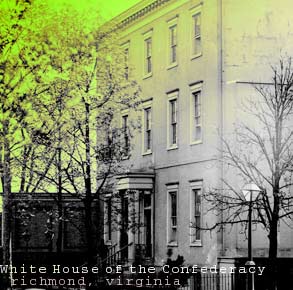
The Executive Mansion is another historic home on the tour of Richmond. It has been the residence of Virginia’s governors since 1813, which makes it the oldest continuously occupied governor’s mansion in the United States. Nearby, the White House of the Confederacy, built in 1818, was the home of President Jefferson Davis and his family during the War Between the States. Not surprisingly, the Museum of the Confederacy is right next door. It has the country’s largest collection of Confederate artifacts.

Inside the Virginia State Capitol building, designed by Thomas Jefferson in 1785, you’ll find two remarkable things. One is the oldest legislative body in the Western Hemisphere. The other is a sculpture of George Washington — the only representation of our first president produced during his lifetime. The head was made from a plaster cast of his face, so it’s more accurate than what we see on our dollar bills. That image was produced by an artist named Gilbert Stuart, who openly admitted that he disliked Washington and intended to make him as unattractive as possible. Among those who know this story, some have requested that the government redesign the bills with a more honest likeness. Fitting for a president who couldn’t tell a lie.

The Jefferson Hotel is another example of Richmond’s well-preserved past. Opened for business in 1895, the handsome building has been part of the city’s social life ever since. At the center of the hotel’s Palm Court lobby is a life-size marble statue of Thomas Jefferson. It stands beneath a 35-foot Tiffany stained-glass skylight. Next door is the extraordinary Rotunda room, which features a 70-foot-long ceiling decorated with a reproduction of a Tiffany skylight. The Rotunda and the Palm Court are connected by the Grand Staircase. The word around town is that this enormous staircase was used as the model for the one in “Gone With The Wind.”

Virginia’s remarkable preservation work is not limited to buildings. The state has also worked to conserve historic battlefields. Through a program called “Virginia’s Civil War Trails,” tourists can visit the site of important battles between Confederate and Union troops. Call (888) 248-4592 for a packet of information that will lead you on a progression of military landmarks throughout Richmond and the state.

After you’ve had a chance to appreciate old Richmond, make some time for the newer attractions. The Shockoe Slip section of town, once a warehouse district, is now the nightlife neighborhood. Carytown is a good spot for walking, shopping or visiting museums and galleries. You could also catch a movie at the Byrd, a restored movie house from the ’30s where a ticket costs just 99 cents. Monument Avenue is a wide boulevard upon which stand statues of Richmond’s celebrities, including tennis star Arthur Ashe, who was born in Richmond.

Nearby, you can find a good meal at Millie’s Diner. Millie’s sits where the historic Kullman Diner once did. The Kullman was originally built for neighborhood factory workers. Nowadays it’s packed with lovers of good food and great jukebox music. You’ll want to order Millie’s signature dish: Devil’s Mess — a plate of peppers, onions, eggplant and hot Italian sausage, stewed with curry and pan-fried eggs.

Next stop is the Jackson Ward district, birthplace of black capitalism and the home of the Black History Museum. In the early 1900s it was considered to be a black Wall Street. One of the inspirational figures in this community was a woman named Maggie Walker, whose former home is now a major attraction. At the turn of the century, Walker became the first woman millionaire and the first black president of an American bank.

Walker’s story begins with the application for a loan, which she was denied. She decided that the only way to finance her business was to pool the meager resources of her African-American community and open her own savings and loan. She called it the St. Luke’s Pennies and Savings Bank, and she got customers to bring their pennies in to start a savings account. Walker turned those pennies into dollars, which eventually became a great investment for the community. Plus, she taught others how to invest their dollars so that one day they could purchase land, build a house or start a business. Today, Jackson Ward is going through another revitalization as part of the city’s “Vision 2000″ project.

No tour of Richmond is complete without a trip on the James River, for the city would not have existed without the waterway. The river was Richmond’s main thoroughfare in colonial times and the cheapest, most efficient way to ship slave-harvested tobacco out and bring goods in.

Today visitors can travel the river and see the James River Falls on the Annabel Lee, an antique paddlewheel steamer. If that’s too fancy, there’s always the raft. The Richmond Raft Co. will set you up with a trained guide and all the gear you need to go white-water rafting right through the center of the city. The trip offers a close look at the beauty of the falls, and is yet another proud piece of Richmond, Va.

Continue Reading Close

Page 1 of 5 in Burt Wolf