NEW ORLEANS (AP) — The Times-Picayune, one of the nation’s oldest newspapers, will no longer offer print editions seven days a week and instead plans to offer three printed issues a week starting in the fall. The change means New Orleans would become the largest metro area in the nation without a daily newspaper in the digital age.
The changes announced Thursday were combined with similar moves at three major Alabama daily newspapers also owned by the Newhouse family group’s Advance Publications. The Birmingham News, the Press-Register in Mobile and The Huntsville Times will switch to publishing three days a week as part of a new focus on online news. At all four papers, there will be unspecified staff cuts. All four papers will continue to publish continuously on their websites, and online access will remain free.
Newspapers have struggled in recent years as consumers increasingly get their news online. Print advertising declined as the economy went into recession, and newspapers have yet to learn how to make online advertising as profitable as its printed counterpart.
“For us, this isn’t about print versus digital, this is about creating a very successful multi-platform media company that addresses the ever-changing needs of our readers, our online users and our advertisers,” said Advance Publications’ president of local digital strategy, Randy Siegel, in an interview with The Associated Press. “This change is not easy, but it’s essential for us to remain relevant.”
Siegel didn’t say how much money the reduced print runs in Louisiana and Alabama would save, nor how many staff members would be laid off or hired in the new online units.
“To get good quality information is not cheap,” said Jennifer Greer, chair of the journalism department at the University of Alabama. “What you are seeing is people trying to figure out a business model that works in a digital age.”
The decision was met with sadness by some residents in New Orleans, where The Times-Picayune won a Pulitzer Prize for its coverage of Hurricane Katrina in 2005. Staffers continued reporting despite being forced out of the newspaper’s offices amid widespread flooding and power outages.
The storm drove away thousands of residents, some of whom never came back. The city — and its newspaper — struggled to recover in the years since.
The paper was a lifeline for the Southern, working-class city, providing government announcements, obituaries, Carnival and scoops on local corruption, said Cheron Brylski, a 53-year-old New Orleans-based political consultant. Not having the paper every day is like losing a sports team, she said.
“Where is New Orleans headed since Katrina? This is not something that helps our recovery,” she said.
The papers in Alabama also have long histories. The Mobile paper has roots to 1813 with the founding of the Mobile Gazette and became a daily in 1832, according to a history of the publication on al.com. And in 2007, the Birmingham News won a Pulitzer Prize for a series on corruption in Alabama’s two-year college system.
Birmingham News employees were told during morning meetings that longtime Editor Tom Scarritt will retire this fall when the new companies are created, according to two reporters who spoke on condition of anonymity because they were not authorized to speak publicly about the changes for the company.
In New Orleans, a new company, the NOLA Media Group, would be created to oversee both The Times-Picayune and its affiliated website, NOLA.com.
The announcements mirror changes Advance Publications made in Michigan. In 2009, the company shut the Ann Arbor News but created AnnArbor.com, a news website that still publishes print editions on Thursday and Sunday.
In February, it launched the MLive Media Group, which runs MLive.com, to focus its efforts in Michigan digitally. Meanwhile, all of its eight other newspapers in the state offer three days of home delivery with newsstand sales from three to seven days a week.
Newspaper analyst Ken Doctor, who writes the Newsonomics blog, said the company is trying to hold on to declining print ad revenue for a few more years, and expects Advance to eventually cut print runs at its other newspapers in New Jersey, Oregon, Ohio and elsewhere. The company owns The Oregonian in Portland, Ore.; The Plain Dealer in Cleveland; and The Star-Ledger in Newark, N.J.
“It’s a big bet to retain profitability and hope that in the shock therapy, there are profits on the other end,” he said.
Print circulation has been dropping steadily over the years at the four newspapers affected by Thursday’s announcement, according to the Audit Bureau of Circulations. On average, the four papers’ circulation in the half year through March fell about 6 percent from a year ago.
Nonetheless, the Times-Picayune remains one of the nation’s most successful newspapers. Of the top 50 large-sized markets, the newspaper has the highest rate of readership of its daily edition in the U.S., according to Austin, Texas-based Scarborough Research, a firm that tracks the industry.
The Times-Picayune’s average paid circulation was 133,557 in the six months through March, down 49 percent compared to March 2005, a few months before Hurricane Katrina hit.
The Birmingham News’ circulation of 103,729 is down 29 percent from five years ago; the Press-Register’s of 82,088 is down 18 percent; and The Huntsville Times’ of 44,725 is down 15 percent.
Die-hard supporters and even Mayor Mitch Landrieu pledged to make sure the newspaper remained a part of New Orleans culture.
“Through wars and floods, the ‘Aints and a Saints Super Bowl victory, the TP has been and remains an integral part of our daily routine and our culture,” Landrieu said.
Anne Milling, a longtime member of the advisory board to The Times-Picayune, said an online-focused model wouldn’t work in New Orleans. She said she and other supporters were exploring bringing in new owners committed to a daily paper, or even starting a new daily publication.
“We always do things differently,” she said. “It’s part of our tradition: You wake up with a cup of chicory coffee and read the newspaper.”
___
Business Writer Ryan Nakashima in Los Angeles, Phillip Rawls in Birmingham, Ala., and Janet McConnaughey in New Orleans contributed to this report.
LAFITTE, La. (AP) — Gloom infects the hard-working shrimp and crab docks of this gritty fishing town as the second full year of fishing since BP’s catastrophic oil spill kicks into high gear.
Usually folks are upbeat and busy in May, when shrimpers get back to work in Louisiana’s rich waters. This spring, though, catches are down, docks are idle and anxiety is growing that the ill effects of the massive BP oil spill may be far from over.
An Associated Press examination of catch data from last year’s commercial harvest along the Gulf — the first full year of fishing since the 2010 spill — reveals merit in the fishermen’s complaints. According to the analysis of figures obtained through public records requests, seafood crops hit rock bottom in the Barataria estuary, the same place where some of the thickest waves of oil washed in when a BP well exploded in the Gulf of Mexico.
Detailed data from “trip tickets” fishermen fill out when they unload at docks reveal steep drops in Barataria, though it’s far from bleak everywhere along the Gulf Coast. Fishermen are making money that is pretty equal to before the spill, according to the 2011 data not officially released yet by the National Marine Fisheries Service.
Part of the reason is that though the fishermen aren’t hauling in as much, prices are up so people are paying more for seafood from the Gulf than other sources.
In Barataria, the number of shrimpers in the water has remained steady, yet the fall season was off by about 7 million pounds from an average of 18.1 million pounds between 2006 and 2009. It wasn’t a pretty picture for blue crabs either in Barataria: the crab catch was off by 2.7 million pounds from an average of 9.5 million pounds between 2006 and 2009, the data showed.
Fresh water from a historically high Mississippi River could have been the culprit for some of the drop off in productivity, marine experts said. Another factor may be that some areas in the estuary were closed due to oil contamination. One such place is Bay Jimmy, where oil is still gooey and thick on the shores.
Fishermen blame the spill. In Lafitte, they said the new shrimp season was off to a slow start.
“I’m afraid that oil spill has ruined us,” said Ken Lee, a shrimp dock owner. “We’re hardly unloading any brown shrimp at all.”
For now though, a range of government officials, scientists and seafood experts say it’s much too early to make any definite link between the oil spill and one-year declines in catches. Seafood harvests, while generally predictable, are subject to fluctuations even in the best of times.
But Lee shook his head as he looked over a sheet tallying recent shrimp loads in the past few days. It was slim pickings. Moments before, an 18-wheeler pulled away from his dock with just seven vats of frozen fresh shrimp. The truck has room for more than 40, he said.
“That’s pitiful!” he said. “We usually load a truck full.”
While catches were off, though, prices were high. The Louisiana data shows fishermen actually made as much or more in 2011 than they had in previous years. The total values of the blue crab and oyster harvests were higher than the six-year average.
Taken as a whole, the volume of seafood harvested last year in Louisiana for shrimp, crabs and oysters showed only modest drops from averages for 2003-2009, according to the AP analysis. Catches for 2010, the year of the spill, were excluded because much of the Gulf was shut down. Meanwhile, in Texas, the oyster and crab hauls were down slightly from 2003-2009 averages, the AP analysis showed.
Drought could have been a cause there, a Texas official said. The state did not have figures on its shrimp catch. Florida’s data showed no major swings in harvests of oysters, crabs and shrimp. Mississippi’s shrimp haul was down about 13 percent from 2003-2009 averages and its small-scale crab harvest was down 52 percent. From the 2003-2009 average, Alabama’s brown shrimp catch was off 12 percent, blue crabs were off 27 percent and oysters down by about 50 percent, the state’s data showed.
Fishermen say economic conditions were tough before the BP spill due to imports, high fuel prices and hurricanes. But now they say they’ve reached a low point since the blown-out well spewed more than 200 million gallons of oil.
In Bon Secour, Ala., Mike Skinner, a third-generation shrimper whose entire family works in the business, said last fall was the worst season he had ever seen.
“Hopefully it was a fluke thing. We’ll find out this year,” he said as he piloted his trawler across Mobile Bay.
In Alabama, seafood sales are down about 10 percent to $146 million in the two years since the BP gusher, according to an Auburn University study obtained by the AP. The downturn represented nearly $16 million in lost sales and has left few fishing boats in industry hubs like the Bon Secour River.
To ease the hardships, BP has given $48.5 million to Gulf states so they can market their seafood industries on websites, TV commercials, billboards and print ads that say the catch is healthy.
BP spokesman Craig Savage said the Gulf seafood industry was strong. “The fact is, the data show that seafood from the Gulf of Mexico is safe and abundant, according to numerous government reports,” he said.
Truly identifying any effect of the spill — if any — on marine stocks won’t be possible from landings data for several years, said Chuck Wilson, executive director of the Louisiana Sea Grant College Program, a university-based group of agents and researchers.
Still, there’s reason to be wary, said Olivia Watkins, a spokeswoman for the Louisiana Department of Wildlife and Fisheries.
“We are seeing a number of anomalies in the Gulf of Mexico,” Watkins said. “We should not attempt to draw premature conclusions.”
The long-term prognosis for the Gulf’s health remains uncertain.
Recent studies have found higher numbers of sick fish close to where BP’s well blew out and genome studies of bait fish in Barataria have identified abnormalities. Meanwhile, vast areas of the cold and dark Gulf seafloor are oiled, scientists say.
And many fishermen are convinced something’s amiss.
“I think the oil can kill the shrimp eggs. That’s why there was no shrimp to catch last year,” said Tuna Pham, a 40 -year-old Vietnamese-American shrimper docked in Lafitte. He said the catch this year was bad again.
“We was there to work, but couldn’t,” said Lawrence Salvato, 49, as he stopped for lunch on a dock where he moors a shrimp skiff he runs his wife, Lisa. “Usually people are excited and they can’t wait to get out there. This year, there’s no real incentive.”
He said he made about $10,000 in seafood sales last year compared to $75,000 in 2009. He said his family made do with a $40,000 interim payment they got from BP. Fishermen who haven’t settled legally yet with BP over damages continue to survive on periodic payments from a $20 billion trust fund set up by BP.
“We’re afraid,” Salvato said. “A lot of people are getting out of fishing. They’re afraid.”
___
Associated Press writer Jay Reeves reported from Bon Secour, Ala.
Continue Reading
Close
NEW ORLEANS (AP) — A former BP engineer charged with deleting text messages about how much oil was leaking from the company’s blown-out well in the Gulf of Mexico claims evidence not given to federal investigators will prove his innocence.
In court documents, Kurt Mix asks U.S. District Judge Jane Triche Milazzo to review evidence from an unnamed third party that is “capable of fully exonerating him.” His defense lawyers added that the evidence “exculpates Mix in a particularly direct and unambiguous manner.”
FBI agents did not see the information because it was considered privileged under a client-lawyer agreement, according to court documents filed Monday in New Orleans. The court documents did not identify the third party or the evidence.
Mix has pleaded not guilty to two counts of obstruction of justice. Each count is punishable by up to 20 years in prison and a $250,000 fine.
He has been accused of deleting text messages to a supervisor and a contractor to prevent them from being used in a federal grand jury probe of the Gulf oil spill.
The criminal charges against Mix are the first in the U.S. Justice Department’s probe of the deadly blowout of BP PLC’s Macondo well on April 20, 2010, and the company’s response to the nation’s worst offshore oil spill.
Mix was on a team of BP engineers trying to stop the leak. The FBI has said a text message Mix deleted indicated BP’s blown-out well was spewing far more oil than the company was telling the public.
Mix was freed on $100,000 bond following an initial court appearance in Houston.
The indictment said BP had repeatedly notified Mix that he needed to retain all of his spill-related records, including text messages, but he allegedly deleted about 300 texts he sent to a supervisor who served as BP’s drilling engineering manager for the Gulf and a contractor who also worked on the spill response.
Mix resigned from BP in January.
His lawyers also argued Monday that they have “thousands and thousands of emails, text messages, other electronic information and hard-copy documents that Mix preserved” that show Mix did not intend to hide evidence from investigators. They said he had “wholly innocuous reasons for the two text message string deletions.”
Continue Reading
Close
NEW ORLEANS (AP) — A former BP engineer charged with deleting text messages about how much oil was leaking from the company’s blown-out well in the Gulf of Mexico claims evidence that was not given to federal investigators will prove his innocence.
In court documents, Kurt Mix asks U.S. District Judge Jane Triche Milazzo to review evidence from an unnamed third party that he says can fully exonerate him.
The documents, filed Monday in New Orleans, say FBI agents did not see the information because it was considered privileged under a client-lawyer agreement. The court documents did not identify the third party or the evidence.
Mix has pleaded not guilty to two counts of obstruction of justice. Each count is punishable by up to 20 years in prison and a $250,000 fine.
NEW ORLEANS (AP) — Federal prosecutors brought the first criminal charges Tuesday in the Gulf oil spill, accusing a former BP engineer of deleting more than 300 text messages that indicated the blown-out well was spewing far more crude than the company was telling the public at the time.
Two years and four days after the drilling-rig explosion that set off the worst offshore oil spill in U.S. history, Kurt Mix, 50, of Katy, Texas, was arrested and charged with two counts of obstruction of justice for allegedly destroying evidence.
His attorney, Joan McPhee, issued a statement Tuesday evening describing the charges as misguided and that she is confident Mix will be exonerated.
“The government says he intentionally deleted text messages from his phone, but the content of those messages still resides in thousands of emails, text messages and other documents that he saved,” she said. “Indeed, the emails that Kurt preserved include the very ones highlighted by the government.”
The U.S. Justice Department made it clear that the investigation is still going on and suggested that more people could be arrested. In a statement, Attorney General Eric Holder said prosecutors “will hold accountable those who violated the law in connection with the largest environmental disaster in U.S. history.”
Federal investigators have been looking into the causes of the blowout and the actions of managers, engineers and rig workers at BP and its subcontractors Halliburton and Transocean in the days and hours before the April 20, 2010, explosion.
But the case against Mix focuses only on the aftermath of the blast, when BP scrambled for weeks to plug the leak. Even then, the charges are not really about the disaster itself, but about an alleged attempt to thwart the investigation into it.
In court papers, the FBI said one of the areas under investigation is whether the oil company intentionally lowballed the amount of crude spewing from the well.
In outlining the charges, the government suggested Mix knew the rate of flow from the busted well was much greater than the company publicly acknowledged.
Prosecutors also said BP gave the public an optimistic account of its May 2010 efforts to plug the well via a technique called a “top kill,” even though the company’s internal data and some of the text messages showed the operation was likely to fail.
An accurate flow-rate estimate is necessary to determine how much in penalties BP and its subcontractors could face under the Clean Water Act. In court papers, prosecutors appeared to suggest the company was also worried about the effect of the disaster on its stock price.
The charges came a day before a federal judge was to consider granting preliminary approval of a $7.8 billion civil settlement between BP and a committee of plaintiffs.
In a statement, BP said it is cooperating with the Justice Department and added: “BP had clear policies requiring preservation of evidence in this case and has undertaken substantial and ongoing efforts to preserve evidence.”
The FBI said in court papers that Mix had been repeatedly notified by BP that instant messages and text messages needed to be preserved.
Mix, who resigned from BP in January, appeared on Tuesday afternoon before a judge in Houston, shackled at his hands and feet, and was released on $100,000 bail. His attorney had no comment afterward. If convicted, Mix could get up to 20 years in prison and a $250,000 fine on each count.
The engineer deleted more than 200 messages sent to a BP supervisor from his iPhone containing information about how much oil was spilling out, then erased 100 more messages to a contractor the following year, prosecutors said. Some of the messages were later recovered via forensic computer techniques.
Many of the messages had to do with an effort to plug up the well with heavy mud injected under high pressure.
In public statements, the company professed optimism that the top kill would work, giving it a 60 to 70 percent chance of success.
On the day the top kill began, Mix estimated in a text to his supervisor that more than 15,000 barrels of oil per day were spilling — three times BP’s public estimate of 5,000 barrels and an amount much greater than what BP said the top kill could probably handle.
At the end of the first day, Mix texted his supervisor: “Too much flow rate — over 15,000 and too large an orifice.” Despite Mix’s findings, BP continued to make public statements that the top kill was proceeding according to plan, prosecutors said. On May 29, the top kill was halted and BP announced its failure.
The company’s stock dropped 15 percent on the next trading day, the government said.
David Uhlmann, a University of Michigan law professor who was chief of the Justice Department’s environmental crimes section, said the charges are probably “just the first of what will be multiple criminal charges.”
“It could be the sign that the government believes there was a more far-reaching cover-up about the size of the spill,” he said.
BP stock closed at $41.91 Tuesday, a drop of just 4 cents. Analysts said investors evidently recognized the charges involved just one, low-ranking employee and saw no hint yet of any kind of larger cover-up on BP’s part.
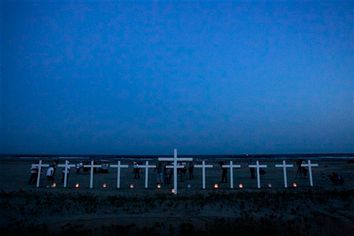
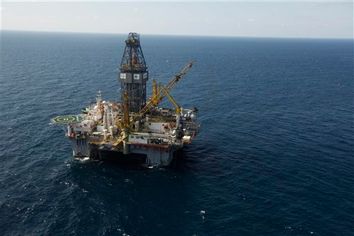
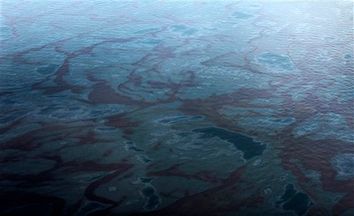
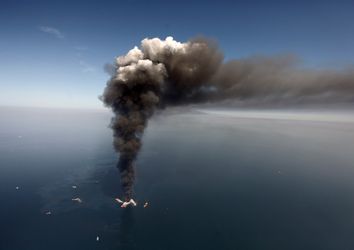
The explosion aboard the Deepwater Horizon drilling rig killed 11 workers. More than 200 million gallons of crude oil leaked from the well off the Louisiana coast before it was capped.
Under the Clean Water Act, polluters can be fined $1,100 to $4,300 per barrel of spilled oil, with the higher amount imposed if the government can show the disaster was caused by gross negligence.
Al Sunseri, whose family-owned oyster business was damaged by the spill, said there was little real news in the arrest of Mix. “I personally believe it’s so involved that we could never really understand the magnitude of the bad players involved,” he said.
Billy Nungesser, president of hard-hit Plaquemines Parish who has long accused BP of misleading the public about the spill, said: “We’re just glad that the truth, and all the truth, will come out. Where crimes were committed, BP needs to pay the price.”
___
Associated Press reporters Kevin McGill in New Orleans and Ramit Masti-Plushnick in Houston contributed to this story.
Continue Reading
Close
BARATARIA BAY, La. (AP) — When fishermen returned to the deep reefs of the Gulf of Mexico weeks after BP’s gushing oil well was capped, they started catching grouper and red snapper with large open sores and strange black streaks, lesions they said they’d never seen and promptly blamed on the spill.
Now, two years after the Deepwater Horizon rig exploded and sank, killing 11 men and touching off the worst offshore spill in U.S. history, the latest research into its effects is starting to back up those early reports from the docks: The ailing fish bear hallmarks of diseases tied to petroleum and other pollutants.
Those illnesses don’t pose an increased health threat to humans, scientists say, but they could be devastating to prized species and the people who make their living catching them.
There’s no saying for sure what’s causing the diseases in what’s still a relatively small percentage of the fish, because the scientists have no baseline data on sick fish in the Gulf before the spill to form a frame of reference. The first comprehensive research may be years from publication. And the Gulf is assaulted with all kinds of contaminants every day.
Still, it’s clear to fishermen and researchers alike that something’s amiss.
— A recent batch of test results revealed the presence of oil in the bile extracted from fish caught in August 2011, a year after BP’s broken well was capped and nearly 15 months after it first blew out on April 20, 2010.
“Bile tells you what a fish’s last meal was,” said Steve Murawski, a marine biologist with the University of South Florida who was chief science adviser for the National Marine Fisheries Service until November 2010 when he began working on oil spill studies for USF. “There was as late as August of last year an oil source out there that some of those animals were consuming.”
Bile in red snapper, yellow-edge grouper and a few other species contained on average 125 parts per million of naphthalene, a compound found in crude oil, Murawski said. Scientists expect to find almost none of the toxin in fish captured in the open ocean.
“Those levels are indicative of polluted urban estuaries,” he said.
— Last summer, a team of scientists led by USF has done what experts say is the most extensive study yet of sick fish in shallow and deep Gulf waters. Over seven cruises in July and August, the scientists caught about 4,000 fish — from Florida’s Dry Tortugas to central Louisiana — using miles-long fishing lines dragged from close to shore out to depths of 600 feet. The work was funded with a federal government grant and help from the Florida Fish and Wildlife Research Institute.
About 3 percent of the fish they caught displayed gashes, ulcers and parasites symptomatic of environmental contamination, according to Murawski, the lead researcher. The number of sick fish rose not only as scientists moved west away from the relatively clean and oil-free waters of Florida but also as they pushed into deeper waters off the coasts of Alabama, Mississippi and especially Louisiana, near where the Deepwater Horizon sank.
About 10 percent of mud-dwelling tile fish caught in the DeSoto Canyon, to the northeast of the well, showed signs of sickness.
“The closer to the oil rig, the higher frequency was” of sick fish, Murawski said.
Past studies off the Atlantic Seaboard found about 1 percent of fish suffering from diseases, Murawski said. For now, he’s taking that as a historical reference point; but he says it’s not possible to directly apply that baseline to the Gulf, which is warmer and because of that an incubator for bacteria and parasites that could be the cause of lesions and sicknesses. Other important differences are that oil and natural gas have been pouring out of fissures from the floor of the Gulf for centuries, and the muddy waters of the Mississippi River flush into the same spots where scientists and fishermen are finding sick fish.
— Laboratory work over the past winter on the USF samples indicates the immune systems of the fish were impaired from an unknown environmental stress or contamination. Other researchers say they have come to similar conclusions over the past year.
“Some of the things I’ve seen over the past year or so I’ve never seen before,” said Will Patterson, a marine biologist at the University of South Alabama’s Dauphin Island Sea Lab. “Things like fin rot, large open sores on fish, those were some of the more disturbing types of things we saw. Different changes in pigment, red snapper with large black streaks on them.”
All of this has biologists — and many fishermen — worried.
James Cowan, a reef fish expert at Louisiana State University doing long-term sampling for the Louisiana Department of Wildlife and Fisheries, received his first report of fish with what looked like ulcers in November 2010. He began reading up on what scientific literature was available on oil spills and fish.
“There is so much in the literature that links exposure to PAHs (the compounds in oil) to exactly what we are seeing: sicknesses, lesions and everything else,” Cowan said.
Even if oil could be pinpointed as a contaminant, however, it’s difficult to definitively tie it to BP’s Macondo well. The Gulf is littered with natural oil seeps, pipelines and oil wells and pollution from passing ships. In addition, there are the discharge of the Mississippi River, salinity and temperature fluctuations and other ecological factors to consider.
These early findings with fish are not out of step with what researchers are turning up all over the Gulf two years after the spill: The oil disaster whacked the Gulf. In the past year, research has emerged showing deep-water corals, seaweed beds, inshore bait fish, dolphins and other species were injured by the spill.
“There is lots of circumstantial evidence that something is still awry,” said Christopher D’Elia, the dean of LSU’s School of the Coast and Environment. “On the whole, it is not as much environmental damage as originally projected. Doesn’t mean there is none.”
Portions of a few bays remain closed because of the spill.
For the second year, fishermen like Wayne Werner, a 53-year-old Louisiana captain who catches red snapper commercially, are calling in with reports of lesions.
He and other fishermen said they want to get to the bottom of a problem that’s forcing them to take longer trips to fishing spots outside the spill zone and perpetuating their fear for their livelihoods.
“Every time we talked about bad fish, everybody kind of went nuts on us. Just like, ‘You’re hear-saying,’ you know? And we’re saying, ‘Well, they’re there,’” he said this week.
“They’re still there. Now that the water is getting warm again, we’re starting to see more and more again.”
Continue Reading
Close